Building Blocks
Subcategories of "Building Blocks"
- Boronic Acids & Boronic Acid Derivatives(5,805 products)
- Chiral Building Blocks(1,248 products)
- Hydrocarbon Building Blocks(6,118 products)
- Organic Building Blocks(61,447 products)
Found 208423 products of "Building Blocks"
4-Bromomethyl-4'-methyl-2,2'-bipyridine
CAS:Please enquire for more information about 4-Bromomethyl-4'-methyl-2,2'-bipyridine including the price, delivery time and more detailed product information at the technical inquiry form on this page
Formula:C12H11BrN2Purity:Min. 91.0 Area-%Molecular weight:263.14 g/mol4-Bromobenzaldehyde
CAS:Please enquire for more information about 4-Bromobenzaldehyde including the price, delivery time and more detailed product information at the technical inquiry form on this page
Formula:C7H5BrOMolecular weight:185.03 g/molRef: 3D-B-5782
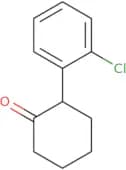
Discontinued product2-(2-Chlorophenyl)cyclohexan-1-one
CAS:Versatile small molecule scaffold
Formula:C12H13ClOPurity:Min. 95%Molecular weight:208.68 g/molRef: 3D-RDA39349
Discontinued product2,2-Diethoxyacetophenone
CAS:2,2-Diethoxyacetophenone is a high quality reagent that is useful as an intermediate in the synthesis of complex compounds. It has been shown to be a useful scaffold or building block for the synthesis of a wide range of organic compounds. 2,2-Diethoxyacetophenone has been used as a reactant for reactions involving alkylation, acylation, and dealkylation reactions. This compound can also be used as a research chemical in studies on the development of new drugs. The CAS number for this compound is 6175-45-7.
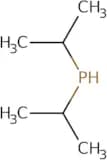
Formula:C12H16O3Molecular weight:208.25 g/molDiisopropylphosphine, 10wt.% in hexane
CAS:Please enquire for more information about Diisopropylphosphine, 10wt.% in hexane including the price, delivery time and more detailed product information at the technical inquiry form on this page
Formula:C6H15PPurity:Min. 95%Molecular weight:118.16 g/molRef: 3D-VAA49153
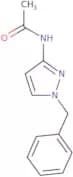
Discontinued productN-(1-Benzyl-1H-pyrazol-3-yl)acetamide
CAS:Versatile small molecule scaffold
Formula:C12H13N3OPurity:Min. 95%Molecular weight:215.25 g/molRef: 3D-XCA15921
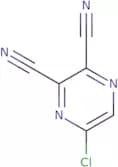
Discontinued product5-Chloropyrazine-2,3-dicarbonitrile
CAS:5-Chloropyrazine-2,3-dicarbonitrile (5CPD) is an organochlorine compound that is used as a chlorinating agent in the production of alkyl and aralkyl chlorides. 5CPD is a monofunctional reagent that can also be used for the synthesis of furyl and thionyl chloride.
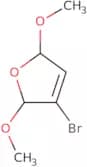
Formula:C6HClN4Purity:Min. 95%Molecular weight:164.55 g/mol3-Bromo-2,5-dimethoxy-2,5-dihydrofuran
CAS:Versatile small molecule scaffold
Formula:C6H9BrO3Purity:Min. 95%Molecular weight:209.04 g/molRef: 3D-XCA16753
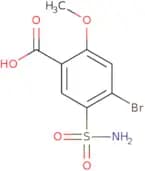
Discontinued product4-Bromo-2-methoxy-5-sulfamoylbenzoic acid
CAS:Versatile small molecule scaffoldFormula:C8H8BrNO5SPurity:Min. 95%Molecular weight:310.12 g/molRef: 3D-XCA13537
Discontinued product2-[Ethyl(propan-2-yl)amino]ethan-1-ol
CAS:Controlled ProductVersatile small molecule scaffold
Formula:C7H17NOPurity:Min. 95%Molecular weight:131.22 g/mol2-Cyclopropylbenzaldehyde
CAS:Versatile small molecule scaffold
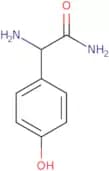
Formula:C10H10OPurity:Min. 95%Molecular weight:146.19 g/mol2-Amino-2-(4-hydroxyphenyl)acetamide hydrochloride
CAS:2-Amino-2-(4-hydroxy-phenyl)-acetamide is a research chemical that belongs to the amide family. It is commonly used in scientific studies and experiments. This compound, also known as glycinamide, has various applications in the field of chemistry and biology. Its unique structure makes it a valuable tool for researchers looking to explore new areas of study or develop innovative solutions. With its high purity and reliable quality, 2-Amino-2-(4-hydroxy-phenyl)-acetamide is an essential component for any laboratory or research facility.
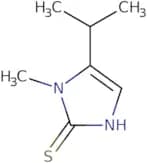
Formula:C8H10N2O2HClPurity:Min. 95%Molecular weight:202.64 g/mol1-Methyl-5-(propan-2-yl)-1H-imidazole-2-thiol
CAS:Versatile small molecule scaffold
Formula:C7H12N2SPurity:Min. 95%Molecular weight:156.25 g/molRef: 3D-XCA11998
Discontinued productPB-22 3-carboxyindole metabolite solution
CAS:Controlled ProductPB-22 is a synthetic cannabinoid, which can be classified as a CB1 receptor agonist. It is one of the many cannabinoids that have been created in an attempt to circumvent drug laws by creating compounds that are similar to those found in cannabis but have different chemical structures. PB-22 has shown to increase locomotor activity and stimulate the cb1 receptor in mice. Magnetic resonance spectroscopy (MRS) and assays were used to determine the binding affinity of PB-22 for the CB1 receptor. The MRS data showed that PB-22 bound with high affinity to the CB1 receptor and had a lower affinity for CB2 receptors. This suggests that PB-22 may be more potent than other synthetic cannabinoids, such as JWH-018 and CP 55,940, which bind better with CB2 receptors than CB1 receptors.
PB-22 is an analog of JWH-073 and has been shown to have a stronger effect on locomotor activity than JWHFormula:C14H17NO2Purity:Min. 95%Molecular weight:231.29 g/molTromantadine
CAS:Controlled ProductTromantadine is an active analogue of quinolones and is used in the treatment of infections caused by bacteria. Tromantadine has been shown to be effective against a number of bacterial strains, including some strains that are resistant to other antibiotics. Tromantadine inhibits bacterial growth by binding to DNA-dependent RNA polymerase and preventing transcription and replication. It also has anti-inflammatory properties, which may be due to its ability to inhibit prostaglandin synthesis. Tromantadine is chemically stable at high temperatures, making it suitable for use in hot climates.
Formula:C16H28N2O2Purity:Min. 95%Molecular weight:280.41 g/molRef: 3D-DCA78383
Discontinued productBis(2-dimethylaminoethyl) Ether
CAS:Controlled ProductBis(2-dimethylaminoethyl) Ether is a growth factor that is used to grow cells in culture. It has been shown to stimulate the proliferation of cells by stimulating the release of amines, water vapor and ft-ir spectroscopy from the cell. The molecule also has a cavity that can be filled with hydrochloric acid and sodium carbonate, which generates hydrogen gas as a result of an exothermic reaction. This molecule is also able to form hydrogen bonding interactions with other molecules, such as ethylene diamine.
Formula:C8H20N2OPurity:Min. 95%Molecular weight:160.26 g/mol4-Methyl-3-nitrobenzoic acid
CAS:4-Methyl-3-nitrobenzoic acid is a fine chemical that is used as a building block in the synthesis of complex compounds. It is often used as a reagent or speciality chemical, and it has a CAS number of 96-98-0. 4-Methyl-3-nitrobenzoic acid can be react with other chemicals to form useful intermediates or scaffolds for larger molecules. This chemical is versatile and can be used in many different reactions.
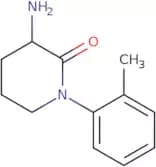
Formula:C8H7NO4Purity:Min. 98.0 Area-%Molecular weight:181.15 g/mol3-Amino-1-(2-methylphenyl)piperidin-2-one
CAS:Versatile small molecule scaffoldFormula:C12H16N2OPurity:Min. 95%Molecular weight:204.27 g/molRef: 3D-QDC03539
Discontinued product5H,6H-[1,2,4]Triazolo[4,3-c]pyrimidin-5-one
CAS:5H,6H-[1,2,4]Triazolo[4,3-c]pyrimidin-5-one is a potent antitumor agent that is structurally similar to the cytotoxic agents mcf-7 and doxorubicin. It has been synthesized by the reaction of an enaminone with diazonium salt. The synthesis of 5H,6H-[1,2,4]Triazolo[4,3-c]pyrimidin-5-one has been carried out using a number of techniques including halide exchange reactions with amines and enaminones. This compound has been shown to be active against breast cancer cells in culture and induces apoptosis by interfering with DNA replication.
Formula:C5H4N4OPurity:Min. 95%Molecular weight:136.11 g/molRef: 3D-QDA99388
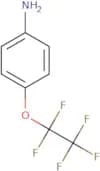
Discontinued product4-(Perfluoroethoxy)aniline
CAS:Versatile small molecule scaffold
Formula:C8H6F5NOPurity:Min. 95%Molecular weight:227.13 g/molRef: 3D-AAA71785
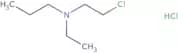
Discontinued productN-(2-Chloroethyl)-N-ethylpropan-1-amine hydrochloride
CAS:Controlled ProductVersatile small molecule scaffold
Formula:C7H17Cl2NPurity:Min. 95%Molecular weight:186.12 g/molRef: 3D-NAA10593
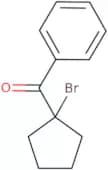
Discontinued product(1-Bromocyclopentyl)(phenyl)methanone
CAS:Versatile small molecule scaffold
Formula:C12H13BrOPurity:Min. 95%Molecular weight:253.13 g/molRef: 3D-GAA74066
Discontinued product2-Bromo-3,3,3-trifluoro-1-propene
CAS:Controlled Product2-Bromo-3,3,3-trifluoro-1-propene is a chemical compound that has been synthesized in an asymmetric reaction. The reactant is bromopropane and the product is 2,2,2-trifluoropropene. The methylene group on the propene molecule is activated by the nucleophilic attack of a fluoride ion from hydrogen fluoride to form a cavity with a highly strained bond. The kinetic study of this reaction revealed that the activation energy for the reaction is 42 kJ/mol. Palladium-catalyzed coupling reactions are catalyzed by palladium and require nonpolar solvents such as toluene or dichloromethane. This type of reaction has been shown to be exothermic with an isolated yield of 1%.
Formula:C3H2BrF3Purity:Min. 95%Color and Shape:Colorless PowderMolecular weight:174.95 g/mol



![2-[Ethyl(propan-2-yl)amino]ethan-1-ol](/_next/image/?url=https%3A%2Fstatic.cymitquimica.com%2Fproducts%2F3D%2Fthumb-webp%2FCAA89361.webp&w=3840&q=75)




![5H,6H-[1,2,4]Triazolo[4,3-c]pyrimidin-5-one](/_next/image/?url=https%3A%2Fstatic.cymitquimica.com%2Fproducts%2F3D%2Fthumb-webp%2FQDA99388.webp&w=3840&q=75)