Building Blocks
This section contains fundamental products for the synthesis of organic and biological compounds. Building blocks are the essential starting materials used to construct complex molecules through various chemical reactions. They play a critical role in drug discovery, material science, and chemical research. At CymitQuimica, we offer a diverse range of high-quality building blocks to support your innovative research and industrial projects, ensuring you have the essential components for successful synthesis.
Subcategories of "Building Blocks"
- Boronic Acids & Boronic Acid Derivatives(5,778 products)
- Chiral Building Blocks(1,242 products)
- Hydrocarbon Building Blocks(6,098 products)
- Organic Building Blocks(61,092 products)
Found 199296 products of "Building Blocks"
Sort by
Purity (%)
0
100
|
0
|
50
|
90
|
95
|
100
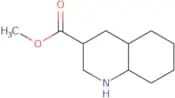
Methyl decahydroquinoline-3-carboxylates
CAS:<p>Versatile small molecule scaffold</p>Formula:C11H19NO2Purity:Min. 95%Molecular weight:197.3 g/molRef: 3D-SDA24469
Discontinued product1-(Cyclohex-1-en-1-yl)propan-2-amine hydrochloride
CAS:<p>Versatile small molecule scaffold</p>Formula:C9H18ClNPurity:Min. 95%Molecular weight:175.7 g/molRef: 3D-SDA14555
Discontinued product1-[3-Methoxy-4-(3-methylbutoxy)phenyl]ethan-1-one
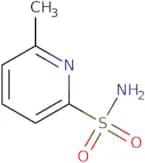
CAS:<p>Versatile small molecule scaffold</p>Formula:C14H20O3Purity:Min. 95%Molecular weight:236.31 g/mol6-Methylpyridine-2-sulfonamide
CAS:<p>Versatile small molecule scaffold</p>Formula:C6H8N2O2SPurity:Min. 95%Molecular weight:172.21 g/molRef: 3D-QCA93876
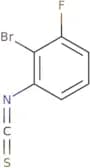
Discontinued product2-Bromo-3-fluorophenylisothiocyanate
CAS:<p>Versatile small molecule scaffold</p>Formula:C7H3BrFNSPurity:Min. 95%Molecular weight:232.08 g/mol1-[(2-Bromoethyl)sulfanyl]-4-fluorobenzene
CAS:<p>Versatile small molecule scaffold</p>Formula:C8H8BrFSPurity:Min. 95%Molecular weight:235.12 g/mol2-[4-(2-Pyrimidinyloxy)phenyl]acetonitrile
CAS:<p>Versatile small molecule scaffold</p>Formula:C12H9N3OPurity:Min. 95%Molecular weight:211.23 g/molRef: 3D-PNA10555
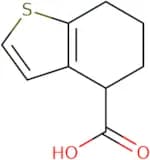
Discontinued product4,5,6,7-Tetrahydro-1-benzothiophene-4-carboxylic acid
CAS:<p>Versatile small molecule scaffold</p>Formula:C9H10O2SPurity:Min. 95%Molecular weight:182.24 g/molRef: 3D-PNA05648
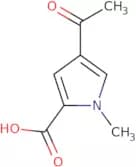
Discontinued product4-Acetyl-1-methyl-1H-pyrrole-2-carboxylic acid
CAS:<p>Versatile small molecule scaffold</p>Formula:C8H9NO3Purity:Min. 95%Molecular weight:167.16 g/molDiethyl [(1-methyl-1H-pyrazol-5-yl)methyl]phosphonate
CAS:<p>Versatile small molecule scaffold</p>Formula:C9H17N2O3PPurity:Min. 95%Molecular weight:232.22 g/molRef: 3D-NGA62686
Discontinued product7-Bromo-5-methyl-1H-indazol-3-amine
CAS:<p>Versatile small molecule scaffold</p>Formula:C8H8BrN3Purity:Min. 95%Molecular weight:226.07 g/molRef: 3D-NFC07321
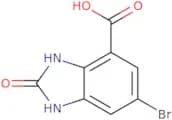
Discontinued product6-Bromo-2-oxo-2,3-dihydro-1H-1,3-benzodiazole-4-carboxylic acid
CAS:<p>Versatile small molecule scaffold</p>Formula:C8H5BrN2O3Purity:Min. 95%Molecular weight:257.04 g/molRef: 3D-NFC05984
Discontinued product4-Chloro-2-cyclopropyl-7-methylthieno[3,2-d]pyrimidine
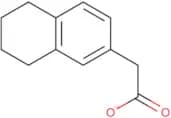
CAS:<p>Versatile small molecule scaffold</p>Formula:C10H9ClN2SPurity:Min. 95%Molecular weight:224.71 g/mol(5,6,7,8-Tetrahydro-naphthalen-2-yl)-acetic acid
CAS:<p>Versatile small molecule scaffold</p>Formula:C12H14O2Purity:Min. 95%Molecular weight:190.24 g/molRef: 3D-NAA05299
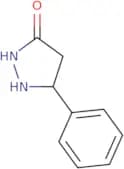
Discontinued product5-Phenylpyrazolidin-3-one
CAS:<p>5-Phenylpyrazolidin-3-one is a pyrazole compound that has a tautomeric form. It has been shown to selectively interact with anions, such as chloride anion, in the presence of hydrogen bonds. This leads to the production of a hydrogen cation and an electrophilic imine. 5-Phenylpyrazolidin-3-one is used in chemosensors for the detection of various chemicals, including formaldehyde and acetaldehyde. 5-Phenylpyrazolidin-3-one also has antitumor activity due to its ability to inhibit DNA synthesis and induce apoptosis in cancer cells.</p>Formula:C9H10N2OPurity:Min. 95%Molecular weight:162.19 g/molRef: 3D-NAA04712
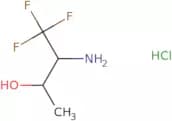
Discontinued product3-Amino-4,4,4-trifluorobutan-2-ol hydrochloride
CAS:<p>Versatile small molecule scaffold</p>Formula:C4H9ClF3NOPurity:Min. 95%Molecular weight:179.57 g/molRef: 3D-MLD98681
Discontinued product(5-bromo-2-methoxypyridin-3-yl)methanamine
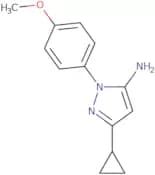
CAS:<p>Versatile small molecule scaffold</p>Formula:C7H9BrN2OPurity:Min. 95%Molecular weight:217.1 g/mol3-Cyclopropyl-1-(4-methoxyphenyl)-1H-pyrazol-5-amine
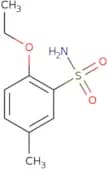
CAS:<p>Versatile small molecule scaffold</p>Formula:C13H15N3OPurity:Min. 95%Molecular weight:229.28 g/mol2-Ethoxy-5-methylbenzene-1-sulfonamide
CAS:<p>Versatile small molecule scaffold</p>Formula:C9H13NO3SPurity:Min. 95%Molecular weight:215.27 g/molRef: 3D-MHA47114
Discontinued product1-Iodo-3-methylbicyclo[1.1.1]pentane
CAS:<p>Versatile small molecule scaffold</p>Formula:C6H9IPurity:Min. 95%Molecular weight:208.04 g/mol4-[2-(Trifluoromethyl)phenoxy]aniline
CAS:<p>Versatile small molecule scaffold</p>Formula:C13H10F3NOPurity:Min. 95%Molecular weight:253.22 g/mol5-Bromo-6-hydroxypyrimidine-4-carboxylic acid
CAS:<p>5-Bromo-6-hydroxypyrimidine-4-carboxylic acid is a homologous organic acid that is used as a pharmaceutical preservative. It is most commonly found in acidic pharmaceutical formulations. 5-Bromo-6-hydroxypyrimidine-4-carboxylic acid inhibits the growth of bacteria and fungi by acting as an enzyme inhibitor. The inhibition of enzymes such as lactamase, which breaks down the lactam ring in penicillin, prevents bacterial and fungal growth by preventing them from breaking down their natural cell walls. 5-Bromo-6-hydroxypyrimidine-4-carboxylic acid has also been shown to have potent anticancer activity in the lab setting, although the clinical significance of this has not yet been determined.</p>Formula:C5H3BrN2O3Purity:Min. 95%Molecular weight:218.99 g/molRef: 3D-KFA27482
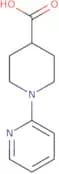
Discontinued product1-(Pyridin-2-yl)piperidine-4-carboxylic acid
CAS:<p>Versatile small molecule scaffold</p>Formula:C11H14N2O2Purity:Min. 95%Molecular weight:206.24 g/molRef: 3D-KCB82770
Discontinued product1-(tert-butyl)-1H-1,2,3-triazole-4-carboxylic acid
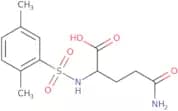
CAS:<p>Versatile small molecule scaffold</p>Formula:C7H11N3O2Purity:Min. 95%Molecular weight:169.18 g/mol4-Carbamoyl-2-(2,5-dimethylbenzenesulfonamido)butanoic acid
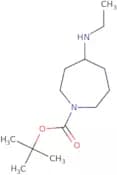
CAS:<p>Versatile small molecule scaffold</p>Formula:C13H18N2O5SPurity:Min. 95%Molecular weight:314.36 g/moltert-Butyl 4-(ethylamino)azepane-1-carboxylate
CAS:<p>Versatile small molecule scaffold</p>Formula:C13H26N2O2Purity:Min. 95%Molecular weight:242.36 g/molRef: 3D-JQB07549
Discontinued productrac-(1R,3S)-1-{[(tert-Butoxy)carbonyl]amino}-3-methylcyclohexane-1-carboxylic acid
CAS:<p>Versatile small molecule scaffold</p>Formula:C13H23NO4Purity:Min. 95%Molecular weight:257.3 g/molRef: 3D-JND07961
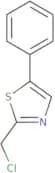
Discontinued product2-(Chloromethyl)-5-phenyl-1,3-thiazole
CAS:<p>Versatile small molecule scaffold</p>Formula:C10H8ClNSPurity:Min. 95%Molecular weight:209.7 g/molRef: 3D-JJB47058
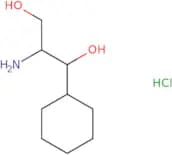
Discontinued product2-Amino-1-cyclohexylpropane-1,3-diol hydrochloride
CAS:<p>Versatile small molecule scaffold</p>Formula:C9H20ClNO2Purity:Min. 95%Molecular weight:209.71 g/molRef: 3D-JJB05329
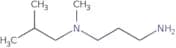
Discontinued product(3-Aminopropyl)(methyl)(2-methylpropyl)amine
CAS:<p>Versatile small molecule scaffold</p>Formula:C8H20N2Purity:Min. 95%Molecular weight:144.26 g/molRef: 3D-JJB05260
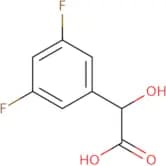
Discontinued productBenzeneacetic acid, 3,5-difluoro-hydroxy-, (S)-
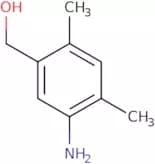
CAS:<p>Benzeneacetic acid, 3,5-difluoro-hydroxy-, (S)- is a ligand that can bind to transition metals such as copper or iron. It has been shown to be a good sensing ligand for the detection of mandelate and enantioselective for the synthesis of chiral molecules. The divalent bonding between the benzeneacetic acid and the metal may be due to coordination or dipyridyl. The stability of this molecule is also dependent on the type of metal it is bonded with.</p>Formula:C8H6F2O3Purity:Min. 95%Molecular weight:188.13 g/mol(5-Amino-2,4-dimethylphenyl)methanol
CAS:<p>Versatile small molecule scaffold</p>Formula:C9H13NOPurity:Min. 95%Molecular weight:151.21 g/molMethyl 4-chloro-2-(pyrrolidin-1-yl)-1,3-thiazole-5-carboxylate
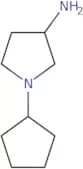
CAS:<p>Versatile small molecule scaffold</p>Formula:C9H11ClN2O2SPurity:Min. 95%Molecular weight:246.71 g/mol1-cyclopentylpyrrolidin-3-amine
CAS:<p>Versatile small molecule scaffold</p>Formula:C9H18N2Purity:Min. 95%Molecular weight:154.25 g/molRef: 3D-IMB71303
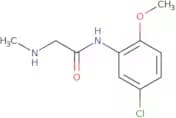
Discontinued productN-(5-Chloro-2-methoxyphenyl)-2-(methylamino)acetamide
CAS:<p>Versatile small molecule scaffold</p>Formula:C10H13ClN2O2Purity:Min. 95%Molecular weight:228.67 g/molRef: 3D-IEB03088
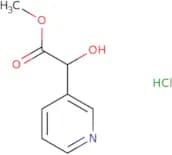
Discontinued productMethyl 2-hydroxy-2-(pyridin-3-yl)acetate hydrochloride
CAS:<p>Versatile small molecule scaffold</p>Formula:C8H10ClNO3Purity:Min. 95%Molecular weight:203.62 g/molRef: 3D-IAC65252
Discontinued productMethyl 3-amino-2-[(3-fluorophenyl)methyl]propanoate hydrochloride
CAS:Versatile small molecule scaffoldFormula:C11H15ClFNO2Purity:Min. 95%Molecular weight:247.69 g/molRef: 3D-IAC65242
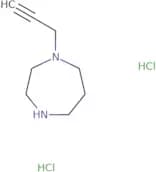
Discontinued product1-(Prop-2-yn-1-yl)-1,4-diazepane dihydrochloride
CAS:<p>Versatile small molecule scaffold</p>Formula:C8H16Cl2N2Purity:Min. 95%Molecular weight:211.13 g/molRef: 3D-IAC65107
Discontinued productrac-(3R,4S)-4-({[(tert-Butoxy)carbonyl]amino}methyl)-1-{[(9H-fluoren-9-yl)methoxy]carbonyl}pyrrolidine-3-carboxylic acid
CAS:<p>Versatile small molecule scaffold</p>Formula:C26H30N2O6Purity:Min. 95%Molecular weight:466.5 g/molRef: 3D-HSD10562
Discontinued product3-[(2R)-1-[(tert-Butoxy)carbonyl]pyrrolidin-2-yl]propanoic acid
CAS:<p>Versatile small molecule scaffold</p>Formula:C12H21NO4Purity:Min. 95%Molecular weight:243.3 g/molRef: 3D-HQC38854
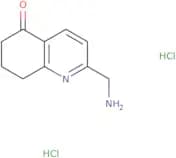
Discontinued product2-(Aminomethyl)-5,6,7,8-tetrahydroquinolin-5-one dihydrochloride
CAS:<p>Versatile small molecule scaffold</p>Formula:C10H14Cl2N2OPurity:Min. 95%Molecular weight:249.13 g/molRef: 3D-HHC68135
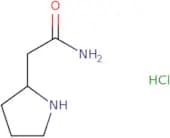
Discontinued product2-(Pyrrolidin-2-yl)acetamide hydrochloride
CAS:<p>Versatile small molecule scaffold</p>Formula:C6H13ClN2OPurity:Min. 95%Molecular weight:164.63 g/molRef: 3D-HHC68100
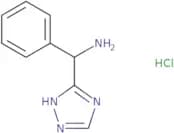
Discontinued productPhenyl(4H-1,2,4-triazol-3-yl)methanamine hydrochloride
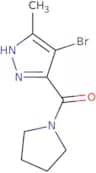
CAS:<p>Versatile small molecule scaffold</p>Formula:C9H11ClN4Purity:Min. 95%Molecular weight:210.66 g/mol(4-Bromo-5-methyl-1H-pyrazol-3-yl)(pyrrolidin-1-yl)methanone
CAS:Controlled Product<p>Versatile small molecule scaffold</p>Formula:C9H12BrN3OPurity:Min. 95%Molecular weight:258.12 g/molRef: 3D-HAC84481
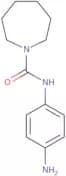
Discontinued productN-(4-Aminophenyl)azepane-1-carboxamide
CAS:<p>N-(4-Aminophenyl)azepane-1-carboxamide is an analytical reference material, which is a secondary metabolite of plants. It is isolated from the root of the plant Scoparia dulcis, and it has been shown to have a variety of bioactive effects. N-(4-Aminophenyl)azepane-1-carboxamide has been found to inhibit the growth of various cancer cells in vitro and in vivo. It also inhibits protein synthesis and has antioxidant properties.</p>Formula:C13H19N3OPurity:Min. 95%Molecular weight:233.31 g/mol3-[(5-Cyclopropyl-1,3,4-oxadiazol-2-yl)carbamoyl]propanoic acid
CAS:<p>Versatile small molecule scaffold</p>Formula:C9H11N3O4Purity:Min. 95%Molecular weight:225.2 g/molRef: 3D-GWB42449
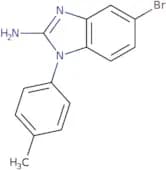
Discontinued product5-Bromo-1-(4-methylphenyl)-1H-1,3-benzodiazol-2-amine
CAS:<p>Versatile small molecule scaffold</p>Formula:C14H12BrN3Purity:Min. 95%Molecular weight:302.17 g/molRef: 3D-GWB27588
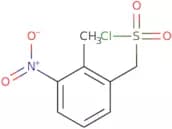
Discontinued product(2-Methyl-3-nitrophenyl)methanesulfonyl chloride
CAS:<p>Versatile small molecule scaffold</p>Formula:C8H8ClNO4SPurity:Min. 95%Molecular weight:249.67 g/molRef: 3D-GWB22328
Discontinued product2-([(Furan-2-ylmethyl)(methyl)carbamoyl]amino)acetic acid
CAS:<p>Versatile small molecule scaffold</p>Formula:C9H12N2O4Purity:Min. 95%Molecular weight:212.2 g/molRef: 3D-GWB17908
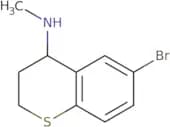
Discontinued product6-Bromo-N-methyl-3,4-dihydro-2H-1-benzothiopyran-4-amine
CAS:<p>Versatile small molecule scaffold</p>Formula:C10H12BrNSPurity:Min. 95%Molecular weight:258.18 g/molRef: 3D-GWB17719
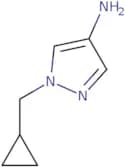
Discontinued product1-(Cyclopropylmethyl)-1H-pyrazol-4-amine
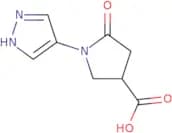
CAS:<p>Versatile small molecule scaffold</p>Formula:C7H11N3Purity:Min. 95%Molecular weight:137.18 g/mol5-Oxo-1-(1H-pyrazol-4-yl)pyrrolidine-3-carboxylic acid
CAS:<p>Versatile small molecule scaffold</p>Formula:C8H9N3O3Purity:Min. 95%Molecular weight:195.18 g/molRef: 3D-GWB16768
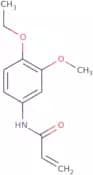
Discontinued productN-(4-Ethoxy-3-methoxyphenyl)prop-2-enamide
CAS:<p>Versatile small molecule scaffold</p>Formula:C12H15NO3Purity:Min. 95%Molecular weight:221.25 g/molRef: 3D-GWB15912
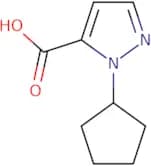
Discontinued product1-Cyclopentyl-1H-pyrazole-5-carboxylic acid
CAS:<p>Versatile small molecule scaffold</p>Formula:C9H12N2O2Purity:Min. 95%Molecular weight:180.2 g/mol2-[4-Chloro-3-(trifluoromethyl)-1H-pyrazol-1-yl]butanoic acid
CAS:<p>Versatile small molecule scaffold</p>Formula:C8H8ClF3N2O2Purity:Min. 95%Molecular weight:256.61 g/molRef: 3D-GQB33314
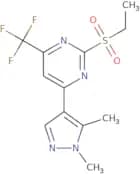
Discontinued product4-(1,5-Dimethyl-1H-pyrazol-4-yl)-2-(ethylsulfonyl)-6-(trifluoromethyl)pyrimidine
CAS:<p>Versatile small molecule scaffold</p>Formula:C12H13F3N4O2SPurity:Min. 95%Molecular weight:334.32 g/molRef: 3D-GQB32863
Discontinued product2-[(4-Chloro-3,5-dimethyl-1H-pyrazol-1-yl)methanesulfonyl]acetic acid
CAS:<p>Versatile small molecule scaffold</p>Formula:C8H11ClN2O4SPurity:Min. 95%Molecular weight:266.7 g/molRef: 3D-GQB31932
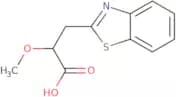
Discontinued product3-(1,3-Benzothiazol-2-yl)-2-methoxypropanoic acid
CAS:<p>3-(1,3-Benzothiazol-2-yl)-2-methoxypropanoic acid is a versatile compound that exhibits various characteristics and applications. It forms hydrogen bonds with other molecules, making it useful as an intermediate in the synthesis of compounds like blonanserin. Additionally, it can act as a chlorinating agent in the presence of suitable catalysts.</p>Formula:C11H11NO3SPurity:Min. 95%Molecular weight:237.28 g/molRef: 3D-GQA71120
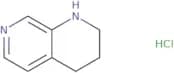
Discontinued product1,2,3,4-Tetrahydro-1,7-naphthyridine hydrochloride
CAS:<p>Versatile small molecule scaffold</p>Formula:C8H11ClN2Purity:Min. 95%Molecular weight:170.6 g/molRef: 3D-GDD37006
Discontinued product1-{3-[(4-Methylphenyl)methoxy]phenyl}piperazine hydrochloride
CAS:<p>Versatile small molecule scaffold</p>Formula:C18H23ClN2OPurity:Min. 95%Molecular weight:318.8 g/molRef: 3D-GBC18041
Discontinued product1-{6-Oxa-3-azabicyclo[3.1.0]hexan-3-yl}ethan-1-one
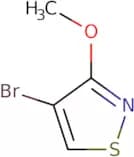
CAS:<p>Versatile small molecule scaffold</p>Formula:C6H9NO2Purity:Min. 95%Molecular weight:127.14 g/mol4-Bromo-3-methoxy-1,2-thiazole
CAS:<p>4-Bromo-3-methoxy-1,2-thiazole is a carboxylic acid. It is a cyanating agent and can be used to form carboxamides. The dealkylation of 4-bromo-3-methoxy-1,2-thiazole gives methyl 4-(4′-bromophenyl)butanoate. Halogenation of the carbonyl group leads to the formation of 4-(4′-chlorophenyl)butanoic acid. 4-(4′-Bromophenyl)butanoic acid can be converted into an isothiazole by reacting with potassium hydroxide in methanol.</p>Formula:C4H4BrNOSPurity:Min. 95%Molecular weight:194.05 g/molRef: 3D-GBA81540
Discontinued productBicyclo[4.1.0]heptan-7-ylmethanol
CAS:<p>Bicyclo[4.1.0]heptan-7-ylmethanol is a hydride inhibitor of lactate dehydrogenase, which is an enzyme that catalyzes the conversion of pyruvate to lactate in the liver. Bicyclo[4.1.0]heptan-7-ylmethanol has inhibitory properties against aldehyde dehydrogenase and alcohol dehydrogenase, which are enzymes involved in the metabolism of aldehydes and alcohols respectively. This substance also inhibits mitochondrial monoamine oxidase (MAO), which is an enzyme that breaks down neurotransmitters such as dopamine, norepinephrine, and serotonin. Bicyclo[4.1.0]heptan-7-ylmethanol can be used to inhibit the function of MAO in order to increase levels of these neurotransmitters in the brain, which may be helpful for conditions like depression or Parkinson</p>Formula:C8H14OPurity:Min. 95%Molecular weight:126.2 g/molRef: 3D-GAA22639
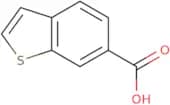
Discontinued product1-Benzothiophene-6-carboxylic acid
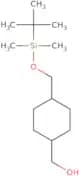
CAS:<p>1-Benzothiophene-6-carboxylic acid is a nicotinic acetylcholine receptor agonist that has been shown to have high oral bioavailability and efficacy in vivo. It binds to the α7 nicotinic acetylcholine receptor and activates the receptor, leading to increased neurotransmitter release. 1-Benzothiophene-6-carboxylic acid has been shown to be effective in vivo in models of neuropathic pain and Parkinson's disease. This drug also has a low affinity for other receptors, such as muscarinic acetylcholine receptors, which reduces the chance of adverse effects.</p>Formula:C9H6O2SPurity:Min. 95%Molecular weight:178.21 g/molrac-((1R,4R)-4-(((tert-Butyldimethylsilyl)oxy)methyl)cyclohexyl)methanol
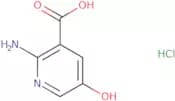
CAS:<p>Versatile small molecule scaffold</p>Formula:C14H30O2SiPurity:Min. 95%Molecular weight:258.47 g/mol2-Amino-5-hydroxypyridine-3-carboxylic acid hydrochloride
CAS:<p>Versatile small molecule scaffold</p>Formula:C6H7ClN2O3Purity:Min. 95%Molecular weight:190.58 g/molRef: 3D-FDD55478
Discontinued product5H,6H,7H-Pyrrolo[3,4-b]pyridine-2-carboxylic acid hydrochloride
CAS:<p>Versatile small molecule scaffold</p>Formula:C8H9ClN2O2Purity:Min. 95%Molecular weight:200.62 g/molRef: 3D-FDD55460
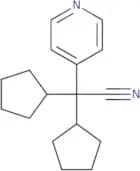
Discontinued product2,2-Dicyclopentyl-2-(pyridin-4-yl)acetonitrile
CAS:<p>Versatile small molecule scaffold</p>Formula:C17H22N2Purity:Min. 95%Molecular weight:254.37 g/molRef: 3D-FDD55406
Discontinued product2-Methyl-1-[4-(3-methylphenyl)piperazin-1-yl]propan-2-amine
CAS:<p>Versatile small molecule scaffold</p>Formula:C15H25N3Purity:Min. 95%Molecular weight:247.38 g/molRef: 3D-FCC78567
Discontinued product2-Chloro-N-[(5-chlorothiophen-2-yl)methyl]acetamide
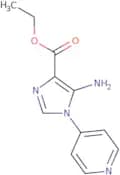
CAS:<p>Versatile small molecule scaffold</p>Formula:C7H7Cl2NOSPurity:Min. 95%Molecular weight:224.11 g/molEthyl 5-amino-1-(pyridin-4-yl)-1H-imidazole-4-carboxylate
CAS:<p>Versatile small molecule scaffold</p>Formula:C11H12N4O2Purity:Min. 95%Molecular weight:232.24 g/molRef: 3D-FBC58262
Discontinued product4-[(3,4-Dihydro-2H-pyrrol-5-yl)amino]benzoic acid
CAS:<p>Versatile small molecule scaffold</p>Formula:C11H12N2O2Purity:Min. 95%Molecular weight:204.22 g/molRef: 3D-FBC57262
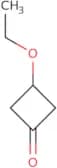
Discontinued product3-Ethoxycyclobutan-1-one
CAS:<p>Versatile small molecule scaffold</p>Formula:C6H10O2Purity:Min. 95%Molecular weight:114.14 g/molRef: 3D-FBA83026
Discontinued product2-(2,6-Dimethoxyphenoxymethyl)oxirane
CAS:<p>Versatile small molecule scaffold</p>Formula:C11H14O4Purity:Min. 95%Molecular weight:210.23 g/molRef: 3D-FAA43529
Discontinued product2-Hydroxy-4-(phenylmethoxy)benzoic Acid Methyl Ester
CAS:<p>2-Hydroxy-4-(phenylmethoxy)benzoic Acid Methyl Ester is a benzene derivative that inhibits the binding of xanthones to the benzene ring in a variety of ways. This compound is formed by reacting phenol with methyl benzoate in the presence of acid and heat. The low energy ligand inhibits the binding of xanthones to benzene by forming hydrogen bonds, covalent bonds, or van der Waals forces with the anion. 2-Hydroxy-4-(phenylmethoxy)benzoic acid methyl ester has shown anti-inflammatory properties, which may be due to its ability to inhibit leukocyte adhesion at inflammatory sites.</p>Formula:C15H14O4Purity:Min. 95%Molecular weight:258.27 g/molRef: 3D-FAA42729
Discontinued product3-{[3-(Trifluoromethyl)-1H-pyrazol-1-yl]methyl}benzoic acid
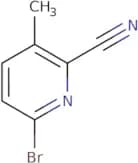
CAS:<p>Versatile small molecule scaffold</p>Formula:C12H9F3N2O2Purity:Min. 95%Molecular weight:270.21 g/mol6-bromo-3-methylpicolinonitrile
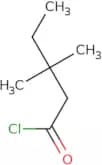
CAS:<p>Versatile small molecule scaffold</p>Formula:C7H5BrN2Purity:Min. 95%Molecular weight:197.04 g/mol3,3-Dimethylpentanoyl chloride
CAS:<p>Versatile small molecule scaffold</p>Formula:C7H13ClOPurity:Min. 95%Molecular weight:148.63 g/molRef: 3D-EDA09784
Discontinued product1-Bromo-4-[(difluoromethyl)sulfanyl]benzene
CAS:<p>Versatile small molecule scaffold</p>Formula:C7H5BrF2SPurity:Min. 95%Molecular weight:239.08 g/mol2-{[(Furan-2-yl)methyl]amino}-5-sulfamoylbenzoic acid
CAS:<p>2-{[(Furan-2-yl)methyl]amino}-5-sulfamoylbenzoic acid is a water soluble drug that is used as a dietary supplement. It has been shown to be effective in inhibiting the growth of cancer cells and preventing the carcinogenic properties of some chemical compounds. 2-{[(Furan-2-yl)methyl]amino}-5-sulfamoylbenzoic acid has been shown to inhibit the growth of cancer cells, with no evidence of toxicity in rats. The compound was found to be safe for use in humans, but its carcinogenic activity could not be ruled out. Studies have shown that 2-[(furan-2-yl)methyl]amino]-5-(sulfamoyl)benzoic acid can inhibit the growth of cancer cells and prevent the carcinogenic properties of chemical compounds. 2-[(furan-2-yl)methyl]am</p>Formula:C12H12N2O5SPurity:Min. 95%Molecular weight:296.3 g/molRef: 3D-EAA81885
Discontinued productN-Tosyl-L-aspartic acid
CAS:<p>N-Tosyl-L-aspartic acid is a chemical compound that is used as an intermediate in the manufacture of other compounds. It can be obtained by reacting tosyl chloride with L-aspartic acid. The azide group reacts readily with amines, alcohols, and carboxylic acids. This reaction forms the corresponding ester or amide of the carboxylic acid. N-Tosyl-L-aspartic acid has also been used in the synthesis of penicillins, cephalosporins, and thiocarbamates. N-Tosyl-L-aspartic acid is synthesised by refluxing a mixture of thionyl chloride and aspartic acid in dextrose solution containing amines such as triethylamine or pyridine.</p>Formula:C11H13NO6SPurity:Min. 95%Molecular weight:287.29 g/molRef: 3D-EAA81682
Discontinued producttert-Butyl N-[2-(chlorosulfonyl)thiophen-3-yl]carbamate
CAS:<p>Versatile small molecule scaffold</p>Formula:C9H12ClNO4S2Purity:Min. 95%Molecular weight:297.8 g/molRef: 3D-DXC59366
Discontinued product2-Acetylbenzoic acid
CAS:<p>2-Acetylbenzoic acid is a functional molecule that contains an acetyl group. It can form hydrogen bonds with other molecules and has been shown to induce apoptosis in cells. The reaction products of 2-acetylbenzoic acid are malonic acid, acetylsalicylic acid, and 2-benzoylbenzoic acid. These three compounds are made by the addition of hydrogen or hydroxide to the molecule 2-acetylbenzoic acid. The molecule has two functional groups: a carbonyl group and an acetyl group. The chemical structure of this molecule can be seen in the figure below.<br>2-Acetylbenzoic Acid</p>Formula:C9H8O3Purity:Min. 95%Color and Shape:PowderMolecular weight:164.16 g/molRef: 3D-FA05086
Discontinued product3-Methylbenzo[b]thiophene-2-carboxylic acid
CAS:<p>3-Methylbenzo[b]thiophene-2-carboxylic acid (MBTCA) is a heterocyclic compound that is an intermediate in the synthesis of 3-methylthiophene-2-carboxylic acid, a precursor to other drugs. MBTCA is an aerobic, nonpolar compound that has shown antimicrobial activity against some bacteria and fungi. It also has been shown to have practicality as a biomolecular probe for methyl groups in organic solvents. MBTCA can be synthesized by nitration of benzene in the presence of sulfur and sulfoxides. This reaction produces nitrobenzene, which can then be oxidized by potassium permanganate or hydrogen peroxide to produce MBTCA. The most common isomer of MBTCA is 2-(3,5-dimethoxybenzylidene)tetrahydrofuran, with three methyl groups on the</p>Formula:C10H8O2SPurity:Min. 95%Molecular weight:192.23 g/mol3-[5-(Aminomethyl)-1-oxo-2,3-dihydro-1H-isoindol-2-yl]piperidine-2,6-dione hydrochloride
CAS:<p>Versatile small molecule scaffold</p>Formula:C14H16ClN3O3Purity:Min. 95%Molecular weight:309.75 g/mol2-Bromo-4-(4-fluorophenyl)-1,3-thiazole
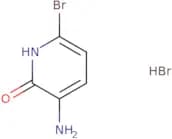
CAS:<p>Versatile small molecule scaffold</p>Formula:C9H5NFSBrPurity:Min. 95%Molecular weight:258.11 g/mol3-amino-6-bromopyridin-2-ol hydrobromide
CAS:<p>Versatile small molecule scaffold</p>Formula:C5H6Br2N2OPurity:Min. 95%Molecular weight:269.9 g/mol(2S,3R)-2-((((9H-Fluoren-9-yl)methoxy)carbonyl)amino)-3-methoxybutanoic acid
CAS:<p>Versatile small molecule scaffold</p>Formula:C20H21NO5Purity:Min. 95%Molecular weight:355.4 g/mol2-Bromo-3,3,3-trifluoro-1-propene
CAS:Controlled Product<p>2-Bromo-3,3,3-trifluoro-1-propene is a chemical compound that has been synthesized in an asymmetric reaction. The reactant is bromopropane and the product is 2,2,2-trifluoropropene. The methylene group on the propene molecule is activated by the nucleophilic attack of a fluoride ion from hydrogen fluoride to form a cavity with a highly strained bond. The kinetic study of this reaction revealed that the activation energy for the reaction is 42 kJ/mol. Palladium-catalyzed coupling reactions are catalyzed by palladium and require nonpolar solvents such as toluene or dichloromethane. This type of reaction has been shown to be exothermic with an isolated yield of 1%.</p>Formula:C3H2BrF3Purity:Min. 95%Color and Shape:Colorless PowderMolecular weight:174.95 g/mol6,6-Difluorospiro[3.3]heptan-2-amine Hydrochloride
CAS:<p>Versatile small molecule scaffold</p>Formula:C7H11F2N·HClPurity:Min. 95%Molecular weight:147.17 g/mol3-(Methoxycarbonyl)pyridine-4-carboxylic acid
CAS:<p>Versatile small molecule scaffold</p>Formula:C8H7NO4Purity:Min. 95%Molecular weight:181.15 g/mol3-Boc-3-azabicyclo[3.2.1]octan-8-amine
CAS:<p>Versatile small molecule scaffold</p>Formula:C12H22N2O2Purity:Min. 95%Molecular weight:226.32 g/mol1-[3-(Dimethylamino)propyl]-1-(4-fluorophenyl)-1,3-dihydro-3-oxo-5-isobenzofurancarbonitrile
CAS:<p>Please enquire for more information about 1-[3-(Dimethylamino)propyl]-1-(4-fluorophenyl)-1,3-dihydro-3-oxo-5-isobenzofurancarbonitrile including the price, delivery time and more detailed product information at the technical inquiry form on this page</p>Formula:C20H19FN2O2Purity:Min. 95%Molecular weight:338.38 g/molRef: 3D-FD184085
Discontinued producttert-Butyl 5-bromo-3,4-dihydro-2,7-naphthyridine-2(1H)-carboxylate
CAS:<p>Versatile small molecule scaffold</p>Formula:C13H17BrN2O2Purity:Min. 95%Molecular weight:313.19 g/molH-Ser-Ala-Glu-Glu-Tyr-Glu-Tyr-Pro-Ser OH trifluoroacetate
CAS:<p>Please enquire for more information about H-Ser-Ala-Glu-Glu-Tyr-Glu-Tyr-Pro-Ser OH trifluoroacetate including the price, delivery time and more detailed product information at the technical inquiry form on this page</p>Formula:C47H63N9O20•(C2HF3O2)xPurity:Min. 95%Ref: 3D-FS183525
Discontinued productGivinostat hydrochloride
CAS:<p>Givinostat hydrochloride is a research chemical that has shown potential in various fields. It is a molybdenum-based compound that has been studied for its effects on dopamine release and hydrogen evolution. Givinostat hydrochloride has also been investigated as an osteoclast inhibitor, which may be beneficial in the treatment of bone-related disorders such as osteoporosis. Additionally, it has shown promise as a retinoid and calpain inhibitor, suggesting its potential use in dermatological conditions and neurodegenerative diseases. The compound contains fluorine atoms, making it suitable for imaging studies using fluorine MRI techniques. Givinostat hydrochloride has been tested on MDA-MB-231 cells and has shown inhibitory effects on their growth, indicating its potential as an anticancer agent.</p>Formula:C24H27N3O4·HClPurity:Min. 95%Molecular weight:457.95 g/mol

![1-[3-Methoxy-4-(3-methylbutoxy)phenyl]ethan-1-one](/_next/image/?url=https%3A%2Fstatic.cymitquimica.com%2Fproducts%2F3D%2Fthumb-webp%2FRQB88051.webp&w=3840&q=75)
![1-[(2-Bromoethyl)sulfanyl]-4-fluorobenzene](/_next/image/?url=https%3A%2Fstatic.cymitquimica.com%2Fproducts%2F3D%2Fthumb-webp%2FPNA36385.webp&w=3840&q=75)
![2-[4-(2-Pyrimidinyloxy)phenyl]acetonitrile](/_next/image/?url=https%3A%2Fstatic.cymitquimica.com%2Fproducts%2F3D%2Fthumb-webp%2FPNA10555.webp&w=3840&q=75)
![Diethyl [(1-methyl-1H-pyrazol-5-yl)methyl]phosphonate](/_next/image/?url=https%3A%2Fstatic.cymitquimica.com%2Fproducts%2F3D%2Fthumb-webp%2FNGA62686.webp&w=3840&q=75)

![4-Chloro-2-cyclopropyl-7-methylthieno[3,2-d]pyrimidine](/_next/image/?url=https%3A%2Fstatic.cymitquimica.com%2Fproducts%2F3D%2Fthumb-webp%2FNFC05650.webp&w=3840&q=75)

![1-Iodo-3-methylbicyclo[1.1.1]pentane](/_next/image/?url=https%3A%2Fstatic.cymitquimica.com%2Fproducts%2F3D%2Fthumb-webp%2FLFA39910.webp&w=3840&q=75)
![4-[2-(Trifluoromethyl)phenoxy]aniline](/_next/image/?url=https%3A%2Fstatic.cymitquimica.com%2Fproducts%2F3D%2Fthumb-webp%2FLCA94684.webp&w=3840&q=75)


![rac-(1R,3S)-1-{[(tert-Butoxy)carbonyl]amino}-3-methylcyclohexane-1-carboxylic acid](/_next/image/?url=https%3A%2Fstatic.cymitquimica.com%2Fproducts%2F3D%2Fthumb-webp%2FJND07961.webp&w=3840&q=75)

![Methyl 3-amino-2-[(3-fluorophenyl)methyl]propanoate hydrochloride](/_next/image/?url=https%3A%2Fstatic.cymitquimica.com%2Fproducts%2F3D%2Fthumb-webp%2FIAC65242.webp&w=3840&q=75)
![rac-(3R,4S)-4-({[(tert-Butoxy)carbonyl]amino}methyl)-1-{[(9H-fluoren-9-yl)methoxy]carbonyl}pyrroli…](/_next/image/?url=https%3A%2Fstatic.cymitquimica.com%2Fproducts%2F3D%2Fthumb-webp%2FHSD10562.webp&w=3840&q=75)
![3-[(2R)-1-[(tert-Butoxy)carbonyl]pyrrolidin-2-yl]propanoic acid](/_next/image/?url=https%3A%2Fstatic.cymitquimica.com%2Fproducts%2F3D%2Fthumb-webp%2FHQC38854.webp&w=3840&q=75)
![3-[(5-Cyclopropyl-1,3,4-oxadiazol-2-yl)carbamoyl]propanoic acid](/_next/image/?url=https%3A%2Fstatic.cymitquimica.com%2Fproducts%2F3D%2Fthumb-webp%2FGWB42449.webp&w=3840&q=75)
![2-([(Furan-2-ylmethyl)(methyl)carbamoyl]amino)acetic acid](/_next/image/?url=https%3A%2Fstatic.cymitquimica.com%2Fproducts%2F3D%2Fthumb-webp%2FGWB17908.webp&w=3840&q=75)
![2-[4-Chloro-3-(trifluoromethyl)-1H-pyrazol-1-yl]butanoic acid](/_next/image/?url=https%3A%2Fstatic.cymitquimica.com%2Fproducts%2F3D%2Fthumb-webp%2FGQB33314.webp&w=3840&q=75)
![2-[(4-Chloro-3,5-dimethyl-1H-pyrazol-1-yl)methanesulfonyl]acetic acid](/_next/image/?url=https%3A%2Fstatic.cymitquimica.com%2Fproducts%2F3D%2Fthumb-webp%2FGQB31932.webp&w=3840&q=75)
![1-{3-[(4-Methylphenyl)methoxy]phenyl}piperazine hydrochloride](/_next/image/?url=https%3A%2Fstatic.cymitquimica.com%2Fproducts%2F3D%2Fthumb-webp%2FGBC18041.webp&w=3840&q=75)
![1-{6-Oxa-3-azabicyclo[3.1.0]hexan-3-yl}ethan-1-one](/_next/image/?url=https%3A%2Fstatic.cymitquimica.com%2Fproducts%2F3D%2Fthumb-webp%2FGBA86521.webp&w=3840&q=75)
![Bicyclo[4.1.0]heptan-7-ylmethanol](/_next/image/?url=https%3A%2Fstatic.cymitquimica.com%2Fproducts%2F3D%2Fthumb-webp%2FGAA22639.webp&w=3840&q=75)
![5H,6H,7H-Pyrrolo[3,4-b]pyridine-2-carboxylic acid hydrochloride](/_next/image/?url=https%3A%2Fstatic.cymitquimica.com%2Fproducts%2F3D%2Fthumb-webp%2FFDD55460.webp&w=3840&q=75)
![2-Methyl-1-[4-(3-methylphenyl)piperazin-1-yl]propan-2-amine](/_next/image/?url=https%3A%2Fstatic.cymitquimica.com%2Fproducts%2F3D%2Fthumb-webp%2FFCC78567.webp&w=3840&q=75)
![2-Chloro-N-[(5-chlorothiophen-2-yl)methyl]acetamide](/_next/image/?url=https%3A%2Fstatic.cymitquimica.com%2Fproducts%2F3D%2Fthumb-webp%2FFCC71219.webp&w=3840&q=75)
![4-[(3,4-Dihydro-2H-pyrrol-5-yl)amino]benzoic acid](/_next/image/?url=https%3A%2Fstatic.cymitquimica.com%2Fproducts%2F3D%2Fthumb-webp%2FFBC57262.webp&w=3840&q=75)

![3-{[3-(Trifluoromethyl)-1H-pyrazol-1-yl]methyl}benzoic acid](/_next/image/?url=https%3A%2Fstatic.cymitquimica.com%2Fproducts%2F3D%2Fthumb-webp%2FEQB64362.webp&w=3840&q=75)
![1-Bromo-4-[(difluoromethyl)sulfanyl]benzene](/_next/image/?url=https%3A%2Fstatic.cymitquimica.com%2Fproducts%2F3D%2Fthumb-webp%2FEAA83714.webp&w=3840&q=75)
![2-{[(Furan-2-yl)methyl]amino}-5-sulfamoylbenzoic acid](/_next/image/?url=https%3A%2Fstatic.cymitquimica.com%2Fproducts%2F3D%2Fthumb-webp%2FEAA81885.webp&w=3840&q=75)
![tert-Butyl N-[2-(chlorosulfonyl)thiophen-3-yl]carbamate](/_next/image/?url=https%3A%2Fstatic.cymitquimica.com%2Fproducts%2F3D%2Fthumb-webp%2FDXC59366.webp&w=3840&q=75)

![3-Methylbenzo[b]thiophene-2-carboxylic acid](/_next/image/?url=https%3A%2Fstatic.cymitquimica.com%2Fproducts%2F3D%2Fthumb-webp%2FDAA13378.webp&w=3840&q=75)
![3-[5-(Aminomethyl)-1-oxo-2,3-dihydro-1H-isoindol-2-yl]piperidine-2,6-dione hydrochloride](/_next/image/?url=https%3A%2Fstatic.cymitquimica.com%2Fproducts%2F3D%2Fthumb-webp%2FIWB26469.webp&w=3840&q=75)



![6,6-Difluorospiro[3.3]heptan-2-amine Hydrochloride](/_next/image/?url=https%3A%2Fstatic.cymitquimica.com%2Fproducts%2F3D%2Fthumb-webp%2FYGC03271.webp&w=3840&q=75)

![3-Boc-3-azabicyclo[3.2.1]octan-8-amine](/_next/image/?url=https%3A%2Fstatic.cymitquimica.com%2Fproducts%2F3D%2Fthumb-webp%2FFDC76351.webp&w=3840&q=75)
![1-[3-(Dimethylamino)propyl]-1-(4-fluorophenyl)-1,3-dihydro-3-oxo-5-isobenzofurancarbonitrile](/_next/image/?url=https%3A%2Fstatic.cymitquimica.com%2Fproducts%2F3D%2Fthumb-webp%2FFD184085.webp&w=3840&q=75)