Building Blocks
This section contains fundamental products for the synthesis of organic and biological compounds. Building blocks are the essential starting materials used to construct complex molecules through various chemical reactions. They play a critical role in drug discovery, material science, and chemical research. At CymitQuimica, we offer a diverse range of high-quality building blocks to support your innovative research and industrial projects, ensuring you have the essential components for successful synthesis.
Subcategories of "Building Blocks"
- Boronic Acids & Boronic Acid Derivatives(5,778 products)
- Chiral Building Blocks(1,243 products)
- Hydrocarbon Building Blocks(6,097 products)
- Organic Building Blocks(61,052 products)
Found 201390 products of "Building Blocks"
Sort by
Purity (%)
0
100
|
0
|
50
|
90
|
95
|
100
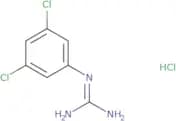
N-(3,5-Dichlorophenyl)guanidine hydrochloride
CAS:<p>Versatile small molecule scaffold</p>Formula:C7H8Cl3N3Purity:Min. 95%Molecular weight:240.5 g/molRef: 3D-BDA63515
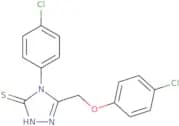
Discontinued product5-(4-Chlorophenoxymethyl)-4-(4-chlorophenyl)-4H-1,2,4-triazole-3-thiol
CAS:<p>Versatile small molecule scaffold</p>Formula:C15H11Cl2N3OSPurity:Min. 95%Molecular weight:352.2 g/molRef: 3D-BDA11124
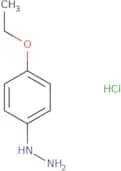
Discontinued product(4-Ethoxyphenyl)hydrazine hydrochloride
CAS:<p>Versatile small molecule scaffold</p>Formula:C8H13ClN2OPurity:Min. 95%Molecular weight:188.66 g/molN-[4-(Hydroxymethyl)-2-thiazolyl]acetamide
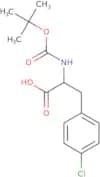
CAS:<p>Versatile small molecule scaffold</p>Formula:C6H8N2O2SPurity:Min. 95%Molecular weight:172.2 g/mol2-((tert-Butoxycarbonyl)amino)-3-(4-chlorophenyl)propanoic acid
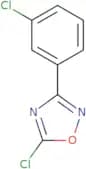
CAS:<p>Versatile small molecule scaffold</p>Formula:C14H18ClNO4Purity:Min. 95%Molecular weight:299.75 g/mol5-Chloro-3-(3-chlorophenyl)-1,2,4-oxadiazole
CAS:<p>Versatile small molecule scaffold</p>Formula:C8H4Cl2N2OPurity:Min. 95%Molecular weight:215.03 g/mol(2R)-3-[(Carboxymethyl)sulfanyl]-2-acetamidopropanoic acid
CAS:<p>(2R)-3-[(Carboxymethyl)sulfanyl]-2-acetamidopropanoic acid is a metabolite of the drug sulfapyridine. It is formed by conjugation with glutathione in the liver to form 3-glutathione-2-sulfapyridine, and then excreted into bile. (2R)-3-[(Carboxymethyl)sulfanyl]-2-acetamidopropanoic acid has been found to be genotoxic in mice, which may be due to its ability to form reactive metabolites that bind to DNA. This compound also possesses cytotoxic properties, which may be due to its ability to inhibit protein synthesis.</p>Formula:C7H11NO5SPurity:Min. 95%Molecular weight:221.23 g/molRef: 3D-BBA17754
Discontinued product2-{2-Oxa-6-azaspiro[3.3]heptan-6-yl}ethan-1-ol
CAS:<p>Versatile small molecule scaffold</p>Formula:C7H13NO2Purity:Min. 95%Molecular weight:143.18 g/mol6-Methyl-2,3-dihydro-1-benzothiophene-2-carboxylic acid
CAS:<p>Versatile small molecule scaffold</p>Formula:C10H10O2SPurity:Min. 95%Molecular weight:194.25 g/molRef: 3D-BBA01871
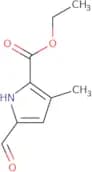
Discontinued productEthyl 5-formyl-3-methyl-1H-pyrrole-2-carboxylate
CAS:<p>Versatile small molecule scaffold</p>Formula:C9H11NO3Purity:Min. 95%Molecular weight:181.19 g/molRef: 3D-BBA01830
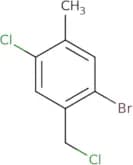
Discontinued product1-Bromo-4-chloro-2-(chloromethyl)-5-methylbenzene
CAS:<p>Versatile small molecule scaffold</p>Formula:C8H7BrCl2Purity:Min. 95%Molecular weight:253.95 g/molRef: 3D-BAD58556
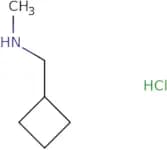
Discontinued product(Cyclobutylmethyl)methylamine hydrochloride
CAS:<p>Versatile small molecule scaffold</p>Formula:C6H14ClNPurity:Min. 95%Molecular weight:135.64 g/molN-(2-Azidoethyl)-2-methylpropanamide
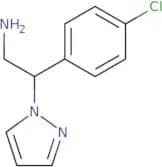
CAS:<p>Versatile small molecule scaffold</p>Formula:C6H12N4OPurity:Min. 95%Molecular weight:156.19 g/mol2-(4-Chlorophenyl)-2-(1H-pyrazol-1-yl)ethan-1-amine
CAS:<p>Versatile small molecule scaffold</p>Formula:C11H12ClN3Purity:Min. 95%Molecular weight:221.68 g/molRef: 3D-BAC10496
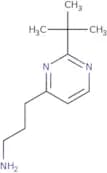
Discontinued product3-(2-tert-Butylpyrimidin-4-yl)propan-1-amine
CAS:<p>Versatile small molecule scaffold</p>Formula:C11H19N3Purity:Min. 95%Molecular weight:193.29 g/molRef: 3D-BAC08805
Discontinued product3-[(4-Bromo-1H-pyrazol-1-yl)methyl]-5-propyl-1,2,4-oxadiazole
CAS:<p>Versatile small molecule scaffold</p>Formula:C9H11BrN4OPurity:Min. 95%Molecular weight:271.11 g/molRef: 3D-BAC04876
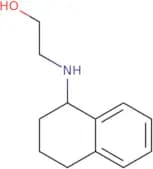
Discontinued product2-((1,2,3,4-Tetrahydronaphthalen-1-yl)amino)ethanol
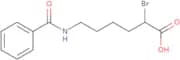
CAS:<p>Versatile small molecule scaffold</p>Formula:C12H17NOPurity:Min. 95%Molecular weight:191.27 g/mol2-Bromo-6-(phenylformamido)hexanoic acid
CAS:<p>Versatile small molecule scaffold</p>Formula:C13H16BrNO3Purity:Min. 95%Molecular weight:314.17 g/mol4-Pyridinecarboxylic Acid Ethyl Ester
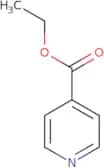
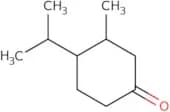
CAS:<p>4-Pyridinecarboxylic Acid Ethyl Ester is a compound that belongs to the group of pyridinecarboxylic acids. It is a metabolite of nicotinamide, which is converted to 4-pyridinecarboxylic acid ethyl ester by esterases in the intestine. Nicotinamide is an important component of the vitamin B3 and has been shown to be effective for treating autoimmune diseases such as rheumatoid arthritis. 4-Pyridinecarboxylic Acid Ethyl Ester may have similar effects on inflammatory bowel disease and alopecia areata. The reaction mechanism of this compound has not been elucidated, but it has been shown to inhibit amyloid protein production in rat intestines. Hydroxyl groups on the side chain likely play a role in hydrogen bonding interactions with receptors in inflammatory bowel disease and alopecia areata.</p>Formula:C8H9NO2Purity:Min. 95%Molecular weight:151.16 g/mol3-Methyl-4-(propan-2-yl)cyclohexan-1-one
CAS:<p>Versatile small molecule scaffold</p>Formula:C10H18OPurity:Min. 95%Molecular weight:154.25 g/molRef: 3D-BAA53819
Discontinued product5-Methyl-1-phenyl-1H-[1,2,4]triazole-3-carboxylic acid
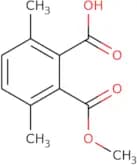
CAS:<p>Versatile small molecule scaffold</p>Formula:C10H9N3O2Purity:Min. 95%Molecular weight:203.2 g/mol2-(Methoxycarbonyl)-3,6-dimethylbenzoic acid
CAS:<p>Versatile small molecule scaffold</p>Formula:C11H12O4Purity:Min. 95%Molecular weight:208.2 g/molRef: 3D-BAA01554
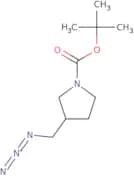
Discontinued producttert-Butyl 3-(azidomethyl)pyrrolidine-1-carboxylate
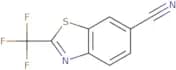
CAS:<p>Versatile small molecule scaffold</p>Formula:C10H18N4O2Purity:Min. 95%Molecular weight:226.28 g/mol2-(Trifluoromethyl)-1,3-benzothiazole-6-carbonitrile
CAS:<p>2-(Trifluoromethyl)-1,3-benzothiazole-6-carbonitrile (2TFB) is a volatile chemical used in the diagnosis of infectious diseases. It is extracted from sample by solid phase microextraction and then analyzed by gas chromatography with mass spectrometry. 2TFB has been shown to be an influential compound in the synthesis of microspheres for drug delivery. The imprinting process is also influenced by this compound and can be used for the production of microspheres with different properties on demand. It has been shown that 2-TFB inhibits virus growth and can be used as a potential anti-viral agent.</p>Formula:C9H3F3N2SPurity:Min. 95%Molecular weight:228.2 g/molRef: 3D-AZB04114
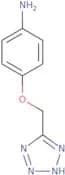
Discontinued product4-(1H-1,2,3,4-Tetrazol-5-ylmethoxy)aniline
CAS:<p>Versatile small molecule scaffold</p>Formula:C8H9N5OPurity:Min. 95%Molecular weight:191.19 g/molRef: 3D-AYA47447
Discontinued product4-[(2-Chlorophenyl)methyl]piperidine hydrochloride
CAS:<p>Versatile small molecule scaffold</p>Formula:C12H17Cl2NPurity:Min. 95%Molecular weight:246.17 g/molRef: 3D-AXC30294
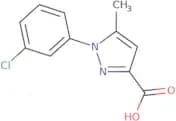
Discontinued product1-(3-Chlorophenyl)-5-methyl-1H-pyrazole-3-carboxylic acid
CAS:<p>Versatile small molecule scaffold</p>Formula:C11H9ClN2O2Purity:Min. 95%Molecular weight:236.65 g/molRef: 3D-AXB97208
Discontinued producttert-Butyl N-[1-(1-imino-1-oxo-1λ⁶-thian-4-yl)cyclopropyl]carbamate
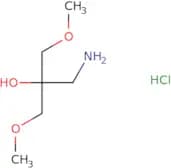
CAS:<p>Versatile small molecule scaffold</p>Formula:C13H24N2O3SPurity:Min. 95%Molecular weight:288.4 g/mol1-Amino-3-methoxy-2-(methoxymethyl)propan-2-ol hydrochloride
CAS:<p>Versatile small molecule scaffold</p>Formula:C6H16ClNO3Purity:Min. 95%Molecular weight:185.6 g/molRef: 3D-AVD27431
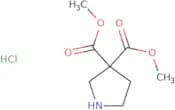
Discontinued product3,3-Dimethyl pyrrolidine-3,3-dicarboxylate hydrochloride
CAS:<p>Versatile small molecule scaffold</p>Formula:C8H14ClNO4Purity:Min. 95%Molecular weight:223.7 g/molRef: 3D-AVD27420
Discontinued producttert-Butyl N-[1-(thietan-3-yl)azetidin-3-yl]carbamate
CAS:<p>Versatile small molecule scaffold</p>Formula:C11H20N2O2SPurity:Min. 95%Molecular weight:244.4 g/molRef: 3D-AVD27394
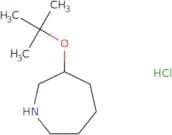
Discontinued product3-(tert-Butoxy)azepane hydrochloride
CAS:<p>Versatile small molecule scaffold</p>Formula:C10H22ClNOPurity:Min. 95%Molecular weight:207.7 g/molRef: 3D-AVD27322
Discontinued product(Pyridazin-3-yl)methanamine dihydrochloride
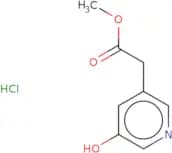
CAS:<p>Versatile small molecule scaffold</p>Formula:C5H9Cl2N3Purity:Min. 95%Molecular weight:182.05 g/molMethyl 2-(5-hydroxypyridin-3-yl)acetate hydrochloride
CAS:<p>Versatile small molecule scaffold</p>Formula:C8H10ClNO3Purity:Min. 95%Molecular weight:203.6 g/molRef: 3D-AVD26894
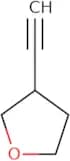
Discontinued product3-Ethynyltetrahydrofuran
CAS:<p>Versatile small molecule scaffold</p>Formula:C6H8OPurity:Min. 95%Molecular weight:96.13 g/mol6-(1-Methyl-1H-pyrazol-4-yl)-2,3-dihydropyridazin-3-one
CAS:<p>Versatile small molecule scaffold</p>Formula:C8H8N4OPurity:Min. 95%Molecular weight:176.18 g/molRef: 3D-AUB59849
Discontinued product2,3-Dimethoxy-6H,7H,8H,9H,10H,12H-azepino[2,1-b]quinazolin-12-one
CAS:<p>Versatile small molecule scaffold</p>Formula:C15H18N2O3Purity:Min. 95%Molecular weight:274.31 g/molRef: 3D-AUA63835
Discontinued product2-[(5-Methyl-1,3-thiazol-2-yl)sulfanyl]-1-(thiophen-2-yl)ethan-1-one
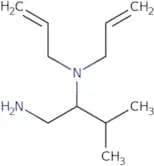
CAS:<p>Versatile small molecule scaffold</p>Formula:C10H9NOS3Purity:Min. 95%Molecular weight:255.4 g/mol(1-Amino-3-methylbutan-2-yl)bis(prop-2-en-1-yl)amine
CAS:<p>Versatile small molecule scaffold</p>Formula:C11H22N2Purity:Min. 95%Molecular weight:182.31 g/molRef: 3D-AQB93194
Discontinued product3-Cyclopropyl-3-azabicyclo[3.3.1]nonan-9-one
CAS:<p>Versatile small molecule scaffold</p>Formula:C11H17NOPurity:Min. 95%Molecular weight:179.26 g/molRef: 3D-AQB93118
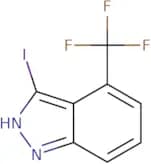
Discontinued product3-Iodo-4-(trifluoromethyl)-1H-indazole
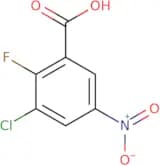
CAS:<p>Versatile small molecule scaffold</p>Formula:C8H4F3IN2Purity:Min. 95%Molecular weight:312.03 g/mol3-Chloro-2-fluoro-5-nitrobenzoic acid
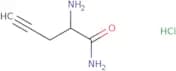
CAS:<p>Versatile small molecule scaffold</p>Formula:C7H3ClFNO4Purity:Min. 95%Molecular weight:219.55 g/mol2-Aminopent-4-ynamide hydrochloride
CAS:<p>Versatile small molecule scaffold</p>Formula:C5H9ClN2OPurity:Min. 95%Molecular weight:148.59 g/molRef: 3D-AQA85933
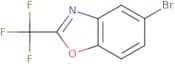
Discontinued product5-Bromo-2-(trifluoromethyl)-1,3-benzoxazole
CAS:<p>Versatile small molecule scaffold</p>Formula:C8H3BrF3NOPurity:Min. 95%Molecular weight:266.01 g/molRef: 3D-AQA36908
Discontinued product1-Ethyl-6-methyl-4-[(oxan-4-yl)amino]-1H-pyrazolo[3,4-b]pyridine-5-carbonitrile
CAS:<p>Versatile small molecule scaffold</p>Formula:C15H19N5OPurity:Min. 95%Molecular weight:285.3 g/molRef: 3D-APD14747
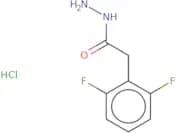
Discontinued product2-(2,6-Difluorophenyl)acetohydrazide hydrochloride
CAS:<p>Versatile small molecule scaffold</p>Formula:C8H9ClF2N2OPurity:Min. 95%Molecular weight:222.6 g/mol1-[(5-Methyl-1,3,4-thiadiazol-2-yl)methyl]piperazine dihydrochloride
CAS:<p>Versatile small molecule scaffold</p>Formula:C8H16Cl2N4SPurity:Min. 95%Molecular weight:271.2 g/molRef: 3D-APD14702
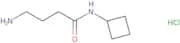
Discontinued product4-Amino-N-cyclobutylbutanamide hydrochloride
CAS:<p>Versatile small molecule scaffold</p>Formula:C8H17ClN2OPurity:Min. 95%Molecular weight:192.7 g/molRef: 3D-APD14684
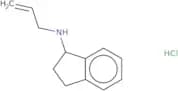
Discontinued productN-(Prop-2-en-1-yl)-2,3-dihydro-1H-inden-1-amine hydrochloride
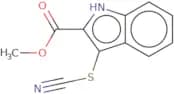
CAS:<p>Versatile small molecule scaffold</p>Formula:C12H16ClNPurity:Min. 95%Molecular weight:209.7 g/molMethyl 3-(cyanosulfanyl)-1H-indole-2-carboxylate
CAS:<p>Versatile small molecule scaffold</p>Formula:C11H8N2O2SPurity:Min. 95%Molecular weight:232.3 g/molRef: 3D-APD14637
Discontinued productMethyl 2-[(2R,4S)-4-fluoropyrrolidin-2-yl]acetate hydrochloride
CAS:<p>Versatile small molecule scaffold</p>Formula:C7H13ClFNO2Purity:Min. 95%Molecular weight:197.6 g/molRef: 3D-APD12670
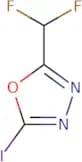
Discontinued product2-(Difluoromethyl)-5-iodo-1,3,4-oxadiazole
CAS:<p>Versatile small molecule scaffold</p>Formula:C3HF2IN2OPurity:Min. 95%Molecular weight:245.95 g/molRef: 3D-APC93827
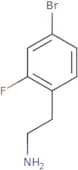
Discontinued product2-(4-Bromo-2-fluorophenyl)ethan-1-amine
CAS:Controlled Product<p>Versatile small molecule scaffold</p>Formula:C8H9BrFNPurity:Min. 95%Molecular weight:218.07 g/mol5-[(3-Methylphenyl)methyl]-1,3-thiazol-2-amine
CAS:<p>Versatile small molecule scaffold</p>Formula:C11H12N2SPurity:Min. 95%Molecular weight:204.29 g/molRef: 3D-AMA82754
Discontinued product3-Amino-2-methyl-5-(4-methylphenyl)-3H,4H-thieno[2,3-d]pyrimidin-4-one
CAS:<p>Versatile small molecule scaffold</p>Formula:C14H13N3OSPurity:Min. 95%Molecular weight:271.34 g/mol2-Methyl-1H,5H-[1,2,4]triazolo[1,5-c]quinazoline-5-thione
CAS:<p>Versatile small molecule scaffold</p>Formula:C10H8N4SPurity:Min. 95%Molecular weight:216.26 g/molRef: 3D-AKB16035
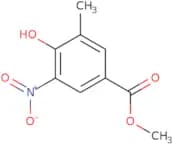
Discontinued productBenzoic acid, 4-hydroxy-3-methyl-5-nitro-, methyl ester
CAS:<p>Versatile small molecule scaffold</p>Formula:C9H9NO5Purity:Min. 95%Molecular weight:211.17 g/moltert-butyl 4-[(tetramethyl-1,3,2-dioxaborolan-2-yl)methylidene]piperidine-1-carboxylate
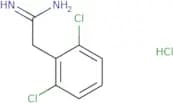
CAS:<p>Versatile small molecule scaffold</p>Formula:C17H30BNO4Purity:Min. 95%Molecular weight:323.2 g/mol2-(2,6-Dichlorophenyl)ethanimidamide hydrochloride
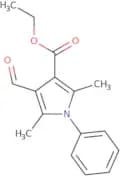
CAS:<p>Covid-19 is a drug that has been developed to help prevent and treat pandemics. Covid-19 is a resonance compound, which can be accessed by magnetic resonance. Covid-19 has two chemical shifts, which are related to the coupling constants between the nuclear spins in the molecule. The covid-19 molecule is made up of five different heterocycles and it has a constant magnetic resonance signal at 1H NMR. Covid-19 may be used for prevention and treatment of pandemic influenza A (H5N1) virus infection.</p>Formula:C8H9Cl3N2Purity:Min. 95%Molecular weight:239.53 g/mol4-Formyl-2,5-dimethyl-1-phenyl-1H-pyrrole-3-carboxylic acid ethyl ester
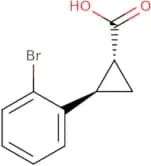
CAS:<p>Versatile small molecule scaffold</p>Formula:C16H17NO3Purity:Min. 95%Molecular weight:271.31 g/molrel-(1R,2R)-2-(2-Bromophenyl)cyclopropane-1-carboxylic acid
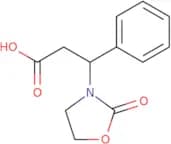
CAS:<p>Versatile small molecule scaffold</p>Formula:C10H9BrO2Purity:Min. 95%Molecular weight:241.08 g/mol3-(2-Oxo-1,3-oxazolidin-3-yl)-3-phenylpropanoic acid
CAS:<p>Versatile small molecule scaffold</p>Formula:C12H13NO4Purity:Min. 95%Molecular weight:235.24 g/molRef: 3D-AGA81264
Discontinued product2-(Aminomethyl)-5-methyl-[1,2,4]triazolo[1,5-a]pyrimidin-7-ol
CAS:<p>Versatile small molecule scaffold</p>Formula:C7H9N5OPurity:Min. 95%Molecular weight:179.18 g/molRef: 3D-AGA19092
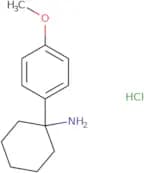
Discontinued product1-(4-Methoxyphenyl)cyclohexan-1-amine hydrochloride
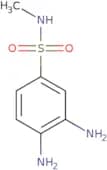
CAS:Controlled Product<p>Versatile small molecule scaffold</p>Formula:C13H20ClNOPurity:Min. 95%Molecular weight:241.8 g/mol3,4-Diamino-N-methylbenzene-1-sulfonamide
CAS:Versatile small molecule scaffoldFormula:C7H11N3O2SPurity:Min. 95%Molecular weight:201.25 g/molRef: 3D-AFA10642
Discontinued productMethyl 2-methoxypyrimidine-4-carboxylate
CAS:<p>Versatile small molecule scaffold</p>Formula:C7H8N2O3Purity:Min. 95%Molecular weight:168.15 g/molRef: 3D-ADA82559
Discontinued product3-Chloro-6-(2-methyl-1H-imidazol-1-yl)pyridazine
CAS:<p>Versatile small molecule scaffold</p>Formula:C8H7ClN4Purity:Min. 95%Molecular weight:194.62 g/molRef: 3D-ADA79266
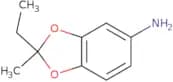
Discontinued product2-Ethyl-2-methyl-1,3-dioxaindan-5-amine
CAS:<p>Versatile small molecule scaffold</p>Formula:C10H13NO2Purity:Min. 95%Molecular weight:179.22 g/molRef: 3D-ADA20074
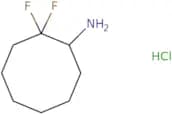
Discontinued product2,2-Difluorocyclooctan-1-amine hydrochloride
CAS:<p>Versatile small molecule scaffold</p>Formula:C8H16ClF2NPurity:Min. 95%Molecular weight:199.67 g/molRef: 3D-ADA14951
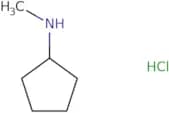
Discontinued productN-Methylcyclopentanamine hydrochloride
CAS:<p>Versatile small molecule scaffold</p>Formula:C6H14ClNPurity:Min. 95%Molecular weight:135.64 g/mol4-(3-Methoxypropyl)-4H-1,2,4-triazole-3-thiol
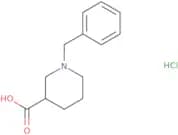
CAS:<p>4-(3-Methoxypropyl)-4H-1,2,4-triazole-3-thiol is a sulfuric acid derivative of 4H-1,2,4-triazole-3-thiol. It is an efficient and potentiodynamic polarizer that can be used to measure the concentration of copper ions in solution. This agent has been shown to have synergistic effects with copper ions and can be used as an analytical tool for cyclic voltammetry.</p>Formula:C6H11N3OSPurity:Min. 95%Molecular weight:173.24 g/mol1-Benzylpiperidine-3-carboxylic acid hydrochloride
CAS:<p>Versatile small molecule scaffold</p>Formula:C13H18ClNO2Purity:Min. 95%Molecular weight:255.75 g/molRef: 3D-ACA58592
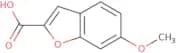
Discontinued product6-Methoxybenzofuran-2-carboxylic acid
CAS:<p>6-Methoxybenzofuran-2-carboxylic acid is a synthetic compound that can be used as an intermediate in organic synthesis. It is stable and resistant to aqueous conditions, making it suitable for use in organic synthesis. 6-Methoxybenzofuran-2-carboxylic acid is also analogous to benzofurancarboxylic acids, which are characterized by their dianionic character. It has been shown to react with aldehydes at low temperatures and form tetrahydrofuran derivatives. 6-Methoxybenzofuran-2-carboxylic acid can be metallated with various metals to form stable complexes.</p>Formula:C10H8O4Purity:Min. 95%Molecular weight:192.17 g/mol5-bromo-4-methyl-1H-indole-2-carboxylic acid
CAS:<p>Versatile small molecule scaffold</p>Formula:C10H8BrNO2Purity:Min. 95%Molecular weight:254.1 g/molRef: 3D-ACA53658
Discontinued product2-[(2-Methoxyphenoxy)methyl]benzoic acid
CAS:<p>Versatile small molecule scaffold</p>Formula:C15H14O4Purity:Min. 95%Molecular weight:258.27 g/molRef: 3D-ACA45688
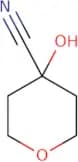
Discontinued product4-Hydroxytetrahydro-2H-pyran-4-carbonitrile
CAS:<p>Versatile small molecule scaffold</p>Formula:C6H9NO2Purity:Min. 95%Molecular weight:127.14 g/molRef: 3D-ACA28910
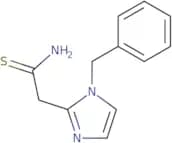
Discontinued product2-(1-Benzyl-1H-imidazol-2-yl)ethanethioamide
CAS:<p>Versatile small molecule scaffold</p>Formula:C12H13N3SPurity:Min. 95%Molecular weight:231.32 g/molRef: 3D-ACA28875
Discontinued producttert-Butyl 5-bromo-3,4-dihydro-2,7-naphthyridine-2(1H)-carboxylate
CAS:<p>Versatile small molecule scaffold</p>Formula:C13H17BrN2O2Purity:Min. 95%Molecular weight:313.19 g/mol2-Bromo-3,3,3-trifluoro-1-propene
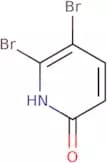
CAS:Controlled Product<p>2-Bromo-3,3,3-trifluoro-1-propene is a chemical compound that has been synthesized in an asymmetric reaction. The reactant is bromopropane and the product is 2,2,2-trifluoropropene. The methylene group on the propene molecule is activated by the nucleophilic attack of a fluoride ion from hydrogen fluoride to form a cavity with a highly strained bond. The kinetic study of this reaction revealed that the activation energy for the reaction is 42 kJ/mol. Palladium-catalyzed coupling reactions are catalyzed by palladium and require nonpolar solvents such as toluene or dichloromethane. This type of reaction has been shown to be exothermic with an isolated yield of 1%.</p>Formula:C3H2BrF3Purity:Min. 95%Color and Shape:Colorless PowderMolecular weight:174.95 g/mol5,6-Dibromopyridin-2-ol
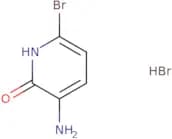
CAS:<p>Versatile small molecule scaffold</p>Formula:C5H3Br2NOPurity:Min. 95%Molecular weight:252.89 g/mol3-amino-6-bromopyridin-2-ol hydrobromide
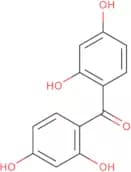
CAS:<p>Versatile small molecule scaffold</p>Formula:C5H6Br2N2OPurity:Min. 95%Molecular weight:269.9 g/mol2,2',4,4'-tetrahydroxybenzophenone
CAS:<p>2,2',4,4'-tetrahydroxybenzophenone is a hydroxylated benzophenone that has immunomodulatory effects. It binds to the receptor in the immune system and can cause an increase in cytokine production. 2,2',4,4'-tetrahydroxybenzophenone is cytotoxic and has significant toxicity in vitro. The molecule has been shown to disrupt mitochondrial membrane potential. This may be due to its ability to form hydrogen bonds with molecules on the mitochondrial membrane. 2,2',4,4'-tetrahydroxybenzophenone also modulates transcriptional regulation of genes involved in cell proliferation and apoptosis. The drug is detectable at low levels by mass spectrometry and is not known to have any toxicological effects.END>></p>Formula:C13H10O5Purity:Min. 95%Color and Shape:Green PowderMolecular weight:246.22 g/molRef: 3D-FT55663
Discontinued product1-[3-(Dimethylamino)propyl]-1-(4-fluorophenyl)-1,3-dihydro-3-oxo-5-isobenzofurancarbonitrile
CAS:<p>Please enquire for more information about 1-[3-(Dimethylamino)propyl]-1-(4-fluorophenyl)-1,3-dihydro-3-oxo-5-isobenzofurancarbonitrile including the price, delivery time and more detailed product information at the technical inquiry form on this page</p>Formula:C20H19FN2O2Purity:Min. 95%Molecular weight:338.38 g/molRef: 3D-FD184085
Discontinued product3-Methylbenzo[b]thiophene-2-carboxylic acid
CAS:<p>3-Methylbenzo[b]thiophene-2-carboxylic acid (MBTCA) is a heterocyclic compound that is an intermediate in the synthesis of 3-methylthiophene-2-carboxylic acid, a precursor to other drugs. MBTCA is an aerobic, nonpolar compound that has shown antimicrobial activity against some bacteria and fungi. It also has been shown to have practicality as a biomolecular probe for methyl groups in organic solvents. MBTCA can be synthesized by nitration of benzene in the presence of sulfur and sulfoxides. This reaction produces nitrobenzene, which can then be oxidized by potassium permanganate or hydrogen peroxide to produce MBTCA. The most common isomer of MBTCA is 2-(3,5-dimethoxybenzylidene)tetrahydrofuran, with three methyl groups on the</p>Formula:C10H8O2SPurity:Min. 95%Molecular weight:192.23 g/mol3-(Methoxycarbonyl)pyridine-4-carboxylic acid
CAS:<p>Versatile small molecule scaffold</p>Formula:C8H7NO4Purity:Min. 95%Molecular weight:181.15 g/mol2-Acetylbenzoic acid
CAS:<p>2-Acetylbenzoic acid is a functional molecule that contains an acetyl group. It can form hydrogen bonds with other molecules and has been shown to induce apoptosis in cells. The reaction products of 2-acetylbenzoic acid are malonic acid, acetylsalicylic acid, and 2-benzoylbenzoic acid. These three compounds are made by the addition of hydrogen or hydroxide to the molecule 2-acetylbenzoic acid. The molecule has two functional groups: a carbonyl group and an acetyl group. The chemical structure of this molecule can be seen in the figure below.<br>2-Acetylbenzoic Acid</p>Formula:C9H8O3Purity:Min. 95%Color and Shape:PowderMolecular weight:164.16 g/molRef: 3D-FA05086
Discontinued product4-(Methylamino)benzene-1-sulfonamide
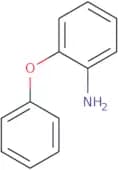
CAS:<p>Versatile small molecule scaffold</p>Formula:C7H10N2O2SPurity:Min. 95%Molecular weight:186.23 g/mol2-Phenoxyaniline
CAS:<p>2-Phenoxyaniline is a nitro compound that can be converted to the corresponding palladium complexes. It is an inhibitor of the acylation reaction, which is a type of chemical reaction in which an organic molecule reacts with an acid. The inhibition of this reaction has been shown to have an effect on heart disease, specifically by lowering cholesterol levels and reducing atherosclerosis. 2-Phenoxyaniline has also been shown to inhibit the activation energy for electron transfer reactions, making it useful as a catalyst in analytical methods. 2-Phenoxyaniline also undergoes vibrational spectroscopy when exposed to liquid chromatography and other analytical methods.</p>Formula:C12H11NOPurity:Min. 95%Color and Shape:Brown PowderMolecular weight:185.22 g/molH-Ser-Ala-Glu-Glu-Tyr-Glu-Tyr-Pro-Ser OH trifluoroacetate
CAS:<p>Please enquire for more information about H-Ser-Ala-Glu-Glu-Tyr-Glu-Tyr-Pro-Ser OH trifluoroacetate including the price, delivery time and more detailed product information at the technical inquiry form on this page</p>Formula:C47H63N9O20•(C2HF3O2)xPurity:Min. 95%Ref: 3D-FS183525
Discontinued productGivinostat hydrochloride
CAS:<p>Givinostat hydrochloride is a research chemical that has shown potential in various fields. It is a molybdenum-based compound that has been studied for its effects on dopamine release and hydrogen evolution. Givinostat hydrochloride has also been investigated as an osteoclast inhibitor, which may be beneficial in the treatment of bone-related disorders such as osteoporosis. Additionally, it has shown promise as a retinoid and calpain inhibitor, suggesting its potential use in dermatological conditions and neurodegenerative diseases. The compound contains fluorine atoms, making it suitable for imaging studies using fluorine MRI techniques. Givinostat hydrochloride has been tested on MDA-MB-231 cells and has shown inhibitory effects on their growth, indicating its potential as an anticancer agent.</p>Formula:C24H27N3O4·HClPurity:Min. 95%Molecular weight:457.95 g/mol

![N-[4-(Hydroxymethyl)-2-thiazolyl]acetamide](/_next/image/?url=https%3A%2Fstatic.cymitquimica.com%2Fproducts%2F3D%2Fthumb-webp%2FBCA30738.webp&w=3840&q=75)
![(2R)-3-[(Carboxymethyl)sulfanyl]-2-acetamidopropanoic acid](/_next/image/?url=https%3A%2Fstatic.cymitquimica.com%2Fproducts%2F3D%2Fthumb-webp%2FBBA17754.webp&w=3840&q=75)
![2-{2-Oxa-6-azaspiro[3.3]heptan-6-yl}ethan-1-ol](/_next/image/?url=https%3A%2Fstatic.cymitquimica.com%2Fproducts%2F3D%2Fthumb-webp%2FBBA09635.webp&w=3840&q=75)


![3-[(4-Bromo-1H-pyrazol-1-yl)methyl]-5-propyl-1,2,4-oxadiazole](/_next/image/?url=https%3A%2Fstatic.cymitquimica.com%2Fproducts%2F3D%2Fthumb-webp%2FBAC04876.webp&w=3840&q=75)
![5-Methyl-1-phenyl-1H-[1,2,4]triazole-3-carboxylic acid](/_next/image/?url=https%3A%2Fstatic.cymitquimica.com%2Fproducts%2F3D%2Fthumb-webp%2FBAA01657.webp&w=3840&q=75)
![4-[(2-Chlorophenyl)methyl]piperidine hydrochloride](/_next/image/?url=https%3A%2Fstatic.cymitquimica.com%2Fproducts%2F3D%2Fthumb-webp%2FAXC30294.webp&w=3840&q=75)
![tert-Butyl N-[1-(1-imino-1-oxo-1λ⁶-thian-4-yl)cyclopropyl]carbamate](/_next/image/?url=https%3A%2Fstatic.cymitquimica.com%2Fproducts%2F3D%2Fthumb-webp%2FAVD27462.webp&w=3840&q=75)
![tert-Butyl N-[1-(thietan-3-yl)azetidin-3-yl]carbamate](/_next/image/?url=https%3A%2Fstatic.cymitquimica.com%2Fproducts%2F3D%2Fthumb-webp%2FAVD27394.webp&w=3840&q=75)


![2,3-Dimethoxy-6H,7H,8H,9H,10H,12H-azepino[2,1-b]quinazolin-12-one](/_next/image/?url=https%3A%2Fstatic.cymitquimica.com%2Fproducts%2F3D%2Fthumb-webp%2FAUA63835.webp&w=3840&q=75)
![2-[(5-Methyl-1,3-thiazol-2-yl)sulfanyl]-1-(thiophen-2-yl)ethan-1-one](/_next/image/?url=https%3A%2Fstatic.cymitquimica.com%2Fproducts%2F3D%2Fthumb-webp%2FAQB93225.webp&w=3840&q=75)
![3-Cyclopropyl-3-azabicyclo[3.3.1]nonan-9-one](/_next/image/?url=https%3A%2Fstatic.cymitquimica.com%2Fproducts%2F3D%2Fthumb-webp%2FAQB93118.webp&w=3840&q=75)
![1-Ethyl-6-methyl-4-[(oxan-4-yl)amino]-1H-pyrazolo[3,4-b]pyridine-5-carbonitrile](/_next/image/?url=https%3A%2Fstatic.cymitquimica.com%2Fproducts%2F3D%2Fthumb-webp%2FAPD14747.webp&w=3840&q=75)
![1-[(5-Methyl-1,3,4-thiadiazol-2-yl)methyl]piperazine dihydrochloride](/_next/image/?url=https%3A%2Fstatic.cymitquimica.com%2Fproducts%2F3D%2Fthumb-webp%2FAPD14702.webp&w=3840&q=75)
![Methyl 2-[(2R,4S)-4-fluoropyrrolidin-2-yl]acetate hydrochloride](/_next/image/?url=https%3A%2Fstatic.cymitquimica.com%2Fproducts%2F3D%2Fthumb-webp%2FAPD12670.webp&w=3840&q=75)
![5-[(3-Methylphenyl)methyl]-1,3-thiazol-2-amine](/_next/image/?url=https%3A%2Fstatic.cymitquimica.com%2Fproducts%2F3D%2Fthumb-webp%2FAMA82754.webp&w=3840&q=75)
![3-Amino-2-methyl-5-(4-methylphenyl)-3H,4H-thieno[2,3-d]pyrimidin-4-one](/_next/image/?url=https%3A%2Fstatic.cymitquimica.com%2Fproducts%2F3D%2Fthumb-webp%2FAMA81836.webp&w=3840&q=75)
![2-Methyl-1H,5H-[1,2,4]triazolo[1,5-c]quinazoline-5-thione](/_next/image/?url=https%3A%2Fstatic.cymitquimica.com%2Fproducts%2F3D%2Fthumb-webp%2FAKB16035.webp&w=3840&q=75)
![tert-butyl 4-[(tetramethyl-1,3,2-dioxaborolan-2-yl)methylidene]piperidine-1-carboxylate](/_next/image/?url=https%3A%2Fstatic.cymitquimica.com%2Fproducts%2F3D%2Fthumb-webp%2FAHC97061.webp&w=3840&q=75)
![2-(Aminomethyl)-5-methyl-[1,2,4]triazolo[1,5-a]pyrimidin-7-ol](/_next/image/?url=https%3A%2Fstatic.cymitquimica.com%2Fproducts%2F3D%2Fthumb-webp%2FAGA19092.webp&w=3840&q=75)




![2-[(2-Methoxyphenoxy)methyl]benzoic acid](/_next/image/?url=https%3A%2Fstatic.cymitquimica.com%2Fproducts%2F3D%2Fthumb-webp%2FACA45688.webp&w=3840&q=75)


![1-[3-(Dimethylamino)propyl]-1-(4-fluorophenyl)-1,3-dihydro-3-oxo-5-isobenzofurancarbonitrile](/_next/image/?url=https%3A%2Fstatic.cymitquimica.com%2Fproducts%2F3D%2Fthumb-webp%2FFD184085.webp&w=3840&q=75)
![3-Methylbenzo[b]thiophene-2-carboxylic acid](/_next/image/?url=https%3A%2Fstatic.cymitquimica.com%2Fproducts%2F3D%2Fthumb-webp%2FDAA13378.webp&w=3840&q=75)