


Building Blocks
This section contains fundamental products for the synthesis of organic and biological compounds. Building blocks are the essential starting materials used to construct complex molecules through various chemical reactions. They play a critical role in drug discovery, material science, and chemical research. At CymitQuimica, we offer a diverse range of high-quality building blocks to support your innovative research and industrial projects, ensuring you have the essential components for successful synthesis.
Subcategories of "Building Blocks"
- Boronic Acids & Boronic Acid Derivatives(5,778 products)
- Chiral Building Blocks(1,242 products)
- Hydrocarbon Building Blocks(6,098 products)
- Organic Building Blocks(61,092 products)
Found 199296 products of "Building Blocks"
Sort by
Purity (%)
0
100
|
0
|
50
|
90
|
95
|
100
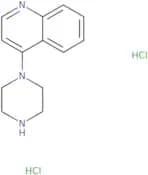
4-Piperazin-1-yl-quinoline dihydrochloride
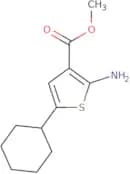
CAS:Versatile small molecule scaffoldFormula:C13H15N3HClPurity:Min. 95%Molecular weight:286.2 g/molMethyl 2-amino-5-cyclohexylthiophene-3-carboxylate
CAS:<p>Versatile small molecule scaffold</p>Formula:C12H17NO2SPurity:Min. 95%Molecular weight:239.34 g/molRef: 3D-AEC62354
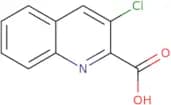
Discontinued product3-Chloroquinoline-2-carboxylic acid
CAS:<p>Versatile small molecule scaffold</p>Formula:C10H6ClNO2Purity:Min. 95%Molecular weight:207.61 g/molRef: 3D-DXC56761
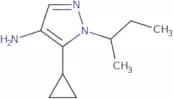
Discontinued product1-(Butan-2-yl)-5-cyclopropyl-1H-pyrazol-4-amine
CAS:<p>Versatile small molecule scaffold</p>Formula:C10H17N3Purity:Min. 95%Molecular weight:179.26 g/molRef: 3D-GQB45453
Discontinued productMethyl 2-azaspiro[4.4]nonane-4-carboxylate hydrochloride
CAS:<p>Versatile small molecule scaffold</p>Formula:C10H18ClNO2Purity:Min. 95%Molecular weight:219.7 g/molRef: 3D-TPD51625
Discontinued product1-Hydroxypropan-2-yl 2-(3-benzoylphenyl)propanoate
CAS:<p>Versatile small molecule scaffold</p>Formula:C19H20O4Purity:Min. 95%Molecular weight:312.4 g/molRef: 3D-BKD16179
Discontinued product{5H,7H,8H-Pyrano[4,3-d]pyrimidin-2-yl}methanamine
CAS:<p>Versatile small molecule scaffold</p>Formula:C8H11N3OPurity:Min. 95%Molecular weight:165.19 g/molRef: 3D-EMC23714
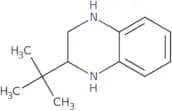
Discontinued product(2R)-2-tert-Butyl-1,2,3,4-tetrahydroquinoxaline
CAS:<p>Versatile small molecule scaffold</p>Formula:C12H18N2Purity:Min. 95%Molecular weight:190.28 g/molRef: 3D-AEC82766
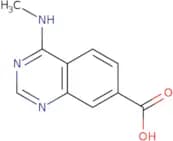
Discontinued product4-(Methylamino)quinazoline-7-carboxylic acid
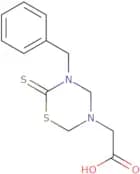
CAS:<p>Versatile small molecule scaffold</p>Formula:C10H9N3O2Purity:Min. 95%Molecular weight:203.2 g/mol2-(5-Benzyl-6-thioxo-1,3,5-thiadiazinan-3-yl)acetic acid
CAS:<p>2-(5-Benzyl-6-thioxo-1,3,5-thiadiazinan-3-yl)acetic acid is a hydroxyl group containing fatty acid. It is an implanting agent that has biological properties including skin condition and choroidal neovascularization. Inhibitor compounds have been shown to be effective in preventing the growth of δ opioid receptor agonists in vitro. Sodium citrate can be used as a reconstituted cross linking agent for 2-(5-benzyl-6-thioxo-1,3,5-thiadiazinan-3-yl)acetic acid. Fatty acids are also a cross linking agents for 2-(5-benzyl-6-thioxo-1,3,5 thiadiazinan 3 yl)acetic acid. Furthermore, herpes simplex virus and other viruses are inhibited by 2-(5 benzyl</p>Formula:C12H14N2O2S2Purity:Min. 95%Molecular weight:282.4 g/molRef: 3D-BAA21977
Discontinued product2-({5,6-Dimethylthieno[2,3-d]pyrimidin-4-yl}sulfanyl)benzoic acid
CAS:Controlled Product<p>2-({5,6-Dimethylthieno[2,3-d]pyrimidin-4-yl}sulfanyl)benzoic acid is a synthetic nonpeptide compound that belongs to the group of ligands. This inhibitor binds to nicotinic acetylcholine receptors and inhibits their activity. 2-({5,6-Dimethylthieno[2,3-d]pyrimidin-4-yl}sulfanyl)benzoic acid has been shown to be a potent activator of these receptors. This compound also inhibits voltage dependent potassium channels and calcium channels.</p>Formula:C15H12N2O2S2Purity:Min. 95%Molecular weight:316.4 g/molRef: 3D-BEB15117
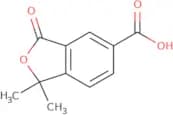
Discontinued product1,1-Dimethyl-3-oxo-1,3-dihydro-2-benzofuran-5-carboxylic acid
CAS:<p>Versatile small molecule scaffold</p>Formula:C11H10O4Purity:Min. 95%Molecular weight:206.19 g/molRef: 3D-BAA42881
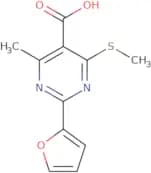
Discontinued product2-(Furan-2-yl)-4-methyl-6-(methylsulfanyl)pyrimidine-5-carboxylic acid
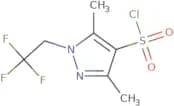
CAS:<p>Versatile small molecule scaffold</p>Formula:C11H10N2O3SPurity:Min. 95%Molecular weight:250.28 g/mol3,5-Dimethyl-1-(2,2,2-trifluoroethyl)-1H-pyrazole-4-sulfonyl chloride
CAS:<p>Versatile small molecule scaffold</p>Formula:C7H8ClF3N2O2SPurity:Min. 95%Molecular weight:276.66 g/molEthyl 5-(4-methoxyphenyl)-1,3-oxazole-2-carboxylate
CAS:<p>Versatile small molecule scaffold</p>Formula:C13H13NO4Purity:Min. 95%Molecular weight:247.25 g/molRef: 3D-BAA44137
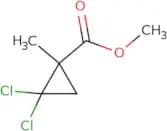
Discontinued productMethyl 2,2-dichloro-1-methylcyclopropanecarboxylate
CAS:<p>Methyl 2,2-dichloro-1-methylcyclopropanecarboxylate is a cyclic compound with an effective rate of 11.6 s−1. It has been shown to be an effective catalyst for the electrochemical reduction of anthracene and other aromatic compounds in metallocomplexes. The catalytic activity of Methyl 2,2-dichloro-1-methylcyclopropanecarboxylate is dependent on the concentration and type of anion present in solution. In homogeneous systems, this compound is catalytically active for the electrochemical reduction of radical anions and polarographic oxidation of pyridine. This chemical also shows high electrochemical reductive activity towards palladium.</p>Formula:C6H8Cl2O2Purity:Min. 95%Molecular weight:183.03 g/molRef: 3D-BAA44713
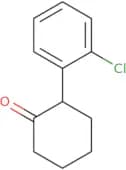
Discontinued product2-(2-Chlorophenyl)cyclohexan-1-one
CAS:<p>Versatile small molecule scaffold</p>Formula:C12H13ClOPurity:Min. 95%Molecular weight:208.68 g/molRef: 3D-RDA39349
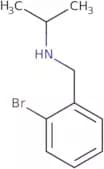
Discontinued productN-(2-Bromobenzyl)propan-2-amine
CAS:<p>Versatile small molecule scaffold</p>Formula:C10H14BrNPurity:Min. 95%Molecular weight:228.13 g/molRef: 3D-QDA94451
Discontinued product6-benzyl-2-methyl-5,6,7,8-tetrahydropyrido[4,3-d]pyrimidin-4(3H)-one
CAS:<p>Versatile small molecule scaffold</p>Formula:C15H17N3OPurity:Min. 95%Molecular weight:255.32 g/mol2,5-Dimethylpiperazine dihydrochloride
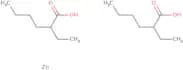
CAS:<p>Versatile small molecule scaffold</p>Formula:C6H16Cl2N2Purity:Min. 95%Molecular weight:187.11 g/molEthylhexanoic acid zinc
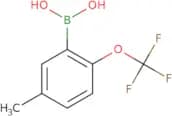
CAS:<p>Ethylhexanoic acid zinc salt is a viscosity-increasing agent that is used in the production of high-viscosity polymers. It is a carboxylate salt of ethyl hexanoic acid and zinc. The reaction of ethylhexane with zirconium oxide produces a viscous liquid with a strong cationic polymerization activity. This product reacts with diphenyl ether and aromatic hydrocarbons to form solid products. The reaction with calcium stearate, an ester of glycerol, results in the formation of particles that are insoluble in water but soluble in organic solvents. Ethylhexane also reacts with ethylene diamine to form methyl myristate, which has kinetic data available for it.</p>Formula:C16H30O4ZnPurity:Min. 95%Molecular weight:351.8 g/mol5-Methyl-2-(trifluoromethoxy)phenylboronic acid
CAS:<p>Versatile small molecule scaffold</p>Formula:C8H8BF3O3Purity:Min. 95%Molecular weight:219.95 g/molRef: 3D-ETB40245
Discontinued productN-[4-Chloro-3-(trifluoromethyl)phenyl]-2-hydroxybenzamide
CAS:<p>Versatile small molecule scaffold</p>Formula:C14H9ClF3NO2Purity:Min. 95%Molecular weight:315.67 g/molRef: 3D-AAA36974
Discontinued product5-[4-(Aminomethyl)phenyl]-5-methylimidazolidine-2,4-dione hydrochloride
CAS:<p>Versatile small molecule scaffold</p>Formula:C11H14ClN3O2Purity:Min. 95%Molecular weight:255.7 g/molRef: 3D-DXC58913
Discontinued product3,8-Diethyl 4-aminopyrazolo[3,2-c][1,2,4]triazine-3,8-dicarboxylate
CAS:<p>3,8-Diethyl 4-aminopyrazolo[3,2-c][1,2,4]triazine-3,8-dicarboxylate is a structural formula that contains nitrogen atoms and a hydroxyl group. The alkylthio group and alkynyl groups are attached to the nitrogens on the 3 and 8 positions. This drug has been shown to be effective in treating chronic bronchitis, depression, and inflammatory diseases such as ischemia reperfusion injury. It also has a solid catalyst property which may be due to its ability to form complexes with dodecanedioic acid.</p>Formula:C11H13N5O4Purity:Min. 95%Molecular weight:279.25 g/mol3-Amino-1λ⁶-thiaspiro[3.5]nonane-1,1-dione hydrochloride
CAS:<p>Versatile small molecule scaffold</p>Formula:C8H16ClNO2SPurity:Min. 95%Molecular weight:225.7 g/molRef: 3D-TPD51634
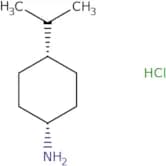
Discontinued productrac-(1S,4S)-4-(Propan-2-yl)cyclohexan-1-amine hydrochloride
CAS:<p>Versatile small molecule scaffold</p>Formula:C9H20ClNPurity:Min. 95%Molecular weight:177.7 g/molRef: 3D-MTB35125
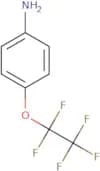
Discontinued product4-(Perfluoroethoxy)aniline
CAS:<p>Versatile small molecule scaffold</p>Formula:C8H6F5NOPurity:Min. 95%Molecular weight:227.13 g/molRef: 3D-AAA71785
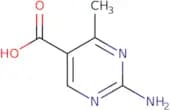
Discontinued product2-Amino-4-methyl-pyrimidine-5-carboxylic acid
CAS:<p>2-Amino-4-methyl-pyrimidine-5-carboxylic acid is a spleen cell immunogen that induces antibody production in animals. 2-Amino-4-methyl-pyrimidine-5-carboxylic acid is an immunogen that belongs to the class of pyrimidine carboxylic acids. It has been optimised for use as an animal vaccine by inoculating it into tissues and monitoring antibody production with an enzyme linked immunosorbent assay. This compound has also been used to monitor and screen for antibodies in liquid chromatography.</p>Formula:C6H7N3O2Purity:Min. 95%Molecular weight:153.14 g/molRef: 3D-AAA76951
Discontinued product2-(2,4-Dimethylbenzoyl)furan
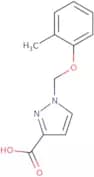
CAS:<p>Versatile small molecule scaffold</p>Formula:C13H12O2Purity:Min. 95%Molecular weight:200.23 g/mol1-(2-Methylphenoxymethyl)-1H-pyrazole-3-carboxylic acid
CAS:<p>Versatile small molecule scaffold</p>Formula:C12H12N2O3Purity:Min. 95%Molecular weight:232.23 g/molRef: 3D-BQB51922
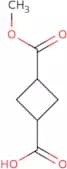
Discontinued product3-(METHOXYCARBONYL)CYCLOBUTANECARBOXYLIC ACID, trans
CAS:<p>Versatile small molecule scaffold</p>Formula:C7H10O4Purity:Min. 95%Molecular weight:158.2 g/molRef: 3D-BGC10371
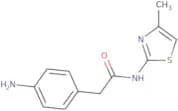
Discontinued product2-(4-Aminophenyl)-N-(4-methyl-1,3-thiazol-2-yl)acetamide
CAS:<p>Versatile small molecule scaffold</p>Formula:C12H13N3OSPurity:Min. 95%Molecular weight:247.32 g/molRef: 3D-NIA98598
Discontinued productN-(5-Aminopentyl)hydroxylamine dihydrochloride
CAS:<p>Versatile small molecule scaffold</p>Formula:C5H15ClN2OPurity:Min. 95%Molecular weight:154.64 g/molRef: 3D-BAA00238
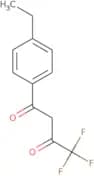
Discontinued product1-(4-Ethylphenyl)-4,4,4-trifluorobutane-1,3-dione
CAS:<p>Versatile small molecule scaffold</p>Formula:C12H11F3O2Purity:Min. 95%Molecular weight:244.21 g/mol2-(2-Amino-2-cyclopropylethyl)-1λ⁶,2-thiazolidine-1,1-dione
CAS:<p>Versatile small molecule scaffold</p>Formula:C8H16N2O2SPurity:Min. 95%Molecular weight:204.29 g/molRef: 3D-QDC04429
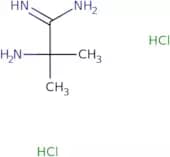
Discontinued product2-Amino-2-methylpropanimidamide dihydrochloride
CAS:<p>Versatile small molecule scaffold</p>Formula:C4H13Cl2N3Purity:Min. 95%Molecular weight:174.07 g/molRef: 3D-DXC60978
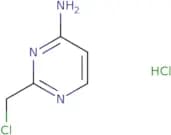
Discontinued product2-(Chloromethyl)pyrimidin-4-amine hydrochloride
CAS:<p>Versatile small molecule scaffold</p>Formula:C5H7Cl2N3Purity:Min. 95%Molecular weight:180.03 g/moltert-Butyl 6,6-dimethyl-5-oxa-2,8-diazaspiro[3.5]nonane-2-carboxylate
CAS:<p>Versatile small molecule scaffold</p>Formula:C13H24N2O3Purity:Min. 95%Molecular weight:256.34 g/molRef: 3D-DXC58061
Discontinued product(7S)-5-Oxo-5H,6H,7H,8H-imidazo[1,5-c]pyrimidine-7-carboxylic acid hydrochloride
CAS:<p>Versatile small molecule scaffold</p>Formula:C7H8ClN3O3Purity:Min. 95%Molecular weight:217.61 g/molRef: 3D-BGA11205
Discontinued productrac-(4aR,7aS)-1-{[(9H-Fluoren-9-yl)methoxy]carbonyl}-octahydro-1H-cyclopenta[b]pyridine-4a-carboxylic acid
CAS:<p>Versatile small molecule scaffold</p>Formula:C24H25NO4Purity:Min. 95%Molecular weight:391.5 g/molRef: 3D-DQD62972
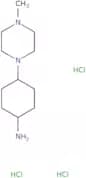
Discontinued product4-(4-Methylpiperazin-1-yl)cyclohexan-1-amine trihydrochloride
CAS:<p>Versatile small molecule scaffold</p>Formula:C11H26Cl3N3Purity:Min. 95%Molecular weight:306.7 g/molRef: 3D-LIC68922
Discontinued productMethyl 2-(azetidin-3-yloxy)acetate hydrochloride
CAS:<p>Versatile small molecule scaffold</p>Formula:C6H12ClNO3Purity:Min. 95%Molecular weight:181.6 g/molRef: 3D-TPD52168
Discontinued productMethyl 1-(chlorosulfonyl)imidazo[1,5-a]pyridine-6-carboxylate
CAS:Versatile small molecule scaffoldFormula:C9H7ClN2O4SPurity:Min. 95%Molecular weight:274.68 g/molRef: 3D-BKD16195
Discontinued product(1R,3S,5R,7S)-3-(1H-1,2,4-Triazol-1-yl)adamantane-1-carboxylic acid
CAS:<p>Versatile small molecule scaffold</p>Formula:C13H17N3O2Purity:Min. 95%Molecular weight:247.29 g/molRef: 3D-TRA80551
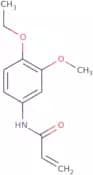
Discontinued productN-(4-Ethoxy-3-methoxyphenyl)prop-2-enamide
CAS:<p>Versatile small molecule scaffold</p>Formula:C12H15NO3Purity:Min. 95%Molecular weight:221.25 g/molRef: 3D-GWB15912
Discontinued product2-(2-Fluoro-6-methoxyphenyl)pyrrolidine hydrochloride
CAS:<p>Versatile small molecule scaffold</p>Formula:C11H15ClFNOPurity:Min. 95%Molecular weight:231.7 g/molRef: 3D-DQD63031
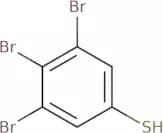
Discontinued product3,4,5-Tribromobenzene-1-thiol
CAS:<p>Versatile small molecule scaffold</p>Formula:C6H3Br3SPurity:Min. 95%Molecular weight:346.87 g/molRef: 3D-TSA68320
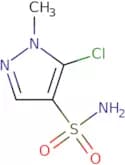
Discontinued product5-Chloro-1-methyl-1H-pyrazole-4-sulfonamide
CAS:<p>Versatile small molecule scaffold</p>Formula:C4H6ClN3O2SPurity:Min. 95%Molecular weight:195.63 g/molRef: 3D-NDA39850
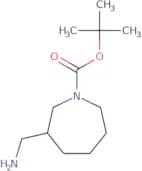
Discontinued producttert-butyl 3-(aminomethyl)azepane-1-carboxylate
CAS:<p>Versatile small molecule scaffold</p>Formula:C12H24N2O2Purity:Min. 95%Molecular weight:228.3 g/molRef: 3D-BKB14747
Discontinued product{[1-(3-Bromophenyl)-1H-1,2,3-triazol-4-yl]methyl}(methyl)amine hydrochloride
CAS:<p>Versatile small molecule scaffold</p>Formula:C10H12BrClN4Purity:Min. 95%Molecular weight:303.58 g/molRef: 3D-DXC58896
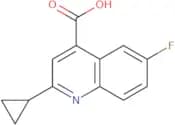
Discontinued product2-Cyclopropyl-6-fluoroquinoline-4-carboxylic acid
CAS:<p>Versatile small molecule scaffold</p>Formula:C13H10FNO2Purity:Min. 95%Molecular weight:231.22 g/molRef: 3D-AAA78458
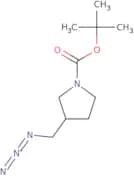
Discontinued producttert-Butyl 3-(azidomethyl)pyrrolidine-1-carboxylate
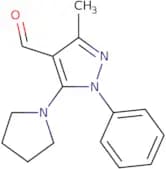
CAS:<p>Versatile small molecule scaffold</p>Formula:C10H18N4O2Purity:Min. 95%Molecular weight:226.28 g/mol3-Methyl-1-phenyl-5-(pyrrolidin-1-yl)-1H-pyrazole-4-carbaldehyde
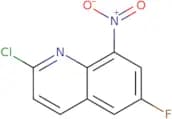
CAS:<p>Versatile small molecule scaffold</p>Formula:C15H17N3OPurity:Min. 95%Molecular weight:255.31 g/mol2-Chloro-6-fluoro-8-nitroquinoline
CAS:<p>Versatile small molecule scaffold</p>Formula:C9H4ClFN2O2Purity:Min. 95%Molecular weight:226.59 g/molRef: 3D-DXC58096
Discontinued product4-{[(5-Nitrofuran-2-yl)methyl]amino}benzoic acid
CAS:<p>Versatile small molecule scaffold</p>Formula:C12H10N2O5Purity:Min. 95%Molecular weight:262.22 g/molRef: 3D-NDA79661
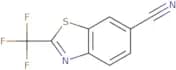
Discontinued product2-(Trifluoromethyl)-1,3-benzothiazole-6-carbonitrile
CAS:<p>2-(Trifluoromethyl)-1,3-benzothiazole-6-carbonitrile (2TFB) is a volatile chemical used in the diagnosis of infectious diseases. It is extracted from sample by solid phase microextraction and then analyzed by gas chromatography with mass spectrometry. 2TFB has been shown to be an influential compound in the synthesis of microspheres for drug delivery. The imprinting process is also influenced by this compound and can be used for the production of microspheres with different properties on demand. It has been shown that 2-TFB inhibits virus growth and can be used as a potential anti-viral agent.</p>Formula:C9H3F3N2SPurity:Min. 95%Molecular weight:228.2 g/molRef: 3D-AZB04114
Discontinued product5-[(tert-Butoxy)carbonyl]-2-oxa-5-azabicyclo[2.2.1]heptane-4-carboxylic acid
CAS:<p>Versatile small molecule scaffold</p>Formula:C11H17NO5Purity:Min. 95%Molecular weight:243.26 g/mol7-(Bromomethyl)-6-oxaspiro[3.5]nonane
CAS:<p>Versatile small molecule scaffold</p>Formula:C9H15BrOPurity:Min. 95%Molecular weight:219.12 g/molRef: 3D-QID71156
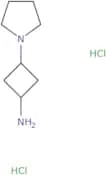
Discontinued productrac-(1S,3S)-3-(Pyrrolidin-1-yl)cyclobutan-1-amine dihydrochloride
CAS:<p>Versatile small molecule scaffold</p>Formula:C8H18Cl2N2Purity:Min. 95%Molecular weight:213.15 g/molRef: 3D-JBD28873
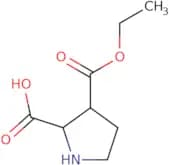
Discontinued productrac-(2R,3S)-3-(Ethoxycarbonyl)pyrrolidine-2-carboxylic acid
CAS:<p>Versatile small molecule scaffold</p>Formula:C8H13NO4Purity:Min. 95%Molecular weight:187.2 g/molRef: 3D-TTD96447
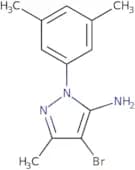
Discontinued product4-Bromo-1-(3,5-dimethylphenyl)-3-methyl-1H-pyrazol-5-amine
CAS:<p>Versatile small molecule scaffold</p>Formula:C12H14BrN3Purity:Min. 95%Molecular weight:280.16 g/molrac-(1R,2S,4S)-7-Oxabicyclo[2.2.1]heptane-2-carbonitrile, endo
CAS:<p>Versatile small molecule scaffold</p>Formula:C7H9NOPurity:Min. 95%Molecular weight:123.15 g/molRef: 3D-BAA72796
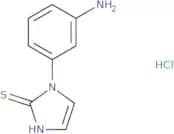
Discontinued product1-(3-Aminophenyl)-1H-imidazole-2-thiol hydrochloride
CAS:<p>Versatile small molecule scaffold</p>Formula:C9H10ClN3SPurity:Min. 95%Molecular weight:227.71 g/molRef: 3D-DXC57232
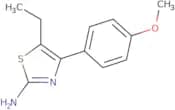
Discontinued product5-Ethyl-4-(4-methoxy-phenyl)-thiazol-2-ylamine
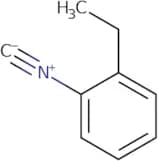
CAS:<p>Versatile small molecule scaffold</p>Formula:C12H14N2OSPurity:Min. 95%Molecular weight:234.32 g/mol1-Ethyl-2-isocyano-benzene
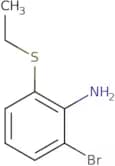
CAS:<p>Versatile small molecule scaffold</p>Formula:C9H9NPurity:Min. 95%Molecular weight:131.17 g/mol2-Bromo-6-(ethylsulfanyl)aniline
CAS:<p>Versatile small molecule scaffold</p>Formula:C8H10BrNSPurity:Min. 95%Molecular weight:232.14 g/molRef: 3D-DXC60876
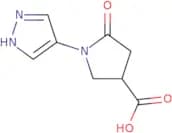
Discontinued product5-Oxo-1-(1H-pyrazol-4-yl)pyrrolidine-3-carboxylic acid
CAS:<p>Versatile small molecule scaffold</p>Formula:C8H9N3O3Purity:Min. 95%Molecular weight:195.18 g/molRef: 3D-GWB16768
Discontinued productMethyl 4-methyl-3-{[(4-methyl-1H-imidazol-5-yl)methyl]amino}benzoate
CAS:<p>Versatile small molecule scaffold</p>Formula:C14H17N3O2Purity:Min. 95%Molecular weight:259.3 g/molRef: 3D-QCC36887
Discontinued product{Bicyclo[2.2.2]oct-5-en-2-yl}methanamine hydrochloride
CAS:<p>Versatile small molecule scaffold</p>Formula:C9H16ClNPurity:Min. 95%Molecular weight:173.68 g/molRef: 3D-JBD31357
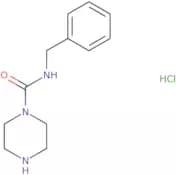
Discontinued productN-Benzylpiperazine-1-carboxamide hydrochloride
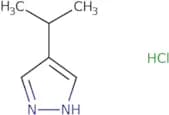
CAS:<p>Versatile small molecule scaffold</p>Formula:C12H18ClN3OPurity:Min. 95%Molecular weight:255.74 g/mol4-(Propan-2-yl)-1H-pyrazole hydrochloride
CAS:<p>Versatile small molecule scaffold</p>Formula:C6H11ClN2Purity:Min. 95%Molecular weight:146.62 g/molRef: 3D-QFC65461
Discontinued product11,13-Dimethyl-8-thia-3,5,10-triazatricyclo[7.4.0.0,2,7]trideca-1(13),2(7),3,9,11-pentaen-6-one
CAS:<p>Versatile small molecule scaffold</p>Formula:C11H9N3OSPurity:Min. 95%Molecular weight:231.28 g/molRef: 3D-FCA02335
Discontinued product2-Chloro-N-[4-(1-pyrrolidinyl)phenyl]acetamide
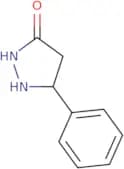
CAS:<p>Versatile small molecule scaffold</p>Formula:C12H15ClN2OPurity:Min. 95%Molecular weight:238.72 g/mol5-Phenylpyrazolidin-3-one
CAS:<p>5-Phenylpyrazolidin-3-one is a pyrazole compound that has a tautomeric form. It has been shown to selectively interact with anions, such as chloride anion, in the presence of hydrogen bonds. This leads to the production of a hydrogen cation and an electrophilic imine. 5-Phenylpyrazolidin-3-one is used in chemosensors for the detection of various chemicals, including formaldehyde and acetaldehyde. 5-Phenylpyrazolidin-3-one also has antitumor activity due to its ability to inhibit DNA synthesis and induce apoptosis in cancer cells.</p>Formula:C9H10N2OPurity:Min. 95%Molecular weight:162.19 g/molRef: 3D-NAA04712
Discontinued product8-Methyl-2-oxa-8-azaspiro[4.5]decane-1,3-dione hydrochloride
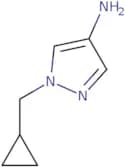
CAS:<p>Versatile small molecule scaffold</p>Formula:C9H14ClNO3Purity:Min. 95%Molecular weight:219.66 g/mol1-(Cyclopropylmethyl)-1H-pyrazol-4-amine
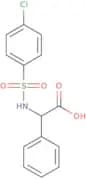
CAS:<p>Versatile small molecule scaffold</p>Formula:C7H11N3Purity:Min. 95%Molecular weight:137.18 g/mol2-(4-Chlorobenzenesulfonamido)-2-phenylacetic acid
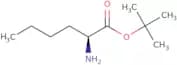
CAS:<p>Versatile small molecule scaffold</p>Formula:C14H12ClNO4SPurity:Min. 95%Molecular weight:325.8 g/moltert-butyl (2S)-2-aminohexanoate
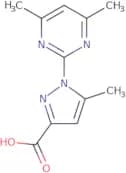
CAS:<p>Tert-butyl (2S)-2-aminohexanoate is an intermediate that is used in the synthesis of glycine by the reaction of benzyl bromide and tert-butyl amine. The stereospecifically incorporated tert-butyl group has a high degree of enantioselectivity, which makes this intermediate useful in the synthesis of glycine. Tert-butyl (2S)-2-aminohexanoate can be synthesized using lithium diisopropylamide and a tertiary amine as an alkylating agent.</p>Formula:C10H21NO2Purity:Min. 95%Molecular weight:187.3 g/mol1-(4,6-Dimethylpyrimidin-2-yl)-5-methyl-1H-pyrazole-3-carboxylic acid
CAS:<p>Versatile small molecule scaffold</p>Formula:C11H12N4O2Purity:Min. 95%Molecular weight:232.24 g/molRef: 3D-BMB01642
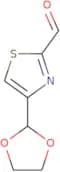
Discontinued product4-(1,3-Dioxolan-2-yl)-1,3-thiazole-2-carbaldehyde
CAS:<p>Versatile small molecule scaffold</p>Formula:C7H7NO3SPurity:Min. 95%Molecular weight:185.2 g/molRef: 3D-JCD39221
Discontinued product2-[(5-Amino-1H-1,2,4-triazol-3-yl)sulfanyl]ethan-1-ol
CAS:<p>Versatile small molecule scaffold</p>Formula:C4H8N4OSPurity:Min. 95%Molecular weight:160.2 g/molRef: 3D-RMB86793
Discontinued product3-[5-(Aminomethyl)-1-oxo-2,3-dihydro-1H-isoindol-2-yl]piperidine-2,6-dione hydrochloride
CAS:<p>Versatile small molecule scaffold</p>Formula:C14H16ClN3O3Purity:Min. 95%Molecular weight:309.75 g/mol3-amino-6-bromopyridin-2-ol hydrobromide
CAS:<p>Versatile small molecule scaffold</p>Formula:C5H6Br2N2OPurity:Min. 95%Molecular weight:269.9 g/mol3-(Methoxycarbonyl)pyridine-4-carboxylic acid
CAS:<p>Versatile small molecule scaffold</p>Formula:C8H7NO4Purity:Min. 95%Molecular weight:181.15 g/mol3-Methylbenzo[b]thiophene-2-carboxylic acid
CAS:<p>3-Methylbenzo[b]thiophene-2-carboxylic acid (MBTCA) is a heterocyclic compound that is an intermediate in the synthesis of 3-methylthiophene-2-carboxylic acid, a precursor to other drugs. MBTCA is an aerobic, nonpolar compound that has shown antimicrobial activity against some bacteria and fungi. It also has been shown to have practicality as a biomolecular probe for methyl groups in organic solvents. MBTCA can be synthesized by nitration of benzene in the presence of sulfur and sulfoxides. This reaction produces nitrobenzene, which can then be oxidized by potassium permanganate or hydrogen peroxide to produce MBTCA. The most common isomer of MBTCA is 2-(3,5-dimethoxybenzylidene)tetrahydrofuran, with three methyl groups on the</p>Formula:C10H8O2SPurity:Min. 95%Molecular weight:192.23 g/mol1-[3-(Dimethylamino)propyl]-1-(4-fluorophenyl)-1,3-dihydro-3-oxo-5-isobenzofurancarbonitrile
CAS:<p>Please enquire for more information about 1-[3-(Dimethylamino)propyl]-1-(4-fluorophenyl)-1,3-dihydro-3-oxo-5-isobenzofurancarbonitrile including the price, delivery time and more detailed product information at the technical inquiry form on this page</p>Formula:C20H19FN2O2Purity:Min. 95%Molecular weight:338.38 g/molRef: 3D-FD184085
Discontinued product2-Acetylbenzoic acid
CAS:<p>2-Acetylbenzoic acid is a functional molecule that contains an acetyl group. It can form hydrogen bonds with other molecules and has been shown to induce apoptosis in cells. The reaction products of 2-acetylbenzoic acid are malonic acid, acetylsalicylic acid, and 2-benzoylbenzoic acid. These three compounds are made by the addition of hydrogen or hydroxide to the molecule 2-acetylbenzoic acid. The molecule has two functional groups: a carbonyl group and an acetyl group. The chemical structure of this molecule can be seen in the figure below.<br>2-Acetylbenzoic Acid</p>Formula:C9H8O3Purity:Min. 95%Color and Shape:PowderMolecular weight:164.16 g/molRef: 3D-FA05086
Discontinued product6,6-Difluorospiro[3.3]heptan-2-amine Hydrochloride
CAS:<p>Versatile small molecule scaffold</p>Formula:C7H11F2N·HClPurity:Min. 95%Molecular weight:147.17 g/mol(2S,3R)-2-((((9H-Fluoren-9-yl)methoxy)carbonyl)amino)-3-methoxybutanoic acid
CAS:<p>Versatile small molecule scaffold</p>Formula:C20H21NO5Purity:Min. 95%Molecular weight:355.4 g/mol3-Boc-3-azabicyclo[3.2.1]octan-8-amine
CAS:<p>Versatile small molecule scaffold</p>Formula:C12H22N2O2Purity:Min. 95%Molecular weight:226.32 g/moltert-Butyl 5-bromo-3,4-dihydro-2,7-naphthyridine-2(1H)-carboxylate
CAS:<p>Versatile small molecule scaffold</p>Formula:C13H17BrN2O2Purity:Min. 95%Molecular weight:313.19 g/mol2-Bromo-3,3,3-trifluoro-1-propene
CAS:Controlled Product<p>2-Bromo-3,3,3-trifluoro-1-propene is a chemical compound that has been synthesized in an asymmetric reaction. The reactant is bromopropane and the product is 2,2,2-trifluoropropene. The methylene group on the propene molecule is activated by the nucleophilic attack of a fluoride ion from hydrogen fluoride to form a cavity with a highly strained bond. The kinetic study of this reaction revealed that the activation energy for the reaction is 42 kJ/mol. Palladium-catalyzed coupling reactions are catalyzed by palladium and require nonpolar solvents such as toluene or dichloromethane. This type of reaction has been shown to be exothermic with an isolated yield of 1%.</p>Formula:C3H2BrF3Purity:Min. 95%Color and Shape:Colorless PowderMolecular weight:174.95 g/mol2-Bromo-4-(4-fluorophenyl)-1,3-thiazole
CAS:<p>Versatile small molecule scaffold</p>Formula:C9H5NFSBrPurity:Min. 95%Molecular weight:258.11 g/molH-Ser-Ala-Glu-Glu-Tyr-Glu-Tyr-Pro-Ser OH trifluoroacetate
CAS:<p>Please enquire for more information about H-Ser-Ala-Glu-Glu-Tyr-Glu-Tyr-Pro-Ser OH trifluoroacetate including the price, delivery time and more detailed product information at the technical inquiry form on this page</p>Formula:C47H63N9O20•(C2HF3O2)xPurity:Min. 95%Ref: 3D-FS183525
Discontinued productGivinostat hydrochloride
CAS:<p>Givinostat hydrochloride is a research chemical that has shown potential in various fields. It is a molybdenum-based compound that has been studied for its effects on dopamine release and hydrogen evolution. Givinostat hydrochloride has also been investigated as an osteoclast inhibitor, which may be beneficial in the treatment of bone-related disorders such as osteoporosis. Additionally, it has shown promise as a retinoid and calpain inhibitor, suggesting its potential use in dermatological conditions and neurodegenerative diseases. The compound contains fluorine atoms, making it suitable for imaging studies using fluorine MRI techniques. Givinostat hydrochloride has been tested on MDA-MB-231 cells and has shown inhibitory effects on their growth, indicating its potential as an anticancer agent.</p>Formula:C24H27N3O4·HClPurity:Min. 95%Molecular weight:457.95 g/mol

![Methyl 2-azaspiro[4.4]nonane-4-carboxylate hydrochloride](/_next/image/?url=https%3A%2Fstatic.cymitquimica.com%2Fproducts%2F3D%2Fthumb-webp%2FTPD51625.webp&w=3840&q=75)
![{5H,7H,8H-Pyrano[4,3-d]pyrimidin-2-yl}methanamine](/_next/image/?url=https%3A%2Fstatic.cymitquimica.com%2Fproducts%2F3D%2Fthumb-webp%2FEMC23714.webp&w=3840&q=75)
![2-({5,6-Dimethylthieno[2,3-d]pyrimidin-4-yl}sulfanyl)benzoic acid](/_next/image/?url=https%3A%2Fstatic.cymitquimica.com%2Fproducts%2F3D%2Fthumb-webp%2FBEB15117.webp&w=3840&q=75)

![6-benzyl-2-methyl-5,6,7,8-tetrahydropyrido[4,3-d]pyrimidin-4(3H)-one](/_next/image/?url=https%3A%2Fstatic.cymitquimica.com%2Fproducts%2F3D%2Fthumb-webp%2FBAA44840.webp&w=3840&q=75)

![N-[4-Chloro-3-(trifluoromethyl)phenyl]-2-hydroxybenzamide](/_next/image/?url=https%3A%2Fstatic.cymitquimica.com%2Fproducts%2F3D%2Fthumb-webp%2FAAA36974.webp&w=3840&q=75)
![5-[4-(Aminomethyl)phenyl]-5-methylimidazolidine-2,4-dione hydrochloride](/_next/image/?url=https%3A%2Fstatic.cymitquimica.com%2Fproducts%2F3D%2Fthumb-webp%2FDXC58913.webp&w=3840&q=75)
![3,8-Diethyl 4-aminopyrazolo[3,2-c][1,2,4]triazine-3,8-dicarboxylate](/_next/image/?url=https%3A%2Fstatic.cymitquimica.com%2Fproducts%2F3D%2Fthumb-webp%2FQEA42304.webp&w=3840&q=75)
![3-Amino-1λ⁶-thiaspiro[3.5]nonane-1,1-dione hydrochloride](/_next/image/?url=https%3A%2Fstatic.cymitquimica.com%2Fproducts%2F3D%2Fthumb-webp%2FTPD51634.webp&w=3840&q=75)



![tert-Butyl 6,6-dimethyl-5-oxa-2,8-diazaspiro[3.5]nonane-2-carboxylate](/_next/image/?url=https%3A%2Fstatic.cymitquimica.com%2Fproducts%2F3D%2Fthumb-webp%2FDXC58061.webp&w=3840&q=75)
![(7S)-5-Oxo-5H,6H,7H,8H-imidazo[1,5-c]pyrimidine-7-carboxylic acid hydrochloride](/_next/image/?url=https%3A%2Fstatic.cymitquimica.com%2Fproducts%2F3D%2Fthumb-webp%2FBGA11205.webp&w=3840&q=75)
![rac-(4aR,7aS)-1-{[(9H-Fluoren-9-yl)methoxy]carbonyl}-octahydro-1H-cyclopenta[b]pyridine-4a-carboxy…](/_next/image/?url=https%3A%2Fstatic.cymitquimica.com%2Fproducts%2F3D%2Fthumb-webp%2FDQD62972.webp&w=3840&q=75)

![Methyl 1-(chlorosulfonyl)imidazo[1,5-a]pyridine-6-carboxylate](/_next/image/?url=https%3A%2Fstatic.cymitquimica.com%2Fproducts%2F3D%2Fthumb-webp%2FBKD16195.webp&w=3840&q=75)


![{[1-(3-Bromophenyl)-1H-1,2,3-triazol-4-yl]methyl}(methyl)amine hydrochloride](/_next/image/?url=https%3A%2Fstatic.cymitquimica.com%2Fproducts%2F3D%2Fthumb-webp%2FDXC58896.webp&w=3840&q=75)
![4-{[(5-Nitrofuran-2-yl)methyl]amino}benzoic acid](/_next/image/?url=https%3A%2Fstatic.cymitquimica.com%2Fproducts%2F3D%2Fthumb-webp%2FNDA79661.webp&w=3840&q=75)
![5-[(tert-Butoxy)carbonyl]-2-oxa-5-azabicyclo[2.2.1]heptane-4-carboxylic acid](/_next/image/?url=https%3A%2Fstatic.cymitquimica.com%2Fproducts%2F3D%2Fthumb-webp%2FJCD36379.webp&w=3840&q=75)
![7-(Bromomethyl)-6-oxaspiro[3.5]nonane](/_next/image/?url=https%3A%2Fstatic.cymitquimica.com%2Fproducts%2F3D%2Fthumb-webp%2FQID71156.webp&w=3840&q=75)
![rac-(1R,2S,4S)-7-Oxabicyclo[2.2.1]heptane-2-carbonitrile, endo](/_next/image/?url=https%3A%2Fstatic.cymitquimica.com%2Fproducts%2F3D%2Fthumb-webp%2FBAA72796.webp&w=3840&q=75)
![Methyl 4-methyl-3-{[(4-methyl-1H-imidazol-5-yl)methyl]amino}benzoate](/_next/image/?url=https%3A%2Fstatic.cymitquimica.com%2Fproducts%2F3D%2Fthumb-webp%2FQCC36887.webp&w=3840&q=75)
![{Bicyclo[2.2.2]oct-5-en-2-yl}methanamine hydrochloride](/_next/image/?url=https%3A%2Fstatic.cymitquimica.com%2Fproducts%2F3D%2Fthumb-webp%2FJBD31357.webp&w=3840&q=75)
![11,13-Dimethyl-8-thia-3,5,10-triazatricyclo[7.4.0.0,2,7]trideca-1(13),2(7),3,9,11-pentaen-6-one](/_next/image/?url=https%3A%2Fstatic.cymitquimica.com%2Fproducts%2F3D%2Fthumb-webp%2FFCA02335.webp&w=3840&q=75)
![2-Chloro-N-[4-(1-pyrrolidinyl)phenyl]acetamide](/_next/image/?url=https%3A%2Fstatic.cymitquimica.com%2Fproducts%2F3D%2Fthumb-webp%2FBKA09715.webp&w=3840&q=75)
![8-Methyl-2-oxa-8-azaspiro[4.5]decane-1,3-dione hydrochloride](/_next/image/?url=https%3A%2Fstatic.cymitquimica.com%2Fproducts%2F3D%2Fthumb-webp%2FDXC60859.webp&w=3840&q=75)
![2-[(5-Amino-1H-1,2,4-triazol-3-yl)sulfanyl]ethan-1-ol](/_next/image/?url=https%3A%2Fstatic.cymitquimica.com%2Fproducts%2F3D%2Fthumb-webp%2FRMB86793.webp&w=3840&q=75)
![3-[5-(Aminomethyl)-1-oxo-2,3-dihydro-1H-isoindol-2-yl]piperidine-2,6-dione hydrochloride](/_next/image/?url=https%3A%2Fstatic.cymitquimica.com%2Fproducts%2F3D%2Fthumb-webp%2FIWB26469.webp&w=3840&q=75)


![3-Methylbenzo[b]thiophene-2-carboxylic acid](/_next/image/?url=https%3A%2Fstatic.cymitquimica.com%2Fproducts%2F3D%2Fthumb-webp%2FDAA13378.webp&w=3840&q=75)
![1-[3-(Dimethylamino)propyl]-1-(4-fluorophenyl)-1,3-dihydro-3-oxo-5-isobenzofurancarbonitrile](/_next/image/?url=https%3A%2Fstatic.cymitquimica.com%2Fproducts%2F3D%2Fthumb-webp%2FFD184085.webp&w=3840&q=75)

![6,6-Difluorospiro[3.3]heptan-2-amine Hydrochloride](/_next/image/?url=https%3A%2Fstatic.cymitquimica.com%2Fproducts%2F3D%2Fthumb-webp%2FYGC03271.webp&w=3840&q=75)

![3-Boc-3-azabicyclo[3.2.1]octan-8-amine](/_next/image/?url=https%3A%2Fstatic.cymitquimica.com%2Fproducts%2F3D%2Fthumb-webp%2FFDC76351.webp&w=3840&q=75)



