Building Blocks
This section contains fundamental products for the synthesis of organic and biological compounds. Building blocks are the essential starting materials used to construct complex molecules through various chemical reactions. They play a critical role in drug discovery, material science, and chemical research. At CymitQuimica, we offer a diverse range of high-quality building blocks to support your innovative research and industrial projects, ensuring you have the essential components for successful synthesis.
Subcategories of "Building Blocks"
- Boronic Acids & Boronic Acid Derivatives(5,778 products)
- Chiral Building Blocks(1,242 products)
- Hydrocarbon Building Blocks(6,098 products)
- Organic Building Blocks(61,059 products)
Found 199580 products of "Building Blocks"
Sort by
Purity (%)
0
100
|
0
|
50
|
90
|
95
|
100
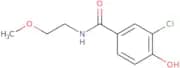
3-Chloro-4-hydroxy-N-(2-methoxyethyl)benzamide
CAS:<p>Versatile small molecule scaffold</p>Formula:C10H12ClNO3Purity:Min. 95%Molecular weight:229.66 g/molRef: 3D-UQB46653
Discontinued productN-[4-(Aminomethyl)phenyl]-4-butylcyclohexane-1-carboxamide
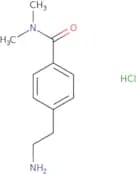
CAS:<p>Versatile small molecule scaffold</p>Formula:C18H28N2OPurity:Min. 95%Molecular weight:288.4 g/mol4-(2-Aminoethyl)-N,N-dimethylbenzamide hydrochloride
CAS:<p>Versatile small molecule scaffold</p>Formula:C11H17ClN2OPurity:Min. 95%Molecular weight:228.72 g/molRef: 3D-YEC22374
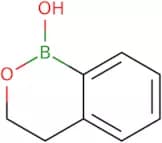
Discontinued product2-(2-Hydroxyethyl)phenylboronic acid dehydrated
CAS:<p>2-(2-Hydroxyethyl)phenylboronic acid dehydrated is a molecule with a hydroxyl group, a neutral ph, and a hydroxyl group. It is used in the synthesis of nitro compounds and has shown to have an inhibitory effect on protein synthesis. The compound also binds to hyaluronic acid, which may be due to its structural similarity to the sugar glucose.</p>Formula:C8H9BO2Purity:Min. 95%Molecular weight:147.97 g/molEthyl 1-benzothiophene-3-carboxylate
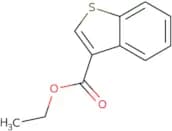
CAS:<p>Ethyl 1-benzothiophene-3-carboxylate is a heterocyclic compound that has been shown to be an efficient condensation reagent. This compound has two methylene groups and is used in the synthesis of heterocycles. It can be used as a precursor for the synthesis of amines and pyridopyridazine derivatives, which are often used as reagents in organic chemistry. Ethyl 1-benzothiophene-3-carboxylate can also be used for irradiation experiments. It has been shown that this compound is active at lower temperatures than other benzothiophenes, making it ideal for use in x-ray crystallography experiments.</p>Formula:C11H10O2SPurity:Min. 95%Molecular weight:206.26 g/molRef: 3D-UAA15649
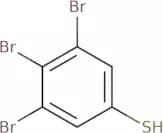
Discontinued product3,4,5-Tribromobenzene-1-thiol
CAS:<p>Versatile small molecule scaffold</p>Formula:C6H3Br3SPurity:Min. 95%Molecular weight:346.87 g/molRef: 3D-TSA68320
Discontinued product(1R,3S,5R,7S)-3-(1H-1,2,4-Triazol-1-yl)adamantane-1-carboxylic acid
CAS:<p>Versatile small molecule scaffold</p>Formula:C13H17N3O2Purity:Min. 95%Molecular weight:247.29 g/molRef: 3D-TRA80551
Discontinued product(3-Amino-piperidin-1-yl)-acetic acid methyl ester dihydrochloride
CAS:<p>Versatile small molecule scaffold</p>Formula:C8H18Cl2N2O2Purity:Min. 95%Molecular weight:245.15 g/molRef: 3D-YEC22381
Discontinued product{1-Methyl-2-oxabicyclo[2.2.1]heptan-4-yl}methanamine hydrochloride
CAS:<p>Versatile small molecule scaffold</p>Formula:C8H16ClNOPurity:Min. 95%Molecular weight:177.7 g/mol7-Amino-2H,3H,5H,6H,7H,8H-[1,2,4]triazolo[4,3-a]pyridin-3-one hydrochloride
CAS:<p>Versatile small molecule scaffold</p>Formula:C6H11ClN4OPurity:Min. 95%Molecular weight:190.6 g/molRef: 3D-TPD51384
Discontinued product{8,8-Difluorobicyclo[5.1.0]octan-4-yl}methanamine hydrochloride
CAS:<p>Versatile small molecule scaffold</p>Formula:C9H16ClF2NPurity:Min. 95%Molecular weight:211.7 g/molRef: 3D-TPD51228
Discontinued product2-(6,6-Dimethylmorpholin-2-yl)acetamide hydrochloride
CAS:<p>Versatile small molecule scaffold</p>Formula:C8H17ClN2O2Purity:Min. 95%Molecular weight:208.7 g/molRef: 3D-TPD51217
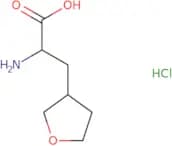
Discontinued product2-Amino-3-(oxolan-3-yl)propanoic acid hydrochloride
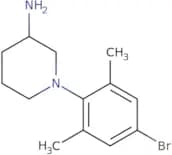
CAS:<p>Versatile small molecule scaffold</p>Formula:C7H14ClNO3Purity:Min. 95%Molecular weight:195.64 g/mol1-(4-Bromo-2,6-dimethylphenyl)piperidin-3-amine
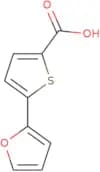
CAS:<p>Versatile small molecule scaffold</p>Formula:C13H19BrN2Purity:Min. 95%Molecular weight:283.21 g/mol5-(Fur-2-yl)thiophene-2-carboxylic acid
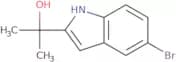
CAS:<p>Versatile small molecule scaffold</p>Formula:C9H6O3SPurity:Min. 95%Molecular weight:194.21 g/mol2-(5-Bromo-1H-indol-2-yl)propan-2-ol
CAS:<p>Versatile small molecule scaffold</p>Formula:C11H12BrNOPurity:Min. 95%Molecular weight:254.12 g/molRef: 3D-TJB69202
Discontinued product5-(Trifluoromethyl)benzo[D]isoxazol-3-amine
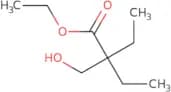
CAS:<p>Versatile small molecule scaffold</p>Formula:C8H5F3N2OPurity:Min. 95%Molecular weight:202.14 g/molEthyl 2-ethyl-2-(hydroxymethyl)butanoate
CAS:<p>Versatile small molecule scaffold</p>Formula:C9H18O3Purity:Min. 95%Molecular weight:174.24 g/molRef: 3D-TJA83598
Discontinued product1-{5H,6H,7H,8H-Pyrido[4,3-c]pyridazin-3-yl}pyrrolidine dihydrochloride
CAS:<p>Versatile small molecule scaffold</p>Formula:C11H18Cl2N4Purity:Min. 95%Molecular weight:277.2 g/molRef: 3D-TID58230
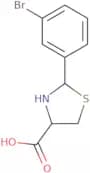
Discontinued product2-(3-Bromophenyl)-1,3-thiazolidine-4-carboxylic acid
CAS:<p>2-(3-Bromophenyl)-1,3-thiazolidine-4-carboxylic acid is an antiparasitic drug. It is a natural compound that has been approved for the treatment of leishmaniasis. This drug also has antimicrobial activity and has been used to treat bacterial and viral infections. 2-(3-Bromophenyl)-1,3-thiazolidine-4-carboxylic acid is synthesized in a laboratory by reacting 3-bromobenzaldehyde with thiosemicarbazide. This drug may also be used to treat fungal infections such as Candida albicans.</p>Formula:C10H10BrNO2SPurity:Min. 95%Molecular weight:288.16 g/molRef: 3D-TEA72156
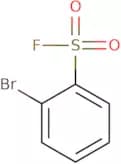
Discontinued product2-Bromobenzenesulfonyl fluoride
CAS:<p>Versatile small molecule scaffold</p>Formula:C6H4BrFO2SPurity:Min. 95%Molecular weight:239.06 g/mol2-(Thiophen-2-yl)quinazoline-4-thiol
CAS:<p>Versatile small molecule scaffold</p>Formula:C12H8N2S2Purity:Min. 95%Molecular weight:244.3 g/molRef: 3D-TAA59068
Discontinued product5-[(tert-Butoxy)carbonyl]pyridine-3-carboxylic acid
CAS:<p>Versatile small molecule scaffold</p>Formula:C11H13NO4Purity:Min. 95%Molecular weight:223.22 g/molRef: 3D-SQB79326
Discontinued product6-({[(9H-fluoren-9-yl)methoxy]carbonyl}(methyl)amino)hexanoic acid
CAS:<p>Versatile small molecule scaffold</p>Formula:C22H25NO4Purity:Min. 95%Molecular weight:367.4 g/mol1-[(tert-Butyldimethylsilyl)oxy]-1-cyclopropylbut-3-en-2-one
CAS:<p>Versatile small molecule scaffold</p>Formula:C13H24O2SiPurity:Min. 95%Molecular weight:240.41 g/molRef: 3D-SLD11633
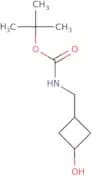
Discontinued productcis-3-(Boc-aminomethyl)cyclobutanol
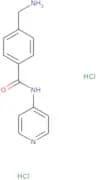
CAS:<p>Versatile small molecule scaffold</p>Formula:C10H19NO3Purity:Min. 95%Molecular weight:201.27 g/mol4-(Aminomethyl)-N-(pyridin-4-yl)benzamide dihydrochloride
CAS:<p>Versatile small molecule scaffold</p>Formula:C13H15Cl2N3OPurity:Min. 95%Molecular weight:300.18 g/mol4-{3-[({[(9H-Fluoren-9-yl)methoxy]carbonyl}amino)methyl]phenyl}benzoic acid
CAS:<p>Versatile small molecule scaffold</p>Formula:C29H23NO4Purity:Min. 95%Molecular weight:449.5 g/molRef: 3D-YGA91123
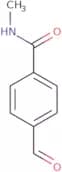
Discontinued product4-Formyl-N-methyl-benzamide
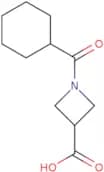
CAS:<p>Versatile small molecule scaffold</p>Formula:C9H9NO2Purity:Min. 95%Molecular weight:163.18 g/mol1-Cyclohexanecarbonylazetidine-3-carboxylic acid
CAS:<p>Versatile small molecule scaffold</p>Formula:C11H17NO3Purity:Min. 95%Molecular weight:211.26 g/molRef: 3D-SDC08918
Discontinued product1-[1-(2-Methoxyethyl)-3,5-dimethyl-1H-pyrazol-4-yl]ethan-1-one
CAS:<p>Versatile small molecule scaffold</p>Formula:C10H16N2O2Purity:Min. 95%Molecular weight:196.25 g/molRef: 3D-SDC02530
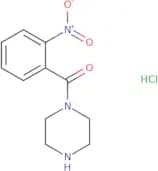
Discontinued product1-(2-Nitrobenzoyl)piperazine hydrochloride
CAS:<p>Versatile small molecule scaffold</p>Formula:C11H14ClN3O3Purity:Min. 95%Molecular weight:271.7 g/molRef: 3D-YMC05256
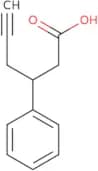
Discontinued product3-Phenylhex-5-ynoic acid
CAS:<p>Versatile small molecule scaffold</p>Formula:C12H12O2Purity:Min. 95%Molecular weight:188.22 g/molRef: 3D-SDA89816
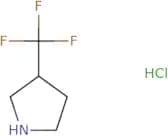
Discontinued product(3R)-3-(Trifluoromethyl)pyrrolidine hydrochloride
CAS:<p>Versatile small molecule scaffold</p>Formula:C5H9ClF3NPurity:Min. 95%Molecular weight:175.58 g/mol2-[(Piperidin-4-yl)methyl]-1,3-thiazole-4-carboxylic acid dihydrochloride
CAS:<p>Versatile small molecule scaffold</p>Formula:C10H16Cl2N2O2SPurity:Min. 95%Molecular weight:299.2 g/molRef: 3D-YPD34383
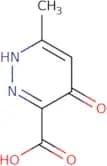
Discontinued product6-Methyl-4-oxo-1,4-dihydropyridazine-3-carboxylic acid
CAS:<p>Versatile small molecule scaffold</p>Formula:C6H6N2O3Purity:Min. 95%Molecular weight:154.12 g/mol(1-Fluoronaphthalen-2-yl)methanamine hydrochloride
CAS:<p>Versatile small molecule scaffold</p>Formula:C11H11ClFNPurity:Min. 95%Molecular weight:211.7 g/molRef: 3D-YPD35653
Discontinued product1-Methyl-2-oxo-2,3-dihydro-1H-imidazole-4-carboxylic acid
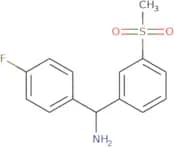
CAS:<p>Versatile small molecule scaffold</p>Formula:C5H6N2O3Purity:Min. 95%Molecular weight:142.11 g/mol(4-Fluorophenyl)(3-methanesulfonylphenyl)methanamine
CAS:<p>Versatile small molecule scaffold</p>Formula:C14H14FNO2SPurity:Min. 95%Molecular weight:279.33 g/molRef: 3D-RQB50886
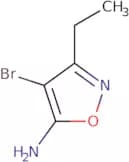
Discontinued product4-Bromo-3-ethyl-1,2-oxazol-5-amine
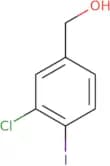
CAS:<p>Versatile small molecule scaffold</p>Formula:C5H7BrN2OPurity:Min. 95%Molecular weight:191.03 g/mol3-Chloro-4-iodobenzyl alcohol
CAS:<p>Versatile small molecule scaffold</p>Formula:C7H6OClIPurity:Min. 95%Molecular weight:268.47 g/molRef: 3D-RGA38660
Discontinued productrac-Methyl (2R)-2-amino-2-[(2R)-2,3-dihydro-1-benzofuran-2-yl]acetate hydrochloride
CAS:<p>Versatile small molecule scaffold</p>Formula:C11H14ClNO3Purity:Min. 95%Molecular weight:243.7 g/molRef: 3D-YPD40693
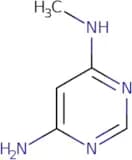
Discontinued product4-N-Methylpyrimidine-4,6-diamine
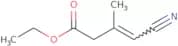
CAS:<p>Versatile small molecule scaffold</p>Formula:C5H8N4Purity:Min. 95%Molecular weight:124.14 g/molEthyl 4-cyano-3-methylbut-3-enoate
CAS:<p>Versatile small molecule scaffold</p>Formula:C8H11NO2Purity:Min. 95%Molecular weight:153.18 g/molRef: 3D-RCA06639
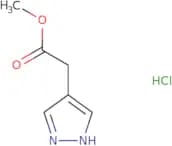
Discontinued product(1H-Pyrazol-4-yl)-acetic acid methyl ester hydrochloride
CAS:<p>Versatile small molecule scaffold</p>Formula:C6H9ClN2O2Purity:Min. 95%Molecular weight:176.6 g/molRef: 3D-QUD41920
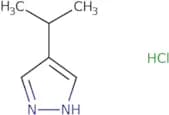
Discontinued product4-(Propan-2-yl)-1H-pyrazole hydrochloride
CAS:<p>Versatile small molecule scaffold</p>Formula:C6H11ClN2Purity:Min. 95%Molecular weight:146.62 g/molRef: 3D-QFC65461
Discontinued product3,3-Diethylpiperidine hydrochloride
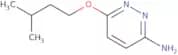
CAS:<p>Versatile small molecule scaffold</p>Formula:C9H20ClNPurity:Min. 95%Molecular weight:177.71 g/mol6-(3-Methylbutoxy)pyridazin-3-amine
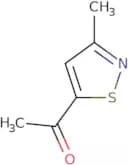
CAS:<p>Versatile small molecule scaffold</p>Formula:C9H15N3OPurity:Min. 95%Molecular weight:181.23 g/mol1-(3-Methyl-isothiazol-5-yl)-ethanone
CAS:<p>Versatile small molecule scaffold</p>Formula:C6H7NOSPurity:Min. 95%Molecular weight:141.19 g/molRef: 3D-QDA72449
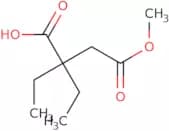
Discontinued product2,2-Diethyl-4-methoxy-4-oxobutanoic acid
CAS:<p>Versatile small molecule scaffold</p>Formula:C9H16O4Purity:Min. 95%Molecular weight:188.22 g/molRef: 3D-QDA64779
Discontinued productPiperazin-1-amine dihydrochloride
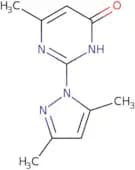
CAS:<p>Versatile small molecule scaffold</p>Formula:C4H13Cl2N3Purity:Min. 95%Molecular weight:174.07 g/mol2-(3,5-Dimethyl-1H-pyrazol-1-yl)-6-methylpyrimidin-4-ol
CAS:<p>2-(3,5-Dimethyl-1H-pyrazol-1-yl)-6-methylpyrimidin-4-ol is a tautomeric form of 2-(3,5-dimethylpyrazol-1-yl)-6-[(2R,3S)-3,5-dimethoxyphenyl]pyrimidin-4-ol. It is a potent inhibitor of lipases and has been shown to have antiinflammatory properties. The drug has also been found to decrease the number of inflammatory cells in the bowel and can be used for the treatment of inflammatory bowel disease. The drug may also be effective for treating other autoimmune diseases such as thyroiditis and scleroderma. This drug also has cancer prevention effects because it inhibits cell division and tumor growth by binding to DNA.</p>Formula:C10H12N4OPurity:Min. 95%Molecular weight:204.23 g/molRef: 3D-QCA00442
Discontinued product{[(4-Fluorophenyl)methyl]carbamoyl}formic acid
CAS:<p>Versatile small molecule scaffold</p>Formula:C9H8FNO3Purity:Min. 95%Molecular weight:197.16 g/molRef: 3D-PJB24464
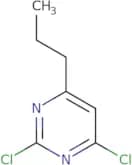
Discontinued product2,4-Dichloro-6-propylpyrimidine
CAS:<p>Versatile small molecule scaffold</p>Formula:C7H8Cl2N2Purity:Min. 95%Molecular weight:191.05 g/molRef: 3D-PDA93807
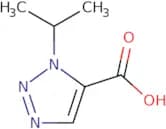
Discontinued product1-(Propan-2-yl)-1H-1,2,3-triazole-5-carboxylic acid
CAS:<p>Versatile small molecule scaffold</p>Formula:C6H9N3O2Purity:Min. 95%Molecular weight:155.15 g/molRef: 3D-YXB43754
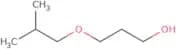
Discontinued product3-(2-Methylpropoxy)propan-1-ol
CAS:<p>3-(2-Methylpropoxy)propan-1-ol is a volatile organic chemical that can be used as a solvent in the production of paints and coatings. It is also used as an intermediate in the manufacture of other chemicals, such as trichloroethane and ethylene dichloride. 3-(2-Methylpropoxy)propan-1-ol has been detected by gas chromatography using a flame ionization detector (GC/FID) in oleoresin samples from oranges and pineapples. Recoveries of 3-(2-methylpropoxy)propan-1-ol from orange oleoresin were found to be 87%.</p>Formula:C7H16O2Purity:Min. 95%Molecular weight:132.2 g/molRef: 3D-PDA85549
Discontinued product{4H,5H,6H,7H,8H-Cyclohepta[D][1,2]oxazol-3-yl}methanesulfonyl chloride
CAS:<p>Versatile small molecule scaffold</p>Formula:C9H12ClNO3SPurity:Min. 95%Molecular weight:249.72 g/molRef: 3D-NKD16955
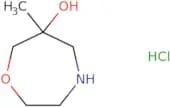
Discontinued product6-Methyl-1,4-oxazepan-6-ol hydrochloride
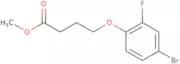
CAS:<p>Versatile small molecule scaffold</p>Formula:C6H14ClNO2Purity:Min. 95%Molecular weight:167.63 g/molMethyl 4-(4-bromo-2-fluorophenoxy)butanoate
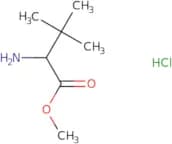
CAS:Controlled Product<p>Versatile small molecule scaffold</p>Formula:C11H12BrFO3Purity:Min. 95%Molecular weight:291.11 g/molMethyl 2-amino-3,3-dimethylbutanoate hydrochloride
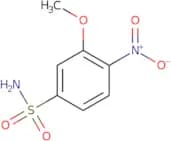
CAS:<p>Versatile small molecule scaffold</p>Formula:C7H16ClNO2Purity:Min. 95%Molecular weight:181.66 g/mol3-Methoxy-4-nitrobenzene-1-sulfonamide
CAS:<p>Versatile small molecule scaffold</p>Formula:C7H8N2O5SPurity:Min. 95%Molecular weight:232.22 g/molRef: 3D-XAA11782
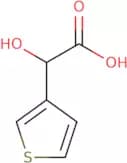
Discontinued product2-Hydroxy-2-(thiophen-3-yl)acetic acid
CAS:<p>Versatile small molecule scaffold</p>Formula:C6H6O3SPurity:Min. 95%Molecular weight:158.18 g/molRef: 3D-XAA09820
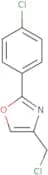
Discontinued product4-(Chloromethyl)-2-(4-chlorophenyl)-1,3-oxazole
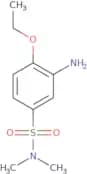
CAS:<p>Versatile small molecule scaffold</p>Formula:C10H7Cl2NOPurity:Min. 95%Molecular weight:228.07 g/mol3-Amino-4-ethoxy-N,N-dimethylbenzene-1-sulfonamide
CAS:<p>Versatile small molecule scaffold</p>Formula:C10H16N2O3SPurity:Min. 95%Molecular weight:244.31 g/molRef: 3D-XAA12173
Discontinued product8-Methoxy-6-methylquinolin-4-ol
CAS:<p>8-Methoxy-6-methylquinolin-4-ol (8MQ) is a mitochondrial substrate that has been shown to have physiological functions in energy metabolism and lysine biosynthesis. 8MQ has been shown to be a potential drug target for the treatment of corynebacterium glutamicum, which produces acid formation. 8MQ also inhibits wild-type strains of bacteria and clinical isolates of HIV. The m2 phenotype is an HIV-1 protein that is essential for viral replication. 8MQ binding to this protein prevents it from binding with other proteins on the surface of the virus, inhibiting its ability to bind with CD4 cells and infect new cells.</p>Formula:C11H11NO2Purity:Min. 95%Molecular weight:189.21 g/mol3-[5-(Aminomethyl)-1-oxo-2,3-dihydro-1H-isoindol-2-yl]piperidine-2,6-dione hydrochloride
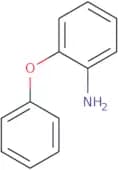
CAS:<p>Versatile small molecule scaffold</p>Formula:C14H16ClN3O3Purity:Min. 95%Molecular weight:309.75 g/mol2-Phenoxyaniline
CAS:<p>2-Phenoxyaniline is a nitro compound that can be converted to the corresponding palladium complexes. It is an inhibitor of the acylation reaction, which is a type of chemical reaction in which an organic molecule reacts with an acid. The inhibition of this reaction has been shown to have an effect on heart disease, specifically by lowering cholesterol levels and reducing atherosclerosis. 2-Phenoxyaniline has also been shown to inhibit the activation energy for electron transfer reactions, making it useful as a catalyst in analytical methods. 2-Phenoxyaniline also undergoes vibrational spectroscopy when exposed to liquid chromatography and other analytical methods.</p>Formula:C12H11NOPurity:Min. 95%Color and Shape:Brown PowderMolecular weight:185.22 g/mol4-(Methylamino)benzene-1-sulfonamide
CAS:<p>Versatile small molecule scaffold</p>Formula:C7H10N2O2SPurity:Min. 95%Molecular weight:186.23 g/mol3-amino-6-bromopyridin-2-ol hydrobromide
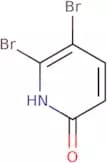
CAS:<p>Versatile small molecule scaffold</p>Formula:C5H6Br2N2OPurity:Min. 95%Molecular weight:269.9 g/mol5,6-Dibromopyridin-2-ol
CAS:<p>Versatile small molecule scaffold</p>Formula:C5H3Br2NOPurity:Min. 95%Molecular weight:252.89 g/mol1-[3-(Dimethylamino)propyl]-1-(4-fluorophenyl)-1,3-dihydro-3-oxo-5-isobenzofurancarbonitrile
CAS:<p>Please enquire for more information about 1-[3-(Dimethylamino)propyl]-1-(4-fluorophenyl)-1,3-dihydro-3-oxo-5-isobenzofurancarbonitrile including the price, delivery time and more detailed product information at the technical inquiry form on this page</p>Formula:C20H19FN2O2Purity:Min. 95%Molecular weight:338.38 g/molRef: 3D-FD184085
Discontinued producttert-Butyl 5-bromo-3,4-dihydro-2,7-naphthyridine-2(1H)-carboxylate
CAS:<p>Versatile small molecule scaffold</p>Formula:C13H17BrN2O2Purity:Min. 95%Molecular weight:313.19 g/mol3-Methylbenzo[b]thiophene-2-carboxylic acid
CAS:<p>3-Methylbenzo[b]thiophene-2-carboxylic acid (MBTCA) is a heterocyclic compound that is an intermediate in the synthesis of 3-methylthiophene-2-carboxylic acid, a precursor to other drugs. MBTCA is an aerobic, nonpolar compound that has shown antimicrobial activity against some bacteria and fungi. It also has been shown to have practicality as a biomolecular probe for methyl groups in organic solvents. MBTCA can be synthesized by nitration of benzene in the presence of sulfur and sulfoxides. This reaction produces nitrobenzene, which can then be oxidized by potassium permanganate or hydrogen peroxide to produce MBTCA. The most common isomer of MBTCA is 2-(3,5-dimethoxybenzylidene)tetrahydrofuran, with three methyl groups on the</p>Formula:C10H8O2SPurity:Min. 95%Molecular weight:192.23 g/mol2-Bromo-3,3,3-trifluoro-1-propene
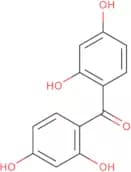
CAS:Controlled Product<p>2-Bromo-3,3,3-trifluoro-1-propene is a chemical compound that has been synthesized in an asymmetric reaction. The reactant is bromopropane and the product is 2,2,2-trifluoropropene. The methylene group on the propene molecule is activated by the nucleophilic attack of a fluoride ion from hydrogen fluoride to form a cavity with a highly strained bond. The kinetic study of this reaction revealed that the activation energy for the reaction is 42 kJ/mol. Palladium-catalyzed coupling reactions are catalyzed by palladium and require nonpolar solvents such as toluene or dichloromethane. This type of reaction has been shown to be exothermic with an isolated yield of 1%.</p>Formula:C3H2BrF3Purity:Min. 95%Color and Shape:Colorless PowderMolecular weight:174.95 g/mol2,2',4,4'-tetrahydroxybenzophenone
CAS:<p>2,2',4,4'-tetrahydroxybenzophenone is a hydroxylated benzophenone that has immunomodulatory effects. It binds to the receptor in the immune system and can cause an increase in cytokine production. 2,2',4,4'-tetrahydroxybenzophenone is cytotoxic and has significant toxicity in vitro. The molecule has been shown to disrupt mitochondrial membrane potential. This may be due to its ability to form hydrogen bonds with molecules on the mitochondrial membrane. 2,2',4,4'-tetrahydroxybenzophenone also modulates transcriptional regulation of genes involved in cell proliferation and apoptosis. The drug is detectable at low levels by mass spectrometry and is not known to have any toxicological effects.END>></p>Formula:C13H10O5Purity:Min. 95%Color and Shape:Green PowderMolecular weight:246.22 g/molRef: 3D-FT55663
Discontinued product2-Acetylbenzoic acid
CAS:<p>2-Acetylbenzoic acid is a functional molecule that contains an acetyl group. It can form hydrogen bonds with other molecules and has been shown to induce apoptosis in cells. The reaction products of 2-acetylbenzoic acid are malonic acid, acetylsalicylic acid, and 2-benzoylbenzoic acid. These three compounds are made by the addition of hydrogen or hydroxide to the molecule 2-acetylbenzoic acid. The molecule has two functional groups: a carbonyl group and an acetyl group. The chemical structure of this molecule can be seen in the figure below.<br>2-Acetylbenzoic Acid</p>Formula:C9H8O3Purity:Min. 95%Color and Shape:PowderMolecular weight:164.16 g/molRef: 3D-FA05086
Discontinued product(2S,3R)-2-((((9H-Fluoren-9-yl)methoxy)carbonyl)amino)-3-methoxybutanoic acid
CAS:<p>Versatile small molecule scaffold</p>Formula:C20H21NO5Purity:Min. 95%Molecular weight:355.4 g/mol3-(Methoxycarbonyl)pyridine-4-carboxylic acid
CAS:<p>Versatile small molecule scaffold</p>Formula:C8H7NO4Purity:Min. 95%Molecular weight:181.15 g/molH-Ser-Ala-Glu-Glu-Tyr-Glu-Tyr-Pro-Ser OH trifluoroacetate
CAS:<p>Please enquire for more information about H-Ser-Ala-Glu-Glu-Tyr-Glu-Tyr-Pro-Ser OH trifluoroacetate including the price, delivery time and more detailed product information at the technical inquiry form on this page</p>Formula:C47H63N9O20•(C2HF3O2)xPurity:Min. 95%Ref: 3D-FS183525
Discontinued productGivinostat hydrochloride
CAS:<p>Givinostat hydrochloride is a research chemical that has shown potential in various fields. It is a molybdenum-based compound that has been studied for its effects on dopamine release and hydrogen evolution. Givinostat hydrochloride has also been investigated as an osteoclast inhibitor, which may be beneficial in the treatment of bone-related disorders such as osteoporosis. Additionally, it has shown promise as a retinoid and calpain inhibitor, suggesting its potential use in dermatological conditions and neurodegenerative diseases. The compound contains fluorine atoms, making it suitable for imaging studies using fluorine MRI techniques. Givinostat hydrochloride has been tested on MDA-MB-231 cells and has shown inhibitory effects on their growth, indicating its potential as an anticancer agent.</p>Formula:C24H27N3O4·HClPurity:Min. 95%Molecular weight:457.95 g/mol

![N-[4-(Aminomethyl)phenyl]-4-butylcyclohexane-1-carboxamide](/_next/image/?url=https%3A%2Fstatic.cymitquimica.com%2Fproducts%2F3D%2Fthumb-webp%2FUQB40032.webp&w=3840&q=75)

![{1-Methyl-2-oxabicyclo[2.2.1]heptan-4-yl}methanamine hydrochloride](/_next/image/?url=https%3A%2Fstatic.cymitquimica.com%2Fproducts%2F3D%2Fthumb-webp%2FTPD51396.webp&w=3840&q=75)
![7-Amino-2H,3H,5H,6H,7H,8H-[1,2,4]triazolo[4,3-a]pyridin-3-one hydrochloride](/_next/image/?url=https%3A%2Fstatic.cymitquimica.com%2Fproducts%2F3D%2Fthumb-webp%2FTPD51384.webp&w=3840&q=75)
![{8,8-Difluorobicyclo[5.1.0]octan-4-yl}methanamine hydrochloride](/_next/image/?url=https%3A%2Fstatic.cymitquimica.com%2Fproducts%2F3D%2Fthumb-webp%2FTPD51228.webp&w=3840&q=75)
![5-(Trifluoromethyl)benzo[D]isoxazol-3-amine](/_next/image/?url=https%3A%2Fstatic.cymitquimica.com%2Fproducts%2F3D%2Fthumb-webp%2FTJB27114.webp&w=3840&q=75)
![1-{5H,6H,7H,8H-Pyrido[4,3-c]pyridazin-3-yl}pyrrolidine dihydrochloride](/_next/image/?url=https%3A%2Fstatic.cymitquimica.com%2Fproducts%2F3D%2Fthumb-webp%2FTID58230.webp&w=3840&q=75)
![5-[(tert-Butoxy)carbonyl]pyridine-3-carboxylic acid](/_next/image/?url=https%3A%2Fstatic.cymitquimica.com%2Fproducts%2F3D%2Fthumb-webp%2FSQB79326.webp&w=3840&q=75)
![6-({[(9H-fluoren-9-yl)methoxy]carbonyl}(methyl)amino)hexanoic acid](/_next/image/?url=https%3A%2Fstatic.cymitquimica.com%2Fproducts%2F3D%2Fthumb-webp%2FYGA69047.webp&w=3840&q=75)
![1-[(tert-Butyldimethylsilyl)oxy]-1-cyclopropylbut-3-en-2-one](/_next/image/?url=https%3A%2Fstatic.cymitquimica.com%2Fproducts%2F3D%2Fthumb-webp%2FSLD11633.webp&w=3840&q=75)
![4-{3-[({[(9H-Fluoren-9-yl)methoxy]carbonyl}amino)methyl]phenyl}benzoic acid](/_next/image/?url=https%3A%2Fstatic.cymitquimica.com%2Fproducts%2F3D%2Fthumb-webp%2FYGA91123.webp&w=3840&q=75)
![1-[1-(2-Methoxyethyl)-3,5-dimethyl-1H-pyrazol-4-yl]ethan-1-one](/_next/image/?url=https%3A%2Fstatic.cymitquimica.com%2Fproducts%2F3D%2Fthumb-webp%2FSDC02530.webp&w=3840&q=75)
![2-[(Piperidin-4-yl)methyl]-1,3-thiazole-4-carboxylic acid dihydrochloride](/_next/image/?url=https%3A%2Fstatic.cymitquimica.com%2Fproducts%2F3D%2Fthumb-webp%2FYPD34383.webp&w=3840&q=75)

![rac-Methyl (2R)-2-amino-2-[(2R)-2,3-dihydro-1-benzofuran-2-yl]acetate hydrochloride](/_next/image/?url=https%3A%2Fstatic.cymitquimica.com%2Fproducts%2F3D%2Fthumb-webp%2FYPD40693.webp&w=3840&q=75)
![{[(4-Fluorophenyl)methyl]carbamoyl}formic acid](/_next/image/?url=https%3A%2Fstatic.cymitquimica.com%2Fproducts%2F3D%2Fthumb-webp%2FPJB24464.webp&w=3840&q=75)
![{4H,5H,6H,7H,8H-Cyclohepta[D][1,2]oxazol-3-yl}methanesulfonyl chloride](/_next/image/?url=https%3A%2Fstatic.cymitquimica.com%2Fproducts%2F3D%2Fthumb-webp%2FNKD16955.webp&w=3840&q=75)

![3-[5-(Aminomethyl)-1-oxo-2,3-dihydro-1H-isoindol-2-yl]piperidine-2,6-dione hydrochloride](/_next/image/?url=https%3A%2Fstatic.cymitquimica.com%2Fproducts%2F3D%2Fthumb-webp%2FIWB26469.webp&w=3840&q=75)


![1-[3-(Dimethylamino)propyl]-1-(4-fluorophenyl)-1,3-dihydro-3-oxo-5-isobenzofurancarbonitrile](/_next/image/?url=https%3A%2Fstatic.cymitquimica.com%2Fproducts%2F3D%2Fthumb-webp%2FFD184085.webp&w=3840&q=75)

![3-Methylbenzo[b]thiophene-2-carboxylic acid](/_next/image/?url=https%3A%2Fstatic.cymitquimica.com%2Fproducts%2F3D%2Fthumb-webp%2FDAA13378.webp&w=3840&q=75)