Building Blocks
Subcategories of "Building Blocks"
- Boronic Acids & Boronic Acid Derivatives(5,774 products)
- Chiral Building Blocks(1,237 products)
- Hydrocarbon Building Blocks(6,098 products)
- Organic Building Blocks(60,970 products)
Found 205135 products of "Building Blocks"
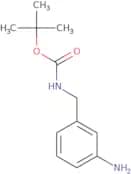
(3-Aminobenzyl)carbamic acid tert-butyl ester
CAS:Versatile small molecule scaffold
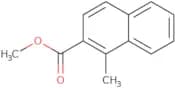
Formula:C12H18N2O2Purity:Min. 95%Molecular weight:222.28 g/molMethyl 1-methylnaphthalene-2-carboxylate
CAS:Versatile small molecule scaffold
Formula:C13H12O2Purity:Min. 95%Molecular weight:200.23 g/mol3,6-Dichloropicolinonitrile
CAS:3,6-Dichloropicolinonitrile is a peroxide that is used in the synthesis of organic compounds. It is produced by the reaction of sodium carbonate and hydrochloric acid with nitric acid as a catalyst. 3,6-Dichloropicolinonitrile has been shown to be more selective than other oxidizing agents such as hydrogen peroxide and potassium permanganate. The product can then be purified by adding diacetate, which selectively reacts with the chlorine to form acetyl chloride and glycolic acid. The resulting mixture can then be distilled to produce 3,6-dichloropicolinonitrile in high purity. 3,6-Dichloropicolinonitrile can also be used in electrochemical methods for the synthesis of cyanides or biochemically for virulent products such as pesticides and organic solvents.
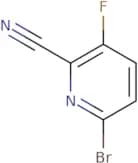
Formula:C6H2Cl2N2Purity:Min. 95%Molecular weight:173 g/mol6-Bromo-3-fluoropyridine-2-carbonitrile
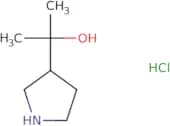
CAS:Versatile small molecule scaffoldFormula:C6H2N2FBrPurity:Min. 95%Molecular weight:200.99 g/mol(S)-2-(3-Pyrrolidinyl)-2-propanol Hydrochloride ee
CAS:Versatile small molecule scaffold
Formula:C7H16ClNOPurity:Min. 95%Molecular weight:165.66 g/mol(S)-2-(N-Boc-aminomethyl)morpholine
CAS:Versatile small molecule scaffold
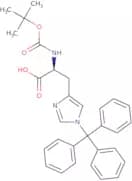
Formula:C10H20N2O3Purity:Min. 95%Molecular weight:216.27 g/molBoc-His(Trt)-OH
CAS:Boc-His(Trt)-OH is a chemical compound that has been used in the laboratory to study uptake and binding of compounds. It is stable in complex with albumin, which has led to its use as a model system for studying hepatic steatosis. This chemical can be synthesized by solid-phase synthesis with trifluoroacetic acid and polypeptide synthesis. FT-IR spectroscopy has been used to characterize Boc-His(Trt)-OH, revealing its chemical diversity.
Formula:C30H31N3O4Purity:Min. 95%Color and Shape:PowderMolecular weight:497.58 g/molRef: 3D-FB42925
Discontinued productCoproporphyrin III
CAS:Please enquire for more information about Coproporphyrin III including the price, delivery time and more detailed product information at the technical inquiry form on this page
Formula:C36H38N4O8Purity:Min. 95%Molecular weight:654.71 g/molRef: 3D-FC183946
Discontinued product7-Bromo-1-methylnaphthalene
CAS:7-Bromo-1-methylnaphthalene is a fluorescent dye that can be used to measure the concentration of DNA, RNA, and proteins. This compound is an intercalator, which means that it can bind to double stranded DNA or RNA near the center of the molecule where there is a space for binding. It has been used in the study of the thymic gland because it binds to DNA and RNA in cells from this organ. 7-Bromo-1-methylnaphthalene has also been used as a skeleton for organic compounds, such as dimethylammonium. The bromine atom in this compound can be replaced with other atoms like iodine or chlorine to make different colored dyes.
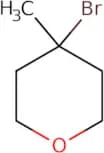
Formula:C11H9BrPurity:Min. 95%Molecular weight:221.09 g/mol4-Bromo-4-methyltetrahydropyran
CAS:Versatile small molecule scaffold
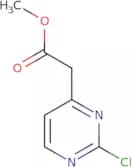
Formula:C6H11BrOPurity:Min. 95%Molecular weight:179.06 g/molMethyl 2-(2-chloropyrimidin-4-yl)acetate
CAS:Versatile small molecule scaffold
Formula:C7H7ClN2O2Purity:Min. 95%Molecular weight:186.59 g/mol8-Bromo-2-methylimidazo[1,2-a]pyridine
CAS:Versatile small molecule scaffold
Formula:C8H7N2BrPurity:Min. 95%Molecular weight:211.05 g/mol7-bromo-3-iodoimidazo[1,2-a]pyridine
CAS:Versatile small molecule scaffold
Formula:C7H4BrIN2Purity:Min. 95%Molecular weight:322.9 g/mol3-(iodomethyl)oxetane
CAS:Versatile small molecule scaffold
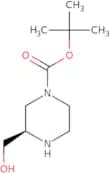
Formula:C4H7IOPurity:Min. 95%Molecular weight:198 g/mol(R)-4-N-Boc-2-hydroxymethyl-piperazine
CAS:Please enquire for more information about (R)-4-N-Boc-2-hydroxymethyl-piperazine including the price, delivery time and more detailed product information at the technical inquiry form on this page
Formula:C10H20N2O3Purity:Min. 95%Molecular weight:216.28 g/mol1-Bromo-4-iodobenzene
CAS:1-Bromo-4-iodobenzene is an aryl halide that can be synthesized by the cross coupling of ethyl formate and hydrochloric acid. This compound is useful in analytical applications, such as chromatographic methods, due to its high solubility in organic solvents. It is also used in synthetic procedures for the preparation of other aryl halides. 1-Bromo-4-iodobenzene has been used to synthesize calcium carbonate via the Suzuki coupling reaction with sodium salts, which are nucleophiles. The carbonyl group on this molecule reacts with the nucleophile, forming an alkyl group and a metal salt. Transfer reactions involving these salts can produce other products with different functional groups.
Formula:C6H4BrIPurity:Min. 95%Color and Shape:PowderMolecular weight:282.9 g/molRef: 3D-FB38228
Discontinued product1,2-Bis(chlorodimethylsilyl)ethane
CAS:1,2-Bis(chlorodimethylsilyl)ethane is a reactive chemical that is synthesized from hydroxychloroformates and hydrogen chloride. It reacts with silicon to form chlorosilanes, which are then used in the polymerization of siloxanes. 1,2-Bis(chlorodimethylsilyl)ethane has been shown to be an effective initiator for the polymerization of methyl methacrylate and ethylene glycol dimethacrylate. 1,2-Bis(chlorodimethylsilyl)ethane is also used as a hydroxyl group donor in organic reactions.
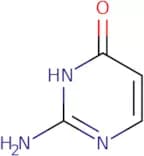
Formula:C6H16Cl2Si2Purity:Min. 95 Area-%Color and Shape:PowderMolecular weight:215.27 g/molIsocytosine
CAS:Isocytosine is a prodrug that has been synthesized with the intramolecular hydrogen on the nitrogen atoms, which makes it more chemically stable. Isocytosine is a reactive molecule, and can react with tautomers to form isocytosine derivatives. Isocytosine contains three hydrogen atoms that are transferable through reactions to other molecules. The chemical stability of isocytosine allows for its use in wastewater treatment. It also has metabolic effects, such as the inhibition of colorectal adenocarcinoma and metabolic disorders. Isocytosine can be used as a model system for studying transfer reactions and reaction mechanisms.
Formula:C4H5N3OPurity:Min. 95%Color and Shape:PowderMolecular weight:111.1 g/molRef: 3D-FI07235
Discontinued product4-Chloro-2-hydroxy-6-methylphenylboronic acid
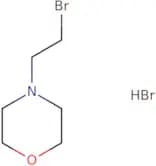
CAS:Versatile small molecule scaffoldFormula:C7H8BClO3Purity:Min. 95%Molecular weight:186.4 g/mol4-(2-Bromoethyl)morpholine hydrobromide
CAS:4-(2-Bromoethyl)morpholine hydrobromide is a solvent that is used as an agent in the production of other chemicals. It is a colorless, crystalline solid with a constant melting point of 130 to 131 degrees Celsius. 4-(2-Bromoethyl)morpholine hydrobromide is soluble in acetone, ethanol, ether, and water. This chemical has been shown to be toxic and should be handled with care.
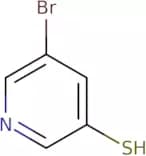
Formula:C6H13Br2NOPurity:Min. 95%Molecular weight:274.98 g/mol5-Bromopyridine-3-thiol
CAS:Versatile small molecule scaffold
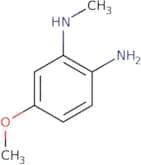
Formula:C5H4BrNSPurity:Min. 95%Molecular weight:190.06 g/mol5-Methoxy-N1-methylbenzene-1,2-diamine
CAS:Versatile small molecule scaffold
Formula:C8H12N2OPurity:Min. 95%Molecular weight:152.19 g/mol6,7-dihydro-5h-pyrrolo[3,4-d]pyrimidin-2-amine 2hcl
CAS:Versatile small molecule scaffold
Formula:C6H10Cl2N4Purity:Min. 95%Molecular weight:209.07 g/mol2-Methoxy-benzenesulfonic acid
CAS:2-Methoxy-benzenesulfonic acid is a synthetic chemical compound that is used in the production of polymers and other ester compounds. It can be produced by reacting benzenesulfonyl chloride with methanol in the presence of a strong acid catalyst. 2-Methoxy-benzenesulfonic acid reacts with radiation to produce reactive oxygen species that are capable of damaging cellular structures. The molecule contains an intramolecular hydrogen bond, which stabilizes the structure and helps to form hydrogen bonds with other molecules. 2-Methoxy-benzenesulfonic acid also has a hydroxyl group, which allows it to function as an acidic compound that can react with water and cause inflammation. This functional group also makes it soluble in water, allowing it to penetrate tissue structures.
Formula:C7H8O4SPurity:Min. 95%Molecular weight:188.2 g/molRef: 3D-JBA25600
Discontinued product2-(2-Chloro-4-nitrophenyl)acetic acid
CAS:Versatile small molecule scaffold
Formula:C8H6ClNO4Purity:Min. 95%Molecular weight:215.59 g/mol1-(4-Ethylphenyl)-2,2,2-trifluoroethan-1-ol
CAS:Versatile small molecule scaffold
Formula:C10H11F3OPurity:Min. 95%Molecular weight:204.19 g/molTripropylphosphine
CAS:Tripropylphosphine is a fatty acid that can be synthesized by reacting tripropyl alcohol with phosphorus trichloride. Tripropylphosphine is soluble in organic solvents, and has an optical rotation of +58°. It has been shown to have cancer-inhibiting properties, as well as the ability to inhibit tumor growth and induce apoptosis in cancer cells. This compound may also be used as a growth regulator, since it inhibits the synthesis of certain proteins and enzymes.
Formula:C9H21PPurity:Min. 95%Molecular weight:160.24 g/mol4,5-Dihydroxy-2,3-Pentanedione
CAS:4,5-Dihydroxy-2,3-pentanedione is a carbonyl compound that is the product of the oxidation of ascorbic acid. It is used in wastewater treatment and has antimicrobial properties against infectious diseases. This compound has been shown to inhibit protein synthesis by binding to the ribosome and preventing the formation of peptide bonds between amino acids. 4,5-Dihydroxy-2,3-pentanedione has also been shown to bind to plasma proteins, which may be due to its acyl chain structure. 4,5-Dihydroxy-2,3-pentanedione can be synthesized in a catalytic mechanism that involves dehydroascorbic acid and molecular oxygen.
Formula:C5H8O4Purity:Min. 95%Color and Shape:PowderMolecular weight:132.11 g/molRef: 3D-FD180770
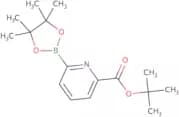
Discontinued producttert-Butyl 6-(4,4,5,5-tetramethyl-1,3,2-dioxaborolan-2-yl)picolinate
CAS:Versatile small molecule scaffoldFormula:C16H24BNO4Purity:Min. 95%Molecular weight:305.2 g/molRef: 3D-KCC40419
Discontinued productN-(2-Methyl-6-benzoxazolyl)-2-propenamide
CAS:Please enquire for more information about N-(2-Methyl-6-benzoxazolyl)-2-propenamide including the price, delivery time and more detailed product information at the technical inquiry form on this page
Formula:C11H10N2O2Purity:Min. 95%Molecular weight:202.21 g/molRef: 3D-FM184094
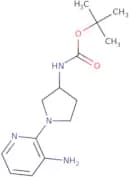
Discontinued product(R)-tert-Butyl 1-(3-aminopyridin-2-yl)pyrrolidin-3-ylcarbamate
CAS:Versatile small molecule scaffoldFormula:C14H22N4O2Purity:Min. 95%Molecular weight:278.35 g/molRef: 3D-IZB85984
Discontinued productPiperyline
CAS:Piperyline is an alkanoic acid that has shown to be effective against skin cancer. It also has antimicrobial properties, which may be due to its ability to bind metal ions and form polymeric compounds. Piperyline inhibits microbial growth by inhibiting the synthesis of proteins and nucleic acids. The antimicrobial activity is related to its cationic polymerization with hydroxyl groups, which forms a structure that can inhibit microbial enzymes and disrupt microbial cell membranes. This compound also interacts with the skin's natural lipids, making it difficult for microorganisms to attach and grow on the skin. Piperyline is synthesized in organic chemistry laboratories as an amide precursor of other pharmaceuticals such as penicillin.
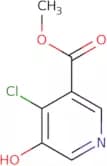
Formula:C16H17NO3Purity:Min. 95%Molecular weight:271.31 g/molMethyl 4-chloro-5-hydroxy-3-pyridinecarboxylate
CAS:Versatile small molecule scaffold
Formula:C7H6ClNO3Purity:Min. 95%Molecular weight:187.58 g/molMacaridine
CAS:Please enquire for more information about Macaridine including the price, delivery time and more detailed product information at the technical inquiry form on this page
Formula:C13H13NO2Purity:Min. 95%Molecular weight:215.25 g/molRef: 3D-FM183770
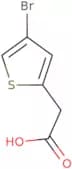
Discontinued product4-Bromothiophene-2-acetic acid
CAS:Versatile small molecule scaffold
Formula:C6H5BrO2SPurity:Min. 95%Molecular weight:221.07 g/mol





![8-Bromo-2-methylimidazo[1,2-a]pyridine](/_next/image/?url=https%3A%2Fstatic.cymitquimica.com%2Fproducts%2F3D%2Fthumb-webp%2FUXB37475.webp&w=3840&q=75)
![7-bromo-3-iodoimidazo[1,2-a]pyridine](/_next/image/?url=https%3A%2Fstatic.cymitquimica.com%2Fproducts%2F3D%2Fthumb-webp%2FWZB18455.webp&w=3840&q=75)




![6,7-dihydro-5h-pyrrolo[3,4-d]pyrimidin-2-amine 2hcl](/_next/image/?url=https%3A%2Fstatic.cymitquimica.com%2Fproducts%2F3D%2Fthumb-webp%2FHGA32752.webp&w=3840&q=75)