


Building Blocks
Subcategories of "Building Blocks"
- Boronic Acids & Boronic Acid Derivatives(5,778 products)
- Chiral Building Blocks(1,243 products)
- Hydrocarbon Building Blocks(6,098 products)
- Organic Building Blocks(61,042 products)
Found 204339 products of "Building Blocks"
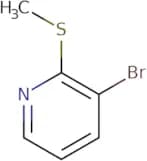
3-Bromo-2-(methylthio)pyridine
CAS:Versatile small molecule scaffold
Formula:C6H6BrNSPurity:Min. 95%Molecular weight:204.09 g/molRef: 3D-BCA93377
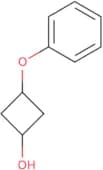
Discontinued product(1R,3R)-3-Phenoxycyclobutan-1-ol
CAS:Versatile small molecule scaffold
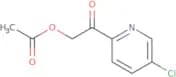
Formula:C10H12O2Purity:Min. 95%Molecular weight:164.2 g/mol2-(5-Chloropyridin-2-yl)-2-oxoethyl acetate
CAS:Versatile small molecule scaffold
Formula:C9H8ClNO3Purity:Min. 95%Molecular weight:213.62 g/molRef: 3D-XWC38084
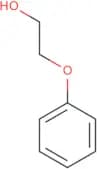
Discontinued product2-Phenoxyethanol-1,1-d2
CAS:Versatile small molecule scaffold
Formula:C8H10O2Purity:Min. 95%Molecular weight:140.18 g/molRef: 3D-WAA27338
Discontinued product5-[(2,4-Difluorophenyl)methyl]-4-methyl-1,3-thiazol-2-amine hydrobromide
CAS:Versatile small molecule scaffold
Formula:C11H11BrF2N2SPurity:Min. 95%Molecular weight:321.19 g/molRef: 3D-VWC49324
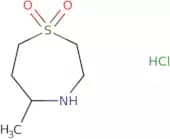
Discontinued product5-Methyl-1,4-thiazepane-1,1-dione hydrochloride
CAS:Versatile small molecule scaffold
Formula:C6H14ClNO2SPurity:Min. 95%Molecular weight:199.7 g/molRef: 3D-VWC27667
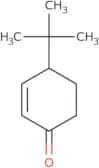
Discontinued product4-tert-Butylcyclohex-2-en-1-one
CAS:Versatile small molecule scaffold
Formula:C10H16OPurity:Min. 95%Molecular weight:152.23 g/molRef: 3D-AAA93707
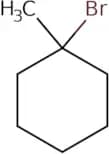
Discontinued product1-Bromo-1-methylcyclohexane
CAS:1-Bromo-1-methylcyclohexane is a monomolecular gas that is used as an intermediate in organic synthesis. It reacts with halides to form cyclopentyl derivatives. This reaction has been shown to be faster than the corresponding reaction of 1-bromocyclohexane with chlorides or bromides. The rate of this reaction may be due to the polarizability and conformational changes of the molecule upon substitution by a methyl group. 1-Bromo-1-methylcyclohexane is also an ionizing reagent, which means it can cause electrophilic reactions to occur on other molecules. It has been found that the solvent effect on this product can affect its reactivity, with solvents such as water having more of an effect than solvents such as benzene. 1-Bromo-1-methylcyclohexane has been shown to interact with other compounds in both transfer and complex
Formula:C7H13BrPurity:Min. 95%Molecular weight:177.08 g/molRef: 3D-AAA93177
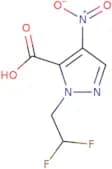
Discontinued product1-(2,2-Difluoroethyl)-4-nitro-1H-pyrazole-5-carboxylic acid
CAS:Versatile small molecule scaffoldFormula:C6H5F2N3O4Purity:Min. 95%Molecular weight:221.12 g/molRef: 3D-VWC27524
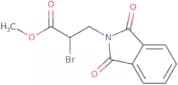
Discontinued productMethyl 2-bromo-3-(1,3-dioxo-2,3-dihydro-1H-isoindol-2-yl)propanoate
CAS:Versatile small molecule scaffoldFormula:C12H10BrNO4Purity:Min. 95%Molecular weight:312.12 g/molRef: 3D-VDA19695
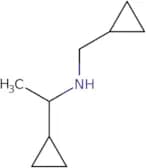
Discontinued product(1-Cyclopropylethyl)(cyclopropylmethyl)amine
CAS:Versatile small molecule scaffold
Formula:C9H17NPurity:Min. 95%Molecular weight:139.24 g/molRef: 3D-UQB56165
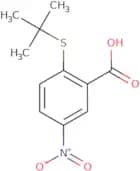
Discontinued product2-(tert-Butylsulfanyl)-5-nitrobenzoic acid
CAS:Versatile small molecule scaffold
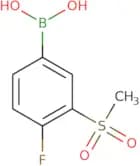
Formula:C11H13NO4SPurity:Min. 95%Molecular weight:255.29 g/mol4-Fluoro-3-(methanesulfonyl)phenylboronic acid
CAS:Versatile small molecule scaffold
Formula:C7H8BFO4SPurity:Min. 95%Molecular weight:218.02 g/molRef: 3D-TAC49635
Discontinued producttert-Butyl N-[1-(4-aminophenyl)ethyl]carbamate
CAS:Versatile small molecule scaffold
Formula:C13H20N2O2Purity:Min. 95%Molecular weight:236.31 g/molRef: 3D-TAB08668
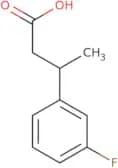
Discontinued product3-(3-Fluorophenyl)butanoic acid
CAS:Versatile small molecule scaffold
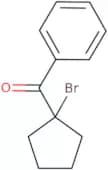
Formula:C10H11FO2Purity:Min. 95%Molecular weight:182.19 g/mol(1-Bromocyclopentyl)(phenyl)methanone
CAS:Versatile small molecule scaffold
Formula:C12H13BrOPurity:Min. 95%Molecular weight:253.13 g/molRef: 3D-GAA74066
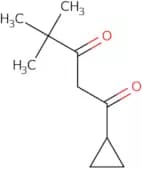
Discontinued product1-Cyclopropyl-4,4-dimethylpentane-1,3-dione
CAS:Versatile small molecule scaffold
Formula:C10H16O2Purity:Min. 95%Molecular weight:168.23 g/molRef: 3D-SCA07876
Discontinued product3-[(Trimethylsilyl)oxy]oxane-3-carbonitrile
CAS:Versatile small molecule scaffold
Formula:C9H17NO2SiPurity:Min. 95%Molecular weight:199.32 g/molRef: 3D-RDC77065
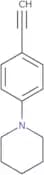
Discontinued product4'-N-Piperidinophenyl acetylene
CAS:Versatile small molecule scaffold
Formula:C13H15NPurity:Min. 95%Molecular weight:185.27 g/molRef: 3D-RBA87666
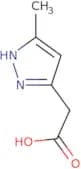
Discontinued product2-(5-Methyl-1H-pyrazol-3-yl)acetic acid
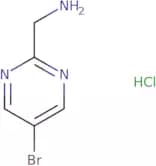
CAS:Versatile small molecule scaffoldFormula:C6H8N2O2Purity:Min. 95%Molecular weight:140.14 g/mol(5-bromopyrimidin-2-yl)methanamine hcl
CAS:Versatile small molecule scaffold
Formula:C5H7BrClN3Purity:Min. 95%Molecular weight:224.49 g/mol4-(3-Cyclopropyl-1H-1,2,4-triazol-5-yl)aniline
CAS:Versatile small molecule scaffold
Formula:C11H12N4Purity:Min. 95%Molecular weight:200.24 g/moltert-Butyl 4-methoxy-3,10-diazabicyclo[4.3.1]dec-3-ene-10-carboxylate
CAS:Versatile small molecule scaffoldFormula:C14H24N2O3Purity:Min. 95%Molecular weight:268.4 g/molRef: 3D-FSD25605
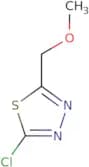
Discontinued product2-Chloro-5-(methoxymethyl)-1,3,4-thiadiazole
CAS:Versatile small molecule scaffoldFormula:C4H5ClN2OSPurity:Min. 95%Molecular weight:164.61 g/molRef: 3D-PDC25110
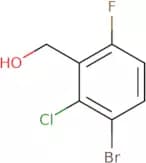
Discontinued product3-Bromo-2-chloro-6-fluorobenzyl alcohol
CAS:Versatile small molecule scaffold
Formula:C7H5BrClFOPurity:Min. 95%Molecular weight:239.47 g/molRef: 3D-JWC62856
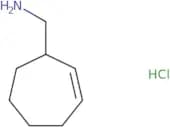
Discontinued product(Cyclohept-2-en-1-yl)methanamine hydrochloride
CAS:Versatile small molecule scaffold
Formula:C8H16ClNPurity:Min. 95%Molecular weight:161.7 g/molRef: 3D-KQD93769
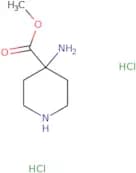
Discontinued productMethyl 4-aminopiperidine-4-carboxylate dihydrochloride
CAS:Versatile small molecule scaffoldFormula:C7H16Cl2N2O2Purity:Min. 95%Molecular weight:231.12 g/molRef: 3D-LGA31519
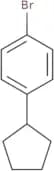
Discontinued product1-Bromo-4-cyclopentylbenzene
CAS:1-Bromo-4-cyclopentylbenzene (1-BCPB) is a chlorinated aromatic compound that can be synthesized by reacting 1-bromo-4-chlorobenzene and cyclopentylmagnesium bromide. The reaction sequence begins with the addition of hydrochloric acid to the first reactant, followed by magnesium chloride and ether. The mixture is heated to produce a liquid solution of ethylhexyloxy pyridine, which reacts with the second reactant in a sequence that leads to the desired product. 1-BCPB is used as an intermediate in organic synthesis. It has been shown to have moderate interaction with paraldehyde and pyridinium salts at room temperature, but it does not react with cycloalkyls or pyridinium salts at elevated temperatures.
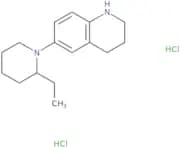
Formula:C11H13BrPurity:Min. 95%Molecular weight:225.13 g/mol6-(2-Ethylpiperidin-1-yl)-1,2,3,4-tetrahydroquinoline dihydrochloride
CAS:Versatile small molecule scaffoldFormula:C16H26Cl2N2Purity:Min. 95%Molecular weight:317.3 g/molRef: 3D-LIC71538
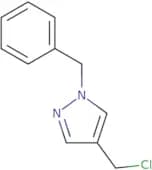
Discontinued product1-Benzyl-4-(chloromethyl)-1H-pyrazole
CAS:Controlled ProductVersatile small molecule scaffoldFormula:C11H11ClN2Purity:Min. 95%Molecular weight:206.67 g/mol3-(Aminomethyl)-2,2-difluoropentane hydrochloride
CAS:Versatile small molecule scaffoldFormula:C6H14ClF2NPurity:Min. 95%Molecular weight:173.6 g/molRef: 3D-LUD64101
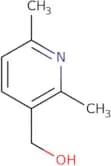
Discontinued product(2,6-Dimethylpyridin-3-yl)methanol
CAS:Versatile small molecule scaffold
Formula:C8H11NOPurity:Min. 95%Molecular weight:137.18 g/mol(7S,8aS)-7-Fluoro-octahydropyrrolo[1,2-a]pyrazine dihydrochloride
CAS:Versatile small molecule scaffold
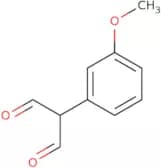
Formula:C7H15Cl2FN2Purity:Min. 95%Molecular weight:217.11 g/mol2-(3-Methoxyphenyl)malondialdehyde
CAS:Versatile small molecule scaffold
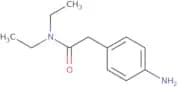
Formula:C10H10O3Purity:Min. 95%Molecular weight:178.18 g/mol2-(4-Aminophenyl)-N,N-diethylacetamide
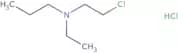
CAS:Versatile small molecule scaffoldFormula:C12H18N2OPurity:Min. 95%Molecular weight:206.28 g/molN-(2-Chloroethyl)-N-ethylpropan-1-amine hydrochloride
CAS:Controlled ProductVersatile small molecule scaffold
Formula:C7H17Cl2NPurity:Min. 95%Molecular weight:186.12 g/molRef: 3D-NAA10593
Discontinued product2,4-dichloro-7H-pyrrolo[2,3-d]pyrimidine-5-carbaldehyde
CAS:Versatile small molecule scaffold
Formula:C7H3Cl2N3OPurity:Min. 95%Molecular weight:216.02 g/molRef: 3D-NQC76757
Discontinued product2-Bromo-3,3,3-trifluoro-1-propene
CAS:Controlled Product2-Bromo-3,3,3-trifluoro-1-propene is a chemical compound that has been synthesized in an asymmetric reaction. The reactant is bromopropane and the product is 2,2,2-trifluoropropene. The methylene group on the propene molecule is activated by the nucleophilic attack of a fluoride ion from hydrogen fluoride to form a cavity with a highly strained bond. The kinetic study of this reaction revealed that the activation energy for the reaction is 42 kJ/mol. Palladium-catalyzed coupling reactions are catalyzed by palladium and require nonpolar solvents such as toluene or dichloromethane. This type of reaction has been shown to be exothermic with an isolated yield of 1%.
Formula:C3H2BrF3Purity:Min. 95%Color and Shape:Colorless PowderMolecular weight:174.95 g/molPiperyline
CAS:Piperyline is an alkanoic acid that has shown to be effective against skin cancer. It also has antimicrobial properties, which may be due to its ability to bind metal ions and form polymeric compounds. Piperyline inhibits microbial growth by inhibiting the synthesis of proteins and nucleic acids. The antimicrobial activity is related to its cationic polymerization with hydroxyl groups, which forms a structure that can inhibit microbial enzymes and disrupt microbial cell membranes. This compound also interacts with the skin's natural lipids, making it difficult for microorganisms to attach and grow on the skin. Piperyline is synthesized in organic chemistry laboratories as an amide precursor of other pharmaceuticals such as penicillin.
Formula:C16H17NO3Purity:Min. 95%Molecular weight:271.31 g/mol

![5-[(2,4-Difluorophenyl)methyl]-4-methyl-1,3-thiazol-2-amine hydrobromide](/_next/image/?url=https%3A%2Fstatic.cymitquimica.com%2Fproducts%2F3D%2Fthumb-webp%2FVWC49324.webp&w=3840&q=75)
![tert-Butyl N-[1-(4-aminophenyl)ethyl]carbamate](/_next/image/?url=https%3A%2Fstatic.cymitquimica.com%2Fproducts%2F3D%2Fthumb-webp%2FTAB08668.webp&w=3840&q=75)
![3-[(Trimethylsilyl)oxy]oxane-3-carbonitrile](/_next/image/?url=https%3A%2Fstatic.cymitquimica.com%2Fproducts%2F3D%2Fthumb-webp%2FRDC77065.webp&w=3840&q=75)

![tert-Butyl 4-methoxy-3,10-diazabicyclo[4.3.1]dec-3-ene-10-carboxylate](/_next/image/?url=https%3A%2Fstatic.cymitquimica.com%2Fproducts%2F3D%2Fthumb-webp%2FFSD25605.webp&w=3840&q=75)

![(7S,8aS)-7-Fluoro-octahydropyrrolo[1,2-a]pyrazine dihydrochloride](/_next/image/?url=https%3A%2Fstatic.cymitquimica.com%2Fproducts%2F3D%2Fthumb-webp%2FHXC93968.webp&w=3840&q=75)
![2,4-dichloro-7H-pyrrolo[2,3-d]pyrimidine-5-carbaldehyde](/_next/image/?url=https%3A%2Fstatic.cymitquimica.com%2Fproducts%2F3D%2Fthumb-webp%2FNQC76757.webp&w=3840&q=75)

