Building Blocks
Subcategories of "Building Blocks"
- Boronic Acids & Boronic Acid Derivatives(5,778 products)
- Chiral Building Blocks(1,243 products)
- Hydrocarbon Building Blocks(6,099 products)
- Organic Building Blocks(61,038 products)
Found 205376 products of "Building Blocks"
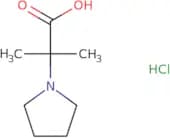
2-Methyl-2-(pyrrolidin-1-yl)propanoic acid hydrochloride
CAS:Versatile small molecule scaffold
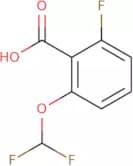
Formula:C8H16ClNO2Purity:Min. 95%Molecular weight:193.67 g/mol2-(Difluoromethoxy)-6-fluorobenzoic acid
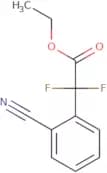
CAS:Versatile small molecule scaffoldFormula:C8H5F3O3Purity:Min. 95%Molecular weight:206.12 g/molEthyl 2-(2-cyanophenyl)-2,2-difluoroacetate
CAS:Versatile small molecule scaffold
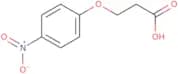
Formula:C11H9F2NO2Purity:Min. 95%Molecular weight:225.19 g/mol3-(4-Nitrophenoxy)propionic acid
CAS:3-(4-Nitrophenoxy)propionic acid is a promiscuous compound that can be used to synthesize other compounds. It reacts with hydrochloric acid, nitro groups, and phosphorus pentoxide to produce nitro compounds. 3-(4-Nitrophenoxy)propionic acid reacts with benzoylamine in the presence of a cocatalyst to form alkoxycarbonyl products. The cocatalyst is typically a metal such as zinc or magnesium. 3-(4-Nitrophenoxy)propionic acid is also used as an agrochemical for controlling influenza virus and Influenzae bacteria.
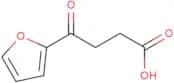
!--Formula:C9H9NO5Purity:Min. 95%Molecular weight:211.17 g/mol4-(Furan-2-yl)-4-oxobutanoic acid
CAS:Versatile small molecule scaffold
Formula:C8H8O4Purity:Min. 95%Molecular weight:168.15 g/molRef: 3D-KAA56400
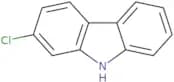
Discontinued product2-Chloro-9H-carbazole
CAS:2-Chloro-9H-carbazole (2CzC) is a heterocyclic compound that belongs to the group of carbazoles. It can be used as medicine and has been shown to be a good control experiment for other carbazoles. The nucleophilicity of 2CzC is affected by the functional groups present in the molecule, and it has been shown to react with anions such as Cl-, Br-, or I-. This heterocycle also has two resonance forms, which are generated by the electron delocalization in the ring system. The gas phase kinetics of 2CzC have been found to follow an Arrhenius relationship, with k = 3.6x10^3 M^-1 s^-1 at 298 K. Yields for this compound have been found to be high, with 90% yield when synthesized from chloroacetone and phenylmagnesium bromide.
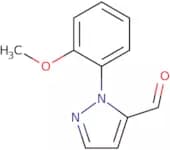
Formula:C12H8ClNPurity:Min. 95%Molecular weight:201.65 g/mol1-(2-Methoxyphenyl)-1H-pyrazole-5-carbaldehyde
CAS:Versatile small molecule scaffold
Formula:C11H10N2O2Purity:Min. 95%Molecular weight:202.21 g/molRef: 3D-JWB83034
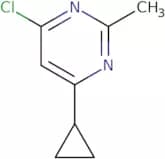
Discontinued product4-Chloro-6-cyclopropyl-2-methylpyrimidine
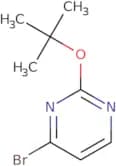
CAS:Versatile small molecule scaffoldFormula:C8H9ClN2Purity:Min. 95%Molecular weight:168.62 g/mol4-Bromo-2-(tert-butoxy)pyrimidine
CAS:Versatile small molecule scaffold
Formula:C8H11BrN2OPurity:Min. 95%Molecular weight:231.09 g/molRef: 3D-JNB24097
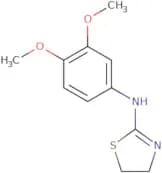
Discontinued productN-(3,4-Dimethoxyphenyl)-4,5-dihydro-1,3-thiazol-2-amine
CAS:Versatile small molecule scaffoldFormula:C11H14N2O2SPurity:Min. 95%Molecular weight:238.31 g/molRef: 3D-JGA09188
Discontinued product3-[(Furan-2-ylmethyl)sulfanyl]prop-2-enoic acid
CAS:Versatile small molecule scaffold
Formula:C8H8O3SPurity:Min. 95%Molecular weight:184.21 g/molRef: 3D-JFC43383
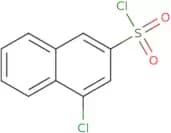
Discontinued product4-Chloronaphthalene-2-sulfonyl chloride
CAS:Versatile small molecule scaffoldFormula:C10H6Cl2O2SPurity:Min. 95%Molecular weight:261.12 g/molRef: 3D-JFC43112
Discontinued product1-(Propan-2-yl)-N-[1-(propan-2-yl)-4,5,6,7-tetrahydro-1H-indazol-5-yl]-4,5,6,7-tetrahydro-1H-indazol-5-amine
CAS:Versatile small molecule scaffold
Formula:C20H31N5Purity:Min. 95%Molecular weight:341.5 g/molRef: 3D-JDC14931
Discontinued product9-{[(tert-Butoxy)carbonyl]amino}bicyclo[3.3.1]nonane-3-carboxylic acid
CAS:Versatile small molecule scaffoldFormula:C15H25NO4Purity:Min. 95%Molecular weight:283.36 g/molRef: 3D-JDC14847
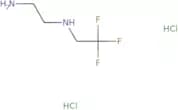
Discontinued product(2-Aminoethyl)(2,2,2-trifluoroethyl)amine dihydrochloride
CAS:Versatile small molecule scaffold
Formula:C4H11Cl2F3N2Purity:Min. 95%Molecular weight:215.04 g/molRef: 3D-JDC14763
Discontinued product5-Cyclopropyl-7-oxa-5-azaspiro[3.4]octane-6,8-dione
CAS:Versatile small molecule scaffold
Formula:C9H11NO3Purity:Min. 95%Molecular weight:181.19 g/molRef: 3D-JBD33609
Discontinued product2-Benzoyl-2-azabicyclo[2.1.1]hexane-1-carboxylic acid
CAS:Versatile small molecule scaffold
Formula:C13H13NO3Purity:Min. 95%Molecular weight:231.25 g/molRef: 3D-JBD33608
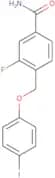
Discontinued product3-Fluoro-4-(4-iodophenoxymethyl)benzamide
CAS:Versatile small molecule scaffoldFormula:C14H11FINO2Purity:Min. 95%Molecular weight:371.14 g/molRef: 3D-JBC14709
Discontinued product4-(Piperazin-1-yl)isoquinoline dihydrochloride
CAS:Versatile small molecule scaffold
Formula:C13H17Cl2N3Purity:Min. 95%Molecular weight:286.2 g/molRef: 3D-ILB29289
Discontinued product2-[2-(Furan-3-yl)-1,3-thiazol-4-yl]acetic acid
CAS:Versatile small molecule scaffold
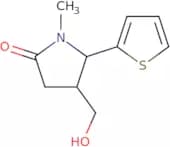
Formula:C9H7NO3SPurity:Min. 95%Molecular weight:209.22 g/mol4-(Hydroxymethyl)-1-methyl-5-(thiophen-2-yl)pyrrolidin-2-one
CAS:Versatile small molecule scaffold
Formula:C10H13NO2SPurity:Min. 95%Molecular weight:211.28 g/molRef: 3D-IDC52490
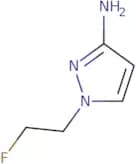
Discontinued product1-(2-Fluoroethyl)-1H-pyrazol-3-amine
CAS:Versatile small molecule scaffold
Formula:C5H8FN3Purity:Min. 95%Molecular weight:129.14 g/molRef: 3D-IAC86398
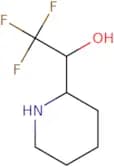
Discontinued product2,2,2-Trifluoro-1-(piperidin-2-yl)ethan-1-ol
CAS:Versatile small molecule scaffoldFormula:C7H12F3NOPurity:Min. 95%Molecular weight:183.17 g/molRef: 3D-IAC65125
Discontinued product3-(4-Fluoro-3-methylbenzoyl)pyridine
CAS:Versatile small molecule scaffoldFormula:C13H10FNOPurity:Min. 95%Molecular weight:215.22 g/molRef: 3D-HXB94073
Discontinued product(Cyclopropylmethyl)[(6-methylpyridin-3-yl)methyl]amine
CAS:Versatile small molecule scaffold
Formula:C11H16N2Purity:Min. 95%Molecular weight:176.26 g/molRef: 3D-HXB91986
Discontinued product2-Chloropyridine-4-sulfonamide
CAS:Versatile small molecule scaffold
Formula:C5H5ClN2O2SPurity:Min. 95%Molecular weight:192.62 g/molRef: 3D-HXB76738
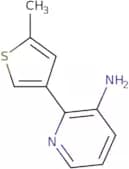
Discontinued product2-(5-Methylthiophen-3-yl)pyridin-3-amine
CAS:Versatile small molecule scaffold
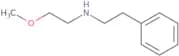
Formula:C10H10N2SPurity:Min. 95%Molecular weight:190.27 g/mol(2-Methoxyethyl)(2-phenylethyl)amine
CAS:Controlled ProductVersatile small molecule scaffold
Formula:C11H17NOPurity:Min. 95%Molecular weight:179.26 g/molRef: 3D-HMB00572
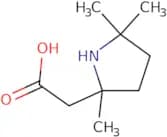
Discontinued product2-(2,5,5-Trimethylpyrrolidin-2-yl)acetic acid
CAS:Versatile small molecule scaffold
Formula:C9H17NO2Purity:Min. 95%Molecular weight:171.24 g/molRef: 3D-HDA83090
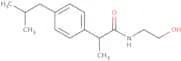
Discontinued productMabuprofen
CAS:Mabuprofen is a nonsteroidal anti-inflammatory drug that belongs to the class of NSAIDs. It is used to treat pain, inflammation, and stiffness caused by osteoarthritis, rheumatoid arthritis, and other joint diseases. Mabuprofen is a prodrug that has been shown to inhibit the production of prostaglandins in the brain and spinal cord. This inhibition leads to an increase in cyclic adenosine monophosphate (cAMP) levels which can then reduce the production of proteins in cells. This can have anti-inflammatory effects that are beneficial for people with inflammatory bowel disease or hyperproliferative diseases such as cancer. Mabuprofen has also been shown to decrease the levels of soybean trypsin inhibitor in rats with bowel disease. The mechanism for this activity may be due to its ability to act as a substrate molecule for enzyme reactions, such as soybean trypsin inhibitors.
Formula:C15H23NO2Purity:Min. 95%Molecular weight:249.35 g/moltert-butyl N-[(2R)-1-oxopropan-2-yl]carbamate
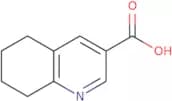
CAS:Versatile small molecule scaffoldFormula:C8H15NO3Purity:Min. 95%Molecular weight:173.2 g/mol5,6,7,8-Tetrahydroquinoline-3-carboxylic acid
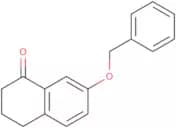
CAS:5,6,7,8-Tetrahydroquinoline-3-carboxylic acid is a quinoline derivative that has been shown to have bacteriostatic activity against Staphylococcus aureus. It binds to the hydroxyl groups of the bacterial cell membrane and inhibits the production of enzymes necessary for protein synthesis. The interaction between the 5,6,7,8-tetrahydroquinoline-3-carboxylic acid and the hydroxyl group is reversible. 5,6,7,8-Tetrahydroquinoline-3-carboxylic acid also has bacteriostatic activity against other bacteria such as Mycobacterium tuberculosis and Mycobacterium avium complex.Formula:C10H11NO2Purity:Min. 95%Molecular weight:177.2 g/mol7-(Benzyloxy)-3,4-dihydronaphthalen-1(2H)-one
CAS:7-(Benzyloxy)-3,4-dihydronaphthalen-1(2H)-one is a tricyclic carboxamide that belongs to the carboxylic acid group. It has a constant boiling point and an acidic pH. 7-(Benzyloxy)-3,4-dihydronaphthalen-1(2H)-one is soluble in water and dilute acids. It has been shown that the melting point of 7-(Benzyloxy)-3,4-dihydronaphthalen-1(2H)-one is not affected by dilution or experiments. The chemical compounds are made up of benzoic acid and carboxylic acid groups that form a six-membered ring with two heterocycles on either side of the molecule.Formula:C17H16O2Purity:Min. 95%Molecular weight:252.31 g/mol6-Chloro-2,3,4,9-tetrahydro-1H-carbazol-3-ol
CAS:Versatile small molecule scaffold
Formula:C12H12ClNOPurity:Min. 95%Molecular weight:221.68 g/molRef: 3D-HBA20279
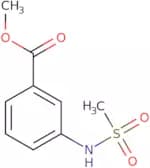
Discontinued productMethyl 3-methanesulfonamidobenzoate
CAS:Methyl 3-methanesulfonamidobenzoate is an organic compound that is used as a reagent in organic synthesis. It has the chemical formula CH3O2C(CH2)2SO2CH=NOH. Methyl 3-methanesulfonamidobenzoate is a methyl ester of benzoic acid, which is also known as methyl benzoate. This compound has been shown to react with DNA, forming adducts with guanine and cytosine bases.
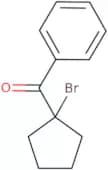
Formula:C9H11NO4SPurity:Min. 95%Molecular weight:229.26 g/mol(1-Bromocyclopentyl)(phenyl)methanone
CAS:Versatile small molecule scaffold
Formula:C12H13BrOPurity:Min. 95%Molecular weight:253.13 g/molRef: 3D-GAA74066
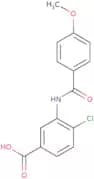
Discontinued product4-Chloro-3-(4-methoxybenzamido)benzoic acid
CAS:Versatile small molecule scaffold
Formula:C15H12ClNO4Purity:Min. 95%Molecular weight:305.71 g/molRef: 3D-FRB50804
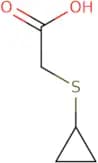
Discontinued product2-(Cyclopropylsulfanyl)acetic acid
CAS:Versatile small molecule scaffold
Formula:C5H8O2SPurity:Min. 95%Molecular weight:132.18 g/mol4-(Thiophen-2-yl)-1H,4H,5H,6H,7H-imidazo[4,5-c]pyridine-6-carboxylic acid
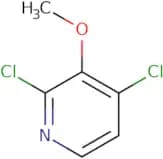
CAS:Versatile small molecule scaffoldFormula:C11H11N3O2SPurity:Min. 95%Molecular weight:249.29 g/mol2,4-Dichloro-3-methoxypyridine
CAS:Versatile small molecule scaffold
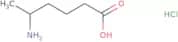
Formula:C6H5Cl2NOPurity:Min. 95%Molecular weight:178.01 g/mol5-Aminohexanoic acid hydrochloride
CAS:Versatile small molecule scaffold
Formula:C6H14ClNO2Purity:Min. 95%Molecular weight:167.63 g/molRef: 3D-FJB91365
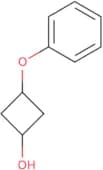
Discontinued product(1R,3R)-3-Phenoxycyclobutan-1-ol
CAS:Versatile small molecule scaffold
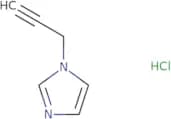
Formula:C10H12O2Purity:Min. 95%Molecular weight:164.2 g/mol1-(Prop-2-yn-1-yl)-1H-imidazole hydrochloride
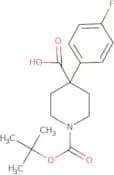
CAS:Versatile small molecule scaffoldFormula:C6H7ClN2Purity:Min. 95%Molecular weight:142.58 g/molBoc-4-(4-fluorophenyl)-piperidine-4-carboxylic acid
CAS:Please enquire for more information about Boc-4-(4-fluorophenyl)-piperidine-4-carboxylic acid including the price, delivery time and more detailed product information at the technical inquiry form on this page
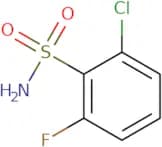
Formula:C17H22FNO4Purity:Min. 95%Molecular weight:323.36 g/mol2-Chloro-6-fluorobenzene-1-sulfonamide
CAS:2-Chloro-6-fluorobenzene-1-sulfonamide is a pharmacological agent that has been shown to have anticancer activity. It is an inhibitor of sterol regulatory element binding protein 2 (SREBP2) and, as such, inhibits cholesterol synthesis. This inhibition results in the accumulation of fatty acids and downstream metabolites in cancer cells, which leads to apoptosis. 2-Chloro-6-fluorobenzene-1-sulfonamide may also be used to treat neurodegenerative diseases and inflammatory pathways.Formula:C6H5ClFNO2SPurity:Min. 95%Molecular weight:209.63 g/molRef: 3D-EYB57352
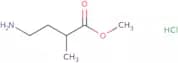
Discontinued productMethyl 4-amino-2-methylbutanoate hydrochloride
CAS:Versatile small molecule scaffoldFormula:C6H14ClNO2Purity:Min. 95%Molecular weight:167.63 g/molRef: 3D-EIA50378
Discontinued product2-Methyl-6-nitro-4-(1,2,3,6-tetrahydropyridin-4-yl)aniline hydrochloride
CAS:Versatile small molecule scaffold
Formula:C12H16ClN3O2Purity:Min. 95%Molecular weight:269.73 g/molRef: 3D-EEC96073
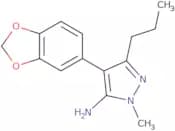
Discontinued product4-(1,3-Dioxaindan-5-yl)-2-methyl-5-propyl-2,3-dihydro-1H-pyrazol-3-imine
CAS:Versatile small molecule scaffold
Formula:C14H17N3O2Purity:Min. 95%Molecular weight:259.3 g/molRef: 3D-EEC96042
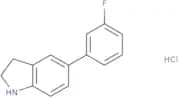
Discontinued product5-(3-Fluorophenyl)-2,3-dihydro-1H-indole hydrochloride
CAS:Versatile small molecule scaffoldFormula:C14H13ClFNPurity:Min. 95%Molecular weight:249.71 g/molRef: 3D-EEC95999
Discontinued product2,2,2-Trifluoroethyl N-[3-fluoro-4-(1H-pyrazol-1-yl)phenyl]carbamate
CAS:Versatile small molecule scaffoldFormula:C12H9F4N3O2Purity:Min. 95%Molecular weight:303.21 g/molRef: 3D-EEC95905
Discontinued product4-[2-(2-Methylphenyl)ethyl]piperidine
CAS:Versatile small molecule scaffold
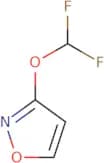
Formula:C14H21NPurity:Min. 95%Molecular weight:203.32 g/mol3-(Difluoromethoxy)-1,2-oxazole
CAS:Versatile small molecule scaffold
Formula:C4H3F2NO2Purity:Min. 95%Molecular weight:135.07 g/molRef: 3D-DXC56293
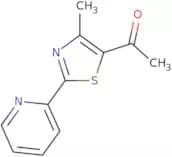
Discontinued product1-(4-Methyl-2-pyridin-2-yl-1,3-thiazol-5-yl)ethanone
CAS:Versatile small molecule scaffold
Formula:C11H10N2OSPurity:Min. 95%Molecular weight:218.28 g/molRef: 3D-DUA25765
Discontinued product2,6-Dichloropyridine-3-sulfonamide
CAS:Versatile small molecule scaffold
Formula:C5H4Cl2N2O2SPurity:Min. 95%Molecular weight:227.07 g/molRef: 3D-DTB62777
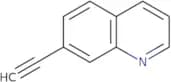
Discontinued product7-Ethynylquinoline
CAS:Versatile small molecule scaffold
Formula:C11H7NPurity:Min. 95%Molecular weight:153.18 g/molRef: 3D-DEA98780
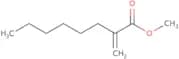
Discontinued productMethyl 2-methylideneoctanoate
CAS:Versatile small molecule scaffold
Formula:C10H18O2Purity:Min. 95%Molecular weight:170.25 g/molRef: 3D-DAA61840
Discontinued product3-Chloro-N-[2-(4-methyl-1,3-thiazol-5-yl)-2-oxoethyl]propanamide
CAS:Versatile small molecule scaffoldFormula:C9H11ClN2O2SPurity:Min. 95%Molecular weight:246.71 g/molRef: 3D-CHC38015
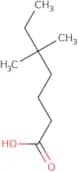
Discontinued product5,5-Dimethylheptanoic acid
CAS:Versatile small molecule scaffold
Formula:C9H18O2Purity:Min. 95%Molecular weight:158.24 g/molRef: 3D-CCA14621
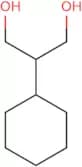
Discontinued product2-Cyclohexylpropane-1,3-diol
CAS:2-Cyclohexylpropane-1,3-diol is a substrate for porcine pancreatic lipase. It is hydrolyzed by this enzyme, which is stereoselective and enantioselective. 2-Cyclohexylpropane-1,3-diol also has properties that are similar to angiotensin, a peptide that is secreted by the human body. This substance can be used as a solvent for other organic compounds in chemical reactions.
Formula:C9H18O2Purity:Min. 95%Molecular weight:158.24 g/mol2-[Benzyl(methyl)ao]propanoic acid
CAS:2-[Benzyl(methyl)ao]propanoic acid is a glycine analogue that has been synthesized and characterized. It is an α-amino acid with the chemical formula C5H11NO2. The molecule has a chiral carbon atom at the center of the propanoic acid group and contains two asymmetric carbon atoms on the benzene ring, which enable it to exist in two stereoisomers. The compound has been shown to exhibit interligand interactions with copper as well as stereoselectivity in its interactions with l-amino acids. 2-[Benzyl(methyl)ao]propanoic acid also exhibits dichroism spectra, which are unique to these types of molecules.
Formula:C11H15NO2Purity:Min. 95%Molecular weight:193.24 g/molRef: 3D-BEA69294
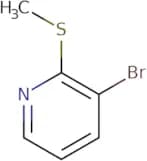
Discontinued product3-Bromo-2-(methylthio)pyridine
CAS:Versatile small molecule scaffold
Formula:C6H6BrNSPurity:Min. 95%Molecular weight:204.09 g/molRef: 3D-BCA93377
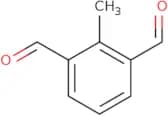
Discontinued product2-Methylbenzene-1,3-dicarbaldehyde
CAS:2-Methylbenzene-1,3-dicarbaldehyde is a divalent hydrocarbon that has an oxidation catalyst. This compound is used as an intermediate in the production of drugs and pharmaceuticals. It has been shown to have cardiovascular disorders, such as vasodilatation and hypotension. The mechanism of action is not fully understood but may be related to its ability to act as a nitrovasodilator by increasing nitric oxide (NO) release. 2-Methylbenzene-1,3-dicarbaldehyde also produces psychotic disorders when long term exposure occurs. This compound has been shown to have neurotoxic effects in animal models with long term exposure.
Formula:C9H8O2Purity:Min. 95%Molecular weight:148.16 g/molRef: 3D-BCA68950
Discontinued product4-(Dimethyl-1,2-oxazol-4-yl)phenol
CAS:Versatile small molecule scaffold
Formula:C11H11NO2Purity:Min. 95%Molecular weight:189.21 g/molRef: 3D-AKB62875
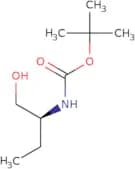
Discontinued productN-Boc-(S)-(ˆ’)-2-amino-1-butanol
CAS:Versatile small molecule scaffold
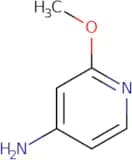
Formula:C9H19NO3Purity:Min. 95%Molecular weight:189.25 g/mol(4-Aminopyridin-2-yl)methanol
CAS:Versatile small molecule scaffold
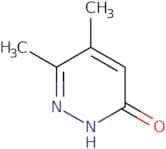
Formula:C6H8N2OPurity:Min. 95%Molecular weight:124.14 g/mol5,6-Dimethylpyridazin-3(2H)-one
CAS:Versatile small molecule scaffold
Formula:C6H8N2OPurity:Min. 95%Molecular weight:124.14 g/mol3-(Trifluoroacetamido)propanoic acid
CAS:Versatile small molecule scaffold
Formula:C5H6F3NO3Purity:Min. 95%Molecular weight:185.1 g/mol1-Hydroxycyclopentane-1-carbonitrile
CAS:1-Hydroxycyclopentane-1-carbonitrile is a monomer that is hydrolyzed to form benzoin and cyanohydrins. It can be used in the production of scifinder as a monomer or dimerizer.
Formula:C6H9NOPurity:Min. 95%Molecular weight:111.14 g/mol2-Bromo-3,3,3-trifluoro-1-propene
CAS:Controlled Product2-Bromo-3,3,3-trifluoro-1-propene is a chemical compound that has been synthesized in an asymmetric reaction. The reactant is bromopropane and the product is 2,2,2-trifluoropropene. The methylene group on the propene molecule is activated by the nucleophilic attack of a fluoride ion from hydrogen fluoride to form a cavity with a highly strained bond. The kinetic study of this reaction revealed that the activation energy for the reaction is 42 kJ/mol. Palladium-catalyzed coupling reactions are catalyzed by palladium and require nonpolar solvents such as toluene or dichloromethane. This type of reaction has been shown to be exothermic with an isolated yield of 1%.
Formula:C3H2BrF3Purity:Min. 95%Color and Shape:Colorless PowderMolecular weight:174.95 g/mol3-Hydroxy-5-methylpyridine
CAS:3-Hydroxy-5-methylpyridine (3HMP) is a chemical substance that has been classified as an amine. It is a product of the metabolism of purines, which are nitrogenous bases found in DNA and RNA. 3HMP is produced by aerogenic bacteria (such as Enterobacter), and can be used to estimate the number of these bacteria present in water samples. 3HMP has been shown to have antiviral properties against influenza virus, and can be used as a biomarker for the presence of other viruses in animals. 3HMP also has mineralization properties, which have been studied extensively, particularly with regards to pancreatic disease.
Formula:C6H7NOPurity:Min. 95%Color and Shape:PowderMolecular weight:109.13 g/molRef: 3D-FH16174
Discontinued product4-Chloro-2-hydroxy-6-methylphenylboronic acid
CAS:Versatile small molecule scaffoldFormula:C7H8BClO3Purity:Min. 95%Molecular weight:186.4 g/mol8-Bromo-2-methylimidazo[1,2-a]pyridine
CAS:Versatile small molecule scaffold
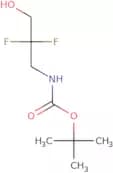
Formula:C8H7N2BrPurity:Min. 95%Molecular weight:211.05 g/moltert-Butyl (2,2-difluoro-3-hydroxypropyl)carbamate
CAS:Versatile small molecule scaffoldFormula:C10H13NO4Purity:Min. 95%Molecular weight:211.21 g/mol4,5-Dihydro-1H-imidazol-2-amine hydrochloride
CAS:Please enquire for more information about 4,5-Dihydro-1H-imidazol-2-amine hydrochloride including the price, delivery time and more detailed product information at the technical inquiry form on this page
Formula:C3H7N3•HClPurity:Min. 95%Molecular weight:121.57 g/molRef: 3D-FD183639
Discontinued product4,5-Dihydroxy-2,3-Pentanedione
CAS:4,5-Dihydroxy-2,3-pentanedione is a carbonyl compound that is the product of the oxidation of ascorbic acid. It is used in wastewater treatment and has antimicrobial properties against infectious diseases. This compound has been shown to inhibit protein synthesis by binding to the ribosome and preventing the formation of peptide bonds between amino acids. 4,5-Dihydroxy-2,3-pentanedione has also been shown to bind to plasma proteins, which may be due to its acyl chain structure. 4,5-Dihydroxy-2,3-pentanedione can be synthesized in a catalytic mechanism that involves dehydroascorbic acid and molecular oxygen.
Formula:C5H8O4Purity:Min. 95%Color and Shape:PowderMolecular weight:132.11 g/molRef: 3D-FD180770
Discontinued productPiperyline
CAS:Piperyline is an alkanoic acid that has shown to be effective against skin cancer. It also has antimicrobial properties, which may be due to its ability to bind metal ions and form polymeric compounds. Piperyline inhibits microbial growth by inhibiting the synthesis of proteins and nucleic acids. The antimicrobial activity is related to its cationic polymerization with hydroxyl groups, which forms a structure that can inhibit microbial enzymes and disrupt microbial cell membranes. This compound also interacts with the skin's natural lipids, making it difficult for microorganisms to attach and grow on the skin. Piperyline is synthesized in organic chemistry laboratories as an amide precursor of other pharmaceuticals such as penicillin.
Formula:C16H17NO3Purity:Min. 95%Molecular weight:271.31 g/mol

![3-[(Furan-2-ylmethyl)sulfanyl]prop-2-enoic acid](/_next/image/?url=https%3A%2Fstatic.cymitquimica.com%2Fproducts%2F3D%2Fthumb-webp%2FJFC43383.webp&w=3840&q=75)
![1-(Propan-2-yl)-N-[1-(propan-2-yl)-4,5,6,7-tetrahydro-1H-indazol-5-yl]-4,5,6,7-tetrahydro-1H-indaz…](/_next/image/?url=https%3A%2Fstatic.cymitquimica.com%2Fproducts%2F3D%2Fthumb-webp%2FJDC14931.webp&w=3840&q=75)
![9-{[(tert-Butoxy)carbonyl]amino}bicyclo[3.3.1]nonane-3-carboxylic acid](/_next/image/?url=https%3A%2Fstatic.cymitquimica.com%2Fproducts%2F3D%2Fthumb-webp%2FJDC14847.webp&w=3840&q=75)
![5-Cyclopropyl-7-oxa-5-azaspiro[3.4]octane-6,8-dione](/_next/image/?url=https%3A%2Fstatic.cymitquimica.com%2Fproducts%2F3D%2Fthumb-webp%2FJBD33609.webp&w=3840&q=75)
![2-Benzoyl-2-azabicyclo[2.1.1]hexane-1-carboxylic acid](/_next/image/?url=https%3A%2Fstatic.cymitquimica.com%2Fproducts%2F3D%2Fthumb-webp%2FJBD33608.webp&w=3840&q=75)

![2-[2-(Furan-3-yl)-1,3-thiazol-4-yl]acetic acid](/_next/image/?url=https%3A%2Fstatic.cymitquimica.com%2Fproducts%2F3D%2Fthumb-webp%2FIDC97860.webp&w=3840&q=75)

![(Cyclopropylmethyl)[(6-methylpyridin-3-yl)methyl]amine](/_next/image/?url=https%3A%2Fstatic.cymitquimica.com%2Fproducts%2F3D%2Fthumb-webp%2FHXB91986.webp&w=3840&q=75)

![tert-butyl N-[(2R)-1-oxopropan-2-yl]carbamate](/_next/image/?url=https%3A%2Fstatic.cymitquimica.com%2Fproducts%2F3D%2Fthumb-webp%2FHDA35356.webp&w=3840&q=75)

![4-(Thiophen-2-yl)-1H,4H,5H,6H,7H-imidazo[4,5-c]pyridine-6-carboxylic acid](/_next/image/?url=https%3A%2Fstatic.cymitquimica.com%2Fproducts%2F3D%2Fthumb-webp%2FFRB28535.webp&w=3840&q=75)

![2,2,2-Trifluoroethyl N-[3-fluoro-4-(1H-pyrazol-1-yl)phenyl]carbamate](/_next/image/?url=https%3A%2Fstatic.cymitquimica.com%2Fproducts%2F3D%2Fthumb-webp%2FEEC95905.webp&w=3840&q=75)
![4-[2-(2-Methylphenyl)ethyl]piperidine](/_next/image/?url=https%3A%2Fstatic.cymitquimica.com%2Fproducts%2F3D%2Fthumb-webp%2FEBB66297.webp&w=3840&q=75)

![3-Chloro-N-[2-(4-methyl-1,3-thiazol-5-yl)-2-oxoethyl]propanamide](/_next/image/?url=https%3A%2Fstatic.cymitquimica.com%2Fproducts%2F3D%2Fthumb-webp%2FCHC38015.webp&w=3840&q=75)
![2-[Benzyl(methyl)ao]propanoic acid](/_next/image/?url=https%3A%2Fstatic.cymitquimica.com%2Fproducts%2F3D%2Fthumb-webp%2FBEA69294.webp&w=3840&q=75)





![8-Bromo-2-methylimidazo[1,2-a]pyridine](/_next/image/?url=https%3A%2Fstatic.cymitquimica.com%2Fproducts%2F3D%2Fthumb-webp%2FUXB37475.webp&w=3840&q=75)