Building Blocks
Subcategories of "Building Blocks"
- Boronic Acids & Boronic Acid Derivatives(5,778 products)
- Chiral Building Blocks(1,243 products)
- Hydrocarbon Building Blocks(6,099 products)
- Organic Building Blocks(61,038 products)
Found 205376 products of "Building Blocks"
2-[(3-Nitrophenyl)formamido]acetic acid
CAS:2-[(3-Nitrophenyl)formamido]acetic acid (2NPA) is a modifying agent that has been used in the modification of carboxyl groups. It can react with nucleophiles to form adducts and with carbodiimides to form ureas. 2NPA reacts with amino acids, peptides, and other nitrogenous compounds at their carboxyl groups to form ester or amide bonds. The nature of the residues after modification varies depending on the nature of the carboxyl group that was modified.
Formula:C9H8N2O5Purity:Min. 95%Molecular weight:224.17 g/molRef: 3D-AAA61710
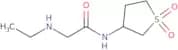
Discontinued product2-(Ethylamino)-N-(tetrahydro-1,1-dioxido-3-thienyl)acetamide
CAS:Versatile small molecule scaffoldFormula:C8H16N2O3SPurity:Min. 95%Molecular weight:220.29 g/molRef: 3D-TEB44454
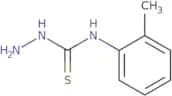
Discontinued product4-(2-Methylphenyl)-3-thiosemicarbazide
CAS:4-(2-Methylphenyl)-3-thiosemicarbazide is a crystalline solid that belongs to the group of benzoic acid derivatives. It has an orthorhombic crystal structure, with a yellow color. The crystals are measured at room temperature, and it has an atomic weight of 197.11 g/mol. 4-(2-Methylphenyl)-3-thiosemicarbazide is stable in air and in solution, but decomposes at temperatures above 250°C. This compound has been studied by using X-ray diffraction measurements and Bruker parameters. Its isotropic radiation is recorded at the following wavelength: 1.5418 Å (1).
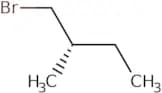
Formula:C8H11N3SPurity:Min. 95%Molecular weight:181.26 g/mol(S)-(+)-1-Bromo-2-methylbutane
CAS:(S)-(+)-1-Bromo-2-methylbutane is a chiral molecule with two stereoisomers, the cis and trans forms. The cis form has been observed to be the more stable of the two. It is a functional theory that these two forms are not mirror images of each other because they have different conformations. (S)-(+)-1-Bromo-2-methylbutane has been used in the synthesis of a number of important molecules. The stereoisomers can be distinguished by conformational analysis and optical microscopy. (S)-(+)-1-Bromo-2-methylbutane also has an application in biotechnology for use as a precursor for hydrazones, which are important in organic chemistry and molecular biology, such as DNA sequencing.
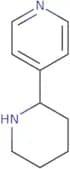
Formula:C5H11BrPurity:Min. 95%Molecular weight:151.04 g/mol4-(Piperidin-2-yl)pyridine
CAS:Versatile small molecule scaffold
Formula:C10H14N2Purity:Min. 95%Molecular weight:162.23 g/molRef: 3D-TFA92451
Discontinued productMethyl 2-Octynoate
CAS:Methyl 2-octynoate is a chemical that has been shown to bind to the nicotinic acetylcholine receptor. Methyl 2-octynoate has been shown to have antitumor activity in various types of cancer cells, including breast, prostate, and lung cancer cells. This chemical is not known to be chemically stable or film-forming. It also disrupts mitochondrial membrane potential and reduces the endpoints of oxidative phosphorylation. Methyl 2-octynoate was found to have low potency against cancer cells in vitro and in vivo.
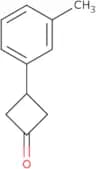
Formula:C9H14O2Purity:Min. 95%Molecular weight:154.21 g/mol3-(3-Methylphenyl)cyclobutan-1-one
CAS:Versatile small molecule scaffold
Formula:C11H12OPurity:Min. 95%Molecular weight:160.21 g/molRef: 3D-TJA86756
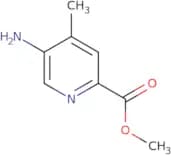
Discontinued productmethyl 5-amino-4-methylpyridine-2-carboxylate
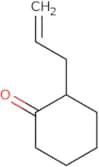
CAS:Versatile small molecule scaffoldFormula:C8H10N2O2Purity:Min. 95%Molecular weight:166.18 g/mol2-Allylcyclohexanone
CAS:2-Allylcyclohexanone is an unsaturated ketone that is synthesized by the ring-opening of allyl cyclohexane carboxylate with sodium hydroxide. It can be used as a chemical intermediate for the synthesis of other compounds. 2-Allylcyclohexanone can also be used to react with hydroxide solution to produce a salt and an alcohol. The hydroxide solution can act as a base, reducing the carbonyl group in the presence of an acid to form the corresponding alcohol. This reaction is stereoselective because it only occurs when there are two different groups on adjacent carbons.
2-Allylcyclohexanone has been shown to inhibit non-nucleoside reverse transcriptase inhibitors (NNRTIs) such as nevirapine, efavirenz, and delavirdine. In addition, it has been found to have functional groups that are capable of reactingFormula:C9H14OPurity:Min. 95%Molecular weight:138.21 g/mol2-(5,6-Difluoro-1H-indol-3-yl)ethan-1-amine hydrochloride
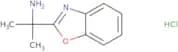
CAS:Controlled ProductVersatile small molecule scaffoldFormula:C10H11ClF2N2Purity:Min. 95%Molecular weight:232.66 g/mol2-(1,3-Benzoxazol-2-yl)propan-2-amine hydrochloride
CAS:Versatile small molecule scaffoldFormula:C10H13ClN2OPurity:Min. 95%Molecular weight:212.67 g/molRef: 3D-UGD90278
Discontinued product4-(5-{[(3-Phenyl-1,2,4-oxadiazol-5-yl)methyl]sulfanyl}-1,3,4-oxadiazol-2-yl)pyridine
CAS:Versatile small molecule scaffoldFormula:C16H11N5O2SPurity:Min. 95%Molecular weight:337.4 g/mol[3-Bromo-4-(morpholin-4-yl)phenyl]methanol
CAS:Versatile small molecule scaffold
Formula:C11H14BrNO2Purity:Min. 95%Molecular weight:272.14 g/molRef: 3D-USC85031
Discontinued productMethyl 3-(4-nitro-1H-pyrazol-1-yl)propanoate
CAS:Versatile small molecule scaffold
Formula:C7H9N3O4Purity:Min. 95%Molecular weight:199.16 g/molRef: 3D-UUA74722
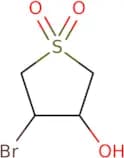
Discontinued product(3R,4S)-rel-4-Bromotetrahydro-thiophene-3-ol 1,1-dioxide
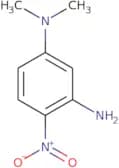
CAS:Versatile small molecule scaffoldFormula:C4H7BrO3SPurity:Min. 95%Molecular weight:215.07 g/mol3-Amino-N,N-dimethyl-4-nitroaniline
CAS:Versatile small molecule scaffold
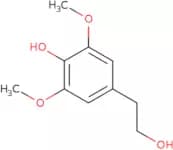
Formula:C8H11N3O2Purity:Min. 95%Molecular weight:181.19 g/mol4-(2-Hydroxyethyl)-2,6-dimethoxyphenol
CAS:Controlled Product4-(2-Hydroxyethyl)-2,6-dimethoxyphenol is a phenolic compound that can be extracted from the bark of the Indian tree Terminalia arjuna. The extract has been used in traditional medicine for centuries to treat diabetes and cancer. In vitro studies have shown that this extract inhibits the activity of viruses, including HIV, with a mechanism of action similar to that of indinavir. 4-(2-Hydroxyethyl)-2,6-dimethoxyphenol also has an antioxidant effect and stimulates the production of glutathione reductase and superoxide dismutase by cells in culture. 4-(2-Hydroxyethyl)-2,6-dimethoxyphenol is used as an herbal drug in India and research has found it to be hepatoprotective when administered orally to rats.
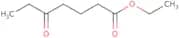
Formula:C10H14O4Purity:Min. 95%Color and Shape:PowderMolecular weight:198.22 g/molEthyl 5-oxoheptanoate
CAS:Ethyl 5-oxoheptanoate is a clear, colorless liquid that can be synthesized by reacting benzene with acetone. The synthesis of ethyl 5-oxoheptanoate is an example of a Friedel-Crafts reaction. This chemical is soluble in organic solvents such as acetone and cyclohexane and has low toxicity. It can be used as a reagent for the preparation of esters from alcohols, phenols, or carboxylic acids. Ethyl 5-oxoheptanoate can also be used to prepare resorcinol, which is a precursor to polymers and dyes, by hydrogenation of the molecule. Preparative methods are often used to produce this product because it has limited solubility in water.
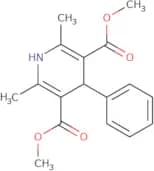
Formula:C9H16O3Purity:Min. 95%Molecular weight:172.22 g/molDimethyl 2,6-dimethyl-4-phenyl-1,4-dihydropyridine-3,5-dicarboxylate
CAS:Dimethyl 2,6-dimethyl-4-phenyl-1,4-dihydropyridine-3,5-dicarboxylate is a radioligand that binds to calcium channels. It is used as a radioligand in binding studies to determine the affinity of various drugs for specific types of calcium channels. Dimethyl 2,6-dimethyl-4-phenyl-1,4-dihydropyridine 3,5 dicarboxylate has been shown to bind specifically to a particular class of calcium channel antagonists (i.e., monosubstituted) and can be used as a pharmacological probe for the study of these compounds.Formula:C17H19NO4Purity:Min. 95%Molecular weight:301.34 g/molRef: 3D-VCA67778
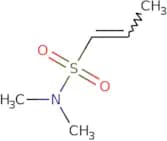
Discontinued productN,N-Dimethylprop-1-ene-1-sulfonamide
CAS:Versatile small molecule scaffold
Formula:C5H11NO2SPurity:Min. 95%Molecular weight:149.2 g/molRef: 3D-VCA78500
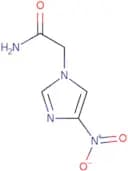
Discontinued product2-(4-Nitro-1H-imidazol-1-yl)acetamide
CAS:Versatile small molecule scaffold
Formula:C5H6N4O3Purity:Min. 95%Molecular weight:170.13 g/mol4,5-Dibromo-3-methoxythiophene-2-carboxylic acid
CAS:Versatile small molecule scaffoldFormula:C6H4Br2O3SPurity:Min. 95%Molecular weight:315.97 g/molRef: 3D-VEA71553
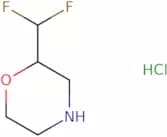
Discontinued product2-(Difluoromethyl)morpholine hydrochloride
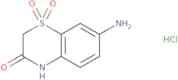
CAS:Versatile small molecule scaffoldFormula:C5H10ClF2NOPurity:Min. 95%Molecular weight:173.59 g/mol7-amino-2H-1,4-benzothiazin-3(4H)-one 1,1-dioxide hydrochloride
CAS:Versatile small molecule scaffold
Formula:C8H9ClN2O3SPurity:Min. 95%Molecular weight:248.69 g/molRef: 3D-VID40915
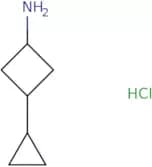
Discontinued product3-Cyclopropylcyclobutan-1-amine hydrochloride, somers
CAS:Versatile small molecule scaffold
Formula:C7H14ClNPurity:Min. 95%Molecular weight:147.64 g/mol(4-Hydroxy-5-methoxypent-1-yn-1-yl)trimethylsilane
CAS:Versatile small molecule scaffoldFormula:C9H18O2SiPurity:Min. 95%Molecular weight:186.32 g/molRef: 3D-VID40976
Discontinued product(1,2-Thiazol-5-yl)methanamine hydrochloride
CAS:Versatile small molecule scaffold
Formula:C4H7ClN2SPurity:Min. 95%Molecular weight:150.63 g/molRef: 3D-VID41014
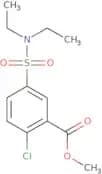
Discontinued productMethyl 2-chloro-5-(diethylsulfamoyl)benzoate
CAS:Versatile small molecule scaffold
Formula:C12H16ClNO4SPurity:Min. 95%Molecular weight:305.78 g/molRef: 3D-VNA62482
Discontinued product4-[(Benzylamino)methyl]thian-4-ol
CAS:Versatile small molecule scaffold
Formula:C13H19NOSPurity:Min. 95%Molecular weight:237.4 g/molRef: 3D-VNC88729
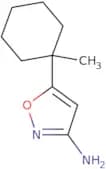
Discontinued product5-(1-Methylcyclohexyl)-1,2-oxazol-3-amine
CAS:Versatile small molecule scaffoldFormula:C10H16N2OPurity:Min. 95%Molecular weight:180.2 g/molRef: 3D-VSC16818
Discontinued product5-Methyl-2-[(2,2,2-trifluoroethyl)sulfanyl]aniline
CAS:Versatile small molecule scaffold
Formula:C9H10F3NSPurity:Min. 95%Molecular weight:221.24 g/molRef: 3D-VTB62431
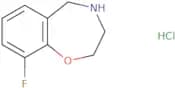
Discontinued product9-Fluoro-2,3,4,5-tetrahydro-1,4-benzoxazepine hydrochloride
CAS:Versatile small molecule scaffold
Formula:C9H11ClFNOPurity:Min. 95%Molecular weight:203.64 g/molRef: 3D-VWC18668
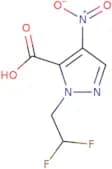
Discontinued product1-(2,2-Difluoroethyl)-4-nitro-1H-pyrazole-5-carboxylic acid
CAS:Versatile small molecule scaffoldFormula:C6H5F2N3O4Purity:Min. 95%Molecular weight:221.12 g/molRef: 3D-VWC27524
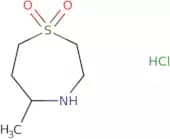
Discontinued product5-Methyl-1,4-thiazepane-1,1-dione hydrochloride
CAS:Versatile small molecule scaffold
Formula:C6H14ClNO2SPurity:Min. 95%Molecular weight:199.7 g/molRef: 3D-VWC27667
Discontinued product2-(2,2,2-Trifluoroethyl)pyrrolidine hydrochloride
CAS:Versatile small molecule scaffold
Formula:C6H11ClF3NPurity:Min. 95%Molecular weight:189.6 g/molRef: 3D-VWC27748
Discontinued product5-[(2,4-Difluorophenyl)methyl]-4-methyl-1,3-thiazol-2-amine hydrobromide
CAS:Versatile small molecule scaffold
Formula:C11H11BrF2N2SPurity:Min. 95%Molecular weight:321.19 g/molRef: 3D-VWC49324
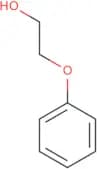
Discontinued product2-Phenoxyethanol-1,1-d2
CAS:Versatile small molecule scaffold
Formula:C8H10O2Purity:Min. 95%Molecular weight:140.18 g/molRef: 3D-WAA27338
Discontinued product1-[5-(Trifluoromethyl)-1,3,4-thiadiazol-2-yl]piperazine hydrochloride
CAS:Versatile small molecule scaffold
Formula:C7H10ClF3N4SPurity:Min. 95%Molecular weight:274.7 g/molRef: 3D-WAC73867
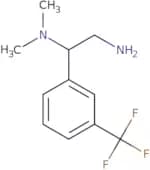
Discontinued productN*1*,N*1*-Dimethyl-1-(3-trifluoromethyl-phenyl)-ethane-1,2-diamine
CAS:Versatile small molecule scaffoldFormula:C11H15F3N2Purity:Min. 95%Molecular weight:232.25 g/moltert-Butyl 8-oxa-4-azabicyclo[5.1.0]octane-4-carboxylate
CAS:Versatile small molecule scaffoldFormula:C11H19NO3Purity:Min. 95%Molecular weight:213.27 g/molRef: 3D-WGB06215
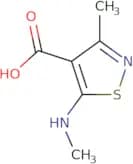
Discontinued product3-Methyl-5-(methylamino)-1,2-thiazole-4-carboxylic acid
CAS:Versatile small molecule scaffold
Formula:C6H8N2O2SPurity:Min. 95%Molecular weight:172.21 g/molRef: 3D-WJB21745
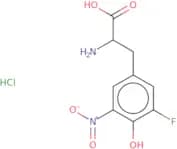
Discontinued product2-Amino-3-(3-fluoro-4-hydroxy-5-nitrophenyl)propanoic acid hydrochloride
CAS:Versatile small molecule scaffold
Formula:C9H10ClFN2O5Purity:Min. 95%Molecular weight:280.6 g/mol2'-[(tert-Butoxy)carbonyl]-2',3'-dihydro-1'H-spiro[cyclopropane-1,4'-isoquinoline]-1'-carboxylic acid
CAS:Versatile small molecule scaffoldFormula:C17H21NO4Purity:Min. 95%Molecular weight:303.4 g/molRef: 3D-WLD79997
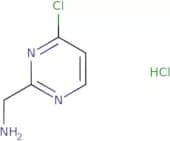
Discontinued product2-(Aminomethyl)-4-chloropyrimidine HCl
CAS:Versatile small molecule scaffold
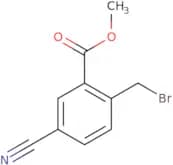
Formula:C5H7Cl2N3Purity:Min. 95%Molecular weight:180.04 g/molMethyl 2-(bromomethyl)-5-cyanobenzoate
CAS:Versatile small molecule scaffold
Formula:C10H8BrNO2Purity:Min. 95%Molecular weight:254.08 g/mol1-Phenyl-2-(trifluoromethoxy)ethan-1-ol
CAS:Versatile small molecule scaffoldFormula:C9H9F3O2Purity:Min. 95%Molecular weight:206.16 g/mol4-(Aminomethyl)-N-(2-methoxyethyl)aniline
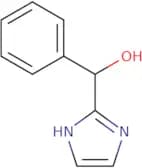
CAS:Versatile small molecule scaffoldFormula:C10H16N2OPurity:Min. 95%Molecular weight:180.25 g/mol1H-Imidazol-2-yl(phenyl)methanol
CAS:Versatile small molecule scaffold
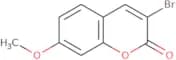
Formula:C10H10N2OPurity:Min. 95%Molecular weight:174.2 g/mol3-Bromo-7-methoxy-2H-1-benzopyran-2-one
CAS:3-Bromo-7-methoxy-2H-1-benzopyran-2-one is a coumarin derivative that has been shown to cause liver lesions in rats. The compound can also inhibit locomotor activity, as well as have a significant effect on the levels of serum prolactin. 3-Bromo-7-methoxy-2H-1-benzopyran-2-one is a ligand for the 5HT2 receptor, and it has been suggested that this may be due to its coordination geometry. In addition, 3BMOP binds to DNA with high affinity and specificity, which suggests that it could be used as an antitumor agent.
Formula:C10H7BrO3Purity:Min. 95%Molecular weight:255.06 g/molN-[(4-Chlorophenyl)methyl]-4,5-dihydro-1,3-thiazol-2-amine
CAS:Versatile small molecule scaffold
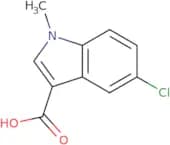
Formula:C10H11ClN2SPurity:Min. 95%Molecular weight:226.73 g/mol5-Chloro-1-methyl-1H-indole-3-carboxylic acid
CAS:Controlled ProductVersatile small molecule scaffoldFormula:C10H8ClNO2Purity:Min. 95%Molecular weight:209.63 g/molRef: 3D-XGA59662
Discontinued product2-(2-[(Propan-2-yloxy)methyl]phenyl)acetic acid
CAS:Versatile small molecule scaffold
Formula:C12H16O3Purity:Min. 95%Molecular weight:208.3 g/molRef: 3D-XLC02690
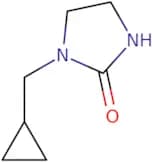
Discontinued product1-(Cyclopropylmethyl)imidazolidin-2-one
CAS:Versatile small molecule scaffold
Formula:C7H12N2OPurity:Min. 95%Molecular weight:140.18 g/molRef: 3D-XLC04672
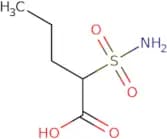
Discontinued product2-Sulfamoylpentanoic acid
CAS:Versatile small molecule scaffold
Formula:C5H11NO4SPurity:Min. 95%Molecular weight:181.21 g/molRef: 3D-XLC81845
Discontinued product3-methylpyridine-2-sulfinate lithium
CAS:Versatile small molecule scaffoldFormula:C6H6LiNO2SPurity:Min. 95%Molecular weight:163.1 g/mol4-Methyl-1,2-oxazolidin-4-ol hydrochloride
CAS:Versatile small molecule scaffold
Formula:C4H10ClNO2Purity:Min. 95%Molecular weight:139.6 g/molRef: 3D-XLD15344
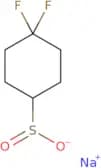
Discontinued productSodium 4,4-difluorocyclohexane-1-sulfinate
CAS:Versatile small molecule scaffold
Formula:C6H9F2NaO2SPurity:Min. 95%Molecular weight:206.19 g/molRef: 3D-XPC01358
Discontinued productEthyl 3-{bicyclo[2.2.1]heptan-2-yl}propanoate
CAS:Versatile small molecule scaffoldFormula:C12H20O2Purity:Min. 95%Molecular weight:196.29 g/molRef: 3D-XWC12157
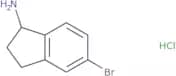
Discontinued product5-bromo-2,3-dihydro-1H-inden-1-amine hydrochloride
CAS:Controlled ProductVersatile small molecule scaffoldFormula:C9H11BrClNPurity:Min. 95%Molecular weight:248.5 g/mol1-[(2-aminophenyl)methyl]pyrrolidin-2-one hydrochloride
CAS:Versatile small molecule scaffold
Formula:C11H15ClN2OPurity:Min. 95%Molecular weight:226.7 g/molRef: 3D-XXB62541
Discontinued product2-(3-Amino-2-oxopiperidin-1-yl)acetic acid hydrochloride
CAS:Versatile small molecule scaffold
Formula:C7H13ClN2O3Purity:Min. 95%Molecular weight:208.6 g/molRef: 3D-XXC41801
Discontinued product2-[(3,5-Dimethylphenyl)formamido]acetic acid
CAS:2-[(3,5-Dimethylphenyl)formamido]acetic acid is a compound with diverse applications and characteristics. It is a diphenyl ether that can be used as an electrode material in various electronic devices. Additionally, it has cholinergic properties, meaning it affects the neurotransmitter acetylcholine in the nervous system.
Formula:C11H13NO3Purity:Min. 95%Molecular weight:207.23 g/molRef: 3D-YAA08214
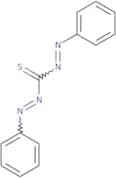
Discontinued product1,3-Bis(phenylimino)thiourea
CAS:Versatile small molecule scaffold
Formula:C13H10N4SPurity:Min. 95%Molecular weight:254.31 g/molRef: 3D-YAA21642
Discontinued productMethyl 5-bromo-3-(bromomethyl)furan-2-carboxylate
CAS:Versatile small molecule scaffold
Formula:C7H6Br2O3Purity:Min. 95%Molecular weight:297.93 g/mol5-(Chloromethyl)-3-methyl-1-phenyl-1H-pyrazole-4-carbonitrile
CAS:Versatile small molecule scaffold
Formula:C12H10ClN3Purity:Min. 95%Molecular weight:231.68 g/mol3-(Hydroxymethyl)-1,2,3,4-tetrahydroquinoxalin-2-one
CAS:Versatile small molecule scaffold
Formula:C9H10N2O2Purity:Min. 95%Molecular weight:178.19 g/molRef: 3D-YFA01290
Discontinued product3-{[3-(Thiophen-3-yl)-1,2,4-oxadiazol-5-yl]methyl}thiomorpholine hydrochloride
CAS:Versatile small molecule scaffold
Formula:C11H14ClN3OS2Purity:Min. 95%Molecular weight:303.8 g/molRef: 3D-YGC02770
Discontinued product3-Hydroxy-5-methylpyridine
CAS:3-Hydroxy-5-methylpyridine (3HMP) is a chemical substance that has been classified as an amine. It is a product of the metabolism of purines, which are nitrogenous bases found in DNA and RNA. 3HMP is produced by aerogenic bacteria (such as Enterobacter), and can be used to estimate the number of these bacteria present in water samples. 3HMP has been shown to have antiviral properties against influenza virus, and can be used as a biomarker for the presence of other viruses in animals. 3HMP also has mineralization properties, which have been studied extensively, particularly with regards to pancreatic disease.
Formula:C6H7NOPurity:Min. 95%Color and Shape:PowderMolecular weight:109.13 g/molRef: 3D-FH16174
Discontinued product1-Hydroxycyclopentane-1-carbonitrile
CAS:1-Hydroxycyclopentane-1-carbonitrile is a monomer that is hydrolyzed to form benzoin and cyanohydrins. It can be used in the production of scifinder as a monomer or dimerizer.
Formula:C6H9NOPurity:Min. 95%Molecular weight:111.14 g/mol8-Bromo-2-methylimidazo[1,2-a]pyridine
CAS:Versatile small molecule scaffold
Formula:C8H7N2BrPurity:Min. 95%Molecular weight:211.05 g/mol4,5-Dihydro-1H-imidazol-2-amine hydrochloride
CAS:Please enquire for more information about 4,5-Dihydro-1H-imidazol-2-amine hydrochloride including the price, delivery time and more detailed product information at the technical inquiry form on this page
Formula:C3H7N3•HClPurity:Min. 95%Molecular weight:121.57 g/molRef: 3D-FD183639
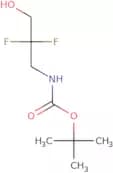
Discontinued producttert-Butyl (2,2-difluoro-3-hydroxypropyl)carbamate
CAS:Versatile small molecule scaffoldFormula:C10H13NO4Purity:Min. 95%Molecular weight:211.21 g/mol4-Chloro-2-hydroxy-6-methylphenylboronic acid
CAS:Versatile small molecule scaffoldFormula:C7H8BClO3Purity:Min. 95%Molecular weight:186.4 g/mol2-Bromo-3,3,3-trifluoro-1-propene
CAS:Controlled Product2-Bromo-3,3,3-trifluoro-1-propene is a chemical compound that has been synthesized in an asymmetric reaction. The reactant is bromopropane and the product is 2,2,2-trifluoropropene. The methylene group on the propene molecule is activated by the nucleophilic attack of a fluoride ion from hydrogen fluoride to form a cavity with a highly strained bond. The kinetic study of this reaction revealed that the activation energy for the reaction is 42 kJ/mol. Palladium-catalyzed coupling reactions are catalyzed by palladium and require nonpolar solvents such as toluene or dichloromethane. This type of reaction has been shown to be exothermic with an isolated yield of 1%.
Formula:C3H2BrF3Purity:Min. 95%Color and Shape:Colorless PowderMolecular weight:174.95 g/mol4,5-Dihydroxy-2,3-Pentanedione
CAS:4,5-Dihydroxy-2,3-pentanedione is a carbonyl compound that is the product of the oxidation of ascorbic acid. It is used in wastewater treatment and has antimicrobial properties against infectious diseases. This compound has been shown to inhibit protein synthesis by binding to the ribosome and preventing the formation of peptide bonds between amino acids. 4,5-Dihydroxy-2,3-pentanedione has also been shown to bind to plasma proteins, which may be due to its acyl chain structure. 4,5-Dihydroxy-2,3-pentanedione can be synthesized in a catalytic mechanism that involves dehydroascorbic acid and molecular oxygen.
Formula:C5H8O4Purity:Min. 95%Color and Shape:PowderMolecular weight:132.11 g/molRef: 3D-FD180770
Discontinued productPiperyline
CAS:Piperyline is an alkanoic acid that has shown to be effective against skin cancer. It also has antimicrobial properties, which may be due to its ability to bind metal ions and form polymeric compounds. Piperyline inhibits microbial growth by inhibiting the synthesis of proteins and nucleic acids. The antimicrobial activity is related to its cationic polymerization with hydroxyl groups, which forms a structure that can inhibit microbial enzymes and disrupt microbial cell membranes. This compound also interacts with the skin's natural lipids, making it difficult for microorganisms to attach and grow on the skin. Piperyline is synthesized in organic chemistry laboratories as an amide precursor of other pharmaceuticals such as penicillin.
Formula:C16H17NO3Purity:Min. 95%Molecular weight:271.31 g/mol
![2-[(3-Nitrophenyl)formamido]acetic acid](/_next/image/?url=https%3A%2Fstatic.cymitquimica.com%2Fproducts%2F3D%2Fthumb-webp%2FAAA61710.webp&w=3840&q=75)



![4-(5-{[(3-Phenyl-1,2,4-oxadiazol-5-yl)methyl]sulfanyl}-1,3,4-oxadiazol-2-yl)pyridine](/_next/image/?url=https%3A%2Fstatic.cymitquimica.com%2Fproducts%2F3D%2Fthumb-webp%2FULB93670.webp&w=3840&q=75)
![[3-Bromo-4-(morpholin-4-yl)phenyl]methanol](/_next/image/?url=https%3A%2Fstatic.cymitquimica.com%2Fproducts%2F3D%2Fthumb-webp%2FUSC85031.webp&w=3840&q=75)



![4-[(Benzylamino)methyl]thian-4-ol](/_next/image/?url=https%3A%2Fstatic.cymitquimica.com%2Fproducts%2F3D%2Fthumb-webp%2FVNC88729.webp&w=3840&q=75)
![5-Methyl-2-[(2,2,2-trifluoroethyl)sulfanyl]aniline](/_next/image/?url=https%3A%2Fstatic.cymitquimica.com%2Fproducts%2F3D%2Fthumb-webp%2FVTB62431.webp&w=3840&q=75)

![5-[(2,4-Difluorophenyl)methyl]-4-methyl-1,3-thiazol-2-amine hydrobromide](/_next/image/?url=https%3A%2Fstatic.cymitquimica.com%2Fproducts%2F3D%2Fthumb-webp%2FVWC49324.webp&w=3840&q=75)
![1-[5-(Trifluoromethyl)-1,3,4-thiadiazol-2-yl]piperazine hydrochloride](/_next/image/?url=https%3A%2Fstatic.cymitquimica.com%2Fproducts%2F3D%2Fthumb-webp%2FWAC73867.webp&w=3840&q=75)
![tert-Butyl 8-oxa-4-azabicyclo[5.1.0]octane-4-carboxylate](/_next/image/?url=https%3A%2Fstatic.cymitquimica.com%2Fproducts%2F3D%2Fthumb-webp%2FWGB06215.webp&w=3840&q=75)
![2'-[(tert-Butoxy)carbonyl]-2',3'-dihydro-1'H-spiro[cyclopropane-1,4'-isoquinoline]-1'-carboxylic a…](/_next/image/?url=https%3A%2Fstatic.cymitquimica.com%2Fproducts%2F3D%2Fthumb-webp%2FWLD79997.webp&w=3840&q=75)


![N-[(4-Chlorophenyl)methyl]-4,5-dihydro-1,3-thiazol-2-amine](/_next/image/?url=https%3A%2Fstatic.cymitquimica.com%2Fproducts%2F3D%2Fthumb-webp%2FXCA23929.webp&w=3840&q=75)
![2-(2-[(Propan-2-yloxy)methyl]phenyl)acetic acid](/_next/image/?url=https%3A%2Fstatic.cymitquimica.com%2Fproducts%2F3D%2Fthumb-webp%2FXLC02690.webp&w=3840&q=75)


![Ethyl 3-{bicyclo[2.2.1]heptan-2-yl}propanoate](/_next/image/?url=https%3A%2Fstatic.cymitquimica.com%2Fproducts%2F3D%2Fthumb-webp%2FXWC12157.webp&w=3840&q=75)
![1-[(2-aminophenyl)methyl]pyrrolidin-2-one hydrochloride](/_next/image/?url=https%3A%2Fstatic.cymitquimica.com%2Fproducts%2F3D%2Fthumb-webp%2FXXB62541.webp&w=3840&q=75)
![2-[(3,5-Dimethylphenyl)formamido]acetic acid](/_next/image/?url=https%3A%2Fstatic.cymitquimica.com%2Fproducts%2F3D%2Fthumb-webp%2FYAA08214.webp&w=3840&q=75)

![3-{[3-(Thiophen-3-yl)-1,2,4-oxadiazol-5-yl]methyl}thiomorpholine hydrochloride](/_next/image/?url=https%3A%2Fstatic.cymitquimica.com%2Fproducts%2F3D%2Fthumb-webp%2FYGC02770.webp&w=3840&q=75)


![8-Bromo-2-methylimidazo[1,2-a]pyridine](/_next/image/?url=https%3A%2Fstatic.cymitquimica.com%2Fproducts%2F3D%2Fthumb-webp%2FUXB37475.webp&w=3840&q=75)