Building Blocks
Subcategories of "Building Blocks"
- Boronic Acids & Boronic Acid Derivatives(5,778 products)
- Chiral Building Blocks(1,243 products)
- Hydrocarbon Building Blocks(6,098 products)
- Organic Building Blocks(61,036 products)
Found 205240 products of "Building Blocks"
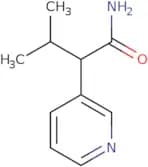
3-Methyl-2-(pyridin-3-yl)butanamide
CAS:Versatile small molecule scaffold
Formula:C10H14N2OPurity:Min. 95%Molecular weight:178.23 g/molRef: 3D-BFC36176
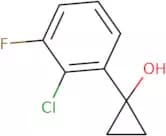
Discontinued product1-(2-Chloro-3-fluorophenyl)cyclopropan-1-ol
CAS:Versatile small molecule scaffold
Formula:C9H8ClFOPurity:Min. 95%Molecular weight:186.61 g/molRef: 3D-EKC93198
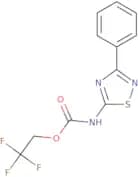
Discontinued product2,2,2-Trifluoroethyl N-(3-phenyl-1,2,4-thiadiazol-5-yl)carbamate
CAS:Versatile small molecule scaffold
Formula:C11H8F3N3O2SPurity:Min. 95%Molecular weight:303.26 g/molRef: 3D-EEC95162
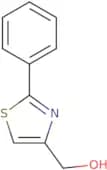
Discontinued product4-(Hydroxymethyl)-2-phenyl-1,3-thiazole
CAS:4-(Hydroxymethyl)-2-phenyl-1,3-thiazole is a versatile compound that has various applications in research and chemical synthesis. It is commonly used as a building block for the synthesis of organic compounds, including antibodies and research chemicals. This compound has been found to exhibit potent antiangiogenic properties, making it valuable in the field of cancer research. Additionally, 4-(Hydroxymethyl)-2-phenyl-1,3-thiazole can be used as a precursor in the synthesis of important pharmaceuticals such as cephalosporins and taxol. Its unique structure allows for diverse chemical reactions, making it an essential tool for chemists and researchers alike. Whether you're working on developing new drugs or exploring novel chemical reactions, 4-(Hydroxymethyl)-2-phenyl-1,3-thiazole is an indispensable compound that will help drive your scientific endeavors forward.
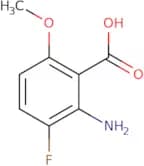
Formula:C10H9NOSPurity:Min. 95%Molecular weight:191.25 g/mol2-Amino-3-fluoro-6-methoxybenzoic acid
CAS:Versatile small molecule scaffoldFormula:C8H8FNO3Purity:Min. 95%Molecular weight:185.15 g/molRef: 3D-EEC94983
Discontinued product3-([(tert-Butoxy)carbonyl]amino)-2-(cyclopentylmethyl)propanoic acid
CAS:Versatile small molecule scaffold
Formula:C14H25NO4Purity:Min. 95%Molecular weight:271.35 g/molRef: 3D-XXC61525
Discontinued productMethyl 3-tert-butyl-1,2,3,4-tetrahydroquinoline-6-carboxylate hydrochloride
CAS:Versatile small molecule scaffoldFormula:C15H22ClNO2Purity:Min. 95%Molecular weight:283.8 g/molRef: 3D-XLD59631
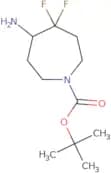
Discontinued producttert-Butyl 5-amino-4,4-difluoroazepane-1-carboxylate
CAS:Versatile small molecule scaffold
Formula:C11H20F2N2O2Purity:Min. 95%Molecular weight:250.29 g/molRef: 3D-XLD51829
Discontinued productEthyl 2-[(4-amino-5-cyanopyrimidin-2-yl)sulfanyl]acetate
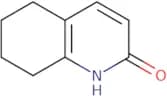
CAS:Versatile small molecule scaffoldFormula:C9H10N4O2SPurity:Min. 95%Molecular weight:238.27 g/mol5,6,7,8-Tetrahydroquinolin-2(1H)-one
CAS:Tetrahydroquinolin-2(1H)-one is a hydrobromide that has been found in the environment as an environmental pollutant. Tetrahydroquinolin-2(1H)-one is used to synthesize amides and has been studied by single-crystal x-ray diffraction. The molecule is centrosymmetric, with a molecular weight of 244.06 g/mol. Tetrahydroquinolin-2(1H)-one can be used as a ligand for metals such as chlorine and magnesium. It does not dissolve in water but does dissolve in organic solvents such as ethers, chloroform, or benzene.
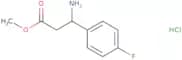
Formula:C9H11NOPurity:Min. 95%Molecular weight:149.19 g/molMethyl (S)-3-amino-3-(4-fluorophenyl)propanoate hydrochloride
CAS:Versatile small molecule scaffoldFormula:C10H13ClFNO2Purity:Min. 95%Molecular weight:233.67 g/molRef: 3D-WZB17474
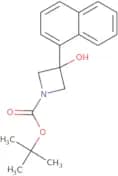
Discontinued producttert-Butyl 3-hydroxy-3-(naphthalen-1-yl)azetidine-1-carboxylate
CAS:Versatile small molecule scaffold
Formula:C18H21NO3Purity:Min. 95%Molecular weight:299.4 g/molRef: 3D-WSC84861
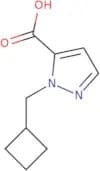
Discontinued product1-(Cyclobutylmethyl)-1H-pyrazole-5-carboxylic acid
CAS:Versatile small molecule scaffoldFormula:C9H12N2O2Purity:Min. 95%Molecular weight:180.2 g/molRef: 3D-WJC58413
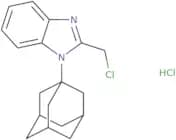
Discontinued product1-(Adamantan-1-yl)-2-(chloromethyl)-1H-1,3-benzodiazole hydrochloride
CAS:Versatile small molecule scaffoldFormula:C18H22Cl2N2Purity:Min. 95%Molecular weight:337.3 g/molRef: 3D-VWB21715
Discontinued product2,2,2-Trifluoro-1-[1-(4-methylcyclohexyl)-1H-pyrazol-4-yl]ethan-1-one
CAS:Versatile small molecule scaffoldFormula:C12H15F3N2OPurity:Min. 95%Molecular weight:260.26 g/molRef: 3D-VJC71138
Discontinued product1-[3-(1-Aminoethyl)phenyl]imidazolidin-2-one
CAS:Versatile small molecule scaffold
Formula:C11H15N3OPurity:Min. 95%Molecular weight:205.26 g/molRef: 3D-VJC67923
Discontinued product2-[(4-Aminophenyl)sulfanyl]-5-chlorobenzonitrile
CAS:Versatile small molecule scaffold
Formula:C13H9ClN2SPurity:Min. 95%Molecular weight:260.74 g/molRef: 3D-VJC36571
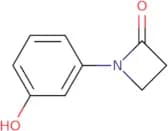
Discontinued product1-(3-Hydroxyphenyl)azetidin-2-one
CAS:Versatile small molecule scaffold
Formula:C9H9NO2Purity:Min. 95%Molecular weight:163.17 g/molRef: 3D-BDA22801
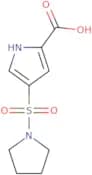
Discontinued product4-(Pyrrolidine-1-sulfonyl)-1H-pyrrole-2-carboxylic acid
CAS:Versatile small molecule scaffoldFormula:C9H12N2O4SPurity:Min. 95%Molecular weight:244.27 g/molRef: 3D-VJB69308
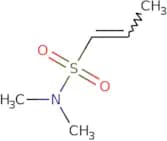
Discontinued productN,N-Dimethylprop-1-ene-1-sulfonamide
CAS:Versatile small molecule scaffold
Formula:C5H11NO2SPurity:Min. 95%Molecular weight:149.2 g/molRef: 3D-VCA78500
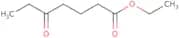
Discontinued productEthyl 5-oxoheptanoate
CAS:Ethyl 5-oxoheptanoate is a clear, colorless liquid that can be synthesized by reacting benzene with acetone. The synthesis of ethyl 5-oxoheptanoate is an example of a Friedel-Crafts reaction. This chemical is soluble in organic solvents such as acetone and cyclohexane and has low toxicity. It can be used as a reagent for the preparation of esters from alcohols, phenols, or carboxylic acids. Ethyl 5-oxoheptanoate can also be used to prepare resorcinol, which is a precursor to polymers and dyes, by hydrogenation of the molecule. Preparative methods are often used to produce this product because it has limited solubility in water.
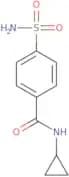
Formula:C9H16O3Purity:Min. 95%Molecular weight:172.22 g/molN-Cyclopropyl-4-sulfamoylbenzamide
CAS:N-Cyclopropyl-4-sulfamoylbenzamide is a sulfonamide antibiotic that inhibits the growth of bacteria by blocking the synthesis of folic acid. It has been shown to be effective against Escherichia coli, Salmonella enterica, and Staphylococcus aureus. N-Cyclopropyl-4-sulfamoylbenzamide is metabolized in the liver by cytochrome P450 enzymes and excreted in the urine. The rate of metabolism is determined by mutant enzyme activity. This drug has been shown to inhibit detoxification enzymes such as Triticum aestivum desmethylase and acetolactate synthase, which may be responsible for its toxic effects on plants.Formula:C10H12N2O3SPurity:Min. 95%Molecular weight:240.28 g/molRef: 3D-URB13516
Discontinued product5-Chloro-3-cyclobutyl-1,2,4-oxadiazole
CAS:Versatile small molecule scaffold
Formula:C6H7ClN2OPurity:Min. 95%Molecular weight:158.58 g/molRef: 3D-NXB26496
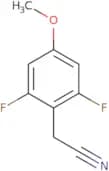
Discontinued product2,6-Difluoro-4-methoxyphenylacetonitrile
CAS:Versatile small molecule scaffold
Formula:C9H7F2NOPurity:Min. 95%Molecular weight:183.16 g/mol3-(Aminomethyl)-2,2-difluoropentane hydrochloride
CAS:Versatile small molecule scaffoldFormula:C6H14ClF2NPurity:Min. 95%Molecular weight:173.6 g/molRef: 3D-LUD64101
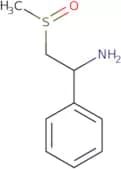
Discontinued product2-Methanesulfinyl-1-phenylethan-1-amine
CAS:Versatile small molecule scaffoldFormula:C9H13NOSPurity:Min. 95%Molecular weight:183.27 g/molRef: 3D-TDC83740
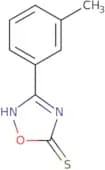
Discontinued product3-(3-Methylphenyl)-1,2,4-oxadiazole-5-thiol
CAS:Versatile small molecule scaffold
Formula:C9H8N2OSPurity:Min. 95%Molecular weight:192.24 g/molRef: 3D-TDC70058
Discontinued product1-(2-tert-Butyl-1,3-thiazol-4-yl)ethan-1-one
CAS:Versatile small molecule scaffold
Formula:C9H13NOSPurity:Min. 95%Molecular weight:183.27 g/molRef: 3D-TDC45616
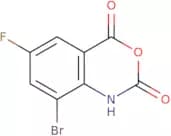
Discontinued product8-Bromo-6-fluoro-2,4-dihydro-1H-3,1-benzoxazine-2,4-dione
CAS:Versatile small molecule scaffold
Formula:C8H3BrFNO3Purity:Min. 95%Molecular weight:260.02 g/molRef: 3D-TDC35994
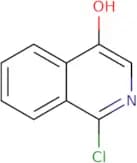
Discontinued product1-Chloroisoquinolin-4-ol
CAS:1-Chloroisoquinolin-4-ol is a phenylpyrimidine with anti-inflammatory properties. It is used in the treatment of sensitivity and mediated diseases, such as osteoarthritis, rheumatoid arthritis, and ankylosing spondylitis. 1-Chloroisoquinolin-4-ol inhibits the enzymatic activity of matrix metalloproteinases (MMPs), which are enzymes that break down collagen and other proteins in the body. The inhibition of MMPs by 1-chloroisoquinolin-4-ol leads to reduced inflammation and pain. This compound is also an effective inhibitor of the activities of chloride channels involved in acid secretion by cells in the stomach lining, thus inhibiting acid production. 1-Chloroisoquinolin-4-ol has been shown to have anticholesterolemic effects on liver cells due to its ability to inhibit cholesterol synthesis through inhibition of HMG CoA
Formula:C9H6ClNOPurity:Min. 95%Molecular weight:179.6 g/molRef: 3D-DAA33643
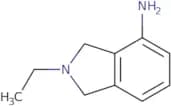
Discontinued product2-Ethyl-2,3-dihydro-1H-isoindol-4-amine
CAS:Versatile small molecule scaffoldFormula:C10H14N2Purity:Min. 95%Molecular weight:162.23 g/molRef: 3D-SQB38828
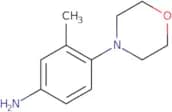
Discontinued product3-Methyl-4-(4-morpholinyl)aniline
CAS:Versatile small molecule scaffold
Formula:C11H16N2OPurity:Min. 95%Molecular weight:192.26 g/molRef: 3D-MEA90082
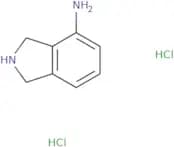
Discontinued productIsoindolin-4-amine dihydrochloride
CAS:Versatile small molecule scaffold
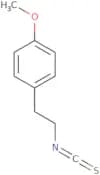
Formula:C8H10N2HClPurity:Min. 95%Molecular weight:207.1 g/mol1-(2-Isothiocyanatoethyl)-4-methoxybenzene
CAS:Versatile small molecule scaffold
Formula:C10H11NOSPurity:Min. 95%Molecular weight:193.27 g/molRef: 3D-SAA42737
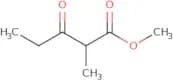
Discontinued product2-Methyl-3-oxo-pentanoicacid methyl ester
CAS:The synthesis of 2-methyl-3-oxo-pentanoic acid methyl ester is accomplished by a three step process. The first step is the intramolecular condensation of 2,2-dimethylpropionic acid with acetone to form a 1:1 mixture of 3,4-dihydroxybutyl and 4,4-dihydroxybutyl esters. The second step is the selective transesterification of the 3,4-dihydroxybutyl ester with benzaldehyde. This reaction provides an optically pure 2-methyl-3-oxo-pentanoic acid methyl ester as the major product. The third step is an aldol condensation between the ketone from the second step and acetone to produce another optically pure 2,2 dimethylpropionic acid methyl ester.Formula:C7H12O3Purity:Min. 95%Molecular weight:144.17 g/mol4-Chloro-2-hydroxy-6-methylphenylboronic acid
CAS:Versatile small molecule scaffoldFormula:C7H8BClO3Purity:Min. 95%Molecular weight:186.4 g/mol2-Bromo-3,3,3-trifluoro-1-propene
CAS:Controlled Product2-Bromo-3,3,3-trifluoro-1-propene is a chemical compound that has been synthesized in an asymmetric reaction. The reactant is bromopropane and the product is 2,2,2-trifluoropropene. The methylene group on the propene molecule is activated by the nucleophilic attack of a fluoride ion from hydrogen fluoride to form a cavity with a highly strained bond. The kinetic study of this reaction revealed that the activation energy for the reaction is 42 kJ/mol. Palladium-catalyzed coupling reactions are catalyzed by palladium and require nonpolar solvents such as toluene or dichloromethane. This type of reaction has been shown to be exothermic with an isolated yield of 1%.
Formula:C3H2BrF3Purity:Min. 95%Color and Shape:Colorless PowderMolecular weight:174.95 g/mol3-Hydroxy-5-methylpyridine
CAS:3-Hydroxy-5-methylpyridine (3HMP) is a chemical substance that has been classified as an amine. It is a product of the metabolism of purines, which are nitrogenous bases found in DNA and RNA. 3HMP is produced by aerogenic bacteria (such as Enterobacter), and can be used to estimate the number of these bacteria present in water samples. 3HMP has been shown to have antiviral properties against influenza virus, and can be used as a biomarker for the presence of other viruses in animals. 3HMP also has mineralization properties, which have been studied extensively, particularly with regards to pancreatic disease.
Formula:C6H7NOPurity:Min. 95%Color and Shape:PowderMolecular weight:109.13 g/molRef: 3D-FH16174
Discontinued product4,5-Dihydroxy-2,3-Pentanedione
CAS:4,5-Dihydroxy-2,3-pentanedione is a carbonyl compound that is the product of the oxidation of ascorbic acid. It is used in wastewater treatment and has antimicrobial properties against infectious diseases. This compound has been shown to inhibit protein synthesis by binding to the ribosome and preventing the formation of peptide bonds between amino acids. 4,5-Dihydroxy-2,3-pentanedione has also been shown to bind to plasma proteins, which may be due to its acyl chain structure. 4,5-Dihydroxy-2,3-pentanedione can be synthesized in a catalytic mechanism that involves dehydroascorbic acid and molecular oxygen.
Formula:C5H8O4Purity:Min. 95%Color and Shape:PowderMolecular weight:132.11 g/molRef: 3D-FD180770
Discontinued productPiperyline
CAS:Piperyline is an alkanoic acid that has shown to be effective against skin cancer. It also has antimicrobial properties, which may be due to its ability to bind metal ions and form polymeric compounds. Piperyline inhibits microbial growth by inhibiting the synthesis of proteins and nucleic acids. The antimicrobial activity is related to its cationic polymerization with hydroxyl groups, which forms a structure that can inhibit microbial enzymes and disrupt microbial cell membranes. This compound also interacts with the skin's natural lipids, making it difficult for microorganisms to attach and grow on the skin. Piperyline is synthesized in organic chemistry laboratories as an amide precursor of other pharmaceuticals such as penicillin.
Formula:C16H17NO3Purity:Min. 95%Molecular weight:271.31 g/mol

![3-([(tert-Butoxy)carbonyl]amino)-2-(cyclopentylmethyl)propanoic acid](/_next/image/?url=https%3A%2Fstatic.cymitquimica.com%2Fproducts%2F3D%2Fthumb-webp%2FXXC61525.webp&w=3840&q=75)

![Ethyl 2-[(4-amino-5-cyanopyrimidin-2-yl)sulfanyl]acetate](/_next/image/?url=https%3A%2Fstatic.cymitquimica.com%2Fproducts%2F3D%2Fthumb-webp%2FMMB60132.webp&w=3840&q=75)
![2,2,2-Trifluoro-1-[1-(4-methylcyclohexyl)-1H-pyrazol-4-yl]ethan-1-one](/_next/image/?url=https%3A%2Fstatic.cymitquimica.com%2Fproducts%2F3D%2Fthumb-webp%2FVJC71138.webp&w=3840&q=75)
![1-[3-(1-Aminoethyl)phenyl]imidazolidin-2-one](/_next/image/?url=https%3A%2Fstatic.cymitquimica.com%2Fproducts%2F3D%2Fthumb-webp%2FVJC67923.webp&w=3840&q=75)
![2-[(4-Aminophenyl)sulfanyl]-5-chlorobenzonitrile](/_next/image/?url=https%3A%2Fstatic.cymitquimica.com%2Fproducts%2F3D%2Fthumb-webp%2FVJC36571.webp&w=3840&q=75)