


Building Blocks
This section contains fundamental products for the synthesis of organic and biological compounds. Building blocks are the essential starting materials used to construct complex molecules through various chemical reactions. They play a critical role in drug discovery, material science, and chemical research. At CymitQuimica, we offer a diverse range of high-quality building blocks to support your innovative research and industrial projects, ensuring you have the essential components for successful synthesis.
Subcategories of "Building Blocks"
- Boronic Acids & Boronic Acid Derivatives(5,756 products)
- Chiral Building Blocks(1,242 products)
- Hydrocarbon Building Blocks(6,095 products)
- Organic Building Blocks(61,038 products)
Found 196817 products of "Building Blocks"
Sort by
Purity (%)
0
100
|
0
|
50
|
90
|
95
|
100
[2-(Hydroxymethyl)spiro[3.3]heptan-2-yl]methanol
CAS:<p>Versatile small molecule scaffold</p>Formula:C9H16O2Purity:Min. 95%Molecular weight:156.22 g/mol2,6-Dimethylmorpholin-3-one
CAS:<p>Versatile small molecule scaffold</p>Formula:C6H11NO2Purity:Min. 95%Molecular weight:129.16 g/mol1,4-Dioxaspiro[4.5]decane-8-carbaldehyde
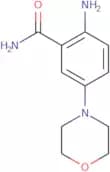
CAS:<p>Versatile small molecule scaffold</p>Formula:C9H14O3Purity:Min. 95%Molecular weight:170.21 g/mol2-Amino-5-(morpholin-4-yl)benzamide
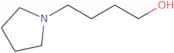
CAS:<p>Versatile small molecule scaffold</p>Formula:C11H15N3O2Purity:Min. 95%Molecular weight:221.26 g/mol4-(1-Pyrrolidinyl)-1-butanol
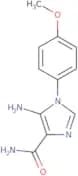
CAS:<p>Versatile small molecule scaffold</p>Formula:C8H17NOPurity:Min. 95%Molecular weight:143.23 g/mol5-Amino-1-(4-methoxyphenyl)-1H-imidazole-4-carboxamide
CAS:<p>Versatile small molecule scaffold</p>Formula:C11H12N4O2Purity:Min. 95%Molecular weight:232.24 g/mol3-[(2-Methoxy-2-oxoethyl)sulfanyl]propanoic acid
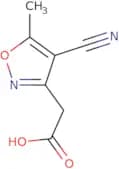
CAS:<p>Versatile small molecule scaffold</p>Formula:C6H10O4SPurity:Min. 95%Molecular weight:178.21 g/mol2-(4-Cyano-5-methyl-1,2-oxazol-3-yl)acetic acid
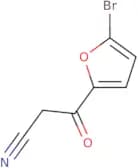
CAS:<p>Versatile small molecule scaffold</p>Formula:C7H6N2O3Purity:Min. 95%Molecular weight:166.13 g/mol3-(5-Bromofuran-2-yl)-3-oxopropanenitrile
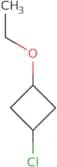
CAS:<p>Versatile small molecule scaffold</p>Formula:C7H4BrNO2Purity:Min. 95%Molecular weight:214.02 g/mol1-Chloro-3-ethoxycyclobutane
CAS:<p>Versatile small molecule scaffold</p>Formula:C6H11ClOPurity:Min. 95%Molecular weight:134.6 g/molDi(prop-2-yn-1-yl)amine hydrochloride
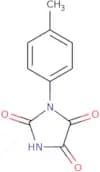
CAS:<p>Versatile small molecule scaffold</p>Formula:C6H8ClNPurity:Min. 95%Molecular weight:129.59 g/mol1-(4-Methylphenyl)imidazolidine-2,4,5-trione
CAS:<p>Versatile small molecule scaffold</p>Formula:C10H8N2O3Purity:Min. 95%Molecular weight:204.18 g/mol{5H,6H,7H-Cyclopenta[b]pyridin-7-yl}methanol
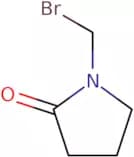
CAS:<p>Versatile small molecule scaffold</p>Formula:C9H11NOPurity:Min. 95%Molecular weight:149.2 g/mol1-(Bromomethyl)pyrrolidin-2-one
CAS:<p>Versatile small molecule scaffold</p>Formula:C5H8BrNOPurity:Min. 95%Molecular weight:178.03 g/molEthyl 5-formyl-1H-pyrazole-3-carboxylate
CAS:Versatile small molecule scaffoldFormula:C7H8N2O3Purity:Min. 95%Molecular weight:168.15 g/mol2-{[5-(4-Chlorophenyl)-4-phenyl-4H-1,2,4-triazol-3-yl]sulfanyl}acetohydrazide
CAS:<p>Versatile small molecule scaffold</p>Formula:C16H14ClN5OSPurity:Min. 95%Molecular weight:359.8 g/mol2,2-Dimethyl-3,4-dihydro-2H-benzo[b][1,4]thiazine
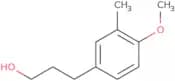
CAS:<p>Versatile small molecule scaffold</p>Formula:C10H13NSPurity:Min. 95%Molecular weight:179.28 g/mol3-(4-Methoxy-3-methylphenyl)propan-1-ol
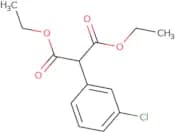
CAS:<p>Versatile small molecule scaffold</p>Formula:C11H16O2Purity:Min. 95%Molecular weight:180.24 g/mol1,3-Diethyl 2-(3-chlorophenyl)propanedioate
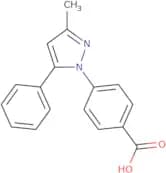
CAS:<p>Versatile small molecule scaffold</p>Formula:C13H15ClO4Purity:Min. 95%Molecular weight:270.71 g/mol4-(3-Methyl-5-phenyl-1H-pyrazol-1-yl)benzoic acid
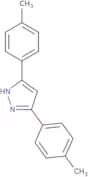
CAS:<p>Versatile small molecule scaffold</p>Formula:C17H14N2O2Purity:Min. 95%Molecular weight:278.3 g/mol3,5-Bis(4-methylphenyl)-1H-pyrazole
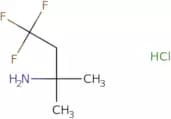
CAS:<p>Versatile small molecule scaffold</p>Formula:C17H16N2Purity:Min. 95%Molecular weight:248.32 g/mol4,4,4-Trifluoro-2-methylbutan-2-amine hydrochloride
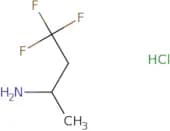
CAS:<p>Versatile small molecule scaffold</p>Formula:C5H11ClF3NPurity:Min. 95%Molecular weight:177.59 g/mol4,4,4-Trifluorobutan-2-amine hydrochloride
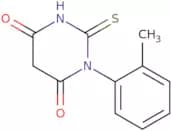
CAS:<p>Versatile small molecule scaffold</p>Formula:C4H9ClF3NPurity:Min. 95%Molecular weight:163.57 g/mol6-Hydroxy-3-(2-methylphenyl)-2-sulfanyl-3,4-dihydropyrimidin-4-one
CAS:<p>Versatile small molecule scaffold</p>Formula:C11H10N2O2SPurity:Min. 95%Molecular weight:234.28 g/mol1-{3-[(Diethylamino)methyl]-4-methoxyphenyl}ethan-1-one
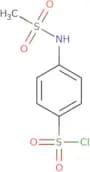
CAS:<p>Versatile small molecule scaffold</p>Formula:C14H21NO2Purity:Min. 95%Molecular weight:235.32 g/mol4-Methanesulfonamidobenzene-1-sulfonyl chloride
CAS:<p>Versatile small molecule scaffold</p>Formula:C7H8ClNO4S2Purity:Min. 95%Molecular weight:269.7 g/mol2-[(3,5-Dimethyl-1-phenyl-1H-pyrazol-4-yl)sulfanyl]acetic acid
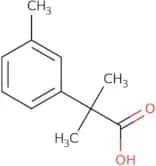
CAS:<p>Versatile small molecule scaffold</p>Formula:C13H14N2O2SPurity:Min. 95%Molecular weight:262.33 g/mol2-Methyl-2-(3-methylphenyl)propanoic acid
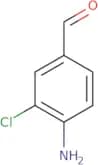
CAS:<p>Versatile small molecule scaffold</p>Formula:C11H14O2Purity:Min. 95%Molecular weight:178.23 g/mol4-Amino-3-chlorobenzaldehyde
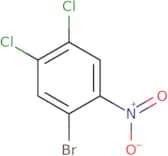
CAS:<p>4-Amino-3-chlorobenzaldehyde is a metabolite of 4-amino-1,2,4-triazole that is water soluble. Its affinity for minerals and its adsorption properties have been experimentally determined. The solubility of 4-amino-3-chlorobenzaldehyde is 6.7g/L in water at 25 degrees Celsius, and the solubility increases with increasing temperature. The adsorption isotherm was determined by using the Langmuir equation, which showed that 4-amino-3-chlorobenzaldehyde has a high affinity for both organic and inorganic matter.</p>Formula:C7H6ClNOPurity:Min. 95%Molecular weight:155.58 g/mol1-Bromo-4,5-dichloro-2-nitrobenzene
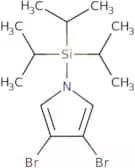
CAS:<p>Versatile small molecule scaffold</p>Formula:C6H2BrCl2NO2Purity:Min. 95%Molecular weight:270.9 g/molN-(Triisopropylsilyl)-3,4-dibromopyrrole
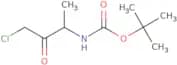
CAS:<p>Versatile small molecule scaffold</p>Formula:C13H23Br2NSiPurity:Min. 95%Molecular weight:381.22 g/mol(S)-3-(Boc-amino)-1-chloro-2-butanone
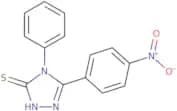
CAS:<p>Versatile small molecule scaffold</p>Formula:C9H16ClNO3Purity:Min. 95%Molecular weight:221.68 g/mol5-(4-Nitrophenyl)-4-phenyl-4H-1,2,4-triazole-3-thiol
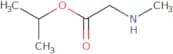
CAS:<p>5-(4-Nitrophenyl)-4-phenyl-4H-1,2,4-triazole-3-thiol (NPTZS) is a potent antifungal agent that contains a thiourea moiety. It has been shown to have antibacterial activity against Escherichia coli and S. aureus in vitro. NPTZS is metabolized by n-dealkylation and is not active against Mycobacterium tuberculosis or Mycobacterium avium complex. The antimycobacterial activity of NPTZS has been demonstrated in vivo with an intraperitoneal dose of 100 mg/kg.</p>Formula:C14H10N4O2SPurity:Min. 95%Molecular weight:298.32 g/molPropan-2-yl 2-(methylamino)acetate
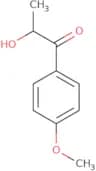
CAS:<p>Versatile small molecule scaffold</p>Formula:C6H13NO2Purity:Min. 95%Molecular weight:131.2 g/mol(2S)-2-Hydroxy-1-(4-methoxyphenyl)propan-1-one
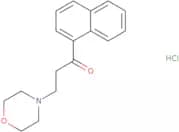
CAS:<p>Versatile small molecule scaffold</p>Formula:C10H12O3Purity:Min. 95%Molecular weight:180.2 g/mol3-(Morpholin-4-yl)-1-(naphthalen-1-yl)propan-1-one hydrochloride
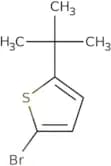
CAS:<p>Versatile small molecule scaffold</p>Formula:C17H20ClNO2Purity:Min. 95%Molecular weight:305.8 g/mol2-Bromo-5-tert-butylthiophene
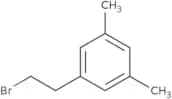
CAS:<p>2-Bromo-5-tert-butylthiophene is a thiophene that is used in the preparation of other molecules. It has been shown to have a magnetic moment, which can be detected by electron spin resonance spectroscopy. 2-Bromo-5-tert-butylthiophene has two isomers, the cis and trans forms. The cis form is more stable due to steric interactions with the methyl groups on the benzene ring. The magnetic resonance spectrum of 2-bromo-5-tert butylthiophene shows an interaction between the substituents and the pentacene molecule, which may be due to a resonance effect.</p>Formula:C8H11BrSPurity:Min. 95%Molecular weight:219.14 g/mol1-(2-Bromoethyl)-3,5-dimethylbenzene
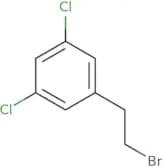
CAS:<p>Versatile small molecule scaffold</p>Formula:C10H13BrPurity:Min. 95%Molecular weight:213.11 g/mol1-(2-Bromoethyl)-3,5-dichlorobenzene
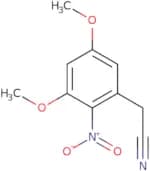
CAS:<p>Versatile small molecule scaffold</p>Formula:C8H7BrCl2Purity:Min. 95%Molecular weight:253.95 g/mol2-(3,5-Dimethoxy-2-nitrophenyl)acetonitrile
CAS:<p>Versatile small molecule scaffold</p>Formula:C10H10N2O4Purity:Min. 95%Molecular weight:222.2 g/mol8-benzyl-3,8-diazabicyclo[3.2.1]octane 2hcl
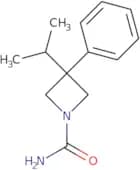
CAS:<p>Versatile small molecule scaffold</p>Formula:C13H19ClN2Purity:Min. 95%Molecular weight:238.76 g/mol3-Phenyl-3-(propan-2-yl)azetidine-1-carboxamide
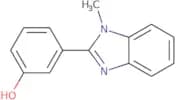
CAS:<p>Versatile small molecule scaffold</p>Formula:C13H18N2OPurity:Min. 95%Molecular weight:218.3 g/mol3-(1-Methyl-1H-1,3-benzodiazol-2-yl)phenol
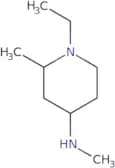
CAS:<p>Versatile small molecule scaffold</p>Formula:C14H12N2OPurity:Min. 95%Molecular weight:224.26 g/mol1-Ethyl-N,2-dimethylpiperidin-4-amine
CAS:<p>Versatile small molecule scaffold</p>Formula:C9H20N2Purity:Min. 95%Molecular weight:156.27 g/mol5-Amino-1-[(2-chlorophenyl)methyl]-1H-1,2,3-triazole-4-carboxamide
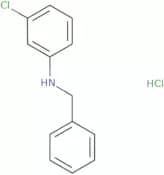
CAS:<p>Versatile small molecule scaffold</p>Formula:C10H10ClN5OPurity:Min. 95%Molecular weight:251.67 g/molN-Benzyl-3-chloroaniline hydrochloride
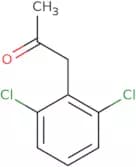
CAS:<p>Versatile small molecule scaffold</p>Formula:C13H13Cl2NPurity:Min. 95%Molecular weight:254.15 g/mol2,6-Dichlorophenylacetone
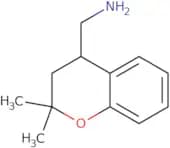
CAS:<p>Versatile small molecule scaffold</p>Formula:C9H8Cl2OPurity:Min. 95%Molecular weight:203.06 g/mol(2,2-Dimethyl-3,4-dihydro-2H-1-benzopyran-4-yl)methanamine
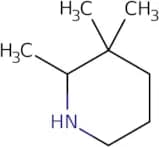
CAS:<p>Versatile small molecule scaffold</p>Formula:C12H17NOPurity:Min. 95%Molecular weight:191.3 g/mol2,3,3-Trimethylpiperidine
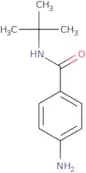
CAS:<p>Versatile small molecule scaffold</p>Formula:C8H17NPurity:Min. 95%Molecular weight:127.23 g/mol4-Amino-N-(tert-butyl)benzamide
CAS:<p>4-Amino-N-(tert-butyl)benzamide is a chemical intermediate that can be used in the preparation of certain pharmaceuticals. This compound is synthesized through the reaction of 4-aminobenzoyl chloride and tert-butanol, which forms an amide bond. The condensation reaction can be catalyzed by either heat or acid. The product of this reaction is hydrogenated to form 4-amino-N-(tert-butyl)-N'-(chloromethyl)benzamide. This compound can also be prepared by refluxing a mixture of 4-aminobenzaldehyde and hydrazine with chloroform and hydrochloric acid.</p>Formula:C11H16N2OPurity:Min. 95%Molecular weight:192.26 g/mol1-Chloro-2-(2-isocyanatoethyl)benzene
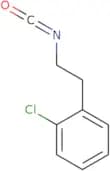
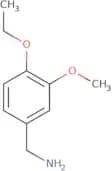
CAS:<p>Versatile small molecule scaffold</p>Formula:C9H8ClNOPurity:Min. 95%Molecular weight:181.62 g/mol(4-Ethoxy-3-methoxybenzyl)amine
CAS:<p>Research has shown that (4-Ethoxy-3-methoxybenzyl)amine (EMBA) is a potent inhibitor of bacterial growth. The alkylation of EMBA with methylamine and benzene leads to the formation of aureus, which is an antibiotic that can be used to treat staphylococcus infections. In addition, EMBA can also be methylated with hydroxylamine to form benzylamine, a compound that inhibits the synthesis of the cell wall in bacteria. These properties make EMBA an effective antimicrobial agent.</p>Formula:C10H15NO2Purity:Min. 95%Molecular weight:181.23 g/mol2-(Isocyanatomethyl)-1,4-dimethoxybenzene
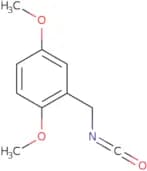
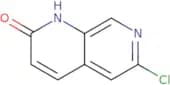
CAS:<p>Versatile small molecule scaffold</p>Formula:C10H11NO3Purity:Min. 95%Molecular weight:193.2 g/mol6-Chloro-1,2-dihydro-1,7-naphthyridin-2-one
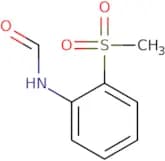
CAS:<p>Versatile small molecule scaffold</p>Formula:C8H5ClN2OPurity:Min. 95%Molecular weight:180.59 g/molN-(2-(Methylsulfonyl)phenyl)formamide
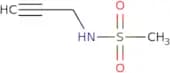
CAS:<p>Versatile small molecule scaffold</p>Formula:C8H9NO3SPurity:Min. 95%Molecular weight:199.23 g/molN-(Prop-2-yn-1-yl)methanesulfonamide
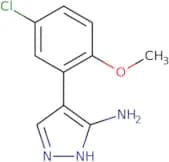
CAS:<p>N-(Prop-2-yn-1-yl)methanesulfonamide is a convergent synthesis of the intermediate N-(prop-2-yn-1-yl)benzenesulfonamide. The synthesis of the intermediate was achieved by reacting propargyl bromide with methanesulfonyl chloride to give N-(prop-2-yn-1-yl)benzenesulfonamide. This compound reacts with 2,4,6-trinitrobenzenesulfonic acid to afford the desired product. The functionalized alkaloid can be used as a synlett for other syntheses.</p>Formula:C4H7NO2SPurity:Min. 95%Molecular weight:133.17 g/mol4-(5-Chloro-2-methoxyphenyl)-1H-pyrazol-5-amine
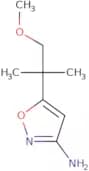
CAS:<p>Versatile small molecule scaffold</p>Formula:C10H10ClN3OPurity:Min. 95%Molecular weight:223.66 g/mol5-(2-Methoxy-1,1-dimethyl-ethyl)-isoxazol-3-ylamine
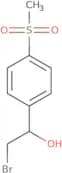
CAS:<p>Versatile small molecule scaffold</p>Formula:C8H14N2O2Purity:Min. 95%Molecular weight:170.21 g/mol2-Bromo-1-(4-methanesulfonylphenyl)ethan-1-ol
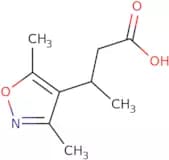
CAS:<p>Versatile small molecule scaffold</p>Formula:C9H11BrO3SPurity:Min. 95%Molecular weight:279.15 g/mol3-(Dimethyl-1,2-oxazol-4-yl)butanoic acid
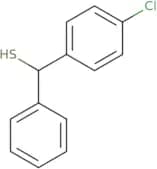
CAS:<p>Versatile small molecule scaffold</p>Formula:C9H13NO3Purity:Min. 95%Molecular weight:183.2 g/mol(4-Chlorophenyl)(phenyl)methanethiol
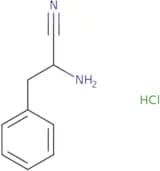
CAS:<p>Versatile small molecule scaffold</p>Formula:C13H11ClSPurity:Min. 95%Molecular weight:234.74 g/mol2-Amino-3-phenylpropanenitrile HCl
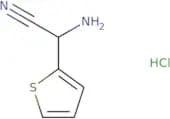
CAS:<p>Versatile small molecule scaffold</p>Formula:C9H10N2·HClPurity:Min. 95%Molecular weight:182.65 g/mol2-Amino-2-(thiophen-2-yl)acetonitrile hydrochloride
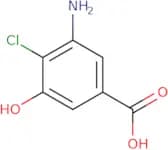
CAS:<p>Versatile small molecule scaffold</p>Formula:C6H7ClN2SPurity:Min. 95%Molecular weight:174.65 g/mol3-Amino-4-chloro-5-hydroxybenzoic acid
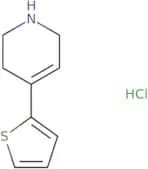
CAS:<p>Versatile small molecule scaffold</p>Formula:C7H6ClNO3Purity:Min. 95%Molecular weight:187.58 g/mol4-(Thiophen-2-yl)-1,2,3,6-tetrahydropyridine hydrochloride
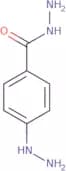
CAS:<p>Versatile small molecule scaffold</p>Formula:C9H12ClNSPurity:Min. 95%Molecular weight:201.72 g/mol4-Hydrazinylbenzohydrazide
CAS:<p>Versatile small molecule scaffold</p>Formula:C7H10N4OPurity:Min. 95%Molecular weight:166.18 g/mol5H,6H,7H-Cyclopenta[C]pyridin-3-amine
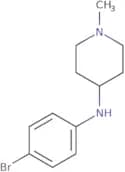
CAS:<p>Versatile small molecule scaffold</p>Formula:C8H10N2Purity:Min. 95%Molecular weight:134.18 g/molN-(4-Bromophenyl)-1-methylpiperidin-4-amine
CAS:<p>Versatile small molecule scaffold</p>Formula:C12H17BrN2Purity:Min. 95%Molecular weight:269.18 g/mol1-Cyclopropyl-7-[4-(ethoxycarbonyl)piperazin-1-yl]-6-fluoro-4-oxo-1,4-dihydroquinoline-3-carboxylic acid
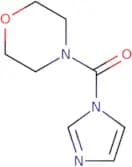
CAS:<p>Versatile small molecule scaffold</p>Formula:C20H22FN3O5Purity:Min. 95%Molecular weight:403.4 g/mol4-(1H-Imidazole-1-carbonyl)morpholine
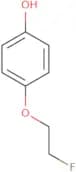
CAS:<p>Versatile small molecule scaffold</p>Formula:C8H11N3O2Purity:Min. 95%Molecular weight:181.19 g/mol4-(2-Fluoroethoxy)phenol
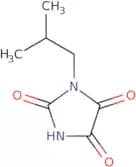
CAS:<p>Versatile small molecule scaffold</p>Formula:C8H9FO2Purity:Min. 95%Molecular weight:156.15 g/mol1-(2-Methylpropyl)imidazolidine-2,4,5-trione
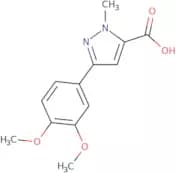
CAS:<p>Versatile small molecule scaffold</p>Formula:C7H10N2O3Purity:Min. 95%Molecular weight:170.17 g/mol3-(3,4-Dimethoxyphenyl)-1-methyl-1H-pyrazole-5-carboxylic acid
CAS:<p>Versatile small molecule scaffold</p>Formula:C13H14N2O4Purity:Min. 95%Molecular weight:262.26 g/mol1,4-Dimethyl-3-phenyl-1H-pyrazole-5-carboxylic acid
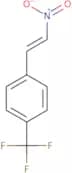
CAS:<p>Versatile small molecule scaffold</p>Formula:C12H12N2O2Purity:Min. 95%Molecular weight:216.2 g/mol1-(2-Nitro-vinyl)-4-benzotrifluoride
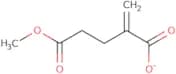
CAS:<p>Versatile small molecule scaffold</p>Formula:C9H6F3NO2Purity:Min. 95%Molecular weight:217.15 g/mol5-Methoxy-2-methylene-5-oxopentanoic acid
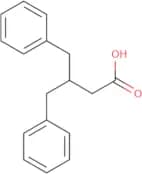
CAS:<p>Versatile small molecule scaffold</p>Formula:C7H9O4Purity:Min. 95%Molecular weight:157.14 g/mol3-Benzyl-4-phenylbutanoic acid
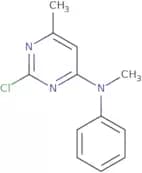
CAS:<p>Versatile small molecule scaffold</p>Formula:C17H18O2Purity:Min. 95%Molecular weight:254.32 g/mol2-Chloro-N,6-dimethyl-N-phenylpyrimidin-4-amine
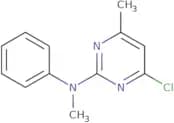
CAS:<p>Versatile small molecule scaffold</p>Formula:C12H12ClN3Purity:Min. 95%Molecular weight:233.69 g/mol4-Chloro-N,6-dimethyl-N-phenylpyrimidin-2-amine
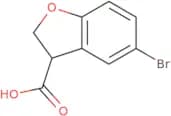
CAS:<p>Versatile small molecule scaffold</p>Formula:C12H12ClN3Purity:Min. 95%Molecular weight:233.69 g/mol5-Bromo-2,3-dihydro-1-benzofuran-3-carboxylic acid
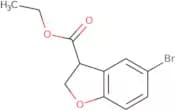
CAS:<p>Versatile small molecule scaffold</p>Formula:C9H7BrO3Purity:Min. 95%Molecular weight:243.05 g/molEthyl 5-bromo-2,3-dihydro-1-benzofuran-3-carboxylate
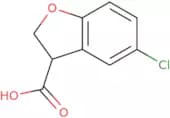
CAS:<p>Versatile small molecule scaffold</p>Formula:C11H11BrO3Purity:Min. 95%Molecular weight:271.11 g/mol5-Chloro-2,3-dihydro-1-benzofuran-3-carboxylic acid
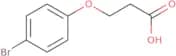
CAS:<p>Versatile small molecule scaffold</p>Formula:C9H7ClO3Purity:Min. 95%Molecular weight:198.6 g/mol3-(4-bromophenoxy)propanoic acid
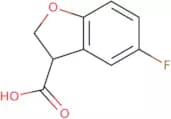
CAS:<p>Versatile small molecule scaffold</p>Formula:C9H9BrO3Purity:Min. 95%Molecular weight:245.1 g/mol5-Fluoro-2,3-dihydro-1-benzofuran-3-carboxylic acid
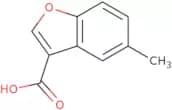
CAS:<p>Versatile small molecule scaffold</p>Formula:C9H7FO3Purity:Min. 95%Molecular weight:182.15 g/mol5-Methyl-1-benzofuran-3-carboxylic acid
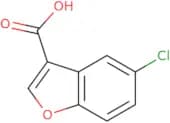
CAS:<p>Versatile small molecule scaffold</p>Formula:C10H8O3Purity:Min. 95%Molecular weight:176.17 g/mol5-Chloro-1-benzofuran-3-carboxylic acid
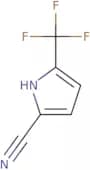
CAS:<p>Versatile small molecule scaffold</p>Formula:C9H5ClO3Purity:Min. 95%Molecular weight:196.58 g/mol5-(Trifluoromethyl)-1H-pyrrole-2-carbonitrile
CAS:<p>Versatile small molecule scaffold</p>Formula:C6H3F3N2Purity:Min. 95%Molecular weight:160.1 g/mol5-(Trifluoromethyl)-1H-pyrrole-3-carbonitrile
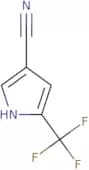
CAS:<p>5-(Trifluoromethyl)-1H-pyrrole-3-carbonitrile is a biodegradable, synergistic effect, chlorine, organisms, chloride, pyrrole, nitrosodisulfonate, benzalkonium chloride, sodium hypochlorite and peroxides. It is recommended for use in coatings and as an additive to hydrogen peroxide formulations.<br>5-(Trifluoromethyl)-1H-pyrrole-3-carbonitrile has been shown to be effective against a wide range of bacteria including Clostridium difficile and Pseudomonas aeruginosa. 5-(Trifluoromethyl)-1H-pyrrole-3-carbonitrile has also been shown to have antiinflammatory properties that may be due to its ability to inhibit the production of prostaglandin E2 (PGE2) by blocking cyclooxygenase (</p>Formula:C6H3F3N2Purity:Min. 95%Molecular weight:160.1 g/mol1-Phenylvinylboronic acid pinacol ester
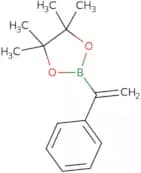
CAS:<p>1-Phenylvinylboronic acid pinacol ester is a catalytic reagent that is used in organic chemistry. It has been shown to be effective in the stabilization of nanostructured materials, such as nanocrystals and organic solvents. The stability of these materials has been attributed to substituent effects on the boronic acid group. 1-Phenylvinylboronic acid pinacol ester has also been shown to be an effective catalyst for cyclopentadiene. This compound can also be used uncatalyzed, although it yields hydrogen peroxide as a byproduct. The use of 1-phenylvinylboronic acid pinacol ester in experiments can be challenging due to its instability in organic solvents.</p>Formula:C14H19BO2Purity:Min. 95%Molecular weight:230.11 g/mol2-Bromo-4-chlorobenzyl alcohol
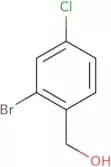
CAS:<p>Versatile small molecule scaffold</p>Formula:C7H6BrClOPurity:Min. 95%Molecular weight:221.48 g/molMethyl 2-(iodomethyl)furan-3-carboxylate
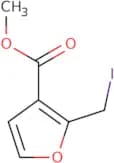
CAS:<p>Versatile small molecule scaffold</p>Formula:C7H7IO3Purity:Min. 95%Molecular weight:266.03 g/mol3-(Pyridin-4-yl)pyridine dihydrochloride
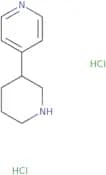
CAS:<p>Versatile small molecule scaffold</p>Formula:C10H10Cl2N2Purity:Min. 95%Molecular weight:229.1 g/mol4-(Piperidin-3-yl)pyridine dihydrochloride
CAS:<p>Versatile small molecule scaffold</p>Formula:C10H16Cl2N2Purity:Min. 95%Molecular weight:235.15 g/mol4-(Piperidin-4-yl)pyridine dihydrochloride
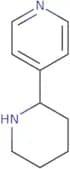
CAS:<p>Versatile small molecule scaffold</p>Formula:C10H16Cl2N2Purity:Min. 95%Molecular weight:235.15 g/mol4-(Piperidin-2-yl)pyridine
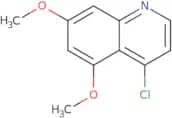
CAS:<p>Versatile small molecule scaffold</p>Formula:C10H14N2Purity:Min. 95%Molecular weight:162.23 g/mol4-Chloro-5,7-dimethoxyquinoline
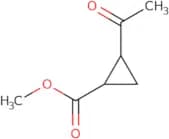
CAS:<p>Versatile small molecule scaffold</p>Formula:C11H10ClNO2Purity:Min. 95%Molecular weight:223.66 g/molMethyl 2-acetylcyclopropane-1-carboxylate
CAS:<p>Methyl 2-acetylcyclopropane-1-carboxylate is a chiral compound that can be synthesized in an asymmetric synthesis. It has been used as a chiral building block for the synthesis of various amines and esters. The diastereoisomers of methyl 2-acetylcyclopropane-1-carboxylate are enantiomers, which means they are mirror images and cannot be superimposed on each other. The two enantiomers have different chemical and physical properties. Methyl 2-acetylcyclopropane-1-carboxylate also reacts with tryptamine to form N,N'-dimethylindole carboxamide or indole carboxamide, which is a biologically active molecule.</p>Formula:C7H10O3Purity:Min. 95%Molecular weight:142.15 g/molImidazo[1,2-a]pyrimidine-2-carbaldehyde
CAS:<p>Imidazo[1,2-a]pyrimidine-2-carboxaldehyde is a biologically active compound that is synthesized through a multicomponent reaction. The synthesis of imidazo[1,2-a]pyrimidine-2-carboxaldehyde requires sodium carbonate and malononitrile as starting materials. The reactants are activated with enolizable reagents such as pyran or acetone before being subjected to the reaction. This process yields target compounds with high yields and excellent spectroscopic properties.</p>Formula:C7H5N3OPurity:Min. 95%Molecular weight:147.14 g/mol2-[(Methylamino)methyl]-4(3H)-quinazolinone dihydrochloride dihydrate
CAS:<p>Versatile small molecule scaffold</p>Formula:C10H11N3OPurity:Min. 95%Molecular weight:189.21 g/mol2-[(Ethylamino)methyl]-3,4-dihydroquinazolin-4-one
CAS:<p>Versatile small molecule scaffold</p>Formula:C11H13N3OPurity:Min. 95%Molecular weight:203.24 g/mol
![[2-(Hydroxymethyl)spiro[3.3]heptan-2-yl]methanol](/_next/image/?url=https%3A%2Fstatic.cymitquimica.com%2Fproducts%2F3D%2Fthumb-webp%2FTDA22504.webp&w=3840&q=75)


![1,4-Dioxaspiro[4.5]decane-8-carbaldehyde](/_next/image/?url=https%3A%2Fstatic.cymitquimica.com%2Fproducts%2F3D%2Fthumb-webp%2FTDA24598.webp&w=3840&q=75)
![3-[(2-Methoxy-2-oxoethyl)sulfanyl]propanoic acid](/_next/image/?url=https%3A%2Fstatic.cymitquimica.com%2Fproducts%2F3D%2Fthumb-webp%2FTDA27467.webp&w=3840&q=75)

![{5H,6H,7H-Cyclopenta[b]pyridin-7-yl}methanol](/_next/image/?url=https%3A%2Fstatic.cymitquimica.com%2Fproducts%2F3D%2Fthumb-webp%2FTDA28442.webp&w=3840&q=75)

![2-{[5-(4-Chlorophenyl)-4-phenyl-4H-1,2,4-triazol-3-yl]sulfanyl}acetohydrazide](/_next/image/?url=https%3A%2Fstatic.cymitquimica.com%2Fproducts%2F3D%2Fthumb-webp%2FTDA30022.webp&w=3840&q=75)
![2,2-Dimethyl-3,4-dihydro-2H-benzo[b][1,4]thiazine](/_next/image/?url=https%3A%2Fstatic.cymitquimica.com%2Fproducts%2F3D%2Fthumb-webp%2FTDA30119.webp&w=3840&q=75)
![1-{3-[(Diethylamino)methyl]-4-methoxyphenyl}ethan-1-one](/_next/image/?url=https%3A%2Fstatic.cymitquimica.com%2Fproducts%2F3D%2Fthumb-webp%2FTDA34482.webp&w=3840&q=75)
![2-[(3,5-Dimethyl-1-phenyl-1H-pyrazol-4-yl)sulfanyl]acetic acid](/_next/image/?url=https%3A%2Fstatic.cymitquimica.com%2Fproducts%2F3D%2Fthumb-webp%2FTDA35066.webp&w=3840&q=75)
![8-benzyl-3,8-diazabicyclo[3.2.1]octane 2hcl](/_next/image/?url=https%3A%2Fstatic.cymitquimica.com%2Fproducts%2F3D%2Fthumb-webp%2FTDA42855.webp&w=3840&q=75)
![5-Amino-1-[(2-chlorophenyl)methyl]-1H-1,2,3-triazole-4-carboxamide](/_next/image/?url=https%3A%2Fstatic.cymitquimica.com%2Fproducts%2F3D%2Fthumb-webp%2FTDA44491.webp&w=3840&q=75)
![5H,6H,7H-Cyclopenta[C]pyridin-3-amine](/_next/image/?url=https%3A%2Fstatic.cymitquimica.com%2Fproducts%2F3D%2Fthumb-webp%2FTDA58743.webp&w=3840&q=75)
![1-Cyclopropyl-7-[4-(ethoxycarbonyl)piperazin-1-yl]-6-fluoro-4-oxo-1,4-dihydroquinoline-3-carboxyli…](/_next/image/?url=https%3A%2Fstatic.cymitquimica.com%2Fproducts%2F3D%2Fthumb-webp%2FTDA59429.webp&w=3840&q=75)


![Imidazo[1,2-a]pyrimidine-2-carbaldehyde](/_next/image/?url=https%3A%2Fstatic.cymitquimica.com%2Fproducts%2F3D%2Fthumb-webp%2FTFA98240.webp&w=3840&q=75)
![2-[(Methylamino)methyl]-4(3H)-quinazolinone dihydrochloride dihydrate](/_next/image/?url=https%3A%2Fstatic.cymitquimica.com%2Fproducts%2F3D%2Fthumb-webp%2FTFA99312.webp&w=3840&q=75)
![2-[(Ethylamino)methyl]-3,4-dihydroquinazolin-4-one](/_next/image/?url=https%3A%2Fstatic.cymitquimica.com%2Fproducts%2F3D%2Fthumb-webp%2FTFA99313.webp&w=3840&q=75)