Building Blocks
This section contains fundamental products for the synthesis of organic and biological compounds. Building blocks are the essential starting materials used to construct complex molecules through various chemical reactions. They play a critical role in drug discovery, material science, and chemical research. At CymitQuimica, we offer a diverse range of high-quality building blocks to support your innovative research and industrial projects, ensuring you have the essential components for successful synthesis.
Subcategories of "Building Blocks"
- Boronic Acids & Boronic Acid Derivatives(5,756 products)
- Chiral Building Blocks(1,242 products)
- Hydrocarbon Building Blocks(6,093 products)
- Organic Building Blocks(60,529 products)
Found 195534 products of "Building Blocks"
Sort by
Purity (%)
0
100
|
0
|
50
|
90
|
95
|
100
3,4-Dimethyl-1-phenyl-1H-pyrazolo[3,4-b]pyridin-6-ol
CAS:<p>Versatile small molecule scaffold</p>Formula:C14H13N3OPurity:Min. 95%Molecular weight:239.27 g/mol2-[(3,4-Dichlorobenzoyl)amino]acetic acid
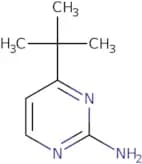
CAS:<p>Versatile small molecule scaffold</p>Formula:C9H7Cl2NO3Purity:Min. 95%Molecular weight:248.07 g/mol4-tert-Butylpyrimidin-2-amine
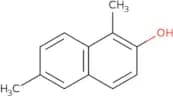
CAS:<p>Versatile small molecule scaffold</p>Formula:C8H13N3Purity:Min. 95%Molecular weight:151.21 g/mol1,6-Dimethylnaphthalen-2-ol
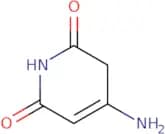
CAS:<p>Versatile small molecule scaffold</p>Formula:C12H12OPurity:Min. 95%Molecular weight:172.22 g/mol4-Amino-1,2,3,6-tetrahydropyridine-2,6-dione
CAS:<p>Thiourea is a compound that can be found in the amino acid threonine. It is also produced by certain bacteria, such as Lactobacillus acidophilus. Thiourea has been shown to have a variety of potential health benefits, including relief from celiac disease symptoms and the formation of body tissues. Thiourea may also serve as a nutritional supplement for animals and humans, although it is not well-studied in this area. The low molecular weight and divalent nature of thiourea makes it soluble in water and thus highly absorbable by the intestines.</p>Formula:C5H6N2O2Purity:Min. 95%Molecular weight:126.11 g/mol2-Chloro-7-methyl-4H-pyrido[1,2-a]pyrimidin-4-one
CAS:<p>Versatile small molecule scaffold</p>Formula:C9H7ClN2OPurity:Min. 95%Molecular weight:194.62 g/mol2-chloro-9-methyl-4H-pyrido[1,2-a]pyrimidin-4-one
CAS:<p>Versatile small molecule scaffold</p>Formula:C9H7N2OClPurity:Min. 95%Molecular weight:194.61 g/mol2-Chloro-9-methyl-4-oxo-4H-pyrido[1,2-a]pyrimidine-3-carbaldehyde
CAS:<p>Versatile small molecule scaffold</p>Formula:C10H7ClN2O2Purity:Min. 95%Molecular weight:222.63 g/molMethyl cyclohept-4-ene-1-carboxylate
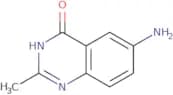
CAS:<p>Versatile small molecule scaffold</p>Formula:C9H14O2Purity:Min. 95%Molecular weight:154.21 g/mol6-Amino-2-methylquinazolin-4-ol
CAS:<p>Versatile small molecule scaffold</p>Formula:C9H9N3OPurity:Min. 95%Molecular weight:175.19 g/mol3-Methyl-4-phenyl-6H,7H-[1,2]oxazolo[3,4-d]pyridazin-7-one
CAS:<p>Patent US20100287939</p>Formula:C12H9N3O2Purity:Min. 95%Molecular weight:227.22 g/mol(2-Chloroethyl)trimethylsilane
CAS:<p>(2-Chloroethyl)trimethylsilane is an organosilicon compound with a molecular weight of 98.06 g/mol. It is synthesized from ethylene and chlorine, and has been shown to inhibit the activity of tyrosine kinase in chronic pain and depression models. (2-Chloroethyl)trimethylsilane also inhibits adenosine receptors, which are involved in the development of chronic pain. This drug has been shown to be effective against depression by inhibiting the binding of adenosine to its receptor site. The kinetic properties of this drug have been studied using molecular modelling, and it has been found that conformational changes are induced in the purinergic receptor when this drug binds.</p>Formula:C5H13ClSiPurity:Min. 95%Molecular weight:136.69 g/molBicyclo[3.2.1]oct-2-en-8-one
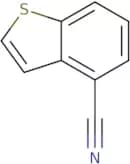
CAS:<p>Versatile small molecule scaffold</p>Formula:C8H10OPurity:Min. 95%Molecular weight:122.2 g/mol1-Benzothiophene-4-carbonitrile
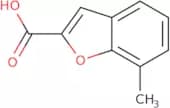
CAS:<p>Versatile small molecule scaffold</p>Formula:C9H5NSPurity:Min. 95%Color and Shape:PowderMolecular weight:159.21 g/mol7-methylbenzofuran-2-carboxylic acid
CAS:<p>Versatile small molecule scaffold</p>Formula:C10H8O3Purity:Min. 95%Molecular weight:176.17 g/mol(2S)-2-(Dimethylamino)-3-(4-hydroxyphenyl)propanoic acid
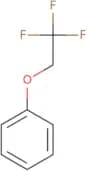
CAS:<p>(2S)-2-(Dimethylamino)-3-(4-hydroxyphenyl)propanoic acid is a potent antagonist of the ryanodine receptor (RYR), which is a calcium release channel in the sarcoplasmatic reticulum. It has been shown to inhibit neuronal death induced by oxidative injury and also to protect against mitochondrial dysfunction. This compound has also been found to be an antinociceptive agent and is detectable at low concentrations in vivo. The pharmacokinetic properties of this drug are not well understood, but it appears to be rapidly absorbed from the gastrointestinal tract and eliminated via the urinary system.</p>Formula:C11H15NO3Purity:Min. 95%Color and Shape:PowderMolecular weight:209.24 g/mol2,2,2-Trifluoroethoxybenzene
CAS:<p>2,2,2-Trifluoroethoxybenzene is an acid catalyst that is used in the production of chlorobenzene. This organic compound has been shown to produce a number of products when heated with dihydroxybenzene. These products include acid chlorides and benzoyl chloride that can be used as intermediates in other chemical reactions. 2,2,2-Trifluoroethoxybenzene has also been shown to react with alkali metals to produce inorganic acids. In addition to acting as an acid catalyst, this compound may be used in the synthesis of flecainide, which is an antiarrhythmic drug. This product also reacts with carbonyl groups and acidic molecules such as halogens to form alkali metal carboxylates and alkanes.</p>Formula:C8H7F3OPurity:Min. 95%Molecular weight:176.14 g/mol3-Amino-N,N-diethyl-4-methyl-benzenesulfonamide
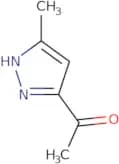
CAS:<p>Versatile small molecule scaffold</p>Formula:C11H18N2O2SPurity:Min. 95%Molecular weight:242.34 g/mol1-(5-Methyl-1H-pyrazol-3-yl)ethanone
CAS:<p>1-(5-Methyl-1H-pyrazol-3-yl)ethanone is an experimental compound that belongs to the class of pyridazines. The molecule was first synthesized in 1933 and it has been studied for its photochemical properties. The structure of 1-(5-methyl-1H-pyrazol-3-yl)ethanone consists of a pyrazole ring fused to an ethanone bearing a methyl substituent. It has been shown that irradiation with UV light causes the molecule to react with dichloromethane, leading to the formation of a series of intermediates, such as chloromethanes, dichloroethylenes, and benzene.</p>Formula:C6H8N2OPurity:Min. 95%Molecular weight:124.14 g/mol7-Methyl-2,3-dihydro-1-benzofuran-2-carboxylic acid
CAS:<p>Versatile small molecule scaffold</p>Formula:C10H10O3Purity:Min. 95%Molecular weight:178.18 g/mol(2S)-3-Methyl-2-(4-methylbenzenesulfonamido)butanoic acid
CAS:<p>(2S)-3-Methyl-2-(4-methylbenzenesulfonamido)butanoic acid is a serine protease inhibitor that binds to the active site of serine proteases, such as those found in Alzheimer's Disease and other neurodegenerative diseases. The compound has been shown to inhibit amyloid beta peptide production and to have an inhibitory effect on the progression of Alzheimer's disease. It has also been shown to prevent neuronal death following traumatic brain injury. The mechanism by which (2S)-3-Methyl-2-(4-methylbenzenesulfonamido)butanoic acid inhibits amyloid beta peptide production is not yet clear, but it may be due to its ability to inhibit enzymes involved in histidine metabolism or its ability to bind with a catalytic site on the enzyme.</p>Formula:C12H17NO4SPurity:Min. 95%Molecular weight:271.33 g/molN-(2-Chloroacetyl)acetamide
CAS:<p>Versatile small molecule scaffold</p>Formula:C4H6ClNO2Purity:Min. 95%Molecular weight:135.55 g/mol(3-Furan-2-yl-propyl)-methyl-amine
CAS:<p>Versatile small molecule scaffold</p>Formula:C8H13NOPurity:Min. 95%Molecular weight:139.19 g/mol4-Phenyl-1,3-oxazole-2-thiol
CAS:<p>Versatile small molecule scaffold</p>Formula:C9H7NOSPurity:Min. 95%Molecular weight:177.22 g/molcinnolin-3-amine
CAS:<p>Cinnolin-3-amine is a pyrimidine compound that inhibits the proliferation of cells and has been shown to be effective in treating hyperproliferative diseases. It binds to chloride ions, protonation, or aromatic hydrocarbons, which are typically found in inflammatory diseases. Cinnolin-3-amine can also react with hydrochloric acid and aliphatic hydrocarbons and form zirconium oxide. Cinnolines are nitrogen atoms that have a receptor subtype, coordination chemistry, and hydroxyl group. These features play a role in cancer treatment by inhibiting the growth of tumor cells.</p>Formula:C8H7N3Purity:Min. 95%Molecular weight:145.16 g/mol1,5-Dimethylimidazolidine-2,4-dione
CAS:<p>Versatile small molecule scaffold</p>Formula:C5H8N2O2Purity:Min. 95%Molecular weight:128.13 g/mol(4-Bromobutyl)dimethylamine hydrobromide
CAS:<p>Versatile small molecule scaffold</p>Formula:C6H15Br2NPurity:Min. 95%Molecular weight:261 g/mol2-Methyl-1-benzothiophene-3-carboxylic acid
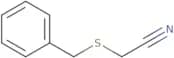
CAS:<p>2-Methyl-1-benzothiophene-3-carboxylic acid is a sulfur containing compound that can be found in many natural products. It is the product of the oxidation of sulfites by hydrogen peroxide and can be found in soil, water, and plants. This compound is synthesized by pseudomonas strains and has shown to have microbial activity against Pseudomonas aeruginosa isolates. 2-Methyl-1-benzothiophene-3-carboxylic acid also exhibits antibacterial activity against other bacteria such as Escherichia coli, Salmonella enterica, and Proteus mirabilis. This compound is an isomer of a number of other thiophenes such as benzothiophene and thiobenzamide.</p>Formula:C10H8O2SPurity:Min. 95%Molecular weight:192.24 g/mol2-(Benzylsulfanyl)acetonitrile
CAS:<p>2-(Benzylsulfanyl)acetonitrile is an intermediate in the synthesis of a number of biologically active compounds, including ornithine and paraformaldehyde. It is also an intermediate in the synthesis of 2-methyl-2-nitrosopropane, which is used as a reagent to prepare nitrosobenzene. 2-(Benzylsulfanyl)acetonitrile can be reacted with various organic compounds to produce a variety of products. For example, when it reacts with paraformaldehyde, it yields 2-benzylthioacetonitrile and 2-hydroxyethyl methacrylate. When reacted with acetone, it yields methyl 3-(2-acetonylbenzylthio)-3-cyanopropionate. This product has been used as a synthase inhibitor in inflammation research and as an adrenergic receptor blocker for the treatment of asthma.</p>Formula:C9H9NSPurity:Min. 95%Molecular weight:163.24 g/molN-Benzyl-4-methoxyaniline
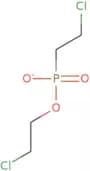
CAS:<p>N-Benzyl-4-methoxyaniline is an organic compound that is used in the manufacture of dyes and pharmaceuticals. This chemical has been shown to be a substrate for glutamate dehydrogenase, which is an enzyme that converts it into 2,3-dihydroxyphenylalanine (DOPA). N-Benzyl-4-methoxyaniline also reacts with trifluoroacetic acid, generating benzaldehyde. The reaction mechanism of this molecule is nucleophilic attack by the hydroxyl group on the benzene ring.<br>The detection sensitivity of this compound was improved through x-ray crystal structures and FTIR spectroscopy studies. It has been shown to have a m2 phenotype, which is associated with cancer.</p>Formula:C14H15NOPurity:Min. 95%Molecular weight:213.28 g/mol(2-Chloroethoxy)(2-chloroethyl)phosphinic acid
CAS:<p>Versatile small molecule scaffold</p>Formula:C4H8Cl2O3PPurity:Min. 95%Molecular weight:205.98 g/mol2-[2-(2-Hydroxyethyl)phenyl]ethan-1-ol
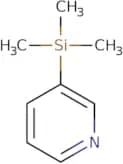
CAS:<p>Versatile small molecule scaffold</p>Formula:C10H14O2Purity:Min. 95%Molecular weight:166.22 g/mol3-(Trimethylsilyl)pyridine
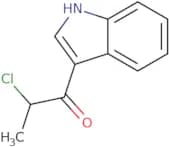
CAS:<p>3-(Trimethylsilyl)pyridine is a compound that belongs to the group of methosulfates and sulfates. The preparation of this compound starts with the reaction of picolinonitrile with methosulfate and pyridine-based reagents in refluxing ethanol. 3-(Trimethylsilyl)pyridine is used as a precursor for the synthesis of picolinamide, which is an important intermediate for organic syntheses. 3-(Trimethylsilyl)pyridine has been shown to react with cyanide ion to form 3-cyano-2-methyl-N,N-dimethylaniline. This reaction can be catalyzed by potassium hydroxide (KOH).</p>Formula:C8H13NSiPurity:Min. 95%Molecular weight:151.28 g/mol2-Chloro-1-(1H-indol-3-yl)propan-1-one
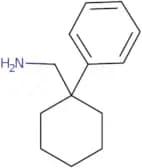
CAS:Controlled Product<p>Versatile small molecule scaffold</p>Formula:C11H10ClNOPurity:Min. 95%Molecular weight:207.65 g/molC-(1-Phenyl-cyclohexyl)-methylamine
CAS:Controlled Product<p>C-(1-Phenyl-cyclohexyl)-methylamine is an ether that is used as a research chemical. It is also known as PCA, 1-phenylcyclohexanol, or C1PCA. This compound has the potential to induce anesthesia and has been used in the past as an analeptic drug. The synthesis of this compound involves refluxing a mixture of phenylacetaldehyde and cyclohexanone with methylamine.</p>Formula:C13H19NPurity:Min. 95%Molecular weight:189.3 g/mol1-Phenylcyclopentanecarbonyl chloride
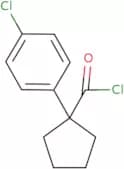
CAS:<p>1-Phenylcyclopentanecarbonyl chloride is an aliphatic compound with a chlorine atom. It is soluble in water and has a solubility of 4.6 g/L at room temperature. 1-Phenylcyclopentanecarbonyl chloride is used as a precursor to produce bioplastics, such as poly(1-phenylcyclopentane)chloride and poly(1,2-diphenylethylene)chloride. This compound can also be used to disrupt cell membranes by reacting with the chloride ion on the outside of the membrane, which lowers its permeability. 1-Phenylcyclopentanecarbonyl chloride reacts with moieties in organic compounds, such as aliphatic and cycloaliphatic moieties, to form covalently bonded chlorides that are less reactive than their corresponding hydrochlorides or other halides. The lower reactivity of these chlorides allows them to</p>Formula:C12H13ClOPurity:Min. 95%Molecular weight:208.68 g/mol1-Phenyl-cyclopentylamine
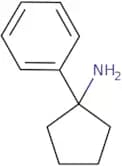
CAS:Controlled Product<p>1-Phenyl-cyclopentylamine (1-PCPA) is an amine that is typically used in the analysis of complex reactions. It has a nanomolar range and can be detected with various analytical methods, such as in vitro studies. 1-PCPA is used to measure enzymatic activity within the micromolar range. It has a bioisosteric relationship with pentapeptide, which means it can be substituted for pentapeptide in vivo without disrupting protein function or structure. 1-PCPA also has oral toxicity and behavioral effects, making it useful for analyzing the effect of amines on sensitivity and hydrochloric acid.</p>Formula:C11H15NPurity:Min. 95%Molecular weight:161.25 g/mol1-Phenylcyclobutylamine
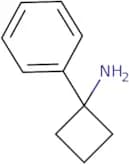
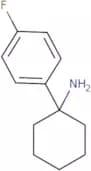
CAS:<p>1-Phenylcyclobutylamine is a reactive molecule that can undergo radical reactions. The radical mechanism is one of the main classes of chemical reactions. 1-Phenylcyclobutylamine reacts with oxygen to form hydroperoxide and hydrogen peroxide. It also reacts with other molecules such as flavin and cytochrome P450, which are important for the metabolism of drugs in the body. 1-Phenylcyclobutylamine has been shown to inhibit the activity of cyclopropylamine, which is an inhibitor of cytochrome P450 enzymes. Inhibition by 1-phenylcyclobutylamine may be due to its ability to form free radicals or directly react with other substances in the body.</p>Formula:C10H13NPurity:Min. 95%Molecular weight:147.22 g/mol1-(4-Fluorophenyl)cyclohexan-1-amine
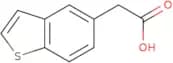
CAS:Controlled Product<p>Versatile small molecule scaffold</p>Formula:C12H16FNPurity:Min. 95%Molecular weight:193.26 g/mol2-(1-Benzothiophen-5-yl)acetic acid
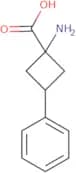
CAS:<p>Versatile small molecule scaffold</p>Formula:C10H8O2SPurity:Min. 95%Molecular weight:192.24 g/mol1-Amino-3-phenylcyclobutane-1-carboxylic acid
CAS:<p>Versatile small molecule scaffold</p>Formula:C11H13NO2Purity:Min. 95%Molecular weight:191.23 g/mol2-[(4-Methylphenyl)amino]-4,5-dihydro-1,3-thiazol-4-one
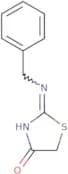
CAS:<p>Versatile small molecule scaffold</p>Formula:C10H10N2OSPurity:Min. 95%Molecular weight:206.27 g/mol2-(Benzylamino)-4,5-dihydro-1,3-thiazol-4-one
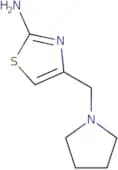
CAS:<p>Versatile small molecule scaffold</p>Formula:C10H10N2OSPurity:Min. 95%Molecular weight:206.27 g/mol4-(Pyrrolidin-1-ylmethyl)-1,3-thiazol-2-amine
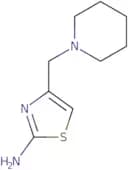
CAS:<p>Versatile small molecule scaffold</p>Formula:C8H13N3SPurity:Min. 95%Molecular weight:183.27 g/mol4-Piperidin-1-ylmethyl-thiazol-2-ylamine dihydrochloride
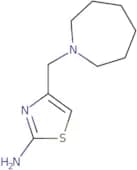
CAS:<p>Versatile small molecule scaffold</p>Formula:C9H17Cl2N3SPurity:Min. 95%Molecular weight:270.23 g/mol4-(Azepan-1-ylmethyl)-1,3-thiazol-2-amine
CAS:<p>Versatile small molecule scaffold</p>Formula:C10H17N3SPurity:Min. 95%Molecular weight:211.33 g/mol1-[(2-Methyl-1,3-thiazol-4-yl)methyl]piperidine
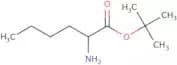
CAS:<p>Versatile small molecule scaffold</p>Formula:C10H16N2SPurity:Min. 95%Molecular weight:196.31 g/moltert-Butyl 2-aminohexanoate
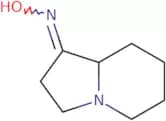
CAS:<p>Versatile small molecule scaffold</p>Formula:C10H21NO2Purity:Min. 95%Molecular weight:187.28 g/molN-(Octahydroindolizin-1-ylidene)hydroxylamine
CAS:<p>Versatile small molecule scaffold</p>Formula:C8H14N2OPurity:Min. 95%Molecular weight:154.21 g/mol1-(2-Methoxy-5-nitrophenyl)-1H-pyrrole-2,5-dione
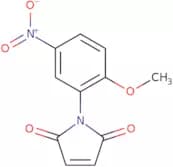
CAS:<p>Versatile small molecule scaffold</p>Formula:C11H8N2O5Purity:Min. 95%Molecular weight:248.19 g/mol7,8-Dichloro-3,4-dihydroquinazolin-4-one
CAS:<p>Versatile small molecule scaffold</p>Formula:C8H4Cl2N2OPurity:Min. 95%Molecular weight:215.03 g/mol1,1-Dicyclopropylethan-1-amine
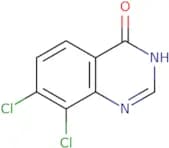
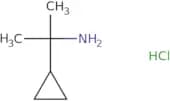
CAS:<p>Versatile small molecule scaffold</p>Formula:C8H15NPurity:Min. 95%Molecular weight:125.21 g/mol(1-Cyclopropyl-1-methylethyl)amine hydrochloride
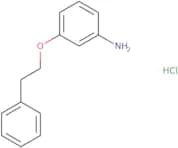
CAS:<p>Versatile small molecule scaffold</p>Formula:C6H14ClNPurity:Min. 95%Molecular weight:135.64 g/mol3-(Phenethyloxy)aniline hydrochloride
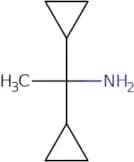
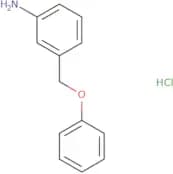
CAS:<p>Versatile small molecule scaffold</p>Formula:C14H16ClNOPurity:Min. 95%Molecular weight:249.74 g/mol3-(Phenoxymethyl)aniline hydrochloride
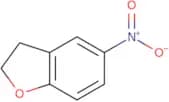
CAS:<p>Versatile small molecule scaffold</p>Formula:C13H14ClNOPurity:Min. 95%Molecular weight:235.71 g/mol5-Nitro-2,3-dihydro-1-benzofuran
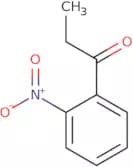
CAS:<p>5-Nitro-2,3-dihydro-1-benzofuran is a versatile compound that serves as an intermediate in the synthesis of various products. It is commonly used in the production of pyrazoles, fatty acids, and aromatic ketones. Additionally, it can be utilized as a methylating agent in chemical reactions.</p>Formula:C8H7NO3Purity:Min. 95%Molecular weight:165.15 g/mol1-(2-Nitrophenyl)propan-1-one
CAS:<p>1-(2-Nitrophenyl)propan-1-one is an electron acceptor in the chemistry of isoxazoles. The compound has a cation that can be protonated to form an alkyl group. 1-(2-Nitrophenyl)propan-1-one has been shown to react with cyanide to form acylium ions and release hydrogen cyanide gas. This compound also reacts with the probe pinacolborane to form isopropyl boronate, which can be used as a spectroscopic probe for aromatic ketones.</p>Formula:C9H9NO3Purity:Min. 95%Molecular weight:179.17 g/mol6-Chloro-7-methylimidazo[1,2-b]pyridazine
CAS:<p>Versatile small molecule scaffold</p>Formula:C7H6ClN3Purity:Min. 95%Molecular weight:167.59 g/mol2-[(4-Chlorophenyl)amino]-2-methylpropanoic acid
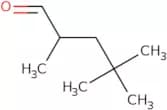
CAS:<p>Versatile small molecule scaffold</p>Formula:C10H12ClNO2Purity:Min. 95%Molecular weight:213.66 g/mol2,4,4-Trimethylpentanal
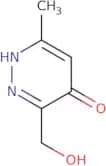
CAS:<p>2,4,4-Trimethylpentanal is a colorless liquid with a sweet odor. It is used as an olefin and solvent, and has industrial applications in the production of chloroform, solvents, and naphthenes. 2,4,4-Trimethylpentanal can also be used as a precursor for the production of benzene by hydrogenation. This product can be found in the liquid phase at room temperature and is soluble in organic solvents such as chloroform and carbon tetrachloride. It reacts with sulphonic acid to produce phosphoric acid or with pentane or tetrachloride to produce epoxides.</p>Formula:C8H16OPurity:Min. 95%Molecular weight:128.21 g/mol3-(Hydroxymethyl)-6-methyl-1,4-dihydropyridazin-4-one
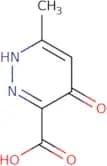
CAS:<p>Versatile small molecule scaffold</p>Formula:C6H8N2O2Purity:Min. 95%Molecular weight:140.14 g/mol6-Methyl-4-oxo-1,4-dihydropyridazine-3-carboxylic acid
CAS:<p>Versatile small molecule scaffold</p>Formula:C6H6N2O3Purity:Min. 95%Molecular weight:154.12 g/molEthyl 5-methyl-4-oxo-3,4-dihydrothieno[2,3-d]pyrimidine-6-carboxylate
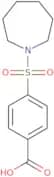
CAS:<p>Versatile small molecule scaffold</p>Formula:C10H10N2O3SPurity:Min. 95%Molecular weight:238.26 g/mol4-(Azepan-1-ylsulfonyl)benzoic acid
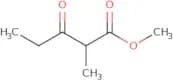
CAS:<p>Versatile small molecule scaffold</p>Formula:C13H17NO4SPurity:Min. 95%Molecular weight:283.34 g/mol2-Methyl-3-oxo-pentanoicacid methyl ester
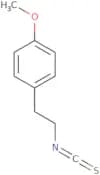
CAS:<p>The synthesis of 2-methyl-3-oxo-pentanoic acid methyl ester is accomplished by a three step process. The first step is the intramolecular condensation of 2,2-dimethylpropionic acid with acetone to form a 1:1 mixture of 3,4-dihydroxybutyl and 4,4-dihydroxybutyl esters. The second step is the selective transesterification of the 3,4-dihydroxybutyl ester with benzaldehyde. This reaction provides an optically pure 2-methyl-3-oxo-pentanoic acid methyl ester as the major product. The third step is an aldol condensation between the ketone from the second step and acetone to produce another optically pure 2,2 dimethylpropionic acid methyl ester.</p>Formula:C7H12O3Purity:Min. 95%Molecular weight:144.17 g/mol1-(2-Isothiocyanatoethyl)-4-methoxybenzene
CAS:<p>Versatile small molecule scaffold</p>Formula:C10H11NOSPurity:Min. 95%Molecular weight:193.27 g/mol3-Methoxy-cyclohexanone
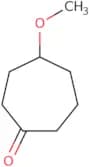
CAS:<p>3-Methoxy-cyclohexanone is a chemical that can be synthesized from 3-methoxy-cyclohexanol. It is used as a starting material for the synthesis of other chemicals such as cyclopentanol, cyclohexene, and cyclohexanol. 3-Methoxy-cyclohexanone can be produced by heating the alcohol in solvents with a palladium catalyst and irradiating the mixture. This process produces an excellent yield. The reaction can also be catalyzed by amines or metal complexes. When heated, 3-methoxy-cyclohexanone isomerizes to produce 3-methyl-cyclohexanone, which can then undergo reductive amination to produce 2-(3'-methylphenyl)propanal.</p>Formula:C7H12O2Purity:Min. 95%Molecular weight:128.17 g/mol4-Methoxycycloheptan-1-one
CAS:<p>Versatile small molecule scaffold</p>Formula:C8H14O2Purity:Min. 95%Molecular weight:142.2 g/mol1-Methyl-2,3-dihydro-[1,1'-biphenyl]-4(1H)-one
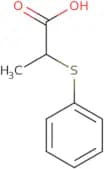
CAS:<p>1-Methyl-2,3-dihydro-[1,1'-biphenyl]-4(1H)-one is a chiral compound with an enolate functional group. It has been used to synthesize the lipase inhibitor ursodeoxycholic acid and cyclohexanones. The enzyme 1-methyl-2,3-dihydro-[1,1'-biphenyl]-4(1H)-one is able to catalyze the hydrolysis of esters and transesterification of esters. This class of compounds also has been found in pseudomonas fluorescens and has been shown to inhibit the growth of this bacteria.</p>Formula:C13H14OPurity:Min. 95%Molecular weight:186.26 g/mol2-(Phenylsulfanyl)propanoic acid
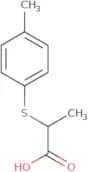
CAS:<p>Versatile small molecule scaffold</p>Formula:C9H10O2SPurity:Min. 95%Molecular weight:182.24 g/mol2-(p-Tolylsulfanyl)propanoic acid
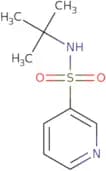
CAS:<p>Versatile small molecule scaffold</p>Formula:C10H12O2SPurity:Min. 95%Molecular weight:196.27 g/molN-tert-Butylpyridine-3-sulfonamide
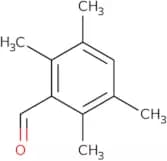
CAS:<p>Versatile small molecule scaffold</p>Formula:C9H14N2O2SPurity:Min. 95%Molecular weight:214.29 g/mol2,3,5,6-Tetramethylbenzaldehyde
CAS:<p>2,3,5,6-Tetramethylbenzaldehyde is an ancillary ligand that has been used in the synthesis of fluorescent devices and optical devices. It is a nonpolar compound that can be used as a solvent for materials that are not soluble in water. 2,3,5,6-Tetramethylbenzaldehyde is soluble in nonpolar solvents such as toluene or hexane. The compound's fluorescence properties have been studied using exciplex emission and single-crystal x-ray diffraction. 2,3,5,6-Tetramethylbenzaldehyde has also been shown to bind anions such as Cl-, NO2-, and CO32-.</p>Formula:C11H14OPurity:Min. 95%Molecular weight:162.23 g/mol3-(3-Bromophenoxy)propan-1-ol
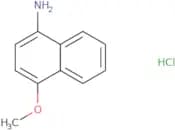
CAS:<p>Versatile small molecule scaffold</p>Formula:C9H11BrO2Purity:Min. 95%Molecular weight:231.09 g/mol1-Amino-4-methoxynaphthalen HCl
CAS:<p>1-Amino-4-methoxynaphthalen HCl is an alkaloid that is synthesised from 1-Amino-4-(N,N-dimethylamino)naphthalene. It is a tetracyclic compound and it has been shown to be effective in the treatment of hypertension and other cardiovascular diseases.</p>Formula:C11H11NO·HClPurity:Min. 95%Molecular weight:209.68 g/mol4-[(Chlorosulfonyl)methyl]benzoic acid
CAS:<p>Versatile small molecule scaffold</p>Formula:C8H7ClO4SPurity:Min. 95%Molecular weight:234.66 g/mol2-Phenyl-1,3-oxazole-5-carbaldehyde
CAS:<p>N/A</p>Formula:C10H7NO2Purity:Min. 95%Molecular weight:173.17 g/mol2-(2-Methoxyethoxy)benzaldehyde
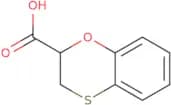
CAS:<p>2-(2-Methoxyethoxy)benzaldehyde is a fluorescent organic compound that has binding properties to ethylene. It undergoes photophysical and chemosensors reactions, and can be used as a moiety in the synthesis of other compounds. 2-(2-Methoxyethoxy)benzaldehyde can be used as an enhancer for thiazole derivatives, which are metal ion chelators. The enhancement of thiazole derivatives is due to the presence of electron-donating methoxy groups on the benzaldehyde ring. 2-(2-Methoxyethoxy)benzaldehyde also has electrochemical properties that make it useful for the detection of metal ions such as copper ions.</p>Formula:C10H12O3Purity:Min. 95%Molecular weight:180.2 g/mol2,3-Dihydro-1,4-benzoxathiine-2-carboxylic acid
CAS:<p>Versatile small molecule scaffold</p>Formula:C9H8O3SPurity:Min. 95%Molecular weight:196.22 g/mol2-(Methanesulfinylmethyl)aniline
CAS:<p>Versatile small molecule scaffold</p>Formula:C8H11NOSPurity:Min. 95%Molecular weight:169.25 g/mol4-(3-Bromopropyl)-1-methoxy-2-methylbenzene
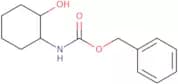
CAS:<p>Versatile small molecule scaffold</p>Formula:C11H15BrOPurity:Min. 95%Molecular weight:243.14 g/molBenzyl N-(2-hydroxycyclohexyl)carbamate
CAS:<p>Versatile small molecule scaffold</p>Formula:C14H19NO3Purity:Min. 95%Molecular weight:249.3 g/mol2-[1-(2-Phenylethyl)cyclopentyl]acetic acid
CAS:<p>Versatile small molecule scaffold</p>Formula:C15H20O2Purity:Min. 95%Molecular weight:232.32 g/mol3,4-Dihydro-2H-1-benzopyran-4-ylmethanamine
CAS:<p>Versatile small molecule scaffold</p>Formula:C10H13NOPurity:Min. 95%Molecular weight:163.22 g/mol5-Benzoylpyrimidine
CAS:<p>5-Benzoylpyrimidine is an anti-cancer drug that can be used as a monotherapy or in combination with other drugs. It has been shown to have significant activity against cancer cells and tuberculosis. This compound is synthesized by reacting aryl amine with benzoyl chloride in presence of potassium cyanide, followed by hydrolysis of the resulting nitrile. 5-Benzoylpyrimidine has also been shown to inhibit the growth of fungi, such as Candida albicans, Saccharomyces cerevisiae, and Aspergillus niger. The mechanism of action for this drug is not fully understood but may involve inhibition of protein synthesis at the ribosome level or inhibition of mitochondrial function.<br>5-Benzoylpyrimidine also inhibits the growth of bacteria such as Staphylococcus aureus, Enterobacter aerogenes and Klebsiella pneumoniae.</p>Formula:C11H8N2OPurity:Min. 95%Molecular weight:184.19 g/mol1,2-Dihydro-1,10-phenanthrolin-2-one
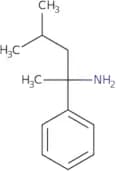
CAS:<p>1,2-Dihydro-1,10-phenanthrolin-2-one is a ligand that binds to copper. It has been shown to be a functional group of the copper complex. The 1,2-dihydro-1,10-phenanthrolin-2-one molecule is able to bind to Alzheimer's disease amyloid plaques in vitro and may mediate their removal from the brain. This compound also interacts with metal ions such as copper oxide and phosphorus pentachloride. Mechanistic studies have been conducted using low energy electron diffraction device. Studies have shown that 1,2-dihydro-1,10 phenanthrolin 2 one binds to carboxylic acid groups on enzymes called esterases and inhibits their function by preventing them from binding phosphate groups.</p>Formula:C12H8N2OPurity:Min. 95%Molecular weight:196.2 g/mol4-Methyl-2-phenylpentan-2-amine
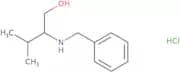
CAS:<p>Versatile small molecule scaffold</p>Formula:C12H19NPurity:Min. 95%Molecular weight:177.3 g/mol2-(Benzylamino)-3-methylbutan-1-ol hydrochloride
CAS:<p>Versatile small molecule scaffold</p>Formula:C12H20ClNOPurity:Min. 95%Molecular weight:229.74 g/molMethyl 2-hexyloxirane-2-carboxylate
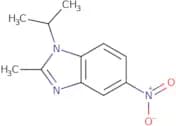
CAS:<p>Versatile small molecule scaffold</p>Formula:C10H18O3Purity:Min. 95%Molecular weight:186.25 g/mol2-Methyl-5-nitro-1-(propan-2-yl)-1H-1,3-benzodiazole
CAS:<p>Versatile small molecule scaffold</p>Formula:C11H13N3O2Purity:Min. 95%Molecular weight:219.24 g/mol2-Amino-N,N-diethylethane-1-sulfonamide
CAS:<p>Versatile small molecule scaffold</p>Formula:C6H16N2O2SPurity:Min. 95%Molecular weight:180.27 g/mol2-(Naphthalene-2-sulfonamido)acetic acid
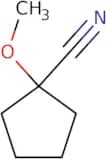
CAS:<p>Versatile small molecule scaffold</p>Formula:C12H11NO4SPurity:Min. 95%Molecular weight:265.29 g/mol1-Methoxycyclopentane-1-carbonitrile
CAS:<p>Versatile small molecule scaffold</p>Formula:C7H11NOPurity:Min. 95%Molecular weight:125.17 g/molN-Hydroxy-1-oxy-nicotinamidine
CAS:<p>Versatile small molecule scaffold</p>Formula:C6H7N3O2Purity:Min. 95%Molecular weight:153.14 g/mol[(3-Methoxyphenyl)methyl]urea
CAS:<p>Versatile small molecule scaffold</p>Formula:C9H12N2O2Purity:Min. 95%Molecular weight:180.2 g/mol1-[(3-Methoxyphenyl)methyl]imidazolidine-2,4,5-trione
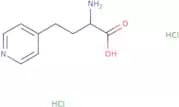
CAS:<p>Versatile small molecule scaffold</p>Formula:C11H10N2O4Purity:Min. 95%Molecular weight:234.21 g/mol2-Amino-4-(pyridin-4-yl)butanoic acid dihydrochloride
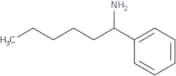
CAS:<p>Versatile small molecule scaffold</p>Formula:C9H14Cl2N2O2Purity:Min. 95%Molecular weight:253.12 g/mol1-Phenylhexan-1-amine
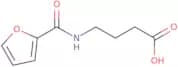
CAS:<p>Versatile small molecule scaffold</p>Formula:C12H19NPurity:Min. 95%Molecular weight:177.29 g/mol4-(Furan-2-ylformamido)butanoic acid
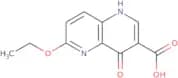
CAS:<p>Versatile small molecule scaffold</p>Formula:C9H11NO4Purity:Min. 95%Molecular weight:197.19 g/mol6-Ethoxy-4-hydroxy-1,5-naphthyridine-3-carboxylic acid
CAS:<p>6-Ethoxy-4-hydroxy-1,5-naphthyridine-3-carboxylic acid is a condensation product of pyrrolidino, propyl and hydroxylamine. It is an antifilarial agent that inhibits the growth of filaria and filariidae. This compound has shown efficacy in the treatment of cycloalkyl and piperidino nematodes, as well as in the elimination of malonate from the body. 6-Ethoxy-4-hydroxy-1,5-naphthyridine 3 carboxylic acid is also used to treat family members who have been infected with morpholinos.</p>Formula:C11H10N2O4Purity:Min. 95%Molecular weight:234.21 g/mol
![3,4-Dimethyl-1-phenyl-1H-pyrazolo[3,4-b]pyridin-6-ol](/_next/image/?url=https%3A%2Fstatic.cymitquimica.com%2Fproducts%2F3D%2Fthumb-webp%2FSAA32144.webp&w=3840&q=75)

![2-[(3,4-Dichlorobenzoyl)amino]acetic acid](/_next/image/?url=https%3A%2Fstatic.cymitquimica.com%2Fproducts%2F3D%2Fthumb-webp%2FSAA32180.webp&w=3840&q=75)
![2-Chloro-7-methyl-4H-pyrido[1,2-a]pyrimidin-4-one](/_next/image/?url=https%3A%2Fstatic.cymitquimica.com%2Fproducts%2F3D%2Fthumb-webp%2FSAA32618.webp&w=3840&q=75)
![2-chloro-9-methyl-4H-pyrido[1,2-a]pyrimidin-4-one](/_next/image/?url=https%3A%2Fstatic.cymitquimica.com%2Fproducts%2F3D%2Fthumb-webp%2FSAA32622.webp&w=3840&q=75)
![2-Chloro-9-methyl-4-oxo-4H-pyrido[1,2-a]pyrimidine-3-carbaldehyde](/_next/image/?url=https%3A%2Fstatic.cymitquimica.com%2Fproducts%2F3D%2Fthumb-webp%2FSAA32627.webp&w=3840&q=75)

![3-Methyl-4-phenyl-6H,7H-[1,2]oxazolo[3,4-d]pyridazin-7-one](/_next/image/?url=https%3A%2Fstatic.cymitquimica.com%2Fproducts%2F3D%2Fthumb-webp%2FSAA33468.webp&w=3840&q=75)

![Bicyclo[3.2.1]oct-2-en-8-one](/_next/image/?url=https%3A%2Fstatic.cymitquimica.com%2Fproducts%2F3D%2Fthumb-webp%2FSAA34466.webp&w=3840&q=75)





![2-[2-(2-Hydroxyethyl)phenyl]ethan-1-ol](/_next/image/?url=https%3A%2Fstatic.cymitquimica.com%2Fproducts%2F3D%2Fthumb-webp%2FSAA37899.webp&w=3840&q=75)
![2-[(4-Methylphenyl)amino]-4,5-dihydro-1,3-thiazol-4-one](/_next/image/?url=https%3A%2Fstatic.cymitquimica.com%2Fproducts%2F3D%2Fthumb-webp%2FSAA38568.webp&w=3840&q=75)
![1-[(2-Methyl-1,3-thiazol-4-yl)methyl]piperidine](/_next/image/?url=https%3A%2Fstatic.cymitquimica.com%2Fproducts%2F3D%2Fthumb-webp%2FSAA38615.webp&w=3840&q=75)
![6-Chloro-7-methylimidazo[1,2-b]pyridazine](/_next/image/?url=https%3A%2Fstatic.cymitquimica.com%2Fproducts%2F3D%2Fthumb-webp%2FSAA41219.webp&w=3840&q=75)
![2-[(4-Chlorophenyl)amino]-2-methylpropanoic acid](/_next/image/?url=https%3A%2Fstatic.cymitquimica.com%2Fproducts%2F3D%2Fthumb-webp%2FSAA41386.webp&w=3840&q=75)
![Ethyl 5-methyl-4-oxo-3,4-dihydrothieno[2,3-d]pyrimidine-6-carboxylate](/_next/image/?url=https%3A%2Fstatic.cymitquimica.com%2Fproducts%2F3D%2Fthumb-webp%2FSAA41767.webp&w=3840&q=75)

![1-Methyl-2,3-dihydro-[1,1'-biphenyl]-4(1H)-one](/_next/image/?url=https%3A%2Fstatic.cymitquimica.com%2Fproducts%2F3D%2Fthumb-webp%2FSAA42936.webp&w=3840&q=75)

![4-[(Chlorosulfonyl)methyl]benzoic acid](/_next/image/?url=https%3A%2Fstatic.cymitquimica.com%2Fproducts%2F3D%2Fthumb-webp%2FSDA61457.webp&w=3840&q=75)




![2-[1-(2-Phenylethyl)cyclopentyl]acetic acid](/_next/image/?url=https%3A%2Fstatic.cymitquimica.com%2Fproducts%2F3D%2Fthumb-webp%2FSDA65503.webp&w=3840&q=75)





![[(3-Methoxyphenyl)methyl]urea](/_next/image/?url=https%3A%2Fstatic.cymitquimica.com%2Fproducts%2F3D%2Fthumb-webp%2FSDA76407.webp&w=3840&q=75)
![1-[(3-Methoxyphenyl)methyl]imidazolidine-2,4,5-trione](/_next/image/?url=https%3A%2Fstatic.cymitquimica.com%2Fproducts%2F3D%2Fthumb-webp%2FSDA76408.webp&w=3840&q=75)