Building Blocks
This section contains fundamental products for the synthesis of organic and biological compounds. Building blocks are the essential starting materials used to construct complex molecules through various chemical reactions. They play a critical role in drug discovery, material science, and chemical research. At CymitQuimica, we offer a diverse range of high-quality building blocks to support your innovative research and industrial projects, ensuring you have the essential components for successful synthesis.
Subcategories of "Building Blocks"
- Boronic Acids & Boronic Acid Derivatives(5,756 products)
- Chiral Building Blocks(1,242 products)
- Hydrocarbon Building Blocks(6,095 products)
- Organic Building Blocks(61,036 products)
Found 195887 products of "Building Blocks"
Sort by
Purity (%)
0
100
|
0
|
50
|
90
|
95
|
100
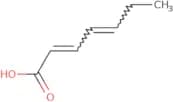
(2E,4E)-Hepta-2,4-dienoic acid
CAS:<p>(2E,4E)-Hepta-2,4-dienoic acid is an organic compound that belongs to the group of quinoline derivatives. It is a colorless liquid at room temperature and is soluble in organic solvents. This compound can be used as a dehydrohalogenating agent in the synthesis of mappicine and camptothecin derivatives. (2E,4E)-Hepta-2,4-dienoic acid can also react with ketocarboxylic acids to form carotenoid compounds. The chemical formula for this molecule is C8H10O3.</p>Formula:C7H10O2Purity:Min. 95%Molecular weight:126.15 g/mol3-Cyclopropyl-3-hydroxybutanoic acid
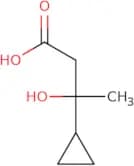
CAS:<p>Versatile small molecule scaffold</p>Formula:C7H12O3Purity:Min. 95%Molecular weight:144.17 g/mol3,3-Dimethyl-1,5-dioxa-9-azaspiro[5.5]undecane
CAS:Controlled Product<p>Versatile small molecule scaffold</p>Formula:C10H19NO2Purity:Min. 95%Molecular weight:185.26 g/mol3-(3-Bromophenyl)propan-1-ol
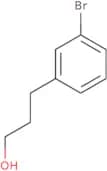
CAS:<p>Versatile small molecule scaffold</p>Formula:C9H11BrOPurity:Min. 95%Molecular weight:215.09 g/molMethyl 1-(2-hydroxyethyl)-1H-1,2,3-triazole-4-carboxylate
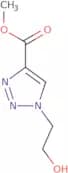
CAS:<p>Versatile small molecule scaffold</p>Formula:C6H9N3O3Purity:Min. 95%Molecular weight:171.15 g/mol2-Pyridin-2-yl-cyclopropanecarboxylic acid
CAS:<p>2-Pyridin-2-yl-cyclopropanecarboxylic acid is a chemotype that belongs to the class of echs. It has been shown to regulate the expression of genes in the erythroid lineage and inhibit Keap1. 2-Pyridin-2-yl-cyclopropanecarboxylic acid has been shown to bind to erythrocyte proteins and act as an anti-oxidant. This molecule has also been found to interact with proteins such as glutathione reductase, cytochrome P450, and glutathione S transferases. 2-Pyridin-2-yl-cyclopropanecarboxylic acid disrupts homoeostasis by regulating the levels of cytoprotective agents such as heme oxygenase 1 and prostaglandins. The therapeutic effect of this molecule is currently being researched for use in medicinal treatments.</p>Formula:C9H9NO2Purity:Min. 95%Molecular weight:163.18 g/mol3,4-Dihydro-2H-1,4-benzoxazine-2-carboxylic acid
CAS:<p>3,4-Dihydro-2H-1,4-benzoxazine-2-carboxylic acid is a chemical compound that is used in the synthesis of esters. It can be used to separate mixtures of compounds in liquid chromatography and reversed phase liquid chromatography. This chemical compound has been shown to have adrenolytic properties, which are due to its ability to modify the activity of the alpha and beta adrenergic receptors. 3,4-Dihydro-2H-1,4-benzoxazine-2-carboxylic acid inhibits lipogenesis by inhibiting enzymes that catalyze this process.</p>Formula:C9H9NO3Purity:Min. 95%Molecular weight:179.17 g/mol1-(2-Methoxy-4-nitrophenyl)ethanone
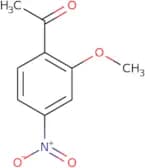
CAS:<p>Versatile small molecule scaffold</p>Formula:C9H9NO4Purity:Min. 95%Molecular weight:195.17 g/mol2-Ethyl-4-nitro-benzoic acid
CAS:<p>Versatile small molecule scaffold</p>Formula:C9H9NO4Purity:Min. 95%Molecular weight:195.17 g/mol2-Ethyl-5-nitrobenzoic acid
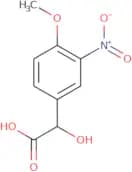
CAS:<p>Versatile small molecule scaffold</p>Formula:C9H9NO4Purity:Min. 95%Molecular weight:195.17 g/mol2-Hydroxy-2-(4-methoxy-3-nitrophenyl)acetic acid
CAS:<p>Versatile small molecule scaffold</p>Formula:C9H9NO6Purity:Min. 95%Molecular weight:227.17 g/mol1-(Pyridin-2-yl)butan-1-amine
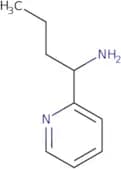
CAS:<p>Versatile small molecule scaffold</p>Formula:C9H14N2Purity:Min. 95%Molecular weight:150.22 g/mol1-[4-(Aminomethyl)phenyl]ethan-1-amine
CAS:<p>Versatile small molecule scaffold</p>Formula:C9H14N2Purity:Min. 95%Molecular weight:150.22 g/mol2-tert-Butyl-6-methylpyrimidin-4-ol
CAS:<p>Versatile small molecule scaffold</p>Formula:C9H14N2OPurity:Min. 95%Molecular weight:166.22 g/mol6,6-Dimethyl-1,3-diazaspiro[4.4]nonane-2,4-dione
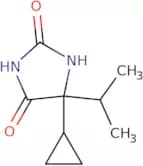
CAS:<p>Versatile small molecule scaffold</p>Formula:C9H14N2O2Purity:Min. 95%Molecular weight:182.22 g/mol5-Cyclopropyl-5-(propan-2-yl)imidazolidine-2,4-dione
CAS:<p>Versatile small molecule scaffold</p>Formula:C9H14N2O2Purity:Min. 95%Molecular weight:182.22 g/mol5-Cyclopropyl-5-propylimidazolidine-2,4-dione
CAS:<p>Versatile small molecule scaffold</p>Formula:C9H14N2O2Purity:Min. 95%Molecular weight:182.22 g/mol3-Amino-4-methyl-pyridazine
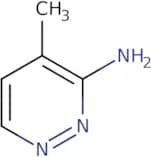
CAS:<p>3-Amino-4-methyl-pyridazine is a pyridazine molecule that has analgesic properties. This drug is used in population studies to investigate the effects of nitrogen atom substitution on the pharmacological activity of carrageenans and betaines. 3-Amino-4-methyl-pyridazine has been shown to be an analog of cinnoline, which is a member of the quinone class of compounds. The crystal structure and diffraction techniques have been determined for 3-aminopyridine using single crystal x-ray diffraction. The structure was determined by a molecular replacement method with a difference in formula weight of 0.01%.</p>Formula:C5H7N3Purity:Min. 95%Molecular weight:109.13 g/mol5-Oxobicyclo[2.2.1]heptane-2,3-dicarboxylic acid
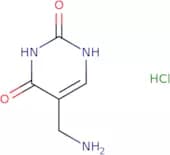
CAS:<p>Versatile small molecule scaffold</p>Formula:C9H10O5Purity:Min. 95%Molecular weight:198.17 g/mol5-(Aminomethyl)-2,4(1H,3H)-pyrimidinedione hydrochloride
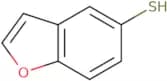
CAS:<p>Versatile small molecule scaffold</p>Formula:C5H8ClN3O2Purity:Min. 95%Molecular weight:177.59 g/mol1-Benzofuran-5-thiol
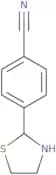
CAS:<p>Versatile small molecule scaffold</p>Formula:C8H6OSPurity:Min. 95%Molecular weight:150.2 g/mol4-(1,3-Thiazolidin-2-yl)benzonitrile
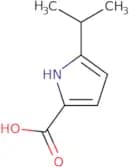
CAS:<p>Versatile small molecule scaffold</p>Formula:C10H10N2SPurity:Min. 95%Molecular weight:190.27 g/mol5-Isopropyl-1H-pyrrole-2-carboxylic acid
CAS:<p>Versatile small molecule scaffold</p>Formula:C8H11NO2Purity:Min. 95%Molecular weight:153.18 g/mol8-Oxa-2-azaspiro[4.5]decane-1,3-dione
CAS:<p>Versatile small molecule scaffold</p>Formula:C8H11NO3Purity:Min. 95%Molecular weight:169.18 g/mol3-[(Methylsulfanyl)methyl]aniline
CAS:<p>Versatile small molecule scaffold</p>Formula:C8H11NSPurity:Min. 95%Molecular weight:153.25 g/mol3-Azabicyclo[4.3.1]decan-4-one
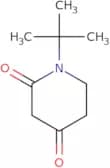
CAS:<p>3-Azabicyclo[4.3.1]decan-4-one is a lactam that contains 4 rings and 10 carbon atoms. The molecule can exist in two geometries, which are both optimized for the lowest energy conformations. This compound has a multicyclic ring system with three azabicyclo[4.3.1]decane rings and one decan ring, which is attached to the nitrogen atom of the amide group. 3-Azabicyclo[4.3.1]decan-4-one has been shown to bind lanthanides and shift their spectral properties, as well as undergo conformational changes when reacting with reagents such as hydrogen cyanide or ammonia gas, indicating that it may be a useful substrate for theoretical studies of lanthanide coordination chemistry and mechanisms of catalysis by metal complexes in organic synthesis.br>br><br>br>br></p>Formula:C9H15NOPurity:Min. 95%Molecular weight:153.2 g/mol1-(tert-Butyl)piperidine-2,4-dione
CAS:<p>Versatile small molecule scaffold</p>Formula:C9H15NO2Purity:Min. 95%Molecular weight:169.22 g/mol8-Methyl-8-azabicyclo[3.2.1]octane-3-carboxylic acid hydrochloride
CAS:<p>Versatile small molecule scaffold</p>Formula:C9H16ClNO2Purity:Min. 95%Molecular weight:205.68 g/mol(2,3-Dihydro-benzo[1,4]dioxin-6-yl)-methyl-aminehydrochloride
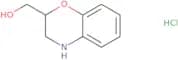
CAS:<p>Versatile small molecule scaffold</p>Formula:C9H12ClNO2Purity:Min. 95%Molecular weight:201.65 g/mol3,4-Dihydro-2H-1,4-benzoxazin-2-ylmethanol hydrochloride
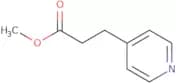
CAS:<p>Versatile small molecule scaffold</p>Formula:C9H12ClNO2Purity:Min. 95%Molecular weight:201.65 g/molMethyl 3-(pyridin-4-yl)propanoate
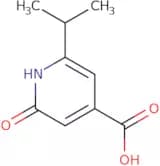
CAS:<p>Versatile small molecule scaffold</p>Formula:C9H11NO2Purity:Min. 95%Molecular weight:165.19 g/mol2-Oxo-6-(propan-2-yl)-1,2-dihydropyridine-4-carboxylic acid
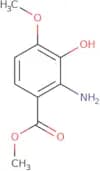
CAS:<p>Versatile small molecule scaffold</p>Formula:C9H11NO3Purity:Min. 95%Molecular weight:181.19 g/molMethyl 2-amino-3-hydroxy-4-methoxybenzoate
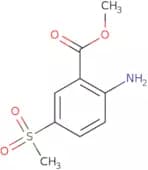
CAS:<p>Methyl 2-amino-3-hydroxy-4-methoxybenzoate is a synthetic compound that is an isomeric mixture. It has been shown to be active against gram-negative bacteria and soil bacteria, which are both gram-negative. Methyl 2-amino-3-hydroxy-4-methoxybenzoate has also been shown to have activity against Staphylococcus aureus and gram negative bacterium. This substance's mechanism of action may be due to its ability to inhibit the enzyme enoyl reductase, which is involved in fatty acid synthesis and cell membrane integrity.</p>Formula:C9H11NO4Purity:Min. 95%Molecular weight:197.19 g/molmethyl 2-amino-5-methanesulfonylbenzoate
CAS:<p>Versatile small molecule scaffold</p>Formula:C9H11NO4SPurity:Min. 95%Molecular weight:229.3 g/molN-Methyl-2,3-dihydro-1,4-benzodioxine-6-sulfonamide
CAS:<p>Versatile small molecule scaffold</p>Formula:C9H11NO4SPurity:Min. 95%Molecular weight:229.26 g/mol8,8-Dimethyl-2-oxabicyclo[4.2.0]octan-7-one
CAS:<p>Versatile small molecule scaffold</p>Formula:C9H14O2Purity:Min. 95%Molecular weight:154.21 g/molOctahydropentalene-2-carboxylic acids
CAS:<p>Versatile small molecule scaffold</p>Formula:C9H14O2Purity:Min. 95%Molecular weight:154.2 g/mol7-Oxaspiro[3.5]nonane-2-carboxylic acid
CAS:<p>Versatile small molecule scaffold</p>Formula:C9H14O3Purity:Min. 95%Molecular weight:170.21 g/mol(2-[(6-Chloropyridazin-3-yl)oxy]ethyl)dimethylamine
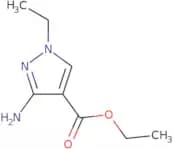
CAS:Controlled Product<p>Versatile small molecule scaffold</p>Formula:C8H12ClN3OPurity:Min. 95%Molecular weight:201.65 g/molEthyl 3-amino-1-ethyl-1H-pyrazole-4-carboxylate
CAS:<p>Versatile small molecule scaffold</p>Formula:C8H13N3O2Purity:Min. 95%Molecular weight:183.21 g/molTricyclo[3.2.1.0,2,4]octan-3-amine
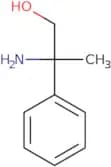
CAS:<p>Versatile small molecule scaffold</p>Formula:C8H13NPurity:Min. 95%Molecular weight:123.2 g/mol2-amino-2-phenylpropan-1-ol
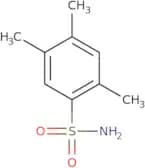
CAS:<p>2-Amino-2-methyl-1-propanol is a chemical compound with the molecular formula CH(NH)CH(OH)CH(OH). It is also known as 2-amino-2-phenylpropan-1-ol. This compound has been shown to be effective in the uptake of fatty acids and can be used in the production of coatings and polymers. The viscosity of 2-amino-2-methylpropane 1,3 diol is lower than that of other similar compounds due to its primary alcohol structure. This chemical is not readily polymerized, but can react with chloride ions to form chlorinated derivatives.</p>Formula:C9H13NOPurity:Min. 95%Molecular weight:151.21 g/mol2,4,5-Trimethylbenzene-1-sulfonamide
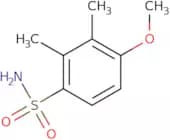
CAS:<p>Versatile small molecule scaffold</p>Formula:C9H13NO2SPurity:Min. 95%Molecular weight:199.27 g/mol4-Methoxy-2,3-dimethylbenzene-1-sulfonamide
CAS:<p>Versatile small molecule scaffold</p>Formula:C9H13NO3SPurity:Min. 95%Molecular weight:215.27 g/mol4-Methoxy-2,5-dimethylbenzene-1-sulfonamide
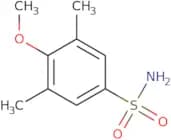
CAS:<p>Versatile small molecule scaffold</p>Formula:C9H13NO3SPurity:Min. 95%Molecular weight:215.27 g/mol4-Methoxy-3,5-dimethylbenzene-1-sulfonamide
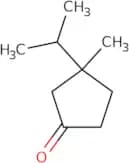
CAS:<p>Versatile small molecule scaffold</p>Formula:C9H13NO3SPurity:Min. 95%Molecular weight:215.27 g/mol3-Methyl-3-(propan-2-yl)cyclopentan-1-one
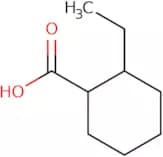
CAS:<p>Versatile small molecule scaffold</p>Formula:C9H16OPurity:Min. 95%Molecular weight:140.22 g/mol2-Ethylcyclohexane-1-carboxylic acid
CAS:<p>Versatile small molecule scaffold</p>Formula:C9H16O2Purity:Min. 95%Molecular weight:156.22 g/mol8,8-Dimethyl-2-oxabicyclo[4.2.0]octan-7-ol
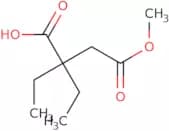
CAS:<p>Versatile small molecule scaffold</p>Formula:C9H16O2Purity:Min. 95%Molecular weight:156.22 g/mol2,2-Diethyl-4-methoxy-4-oxobutanoic acid
CAS:<p>Versatile small molecule scaffold</p>Formula:C9H16O4Purity:Min. 95%Molecular weight:188.22 g/mol4-[(Ethylsulfanyl)methyl]aniline
CAS:<p>Versatile small molecule scaffold</p>Formula:C9H13NSPurity:Min. 95%Molecular weight:167.27 g/mol4-(Pyrrolidin-1-yl)pyridin-3-amine
CAS:<p>Versatile small molecule scaffold</p>Formula:C9H13N3Purity:Min. 95%Molecular weight:163.22 g/mol4-Morpholinopyridin-3-amine
CAS:<p>Versatile small molecule scaffold</p>Formula:C9H13N3OPurity:Min. 95%Molecular weight:179.22 g/mol1-(2-Chloro-4-methylphenyl)-ethanone
CAS:<p>Versatile small molecule scaffold</p>Formula:C9H9ClOPurity:Min. 95%Molecular weight:168.62 g/mol4-Chloro-2,5-dimethylbenzoic acid
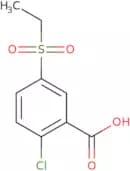
CAS:<p>Versatile small molecule scaffold</p>Formula:C9H9ClO2Purity:Min. 95%Molecular weight:184.62 g/mol2-Chloro-5-(ethanesulfonyl)benzoic acid
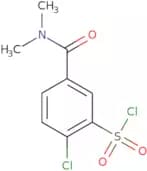
CAS:<p>Versatile small molecule scaffold</p>Formula:C9H9ClO4SPurity:Min. 95%Molecular weight:248.68 g/mol2-Chloro-5-(dimethylcarbamoyl)benzene-1-sulfonyl chloride
CAS:<p>Versatile small molecule scaffold</p>Formula:C9H9Cl2NO3SPurity:Min. 95%Molecular weight:282.14 g/mol1-[(tert-Butyldimethylsilyl)oxy]cyclopropane-1-carbaldehyde
CAS:<p>1-[(tert-Butyldimethylsilyl)oxy]cyclopropane-1-carbaldehyde is a cyclopropanecarboxylic acid that can be prepared by reacting cyclopropane with an ester of ethoxyethyl chloride. It has been used as a precursor for the synthesis of sulfoxide and sulfone derivatives. Cyclopropanecarboxylic acids are used in the preparation of chlorides, esters, and solvents. This compound has also been used as a reagent for the synthesis of oxalyl chloride and pyridinium chloride. 1-[(tert-Butyldimethylsilyl)oxy]cyclopropane-1-carbaldehyde can be purified by recrystallization from organic solvents such as benzene or ether, or it can be purified by preparative thin layer chromatography (PTLC).</p>Formula:C10H20O2SiPurity:Min. 95%Molecular weight:200.35 g/mol4-amino-3-fluoro-n-methylbenzamide
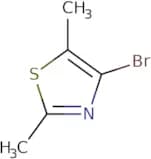
CAS:<p>Versatile small molecule scaffold</p>Formula:C8H9FN2OPurity:Min. 95%Molecular weight:168.17 g/mol4-Bromo-2,5-dimethyl-1,3-thiazole
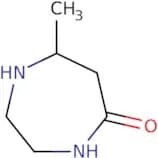
CAS:<p>Versatile small molecule scaffold</p>Formula:C5H6BrNSPurity:Min. 95%Molecular weight:192.08 g/mol7-Methyl-1,4-diazepan-5-one
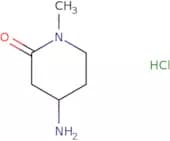
CAS:<p>Versatile small molecule scaffold</p>Formula:C6H12N2OPurity:Min. 95%Molecular weight:128.17 g/mol1-Methyl-4-amino-2-piperidinone hydrochloride
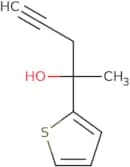
CAS:<p>Versatile small molecule scaffold</p>Formula:C6H13ClN2OPurity:Min. 95%Molecular weight:164.63 g/mol2-(Thiophen-2-yl)pent-4-yn-2-ol
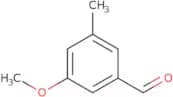
CAS:<p>Versatile small molecule scaffold</p>Formula:C9H10OSPurity:Min. 95%Molecular weight:166.24 g/mol3-Methoxy-5-methylbenzaldehyde
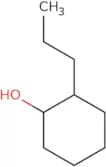
CAS:<p>3-Methoxy-5-methylbenzaldehyde is a natural product that has been identified as an intermediate in the biosynthesis of the sesquiterpene, ursolic acid. It can be synthesized by reacting piperazine with methoxymethyl chloride. 3-Methoxy-5-methylbenzaldehyde has also been used for labeling proteins and nucleic acids. The technique of chromatographic mass spectrometric detection uses this compound to detect volatile compounds in headspace by gas chromatography.</p>Formula:C9H10O2Purity:Min. 95%Molecular weight:150.17 g/mol2-Propylcyclohexanol (cis- and trans- mixture)
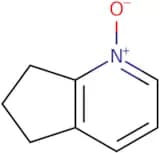
CAS:<p>2-Propylcyclohexanol is a cyclic alcohol that is used as a solvent in organic chemistry. It has two different forms: cis-2-proptyclohexanol and trans-2-proptyclohexanol, which is a mixture of the two. 2-Propylcyclohexanol can be used as a bifunctional reagent for bond cleavage reactions and dehydration reactions. This compound also has properties that make it useful as an organic solvent, such as its ability to dissolve hydronium ions and its relatively low boiling point. 2-Propylcyclohexanol can be used in microscopy because it does not interfere with fluorescence detection or other light sources. It can also be used in the preparation of carbohydrates. The monomers from which this compound is made are cyclic, meaning that they are shaped like circles or rings. These monomers are made up of carbon atoms, hydrogen atoms, and oxygen atoms.</p>Formula:C9H18OPurity:Min. 95%Molecular weight:142.24 g/mol2,3-Cyclopentenopyridine N-oxide
CAS:<p>Versatile small molecule scaffold</p>Formula:C8H9NOPurity:Min. 95%Molecular weight:135.17 g/mol6,7-Dihydro-5h-cyclopenta[b]pyridin-7-yl acetate
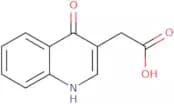
CAS:<p>Versatile small molecule scaffold</p>Formula:C10H11NO2Purity:Min. 95%Molecular weight:177.19 g/mol2-(4-Hydroxyquinolin-3-yl)acetic acid
CAS:<p>Versatile small molecule scaffold</p>Formula:C11H9NO3Purity:Min. 95%Molecular weight:203.19 g/mol5-Chloro-7-methoxythieno[3,2-b]pyridine
CAS:<p>Versatile small molecule scaffold</p>Formula:C8H6ClNOSPurity:Min. 95%Molecular weight:199.65 g/mol7-Chlorothieno[3,2-b]pyridine-6-carboxylic Acid
CAS:<p>Versatile small molecule scaffold</p>Formula:C8H4NO2SClPurity:Min. 95%Molecular weight:213.64 g/molMethyl 5,7-dihydroxythieno[3,2-b]pyridine-6-carboxylate
CAS:<p>Versatile small molecule scaffold</p>Formula:C9H7NO4SPurity:Min. 95%Molecular weight:225.22 g/mol5-Ethyl-1-methyl-1H-1,2,4-triazol-3-amine
CAS:<p>Versatile small molecule scaffold</p>Formula:C5H10N4Purity:Min. 95%Molecular weight:126.16 g/molN-[(Allyloxy)carbonyl]glycine
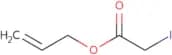
CAS:<p>N-[(Allyloxy)carbonyl]glycine is a synthetic compound that is used as a pharmaceutical agent. It is one of the four stereoisomers of N-allyloxycarbonylglycine, which are all synthesized by solid-phase synthesis. This drug was shown to inhibit the growth of cancer cells and may be useful in treating animals infected with infectious diseases. The antimicrobial activity of N-[(Allyloxy)carbonyl]glycine has been demonstrated using bacterial cultures, which showed that it inhibits the growth of bacteria by inhibiting protein synthesis. It also has been shown to have an effect on cellular processes such as DNA replication and transcription.</p>Formula:C6H9NO4Purity:Min. 95%Molecular weight:159.14 g/molProp-2-en-1-yl 2-iodoacetate
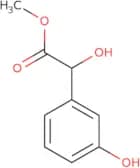
CAS:<p>Prop-2-en-1-yl 2-iodoacetate is a reactive, hydroxyl group containing organometallic molecule that is used as a polymerization initiator in organic reactions. Prop-2-en-1-yl 2-iodoacetate is also used as an agent for catalytic reduction of hydrocarbons and as a reagent in the synthesis of organic compounds. This compound can also be used to synthesize polymers with hydrophobic effect by reacting with halides. The mechanism of this reaction involves formation of a carbocation intermediate followed by nucleophilic attack on the propargyl cation.</p>Formula:C5H7IO2Purity:Min. 95%Molecular weight:226.01 g/molMethyl 2-hydroxy-2-(3-hydroxyphenyl)acetate
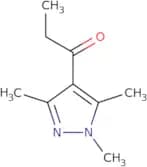
CAS:<p>Versatile small molecule scaffold</p>Formula:C9H10O4Purity:Min. 95%Molecular weight:182.17 g/mol1-(Trimethyl-1H-pyrazol-4-yl)propan-1-one
CAS:<p>Versatile small molecule scaffold</p>Formula:C9H14N2OPurity:Min. 95%Molecular weight:166.22 g/mol[2-(Diethylamino)ethyl](propyl)amine
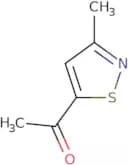
CAS:<p>Versatile small molecule scaffold</p>Formula:C9H22N2Purity:Min. 95%Molecular weight:158.28 g/mol1-(3-Methyl-isothiazol-5-yl)-ethanone
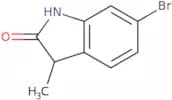
CAS:<p>Versatile small molecule scaffold</p>Formula:C6H7NOSPurity:Min. 95%Molecular weight:141.19 g/mol6-Bromo-3-methylindolin-2-one
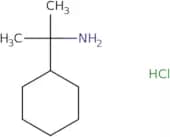
CAS:<p>Versatile small molecule scaffold</p>Formula:C9H8NOBrPurity:Min. 95%Molecular weight:226.07 g/mol2-Cyclohexylpropan-2-amine hydrochloride
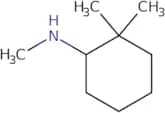
CAS:<p>Versatile small molecule scaffold</p>Formula:C9H20ClNPurity:Min. 95%Molecular weight:177.71 g/molN,2,2-Trimethylcyclohexan-1-amine
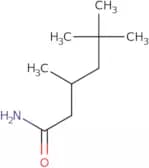
CAS:<p>Versatile small molecule scaffold</p>Formula:C9H19NPurity:Min. 95%Molecular weight:141.25 g/mol3,5,5-Trimethylhexanamide
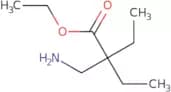
CAS:<p>Versatile small molecule scaffold</p>Formula:C9H19NOPurity:Min. 95%Molecular weight:157.25 g/molEthyl 2-(aminomethyl)-2-ethylbutanoate
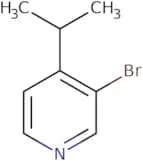
CAS:<p>Versatile small molecule scaffold</p>Formula:C9H19NO2Purity:Min. 95%Molecular weight:173.25 g/mol3-Bromo-4-(propan-2-yl)pyridine
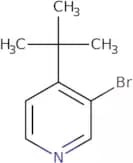
CAS:<p>Versatile small molecule scaffold</p>Formula:C8H10BrNPurity:Min. 95%Molecular weight:200.08 g/mol3-Bromo-4-tert-butylpyridine
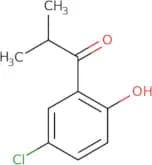
CAS:<p>Versatile small molecule scaffold</p>Formula:C9H12BrNPurity:Min. 95%Molecular weight:214.1 g/mol1-(5-Chloro-2-hydroxyphenyl)-2-methylpropan-1-one
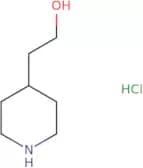
CAS:<p>Versatile small molecule scaffold</p>Formula:C10H11ClO2Purity:Min. 95%Molecular weight:198.64 g/mol2-(Piperidin-4-yl)ethanol hydrochloride
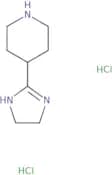
CAS:<p>Versatile small molecule scaffold</p>Formula:C7H16ClNOPurity:Min. 95%Molecular weight:165.66 g/mol4-(4,5-Dihydro-1H-imidazol-2-yl)piperidine dihydrochloride
CAS:<p>Versatile small molecule scaffold</p>Formula:C8H17Cl2N3Purity:Min. 95%Molecular weight:226.14 g/mol4-[3-(1H-Imidazol-1-yl)propyl]piperidine
CAS:<p>Versatile small molecule scaffold</p>Formula:C11H19N3Purity:Min. 95%Molecular weight:193.29 g/mol4-[(1H-Imidazol-2-yl)methyl]piperidine dihydrochloride
CAS:<p>Versatile small molecule scaffold</p>Formula:C9H17Cl2N3Purity:Min. 95%Molecular weight:238.15 g/mol4-[(3-Methylphenyl)methyl]morpholine
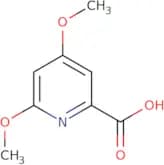
CAS:<p>Versatile small molecule scaffold</p>Formula:C12H17NOPurity:Min. 95%Molecular weight:191.27 g/mol4,6-Dimethoxypicolinic acid
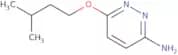
CAS:<p>Versatile small molecule scaffold</p>Formula:C8H9NO4Purity:Min. 95%Molecular weight:183.16 g/mol6-(3-Methylbutoxy)pyridazin-3-amine
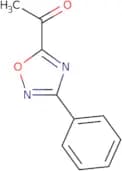
CAS:<p>Versatile small molecule scaffold</p>Formula:C9H15N3OPurity:Min. 95%Molecular weight:181.23 g/mol1-(3-Phenyl-1,2,4-oxadiazol-5-yl)ethan-1-one
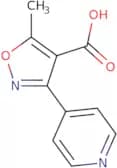
CAS:<p>Versatile small molecule scaffold</p>Formula:C10H8N2O2Purity:Min. 95%Molecular weight:188.18 g/mol5-Methyl-3-pyridin-4-yl-isoxazole-4-carboxylic acid
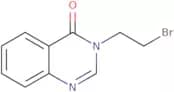
CAS:<p>Versatile small molecule scaffold</p>Formula:C10H8N2O3Purity:Min. 95%Molecular weight:204.19 g/mol3-(2-Bromoethyl)-3,4-dihydroquinazolin-4-one
CAS:<p>3-(2-Bromoethyl)-3,4-dihydroquinazolin-4-one is a synthetic compound with a polycyclic structure. It is soluble in methanol and water and has an abnormal smell. The melting point of this compound is not available.</p>Formula:C10H9BrN2OPurity:Min. 95%Molecular weight:253.09 g/mol2-Chloro-N-[4-(cyanomethyl)phenyl]acetamide
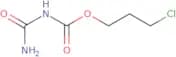
CAS:<p>Versatile small molecule scaffold</p>Formula:C10H9ClN2OPurity:Min. 95%Molecular weight:208.64 g/mol3-Chloropropyl N-carbamoylcarbamate
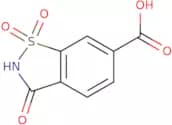
CAS:<p>Versatile small molecule scaffold</p>Formula:C5H9ClN2O3Purity:Min. 95%Molecular weight:180.59 g/mol1,1,3-Trioxo-2,3-dihydro-1,2-benzothiazole-6-carboxylic acid
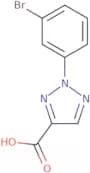
CAS:<p>Versatile small molecule scaffold</p>Formula:C8H5NO5SPurity:Min. 95%Molecular weight:227.19 g/mol2-(3-Bromophenyl)-2H-1,2,3-triazole-4-carboxylic acid
CAS:<p>Versatile small molecule scaffold</p>Formula:C9H6BrN3O2Purity:Min. 95%Molecular weight:268.07 g/mol

![3,3-Dimethyl-1,5-dioxa-9-azaspiro[5.5]undecane](/_next/image/?url=https%3A%2Fstatic.cymitquimica.com%2Fproducts%2F3D%2Fthumb-webp%2FQCA53586.webp&w=3840&q=75)




![1-[4-(Aminomethyl)phenyl]ethan-1-amine](/_next/image/?url=https%3A%2Fstatic.cymitquimica.com%2Fproducts%2F3D%2Fthumb-webp%2FQDA56531.webp&w=3840&q=75)

![6,6-Dimethyl-1,3-diazaspiro[4.4]nonane-2,4-dione](/_next/image/?url=https%3A%2Fstatic.cymitquimica.com%2Fproducts%2F3D%2Fthumb-webp%2FQDA56574.webp&w=3840&q=75)

![5-Oxobicyclo[2.2.1]heptane-2,3-dicarboxylic acid](/_next/image/?url=https%3A%2Fstatic.cymitquimica.com%2Fproducts%2F3D%2Fthumb-webp%2FQDA58232.webp&w=3840&q=75)
![8-Oxa-2-azaspiro[4.5]decane-1,3-dione](/_next/image/?url=https%3A%2Fstatic.cymitquimica.com%2Fproducts%2F3D%2Fthumb-webp%2FQDA60723.webp&w=3840&q=75)
![3-[(Methylsulfanyl)methyl]aniline](/_next/image/?url=https%3A%2Fstatic.cymitquimica.com%2Fproducts%2F3D%2Fthumb-webp%2FQDA60733.webp&w=3840&q=75)
![3-Azabicyclo[4.3.1]decan-4-one](/_next/image/?url=https%3A%2Fstatic.cymitquimica.com%2Fproducts%2F3D%2Fthumb-webp%2FQDA60789.webp&w=3840&q=75)
![8-Methyl-8-azabicyclo[3.2.1]octane-3-carboxylic acid hydrochloride](/_next/image/?url=https%3A%2Fstatic.cymitquimica.com%2Fproducts%2F3D%2Fthumb-webp%2FQDA60878.webp&w=3840&q=75)
![(2,3-Dihydro-benzo[1,4]dioxin-6-yl)-methyl-aminehydrochloride](/_next/image/?url=https%3A%2Fstatic.cymitquimica.com%2Fproducts%2F3D%2Fthumb-webp%2FQDA60993.webp&w=3840&q=75)

![8,8-Dimethyl-2-oxabicyclo[4.2.0]octan-7-one](/_next/image/?url=https%3A%2Fstatic.cymitquimica.com%2Fproducts%2F3D%2Fthumb-webp%2FQDA61194.webp&w=3840&q=75)

![7-Oxaspiro[3.5]nonane-2-carboxylic acid](/_next/image/?url=https%3A%2Fstatic.cymitquimica.com%2Fproducts%2F3D%2Fthumb-webp%2FQDA61260.webp&w=3840&q=75)
![(2-[(6-Chloropyridazin-3-yl)oxy]ethyl)dimethylamine](/_next/image/?url=https%3A%2Fstatic.cymitquimica.com%2Fproducts%2F3D%2Fthumb-webp%2FQDA64147.webp&w=3840&q=75)
![Tricyclo[3.2.1.0,2,4]octan-3-amine](/_next/image/?url=https%3A%2Fstatic.cymitquimica.com%2Fproducts%2F3D%2Fthumb-webp%2FQDA64211.webp&w=3840&q=75)

![8,8-Dimethyl-2-oxabicyclo[4.2.0]octan-7-ol](/_next/image/?url=https%3A%2Fstatic.cymitquimica.com%2Fproducts%2F3D%2Fthumb-webp%2FQDA64673.webp&w=3840&q=75)
![4-[(Ethylsulfanyl)methyl]aniline](/_next/image/?url=https%3A%2Fstatic.cymitquimica.com%2Fproducts%2F3D%2Fthumb-webp%2FQDA64806.webp&w=3840&q=75)


![1-[(tert-Butyldimethylsilyl)oxy]cyclopropane-1-carbaldehyde](/_next/image/?url=https%3A%2Fstatic.cymitquimica.com%2Fproducts%2F3D%2Fthumb-webp%2FQDA66009.webp&w=3840&q=75)

![6,7-Dihydro-5h-cyclopenta[b]pyridin-7-yl acetate](/_next/image/?url=https%3A%2Fstatic.cymitquimica.com%2Fproducts%2F3D%2Fthumb-webp%2FQDA68559.webp&w=3840&q=75)
![5-Chloro-7-methoxythieno[3,2-b]pyridine](/_next/image/?url=https%3A%2Fstatic.cymitquimica.com%2Fproducts%2F3D%2Fthumb-webp%2FQDA69091.webp&w=3840&q=75)
![7-Chlorothieno[3,2-b]pyridine-6-carboxylic Acid](/_next/image/?url=https%3A%2Fstatic.cymitquimica.com%2Fproducts%2F3D%2Fthumb-webp%2FQDA69094.webp&w=3840&q=75)
![Methyl 5,7-dihydroxythieno[3,2-b]pyridine-6-carboxylate](/_next/image/?url=https%3A%2Fstatic.cymitquimica.com%2Fproducts%2F3D%2Fthumb-webp%2FQDA69113.webp&w=3840&q=75)

![N-[(Allyloxy)carbonyl]glycine](/_next/image/?url=https%3A%2Fstatic.cymitquimica.com%2Fproducts%2F3D%2Fthumb-webp%2FQDA71156.webp&w=3840&q=75)
amine](/_next/image/?url=https%3A%2Fstatic.cymitquimica.com%2Fproducts%2F3D%2Fthumb-webp%2FQDA72312.webp&w=3840&q=75)
![4-[3-(1H-Imidazol-1-yl)propyl]piperidine](/_next/image/?url=https%3A%2Fstatic.cymitquimica.com%2Fproducts%2F3D%2Fthumb-webp%2FQDA74759.webp&w=3840&q=75)
![4-[(1H-Imidazol-2-yl)methyl]piperidine dihydrochloride](/_next/image/?url=https%3A%2Fstatic.cymitquimica.com%2Fproducts%2F3D%2Fthumb-webp%2FQDA74764.webp&w=3840&q=75)
![4-[(3-Methylphenyl)methyl]morpholine](/_next/image/?url=https%3A%2Fstatic.cymitquimica.com%2Fproducts%2F3D%2Fthumb-webp%2FQDA75464.webp&w=3840&q=75)
![2-Chloro-N-[4-(cyanomethyl)phenyl]acetamide](/_next/image/?url=https%3A%2Fstatic.cymitquimica.com%2Fproducts%2F3D%2Fthumb-webp%2FQDA77287.webp&w=3840&q=75)