Building Blocks
This section contains fundamental products for the synthesis of organic and biological compounds. Building blocks are the essential starting materials used to construct complex molecules through various chemical reactions. They play a critical role in drug discovery, material science, and chemical research. At CymitQuimica, we offer a diverse range of high-quality building blocks to support your innovative research and industrial projects, ensuring you have the essential components for successful synthesis.
Subcategories of "Building Blocks"
- Boronic Acids & Boronic Acid Derivatives(5,756 products)
- Chiral Building Blocks(1,242 products)
- Hydrocarbon Building Blocks(6,093 products)
- Organic Building Blocks(60,525 products)
Found 195536 products of "Building Blocks"
Sort by
Purity (%)
0
100
|
0
|
50
|
90
|
95
|
100
3-[5-(Propan-2-yl)-1,2,4-oxadiazol-3-yl]piperidine hydrochloride
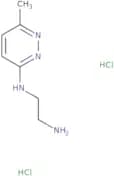
CAS:<p>Versatile small molecule scaffold</p>Formula:C10H18ClN3OPurity:Min. 95%Molecular weight:231.72 g/molN-(2-Aminoethyl)-6-methylpyridazin-3-amine dihydrochloride
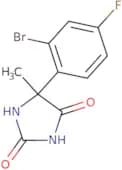
CAS:<p>Versatile small molecule scaffold</p>Formula:C7H14Cl2N4Purity:Min. 95%Molecular weight:225.12 g/mol5-(2-Bromo-4-fluorophenyl)-5-methylimidazolidine-2,4-dione
CAS:<p>Versatile small molecule scaffold</p>Formula:C10H8BrFN2O2Purity:Min. 95%Molecular weight:287.08 g/mol1-[(3-Aminophenyl)sulfanyl]-N,N-dimethylformamide hydrochloride
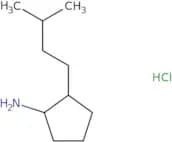
CAS:<p>Versatile small molecule scaffold</p>Formula:C9H13ClN2OSPurity:Min. 95%Molecular weight:232.73 g/mol2-(3-Methylbutyl)cyclopentan-1-amine hydrochloride
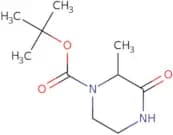
CAS:<p>Versatile small molecule scaffold</p>Formula:C10H22ClNPurity:Min. 95%Molecular weight:191.74 g/mol1-Boc-2-methyl-3-oxopiperazine
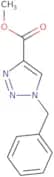
CAS:<p>Versatile small molecule scaffold</p>Formula:C10H18N2O3Purity:Min. 95%Molecular weight:214.26 g/molMethyl 1-Benzyl-1H-1,2,3-triazole-4-carboxylate
CAS:<p>Methyl 1-benzyl-1H-1,2,3-triazole-4-carboxylate is a functional molecule that has the potential to be used in the development of new drugs. It is a triazole molecule that has been shown to have an A+B type structure. The methyl group and the benzyl group are both electron donating groups. The methyl group is localized on the benzene ring and it has a negative charge due to its electronegativity. The benzyl group is more electronegative than the methyl group and it can act as a good leaving group because of its dipole. This molecule has an infrared absorption band at 3270 cm−1 and uv absorption bands at 220 nm, 247 nm, and 311 nm.</p>Formula:C11H11N3O2Purity:Min. 95%Molecular weight:217.22 g/mol1,6-Dihydro-7H-pyrazolo[3,4-c]pyridin-7-one
CAS:<p>1,6-Dihydro-7H-pyrazolo[3,4-c]pyridin-7-one is an isoamyl, pyridine, pyrazole ring that is synthesized from 1,6-dihydro-7H-pyrazolo[3,4-c]pyridin-7-one. This compound has the ability to catalyze the deacetylation of acetyl compounds in a process that involves potassium carbonate and copper. The reaction between 1,6-dihydro-7H-pyrazolo[3,4-c]pyridin-7-one and nitrite yields acetyl radicals. The acetyl radicals then react with methoxyl groups to form ethoxy radicals. Ethoxy radicals are more reactive than acetyl radicals and can be used to produce other organic or inorganic compounds.</p>Formula:C6H5N3OPurity:Min. 95%Molecular weight:135.12 g/mol1H-Pyrazolo[3,4-c]pyridin-3-amine
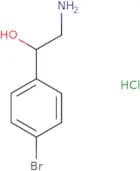
CAS:<p>Versatile small molecule scaffold</p>Formula:C6H6N4Purity:Min. 95%Molecular weight:134.14 g/mol2-Amino-1-(4-bromophenyl)ethanol hydrochloride
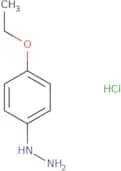
CAS:<p>Versatile small molecule scaffold</p>Formula:C8H11BrClNOPurity:Min. 95%Molecular weight:252.54 g/mol(4-Ethoxyphenyl)hydrazine hydrochloride
CAS:<p>Versatile small molecule scaffold</p>Formula:C8H13ClN2OPurity:Min. 95%Molecular weight:188.66 g/molCyclohexanepropanol, β-methyl-
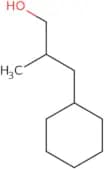
CAS:<p>Cyclohexanepropanol, beta-methyl- is an enantioselective lipase that can be used for the production of chiral drugs and fine chemicals. This enzyme has a high enantioselectivity for esters, alcohols, and solvents. Cyclohexanepropanol, beta-methyl- is one of the most cost-effective enzymes for these reactions. The kinetic properties of this enzyme allows it to efficiently catalyze the hydrolysis of esters under mild conditions. The best results are obtained when using aryl groups with electron withdrawing substituents.</p>Formula:C10H20OPurity:Min. 95%Molecular weight:156.27 g/mol2-(Piperidin-4-yl)ethan-1-amine
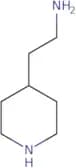
CAS:<p>2-(Piperidin-4-yl)ethan-1-amine is a nonsteroidal anti-inflammatory drug (NSAID) that inhibits the enzyme pancreatic lipase. This inhibition of lipases leads to the decrease in triglycerides and phospholipids in the blood, which prevents inflammation. 2-(Piperidin-4-yl)ethan-1-amine has been shown to have antibacterial and antifungal properties. It has been used for the treatment of infections caused by Mycobacteria sp., including Mycobacterium tuberculosis, M. avium complex, and M. kansasii. It also has been used for the treatment of orlistat induced side effects such as steatorrhea and diarrhea. The use of this drug is limited because it can cause liver toxicity or gastrointestinal ulceration at high doses.</p>Formula:C7H16N2Purity:Min. 95%Molecular weight:128.22 g/molEthyl 2-amino-2-iminoacetate hydrochloride
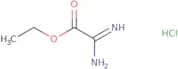
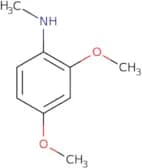
CAS:<p>Versatile small molecule scaffold</p>Formula:C4H9ClN2O2Purity:Min. 95%Molecular weight:152.58 g/mol2,4-Dimethoxy-N-methylaniline
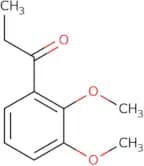
CAS:<p>Versatile small molecule scaffold</p>Formula:C9H13NO2Purity:Min. 95%Molecular weight:167.2 g/mol1-(2,3-Dimethoxyphenyl)propan-1-one
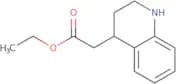
CAS:<p>Versatile small molecule scaffold</p>Formula:C11H14O3Purity:Min. 95%Molecular weight:194.23 g/molEthyl 2-(1,2,3,4-tetrahydroquinolin-4-yl)acetate
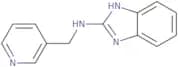
CAS:<p>Versatile small molecule scaffold</p>Formula:C13H17NO2Purity:Min. 95%Molecular weight:219.28 g/molN-(Pyridin-3-ylmethyl)-1H-1,3-benzodiazol-2-amine
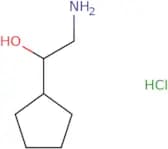
CAS:<p>N-(Pyridin-3-ylmethyl)-1H-1,3-benzodiazol-2-amine is a drug product that has been custom synthesized for a laboratory or research use. It has been purified to high purity and is suitable for analytical studies. It has been shown to be metabolized in vivo in humans and animals and is an impurity standard used for HPLC analysis. This compound may also be used as an API impurity or as a research and development chemical intermediate.</p>Formula:C13H12N4Purity:Min. 95%Molecular weight:224.26 g/mol2-Amino-1-cyclopentylethan-1-ol hydrochloride
CAS:<p>Versatile small molecule scaffold</p>Formula:C7H16ClNOPurity:Min. 95%Molecular weight:165.66 g/mol5-m-Tolyl-[1,3,4]thiadiazol-2-ylamine
CAS:<p>Versatile small molecule scaffold</p>Formula:C9H9N3SPurity:Min. 95%Molecular weight:191.26 g/mol7-Chloro-5-methylimidazo[1,2-c]pyrimidine-2-carboxamide
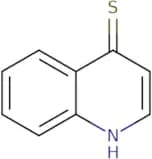
CAS:<p>Versatile small molecule scaffold</p>Formula:C8H7ClN4OPurity:Min. 95%Molecular weight:210.62 g/mol1,4-Dihydroquinoline-4-thione
CAS:<p>1,4-Dihydroquinoline-4-thione is an antibacterial agent that belongs to the class of thiourea derivatives. It has been shown to inhibit the growth of bacteria by binding to the 50S ribosomal subunit. The crystal structure of 1,4-dihydroquinoline-4-thione was determined using X-ray crystallography techniques and gold nanoparticles. The compound has a hydroxyl group that can be labeled with several different groups to produce a variety of isomers.</p>Formula:C9H7NSPurity:Min. 95%Molecular weight:161.23 g/molSCH 28080
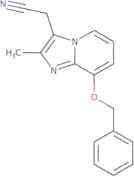
CAS:<p>SCH 28080 is a potent inhibitor of transcriptional activator protein-1 (AP-1) and nuclear factor-κB (NF-κB). These two transcriptional regulatory proteins are activated by various stimuli, including inflammatory cytokines, such as IL-1β, TNF-α, and IL-6. Activation of these transcription factors leads to the upregulation of the genes encoding proinflammatory mediators, such as eosinophil cationic protein and interleukins. SCH 28080 has been shown to inhibit NF-κB activation in human HL60 cells, which may be due to its ability to bind to both the α subunit of NF-κB and AP-1.</p>Formula:C17H15N3OPurity:Min. 95%Molecular weight:277.33 g/mol2-Chloro-1-[4-(2-phenoxyethyl)piperazin-1-yl]ethan-1-one hydrochloride
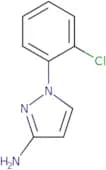
CAS:<p>Versatile small molecule scaffold</p>Formula:C14H20Cl2N2O2Purity:Min. 95%Molecular weight:319.2 g/mol1-(2-Chlorophenyl)-1H-pyrazol-3-amine
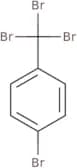
CAS:<p>Versatile small molecule scaffold</p>Formula:C9H8ClN3Purity:Min. 95%Molecular weight:193.63 g/mol1-Bromo-4-(tribromomethyl)benzene
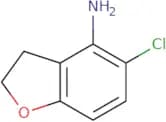
CAS:<p>1-Bromo-4-(tribromomethyl)benzene (1,2,3,4-Tetrabromobenzene) is a perfluorinated chemical substance that is used in the manufacture of fluoropolymers. It is also used as an industrial chemical intermediate and as a precursor to other perfluorinated substances. 1,2,3,4-Tetrabromobenzene has been monitored by China and classified as a high priority for monitoring due to its potential for long-range environmental transport. The efficiency of screening for 1,2,3,4-Tetrabromobenzene in soil samples was found to be dependent on the extraction time and the extraction solvent. Organic chemicals such as 1,2,3,4-Tetrabromobenzene are screened for using gas chromatography with electron capture detection or liquid chromatography with tandem mass spectroscopy.</p>Formula:C7H4Br4Purity:Min. 95%Color and Shape:PowderMolecular weight:407.72 g/mol5-Chloro-2,3-dihydro-1-benzofuran-4-amine
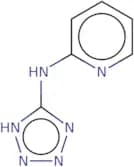
CAS:<p>Versatile small molecule scaffold</p>Formula:C8H8ClNOPurity:Min. 95%Molecular weight:169.61 g/molN-(1H-1,2,3,4-Tetrazol-5-yl)pyridin-2-amine
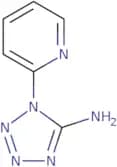
CAS:<p>Versatile small molecule scaffold</p>Formula:C6H6N6Purity:Min. 95%Molecular weight:162.2 g/mol1-(Pyridin-2-yl)-1H-1,2,3,4-tetrazol-5-amine
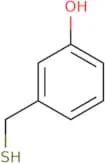
CAS:<p>Versatile small molecule scaffold</p>Formula:C6H6N6Purity:Min. 95%Molecular weight:162.15 g/mol3-(Sulfanylmethyl)phenol
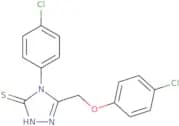
CAS:<p>Versatile small molecule scaffold</p>Formula:C7H8OSPurity:Min. 95%Molecular weight:140.2 g/mol5-(4-Chlorophenoxymethyl)-4-(4-chlorophenyl)-4H-1,2,4-triazole-3-thiol
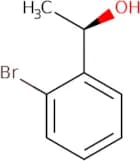
CAS:<p>Versatile small molecule scaffold</p>Formula:C15H11Cl2N3OSPurity:Min. 95%Molecular weight:352.2 g/mol(R)-(+)-2-Bromo-±-methylbenzyl alcohol
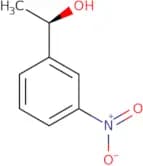
CAS:<p>Versatile small molecule scaffold</p>Formula:C8H9BrOPurity:Min. 95%Molecular weight:201.06 g/mol(1R)-1-(3-Nitrophenyl)ethanol
CAS:<p>(1R)-1-(3-Nitrophenyl)ethanol is a prochiral alcohol that is generated by the oxidation of nitrobenzene. It has an optimal pH range of 5.5-7.0 and optimum catalytic activity at a ph range of 6.5-8.0. (1R)-1-(3-Nitrophenyl)ethanol can be used in the production of antibiotics such as penicillin and cephalosporin, which are derived from erythromycin. The chiral nature of this molecule allows for the synthesis of two different stereoisomers: erythromycin A and erythromycin B. This molecule also has been shown to have antifungal properties, inhibiting the growth of bacteria such as Bacillus subtilis, Staphylococcus aureus, and Escherichia coli.</p>Formula:C8H9NO3Purity:Min. 95%Molecular weight:167.16 g/molBenzyl[(2-methylphenyl)methyl]amine
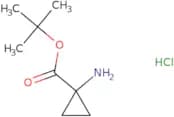
CAS:<p>Versatile small molecule scaffold</p>Formula:C15H17NPurity:Min. 95%Molecular weight:211.3 g/moltert-Butyl 1-aminocyclopropane-1-carboxylate hydrochloride
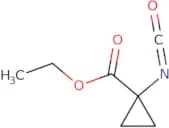
CAS:<p>Versatile small molecule scaffold</p>Formula:C8H16ClNO2Purity:Min. 95%Molecular weight:193.67 g/molEthyl 1-isocyanatocyclopropane-1-carboxylate
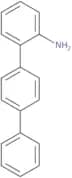
CAS:<p>Versatile small molecule scaffold</p>Formula:C7H9NO3Purity:Min. 95%Molecular weight:155.15 g/mol2-(4-Phenylphenyl)aniline
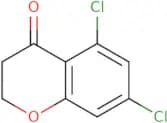
CAS:<p>Versatile small molecule scaffold</p>Formula:C18H15NPurity:Min. 95%Molecular weight:245.3 g/mol5,7-Dichloro-3,4-dihydro-2H-1-benzopyran-4-one
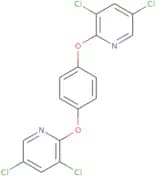
CAS:<p>Versatile small molecule scaffold</p>Formula:C9H6Cl2O2Purity:Min. 95%Molecular weight:217.05 g/molTCPOBOP
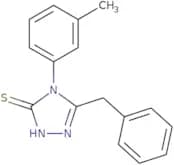
CAS:<p>Tcpobop is an enzyme inducer that increases the metabolic rate and alters lipid metabolism. It has been shown to up-regulate genes involved in energy metabolism, such as fatty acid synthase, and genes involved in iron homeostasis, such as hepcidin. Tcpobop also inhibits cellular growth by causing cell cycle arrest at G1 phase and inducing apoptosis. Tcpobop enhances the expression of epidermal growth factor receptor (EGFR) in CD-1 mice. This may be due to its effects on protein synthesis and gene transcription.</p>Formula:C16H8N2O2Cl4Purity:Min. 95%Molecular weight:402.06 g/mol5-Benzyl-4-(3-methylphenyl)-4H-1,2,4-triazole-3-thiol
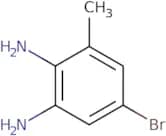
CAS:<p>Versatile small molecule scaffold</p>Formula:C16H15N3SPurity:Min. 95%Molecular weight:281.4 g/mol5-Bromo-3-methylbenzene-1,2-diamine
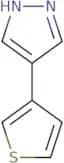
CAS:<p>Versatile small molecule scaffold</p>Formula:C7H9BrN2Purity:Min. 95%Molecular weight:201.06 g/mol4-(Thiophen-3-yl)-1H-pyrazole
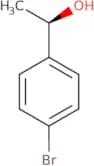
CAS:<p>Versatile small molecule scaffold</p>Formula:C7H6N2SPurity:Min. 95%Molecular weight:150.2 g/mol(R)-1-(4-Bromophenyl)ethanol
CAS:<p>(R)-1-(4-Bromophenyl)ethanol is a reactive chemical that has been shown to be enantiopure and have a high degree of purity. It can be used in microscopy to detect the presence of bacteria, as well as in biological properties studies. The compound is an isomer of (S)-1-(4-bromophenyl)ethanol and can be chiral or racemic. (R)-1-(4-Bromophenyl)ethanol has been sequenced and found to have a molecular weight of 156.2 g/mol. It also has a melting point of 78°C and a boiling point of 201°C. This compound's fluorescence emission maxima are at 400 nm and 440 nm, with an extinction coefficient of 100,000 M-1cm-1 at 400 nm. The compound's sigmoidal curve can be seen in the graph below:</p>Formula:C8H9BrOPurity:Min. 95%Molecular weight:201.06 g/mol(1R)-1-[4-(trifluoromethyl)phenyl]ethan-1-ol
CAS:<p>(1R)-1-[4-(trifluoromethyl)phenyl]ethan-1-ol is a chiral alcohol that is used as a catalyst in organic synthesis. It reacts with many types of compounds, including choline, to produce the corresponding ester or amide. The reaction time is typically less than an hour, and the substrate concentration can be scaled up to 100 grams per liter. (1R)-1-[4-(trifluoromethyl)phenyl]ethan-1-ol is soluble in solvents such as benzene and chloroform. This compound has been shown to have chemokine activity against human monocytes and T lymphocytes.</p>Formula:C9H9F3OPurity:Min. 95%Molecular weight:190.16 g/molethyl 3-aminoimidazo[1,2-a]pyridine-2-carboxylate
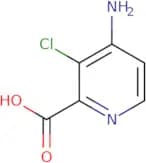
CAS:<p>Versatile small molecule scaffold</p>Formula:C10H11N3O2Purity:Min. 95%Molecular weight:205.2 g/mol4-Amino-3-chloropyridine-2-carboxylic acid
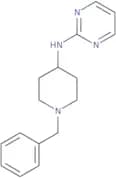
CAS:<p>4-Amino-3-chloropyridine-2-carboxylic acid (4ACPC) is an herbicide that has been used to control weeds in rice fields, sugar cane, and other crops. 4ACPC inhibits the growth of plants by inhibiting photosynthesis. It binds to the electron transport system in chloroplasts and reduces the amount of ATP available for use. This leads to a decrease in chlorophyll production and photosynthetic activity, which ultimately causes plant death. 4ACPC also binds to DNA and has been shown to inhibit transcription in calf thymus cells.</p>Formula:C6H5ClN2O2Purity:Min. 95%Molecular weight:172.57 g/molN-(1-Benzylpiperidin-4-yl)pyrimidin-2-amine
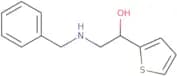
CAS:<p>Versatile small molecule scaffold</p>Formula:C16H20N4Purity:Min. 95%Molecular weight:268.36 g/mol2-(Benzylamino)-1-(thiophen-2-yl)ethan-1-ol
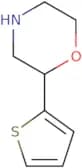
CAS:<p>Versatile small molecule scaffold</p>Formula:C13H15NOSPurity:Min. 95%Molecular weight:233.33 g/mol2-(Thiophen-2-yl)morpholine
CAS:<p>Versatile small molecule scaffold</p>Formula:C8H11NOSPurity:Min. 95%Molecular weight:169.25 g/molThiomorpholine-1-oxide hydrochloride
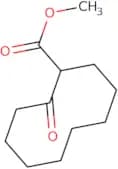
CAS:<p>Versatile small molecule scaffold</p>Formula:C4H9NOS·HClPurity:Min. 95%Molecular weight:155.65 g/molMethyl 2-oxocyclodecane-1-carboxylate
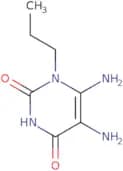
CAS:<p>Versatile small molecule scaffold</p>Formula:C12H20O3Purity:Min. 95%Molecular weight:212.28 g/mol5,6-Diamino-1-propyl-1,2,3,4-tetrahydropyrimidine-2,4-dione
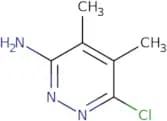
CAS:<p>Versatile small molecule scaffold</p>Formula:C7H12N4O2Purity:Min. 95%Molecular weight:184.2 g/mol3-Amino-6-chloro-4,5-dimethylpyridazine
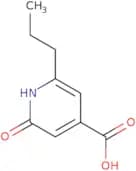
CAS:<p>Versatile small molecule scaffold</p>Formula:C6H8ClN3Purity:Min. 95%Molecular weight:157.6 g/mol2-Oxo-6-propyl-1,2-dihydropyridine-4-carboxylic acid
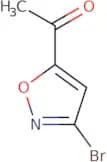
CAS:<p>Versatile small molecule scaffold</p>Formula:C9H11NO3Purity:Min. 95%Molecular weight:181.19 g/mol1-(3-Bromo-1,2-oxazol-5-yl)ethan-1-one
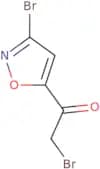
CAS:<p>Versatile small molecule scaffold</p>Formula:C5H4BrNO2Purity:Min. 95%Molecular weight:189.99 g/mol2-Bromo-1-(3-bromo-1,2-oxazol-5-yl)ethan-1-one
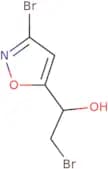
CAS:<p>Versatile small molecule scaffold</p>Formula:C5H3Br2NO2Purity:Min. 95%Molecular weight:268.89 g/mol2-Bromo-1-(3-bromo-1,2-oxazol-5-yl)ethan-1-ol
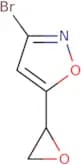
CAS:<p>Versatile small molecule scaffold</p>Formula:C5H5Br2NO2Purity:Min. 95%Molecular weight:270.91 g/mol3-Bromo-5-(oxiran-2-yl)-1,2-oxazole
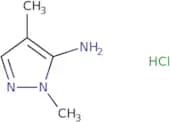
CAS:<p>Versatile small molecule scaffold</p>Formula:C5H4BrNO2Purity:Min. 95%Molecular weight:189.99 g/mol1,4-Dimethyl-1H-pyrazol-5-amine hydrochloride
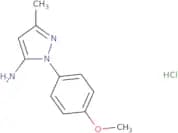
CAS:<p>Versatile small molecule scaffold</p>Formula:C5H10ClN3Purity:Min. 95%Molecular weight:147.6 g/mol1-(4-Methoxyphenyl)-3-methyl-1H-pyrazol-5-amine hydrochloride
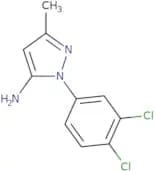
CAS:<p>Versatile small molecule scaffold</p>Formula:C11H14ClN3OPurity:Min. 95%Molecular weight:239.7 g/mol1-(3,4-Dichlorophenyl)-3-methyl-1H-pyrazol-5-amine
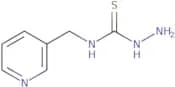
CAS:<p>Versatile small molecule scaffold</p>Formula:C10H9Cl2N3Purity:Min. 95%Molecular weight:242.1 g/mol4-(3-Picolyl)-3-thiosemicarbazide
CAS:<p>Versatile small molecule scaffold</p>Formula:C7H10N4SPurity:Min. 95%Molecular weight:182.25 g/mol3-Amino-1-[2-(pyridin-2-yl)ethyl]thiourea
CAS:<p>Versatile small molecule scaffold</p>Formula:C8H12N4SPurity:Min. 95%Molecular weight:196.28 g/mol3-Amino-1-[4-(dimethylamino)phenyl]thiourea
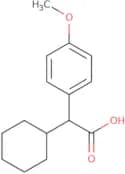
CAS:<p>Versatile small molecule scaffold</p>Formula:C9H14N4SPurity:Min. 95%Molecular weight:210.3 g/mol2-Cyclohexyl-2-(4-methoxyphenyl)acetic acid
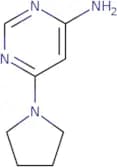
CAS:<p>Versatile small molecule scaffold</p>Formula:C15H20O3Purity:Min. 95%Molecular weight:248.32 g/mol4-Amino-6-pyrrolidinopyrimidine
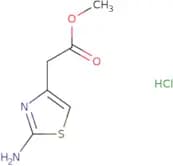
CAS:<p>Versatile small molecule scaffold</p>Formula:C8H12N4Purity:Min. 95%Molecular weight:164.21 g/mol(2-Amino-thiazol-4-yl)-acetic acid methyl esterhydrochloride
CAS:<p>Versatile small molecule scaffold</p>Formula:C6H9ClN2O2SPurity:Min. 95%Molecular weight:208.67 g/molEthyl 2-{5H,6H-imidazo[2,1-b][1,3]thiazol-3-yl}acetate hydrochloride
CAS:<p>Versatile small molecule scaffold</p>Formula:C9H13ClN2O2SPurity:Min. 95%Molecular weight:248.73 g/mol3-(Carboxymethyl)-5,6-dihydroimidazo[2,1-B][1,3]thiazol-4-ium Chloride
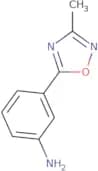
CAS:<p>Versatile small molecule scaffold</p>Formula:C7H8N2O2S·HClPurity:Min. 95%Molecular weight:220.67 g/mol3-(3-Methyl-1,2,4-oxadiazol-5-yl)aniline
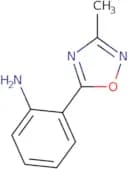
CAS:<p>Versatile small molecule scaffold</p>Formula:C9H9N3OPurity:Min. 95%Molecular weight:175.19 g/mol2-(3-Methyl-1,2,4-oxadiazol-5-yl)aniline
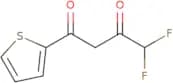
CAS:<p>Versatile small molecule scaffold</p>Formula:C9H9N3OPurity:Min. 95%Molecular weight:175.19 g/mol4,4-Difluoro-1-thien-2-ylbutane-1,3-dione
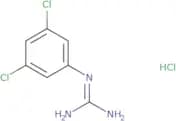
CAS:<p>Versatile small molecule scaffold</p>Formula:C8H6F2O2SPurity:Min. 95%Molecular weight:204.2 g/molN-(3,5-Dichlorophenyl)guanidine hydrochloride
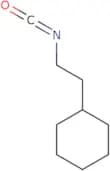
CAS:<p>Versatile small molecule scaffold</p>Formula:C7H8Cl3N3Purity:Min. 95%Molecular weight:240.5 g/mol(2-Isocyanatoethyl)cyclohexane
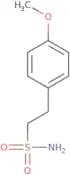
CAS:<p>(2-Isocyanatoethyl)cyclohexane is a synthetic reducer that is used in the synthesis of cyclic amido compounds. It has been shown to have cardiovascular effects, such as inhibiting the activity of dehydrogenase and hyperglycemia, which may be due to its ability to bind with amines. This drug also can inhibit neuronal function. (2-Isocyanatoethyl)cyclohexane is an effective antibiotic against tuberculosis and has been shown to have a sulfonic group that binds with monomers, which are essential for bacterial growth. This drug is often used as a dietary supplement in the treatment of depression and insulin resistance.</p>Formula:C9H15NOPurity:Min. 95%Molecular weight:153.22 g/mol2-(4-Methoxyphenyl)ethane-1-sulfonamide
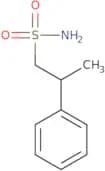
CAS:<p>Versatile small molecule scaffold</p>Formula:C9H13NO3SPurity:Min. 95%Molecular weight:215.27 g/mol2-Phenylpropane-1-sulfonamide
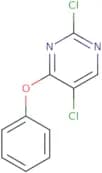
CAS:<p>Versatile small molecule scaffold</p>Formula:C9H13NO2SPurity:Min. 95%Molecular weight:199.27 g/mol2,5-Dichloro-4-phenoxypyrimidine
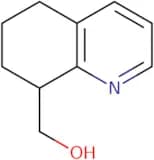
CAS:<p>Versatile small molecule scaffold</p>Formula:C10H6Cl2N2OPurity:Min. 95%Molecular weight:241.07 g/mol5,6,7,8-Tetrahydroquinolin-8-ylmethanol
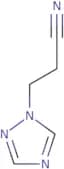
CAS:<p>Versatile small molecule scaffold</p>Formula:C10H13NOPurity:Min. 95%Molecular weight:163.22 g/mol3-(1H-1,2,4-Triazol-1-yl)propanenitrile
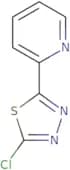
CAS:<p>3-(1H-1,2,4-Triazol-1-yl)propanenitrile is a triazole. It is a fungicide that inhibits the synthesis of proteins by binding to the enzyme RNA polymerase. 3-(1H-1,2,4-Triazol-1-yl)propanenitrile has been patented for use in the treatment of cercospora fruit rot and other plant diseases caused by fungi. The compound is also used as an additive in coatings with excellent corrosion and weathering properties. Triazoles are synthetic compounds that have three nitrogens (triazole rings) linked to a benzene ring.</p>Formula:C5H6N4Purity:Min. 95%Molecular weight:122.13 g/mol2-(5-Chloro-1,3,4-thiadiazol-2-yl)pyridine
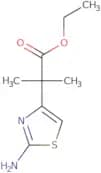
CAS:<p>Versatile small molecule scaffold</p>Formula:C7H4ClN3SPurity:Min. 95%Molecular weight:197.65 g/molEthyl 2-(2-amino-1,3-thiazol-4-yl)-2-methylpropanoate
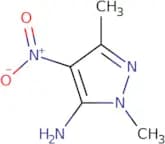
CAS:<p>Versatile small molecule scaffold</p>Formula:C9H14N2O2SPurity:Min. 95%Molecular weight:214.29 g/mol1,3-Dimethyl-4-nitro-1H-pyrazol-5-amine
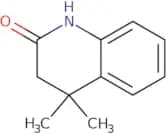
CAS:<p>Versatile small molecule scaffold</p>Formula:C5H8N4O2Purity:Min. 95%Molecular weight:156.14 g/mol4,4-Dimethyl-1,3-dihydroquinolin-2-one
CAS:<p>4,4-Dimethyl-1,3-dihydroquinolin-2-one is a heterocyclic compound that has been shown to be cytotoxic to cancer cells. It is also an inhibitor of cytochrome P450 and has been shown to induce blood pressure in rat models. This drug is synthesized by the reaction of 4,4-dimethylquinoline with chloroform in the presence of sodium hydroxide. 4,4-Dimethyl-1,3-dihydroquinolin-2-one is reactive and can undergo nucleophilic attack on chlorides or other nucleophiles at either nitrogen atom. This process can lead to tautomerization between two possible tautomers that differ in configuration at the double bond. The product of this reaction is an oxime.</p>Formula:C11H13NOPurity:Min. 95%Molecular weight:175.23 g/molN,2-Dimethylpropane-2-sulfonamide
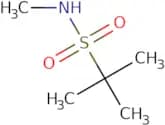
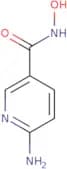
CAS:<p>Versatile small molecule scaffold</p>Formula:C5H13NO2SPurity:Min. 95%Molecular weight:151.23 g/mol6-Amino-N-hydroxypyridine-3-carboxamide
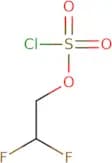
CAS:<p>6-Amino-N-hydroxypyridine-3-carboxamide is a toxic substance that can cause poisoning in humans and animals. It has been used as an anticoagulant in rodenticides, but it is not effective against rodents with resistance to this type of poison. Symptoms of 6-Amino-N-hydroxypyridine-3-carboxamide poisoning include vomiting, dizziness, drowsiness, headache, and coma. The toxic effects are due to the inhibition of vitamin K epoxide reductase (VKOR). Antidotes for 6-Amino-N-hydroxypyridine-3-carboxamide poisoning include nicotinamide and vitamin K1.</p>Formula:C6H7N3O2Purity:Min. 95%Molecular weight:153.14 g/mol2,2-Difluoroethyl chloranesulfonate
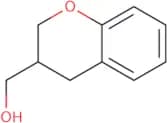
CAS:<p>Versatile small molecule scaffold</p>Formula:C2H3ClF2O3SPurity:Min. 95%Molecular weight:180.56 g/mol(3,4-Dihydro-2H-1-benzopyran-3-yl)methanol
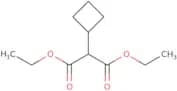
CAS:<p>Versatile small molecule scaffold</p>Formula:C10H12O2Purity:Min. 95%Molecular weight:164.2 g/mol1,3-Diethyl 2-cyclobutylpropanedioate
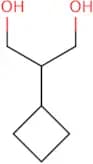
CAS:<p>1,3-Diethyl 2-cyclobutylpropanedioate is a liquid crystal composed of a mixture of compounds that are chiral and anisotropic. It has a hetero molecular structure with the chemical formula C10H20O2. The optical parameters for this liquid crystal are d=1.4284, n=1.5673, λ=568.0nm, and Δn=-0.0014. The optical parameters for this compound are c1-4 alkoxy (C1-4) with a phenyl group at the 6 position and an fluorine atom attached to the 3 position on the ring. This compound is also known as 1,3-diethyl 2-(3-methylcyclobutyl)propanedioate or 1,3-diethyl 2-(cyclopentyl)propanedioate depending on its substitution at the 1 position on the ring.br>br></p>Formula:C11H18O4Purity:Min. 95%Molecular weight:214.26 g/mol2-Cyclobutylpropane-1,3-diol
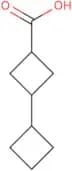
CAS:<p>Versatile small molecule scaffold</p>Formula:C7H14O2Purity:Min. 95%Molecular weight:130.18 g/mol3-Cyclobutylcyclobutane-1-carboxylic acid
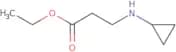
CAS:<p>Versatile small molecule scaffold</p>Formula:C9H14O2Purity:Min. 95%Molecular weight:154.2 g/molEthyl 3-(cyclopropylamino)propanoate
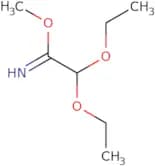
CAS:<p>Versatile small molecule scaffold</p>Formula:C8H15NO2Purity:Min. 95%Molecular weight:157.21 g/molMethyl 2,2-Diethoxyacetimidate
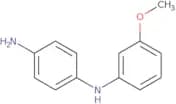
CAS:<p>Methyl 2,2-Diethoxyacetimidate is an inhibitor of metallo-β-lactamase, a class of enzymes that hydrolyzes the β-lactam ring in penicillin and cephalosporin antibiotics. It is effective against a broad range of Gram-positive and Gram-negative bacteria as well as against antibiotic resistant strains such as methicillin-resistant Staphylococcus aureus (MRSA). Methyl 2,2-Diethoxyacetimidate is orally bioavailable and has been shown to be safe for use in humans.<br>Methyl 2,2-Diethoxyacetimidate inhibits the activity of heterocycloalkyl compounds that are used by cancer cells to evade apoptosis. This compound has shown anticancer activity in tumor xenograft models in mice. In addition, methyl 2,2-diethoxyacetimidate can inhibit the production of inflammatory cytokines such as T</p>Formula:C7H15NO3Purity:Min. 95%Molecular weight:161.2 g/molN1-(3-Methoxyphenyl)benzene-1,4-diamine
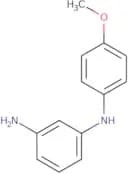
CAS:<p>Versatile small molecule scaffold</p>Formula:C13H14N2OPurity:Min. 95%Molecular weight:214.26 g/molN1-(4-Methoxyphenyl)benzene-1,3-diamine
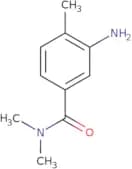
CAS:<p>Versatile small molecule scaffold</p>Formula:C13H14N2OPurity:Min. 95%Molecular weight:214.26 g/mol3-Amino-N,N,4-trimethylbenzamide
CAS:<p>Versatile small molecule scaffold</p>Formula:C10H14N2OPurity:Min. 95%Molecular weight:178.23 g/molEthyl 2-[(4-aminophenyl)formamido]propanoate
CAS:<p>Versatile small molecule scaffold</p>Formula:C12H16N2O3Purity:Min. 95%Molecular weight:236.27 g/mol1-Iodobut-2-yne
CAS:<p>1-Iodobut-2-yne is an alkynyl that can be synthesized from cyclohexanones and propargyl alcohol. It is a bicyclic compound that is structurally similar to the ketone, acetone. 1-Iodobut-2-yne has been used in the synthesis of a number of other organic compounds.</p>Formula:C4H5IPurity:Min. 95%Molecular weight:179.99 g/mol2,4-Dichloro-6,7,8,9-tetrahydro-5H-cyclohepta[d]pyrimidine
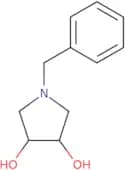
CAS:<p>Versatile small molecule scaffold</p>Formula:C9H10Cl2N2Purity:Min. 95%Molecular weight:217.09 g/molrac-(3R,4S)-1-Benzylpyrrolidine-3,4-diol
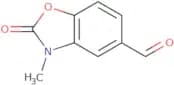
CAS:<p>Versatile small molecule scaffold</p>Formula:C11H15NO2Purity:Min. 95%Molecular weight:193.24 g/mol3-Methyl-2-oxo-2,3-dihydro-1,3-benzoxazole-5-carbaldehyde
CAS:<p>Versatile small molecule scaffold</p>Formula:C9H7NO3Purity:Min. 95%Molecular weight:177.16 g/mol
![3-[5-(Propan-2-yl)-1,2,4-oxadiazol-3-yl]piperidine hydrochloride](/_next/image/?url=https%3A%2Fstatic.cymitquimica.com%2Fproducts%2F3D%2Fthumb-webp%2FBAC92512.webp&w=3840&q=75)

![1-[(3-Aminophenyl)sulfanyl]-N,N-dimethylformamide hydrochloride](/_next/image/?url=https%3A%2Fstatic.cymitquimica.com%2Fproducts%2F3D%2Fthumb-webp%2FBAC92519.webp&w=3840&q=75)
![1,6-Dihydro-7H-pyrazolo[3,4-c]pyridin-7-one](/_next/image/?url=https%3A%2Fstatic.cymitquimica.com%2Fproducts%2F3D%2Fthumb-webp%2FBDA00609.webp&w=3840&q=75)
![1H-Pyrazolo[3,4-c]pyridin-3-amine](/_next/image/?url=https%3A%2Fstatic.cymitquimica.com%2Fproducts%2F3D%2Fthumb-webp%2FBDA00617.webp&w=3840&q=75)
![5-m-Tolyl-[1,3,4]thiadiazol-2-ylamine](/_next/image/?url=https%3A%2Fstatic.cymitquimica.com%2Fproducts%2F3D%2Fthumb-webp%2FBDA07447.webp&w=3840&q=75)
![7-Chloro-5-methylimidazo[1,2-c]pyrimidine-2-carboxamide](/_next/image/?url=https%3A%2Fstatic.cymitquimica.com%2Fproducts%2F3D%2Fthumb-webp%2FBDA07540.webp&w=3840&q=75)
![2-Chloro-1-[4-(2-phenoxyethyl)piperazin-1-yl]ethan-1-one hydrochloride](/_next/image/?url=https%3A%2Fstatic.cymitquimica.com%2Fproducts%2F3D%2Fthumb-webp%2FBDA08780.webp&w=3840&q=75)
![Benzyl[(2-methylphenyl)methyl]amine](/_next/image/?url=https%3A%2Fstatic.cymitquimica.com%2Fproducts%2F3D%2Fthumb-webp%2FBDA12258.webp&w=3840&q=75)
![(1R)-1-[4-(trifluoromethyl)phenyl]ethan-1-ol](/_next/image/?url=https%3A%2Fstatic.cymitquimica.com%2Fproducts%2F3D%2Fthumb-webp%2FBDA15579.webp&w=3840&q=75)
![ethyl 3-aminoimidazo[1,2-a]pyridine-2-carboxylate](/_next/image/?url=https%3A%2Fstatic.cymitquimica.com%2Fproducts%2F3D%2Fthumb-webp%2FBDA15713.webp&w=3840&q=75)
![3-Amino-1-[2-(pyridin-2-yl)ethyl]thiourea](/_next/image/?url=https%3A%2Fstatic.cymitquimica.com%2Fproducts%2F3D%2Fthumb-webp%2FBDA60948.webp&w=3840&q=75)
![3-Amino-1-[4-(dimethylamino)phenyl]thiourea](/_next/image/?url=https%3A%2Fstatic.cymitquimica.com%2Fproducts%2F3D%2Fthumb-webp%2FBDA60949.webp&w=3840&q=75)
![Ethyl 2-{5H,6H-imidazo[2,1-b][1,3]thiazol-3-yl}acetate hydrochloride](/_next/image/?url=https%3A%2Fstatic.cymitquimica.com%2Fproducts%2F3D%2Fthumb-webp%2FBDA62919.webp&w=3840&q=75)
![3-(Carboxymethyl)-5,6-dihydroimidazo[2,1-B][1,3]thiazol-4-ium Chloride](/_next/image/?url=https%3A%2Fstatic.cymitquimica.com%2Fproducts%2F3D%2Fthumb-webp%2FBDA62921.webp&w=3840&q=75)
![Ethyl 2-[(4-aminophenyl)formamido]propanoate](/_next/image/?url=https%3A%2Fstatic.cymitquimica.com%2Fproducts%2F3D%2Fthumb-webp%2FBDA76577.webp&w=3840&q=75)

![2,4-Dichloro-6,7,8,9-tetrahydro-5H-cyclohepta[d]pyrimidine](/_next/image/?url=https%3A%2Fstatic.cymitquimica.com%2Fproducts%2F3D%2Fthumb-webp%2FBDA78096.webp&w=3840&q=75)