


Building Blocks
This section contains fundamental products for the synthesis of organic and biological compounds. Building blocks are the essential starting materials used to construct complex molecules through various chemical reactions. They play a critical role in drug discovery, material science, and chemical research. At CymitQuimica, we offer a diverse range of high-quality building blocks to support your innovative research and industrial projects, ensuring you have the essential components for successful synthesis.
Subcategories of "Building Blocks"
- Boronic Acids & Boronic Acid Derivatives(5,756 products)
- Chiral Building Blocks(1,242 products)
- Hydrocarbon Building Blocks(6,093 products)
- Organic Building Blocks(60,532 products)
Found 195533 products of "Building Blocks"
Sort by
Purity (%)
0
100
|
0
|
50
|
90
|
95
|
100
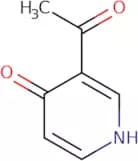
3-Acetylpyridin-4(1H)-one
CAS:<p>Versatile small molecule scaffold</p>Formula:C7H7NO2Purity:Min. 95%Molecular weight:137.14 g/molO-[(3-Pyridyl)methyl]hydroxylamine
CAS:<p>O-[(3-Pyridyl)methyl]hydroxylamine is an epimer of hydroxylamine. It is a nucleic acid that can be enzymatically synthesized and is used in the synthesis of oligosaccharides with uronic acids, such as dermatan sulfate. O-[(3-Pyridyl)methyl]hydroxylamine attacks sulfated glycosaminoglycans and glycosaminoglycan chains in the skin, causing a loss of water from the skin. This drug has been shown to have affinity for dermatan and deuterium, which may result in its use as a marker for dermatan sulfate.</p>Formula:C6H8N2OPurity:Min. 95%Molecular weight:124.14 g/mol3,3,5-Trimethylpiperidine
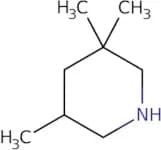
CAS:<p>Versatile small molecule scaffold</p>Formula:C8H17NPurity:Min. 95%Molecular weight:127.23 g/mol1-(1-Methyl-piperidin-4-yl)-ethanol
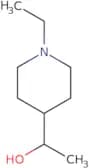
CAS:<p>Versatile small molecule scaffold</p>Formula:C8H17NOPurity:Min. 95%Molecular weight:143.22 g/mol1-(1-Ethylpiperidin-4-yl)ethan-1-ol
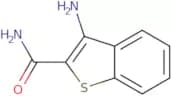
CAS:<p>Versatile small molecule scaffold</p>Formula:C9H19NOPurity:Min. 95%Molecular weight:157.25 g/mol3-Amino-1-benzothiophene-2-carboxamide
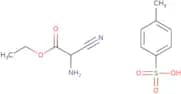
CAS:<p>Versatile small molecule scaffold</p>Formula:C9H8N2OSPurity:Min. 95%Molecular weight:192.24 g/molEthyl 2-amino-2-cyanoacetate 4-methylbenzenesulfonate
CAS:<p>Versatile small molecule scaffold</p>Formula:C12H16N2O5SPurity:Min. 95%Molecular weight:300.33 g/mol3-[(2-Aminophenyl)sulfanyl]-2-methylpropanenitrile
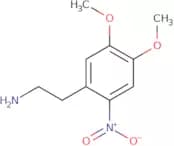
CAS:<p>Versatile small molecule scaffold</p>Formula:C10H12N2SPurity:Min. 95%Molecular weight:192.28 g/mol2-(4,5-Dimethoxy-2-nitrophenyl)ethan-1-amine
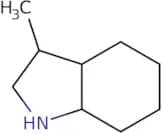
CAS:Controlled Product<p>Versatile small molecule scaffold</p>Formula:C10H14N2O4Purity:Min. 95%Molecular weight:226.23 g/mol3-Methyl-octahydro-1H-indole
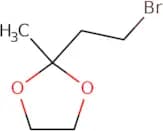
CAS:<p>Versatile small molecule scaffold</p>Formula:C9H17NPurity:Min. 95%Molecular weight:139.24 g/mol2-(2-Bromoethyl)-2-methyl-1,3-dioxolane
CAS:<p>2-(2-Bromoethyl)-2-methyl-1,3-dioxolane is a carbonyl compound that can be used to form an asymmetric epoxide from an ethylene. This product has been shown to produce isolated yields of ketones and acetals. It is a reagent for the asymmetric synthesis of alcohols and amines. 2-(2-Bromoethyl)-2-methyl-1,3-dioxolane also reacts with benzene in the presence of an acid catalyst to give a mixture of epoxides.</p>Formula:C6H11BrO2Purity:Min. 95%Molecular weight:195.06 g/mol4-Azaspiro[bicyclo[2.2.2]octane-2,4'-imidazolidine]-2',5'-dione
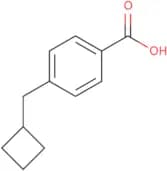
CAS:<p>Versatile small molecule scaffold</p>Formula:C9H13N3O2Purity:Min. 95%Molecular weight:195.22 g/mol4-(Cyclobutylmethyl)benzoic acid
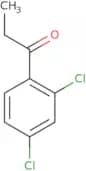
CAS:<p>Versatile small molecule scaffold</p>Formula:C12H14O2Purity:Min. 95%Molecular weight:190.24 g/mol2',4'-Dichloropropiophenone
CAS:<p>2',4'-Dichloropropiophenone is an organic solvent that is used in pharmaceuticals. It has been shown to be a versatile reagent for the synthesis of chalcones and other types of compounds. 2',4'-Dichloropropiophenone can be used in the cross-coupling reaction, which involves the coupling of two organic molecules using a metal catalyst (usually copper) to generate new compounds. The dehydrohalogenating reaction, which involves the conversion of epoxides into alcohols, can be performed with 2',4'-dichloropropiophenone. This compound also reacts with amines to form oximes or aziridines and with epoxy groups to form epoxy ethers. Finally, it is an oxidant that can react with benzene to produce phenols, biphenyls, or nitrobenzenes.</p>Formula:C9H8Cl2OPurity:Min. 95%Molecular weight:203.06 g/moltert-Butylamino-acetic acid ethyl ester
CAS:<p>Versatile small molecule scaffold</p>Formula:C8H17NO2Purity:Min. 95%Molecular weight:159.23 g/mol2-{[(2,2,2-Trifluoroethoxy)carbonyl]amino}acetic acid
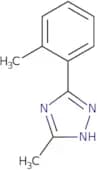
CAS:<p>Versatile small molecule scaffold</p>Formula:C5H6F3NO4Purity:Min. 95%Molecular weight:201.1 g/mol3-Methyl-5-(2-methylphenyl)-1H-1,2,4-triazole
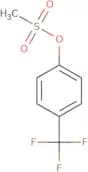
CAS:<p>Versatile small molecule scaffold</p>Formula:C10H11N3Purity:Min. 95%Molecular weight:173.21 g/mol4-(Trifluoromethyl)phenyl methanesulfonate
CAS:<p>Versatile small molecule scaffold</p>Formula:C8H7F3O3SPurity:Min. 95%Molecular weight:240.2 g/mol2-Ethyl-3-methylquinoxaline
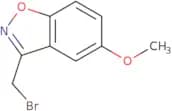
CAS:<p>Quinoxalines are a class of heterocyclic compounds that is structurally related to the more common amino acid, tryptophan. They are typically synthesized by modifications of the quinoxaline ring system with epoxide, amine, or carbonyl groups. Quinoxalines can be analyzed using many different techniques including gas chromatography-mass spectrometry, liquid chromatography-mass spectrometry, and nuclear magnetic resonance spectroscopy. The most common modification is the addition of an aminoguanidine group that is used to distinguish between 2-ethyl-3-methylquinoxaline and 3-ethyl-2-methylquinoxaline. The reaction time between glyoxal and aniline to produce 2-ethyl-3-methylquinoxaline can be optimized by adding potassium dichromate as a catalyst.</p>Formula:C11H12N2Purity:Min. 95%Molecular weight:172.23 g/mol3-(Bromomethyl)-5-methoxy-1,2-benzoxazole
CAS:<p>Versatile small molecule scaffold</p>Formula:C9H8BrNO2Purity:Min. 95%Molecular weight:242.07 g/mol2,6-Dimethyl-4-methoxybenzoic acid
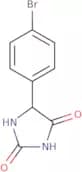
CAS:<p>Versatile small molecule scaffold</p>Formula:C10H12O3Purity:Min. 95%Molecular weight:180.2 g/mol5-(4-Bromophenyl)imidazolidine-2,4-dione
CAS:<p>Versatile small molecule scaffold</p>Formula:C9H7BrN2O2Purity:Min. 95%Molecular weight:255.07 g/mol2-[3-Bromo-4-(propan-2-yloxy)phenyl]acetonitrile
CAS:<p>Versatile small molecule scaffold</p>Formula:C11H12BrNOPurity:Min. 95%Molecular weight:254.12 g/molEthyl 3-[(5-hydroxypentyl)(methyl)amino]propanoate
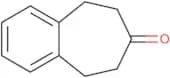
CAS:<p>Versatile small molecule scaffold</p>Formula:C11H23NO3Purity:Min. 95%Molecular weight:217.31 g/mol5,6,8,9-Tetrahydrobenzocyclohepten-7-one
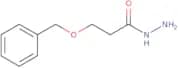
CAS:<p>5,6,8,9-Tetrahydrobenzocyclohepten-7-one is a methylated analogue of benzocycloheptene. It is prepared by the reaction of dichlorocarbene (1) with 7-hydroxybenzocycloheptene (2). The deuterium isotope effect on the conformation of 5,6,8,9-tetrahydrobenzocyclohepten-7-one has been investigated using a spectroscopic technique. The reaction parameters have been optimized for this transformation to produce the desired product in high yield.</p>Formula:C11H12OPurity:Min. 95%Molecular weight:160.22 g/mol3-(Benzyloxy)propanehydrazide
CAS:<p>Versatile small molecule scaffold</p>Formula:C10H14N2O2Purity:Min. 95%Molecular weight:194.23 g/mol2-[5-Oxo-1-(pyridin-2-yl)-2,5-dihydro-1H-pyrazol-3-yl]acetic acid
CAS:<p>Versatile small molecule scaffold</p>Formula:C10H9N3O3Purity:Min. 95%Molecular weight:219.2 g/mol3H,4H-Pyrido[3,2-d][1,2,3]triazin-4-one
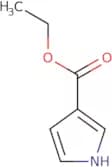
CAS:<p>3H,4H-Pyrido[3,2-d][1,2,3]triazin-4-one is a heterocyclic compound that belongs to the group of endometriosis drugs. It has been shown to inhibit tyrosine kinase and thus has a proliferative effect on the skeleton. 3H,4H-Pyrido[3,2-d][1,2,3]triazin-4-one also has an antiangiogenic activity that prevents the formation of new blood vessels from pre-existing ones. This drug also inhibits tumor growth by blocking cell division and may cause cancerous cells to self destruct. 3H,4H-Pyrido[3,2-d][1,2,3]triazin-4-one can be used to treat symptom of endometriosis such as pain and infertility.</p>Formula:C6H4N4OPurity:Min. 95%Molecular weight:148.12 g/molEthyl 1H-pyrrole-3-carboxylate
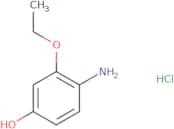
CAS:<p>Ethyl 1H-pyrrole-3-carboxylate is a nitro compound that has been shown to be efficient and multisubstituted. It reacts with carbon monoxide to form a nitro group, which can then be reduced by reductive means. Ethyl 1H-pyrrole-3-carboxylate is also capable of forming vinyl or carbonyl compounds in the presence of appropriate reagents.</p>Formula:C7H9NO2Purity:Min. 95%Molecular weight:139.15 g/mol4-Amino-3-ethoxyphenol hydrochloride
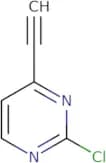
CAS:<p>Versatile small molecule scaffold</p>Formula:C8H12ClNO2Purity:Min. 95%Molecular weight:189.64 g/mol2-Chloro-4-ethynylpyrimidine
CAS:<p>2-Chloro-4-ethynylpyrimidine is a chemical compound that belongs to the family of meridianins. It has been shown to have medicinal properties, and is used in the treatment of trypanosomiasis. This molecule also has physicochemical properties that warrant further investigation. Optimization studies have shown that 2-chloro-4-ethynylpyrimidine can be synthesized with yields of up to 76% using nitrosoarenes as reactants.</p>Formula:C6H3ClN2Purity:Min. 95%Molecular weight:138.55 g/mol1-(3-Ethylpyridin-4-yl)ethan-1-one
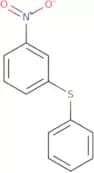
CAS:<p>Versatile small molecule scaffold</p>Formula:C9H11NOPurity:Min. 95%Molecular weight:149.19 g/mol1-Nitro-3-(phenylsulfanyl)benzene
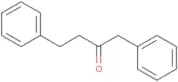
CAS:<p>1-Nitro-3-(phenylsulfanyl)benzene is a compound that belongs to the class of organic compounds with a molecular formula C11H10O3S. It has a transmittance of 0.10 and a polycondensation value of 3.2. The conformation of 1-nitro-3-(phenylsulfanyl)benzene is linear, and it has an average refractive index of 1.5214. This compound has high stabilities, as well as being n-methyl-2-pyrrolidone and sulfur stable, with birefringence values of 0.0805 and -0.0125 respectively. The steric effect on this compound is negligible, with the refractive index being polarizable in optical activity experiments, with an average optical rotation value of -5°/Mol at 20°C (298K).</p>Formula:C12H9NO2SPurity:Min. 95%Molecular weight:231.27 g/mol1,4-Diphenylbutan-2-one
CAS:<p>1,4-Diphenylbutan-2-one is a chemical compound that has been shown to have anticancer activity. It is an inhibitor of the enzyme tyrosinase and can be used as an anti-cancer treatment. 1,4-Diphenylbutan-2-one binds to the active site of tyrosinase and blocks the formation of melanin, which is the pigment in skin cells that gives the skin its color. 1,4-Diphenylbutan-2-one also inhibits growth factor receptors on cancer cells, which prevents tumor growth. This drug has minimal toxicity levels in humans and has been shown to have minimal interactions with other drugs or substances.</p>Formula:C16H16OPurity:Min. 95%Molecular weight:224.3 g/mol5-Methyl-4H,7H-thieno[3,2-b]pyridin-7-one
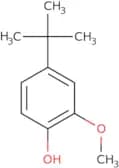
CAS:<p>Versatile small molecule scaffold</p>Formula:C8H7NOSPurity:Min. 95%Molecular weight:165.21 g/mol4-tert-Butyl-2-methoxyphenol
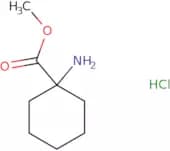
CAS:<p>Versatile small molecule scaffold</p>Formula:C11H16O2Purity:Min. 95%Molecular weight:180.24 g/molMethyl 1-aminocyclohexanecarboxylate hydrochloride
CAS:<p>Versatile small molecule scaffold</p>Formula:C8H16ClNO2Purity:Min. 95%Molecular weight:193.67 g/mol2-[4-(3-Formyl-2,5-dimethyl-1H-pyrrol-1-yl)phenoxy]acetic acid
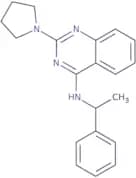
CAS:<p>Versatile small molecule scaffold</p>Formula:C15H15NO4Purity:Min. 95%Molecular weight:273.28 g/molImportazole
CAS:<p>Importazole is a protein that inhibits the polymerase chain reaction (PCR) by binding to the DNA strand. It has been shown to inhibit cancer cell proliferation and induce apoptosis in HL-60 cells. Importazole also prevents the binding of taxane drugs to nuclear receptors, which may be beneficial for chemotherapy treatment. Importazole binds to DNA and blocks transcriptional regulation, which leads to neuronal death in rats. This protein has been shown to bind to both DNA and receptor activity, and also has an effect on cell nuclei.</p>Formula:C20H22N4Purity:Min. 95%Molecular weight:318.42 g/molMethyl 2-(4-amino-2-chlorophenoxy)acetate
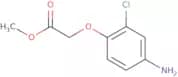
CAS:<p>Versatile small molecule scaffold</p>Formula:C9H10ClNO3Purity:Min. 95%Molecular weight:215.63 g/molN~1~-1,3-Thiazol-2-ylglycinamide dihydrochloride
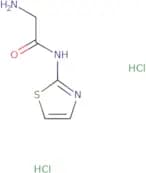
CAS:<p>Versatile small molecule scaffold</p>Formula:C5H9Cl2N3OSPurity:Min. 95%Molecular weight:230.12 g/mol2-(Methoxymethyl)pyrrolidin-1-amine
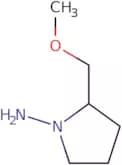
CAS:<p>2-(Methoxymethyl)pyrrolidin-1-amine is a chiral, organocerium compound that can be used to synthesize enantiopure amines. The deamination reaction of 2-(methoxymethyl)pyrrolidin-1-amine yields two products: an amino acid and a primary alcohol. This reaction was rationalized by the use of kinetic isotope effects and enantioselectivity studies. The selectivity for the amino acid product is dependent on both the nucleophilicity of the substrate as well as steric hindrance from the methyl group. 2-(Methoxymethyl)pyrrolidin-1-amine has been shown to be neuroprotective in animal models of Parkinson's disease, Alzheimer's disease, and Huntington's disease.</p>Formula:C6H14N2OPurity:Min. 95%Molecular weight:130.19 g/mol1-(Pyridin-4-yl)piperidin-4-amine
CAS:<p>Versatile small molecule scaffold</p>Formula:C10H15N3Purity:Min. 95%Molecular weight:177.25 g/mol3-Hydroxy-2,3,4,5-tetrahydro-1H-1-benzazepin-2-one
CAS:<p>Versatile small molecule scaffold</p>Formula:C10H11NO2Purity:Min. 95%Molecular weight:177.2 g/molN1-(2-Methoxyethyl)-1,3-propanediamine
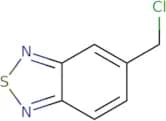
CAS:<p>Versatile small molecule scaffold</p>Formula:C6H16N2OPurity:Min. 95%Molecular weight:132.2 g/mol5-(Chloromethyl)-2,1,3-benzothiadiazole
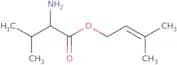
CAS:<p>Versatile small molecule scaffold</p>Formula:C7H5ClN2SPurity:Min. 95%Molecular weight:184.65 g/mol3-Methylbut-2-en-1-yl (2S)-2-amino-3-methylbutanoate
CAS:<p>Versatile small molecule scaffold</p>Formula:C10H19NO2Purity:Min. 95%Molecular weight:185.26 g/molN-Methyl-4-sulfanylbenzamide
CAS:<p>N-Methyl-4-sulfanylbenzamide is an organometallic compound with optical properties that are sensitive to electron transfer. This sensitivity can be used for diagnosis of cancer, as well as for organometallic strategies in the treatment of cancer. NMSBA is a peptidic molecule that is able to bind to oncoproteins and inhibit their function. It has been shown to have optical properties that are surface-enhanced Raman (SE-Raman) active, which may allow its use in fabricating devices for cellular applications.</p>Formula:C8H9NOSPurity:Min. 95%Molecular weight:167.23 g/mol(Oxan-2-yl)methanesulfonyl chloride
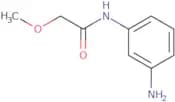
CAS:<p>Versatile small molecule scaffold</p>Formula:C6H11ClO3SPurity:Min. 95%Molecular weight:198.67 g/molN-(3-Aminophenyl)-2-methoxyacetamide
CAS:<p>Versatile small molecule scaffold</p>Formula:C9H12N2O2Purity:Min. 95%Molecular weight:180.2 g/mol2-Amino-4-methyl-1,3-thiazole-5-sulfonamide
CAS:<p>Versatile small molecule scaffold</p>Formula:C4H7N3O2S2Purity:Min. 95%Molecular weight:193.3 g/mol5-Chloro-2-(cyclopentyloxy)benzaldehyde
CAS:<p>Versatile small molecule scaffold</p>Formula:C12H13ClO2Purity:Min. 95%Molecular weight:224.68 g/mol(E)-4-Dimethylamino-1,1-dimethoxybut-3-en-2-one
CAS:<p>Versatile small molecule scaffold</p>Formula:C8H15NO3Purity:Min. 95%Molecular weight:173.21 g/mol2-Chloro-3-nitro-5,6,7,8-tetrahydroquinoline
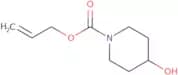
CAS:<p>Versatile small molecule scaffold</p>Formula:C9H9ClN2O2Purity:Min. 95%Molecular weight:212.63 g/molProp-2-en-1-yl 4-hydroxypiperidine-1-carboxylate
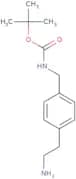
CAS:<p>Versatile small molecule scaffold</p>Formula:C9H15NO3Purity:Min. 95%Molecular weight:185.22 g/moltert-Butyl 4-(2-aminoethyl)benzylcarbamate
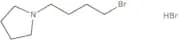
CAS:<p>Versatile small molecule scaffold</p>Formula:C14H22N2O2Purity:Min. 95%Molecular weight:250.34 g/mol1-(4-Bromobutyl)pyrrolidine hydrobromide
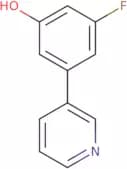
CAS:<p>Versatile small molecule scaffold</p>Formula:C8H17Br2NPurity:Min. 95%Molecular weight:287.04 g/mol3-Fluoro-5-(pyridin-3-yl)phenol
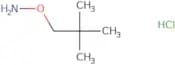
CAS:<p>Versatile small molecule scaffold</p>Formula:C11H8FNOPurity:Min. 95%Molecular weight:189.19 g/molo-(2,2-Dimethylpropyl)hydroxylamine hydrochloride
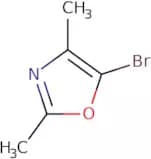
CAS:<p>Versatile small molecule scaffold</p>Formula:C5H14ClNOPurity:Min. 95%Molecular weight:139.62 g/mol5-Bromo-2,4-dimethyl-oxazole
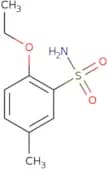
CAS:<p>5-Bromo-2,4-dimethyl-oxazole is a triazole that can be extracted from coal tar. The compound is not found in nature and has low yields. 5-Bromo-2,4-dimethyl-oxazole can be obtained by bromination of 2,4-dimethyloxazole and it can be synthesized by the reaction of acetone with acetic anhydride. This compound is used in the production of esters, which are used as solvents in perfumes and flavors. It is also used as a photolysis agent for the production of dyes and polymers. 5-Bromo-2,4-dimethyl-oxazole has been studied extensively for its photochemical properties.</p>Formula:C5H6BrNOPurity:Min. 95%Molecular weight:176.01 g/mol2-Ethoxy-5-methylbenzene-1-sulfonamide
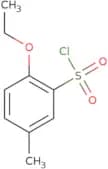
CAS:<p>Versatile small molecule scaffold</p>Formula:C9H13NO3SPurity:Min. 95%Molecular weight:215.27 g/mol2-Ethoxy-5-methylbenzene-1-sulfonyl chloride
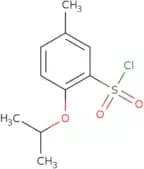
CAS:<p>Versatile small molecule scaffold</p>Formula:C9H11ClO3SPurity:Min. 95%Molecular weight:234.7 g/mol5-Methyl-2-(propan-2-yloxy)benzene-1-sulfonyl chloride
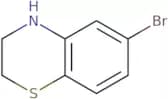
CAS:<p>Versatile small molecule scaffold</p>Formula:C10H13ClO3SPurity:Min. 95%Molecular weight:248.73 g/mol6-Bromo-3,4-dihydro-2H-1,4-benzothiazine
CAS:<p>Versatile small molecule scaffold</p>Formula:C8H8BrNSPurity:Min. 95%Molecular weight:230.12 g/moltert-Butyl N-[1-(hydroxymethyl)cyclohexyl]carbamate
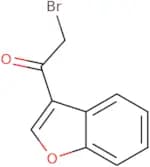
CAS:<p>Versatile small molecule scaffold</p>Formula:C12H23NO3Purity:Min. 95%Molecular weight:229.32 g/mol1-(1-Benzofuran-3-yl)-2-bromo-1-ethanone
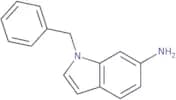
CAS:<p>Versatile small molecule scaffold</p>Formula:C10H7BrO2Purity:Min. 95%Molecular weight:239.07 g/mol1-Benzyl-1H-indol-6-amine
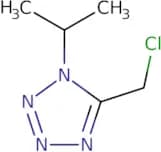
CAS:<p>Versatile small molecule scaffold</p>Formula:C15H14N2Purity:Min. 95%Molecular weight:222.28 g/mol5-(Chloromethyl)-1-(propan-2-yl)-1H-1,2,3,4-tetrazole
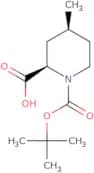
CAS:<p>Versatile small molecule scaffold</p>Formula:C5H9ClN4Purity:Min. 95%Molecular weight:160.6 g/mol(2R,4S)-rel-4-Methyl-1,2-piperidinedicarboxylic Acid 1-(1,1-Dimethylethyl) Ester
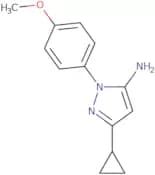
CAS:<p>Versatile small molecule scaffold</p>Formula:C12H21NO4Purity:Min. 95%Molecular weight:243.3 g/mol3-Cyclopropyl-1-(4-methoxyphenyl)-1H-pyrazol-5-amine
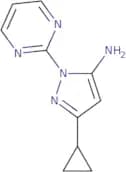
CAS:<p>Versatile small molecule scaffold</p>Formula:C13H15N3OPurity:Min. 95%Molecular weight:229.28 g/mol3-Cyclopropyl-1-(pyrimidin-2-yl)-1H-pyrazol-5-amine
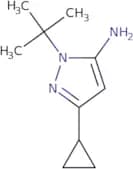
CAS:<p>Versatile small molecule scaffold</p>Formula:C10H11N5Purity:Min. 95%Molecular weight:201.23 g/mol1-(tert-butyl)-3-cyclopropyl-1H-pyrazol-5-amine
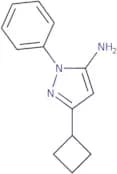
CAS:<p>Versatile small molecule scaffold</p>Formula:C10H17N3Purity:Min. 95%Molecular weight:179.26 g/mol3-cyclobutyl-1-phenyl-1H-pyrazol-5-amine
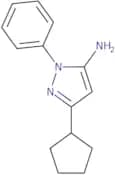
CAS:<p>3-cyclobutyl-1-phenyl-1H-pyrazol-5-amine is an organic solvent with a boiling point of 94.2 degrees Celsius. It is used in the production of ethylene, and can be used as a desiccant or to remove hydroxyl groups from organic compounds. 3-cyclobutyl-1-phenyl-1H-pyrazol-5-amine has been shown to react with phenylphosphinic acid in the presence of dialkylamino, forming 2-(dialkylamino)ethylphosphinic acid, which then reacts with chlorine to form 2-(dialkylamino)ethyl chloride. This product also exhibits antimicrobial activity against Gram negative bacteria and trivalent cations such as mercury, silver, and gold. 3 cyclobutyl pyrazolamine can also be used to produce carbapenems by reacting with sodium chlorides in high yield.</p>Formula:C13H15N3Purity:Min. 95%Molecular weight:213.28 g/mol3-Cyclopentyl-1-phenyl-1H-pyrazol-5-amine
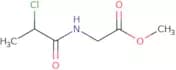
CAS:<p>Versatile small molecule scaffold</p>Formula:C14H17N3Purity:Min. 95%Molecular weight:227.3 g/molMethyl 2-(2-chloropropanamido)acetate
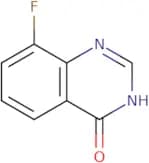
CAS:<p>Versatile small molecule scaffold</p>Formula:C6H10ClNO3Purity:Min. 95%Molecular weight:179.6 g/mol8-Fluoroquinazolin-4(1H)-one
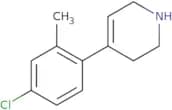
CAS:<p>Versatile small molecule scaffold</p>Formula:C8H5FN2OPurity:Min. 95%Molecular weight:164.14 g/mol4-(4-Chloro-2-methylphenyl)-1,2,3,6-tetrahydropyridine
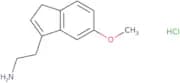
CAS:<p>Versatile small molecule scaffold</p>Formula:C12H14ClNPurity:Min. 95%Molecular weight:207.7 g/mol2-(5-Methoxy-1H-inden-3-yl)ethan-1-amine hydrochloride
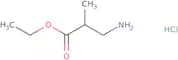
CAS:<p>Versatile small molecule scaffold</p>Formula:C12H16ClNOPurity:Min. 95%Molecular weight:225.71 g/molethyl 3-amino-2-methylpropanoate hydrochloride
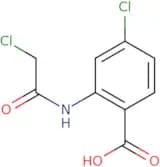
CAS:<p>Versatile small molecule scaffold</p>Formula:C6H14ClNO2Purity:Min. 95%Molecular weight:167.6 g/mol4-Chloro-2-(2-chloroacetamido)benzoic acid
CAS:<p>Versatile small molecule scaffold</p>Formula:C9H7Cl2NO3Purity:Min. 95%Molecular weight:248.06 g/mol5-(2-Methylphenyl)imidazolidine-2,4-dione
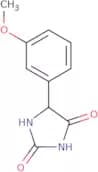
CAS:<p>Versatile small molecule scaffold</p>Formula:C10H10N2O2Purity:Min. 95%Molecular weight:190.2 g/mol5-(3-Methoxyphenyl)imidazolidine-2,4-dione
CAS:<p>Versatile small molecule scaffold</p>Formula:C10H10N2O3Purity:Min. 95%Molecular weight:206.2 g/mol1-(4-Chlorophenyl)-5-(propan-2-yl)-1H-pyrazole-4-carboxylic acid
CAS:<p>Versatile small molecule scaffold</p>Formula:C13H13ClN2O2Purity:Min. 95%Molecular weight:264.71 g/mol5-Methyl-1-(4-(trifluoromethyl)phenyl)-1H-pyrazole-4-carboxylic acid
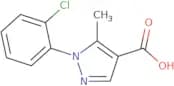
CAS:<p>Versatile small molecule scaffold</p>Formula:C12H9F3N2O2Purity:Min. 95%Molecular weight:270.21 g/mol1-(2-Chlorophenyl)-5-methyl-1H-pyrazole-4-carboxylic acid
CAS:<p>Versatile small molecule scaffold</p>Formula:C11H9ClN2O2Purity:Min. 95%Molecular weight:236.65 g/mol2-(4-Chlorophenoxymethyl)-4-methyl-1,3-thiazole-5-carboxylic acid
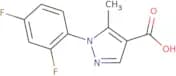
CAS:<p>Versatile small molecule scaffold</p>Formula:C12H10ClNO3SPurity:Min. 95%Molecular weight:283.73 g/mol1-(2,4-Difluorophenyl)-5-methyl-1H-pyrazole-4-carboxylic acid
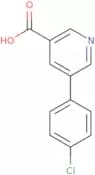
CAS:<p>Versatile small molecule scaffold</p>Formula:C11H8F2N2O2Purity:Min. 95%Molecular weight:238.19 g/mol5-(4-Chlorophenyl)-3-pyridinecarboxylic acid
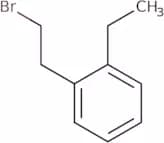
CAS:<p>Versatile small molecule scaffold</p>Formula:C12H8ClNO2Purity:Min. 95%Molecular weight:233.65 g/mol1-(2-Bromoethyl)-2-ethylbenzene
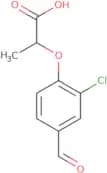
CAS:<p>Versatile small molecule scaffold</p>Formula:C10H13BrPurity:Min. 95%Molecular weight:213.11 g/mol2-(2-Chloro-4-formylphenoxy)propanoic acid
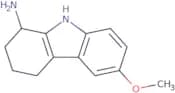
CAS:<p>Versatile small molecule scaffold</p>Formula:C10H9ClO4Purity:Min. 95%Molecular weight:228.63 g/mol6-Methoxy-2,3,4,9-tetrahydro-1H-carbazol-1-amine
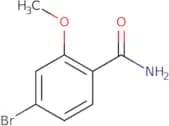
CAS:<p>Versatile small molecule scaffold</p>Formula:C13H16N2OPurity:Min. 95%Molecular weight:216.28 g/mol4-Bromo-2-methoxybenzamide
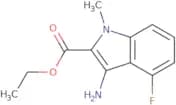
CAS:<p>Versatile small molecule scaffold</p>Formula:C8H8BrNO2Purity:Min. 95%Molecular weight:230.06 g/molEthyl 3-amino-4-fluoro-1-methyl-1H-indole-2-carboxylate
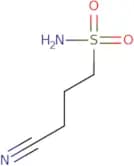
CAS:Controlled Product<p>Versatile small molecule scaffold</p>Formula:C12H13FN2O2Purity:Min. 95%Molecular weight:236.24 g/mol3-Cyanopropane-1-sulfonamide
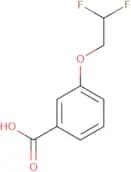
CAS:<p>Versatile small molecule scaffold</p>Formula:C4H8N2O2SPurity:Min. 95%Molecular weight:148.19 g/mol3-(2,2-Difluoroethoxy)benzoic acid
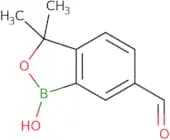
CAS:<p>Versatile small molecule scaffold</p>Formula:C9H8F2O3Purity:Min. 95%Molecular weight:202.15 g/mol1-Hydroxy-3,3-dimethyl-1,3-dihydro-2,1-benzoxaborole-6-carbaldehyde
CAS:<p>Versatile small molecule scaffold</p>Formula:C10H11BO3Purity:Min. 95%Molecular weight:190.01 g/mol6-Methyl-1H-spiro[2,1-benzoxaborole-3,1'-cyclopentane]-1-ol
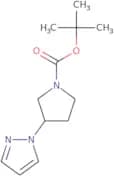
CAS:<p>Versatile small molecule scaffold</p>Formula:C12H15BO2Purity:Min. 95%Molecular weight:202.06 g/moltert-Butyl 3-(1H-pyrazol-1-yl)pyrrolidine-1-carboxylate
CAS:<p>Versatile small molecule scaffold</p>Formula:C12H19N3O2Purity:Min. 95%Molecular weight:237.3 g/mol1-Methyl-1H,2H,3H,4H,5H-pyrido[3,4-b][1,4]diazepin-4-one
CAS:<p>Versatile small molecule scaffold</p>Formula:C9H11N3OPurity:Min. 95%Molecular weight:177.2 g/mol1-Methyl-1H,2H,3H,4H,5H-pyrido[3,4-b][1,4]diazepine
CAS:<p>Versatile small molecule scaffold</p>Formula:C9H13N3Purity:Min. 95%Molecular weight:163.22 g/mol

![O-[(3-Pyridyl)methyl]hydroxylamine](/_next/image/?url=https%3A%2Fstatic.cymitquimica.com%2Fproducts%2F3D%2Fthumb-webp%2FMBA83220.webp&w=3840&q=75)
![3-[(2-Aminophenyl)sulfanyl]-2-methylpropanenitrile](/_next/image/?url=https%3A%2Fstatic.cymitquimica.com%2Fproducts%2F3D%2Fthumb-webp%2FMBA84563.webp&w=3840&q=75)
![4-Azaspiro[bicyclo[2.2.2]octane-2,4'-imidazolidine]-2',5'-dione](/_next/image/?url=https%3A%2Fstatic.cymitquimica.com%2Fproducts%2F3D%2Fthumb-webp%2FMBA87420.webp&w=3840&q=75)

![2-{[(2,2,2-Trifluoroethoxy)carbonyl]amino}acetic acid](/_next/image/?url=https%3A%2Fstatic.cymitquimica.com%2Fproducts%2F3D%2Fthumb-webp%2FMBA88815.webp&w=3840&q=75)


![2-[3-Bromo-4-(propan-2-yloxy)phenyl]acetonitrile](/_next/image/?url=https%3A%2Fstatic.cymitquimica.com%2Fproducts%2F3D%2Fthumb-webp%2FMBA94639.webp&w=3840&q=75)
![Ethyl 3-[(5-hydroxypentyl)(methyl)amino]propanoate](/_next/image/?url=https%3A%2Fstatic.cymitquimica.com%2Fproducts%2F3D%2Fthumb-webp%2FMBA94715.webp&w=3840&q=75)
![2-[5-Oxo-1-(pyridin-2-yl)-2,5-dihydro-1H-pyrazol-3-yl]acetic acid](/_next/image/?url=https%3A%2Fstatic.cymitquimica.com%2Fproducts%2F3D%2Fthumb-webp%2FMBA95919.webp&w=3840&q=75)
![3H,4H-Pyrido[3,2-d][1,2,3]triazin-4-one](/_next/image/?url=https%3A%2Fstatic.cymitquimica.com%2Fproducts%2F3D%2Fthumb-webp%2FMBA96289.webp&w=3840&q=75)

![5-Methyl-4H,7H-thieno[3,2-b]pyridin-7-one](/_next/image/?url=https%3A%2Fstatic.cymitquimica.com%2Fproducts%2F3D%2Fthumb-webp%2FMBA98604.webp&w=3840&q=75)
![2-[4-(3-Formyl-2,5-dimethyl-1H-pyrrol-1-yl)phenoxy]acetic acid](/_next/image/?url=https%3A%2Fstatic.cymitquimica.com%2Fproducts%2F3D%2Fthumb-webp%2FMBB15428.webp&w=3840&q=75)







![tert-Butyl N-[1-(hydroxymethyl)cyclohexyl]carbamate](/_next/image/?url=https%3A%2Fstatic.cymitquimica.com%2Fproducts%2F3D%2Fthumb-webp%2FMHA61067.webp&w=3840&q=75)




![6-Methyl-1H-spiro[2,1-benzoxaborole-3,1'-cyclopentane]-1-ol](/_next/image/?url=https%3A%2Fstatic.cymitquimica.com%2Fproducts%2F3D%2Fthumb-webp%2FMHC05232.webp&w=3840&q=75)
![1-Methyl-1H,2H,3H,4H,5H-pyrido[3,4-b][1,4]diazepin-4-one](/_next/image/?url=https%3A%2Fstatic.cymitquimica.com%2Fproducts%2F3D%2Fthumb-webp%2FMHC43291.webp&w=3840&q=75)
![1-Methyl-1H,2H,3H,4H,5H-pyrido[3,4-b][1,4]diazepine](/_next/image/?url=https%3A%2Fstatic.cymitquimica.com%2Fproducts%2F3D%2Fthumb-webp%2FMHC43362.webp&w=3840&q=75)