Building Blocks
This section contains fundamental products for the synthesis of organic and biological compounds. Building blocks are the essential starting materials used to construct complex molecules through various chemical reactions. They play a critical role in drug discovery, material science, and chemical research. At CymitQuimica, we offer a diverse range of high-quality building blocks to support your innovative research and industrial projects, ensuring you have the essential components for successful synthesis.
Subcategories of "Building Blocks"
- Boronic Acids & Boronic Acid Derivatives(5,756 products)
- Chiral Building Blocks(1,242 products)
- Hydrocarbon Building Blocks(6,093 products)
- Organic Building Blocks(60,519 products)
Found 195533 products of "Building Blocks"
Sort by
Purity (%)
0
100
|
0
|
50
|
90
|
95
|
100
5-Phenylmorpholin-3-one
CAS:<p>Versatile small molecule scaffold</p>Formula:C10H11NO2Purity:Min. 95%Molecular weight:177.2 g/mol6-chloro-3-fluoropyridin-2-amine
CAS:<p>Versatile small molecule scaffold</p>Formula:C5H4ClFN2Purity:Min. 95%Molecular weight:146.6 g/mol5-Amino-6-chloropyridine-3-carbonitrile
CAS:<p>Versatile small molecule scaffold</p>Formula:C6H4ClN3Purity:Min. 95%Molecular weight:153.57 g/moltert-butyl 3-(1H-imidazol-2-yl)piperidine-1-carboxylate
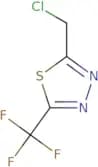
CAS:<p>Versatile small molecule scaffold</p>Formula:C13H21N3O2Purity:Min. 95%Molecular weight:251.32 g/mol2-(Chloromethyl)-5-(trifluoromethyl)-1,3,4-thiadiazole
CAS:<p>Versatile small molecule scaffold</p>Formula:C4H2ClF3N2SPurity:Min. 95%Molecular weight:202.59 g/molMethyl 6-amino-2-bromopyridine-3-carboxylate
CAS:<p>Versatile small molecule scaffold</p>Formula:C7H7BrN2O2Purity:Min. 95%Molecular weight:231.05 g/mol1H-Pyrazolo[3,4-c]pyridine-4-carboxylic acid
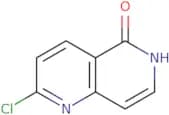
CAS:<p>Versatile small molecule scaffold</p>Formula:C7H5N3O2Purity:Min. 95%Molecular weight:163.13 g/mol2-Chloro-1,6-naphthyridin-5-ol
CAS:<p>Versatile small molecule scaffold</p>Formula:C8H5ClN2OPurity:Min. 95%Molecular weight:180.59 g/mol1-(2,4-Difluorophenyl)cyclobutane-1-carboxylic acid
CAS:<p>Versatile small molecule scaffold</p>Formula:C11H10F2O2Purity:Min. 95%Molecular weight:212.19 g/molMethyl 3-(bromomethyl)-2-fluoropyridine-4-carboxylate
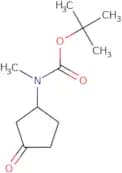
CAS:<p>Versatile small molecule scaffold</p>Formula:C8H7BrFNO2Purity:Min. 95%Molecular weight:248.05 g/molTert-Butyl (3-Oxocyclopentyl)Methylcarbamate
CAS:<p>Versatile small molecule scaffold</p>Formula:C11H19NO3Purity:Min. 95%Molecular weight:213.27 g/molMethyl 5-amino-6-hydroxypyridine-2-carboxylate
CAS:<p>Versatile small molecule scaffold</p>Formula:C7H8N2O3Purity:Min. 95%Molecular weight:168.15 g/mol3-(3-Methoxyphenyl)cyclobutan-1-one
CAS:<p>Versatile small molecule scaffold</p>Formula:C11H12O2Purity:Min. 95%Molecular weight:176.21 g/mol2-(4-Bromo-3-methylphenyl)pyrrolidine
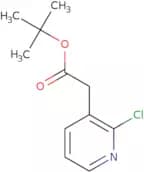
CAS:<p>Versatile small molecule scaffold</p>Formula:C11H14BrNPurity:Min. 95%Molecular weight:240.14 g/moltert-Butyl 2-(2-chloropyridin-3-yl)acetate
CAS:<p>Versatile small molecule scaffold</p>Formula:C11H14ClNO2Purity:Min. 95%Molecular weight:227.69 g/mol5-(4-Bromophenyl)-1H-imidazol-2-amine
CAS:<p>Versatile small molecule scaffold</p>Formula:C9H8BrN3Purity:Min. 95%Molecular weight:238.08 g/mol4-(4-Nitrophenyl)-1H-imidazol-2-amine
CAS:<p>Versatile small molecule scaffold</p>Formula:C9H8N4O2Purity:Min. 95%Molecular weight:204.19 g/mol[2-(Methylsulfanyl)phenyl]hydrazine hydrochloride
CAS:<p>Versatile small molecule scaffold</p>Formula:C7H11ClN2SPurity:Min. 95%Molecular weight:190.69 g/mol(3-Ethyl-phenyl)-hydrazine hydrochloride
CAS:<p>Versatile small molecule scaffold</p>Formula:C8H13ClN2Purity:Min. 95%Molecular weight:172.66 g/mol3-Chloro-N-methyl-2-nitroaniline
CAS:<p>3-Chloro-N-methyl-2-nitroaniline is an antibiotic that belongs to the group of quinolone antibiotics. It has a broad spectrum against Gram-positive and Gram-negative bacteria, including methicillin resistant Staphylococcus aureus (MRSA) and Pseudomonas aeruginosa. 3-Chloro-N-methyl-2-nitroaniline binds to bacterial DNA gyrase and topoisomerase IV, as well as human DNA gyrase and topoisomerase II, inhibiting their activity. This leads to cell death by interfering with the production of proteins vital for cell division. The optimal parameters for this drug have been found using isothermal titration calorimetry on the enzyme gyrase in the presence of different concentrations of 3CMA. Pharmacological targets for this drug include DNA gyrase and topoisomerase IV.</p>Formula:C7H7ClN2O2Purity:Min. 95%Molecular weight:186.59 g/mol2-Acetamido-4-phenylbutanoic acid
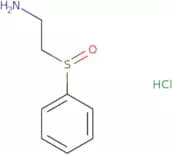
CAS:<p>Versatile small molecule scaffold</p>Formula:C12H15NO3Purity:Min. 95%Molecular weight:221.25 g/mol2-(Benzenesulfinyl)ethan-1-amine hydrochloride
CAS:<p>Versatile small molecule scaffold</p>Formula:C8H12ClNOSPurity:Min. 95%Molecular weight:205.71 g/mol2-Chloro-5-nitronicotinamide
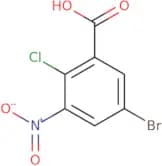
CAS:<p>2-Chloro-5-nitronicotinamide is a synthetic drug that has been used as an antileprosy, antimycobacterial, and chemotherapeutic agent. It is a dithiocarbamate that inhibits the synthesis of mycolic acids in mycobacteria. The interaction between 2-chloro-5-nitronicotinamide and mycolic acid is synergistic. This drug can be used to investigate the role of mycolic acids in the pathogenesis of leprosy and tuberculosis. 2-Chloro-5-nitronicotinamide is also active against footpad infections caused by erythromycin resistant strains of Mycobacterium smegmatis. It has been shown to be effective in mice when applied topically as an antimicrobial agent or when injected intravenously as an antimicrobial chemotherapy agent.</p>Formula:C6H4ClN3O3Purity:Min. 95%Molecular weight:201.57 g/mol5-Bromo-2-chloro-3-nitrobenzoic acid
CAS:<p>Versatile small molecule scaffold</p>Formula:C7H3BrClNO4Purity:Min. 95%Molecular weight:280.46 g/mol3-(Methylamino)-4-phenylbutanoic acid hydrochloride
CAS:<p>Versatile small molecule scaffold</p>Formula:C11H16ClNO2Purity:Min. 95%Molecular weight:229.7 g/mol4-(Benzyloxy)-5-methoxy-2-nitrobenzoic acid
CAS:<p>4-(Benzyloxy)-5-methoxy-2-nitrobenzoic acid (BMN) is a linker that has been shown to have anticancer activity. It has been found that BMN enhances the effect of a tumor suppressor gene and blocks the growth of tumor cells. In addition, BMN can be used as a linker to introduce drugs into proteins. This compound has also been shown to inhibit platelet-derived growth factor receptor (PDGFR), which is linked to atherosclerosis and cancer cell proliferation.</p>Formula:C15H13NO6Purity:Min. 95%Molecular weight:303.27 g/mol6,7-Dimethoxy-2-(piperazin-1-yl)quinazolin-4-amine dihydrochloride
CAS:<p>6,7-Dimethoxy-2-(piperazin-1-yl)quinazolin-4-amine dihydrochloride (DMPQ) is a piperazine derivative that is a potent and selective inhibitor of phosphodiesterase type 5 (PDE5). This drug has been shown to be useful in the treatment of the symptoms of benign prostatic hyperplasia. DMPQ inhibits the hydrolysis of cyclic adenosine monophosphate (cAMP), which leads to an increase in intracellular levels of cAMP. This drug also exhibits antihypertensive effects, as it inhibits the activity of nitric oxide synthase.</p>Formula:C14H21Cl2N5O2Purity:Min. 95%Molecular weight:362.3 g/mol2,2-Dimethyloxane-4-carbonitrile
CAS:<p>Versatile small molecule scaffold</p>Formula:C8H13NOPurity:Min. 95%Molecular weight:139.19 g/mol3-Methyl-2-[(trimethylsilyl)oxy]but-3-enenitrile
CAS:<p>Versatile small molecule scaffold</p>Formula:C8H15NOSiPurity:Min. 95%Molecular weight:169.3 g/mol2-(5-Oxooxolan-2-yl)acetic acid
CAS:<p>2-(5-Oxooxolan-2-yl)acetic acid is a fluorophore that emits light upon excitation. It binds to the kappa opioid receptor and has been shown to inhibit leukocyte chemotaxis in vivo. 2-(5-Oxooxolan-2-yl)acetic acid has also been shown to function as an acetylcholinesterase inhibitor, which is important for maintaining the stability of the neurotransmitter dopamine. The fluorescence intensity of 2-(5-Oxooxolan-2-yl)acetic acid increases when it is reacted with amines or other functional groups.</p>Formula:C6H8O4Purity:Min. 95%Molecular weight:144.12 g/molMethyl 2-(2-pyrimidyl)acetate
CAS:<p>Versatile small molecule scaffold</p>Formula:C7H8N2O2Purity:Min. 95%Molecular weight:152.15 g/mol2-((4-Methoxyphenyl)amino)-2-phenylacetic acid
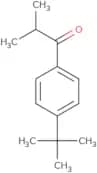
CAS:<p>Versatile small molecule scaffold</p>Formula:C15H15NO3Purity:Min. 95%Molecular weight:257.28 g/mol1-(4-tert-Butylphenyl)-2-methylpropan-1-one
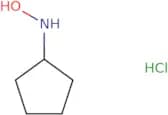
CAS:<p>Versatile small molecule scaffold</p>Formula:C14H20OPurity:Min. 95%Molecular weight:204.31 g/molN-Cyclopentylhydroxylamine hydrochloride
CAS:<p>Versatile small molecule scaffold</p>Formula:C5H12ClNOPurity:Min. 95%Molecular weight:137.61 g/mol6-Methoxy-1,2-dihydronaphthalene
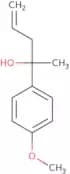
CAS:<p>Versatile small molecule scaffold</p>Formula:C11H12OPurity:Min. 95%Molecular weight:160.21 g/mol2-(4-Methoxyphenyl)pent-4-en-2-ol
CAS:<p>Versatile small molecule scaffold</p>Formula:C12H16O2Purity:Min. 95%Molecular weight:192.25 g/mol3,4-dihydro-2H-1-benzopyran-3-amine
CAS:<p>3,4-Dihydro-2H-1-benzopyran-3-amine is an organic compound that belongs to the group of heterocyclic amines. It has been used as a pharmaceutical preparation in the treatment of dyslipidemia and cardiovascular disorders. The 5-HT7 receptor is a G protein coupled receptor that binds serotonin, but it is not clear if 3,4-dihydro-2H-1-benzopyran-3-amine binds to this receptor. It is possible that 3,4-dihydro-2H-1-benzopyran-3-amine may have anti depressant effects because it has been shown to inhibit dopamine β hydroxylase and serotonin synthesis.</p>Formula:C9H11NOPurity:Min. 95%Molecular weight:149.19 g/molSpiro[2.5]octane-4,8-dione
CAS:<p>Versatile small molecule scaffold</p>Formula:C8H10O2Purity:Min. 95%Molecular weight:138.16 g/mol2-(((Benzyloxy)carbonyl)amino)-2-phenylacetic acid
CAS:<p>Versatile small molecule scaffold</p>Formula:C16H15NO4Purity:Min. 95%Molecular weight:285.29 g/molMethyl 4,4-dimethyl-2-oxocyclopentane-1-carboxylate
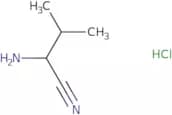
CAS:<p>Versatile small molecule scaffold</p>Formula:C9H14O3Purity:Min. 95%Molecular weight:170.21 g/mol2-Amino-3-methylbutanenitrile hydrochloride
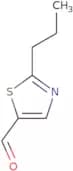
CAS:<p>2-Amino-3-methylbutanenitrile hydrochloride is a chemical that has been shown to have anti-tumor effects. It inhibits the growth of cancer cells and induces programmed cell death (apoptosis). The mechanism of action is not fully understood, but it may involve the immune system by inhibiting certain types of immune cells and suppressing their activity. 2-Amino-3-methylbutanenitrile hydrochloride binds to the mineralocorticoid receptor, which is involved in regulating blood pressure and fluid balance. 2-Amino-3-methylbutanenitrile hydrochloride also has antagonistic activities against C1–6 alkyl groups and C1–4 alkyl groups as well as insoluble properties.</p>Formula:C5H11ClN2Purity:Min. 95%Molecular weight:134.61 g/mol2-Propyl-1,3-thiazole-5-carbaldehyde
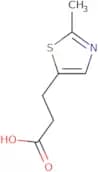
CAS:<p>Versatile small molecule scaffold</p>Formula:C7H9NOSPurity:Min. 95%Molecular weight:155.22 g/mol3-(2-Methyl-1,3-thiazol-5-yl)propanoic acid
CAS:<p>Versatile small molecule scaffold</p>Formula:C7H9NO2SPurity:Min. 95%Molecular weight:171.22 g/mol(2-Chloro-3-pyridinyl)(4-methyl-1-piperazinyl)-methanone
CAS:<p>Versatile small molecule scaffold</p>Formula:C11H14ClN3OPurity:Min. 95%Molecular weight:239.7 g/mol2-Chloro-3-(piperidine-1-sulfonyl)pyridine
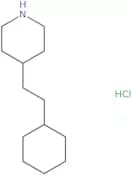
CAS:<p>Versatile small molecule scaffold</p>Formula:C10H13ClN2O2SPurity:Min. 95%Molecular weight:260.74 g/mol4-(2-Cyclohexylethyl)piperidine hydrochloride
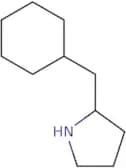
CAS:<p>Versatile small molecule scaffold</p>Formula:C13H26ClNPurity:Min. 95%Molecular weight:231.8 g/mol2-(Cyclohexylmethyl)pyrrolidine
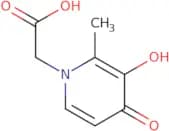
CAS:<p>Versatile small molecule scaffold</p>Formula:C11H21NPurity:Min. 95%Molecular weight:167.29 g/mol2-(3-Hydroxy-2-methyl-4-oxo-1,4-dihydropyridin-1-yl)acetic acid
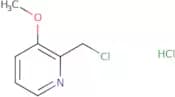
CAS:<p>Versatile small molecule scaffold</p>Formula:C8H9NO4Purity:Min. 95%Molecular weight:183.16 g/mol2-(chloromethyl)-3-methoxypyridin hcl
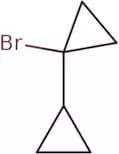
CAS:<p>Versatile small molecule scaffold</p>Formula:C7H9Cl2NOPurity:Min. 95%Molecular weight:194.06 g/mol1-Bromo-1-cyclopropylcyclopropane
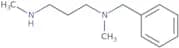
CAS:<p>1-Bromo-1-cyclopropylcyclopropane is a chloride that is produced by the reaction of magnesium with hydrogen bromide. It is used as a reagent in organic synthesis, for example as a stabilizing agent for cyclopropanes and as a ring-opening agent for halides. In addition, 1-bromo-1-cyclopropylcyclopropane can be used to synthesize acetylated compounds and amines. This compound is scalable, which means it can be made in large quantities.</p>Formula:C6H9BrPurity:Min. 95%Molecular weight:161.04 g/molN1-Benzyl-N1,N3-dimethyl-1,3-propanediamine
CAS:<p>Versatile small molecule scaffold</p>Formula:C12H20N2Purity:Min. 95%Molecular weight:192.31 g/mol1-Bromo-3,5-dichloro-2-methoxybenzene
CAS:<p>Versatile small molecule scaffold</p>Formula:C7H5BrCl2OPurity:Min. 95%Molecular weight:255.92 g/mol2-[(3,5-Dichlorophenoxy)methyl]oxirane
CAS:<p>Versatile small molecule scaffold</p>Formula:C9H8Cl2O2Purity:Min. 95%Molecular weight:219.06 g/molMethyl 3-methoxy-5-methyl-1,2-oxazole-4-carboxylate
CAS:<p>Versatile small molecule scaffold</p>Formula:C7H9NO4Purity:Min. 95%Molecular weight:171.2 g/mol3-Bromo-pyrazolo[1,5-a]pyridin-2-ol
CAS:<p>Versatile small molecule scaffold</p>Formula:C7H5BrN2OPurity:Min. 95%Molecular weight:213.03 g/mol2-Cyclobutylethan-1-amine
CAS:<p>2-Cyclobutylethan-1-amine is a compound that has been shown to inhibit p2y12, which is a purinergic receptor. This receptor is known for playing a role in the inflammatory response and vascular permeability. 2-Cyclobutylethan-1-amine also inhibits the mitochondrial enzyme aconitase, leading to a decrease in ATP production. It has been shown to have anti-cancer properties as well as an inhibitory effect on plant diseases such as fatty acid oxidation and ring structure formation. The amide bond of this compound is responsible for its basic structure and ability to bind with acid.</p>Formula:C6H13NPurity:Min. 95%Molecular weight:99.17 g/molMethyl 5-(chlorosulfonyl)-2-hydroxybenzoate
CAS:<p>Versatile small molecule scaffold</p>Formula:C8H7ClO5SPurity:Min. 95%Molecular weight:250.66 g/mol8-Chloro-3,4-dihydro-2H-1-benzothiopyran-4-one
CAS:<p>8-Chloro-3,4-dihydro-2H-1-benzothiopyran-4-one is a chlorinated derivative of the quinoline that has been shown to have carcinogenic activity in biological tests. It is used as an intermediate in the synthesis of other compounds.</p>Formula:C9H7ClOSPurity:Min. 95%Molecular weight:198.67 g/mol2-(3,5-Dimethyl-1H-pyrazol-1-yl)pyridin-3-amine
CAS:<p>Versatile small molecule scaffold</p>Formula:C10H12N4Purity:Min. 95%Molecular weight:188.23 g/mol5-Aminothieno[3,2-b]pyridine-6-carbonitrile
CAS:<p>Versatile small molecule scaffold</p>Formula:C8H5N3SPurity:Min. 95%Molecular weight:175.21 g/molMethyl 4-(3-hydroxyphenyl)-2,4-dioxobutanoate
CAS:<p>Versatile small molecule scaffold</p>Formula:C11H10O5Purity:Min. 95%Molecular weight:222.19 g/molMethyl 5-(3-hydroxyphenyl)-1,2-oxazole-3-carboxylate
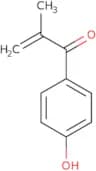
CAS:<p>Versatile small molecule scaffold</p>Formula:C11H9NO4Purity:Min. 95%Molecular weight:219.19 g/mol1-(4-Hydroxyphenyl)-2-methylprop-2-en-1-one
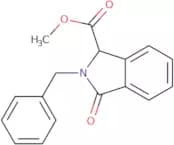
CAS:<p>Versatile small molecule scaffold</p>Formula:C10H10O2Purity:Min. 95%Molecular weight:162.18 g/molMethyl 2-benzyl-3-oxo-2,3-dihydro-1H-isoindole-1-carboxylate
CAS:<p>Versatile small molecule scaffold</p>Formula:C17H15NO3Purity:Min. 95%Molecular weight:281.3 g/mol5-(Propan-2-yl)-2-(trifluoromethyl)aniline
CAS:<p>Versatile small molecule scaffold</p>Formula:C10H12F3NPurity:Min. 95%Molecular weight:203.2 g/molCyclononanamine hydrochloride
CAS:<p>Versatile small molecule scaffold</p>Formula:C9H20ClNPurity:Min. 95%Molecular weight:177.7 g/molMethyl 3-hydroxy-2-methylpentanoate
CAS:<p>Methyl 3-hydroxy-2-methylpentanoate is a chemical compound that belongs to the group of alkenoic esters. It is an intermediate in the Baylis-Hillman reaction, which is a chemoenzymatic synthesis used to produce acrylates. Methyl 3-hydroxy-2-methylpentanoate can also be isolated as a byproduct of the weevil, where it was found in the male genitalia. The optical rotation of methyl 3-hydroxy-2-methylpentanoate has been determined to be (+) and it has a molecular weight of 150.</p>Formula:C7H14O3Purity:Min. 95%Molecular weight:146.18 g/mol3-Methoxy-1,2-thiazole-4-carboxylic acid
CAS:<p>Versatile small molecule scaffold</p>Formula:C5H5NO3SPurity:Min. 95%Molecular weight:159.17 g/mol5-Chloro-2,3-dihydro-1H-indene
CAS:<p>5-Chloro-2,3-dihydro-1H-indene is a pyrazole derivative that has been shown to be a potent inhibitor of restenosis. It inhibits the migration and proliferation of vascular smooth muscle cells by preventing the formation of hydrogen bonds in their actin filaments. 5-Chloro-2,3-dihydro-1H-indene also inhibits insulin resistance in mice by inhibiting chemokine production. This drug is currently under development for the treatment of various conditions including diabetes, atherosclerosis, and sclerosis. The molecular structure of 5CHI has been optimized using molecular modeling techniques and benzylamine derivatives have been synthesized as analogues with improved pharmacokinetic properties.</p>Formula:C9H9ClPurity:Min. 95%Molecular weight:152.62 g/molMethyl 2-(5-methylfuran-2-yl)acetate
CAS:<p>Versatile small molecule scaffold</p>Formula:C8H10O3Purity:Min. 95%Molecular weight:154.16 g/mol{[(2-bromoethyl)sulfanyl]methyl}benzene
CAS:<p>Versatile small molecule scaffold</p>Formula:C9H11BrSPurity:Min. 95%Molecular weight:231.15 g/mol1-Methylindole-2-carbonitrile
CAS:<p>1-Methylindole-2-carbonitrile is an organic compound that belongs to the class of aldehydes. It is an acidic and reactive compound that can undergo reactions with other compounds. The cyano group in the structure gives it a cyan color and it has been shown to react with many compounds, including aromatic aldehydes, halogen, and tryptamine.</p>Formula:C10H8N2Purity:Min. 95%Molecular weight:156.18 g/mol4-(2,5-Dioxo-pyrrolidin-1-yl)-benzoic acid
CAS:<p>4-(2,5-Dioxo-pyrrolidin-1-yl)-benzoic acid is a versatile research chemical commonly used in various scientific techniques. It is known for its azide properties, making it a valuable compound in many laboratory experiments and studies. Whether you are conducting cutting-edge research or exploring new scientific frontiers, 4-(2,5-Dioxo-pyrrolidin-1-yl)-benzoic acid is an essential tool to have in your arsenal. Its high purity and reliability ensure accurate and reproducible results, allowing you to push the boundaries of science and make groundbreaking discoveries. Trust in the quality of 4-(2,5-Dioxo-pyrrolidin-1-yl)-benzoic acid for all your research needs.</p>Formula:C11H9NO4Purity:Min. 95%Molecular weight:219.19 g/mol5-Phenoxyfuran-2-carbaldehyde
CAS:<p>Versatile small molecule scaffold</p>Formula:C11H8O3Purity:Min. 95%Molecular weight:188.18 g/mol3,5-Dimethyl-1-(propan-2-yl)-1H-pyrazol-4-amine
CAS:<p>Versatile small molecule scaffold</p>Formula:C8H15N3Purity:Min. 95%Molecular weight:153.22 g/mol2,3,5,6-Tetramethylbenzenesulfonyl chloride
CAS:<p>Versatile small molecule scaffold</p>Formula:C10H13ClO2SPurity:Min. 95%Molecular weight:232.73 g/mol4-Benzyloxydiphenylamine
CAS:<p>Versatile small molecule scaffold</p>Formula:C19H17NOPurity:Min. 95%Molecular weight:275.3 g/mol2-Methyl-3-(methylsulfanyl)aniline
CAS:<p>Versatile small molecule scaffold</p>Formula:C8H11NSPurity:Min. 95%Molecular weight:153.25 g/mol(1-Benzyl-piperidin-3-yl)-methyl-amine
CAS:<p>Versatile small molecule scaffold</p>Formula:C13H20N2Purity:Min. 95%Molecular weight:204.32 g/molDimethyl-piperidin-2-ylmethyl-amine
CAS:<p>Dimethyl-piperidin-2-ylmethyl-amine (DMPM) is a chemical compound that is known to inhibit activation pathways of NF-κB. DMPM is a selective inhibitor of the activation pathway of NF-κB, and has been shown to reduce inflammation in mouse models. It also inhibits receptor-mediated pathways, which are involved in the activation of antigen presenting cells. DMPM has been shown to be effective in inhibiting chronic inflammation and autoimmunity. This drug has been found to inhibit the inflammatory response by preventing the production of cytokines such as TNF-α, IL1β, IL6, and IFNγ. The chemical structure of DMPM has been shown to be stable enough for screening purposes.</p>Formula:C8H18N2Purity:Min. 95%Molecular weight:142.25 g/mol2-Cyanobicyclo[2.2.1]hept-5-ene-2-carboxylic acid
CAS:<p>Versatile small molecule scaffold</p>Formula:C9H9NO2Purity:Min. 95%Molecular weight:163.17 g/mol1-(2-Hydroxyphenyl)-2-(1H-1,2,3,4-tetrazol-5-yl)ethan-1-one
CAS:<p>Versatile small molecule scaffold</p>Formula:C9H8N4O2Purity:Min. 95%Molecular weight:204.19 g/mol2-(2-Phenyl-1,3-benzoxazol-4-yl)acetic acid
CAS:<p>Versatile small molecule scaffold</p>Formula:C15H11NO3Purity:Min. 95%Molecular weight:253.25 g/mol3-Bromo-5-chlorothiophene-2-carboxylic acid
CAS:<p>Versatile small molecule scaffold</p>Formula:C5H2BrClO2SPurity:Min. 95%Molecular weight:241.48 g/mol1-Phenyl-1H-pyrazole-4-sulfonamide
CAS:<p>Versatile small molecule scaffold</p>Formula:C9H9N3O2SPurity:Min. 95%Molecular weight:223.25 g/mol[1-(2-Phenylethyl)pyrrolidin-2-yl]methanamine
CAS:<p>Versatile small molecule scaffold</p>Formula:C13H20N2Purity:Min. 95%Molecular weight:204.31 g/mol3-Methyl-5-phenylcyclohexan-1-one
CAS:<p>Versatile small molecule scaffold</p>Formula:C13H16OPurity:Min. 95%Molecular weight:188.26 g/molMethyl 3-[(3-methoxy-3-oxopropyl)sulfanyl]butanoate
CAS:<p>Versatile small molecule scaffold</p>Formula:C9H16O4SPurity:Min. 95%Molecular weight:220.29 g/mol2-Methylthian-4-amine
CAS:<p>Versatile small molecule scaffold</p>Formula:C6H13NSPurity:Min. 95%Molecular weight:131.24 g/mol4,6-Dimethylisothiazolo[5,4-b]pyridin-3(2H)-one
CAS:<p>4,6-Dimethylisothiazolo[5,4-b]pyridin-3(2H)-one is a crystalline compound that belongs to the group of p2 molecules. This molecule has an electron density of 0.071 e/Å and a molecular weight of 172.14 g/mol. The tautomeric form is the most stable, with a geometry of C2v and a density of 1.8 g/cm3. The substituents are phenyl rings and methyl groups that have a molecular structure with the following constants: Torsion angle (χ) = -7°; Diameter (D) = 2.8 Å; Distance (d) = 2.4 Å; Length (l) = 3.9 Å; Angle (θ) = -57°; Distance to plane (a) = 2.0 Å</p>Formula:C8H8N2OSPurity:Min. 95%Molecular weight:180.23 g/mol1-Amino-3-(2-methylpropoxy)propan-2-ol
CAS:<p>Versatile small molecule scaffold</p>Formula:C7H17NO2Purity:Min. 95%Molecular weight:147.22 g/molEthyl 2,2-difluorobut-3-enoate
CAS:<p>Versatile small molecule scaffold</p>Formula:C6H8F2O2Purity:Min. 95%Molecular weight:150.12 g/mol3-ethoxy-4-hydroxybenzonitrile
CAS:<p>3-ethoxy-4-hydroxybenzonitrile is a chemical compound that is found in many plants, such as eucalyptus and lavender. It has been shown to have an attractant effect on Diptera, especially Drosophila dorsalis. The structure of 3-ethoxy-4-hydroxybenzonitrile is similar to that of veratrole and methyl eugenol, both compounds that are known to be chemically attractive to flies. In the laboratory, 3-ethoxy-4-hydroxybenzonitrile has been shown to be more effective than either veratrole or methyl eugenol at attracting Drosophila dorsalis. This chemical can also cause damage when irradiated with ultraviolet light.</p>Formula:C9H9NO2Purity:Min. 95%Molecular weight:163.18 g/mol4-Propoxybenzene-1-carbothioamide
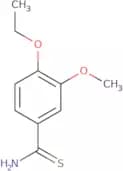
CAS:<p>Versatile small molecule scaffold</p>Formula:C10H13NOSPurity:Min. 95%Molecular weight:195.28 g/mol4-Ethoxy-3-methoxybenzene-1-carbothioamide
CAS:<p>Versatile small molecule scaffold</p>Formula:C10H13NO2SPurity:Min. 95%Molecular weight:211.28 g/mol3,4-Diethoxybenzothioamide
CAS:<p>Versatile small molecule scaffold</p>Formula:C11H15NO2SPurity:Min. 95%Molecular weight:225.31 g/mol3-(Chloromethyl)phenol
CAS:<p>3-(Chloromethyl)phenol is a sulfonating agent that can be used as a reagent for the preparation of sulfonic acids, which are important for their use in pharmaceuticals and as dyes. 3-(Chloromethyl)phenol has been shown to react with anions such as chloride and bromide, forming the corresponding sulfonyl chlorides. This reaction is reversible, and the equilibrium constant can be increased by adding more 3-(chloromethyl)phenol or other bases such as carbon disulfide. The thermochemistry of this reaction is enthalpy driven and shows additivity with respect to the concentration of reactants at low concentrations.</p>Formula:C7H7OClPurity:Min. 95%Molecular weight:142.58 g/mol3-(1-Ethyl-1H-1,2,3,4-tetrazol-5-yl)aniline
CAS:<p>Versatile small molecule scaffold</p>Formula:C9H11N5Purity:Min. 95%Molecular weight:189.22 g/mol4-(4-Chlorobutoxy)butan-1-ol
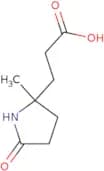
CAS:Controlled Product<p>Versatile small molecule scaffold</p>Formula:C8H17ClO2Purity:Min. 95%Molecular weight:180.67 g/mol3-(2-Methyl-5-oxopyrrolidin-2-yl)propanoic acid
CAS:<p>Versatile small molecule scaffold</p>Formula:C8H13NO3Purity:Min. 95%Molecular weight:171.19 g/mol



![1H-Pyrazolo[3,4-c]pyridine-4-carboxylic acid](/_next/image/?url=https%3A%2Fstatic.cymitquimica.com%2Fproducts%2F3D%2Fthumb-webp%2FKAC67264.webp&w=3840&q=75)






![[2-(Methylsulfanyl)phenyl]hydrazine hydrochloride](/_next/image/?url=https%3A%2Fstatic.cymitquimica.com%2Fproducts%2F3D%2Fthumb-webp%2FKCA48133.webp&w=3840&q=75)





![3-Methyl-2-[(trimethylsilyl)oxy]but-3-enenitrile](/_next/image/?url=https%3A%2Fstatic.cymitquimica.com%2Fproducts%2F3D%2Fthumb-webp%2FKCA55034.webp&w=3840&q=75)




![Spiro[2.5]octane-4,8-dione](/_next/image/?url=https%3A%2Fstatic.cymitquimica.com%2Fproducts%2F3D%2Fthumb-webp%2FKCA58268.webp&w=3840&q=75)





![2-[(3,5-Dichlorophenoxy)methyl]oxirane](/_next/image/?url=https%3A%2Fstatic.cymitquimica.com%2Fproducts%2F3D%2Fthumb-webp%2FKCA63337.webp&w=3840&q=75)

![3-Bromo-pyrazolo[1,5-a]pyridin-2-ol](/_next/image/?url=https%3A%2Fstatic.cymitquimica.com%2Fproducts%2F3D%2Fthumb-webp%2FKCA63730.webp&w=3840&q=75)


![5-Aminothieno[3,2-b]pyridine-6-carbonitrile](/_next/image/?url=https%3A%2Fstatic.cymitquimica.com%2Fproducts%2F3D%2Fthumb-webp%2FKCA63944.webp&w=3840&q=75)




![{[(2-bromoethyl)sulfanyl]methyl}benzene](/_next/image/?url=https%3A%2Fstatic.cymitquimica.com%2Fproducts%2F3D%2Fthumb-webp%2FKCA67159.webp&w=3840&q=75)


![2-Cyanobicyclo[2.2.1]hept-5-ene-2-carboxylic acid](/_next/image/?url=https%3A%2Fstatic.cymitquimica.com%2Fproducts%2F3D%2Fthumb-webp%2FKCA72214.webp&w=3840&q=75)


![[1-(2-Phenylethyl)pyrrolidin-2-yl]methanamine](/_next/image/?url=https%3A%2Fstatic.cymitquimica.com%2Fproducts%2F3D%2Fthumb-webp%2FKCA73745.webp&w=3840&q=75)

![Methyl 3-[(3-methoxy-3-oxopropyl)sulfanyl]butanoate](/_next/image/?url=https%3A%2Fstatic.cymitquimica.com%2Fproducts%2F3D%2Fthumb-webp%2FKCA74324.webp&w=3840&q=75)

![4,6-Dimethylisothiazolo[5,4-b]pyridin-3(2H)-one](/_next/image/?url=https%3A%2Fstatic.cymitquimica.com%2Fproducts%2F3D%2Fthumb-webp%2FKCA75075.webp&w=3840&q=75)