Building Blocks
This section contains fundamental products for the synthesis of organic and biological compounds. Building blocks are the essential starting materials used to construct complex molecules through various chemical reactions. They play a critical role in drug discovery, material science, and chemical research. At CymitQuimica, we offer a diverse range of high-quality building blocks to support your innovative research and industrial projects, ensuring you have the essential components for successful synthesis.
Subcategories of "Building Blocks"
- Boronic Acids & Boronic Acid Derivatives(5,756 products)
- Chiral Building Blocks(1,242 products)
- Hydrocarbon Building Blocks(6,095 products)
- Organic Building Blocks(61,037 products)
Found 196139 products of "Building Blocks"
Sort by
Purity (%)
0
100
|
0
|
50
|
90
|
95
|
100
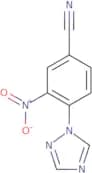
3-Nitro-4-(1H-1,2,4-triazol-1-yl)benzonitrile
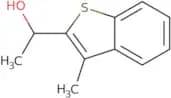
CAS:<p>Versatile small molecule scaffold</p>Formula:C9H5N5O2Purity:Min. 95%Molecular weight:215.17 g/mol1-(3-Methyl-1-benzothiophen-2-yl)ethan-1-ol
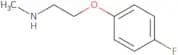
CAS:<p>Versatile small molecule scaffold</p>Formula:C11H12OSPurity:Min. 95%Molecular weight:192.28 g/mol2-(4-Fluorophenoxy)-N-methyl-1-ethanamine
CAS:<p>Versatile small molecule scaffold</p>Formula:C9H12FNOPurity:Min. 95%Molecular weight:169.2 g/molrac-(4aR,7aS)-hexahydro-2H-[1,4]dioxino[2,3-c]pyrrole hydrochloride
CAS:<p>Versatile small molecule scaffold</p>Formula:C6H12ClNO2Purity:Min. 95%Molecular weight:165.6 g/mol1-Ethoxy-4-[(4-nitrobenzyl)oxy]benzene
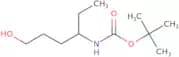
CAS:<p>Versatile small molecule scaffold</p>Formula:C15H15NO4Purity:Min. 95%Molecular weight:273.28 g/moltert-Butyl 6-hydroxyhexan-3-ylcarbamate
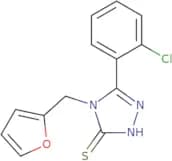
CAS:<p>Versatile small molecule scaffold</p>Formula:C11H23NO3Purity:Min. 95%Molecular weight:217.31 g/mol5-(2-Chlorophenyl)-4-(furan-2-ylmethyl)-4H-1,2,4-triazole-3-thiol
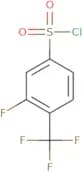
CAS:<p>Versatile small molecule scaffold</p>Formula:C13H10ClN3OSPurity:Min. 95%Molecular weight:291.76 g/mol3-Fluoro-4-(trifluoromethyl)benzene-1-sulfonyl chloride
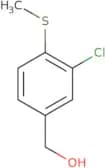
CAS:<p>Versatile small molecule scaffold</p>Formula:C7H3ClF4O2SPurity:Min. 95%Molecular weight:262.61 g/mol(3-Chloro-4-(methylthio)phenyl)methanol
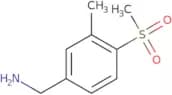
CAS:<p>Versatile small molecule scaffold</p>Formula:C8H9ClOSPurity:Min. 95%Molecular weight:188.67 g/mol(4-Methanesulfonyl-3-methylphenyl)methanamine
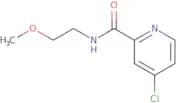
CAS:<p>Versatile small molecule scaffold</p>Formula:C9H13NO2SPurity:Min. 95%Molecular weight:199.27 g/mol4-Chloro-N-(2-methoxyethyl)pyridine-2-carboxamide
CAS:<p>Versatile small molecule scaffold</p>Formula:C9H11ClN2O2Purity:Min. 95%Molecular weight:214.65 g/mol4-(morpholinomethyl)-3-(trifluoromethyl)aniline
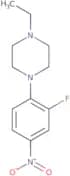
CAS:<p>Versatile small molecule scaffold</p>Formula:C12H15F3N2OPurity:Min. 95%Molecular weight:260.26 g/mol1-Ethyl-4-(2-fluoro-4-nitrophenyl)piperazine
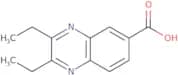
CAS:<p>Versatile small molecule scaffold</p>Formula:C12H16FN3O2Purity:Min. 95%Molecular weight:253.28 g/mol2,3-Diethyl-quinoxaline-6-carboxylic acid
CAS:<p>Versatile small molecule scaffold</p>Formula:C13H14N2O2Purity:Min. 95%Molecular weight:230.27 g/mol1-[4-(4-Ethylpiperazin-1-yl)-3-fluorophenyl]ethan-1-one
CAS:<p>Versatile small molecule scaffold</p>Formula:C14H19FN2OPurity:Min. 95%Molecular weight:250.31 g/mol5-(Trifluoromethyl)-[1,2,4]triazolo[1,5-a]pyridin-2-amine
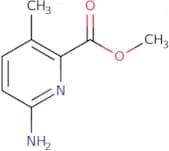
CAS:<p>Versatile small molecule scaffold</p>Formula:C7H5F3N4Purity:Min. 95%Molecular weight:202.14 g/molMethyl 6-amino-3-methylpyridine-2-carboxylate
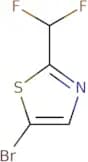
CAS:<p>Versatile small molecule scaffold</p>Formula:C8H10N2O2Purity:Min. 95%Molecular weight:166.18 g/mol5-Bromo-2-(difluoromethyl)-1,3-thiazole
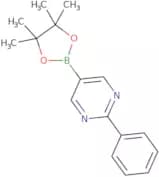
CAS:<p>Versatile small molecule scaffold</p>Formula:C4H2BrF2NSPurity:Min. 95%Molecular weight:214.03 g/mol2-Phenyl-5-(tetramethyl-1,3,2-dioxaborolan-2-yl)pyrimidine
CAS:<p>Versatile small molecule scaffold</p>Formula:C16H19BN2O2Purity:Min. 95%Molecular weight:282.1 g/mol2-azaspiro[4.4]nonane-2-carboxylic acid, 7-hydroxy-, 1,1-dimethylethyl ester
CAS:<p>Versatile small molecule scaffold</p>Formula:C13H23NO3Purity:Min. 95%Molecular weight:241.33 g/moltert-Butyl 6-oxo-2-azaspiro[4.4]nonane-2-carboxylate
CAS:<p>Versatile small molecule scaffold</p>Formula:C13H21NO3Purity:Min. 95%Molecular weight:239.31 g/moltert-butyl 6-hydroxy-2-azaspiro[4.4]nonane-2-carboxylate
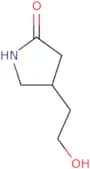
CAS:<p>Versatile small molecule scaffold</p>Formula:C13H23NO3Purity:Min. 95%Molecular weight:241.32 g/mol4-(2-Hydroxyethyl)pyrrolidin-2-one
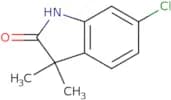
CAS:<p>Versatile small molecule scaffold</p>Formula:C6H11NO2Purity:Min. 95%Molecular weight:129.16 g/mol6-Chloro-3,3-dimethyl-2,3-dihydro-1H-indol-2-one
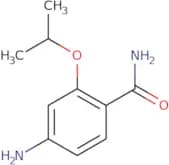
CAS:<p>Versatile small molecule scaffold</p>Formula:C10H10ClNOPurity:Min. 95%Molecular weight:195.64 g/mol4-Amino-2-(propan-2-yloxy)benzamide
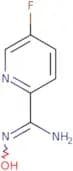
CAS:<p>Versatile small molecule scaffold</p>Formula:C10H14N2O2Purity:Min. 95%Molecular weight:194.23 g/mol5-Fluoro-N'-hydroxypyridine-2-carboximidamide
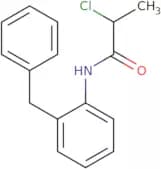
CAS:<p>Versatile small molecule scaffold</p>Formula:C6H6FN3OPurity:Min. 95%Molecular weight:155.13 g/molN-(2-Benzylphenyl)-2-chloropropanamide
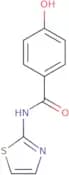
CAS:<p>Versatile small molecule scaffold</p>Formula:C16H16ClNOPurity:Min. 95%Molecular weight:273.75 g/mol4-Hydroxy-N-1,3-thiazol-2-ylbenzamide
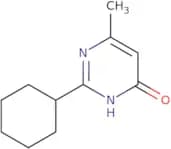
CAS:<p>Versatile small molecule scaffold</p>Formula:C10H8N2O2SPurity:Min. 95%Molecular weight:220.25 g/mol2-Cyclohexyl-6-methyl-3,4-dihydropyrimidin-4-one
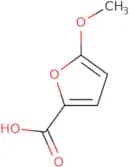
CAS:<p>Versatile small molecule scaffold</p>Formula:C11H16N2OPurity:Min. 95%Molecular weight:192.26 g/mol5-Methoxy-furan-2-carboxylic acid
CAS:<p>Versatile small molecule scaffold</p>Formula:C6H6O4Purity:Min. 95%Molecular weight:142.11 g/mol5-[(Methylthio)methyl]-2-furoic acid
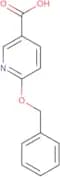
CAS:<p>Versatile small molecule scaffold</p>Formula:C7H8O3SPurity:Min. 95%Molecular weight:172.2 g/mol6-(Benzyloxy)nicotinic acid
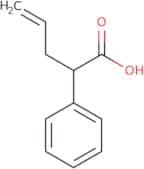
CAS:<p>Versatile small molecule scaffold</p>Formula:C13H11NO3Purity:Min. 95%Molecular weight:229.24 g/mol2-Phenylpent-4-enoic acid
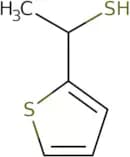
CAS:<p>2-Phenylpent-4-enoic acid is a macrocyclic molecule that is expressed in the liver and other organs. It belongs to the group of organomercurials, which are antifungal drugs. 2-Phenylpent-4-enoic acid has been shown to exhibit in vitro antifungal activity against Aspergillus niger, Candida albicans and Trichophyton mentagrophytes. The pharmacological profiles of this compound have been determined by evaluating its effects on protein synthesis and cell growth. It is a reductive eliminator of carbonyls, which may be due to the presence of two double bonds in its structure; this property makes it useful as an antifungal drug.</p>Formula:C11H12O2Purity:Min. 95%Molecular weight:176.21 g/mol1-(Thiophen-2-yl)ethane-1-thiol
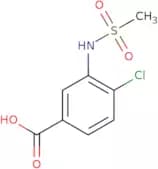
CAS:<p>Versatile small molecule scaffold</p>Formula:C6H8S2Purity:Min. 95%Molecular weight:144.3 g/mol4-Chloro-3-methanesulfonamidobenzoic acid
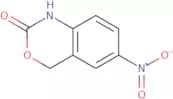
CAS:<p>Versatile small molecule scaffold</p>Formula:C8H8ClNO4SPurity:Min. 95%Molecular weight:249.67 g/mol6-Nitro-2,4-dihydro-1H-3,1-benzoxazin-2-one
CAS:<p>Versatile small molecule scaffold</p>Formula:C8H6N2O4Purity:Min. 95%Molecular weight:194.14 g/mol1-[3-(dimethylamino)propyl]-5-oxopyrrolidine-3-carboxylic acid
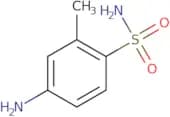
CAS:<p>Versatile small molecule scaffold</p>Formula:C10H18N2O3Purity:Min. 95%Molecular weight:214.27 g/mol4-Amino-2-methylbenzene-1-sulfonamide
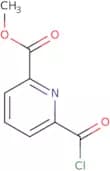
CAS:<p>Versatile small molecule scaffold</p>Formula:C7H10N2O2SPurity:Min. 95%Molecular weight:186.23 g/molMethyl 6-(carboxy)pyridine-2-carboxylate
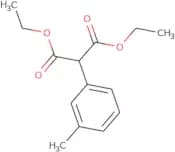
CAS:<p>Versatile small molecule scaffold</p>Formula:C8H6ClNO3Purity:Min. 95%Molecular weight:199.59 g/mol1,3-Diethyl 2-(3-methylphenyl)propanedioate
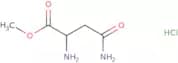
CAS:<p>Versatile small molecule scaffold</p>Formula:C14H18O4Purity:Min. 95%Molecular weight:250.29 g/molMethyl 2-amino-3-carbamoylpropanoate hydrochloride
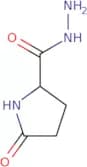
CAS:<p>Versatile small molecule scaffold</p>Formula:C5H11ClN2O3Purity:Min. 95%Molecular weight:182.6 g/mol5-Oxopyrrolidine-2-carbohydrazide
CAS:<p>Versatile small molecule scaffold</p>Formula:C5H9N3O2Purity:Min. 95%Molecular weight:143.14 g/mol5,6,7,8-Tetrahydro-[1,3]dioxolo[4,5-g]isoquinoline
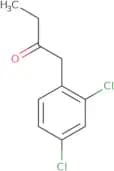
CAS:<p>5,6,7,8-Tetrahydro-[1,3]dioxolo[4,5-g]isoquinoline is a drug that belongs to the group of anorectic drugs. It is used as a stimulant and suppressant and has been evaluated for its effects on blood pressure. 5,6,7,8-Tetrahydro-[1,3]dioxolo[4,5-g]isoquinoline has been shown to increase serotonin levels in the brain and inhibit dopamine release. This compound also inhibits the binding of alphaminergic receptors such as α2 adrenergic receptor and 2-adrenergic receptor. 5,6,7,8-Tetrahydro-[1,3]dioxolo[4,5-g]isoquinoline has demonstrated anxiolytic effects in animals and humans.</p>Formula:C10H11NO2Purity:Min. 95%Molecular weight:177.2 g/mol1-(2,4-Dichlorophenyl)butan-2-one
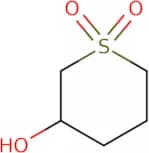
CAS:<p>Versatile small molecule scaffold</p>Formula:C10H10Cl2OPurity:Min. 95%Molecular weight:217.09 g/molTetrahydro-2H-thiopyran-3-ol 1,1-dioxide
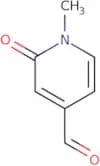
CAS:<p>Versatile small molecule scaffold</p>Formula:C5H10O3SPurity:Min. 95%Molecular weight:150.2 g/mol1-methyl-2-oxo-1,2-dihydropyridine-4-carbaldehyde
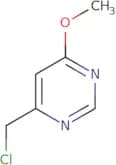
CAS:<p>Versatile small molecule scaffold</p>Formula:C7H7NO2Purity:Min. 95%Molecular weight:137.13 g/mol4-(Chloromethyl)-6-methoxypyrimidine
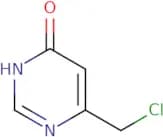
CAS:<p>Versatile small molecule scaffold</p>Formula:C6H7ClN2OPurity:Min. 95%Molecular weight:158.58 g/mol6-(Chloromethyl)pyrimidin-4-ol
CAS:<p>Versatile small molecule scaffold</p>Formula:C5H5ClN2OPurity:Min. 95%Molecular weight:144.56 g/mol3-Bromothieno[3,2-b]pyridine
CAS:<p>Versatile small molecule scaffold</p>Formula:C7H4BrNSPurity:Min. 95%Molecular weight:214.08 g/mol2-Bromothieno[3,2-b]pyridine
CAS:<p>Versatile small molecule scaffold</p>Formula:C7H4BrNSPurity:Min. 95%Molecular weight:214.08 g/mol3-(2-Methoxyethoxy)propan-1-ol
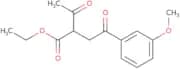
CAS:<p>Versatile small molecule scaffold</p>Formula:C6H14O3Purity:Min. 95%Molecular weight:134.17 g/molEthyl 2-acetyl-4-(3-methoxyphenyl)-4-oxobutanoate
CAS:<p>Versatile small molecule scaffold</p>Formula:C15H18O5Purity:Min. 95%Molecular weight:278.3 g/mol4-[2,3,5,6-Tetrafluoro-4-(4-hydroxyphenoxy)phenoxy]phenol
CAS:<p>Versatile small molecule scaffold</p>Formula:C18H10F4O4Purity:Min. 95%Molecular weight:366.3 g/molEthyl thieno[3,2-c]pyridine-2-carboxylate
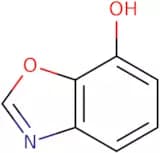
CAS:<p>Versatile small molecule scaffold</p>Formula:C10H9NO2SPurity:Min. 95%Molecular weight:207.25 g/mol1,3-Benzoxazol-7-ol
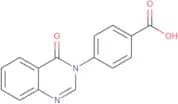
CAS:<p>Benzoxazoles are a class of heterocyclic compounds that have been used extensively in organic chemistry. They are terminal oxidants, which means they can form bonds with other molecules by adding an oxygen atom to them. Benzoxazoles are also efficient catalysts for the synthesis of a variety of functionalized compounds and react selectively with dichlorobenzene to form benzoxazole derivatives. This process is catalytic, meaning it does not require any external energy source. The use of benzoxazole as a catalyst has many advantages over traditional methods, including improved efficiency and regioselectivity.</p>Formula:C7H5NO2Purity:Min. 95%Molecular weight:135.12 g/mol4-(4-Oxo-3,4-dihydroquinazolin-3-yl)benzoic acid
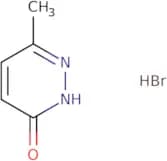
CAS:Controlled Product<p>Versatile small molecule scaffold</p>Formula:C15H10N2O3Purity:Min. 95%Molecular weight:266.25 g/mol6-Methylpyridazin-3(2H)-one hydrobromide
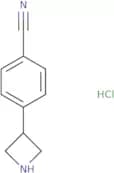
CAS:<p>Versatile small molecule scaffold</p>Formula:C5H6N2O·HBrPurity:Min. 95%Molecular weight:191.03 g/mol4-(Azetidin-3-yl)benzonitrile hydrochloride
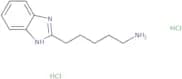
CAS:<p>Versatile small molecule scaffold</p>Formula:C10H11ClN2Purity:Min. 95%Molecular weight:194.66 g/mol5-(1H-1,3-Benzodiazol-2-yl)pentan-1-amine dihydrochloride
CAS:<p>Versatile small molecule scaffold</p>Formula:C12H19Cl2N3Purity:Min. 95%Molecular weight:276.2 g/mol3-Hydroxy-4-(propan-2-yloxy)benzaldehyde
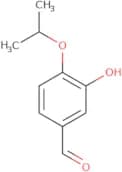
CAS:<p>Versatile small molecule scaffold</p>Formula:C10H12O3Purity:Min. 95%Molecular weight:180.2 g/mol4-Methyl-5-(pyridin-2-yl)-1,3-thiazol-2-amine
CAS:<p>Versatile small molecule scaffold</p>Formula:C9H9N3SPurity:Min. 95%Molecular weight:191.26 g/molN-Butyl-2-chloropropanamide
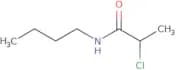
CAS:<p>Versatile small molecule scaffold</p>Formula:C7H14ClNOPurity:Min. 95%Molecular weight:163.64 g/mol2-Chloro-N-cyclohexylpropanamide
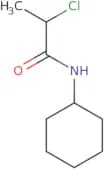
CAS:<p>2-Chloro-N-cyclohexylpropanamide is a chemical compound with the molecular formula CHClNO. It is used as a precursor in the synthesis of different drugs, such as acetanilide and its derivatives. This reagent can be prepared at low cost and has been shown to be efficient for the preparation of various compounds. 2-Chloro-N-cyclohexylpropanamide has been used in research to synthesize acetanilide and its derivatives. The reaction mechanism for this process involves the addition of chloride ion to an amide group on a cyclic ketone. The chloride ion acts as a nucleophile that attacks the carbonyl carbon atom, displacing water and forming an α-chloroketone. This reaction is catalyzed by copper metal or copper oxide.<br>Synopses:<br>Preparative: <br>Yields: <br>Chemical Research:</p>Formula:C9H16ClNOPurity:Min. 95%Molecular weight:189.68 g/molN-(2-Aminoethyl)-3,4-dichlorobenzamide hydrochloride
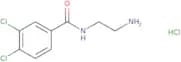
CAS:<p>Versatile small molecule scaffold</p>Formula:C9H11Cl3N2OPurity:Min. 95%Molecular weight:269.6 g/molN-(2-Aminoethyl)-4-fluorobenzamide hydrochloride
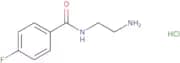
CAS:<p>Versatile small molecule scaffold</p>Formula:C9H12ClFN2OPurity:Min. 95%Molecular weight:218.65 g/mol3-Phenoxy-1,2,4-thiadiazol-5-amine
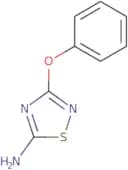
CAS:<p>Versatile small molecule scaffold</p>Formula:C8H7N3OSPurity:Min. 95%Molecular weight:193.23 g/mol1-(Prop-2-yn-1-yl)-4-[3-(trifluoromethyl)phenyl]piperazine
CAS:<p>Versatile small molecule scaffold</p>Formula:C14H15F3N2Purity:Min. 95%Molecular weight:268.28 g/molCyproconazol
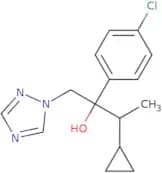
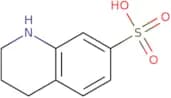
CAS:<p>Cyproconazol is an imidazole fungicide that belongs to the group of triazole derivatives. It has been shown to be a potent bactericide and fungicide with a broad range of activity against bacteria and fungi. Cyproconazol inhibits microbial growth by disrupting the synthesis of proteins, enzymes, and nucleic acids necessary for cell division. This drug is used as a disinfectant in food-contact surfaces, such as agricultural machinery and equipment. Cyproconazol can also be used as a matrix effect chemical to increase the efficacy of other disinfectants or sanitizers. Cyproconazol is toxic to both animals and humans; however, it has been found to be nontoxic to tissue culture cells in vitro.</p>Formula:C15H18ClN3OPurity:Min. 95%Molecular weight:291.78 g/mol1,2,3,4-Tetrahydroquinoline-7-sulfonic acid
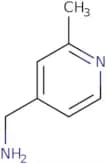
CAS:<p>Versatile small molecule scaffold</p>Formula:C9H11NO3SPurity:Min. 95%Molecular weight:213.26 g/mol4-Aminomethyl-2-methylpyridine
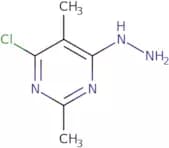
CAS:<p>Versatile small molecule scaffold</p>Formula:C7H10N2Purity:Min. 95%Molecular weight:122.17 g/mol4-Chloro-6-hydrazinyl-2,5-dimethylpyrimidine
CAS:<p>Versatile small molecule scaffold</p>Formula:C6H9ClN4Purity:Min. 95%Molecular weight:172.61 g/mol2-[2-(Benzyloxy)ethyl]oxirane
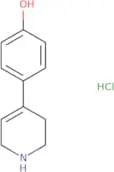
CAS:<p>2-[2-(Benzyloxy)ethyl]oxirane is an organic compound that is a ligand in coordination chemistry. It is used as a monomer in ring-opening polymerization, which can lead to the synthesis of polymers with diverse chemical structures and properties. 2-[2-(Benzyloxy)ethyl]oxirane can be found in invertebrates and animals, where it plays a role in the biosynthesis of natural products. The chemical diversity of this compound arises from its ability to coordinate with metals and form complexes with different ligands. This property also allows for stereoselective reactions.</p>Formula:C11H14O2Purity:Min. 95%Molecular weight:178.23 g/mol4-(1,2,3,6-Tetrahydropyridin-4-yl)phenol hydrochloride
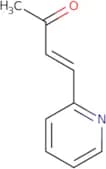
CAS:<p>Versatile small molecule scaffold</p>Formula:C11H14ClNOPurity:Min. 95%Molecular weight:211.69 g/mol(3E)-4-(Pyridin-2-yl)but-3-en-2-one
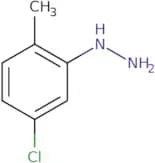
CAS:<p>Versatile small molecule scaffold</p>Formula:C9H9NOPurity:Min. 95%Molecular weight:147.2 g/mol(5-chloro-2-methylphenyl)hydrazine
CAS:<p>(5-chloro-2-methylphenyl)hydrazine is a heterocyclic compound that has been used as a reagent and dye. This compound can be prepared by reacting methylene blue with hydrazine, followed by treatment with hydrochloric acid. The product of this reaction is a yellow solid, which can then be purified to obtain the desired product. (5-Chloro-2-methylphenyl)hydrazine has been used in the synthesis of indolenines and dialdehydes. It is also an important component in the synthesis of thiourea derivatives, guanidinium compounds, and 6-membered ring heterocycles.</p>Formula:C7H9ClN2Purity:Min. 95%Molecular weight:156.61 g/molrac-(4aR,9bS)-2,8-Dimethyl-1H,2H,3H,4H,4aH,5H,9bh-pyrido[4,3-b]indole dihydrochloride
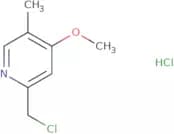
CAS:<p>Dimebon is an investigational drug that is being studied for the treatment of various diseases, including skin diseases, infectious diseases, and nervous system diseases. Dimebon has been shown to inhibit the activity of a particular receptor in animal models of inflammatory bowel disease. It is also a water-soluble drug that may be used for the treatment of cancer or other disorders involving hydrogenated cells. Dimebon binds to this receptor and prevents it from interacting with growth factors. This prevents nerve cells from dying and also suppresses inflammation in the gut.</p>Formula:C13H20Cl2N2Purity:Min. 95%Molecular weight:275.21 g/mol2-(Chloromethyl)-4-methoxy-5-methylpyridine hydrochloride
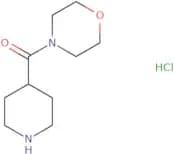
CAS:<p>Versatile small molecule scaffold</p>Formula:C8H11Cl2NOPurity:Min. 95%Molecular weight:208.08 g/molMorpholino(piperidin-4-yl)methanone hydrochloride
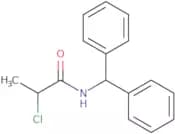
CAS:<p>Versatile small molecule scaffold</p>Formula:C10H19ClN2O2Purity:Min. 95%Molecular weight:234.72 g/mol2-Chloro-N-(diphenylmethyl)propanamide
CAS:<p>Versatile small molecule scaffold</p>Formula:C16H16ClNOPurity:Min. 95%Molecular weight:273.75 g/mol3-(3-Methoxyphenyl)-2-phenylprop-2-enoic acid
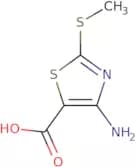
CAS:<p>Versatile small molecule scaffold</p>Formula:C16H14O3Purity:Min. 95%Molecular weight:254.28 g/mol4-Amino-2-(methylsulfanyl)-1,3-thiazole-5-carboxylic acid
CAS:<p>Versatile small molecule scaffold</p>Formula:C5H6N2O2S2Purity:Min. 95%Molecular weight:190.2 g/mol2-Bromo-1-[4-(4-bromophenyl)phenyl]ethan-1-one
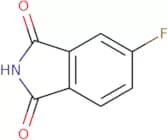
CAS:<p>2-Bromo-1-[4-(4-bromophenyl)phenyl]ethan-1-one is a molecule with an ether linkage. It has a bisecting bond, four seven-membered rings and two six-membered rings. The molecule is experimentally determined to have a conformation of dihedral angle 120° and an experimental dipole moment of 0.2 D. The crystal structure of 2-Bromo-1-[4-(4-bromophenyl)phenyl]ethan-1-one is biphenyl.</p>Formula:C14H10Br2OPurity:Min. 95%Molecular weight:354.04 g/mol5-Fluoro-2,3-dihydro-1H-isoindole-1,3-dione
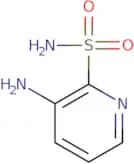
CAS:<p>Versatile small molecule scaffold</p>Formula:C8H4FNO2Purity:Min. 95%Molecular weight:165.12 g/mol3-Aminopyridine-2-sulfonamide
CAS:<p>3-Aminopyridine-2-sulfonamide is a synthetic compound that has been shown to inhibit the activity of 3,4-dihydroxyphenylalanine (DOPA) decarboxylase, which is an enzyme that converts DOPA to dopamine. It has also been shown to act as an allosteric modulator of hydrogen bonds in the adenine base. 3-Aminopyridine-2-sulfonamide has been shown to interact with the hippocampal CA1 region and may be useful for treating Parkinson's disease. This drug also interacts with receptors and can cause food poisoning.</p>Formula:C5H7N3O2SPurity:Min. 95%Molecular weight:173.2 g/molPhenyl(1,2,3,4-tetrahydronaphthalen-1-yl)methanone
CAS:<p>Versatile small molecule scaffold</p>Formula:C17H16OPurity:Min. 95%Molecular weight:236.31 g/mol6-Phenylimidazo[2,1-b][1,3]thiazol-5-amine
CAS:<p>6-Phenylimidazo[2,1-b][1,3]thiazol-5-amine is a reactive chemical substance with a polylactic functional group. It is an organic solvent that is used in pharmaceutical preparations. 6-Phenylimidazo[2,1-b][1,3]thiazol-5-amine can be hydrolyzed by hydrolysis to form active substances such as fatty acids and aromatic hydrocarbons. The aromatic hydrocarbons are derived from the fatty acid esters that are formed during the process of glycolysis. 6-Phenylimidazo[2,1-b][1,3]thiazol-5-amine is used as a plant science for its ability to inhibit the growth of plants.</p>Formula:C11H9N3SPurity:Min. 95%Molecular weight:215.28 g/mol1-{7H-Pyrrolo[2,3-d]pyrimidin-4-yl}piperidine
CAS:<p>Versatile small molecule scaffold</p>Formula:C11H14N4Purity:Min. 95%Molecular weight:202.26 g/mol2-(2,2-Dimethylpropanamido)-6-methoxybenzoic acid
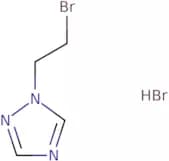
CAS:<p>Versatile small molecule scaffold</p>Formula:C13H17NO4Purity:Min. 95%Molecular weight:251.28 g/mol1-(2-Bromoethyl)-1H-1,2,4-triazole hydrobromide
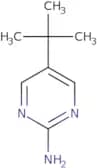
CAS:<p>Versatile small molecule scaffold</p>Formula:C4H7Br2N3Purity:Min. 95%Molecular weight:256.94 g/mol2-Amino-5-(tert-butyl)pyrimidine
CAS:<p>Versatile small molecule scaffold</p>Formula:C8H13N3Purity:Min. 95%Molecular weight:151.21 g/mol3-Ethoxy-4-[2-oxo-2-(piperidin-1-yl)ethoxy]benzaldehyde
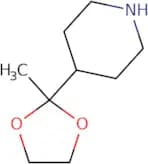
CAS:<p>Versatile small molecule scaffold</p>Formula:C16H21NO4Purity:Min. 95%Molecular weight:291.34 g/mol4-(2-Methyl-1,3-dioxolan-2-yl)piperidine
CAS:<p>Versatile small molecule scaffold</p>Formula:C9H17NO2Purity:Min. 95%Molecular weight:171.24 g/mol1-Methyl-octahydro-1H-isoindoles
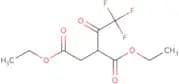
CAS:<p>Versatile small molecule scaffold</p>Formula:C9H17NPurity:Min. 95%Molecular weight:139.2 g/molDiethyl 2-(2,2,2-trifluoroacetyl)succinate
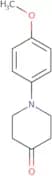
CAS:<p>Versatile small molecule scaffold</p>Formula:C10H13O5F3Purity:Min. 95%Molecular weight:270.2 g/mol1-(4-Methoxyphenyl)piperidin-4-one
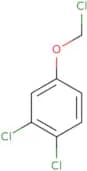
CAS:<p>Versatile small molecule scaffold</p>Formula:C12H15NO2Purity:Min. 95%Molecular weight:205.25 g/mol1,2-Dichloro-4-(chloromethoxy)benzene
CAS:<p>Versatile small molecule scaffold</p>Formula:C7H5Cl3OPurity:Min. 95%Molecular weight:211.5 g/mol2-{[3-Cyano-4-(furan-2-yl)-5,6,7,8-tetrahydroquinolin-2-yl]sulfanyl}acetic acid
CAS:<p>Versatile small molecule scaffold</p>Formula:C16H14N2O3SPurity:Min. 95%Molecular weight:314.4 g/mol10-oxopentacyclo[5.3.0.02,5.03,9.04,8]decane-3-carboxylic acid
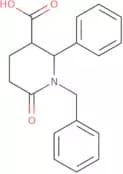
CAS:<p>Versatile small molecule scaffold</p>Formula:C11H10O3Purity:Min. 95%Molecular weight:190.19 g/mol1-Benzyl-6-oxo-2-phenylpiperidine-3-carboxylic acid
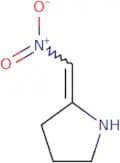
CAS:<p>1-Benzyl-6-oxo-2-phenylpiperidine-3-carboxylic acid is a cyclic amide that is used as a research tool. It belongs to the class of acetonitrile compounds and has a conformation that is either cyclic or linear. The compound can be found in the form of two stereoisomers, which are mirror images of each other. 1-Benzyl-6-oxo-2-phenylpiperidine-3-carboxylic acid has an amide bond with carboxylic acid substituents and hydrogen bonds with water molecules. It crystallizes in a monoclinic system with space group C2/c and lattice constants a = 12.871(1) Å, b = 7.738(1) Å, c = 18.539 (1)Å, β=90°. These values are close to those for</p>Formula:C19H19NO3Purity:Min. 95%Molecular weight:309.4 g/mol(2Z)-2-(Nitromethylidene)pyrrolidine
CAS:<p>Versatile small molecule scaffold</p>Formula:C5H8N2O2Purity:Min. 95%Molecular weight:128.13 g/mol

![rac-(4aR,7aS)-hexahydro-2H-[1,4]dioxino[2,3-c]pyrrole hydrochloride](/_next/image/?url=https%3A%2Fstatic.cymitquimica.com%2Fproducts%2F3D%2Fthumb-webp%2FUCB43904.webp&w=3840&q=75)
![1-Ethoxy-4-[(4-nitrobenzyl)oxy]benzene](/_next/image/?url=https%3A%2Fstatic.cymitquimica.com%2Fproducts%2F3D%2Fthumb-webp%2FUCB44351.webp&w=3840&q=75)

![1-[4-(4-Ethylpiperazin-1-yl)-3-fluorophenyl]ethan-1-one](/_next/image/?url=https%3A%2Fstatic.cymitquimica.com%2Fproducts%2F3D%2Fthumb-webp%2FUCB51702.webp&w=3840&q=75)
![5-(Trifluoromethyl)-[1,2,4]triazolo[1,5-a]pyridin-2-amine](/_next/image/?url=https%3A%2Fstatic.cymitquimica.com%2Fproducts%2F3D%2Fthumb-webp%2FUCC06764.webp&w=3840&q=75)
![2-azaspiro[4.4]nonane-2-carboxylic acid, 7-hydroxy-, 1,1-dimethylethyl ester](/_next/image/?url=https%3A%2Fstatic.cymitquimica.com%2Fproducts%2F3D%2Fthumb-webp%2FUCC71641.webp&w=3840&q=75)
![tert-Butyl 6-oxo-2-azaspiro[4.4]nonane-2-carboxylate](/_next/image/?url=https%3A%2Fstatic.cymitquimica.com%2Fproducts%2F3D%2Fthumb-webp%2FUCC71643.webp&w=3840&q=75)
![tert-butyl 6-hydroxy-2-azaspiro[4.4]nonane-2-carboxylate](/_next/image/?url=https%3A%2Fstatic.cymitquimica.com%2Fproducts%2F3D%2Fthumb-webp%2FUCC71644.webp&w=3840&q=75)
![5-[(Methylthio)methyl]-2-furoic acid](/_next/image/?url=https%3A%2Fstatic.cymitquimica.com%2Fproducts%2F3D%2Fthumb-webp%2FUDA08470.webp&w=3840&q=75)
![1-[3-(dimethylamino)propyl]-5-oxopyrrolidine-3-carboxylic acid](/_next/image/?url=https%3A%2Fstatic.cymitquimica.com%2Fproducts%2F3D%2Fthumb-webp%2FUDA10846.webp&w=3840&q=75)
![5,6,7,8-Tetrahydro-[1,3]dioxolo[4,5-g]isoquinoline](/_next/image/?url=https%3A%2Fstatic.cymitquimica.com%2Fproducts%2F3D%2Fthumb-webp%2FUDA14383.webp&w=3840&q=75)
![3-Bromothieno[3,2-b]pyridine](/_next/image/?url=https%3A%2Fstatic.cymitquimica.com%2Fproducts%2F3D%2Fthumb-webp%2FUDA19112.webp&w=3840&q=75)
![2-Bromothieno[3,2-b]pyridine](/_next/image/?url=https%3A%2Fstatic.cymitquimica.com%2Fproducts%2F3D%2Fthumb-webp%2FUDA19115.webp&w=3840&q=75)

![4-[2,3,5,6-Tetrafluoro-4-(4-hydroxyphenoxy)phenoxy]phenol](/_next/image/?url=https%3A%2Fstatic.cymitquimica.com%2Fproducts%2F3D%2Fthumb-webp%2FUDA19717.webp&w=3840&q=75)
![Ethyl thieno[3,2-c]pyridine-2-carboxylate](/_next/image/?url=https%3A%2Fstatic.cymitquimica.com%2Fproducts%2F3D%2Fthumb-webp%2FUDA22616.webp&w=3840&q=75)

![1-(Prop-2-yn-1-yl)-4-[3-(trifluoromethyl)phenyl]piperazine](/_next/image/?url=https%3A%2Fstatic.cymitquimica.com%2Fproducts%2F3D%2Fthumb-webp%2FUDA36105.webp&w=3840&q=75)
![2-[2-(Benzyloxy)ethyl]oxirane](/_next/image/?url=https%3A%2Fstatic.cymitquimica.com%2Fproducts%2F3D%2Fthumb-webp%2FUDA42672.webp&w=3840&q=75)
![rac-(4aR,9bS)-2,8-Dimethyl-1H,2H,3H,4H,4aH,5H,9bh-pyrido[4,3-b]indole dihydrochloride](/_next/image/?url=https%3A%2Fstatic.cymitquimica.com%2Fproducts%2F3D%2Fthumb-webp%2FUDA45231.webp&w=3840&q=75)

![2-Bromo-1-[4-(4-bromophenyl)phenyl]ethan-1-one](/_next/image/?url=https%3A%2Fstatic.cymitquimica.com%2Fproducts%2F3D%2Fthumb-webp%2FUDA51273.webp&w=3840&q=75)

![6-Phenylimidazo[2,1-b][1,3]thiazol-5-amine](/_next/image/?url=https%3A%2Fstatic.cymitquimica.com%2Fproducts%2F3D%2Fthumb-webp%2FUDA57442.webp&w=3840&q=75)
![1-{7H-Pyrrolo[2,3-d]pyrimidin-4-yl}piperidine](/_next/image/?url=https%3A%2Fstatic.cymitquimica.com%2Fproducts%2F3D%2Fthumb-webp%2FUDA58194.webp&w=3840&q=75)

![3-Ethoxy-4-[2-oxo-2-(piperidin-1-yl)ethoxy]benzaldehyde](/_next/image/?url=https%3A%2Fstatic.cymitquimica.com%2Fproducts%2F3D%2Fthumb-webp%2FUDA62163.webp&w=3840&q=75)
![2-{[3-Cyano-4-(furan-2-yl)-5,6,7,8-tetrahydroquinolin-2-yl]sulfanyl}acetic acid](/_next/image/?url=https%3A%2Fstatic.cymitquimica.com%2Fproducts%2F3D%2Fthumb-webp%2FUDA64013.webp&w=3840&q=75)
![10-oxopentacyclo[5.3.0.02,5.03,9.04,8]decane-3-carboxylic acid](/_next/image/?url=https%3A%2Fstatic.cymitquimica.com%2Fproducts%2F3D%2Fthumb-webp%2FUDA64536.webp&w=3840&q=75)