Building Blocks
This section contains fundamental products for the synthesis of organic and biological compounds. Building blocks are the essential starting materials used to construct complex molecules through various chemical reactions. They play a critical role in drug discovery, material science, and chemical research. At CymitQuimica, we offer a diverse range of high-quality building blocks to support your innovative research and industrial projects, ensuring you have the essential components for successful synthesis.
Subcategories of "Building Blocks"
- Boronic Acids & Boronic Acid Derivatives(5,756 products)
- Chiral Building Blocks(1,242 products)
- Hydrocarbon Building Blocks(6,095 products)
- Organic Building Blocks(61,051 products)
Found 199813 products of "Building Blocks"
Sort by
Purity (%)
0
100
|
0
|
50
|
90
|
95
|
100
3-Methylbenzofuran-2-carboxylic acid ethyl ester
CAS:<p>3-Methylbenzofuran-2-carboxylic acid ethyl ester (MBFE) is a modulator that inhibits the activity of the mcf-7 protein, which is involved in metabolic disorders. MBFE also has activating effects on insulin sensitivity and carbonic anhydrase. This compound has been shown to inhibit the growth of cancer cells in culture, as well as reduce cholesterol levels when administered orally. MBFE may also be used to introduce a mitochondrial biogenesis factor into cancer cells, preventing tumor formation.</p>Formula:C12H12O3Purity:Min. 95%Molecular weight:204.22 g/molN-Cbz-(S)-2-amino-1-butanol
CAS:<p>Versatile small molecule scaffold</p>Formula:C12H17NO3Purity:Min. 95%Molecular weight:223.27 g/mol1-Chloro-4-ethoxyphthalazine
CAS:<p>Versatile small molecule scaffold</p>Formula:C10H9ClN2OPurity:Min. 95%Molecular weight:208.64 g/mol2-bromo-3,4-dimethyl-6-nitroaniline
CAS:<p>Versatile small molecule scaffold</p>Formula:C8H9BrN2O2Purity:Min. 95%Molecular weight:245.1 g/mol3-(2,3-Dimethylphenoxy)propanoic acid
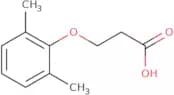
CAS:<p>Versatile small molecule scaffold</p>Formula:C11H14O3Purity:Min. 95%Molecular weight:194.23 g/mol3-(2,6-Dimethylphenoxy)propanoic acid
CAS:<p>Versatile small molecule scaffold</p>Formula:C11H14O3Purity:Min. 95%Molecular weight:194.23 g/mol3-(5-Bromo-2,4-dioxo-1,2,3,4-tetrahydropyrimidin-1-yl)propanoic acid
CAS:<p>Versatile small molecule scaffold</p>Formula:C7H7BrN2O4Purity:Min. 95%Molecular weight:263.05 g/mol4-Amino-5,6,7,8-tetrahydropteridin-6-one
CAS:<p>Versatile small molecule scaffold</p>Formula:C6H7N5OPurity:Min. 95%Molecular weight:165.15 g/mol8-Methyl-7H-purin-6-amine
CAS:<p>8-Methyl-7H-purin-6-amine is a chemical with a molecular weight of 194.2 and a boiling point of 248 °C. It has no color or odor, but it is corrosive in nature. Vapor pressure is 0.0013 mm Hg at 25 °C, acid hydrolysis produces an amide, catalase is unreactive to this compound, and 8-methyl-7H-purin-6-amine does not react with nucleobases under incubated conditions. 8MMP does not form sulfoxide derivatives and is unreactive to alkaline hydrolysis. This compound may be carcinogenic to humans and laboratory studies have shown that benzyl alcohol increases the rate of absorption of 8MMP when ingested orally by rats. Purines are found in RNA and DNA molecules and are essential for life.</p>Formula:C6H7N5Purity:Min. 95%Molecular weight:149.15 g/molPyrido[3,4-d]pyrimidin-4(1H)-one, 2-methyl-
CAS:<p>Versatile small molecule scaffold</p>Formula:C8H7N3OPurity:Min. 95%Molecular weight:161.16 g/mol3,4-Dichloro-6-methylpyridazine
CAS:<p>Versatile small molecule scaffold</p>Formula:C5H4Cl2N2Purity:Min. 95%Molecular weight:163 g/mol2-[2-(2-Bromoacetyl)phenyl]-2,3-dihydro-1H-isoindole-1,3-dione
CAS:<p>Versatile small molecule scaffold</p>Formula:C16H10BrNO3Purity:Min. 95%Molecular weight:344.16 g/molEthyl 2-cyclopropyl-3-oxobutanoate
CAS:<p>Versatile small molecule scaffold</p>Formula:C9H14O3Purity:Min. 95%Molecular weight:170.21 g/mol4-n-Propylpiperidine
CAS:<p>4-n-Propylpiperidine is a piperidine derivative, which is used as a building block in organic synthesis. It has been shown to have anticancer properties in some models of cancer and can be used to treat testicular cancer. 4-n-Propylpiperidine is a carcinogen that can cause mutations and DNA damage, leading to uncontrolled cellular growth. 4-n-Propylpiperidine is an amide or piperazine derivative that has been found to be systematically active against certain types of tumors. This compound is also toxic to the testes and other tissues, and can cause kidney damage.</p>Formula:C8H17NPurity:Min. 95%Molecular weight:127.23 g/molDimethyl 2-(Methoxymethylene)malonate
CAS:<p>Dimethyl 2-(methoxymethylene)malonate is a synthetic molecule that belongs to the class of organic compounds known as dialkylamino malonic esters. It has been shown to inhibit HIV integrase, an enzyme that is essential for HIV replication. Dimethyl 2-(methoxymethylene)malonate was synthesized in two steps from diethyl malonate and methoxyamine hydrochloride. The first step involved the reaction of diethyl malonate with methoxyamine hydrochloride in the presence of nitrobenzene to produce dimethyldiethoxymethoxymethoxymalonic acid methyl ester. The second step involved reacting this product with trimethylamine in the presence of potassium carbonate to produce dimethyl 2-(methoxymethylene)malonate.</p>Formula:C7H10O3Purity:Min. 95%Molecular weight:142.15 g/mol2-Benzylpyrimidin-4-amine
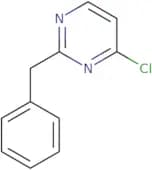
CAS:<p>Versatile small molecule scaffold</p>Formula:C11H11N3Purity:Min. 95%Molecular weight:185.22 g/mol2-Benzyl-4-chloropyrimidine
CAS:<p>2-Benzyl-4-chloropyrimidine is a heterocyclic compound that can be synthesized in three steps from potassium. The reaction pathway starts with the addition of chloroacetic acid to pyrimidine-2,4(1H,3H)-dione and then the intermediate 2-benzylpyrimidine is formed by nucleophilic substitution with an amide. Finally, halogenation of the benzyl group forms 2-benzyl-4-chloropyrimidine. This transformation is due to the fact that pyrimidines are nucleophiles, and chloroacetate is a good leaving group. The substituent on the 4 position of the pyrimidine ring determines whether it will be an amide or a halogenated product.</p>Formula:C11H9ClN2Purity:Min. 95%Molecular weight:204.65 g/mol5,8-Dichloro-3,4-dihydro-2H-1-benzopyran-4-one
CAS:<p>Versatile small molecule scaffold</p>Formula:C9H6Cl2O2Purity:Min. 95%Molecular weight:217.05 g/mol8-Chloro-5-methyl-3,4-dihydro-2H-1-benzopyran-4-one
CAS:<p>Versatile small molecule scaffold</p>Formula:C10H9ClO2Purity:Min. 95%Molecular weight:196.63 g/mol3-Amino-8-methoxy-3,4-dihydro-2H-1-benzopyran-4-one hydrochloride
CAS:<p>Versatile small molecule scaffold</p>Formula:C10H12ClNO3Purity:Min. 95%Molecular weight:229.66 g/mol1-({6-[(1-Cyanocyclohexyl)amino]hexyl}amino)cyclohexane-1-carbonitrile
CAS:<p>Versatile small molecule scaffold</p>Formula:C20H34N4Purity:Min. 95%Molecular weight:330.5 g/mol4-(tert-Butoxy)-2-methylbutan-2-ol
CAS:<p>Versatile small molecule scaffold</p>Formula:C9H20O2Purity:Min. 95%Molecular weight:160.25 g/mol4'-Methyl-3-chloropropiophenone
CAS:<p>Versatile small molecule scaffold</p>Formula:C10H11ClOPurity:Min. 95%Molecular weight:182.65 g/mol2-Cyano-3-methylbutanoic acid
CAS:<p>2-Cyano-3-methylbutanoic acid is a solid with an acidic or basic group. It can be obtained by catalytic reduction of isovaleric acid and has been used to synthesize silicone grafts. 2-Cyano-3-methylbutanoic acid has also shown anticancer activity in a number of animal models, including those for solid tumours. In addition, this compound is conjugated with various drugs and functions as a polymer drug that can be degraded in the body.<br>END></p>Formula:C6H9NO2Purity:Min. 95%Molecular weight:127.14 g/mol2-Cyano-2,2-dimethylacetic acid
CAS:<p>2-Cyano-2,2-dimethylacetic acid (CDMA) is an analog of methylethylcarboxylic acid, which is the precursor for the synthesis of 2-chloro-2,2-dimethylpropionic acid (CDMP). CDMA has been used in the preparation of chromanones and other analogs. It also has a temporary hydroxyl group that can be methylated to form aldehydes or amides. The chloride group can be replaced with dialkylaminocarboxylates, such as dimethoxybenzene or methoxy.</p>Purity:Min. 95%Molecular weight:113.11 g/molBenzyl 5-nitrofuran-2-carboxylate
CAS:<p>Benzyl 5-nitrofuran-2-carboxylate is a catalytic hydrogenolysis agent that can be used to reduce fluoride. It is prepared by the reaction of benzyl chloride with nitrofuran-2-carboxylic acid in the presence of tetraphenylphosphonium and sulfolane. The catalyst, tetraphenylphosphonium, has been shown to increase the yield of benzyl 5-nitrofuran-2-carboxylate. Benzyl 5-nitrofuran-2-carboxylate is mainly used for the synthesis of dimethoxybenzene from dimethylphenol and has also been used as a catalyst for the hydrogenation of ethylene oxide.</p>Formula:C12H9NO5Purity:Min. 95%Molecular weight:247.2 g/molSpiro[2.5]octan-6-ol
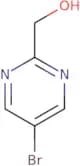
CAS:<p>Spiro[2.5]octan-6-ol is a substrate for the enzyme spiroketal synthase. The enzyme binds to its substrate at one of two active sites and converts it into a spiroketal product. Spiro[2.5]octan-6-ol is converted by the enzyme in an ATP-dependent reaction that requires proton transfer and conformational changes in the enzyme, as shown by magnetic resonance spectroscopy measurements.<br>The enzyme also catalyzes the reverse reaction, converting the spiroketal product back into the original substrate. The reaction mechanism involves a proton transfer between water and an amino acid residue in the active site of the enzyme, followed by nucleophilic attack on an adjacent carbonyl group of the substrate. This results in formation of a tetrahedral intermediate which then collapses to form either products or reactant depending on whether it was formed from reactant or product respectively.</p>Formula:C8H14OPurity:Min. 95%Molecular weight:126.2 g/mol(5-Bromopyrimidin-2-yl)methanol
CAS:<p>Versatile small molecule scaffold</p>Formula:C5H5BrN2OPurity:Min. 95%Molecular weight:189.01 g/mol5-Phenylpyrimidin-4(3H)-one
CAS:<p>Versatile small molecule scaffold</p>Formula:C10H8N2OPurity:Min. 95%Molecular weight:172.18 g/mol2-Bromobenzene-1,3-dicarboxylic acid
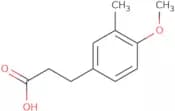
CAS:<p>2-Bromobenzene-1,3-dicarboxylic acid is a carboxylic acid that belongs to the class of aromatic hydrocarbons. It is used in the synthesis of biphenyls and has been found to be an inhibitor of serine proteases. 2-Bromobenzene-1,3-dicarboxylic acid has been shown to be a substrate for oxytocin receptors with hydrogen bonding interactions. This compound also has antireflection properties and can be functionalized by conjugation with other molecules containing functional groups (e.g., biphenyl). 2-Bromobenzene-1,3-dicarboxylic acid can also react with palladium complexes to form aryl chlorides.</p>Formula:C8H5BrO4Purity:Min. 95%Molecular weight:245.03 g/mol3-(4-Methoxy-3-methylphenyl)propanoic acid
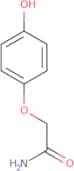
CAS:<p>Versatile small molecule scaffold</p>Formula:C11H14O3Purity:Min. 95%Molecular weight:194.23 g/mol2-(4-Hydroxyphenoxy)acetamide
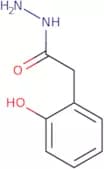
CAS:<p>Versatile small molecule scaffold</p>Formula:C8H9NO3Purity:Min. 95%Molecular weight:167.16 g/mol2-(2-Hydroxyphenyl)acetohydrazide
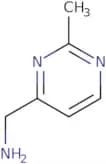
CAS:<p>Versatile small molecule scaffold</p>Formula:C8H10N2O2Purity:Min. 95%Molecular weight:166.18 g/mol(2-Methylpyrimidin-4-yl)methanamine
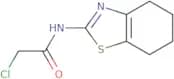
CAS:<p>Versatile small molecule scaffold</p>Formula:C6H9N3Purity:Min. 95%Molecular weight:123.16 g/mol2-Chloro-N-(4,5,6,7-tetrahydro-1,3-benzothiazol-2-yl)acetamide
CAS:Versatile small molecule scaffoldFormula:C9H11ClN2OSPurity:Min. 95%Molecular weight:230.72 g/mol4-Bromomethanesulfonylmorpholine
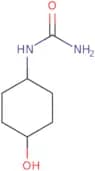
CAS:<p>Versatile small molecule scaffold</p>Formula:C5H10BrNO3SPurity:Min. 95%Molecular weight:244.11 g/mol(4-Hydroxycyclohexyl)urea
CAS:<p>Versatile small molecule scaffold</p>Formula:C7H14N2O2Purity:Min. 95%Molecular weight:158.2 g/mol1H,2H,3H,3aH,4H,9H-Pyrrolo[2,1-b]quinazolin-9-one
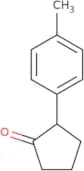
CAS:<p>Versatile small molecule scaffold</p>Formula:C11H12N2OPurity:Min. 95%Molecular weight:188.23 g/mol2-(4-Methylphenyl)cyclopentan-1-one
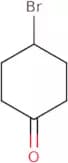
CAS:<p>Versatile small molecule scaffold</p>Formula:C12H14OPurity:Min. 95%Molecular weight:174.24 g/mol4-bromocyclohexan-1-one
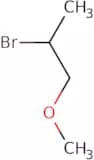
CAS:<p>4-Bromocyclohexan-1-one is a dicarbonyl compound with a cyclohexane ring. It is used as an intermediate in the synthesis of other chemicals, such as dibromobenzene and monomers. This chemical has been shown to have anti-tumor activity against colon cancer cells in vitro and in vivo. 4-Bromocyclohexan-1-one has been shown to bind to DNA, inhibiting DNA synthesis and RNA synthesis. 4-Bromocyclohexan-1-one also inhibits the growth of human tumor cells in culture. The chemical is biodegradable, which limits its toxicity to the environment.</p>Formula:C6H9BrOPurity:Min. 95%Molecular weight:177 g/mol2-bromo-1-methoxypropane
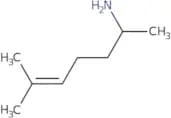
CAS:<p>2-bromo-1-methoxypropane (BMP) is a molecule that inhibits the activity of the enzyme cytochrome P450. It has high solubility and permeability, which makes it suitable for oral administration. BMP is metabolized by esterases and glucuronidases to produce 2-bromo-1-hydroxypropane, which is more soluble in water than 2-bromo-1-methoxypropane. This drug has been shown to be orally bioavailable when administered in rats and monkeys. BMP also has a low molecular weight, which facilitates its passage across cellular membranes. The metabolic stability of BMP has been optimized to increase its bioavailability.</p>Formula:C4H9BrOPurity:Min. 95%Molecular weight:153.02 g/mol6-Methylhept-5-en-2-amine
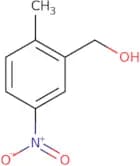
CAS:<p>Versatile small molecule scaffold</p>Formula:C8H17NPurity:Min. 95%Molecular weight:127.23 g/mol(2-Methyl-5-nitrophenyl)methanol
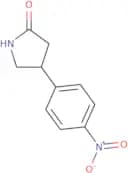
CAS:<p>(2-Methyl-5-nitrophenyl)methanol is an ionic, synthetic and diaxial analog that summarizes the diversity of ketones, nitro compounds and dopamine. It has been synthesized from 2-methylphenol and nitric acid in one step. This compound has been found to be a precursor for the biosynthesis of natural products such as dobutamine, dopamine and nitric oxide. The rearrangement of this compound leads to the formation of an aromatic ring with a nitrogen atom at its center. The synthesis of this compound is summarized in Figure 1.</p>Formula:C8H9NO3Purity:Min. 95%Molecular weight:167.16 g/mol4-(4-nitrophenyl)pyrrolidin-2-one
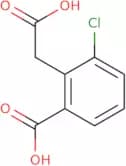
CAS:<p>Versatile small molecule scaffold</p>Formula:C10H10N2O3Purity:Min. 95%Molecular weight:206.2 g/mol2-(Carboxymethyl)-3-chlorobenzoic acid
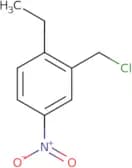
CAS:Versatile small molecule scaffoldFormula:C9H7ClO4Purity:Min. 95%Molecular weight:214.6 g/mol2-(Chloromethyl)-1-ethyl-4-nitrobenzene
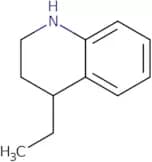
CAS:Versatile small molecule scaffoldFormula:C9H10ClNO2Purity:Min. 95%Molecular weight:199.63 g/mol4-Ethyl-1,2,3,4-tetrahydroquinoline
CAS:<p>Versatile small molecule scaffold</p>Formula:C11H15NPurity:Min. 95%Molecular weight:161.24 g/mol(3-Bromopropoxy)cyclohexane
CAS:<p>Versatile small molecule scaffold</p>Formula:C9H17BrOPurity:Min. 95%Molecular weight:221.13 g/mol2-Methyl-2-(piperidin-1-yl)propanoic acid hydrochloride
CAS:<p>Versatile small molecule scaffold</p>Formula:C9H18ClNO2Purity:Min. 95%Molecular weight:207.7 g/mol4-[(Phenylamino)methyl]aniline
CAS:<p>Versatile small molecule scaffold</p>Formula:C13H14N2Purity:Min. 95%Molecular weight:198.26 g/mol2,6-Dimethylbenzene-1-sulfonamide
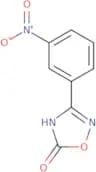
CAS:<p>Versatile small molecule scaffold</p>Formula:C8H11NO2SPurity:Min. 95%Molecular weight:185.25 g/mol3-(3-Nitrophenyl)-4,5-dihydro-1,2,4-oxadiazol-5-one
CAS:<p>Versatile small molecule scaffold</p>Formula:C8H5N3O4Purity:Min. 95%Molecular weight:207.14 g/mol3-Benzoyl-4-methylaniline hydrochloride
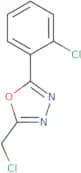
CAS:<p>Versatile small molecule scaffold</p>Formula:C14H14ClNOPurity:Min. 95%Molecular weight:247.72 g/mol2-(Chloromethyl)-5-(2-chlorophenyl)-1,3,4-oxadiazole
CAS:<p>Versatile small molecule scaffold</p>Formula:C9H6Cl2N2OPurity:Min. 95%Molecular weight:229.06 g/molN1-[2-(1-Piperazinyl)ethyl]-1,2-ethanediamine Hydrochloride
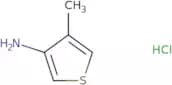
CAS:<p>Versatile small molecule scaffold</p>Formula:C8H20N4·x(HCl)Purity:Min. 95%Molecular weight:172.27 g/mol4-methylthiophen-3-amine hydrochloride
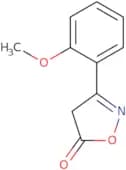
CAS:<p>Versatile small molecule scaffold</p>Formula:C5H8ClNSPurity:Min. 95%Molecular weight:149.64 g/mol3-(2-Methoxyphenyl)-4,5-dihydro-1,2-oxazol-5-one
CAS:<p>Versatile small molecule scaffold</p>Formula:C10H9NO3Purity:Min. 95%Molecular weight:191.18 g/molm-(Benzyloxy)benzyl Chloride
CAS:<p>Versatile small molecule scaffold</p>Formula:C14H13ClOPurity:Min. 95%Molecular weight:232.71 g/mol6-Fluorophthalazine-1,4-diol
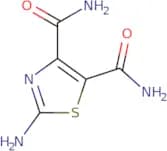
CAS:<p>Versatile small molecule scaffold</p>Formula:C8H5FN2O2Purity:Min. 95%Molecular weight:180.14 g/mol2-Amino-1,3-thiazole-4,5-dicarboxamide
CAS:<p>Versatile small molecule scaffold</p>Formula:C5H6N4O2SPurity:Min. 95%Molecular weight:186.19 g/mol3-Hydroxycyclohexane-1-carbonitrile
CAS:<p>Versatile small molecule scaffold</p>Formula:C7H11NOPurity:Min. 95%Molecular weight:125.17 g/molDiphenyl-1H-1,2,4-triazole-3-carboxylic acid
CAS:<p>Diphenyl-1H-1,2,4-triazole-3-carboxylic acid is a versatile compound that has various applications in different fields. It is commonly used as a co-substrate in the synthesis of other compounds, such as diminazene, furosemide, amprenavir, and fosamprenavir calcium. Additionally, it is utilized in the production of research chemicals and as an intermediate for the synthesis of fatty acids.</p>Formula:C15H11N3O2Purity:Min. 95%Molecular weight:265.27 g/mol2-Ethoxycyclopentan-1-one
CAS:Versatile small molecule scaffoldFormula:C7H12O2Purity:Min. 95%Molecular weight:128.17 g/mol3-(Butylamino)propan-1-ol
CAS:<p>Versatile small molecule scaffold</p>Formula:C7H17NOPurity:Min. 95%Molecular weight:131.22 g/molBis(N-[(furan-2-yl)methyl]guanidine), sulfuric acid
CAS:<p>Versatile small molecule scaffold</p>Formula:C12H20N6O6SPurity:Min. 95%Molecular weight:376.39 g/mol3-Amino-6,6-dimethylcyclohex-2-en-1-one
CAS:<p>Versatile small molecule scaffold</p>Formula:C8H13NOPurity:Min. 95%Molecular weight:139.19 g/mol2-Bromobutan-1-ol
CAS:<p>Versatile small molecule scaffold</p>Formula:C4H9BrOPurity:Min. 95%Molecular weight:153.02 g/mol(2-Methylpropyl)(2-phenylethyl)amine
CAS:Controlled Product<p>(2-Methylpropyl)(2-phenylethyl)amine is a versatile compound that acts as an inhibitor in various applications. It has been utilized in the synthesis of amorphous and/or particulate inhibitors, such as celecoxib, for the treatment of inflammation and pain. Additionally, this compound has shown potential in cellulose lithiation, which is crucial in the production of electrode materials for energy storage devices.</p>Formula:C12H19NPurity:Min. 95%Molecular weight:177.29 g/mol3-Methylcyclopentane-1-carboxylic acid
CAS:<p>Versatile small molecule scaffold</p>Formula:C7H12O2Purity:Min. 95%Molecular weight:128.17 g/mol4-Bromo-1-(chloromethyl)-2-methylbenzene
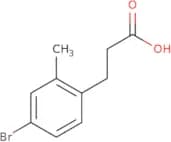
CAS:<p>Versatile small molecule scaffold</p>Formula:C8H8BrClPurity:Min. 95%Molecular weight:219.5 g/mol3-(4-Bromo-2-methylphenyl)propanoic acid
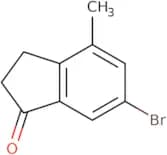
CAS:<p>Versatile small molecule scaffold</p>Formula:C10H11BrO2Purity:Min. 95%Molecular weight:243.1 g/mol6-Bromo-4-methyl-2,3-dihydro-1H-inden-1-one
CAS:<p>Versatile small molecule scaffold</p>Formula:C10H9BrOPurity:Min. 95%Molecular weight:225.08 g/mol4-Formyl-3-methylbenzoic Acid
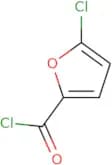
CAS:<p>Versatile small molecule scaffold</p>Formula:C9H8O3Purity:Min. 95%Molecular weight:164.16 g/mol5-Chlorofuran-2-carbonyl chloride
CAS:<p>Versatile small molecule scaffold</p>Formula:C5H2Cl2O2Purity:Min. 95%Molecular weight:164.97 g/mol3-(Hexyloxy)benzaldehyde
CAS:<p>Versatile small molecule scaffold</p>Formula:C13H18O2Purity:Min. 95%Molecular weight:206.28 g/molp-Dodecyloxybenzaldehyde
CAS:<p>Versatile small molecule scaffold</p>Formula:C19H30O2Purity:Min. 95%Molecular weight:290.4 g/mol1-[3-(Chloromethyl)-4-hydroxyphenyl]ethan-1-one
CAS:<p>Versatile small molecule scaffold</p>Formula:C9H9ClO2Purity:Min. 95%Molecular weight:184.62 g/mol5-Iodo-4-methyl-1H-pyrazole
CAS:<p>Versatile small molecule scaffold</p>Formula:C4H5IN2Purity:Min. 95%Molecular weight:208 g/mol3-Methyl-1-phenyl-1H-thieno[2,3-c]pyrazole
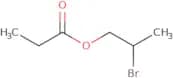
CAS:<p>Versatile small molecule scaffold</p>Formula:C12H10N2SPurity:Min. 95%Molecular weight:214.29 g/mol2-Bromopropyl propionate
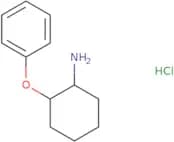
CAS:<p>Versatile small molecule scaffold</p>Formula:C6H11BrO2Purity:Min. 95%Molecular weight:195.05 g/mol2-Phenoxycyclohexan-1-amine hydrochloride
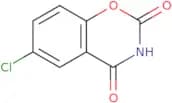
CAS:<p>Versatile small molecule scaffold</p>Formula:C12H18ClNOPurity:Min. 95%Molecular weight:227.73 g/mol6-Chloro-3,4-dihydro-2H-1,3-benzoxazine-2,4-dione
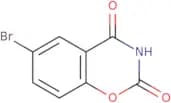
CAS:<p>Versatile small molecule scaffold</p>Formula:C8H4ClNO3Purity:Min. 95%Molecular weight:197.6 g/mol6-Bromo-2h-1,3-benzoxazine-2,4(3h)-dione
CAS:<p>Versatile small molecule scaffold</p>Formula:C8H4NO3BrPurity:Min. 95%Molecular weight:242.03 g/mol4,7-Dioxo-7-thiophen-2-yl-heptanoic acid
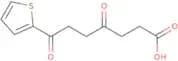
CAS:<p>Versatile small molecule scaffold</p>Formula:C11H12O4SPurity:Min. 95%Molecular weight:240.28 g/mol2-(Methanesulfonylmethyl)-1H-1,3-benzodiazole
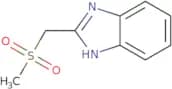
CAS:<p>Versatile small molecule scaffold</p>Formula:C9H10N2O2SPurity:Min. 95%Molecular weight:210.26 g/molN-[4-(Aminomethyl)phenyl]-N-methylacetamide hydrochloride
CAS:<p>Versatile small molecule scaffold</p>Formula:C10H15ClN2OPurity:Min. 95%Molecular weight:214.69 g/molN-{[4-(2-Chloroacetyl)phenyl]methyl}acetamide
CAS:<p>Versatile small molecule scaffold</p>Formula:C11H12ClNO2Purity:Min. 95%Molecular weight:225.67 g/mol3-[5-(4-Methoxy-phenyl)-furan-2-yl]-propionic acid
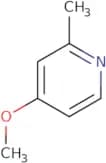
CAS:<p>Versatile small molecule scaffold</p>Formula:C14H14O4Purity:Min. 95%Molecular weight:246.26 g/mol4-Methoxy-2-methylpyridine
CAS:<p>Versatile small molecule scaffold</p>Formula:C7H9NOPurity:Min. 95%Molecular weight:123.15 g/mol1-Methyl-2-propyl-1H-1,3-benzodiazole
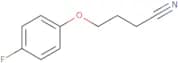
CAS:Controlled Product<p>Versatile small molecule scaffold</p>Formula:C11H14N2Purity:Min. 95%Molecular weight:174.24 g/mol4-(4-Fluorophenoxy)butanenitrile
CAS:<p>Versatile small molecule scaffold</p>Formula:C10H10FNOPurity:Min. 95%Molecular weight:179.19 g/mol1-(5-Ethylfuran-2-yl)ethan-1-one
CAS:<p>Versatile small molecule scaffold</p>Formula:C8H10O2Purity:Min. 95%Molecular weight:138.16 g/molN-Methyl-2-(N-methylacetamido)acetamide
CAS:<p>Versatile small molecule scaffold</p>Formula:C6H12N2O2Purity:Min. 95%Molecular weight:144.17 g/mol2,4-Dichloro-1-methyl-1H-1,3-benzodiazole
CAS:<p>Versatile small molecule scaffold</p>Formula:C8H6Cl2N2Purity:Min. 95%Molecular weight:201.05 g/mol5-Bromo-1,2-dimethyl-1H-imidazole
CAS:<p>5-Bromo-1,2-dimethyl-1H-imidazole is a versatile compound with a range of applications in various industries. It is commonly used in the production of research chemicals, such as indolin-2-one and picroside. Additionally, it is utilized in the synthesis of dyes like pararosaniline. This compound also finds application in the field of medicine. It can be used as a precursor in the synthesis of pharmaceuticals like sulfisoxazole and dacarbazine. Furthermore, 5-Bromo-1,2-dimethyl-1H-imidazole has been studied for its potential as an electrode material due to its unique properties. In addition to its medical and scientific applications, this compound has been explored for its use in various chemical processes. It has been found to act as a solid catalyst in certain reactions and can be employed in collagenase assays. Its versatility extends further to fields like agriculture and food science, where it may find use</p>Formula:C5H7BrN2Purity:Min. 95%Molecular weight:175.03 g/mol1,3-dimethyl-2-oxo-2,3-dihydro-1h-benzo[d]imidazole-5-sulfonyl chloride
CAS:<p>Versatile small molecule scaffold</p>Formula:C9H9ClN2O3SPurity:Min. 95%Molecular weight:260.69 g/mol1,3-Dimethyl-2-oxo-2,3-dihydro-1H-1,3-benzodiazole-5-sulfonamide
CAS:Versatile small molecule scaffoldFormula:C9H11N3O3SPurity:Min. 95%Molecular weight:241.27 g/mol2-[5-(4-Chlorophenyl)-1,2-oxazol-3-yl]acetic acid
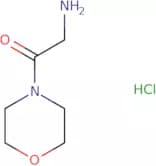
CAS:<p>Versatile small molecule scaffold</p>Formula:C11H8ClNO3Purity:Min. 95%Molecular weight:237.64 g/mol2-Amino-1-(4-morpholinyl)ethanone hydrochloride
CAS:<p>Versatile small molecule scaffold</p>Formula:C6H12N2O2·HClPurity:Min. 95%Molecular weight:180.63 g/mol






![Pyrido[3,4-d]pyrimidin-4(1H)-one, 2-methyl-](/_next/image/?url=https%3A%2Fstatic.cymitquimica.com%2Fproducts%2F3D%2Fthumb-webp%2FXAA38985.webp&w=3840&q=75)

![2-[2-(2-Bromoacetyl)phenyl]-2,3-dihydro-1H-isoindole-1,3-dione](/_next/image/?url=https%3A%2Fstatic.cymitquimica.com%2Fproducts%2F3D%2Fthumb-webp%2FXAA39423.webp&w=3840&q=75)




![1-({6-[(1-Cyanocyclohexyl)amino]hexyl}amino)cyclohexane-1-carbonitrile](/_next/image/?url=https%3A%2Fstatic.cymitquimica.com%2Fproducts%2F3D%2Fthumb-webp%2FXAA41141.webp&w=3840&q=75)


![Spiro[2.5]octan-6-ol](/_next/image/?url=https%3A%2Fstatic.cymitquimica.com%2Fproducts%2F3D%2Fthumb-webp%2FXAA42883.webp&w=3840&q=75)



![1H,2H,3H,3aH,4H,9H-Pyrrolo[2,1-b]quinazolin-9-one](/_next/image/?url=https%3A%2Fstatic.cymitquimica.com%2Fproducts%2F3D%2Fthumb-webp%2FXAA45810.webp&w=3840&q=75)

![4-[(Phenylamino)methyl]aniline](/_next/image/?url=https%3A%2Fstatic.cymitquimica.com%2Fproducts%2F3D%2Fthumb-webp%2FZAA00766.webp&w=3840&q=75)
![N1-[2-(1-Piperazinyl)ethyl]-1,2-ethanediamine Hydrochloride](/_next/image/?url=https%3A%2Fstatic.cymitquimica.com%2Fproducts%2F3D%2Fthumb-webp%2FZAA02846.webp&w=3840&q=75)

![Bis(N-[(furan-2-yl)methyl]guanidine), sulfuric acid](/_next/image/?url=https%3A%2Fstatic.cymitquimica.com%2Fproducts%2F3D%2Fthumb-webp%2FZAA06708.webp&w=3840&q=75)



![1-[3-(Chloromethyl)-4-hydroxyphenyl]ethan-1-one](/_next/image/?url=https%3A%2Fstatic.cymitquimica.com%2Fproducts%2F3D%2Fthumb-webp%2FZAA08505.webp&w=3840&q=75)

![3-Methyl-1-phenyl-1H-thieno[2,3-c]pyrazole](/_next/image/?url=https%3A%2Fstatic.cymitquimica.com%2Fproducts%2F3D%2Fthumb-webp%2FZAA08635.webp&w=3840&q=75)
![N-[4-(Aminomethyl)phenyl]-N-methylacetamide hydrochloride](/_next/image/?url=https%3A%2Fstatic.cymitquimica.com%2Fproducts%2F3D%2Fthumb-webp%2FZAA09551.webp&w=3840&q=75)
![N-{[4-(2-Chloroacetyl)phenyl]methyl}acetamide](/_next/image/?url=https%3A%2Fstatic.cymitquimica.com%2Fproducts%2F3D%2Fthumb-webp%2FZAA09556.webp&w=3840&q=75)
![3-[5-(4-Methoxy-phenyl)-furan-2-yl]-propionic acid](/_next/image/?url=https%3A%2Fstatic.cymitquimica.com%2Fproducts%2F3D%2Fthumb-webp%2FZAA09877.webp&w=3840&q=75)

![1,3-dimethyl-2-oxo-2,3-dihydro-1h-benzo[d]imidazole-5-sulfonyl chloride](/_next/image/?url=https%3A%2Fstatic.cymitquimica.com%2Fproducts%2F3D%2Fthumb-webp%2FZAA13465.webp&w=3840&q=75)
![2-[5-(4-Chlorophenyl)-1,2-oxazol-3-yl]acetic acid](/_next/image/?url=https%3A%2Fstatic.cymitquimica.com%2Fproducts%2F3D%2Fthumb-webp%2FZAA14684.webp&w=3840&q=75)