


Building Blocks
This section contains fundamental products for the synthesis of organic and biological compounds. Building blocks are the essential starting materials used to construct complex molecules through various chemical reactions. They play a critical role in drug discovery, material science, and chemical research. At CymitQuimica, we offer a diverse range of high-quality building blocks to support your innovative research and industrial projects, ensuring you have the essential components for successful synthesis.
Subcategories of "Building Blocks"
- Boronic Acids & Boronic Acid Derivatives(5,756 products)
- Chiral Building Blocks(1,242 products)
- Hydrocarbon Building Blocks(6,093 products)
- Organic Building Blocks(60,522 products)
Found 195533 products of "Building Blocks"
Sort by
Purity (%)
0
100
|
0
|
50
|
90
|
95
|
100
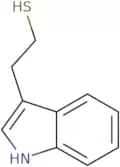
2-(1H-Indol-3-yl)ethane-1-thiol
CAS:<p>Versatile small molecule scaffold</p>Formula:C10H11NSPurity:Min. 95%Molecular weight:177.27 g/mol3-Methyl-1-[2-(morpholin-4-yl)ethyl]thiourea
CAS:<p>Versatile small molecule scaffold</p>Formula:C8H17N3OSPurity:Min. 95%Molecular weight:203.31 g/mol2-Chloro-N-(5-isopropyl-[1,3,4]thiadiazol-2-yl)-acetamide
CAS:<p>Versatile small molecule scaffold</p>Formula:C7H10ClN3OSPurity:Min. 95%Molecular weight:219.69 g/molN-(5-Butyl-1,3,4-thiadiazol-2-yl)-2-chloroacetamide
CAS:<p>Versatile small molecule scaffold</p>Formula:C8H12ClN3OSPurity:Min. 95%Molecular weight:233.72 g/mol2-Chloro-N-[5-(2-methylpropyl)-1,3,4-thiadiazol-2-yl]acetamide
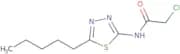
CAS:<p>Versatile small molecule scaffold</p>Formula:C8H12ClN3OSPurity:Min. 95%Molecular weight:233.72 g/mol2-Chloro-N-(5-pentyl-1,3,4-thiadiazol-2-yl)acetamide
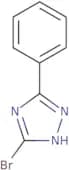
CAS:<p>Versatile small molecule scaffold</p>Formula:C9H14ClN3OSPurity:Min. 95%Molecular weight:247.75 g/mol3-Bromo-5-phenyl-1H-1,2,4-triazole
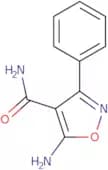
CAS:<p>Versatile small molecule scaffold</p>Formula:C8H6BrN3Purity:Min. 95%Molecular weight:224.1 g/mol5-Amino-3-phenyl-1,2-oxazole-4-carboxamide
CAS:<p>5-Amino-3-phenyl-1,2-oxazole-4-carboxamide (5APOC) is a mitochondria membrane permeable compound that inhibits the growth of cancer cells. 5APOC binds to annexin v, which is a protein found in the outer cell membrane. The binding causes depolarization of the mitochondrial membrane and induces apoptosis. 5APOC also inhibits the growth of colon cancer cells by inhibiting the activity of cytotoxic agents and inducing apoptosis. This drug has been shown to be effective against human colon cancer cells in vitro and in vivo.</p>Formula:C10H9N3O2Purity:Min. 95%Molecular weight:203.2 g/mol2-Cyclopropylglycine
CAS:<p>2-Cyclopropylglycine is a cyclic amino acid that is synthesized from threonine. It is an important intermediate in the biosynthesis of the aminoacyl-tRNA synthetases. The synthesis of 2-cyclopropylglycine begins with the conversion of threonine to homoserine by a series of reactions called the threonine deaminase pathway. Homoserine is converted to 3-hydroxy-2-methylvaleric acid by hydroxymethylglutaryl-CoA synthase and then to 2-cyclopropylglycine by cyclopropane carboxylic acid reductase, which reduces it to 2-cyclopropylmalonic acid, which is then converted to 2-cyclopropylglycine. This compound binds borohydride and forms an unstable complex with phenolic compounds. The affinity for these substrates depends on the pyrroline ring structure, with</p>Formula:C5H9NO2Purity:Min. 95%Molecular weight:115.13 g/mol3-Cyclopropylalanine
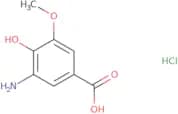
CAS:<p>3-Cyclopropylalanine (3-CPA) is a synthetic amino acid that is used as an enzyme inhibitor for the treatment of metabolic disorders and cancer. 3-CPA inhibits the activity of ns3 protease, which is involved in the production of malonic acid from succinate. The hydrogenated form of 3-CPA has been shown to inhibit protease activity, especially in diagnostic agents. 3-CPA can also be used as a catalyst for chemical reactions and when synthesized as a stable complex with enantiomers, it can be used as a diagnostic agent.</p>Formula:C6H11NO2Purity:Min. 95%Molecular weight:129.16 g/mol3-Amino-4-hydroxy-5-methoxy-benzoic acid, hydrochloride
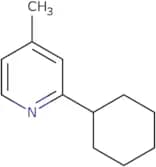
CAS:<p>Versatile small molecule scaffold</p>Formula:C8H10ClNO4Purity:Min. 95%Molecular weight:219.62 g/mol2-Cyclohexyl-4-methylpyridine
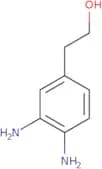
CAS:<p>Versatile small molecule scaffold</p>Formula:C12H17NPurity:Min. 95%Molecular weight:175.27 g/mol2-(3,4-Diaminophenyl)ethan-1-ol
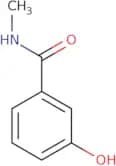
CAS:<p>Versatile small molecule scaffold</p>Formula:C8H12N2OPurity:Min. 95%Molecular weight:152.19 g/mol3-Hydroxy-N-methylbenzamide
CAS:<p>Versatile small molecule scaffold</p>Formula:C8H9NO2Purity:Min. 95%Molecular weight:151.16 g/molN-Ethyl-3-hydroxybenzamide
CAS:<p>Versatile small molecule scaffold</p>Formula:C9H11NO2Purity:Min. 95%Molecular weight:165.19 g/mol3-Hydroxy-N-(2-hydroxyethyl)benzamide
CAS:<p>Versatile small molecule scaffold</p>Formula:C9H11NO3Purity:Min. 95%Molecular weight:181.19 g/mol3-Hydroxy-N,N-dimethylbenzamide
CAS:<p>Versatile small molecule scaffold</p>Formula:C9H11NO2Purity:Min. 95%Molecular weight:165.19 g/molN,N-Diethyl-3-hydroxybenzamide
CAS:<p>Versatile small molecule scaffold</p>Formula:C11H15NO2Purity:Min. 95%Molecular weight:193.24 g/mol3-[(Morpholin-4-yl)carbonyl]phenol
CAS:<p>Versatile small molecule scaffold</p>Formula:C11H13NO3Purity:Min. 95%Molecular weight:207.23 g/mol4,6-Dichloro-1,2-dihydro-1,3,5-triazin-2-one
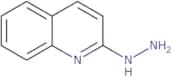
CAS:<p>Versatile small molecule scaffold</p>Formula:C3HCl2N3OPurity:Min. 95%Molecular weight:165.96 g/mol2-Hydrazinoquinoline
CAS:<p>2-Hydrazinoquinoline is a metal chelate that can be used as an analytical method to detect the presence of metals in urine samples. It is also used for the detection of methyl ethyl trifluoroacetic acid and other organic compounds. 2-Hydrazinoquinoline reacts with metal ions to form metal complexes, which are detected by spectroscopy or x-ray diffraction data. The reaction mechanism is not well understood, but it has been shown that reactive intermediates are involved.</p>Formula:C9H9N3Purity:Min. 95%Molecular weight:159.19 g/mol2-(Acetyloxy)-2-methylpropanoic acid
CAS:<p>Versatile small molecule scaffold</p>Formula:C6H10O4Purity:Min. 95%Molecular weight:146.14 g/molSpiro[2.5]octan-6-one
CAS:<p>Spiro[2.5]octan-6-one is a cyclopropanated biphenylene that reacts with diazomethane to form the chloride, resulting in an electron-rich spiro compound. The chloride is converted to the corresponding electron-deficient biphenylene by treatment with lead tetraacetate and cyclopropanes. The resulting biphenylenes can be reacted with an excess of cyclohexane in the presence of a catalytic amount of oriented Ni(0) to form the vinylcyclopropanes. This reaction can be used for the synthesis of dimers by reacting two vinylcyclopropanes together.</p>Formula:C8H12OPurity:Min. 95%Color and Shape:Clear LiquidMolecular weight:124.18 g/mol5-Chloro-2-(1H-pyrrol-1-yl)aniline
CAS:<p>Versatile small molecule scaffold</p>Formula:C10H9ClN2Purity:Min. 95%Molecular weight:192.64 g/mol2-(2,4-Dimethylbenzoyl)furan
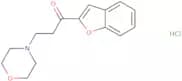
CAS:<p>Versatile small molecule scaffold</p>Formula:C13H12O2Purity:Min. 95%Molecular weight:200.23 g/mol1-(1-Benzofuran-2-yl)-3-(morpholin-4-yl)propan-1-one hydrochloride
CAS:<p>Versatile small molecule scaffold</p>Formula:C15H18ClNO3Purity:Min. 95%Molecular weight:295.76 g/molN-[(4-Methylphenyl)methyl]aniline
CAS:<p>Versatile small molecule scaffold</p>Formula:C14H15NPurity:Min. 95%Molecular weight:197.27 g/mol1-Acetylpiperidine-3-carboxamide
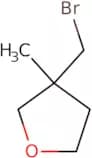
CAS:<p>Versatile small molecule scaffold</p>Formula:C8H14N2O2Purity:Min. 95%Molecular weight:170.21 g/mol3-(Bromomethyl)-3-methyloxolane
CAS:<p>Versatile small molecule scaffold</p>Formula:C6H11BrOPurity:Min. 95%Molecular weight:179.05 g/mol3,3-Dimethylbutane-1,2,4-triol
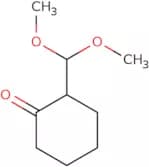
CAS:<p>3,3-Dimethylbutane-1,2,4-triol is a triol that is used as an intermediate in the synthesis of polyvinyl chloride. It is also a plasticizer and an intermediate for the production of neopentyl glycol. 3,3-Dimethylbutane-1,2,4-triol can be hydrogenated to form 1,2-dimethoxyethane at temperatures ranging from 40° C to 100° C and pressures ranging from atmospheric pressure to 100 psi. This compound can also be chlorinated to form 1,2-dichloroethane under catalytic conditions at temperatures ranging from 50° C to 120°C and pressures ranging from atmospheric pressure to 5 psi. 3,3-Dimethylbutane-1,2,4-triol can also be solvolyzed with solvents such as ethanol or diethylether under pressures up to 200 psi.</p>Formula:C6H14O3Purity:Min. 95%Molecular weight:134.17 g/mol2-(Dimethoxymethyl)cyclohexan-1-one
CAS:<p>2-(Dimethoxymethyl)cyclohexan-1-one is a cyclohexanone derivative that has the axial geometry. It is an isomer of 2-(dimethoxy)methylcyclohexanone, which has the same chemical formula and molecular weight but a different geometry (planar). The two compounds have similar spectra, with the exception that 2-(dimethoxymethyl)cyclohexan-1-one has a single proton resonance at δ = 4.71 ppm, whereas 2-(dimethoxy)methylcyclohexanone has two proton resonances at δ = 4.71 ppm and δ = 3.07 ppm. The presence of this single resonance suggests that the molecule is in the axial conformation.</p>Formula:C9H16O3Purity:Min. 95%Molecular weight:172.22 g/mol2-(Dimethoxymethyl)cyclopentan-1-one
CAS:<p>Versatile small molecule scaffold</p>Formula:C8H14O3Purity:Min. 95%Molecular weight:158.19 g/molEthyl 2-(cyclopent-2-en-1-yl)acetate
CAS:<p>Versatile small molecule scaffold</p>Formula:C9H14O2Purity:Min. 95%Molecular weight:154.21 g/mol3-[3-(4-Methoxyphenyl)oxirane-2-carbonyl]-1H-indole
CAS:<p>Versatile small molecule scaffold</p>Formula:C18H15NO3Purity:Min. 95%Molecular weight:293.3 g/mol4-(4-Propoxyphenyl)-1,3-thiazol-2-amine
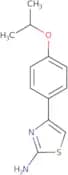
CAS:<p>Versatile small molecule scaffold</p>Formula:C12H14N2OSPurity:Min. 95%Molecular weight:234.32 g/mol4-(4-Isopropoxy-phenyl)-thiazol-2-ylamine
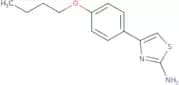
CAS:<p>Versatile small molecule scaffold</p>Formula:C12H14N2OSPurity:Min. 95%Molecular weight:234.32 g/mol4-(4-Butoxyphenyl)-1,3-thiazol-2-amine
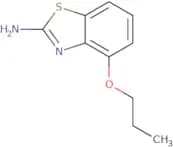
CAS:<p>Versatile small molecule scaffold</p>Formula:C13H16N2OSPurity:Min. 95%Molecular weight:248.35 g/mol4-Propoxy-1,3-benzothiazol-2-amine
CAS:<p>Versatile small molecule scaffold</p>Formula:C10H12N2OSPurity:Min. 95%Molecular weight:208.28 g/molBenzyl[2-(diethylamino)ethyl]amine
CAS:<p>Versatile small molecule scaffold</p>Formula:C13H22N2Purity:Min. 95%Molecular weight:206.33 g/mol3,4-dihydro-2H-1-benzothiopyran-4-amine hydrochloride
CAS:<p>Versatile small molecule scaffold</p>Formula:C9H11NS·HClPurity:Min. 95%Molecular weight:201.71 g/mol5-Bromo-2,3-dihydro-1H-indole hydrochloride
CAS:<p>5-Bromo-2,3-dihydro-1H-indole hydrochloride is an indoline that is used in the transformation of compounds. It is a precursor to other compounds such as 2,3-dichloroindole and 5-bromoindole.</p>Formula:C8H9BrClNPurity:Min. 95%Molecular weight:234.52 g/molIndoline-6-carbonitrile hydrochloride
CAS:<p>Versatile small molecule scaffold</p>Formula:C9H9ClN2Purity:Min. 95%Molecular weight:180.63 g/mol2,3-Dihydro-1H-indole-7-carboxylic acid
CAS:<p>Versatile small molecule scaffold</p>Formula:C9H9NO2Purity:Min. 95%Molecular weight:163.17 g/mol5-Amino-3-bromo-1-methyl-1,2-dihydropyridin-2-one
CAS:<p>Versatile small molecule scaffold</p>Formula:C6H7BrN2OPurity:Min. 95%Molecular weight:203.04 g/mol1-Oxo-1H-isochromene-4-carboxylic acid
CAS:<p>Versatile small molecule scaffold</p>Formula:C10H6O4Purity:Min. 95%Molecular weight:190.15 g/molN-(1,3-Thiazol-4-ylmethyl)aniline
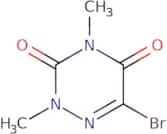
CAS:<p>Versatile small molecule scaffold</p>Formula:C10H10N2SPurity:Min. 95%Molecular weight:190.27 g/mol6-Bromo-2,4-dimethyl-2,3,4,5-tetrahydro-1,2,4-triazine-3,5-dione
CAS:<p>Versatile small molecule scaffold</p>Formula:C5H6BrN3O2Purity:Min. 95%Molecular weight:220.02 g/mol7,7,9,9-Tetramethyl-1,3,8-triazaspiro[4.5]decane-2,4-dione
CAS:<p>Versatile small molecule scaffold</p>Formula:C11H19N3O2Purity:Min. 95%Molecular weight:225.29 g/mol6-(Benzylamino)pyridine-3-carbonitrile
CAS:<p>Versatile small molecule scaffold</p>Formula:C13H11N3Purity:Min. 95%Molecular weight:209.25 g/mol2-(2,4,6-Trimethoxyphenyl)ethan-1-amine
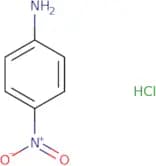
CAS:Controlled Product<p>Versatile small molecule scaffold</p>Formula:C11H17NO3Purity:Min. 95%Molecular weight:211.26 g/mol4-Nitroaniline Hydrochloride
CAS:<p>4-Nitroaniline Hydrochloride is a synthetic substrate that has been shown to inhibit the serine protease activity of human neutrophils. It is a potent inhibitor of the inflammatory response in k562 cells and is also an inhibitor of hydrolysis reactions catalyzed by p-hydroxybenzoic acid. The inhibition of these enzymes may be due to a kinetic or chemical reaction with hydrogen chloride, which acts as a catalyst. 4-Nitroaniline Hydrochloride has not been tested in clinical trials, but it has been shown to have an inhibitory effect on inflammatory diseases in animal models.</p>Formula:C6H6N2O2·HClPurity:Min. 95%Molecular weight:174.58 g/mol2-Hydroxy-3-methyl-2-phenylbutanoic acid
CAS:<p>Versatile small molecule scaffold</p>Formula:C11H14O3Purity:Min. 95%Molecular weight:194.23 g/mol5-(2-Methoxy-ethyl)-[1,3,4]thiadiazol-2-ylamine
CAS:<p>Versatile small molecule scaffold</p>Formula:C5H9N3OSPurity:Min. 95%Molecular weight:159.21 g/mol1-Chloro-4-{[(chloromethyl)sulfanyl]methyl}benzene
CAS:<p>Versatile small molecule scaffold</p>Formula:C8H8Cl2SPurity:Min. 95%Molecular weight:207.12 g/molSodium 3-methylbenzene-1-sulfinate
CAS:<p>Versatile small molecule scaffold</p>Formula:C7H7NaO2SPurity:Min. 95%Molecular weight:178.19 g/mol1-Bromo-5,5-dimethylhexane
CAS:<p>Versatile small molecule scaffold</p>Formula:C8H17BrPurity:Min. 95%Molecular weight:193.12 g/mol6,6-Dimethylheptanoic acid
CAS:<p>6,6-Dimethylheptanoic acid is a polybasic fatty acid that is used as an antifungal agent. It has been shown to inhibit the growth of various yeast and fungi in laboratory studies. 6,6-Dimethylheptanoic acid has also been shown to have anticancer properties due to its ability to cause tumor cell apoptosis. This compound may be used for coatings or treatments on surfaces, such as skin or teeth, and can be used in the production of polymers with antimicrobial activities. 6,6-Dimethylheptanoic acid has been shown to have anti-inflammatory properties and may be useful for the treatment of nociceptive pain.</p>Formula:C9H18O2Purity:Min. 95%Molecular weight:158.24 g/mol2-Methyl-2-(propan-2-yl)cyclopropane-1-carboxylic acid
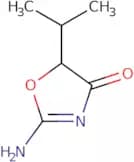
CAS:<p>Versatile small molecule scaffold</p>Formula:C8H14O2Purity:Min. 95%Molecular weight:142.2 g/mol4(5H)-Oxazolone, 2-amino-5-(1-methylethyl)-
CAS:<p>Versatile small molecule scaffold</p>Formula:C6H10N2O2Purity:Min. 95%Molecular weight:142.16 g/mol4-Methyl-isothiazole-5-carboxylic acid
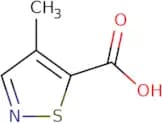
CAS:<p>Versatile small molecule scaffold</p>Formula:C5H5NO2SPurity:Min. 95%Molecular weight:143.16 g/molIsothiazole-5-carboxylic acid methyl ester
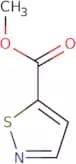
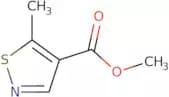
CAS:<p>Versatile small molecule scaffold</p>Formula:C5H5NO2SPurity:Min. 95%Molecular weight:143.16 g/molMethyl 5-methyl-1,2-thiazole-4-carboxylate
CAS:<p>Versatile small molecule scaffold</p>Formula:C6H7NO2SPurity:Min. 95%Molecular weight:157.19 g/mol3-Methylisothiazole-4-carboxylic acid
CAS:<p>3-Methylisothiazole-4-carboxylic acid is an amino acid that has shown anti-tumor activity. It has been shown to inhibit the growth of leukemia cells in mice and to prevent the proliferation of human cancer cells in vitro. 3-Methylisothiazole-4-carboxylic acid is a competitive inhibitor of benzoylamino, which is a key enzyme involved in the synthesis of DNA. The compound inhibits DNA replication by binding to nucleic acids at the site where they are synthesized, blocking the formation of base pairs. This drug also has immunosuppressive properties and can be used as an adjuvant therapy for hypersensitivity reactions such as asthma and allergies.</p>Formula:C5H5NO2SPurity:Min. 95%Molecular weight:143.16 g/mol3-(2,4-Dimethylphenoxy)propanoic acid
CAS:<p>Versatile small molecule scaffold</p>Formula:C11H14O3Purity:Min. 95%Molecular weight:194.23 g/mol3-Amino-2,2,4-trimethylpentan-1-ol
CAS:<p>Versatile small molecule scaffold</p>Formula:C8H19NOPurity:Min. 95%Molecular weight:145.24 g/molN-Phenylcyclobutanecarboxamide
CAS:<p>N-Phenylcyclobutanecarboxamide is a sulfone that is used as a chemotherapy agent. It has been shown to be effective in the treatment of peritoneal carcinomatosis and pancreatic cancer. This drug inhibits the growth of cancer cells by interfering with DNA synthesis and protein synthesis, which prevents cell division. N-Phenylcyclobutanecarboxamide also causes tumor cells to die by causing them to undergo apoptosis.</p>Formula:C11H13NOPurity:Min. 95%Molecular weight:175.23 g/mol3-Amino-1H,4H,5H-pyrazolo[3,4-d]pyrimidin-4-one
CAS:<p>Versatile small molecule scaffold</p>Formula:C5H5N5OPurity:Min. 95%Molecular weight:151.1 g/mol3,4-Dimethyl-6H,7H-[1,2]oxazolo[3,4-d]pyridazin-7-one
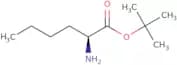
CAS:<p>Versatile small molecule scaffold</p>Formula:C7H7N3O2Purity:Min. 95%Molecular weight:165.15 g/moltert-butyl (2S)-2-aminohexanoate
CAS:<p>Tert-butyl (2S)-2-aminohexanoate is an intermediate that is used in the synthesis of glycine by the reaction of benzyl bromide and tert-butyl amine. The stereospecifically incorporated tert-butyl group has a high degree of enantioselectivity, which makes this intermediate useful in the synthesis of glycine. Tert-butyl (2S)-2-aminohexanoate can be synthesized using lithium diisopropylamide and a tertiary amine as an alkylating agent.</p>Formula:C10H21NO2Purity:Min. 95%Molecular weight:187.3 g/moliso-Butyrylglycine
CAS:<p>Iso-butyrlglycine is an intermediate in the metabolism of amino acids. It has been used as a diagnostic marker for the detection of dehydrogenase deficiency and other diseases. Iso-butyrlglycine is also used to assess the activity index of enzymes such as fatty acid synthase, which are involved in energy metabolism.</p>Formula:C6H11NO3Purity:Min. 95%Molecular weight:145.16 g/mol2-Phenyl-1,3-oxazole-4,5-dicarboxylic acid
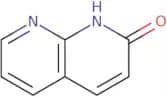
CAS:<p>Versatile small molecule scaffold</p>Formula:C11H7NO5Purity:Min. 95%Molecular weight:233.18 g/mol1,8-Naphthyridine-2(1H)-one
CAS:<p>1,8-Naphthyridine-2(1H)-one is a naphthyridone that inhibits the growth of gram-positive bacteria. This compound binds to the CB2 receptor site on the cell membrane and blocks the transfer of electrons from cytochrome c to molecular oxygen, which inhibits the production of reactive oxygen species. This inhibition causes an accumulation of hydrogen peroxide in the bacterial cell and leads to necrosis. 1,8-Naphthyridine-2(1H)-one has also been shown to inhibit HIV infection by inhibiting reverse transcriptase activity through metal chelate formation.</p>Formula:C8H6N2OPurity:Min. 95%Molecular weight:146.15 g/mol2-Chloro-1,8-naphthyridine
CAS:<p>2-Chloro-1,8-naphthyridine is a configurational isomer of 1,8-naphthyridine. It has two phenyl groups and a cyclic configuration. 2-Chloro-1,8-naphthyridine is synthesized from 2,6-dichloronaphthalene by oxidation with potassium permanganate and subsequent reduction with iron powder. The compound can reversibly form metal complexes with potassium. 2-Chloro-1,8-naphthyridine exhibits reversible changes in its conductance when subjected to cyclic voltammetry.</p>Formula:C8H5ClN2Purity:Min. 95%Molecular weight:164.59 g/mol2-(3-Methylbut-2-en-1-yl)-2,3-dihydro-1H-isoindole-1,3-dione
CAS:<p>Versatile small molecule scaffold</p>Formula:C13H13NO2Purity:Min. 95%Molecular weight:215.25 g/mol5-Bromo-7-methyl-1H-indole-2-carboxylic acid
CAS:<p>Versatile small molecule scaffold</p>Formula:C10H8BrNO2Purity:Min. 95%Molecular weight:254.08 g/mol5-Bromo-7-methyl-1H-indole
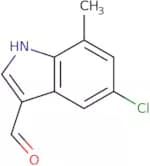
CAS:<p>5-Bromo-7-methyl-1H-indole is a serotonin receptor antagonist that blocks the binding of serotonin to its receptors, which are located on nerve cells. This drug has been used in animal studies to study the role of serotonin in brain function. 5-Bromo-7-methyl-1H-indole has also been shown to be an effective antiserotonin agent for the treatment of depression and anxiety.</p>Formula:C9H8BrNPurity:Min. 95%Molecular weight:210.07 g/mol5-Chloro-7-methyl-1H-indole-3-carbaldehyde
CAS:<p>Versatile small molecule scaffold</p>Formula:C10H8ClNOPurity:Min. 95%Molecular weight:193.63 g/mol2-[(2-bromophenyl)sulfanyl]acetic acid
CAS:<p>Versatile small molecule scaffold</p>Formula:C8H7BrO2SPurity:Min. 95%Molecular weight:247.1 g/mol4-Cyanobicyclo[2.2.2]octane-1-carboxylic acid
CAS:<p>Versatile small molecule scaffold</p>Formula:C10H13NO2Purity:Min. 95%Molecular weight:179.22 g/mol3-Methyl-5-oxocyclohexane-1,2-dicarboxylic acid
CAS:<p>Versatile small molecule scaffold</p>Formula:C9H12O5Purity:Min. 95%Molecular weight:200.19 g/molRel-2-amino-N-[(1R,4R)-4-hydroxycyclohexyl]benzamide
CAS:<p>Versatile small molecule scaffold</p>Formula:C13H18N2O2Purity:Min. 95%Molecular weight:234.29 g/mol7-chloro-1,8-naphthyridin-2-amine
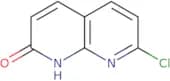
CAS:<p>Versatile small molecule scaffold</p>Formula:C8H6ClN3Purity:Min. 95%Molecular weight:179.6 g/mol7-Chloro-1,8-naphthyridin-2-ol
CAS:<p>7-Chloro-1,8-naphthyridin-2-ol is a nucleic acid that stabilizes duplexes and triplexes. It has an affinity for adenine bases in DNA, RNA, or triplexes. 7-Chloro-1,8-naphthyridin-2-ol also binds to mismatched nucleobases in the sequence of nucleic acids. This compound is a potent inhibitor of HIV replication and has been shown to inhibit the growth of cancer cells by targeting the enzyme topoisomerase II alpha.</p>Formula:C8H5ClN2OPurity:Min. 95%Molecular weight:180.59 g/mol2-Chloro-5-(methylsulfanyl)aniline
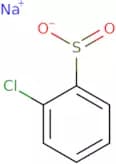
CAS:<p>2-Chloro-5-(methylsulfanyl)aniline is a sulfoxide that can inhibit the n-methyl-d-aspartate (NMDA) receptor, which is an ion channel that plays a key role in neuronal excitability. 2-Chloro-5-(methylsulfanyl)aniline has been shown to be neuroprotective against glutamate toxicity in rats and mice. This drug also blocks the NMDA receptor by binding to it, preventing glutamate from activating it. 2-Chloro-5-(methylsulfanyl)aniline has been shown to have neuroprotective effects in animal models of stroke, cerebral ischemia, and traumatic brain injury.</p>Formula:C7H8ClNSPurity:Min. 95%Molecular weight:173.66 g/mol2-Chlorobenzenesulfinic acid sodium
CAS:<p>Versatile small molecule scaffold</p>Formula:C6H4ClNaO2SPurity:Min. 95%Molecular weight:198.6 g/molSodium 3-chlorobenzene-1-sulfinate
CAS:<p>Versatile small molecule scaffold</p>Formula:C6H4ClNaO2SPurity:Min. 95%Molecular weight:198.6 g/mol2,3,4-Trichlorophenol
CAS:<p>2,3,4-Trichlorophenol (2,3,4-TCP) is a water-soluble compound that is used as an analytical reagent. 2,3,4-TCP is also an antimicrobial agent found in household cleaners and disinfectants. It is used to remove bacteria from equipment and surfaces in hospitals and other healthcare facilities. The acidic aqueous solution of 2,3,4-TCP has been shown to adsorb triclosan and p-hydroxybenzoic acid from wastewater treatment systems. The reaction mechanism for the adsorption process is not well understood but may involve the formation of hydrogen bonds between the polar hydroxyl groups on 2,3,4-TCP and the carboxyl groups on triclosan or p-hydroxybenzoic acid. Anhydrous sodium can be used as an alternative to water for this process.</p>Formula:Cl3C6H2OHPurity:Min. 95%Molecular weight:197.45 g/mol3-Chloro-N,N-diethylbenzamide
CAS:<p>Versatile small molecule scaffold</p>Formula:C11H14ClNOPurity:Min. 95%Molecular weight:211.69 g/mol3-(4-Fluorophenyl)butanoic acid
CAS:<p>3-(4-Fluorophenyl)butanoic acid is an analog of butanoic acid. It has been shown to have properties similar to carbamates and to be an intermediate in the synthesis of a number of other compounds. 3-(4-Fluorophenyl)butanoic acid is used as an oral dosage form, which is converted into its active form (2-chloro-N-[3-(4-fluorophenyl)propionyl]acetamide). This drug has been shown to be effective for the treatment of reflux disease, with a lower incidence of side effects than some other drugs used for this purpose.</p>Formula:C10H11FO2Purity:Min. 95%Molecular weight:182.19 g/mol1-(1,4-Dioxan-2-yl)ethan-1-one
CAS:<p>1-(1,4-Dioxan-2-yl)ethan-1-one is a nucleophilic compound that can be used as a catalyst for the conversion of carbinols and ketonitriles to their corresponding esters. It has been shown to have stereoselective properties in its reaction with substituted phenols. 1-(1,4-Dioxan-2-yl)ethan-1-one is also able to form coordination complexes with metals. The molecule is chiral and the enantiomers have different reactivities. This product has been shown to be useful in coatings, such as those applied to paper or textiles.</p>Formula:C6H10O3Purity:Min. 95%Molecular weight:130.14 g/molN-(4-Hydroxyphenyl)-3,4,5-trimethoxybenzamide
CAS:<p>N-(4-Hydroxyphenyl)-3,4,5-trimethoxybenzamide is a biomolecule that is found in nature. It has a square shape and is hydrophobic. The molecule consists of an amide group and a benzene ring. The molecule has been shown to have dose-dependent effects on ligands. Nonpolar molecules are attracted by the hydrophobic interactions between the benzene ring and the amide group. This molecule has also been cocrystallized with a nonpolar ligand. In this conformation, it is an anionic species with a dihedral angle of 90 degrees.</p>Formula:C16H17NO5Purity:Min. 95%Molecular weight:303.31 g/molSodium 4-nitrobenzene-1-sulfinate
CAS:<p>Sodium 4-nitrobenzenesulfinate is a sulfonylating agent that is used in organic chemistry to synthesize dihydronaphthalene, which is an intermediate in the synthesis of naphthalenes. It can be prepared by the ring-opening reaction of sodium nitrobenzenesulfinate with a suitable nucleophile such as methylenecyclopropanes. Sodium 4-nitrobenzenesulfinate reacts with sulfur to form sulfones, which are important intermediates for the synthesis of thiazoles and benzothiazoles. This reagent has been shown to be effective for the synthesis of biomolecules, such as proteins and peptides.</p>Formula:C6H4NNaO4SPurity:Min. 95%Molecular weight:209.16 g/molN-Phenylaminosulfonamide
CAS:<p>N-Phenylaminosulfonamide is a prodrug that is metabolized in the body to release oxadiazole. It has been shown to lower intracellular calcium levels by targeting response elements and hydrogen bonds in the cell. N-Phenylaminosulfonamide also inhibits fatty acid synthesis, which may be due to its ability to inhibit 3t3-l1 preadipocytes. The drug has been shown to have an anti-obesity effect by inhibiting energy metabolism through inhibition of hydroxyl group oxidation, leading to reduced glucose uptake and glycolysis.</p>Formula:C6H8N2O2SPurity:Min. 95%Molecular weight:172.21 g/mol2-Phenyl-2-propanamidoacetic acid
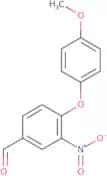
CAS:<p>Versatile small molecule scaffold</p>Formula:C11H13NO3Purity:Min. 95%Molecular weight:207.23 g/mol4-(4-Methoxyphenoxy)-3-nitrobenzaldehyde
CAS:<p>Versatile small molecule scaffold</p>Formula:C14H11NO5Purity:Min. 95%Molecular weight:273.24 g/molMethyl 3-methylenecyclobutanecarboxylate
CAS:<p>Methyl 3-methylenecyclobutanecarboxylate is an organic compound with the chemical formula CH3C(O)CH2CH2COOCH3. It is a colorless liquid that is soluble in organic solvents. Methyl 3-methylenecyclobutanecarboxylate has been studied for its use as a precursor to potassium salts, which are used as catalysts in industrial processes. Methyl 3-methylenecyclobutanecarboxylate has also been identified as a structural factor for the elimination of potassium from cyclopentanone and benzene, factors that contribute to its elimination from the body. This compound can be brominated using potassium tert-butoxide and reactions with other reagents such as lithium chloride or sodium hydroxide to form methyl 3-bromocyclobutanecarboxylate, which can then be dehydrobrominated to form methyl 3-</p>Formula:C7H10O2Purity:Min. 95%Molecular weight:126.15 g/mol(3-Chlorocyclobutyl)methanol
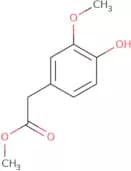
CAS:<p>Versatile small molecule scaffold</p>Formula:C5H9ClOPurity:Min. 95%Molecular weight:120.58 g/molMethyl 4-hydroxy-3-methoxyphenylacetate
CAS:<p>Methyl 4-hydroxy-3-methoxyphenylacetate (HMPAA) is a natural compound, which can be detected by mass spectrometric detection. It is an evaporative and has been shown to have inhibitory effects on the growth of ganglion cells in culture. HMPAA also inhibits phosphotungstic acid precipitation assays and crth2 expression. HMPAA has been shown to interact with other proteins, such as protein–protein interactions or functional groups. This compound is also involved in chemical reactions, such as the hydroxyl group or the methyl group. The detectable concentration of HMPAA ranges from 1 ng/mL to 1 μM and it is found in monomers or organic acids.</p>Formula:C10H12O4Purity:Min. 95%Molecular weight:196.2 g/mol1-Methyl-4-phenyl-1H-1,2,3-triazole
CAS:<p>1-Methyl-4-phenyl-1H-1,2,3-triazole is a ligand that interacts with copper. It is used in the synthesis of pyridine complexes and as a reagent for the preparation of other organometallic compounds. 1-Methyl-4-phenyl-1H-1,2,3-triazole has been shown to be able to replace azide or chloride ligands in some metal coordination complexes. It has been observed in spectra of copper and rhenium complexes with axially coordinated ligands. The X ray crystal structures of 1 methyl 4 phenyl 1H 1 2 3 triazole have revealed that it can be either a luminescent or nonluminescent compound depending on the type of solvent used during its preparation.</p>Formula:C9H9N3Purity:Min. 95%Molecular weight:159.19 g/mol2-Chloro-4-methyl-1H-benzo[d]imidazole
CAS:<p>2-Chloro-4-methyl-1H-benzo[d]imidazole is a biochemical, which has been used in structural studies and conformational analyses. The compound has been shown to be an oriented molecule that can exist in two different forms, depending on the solvent conditions. 2-Chloro-4-methyl-1H-benzo[d]imidazole is a halide with a low degree of solubility in water. It reacts with divalent cations such as magnesium or calcium ions to form insoluble salts. 2CMBDI has been shown to inhibit DNA replication by binding to 8-oxoguanosine residues during the synthesis of DNA and preventing their incorporation into the growing strand. Mechanistically, 2CMBDI inhibits cellular anions and causes cell death by inhibiting DNA replication.</p>Formula:C8H7ClN2Purity:Min. 95%Molecular weight:166.61 g/mol

![3-Methyl-1-[2-(morpholin-4-yl)ethyl]thiourea](/_next/image/?url=https%3A%2Fstatic.cymitquimica.com%2Fproducts%2F3D%2Fthumb-webp%2FQAA77599.webp&w=3840&q=75)
![2-Chloro-N-(5-isopropyl-[1,3,4]thiadiazol-2-yl)-acetamide](/_next/image/?url=https%3A%2Fstatic.cymitquimica.com%2Fproducts%2F3D%2Fthumb-webp%2FQAA77741.webp&w=3840&q=75)

![2-Chloro-N-[5-(2-methylpropyl)-1,3,4-thiadiazol-2-yl]acetamide](/_next/image/?url=https%3A%2Fstatic.cymitquimica.com%2Fproducts%2F3D%2Fthumb-webp%2FQAA77746.webp&w=3840&q=75)




![3-[(Morpholin-4-yl)carbonyl]phenol](/_next/image/?url=https%3A%2Fstatic.cymitquimica.com%2Fproducts%2F3D%2Fthumb-webp%2FQAA78905.webp&w=3840&q=75)


![Spiro[2.5]octan-6-one](/_next/image/?url=https%3A%2Fstatic.cymitquimica.com%2Fproducts%2F3D%2Fthumb-webp%2FQAA81121.webp&w=3840&q=75)


![N-[(4-Methylphenyl)methyl]aniline](/_next/image/?url=https%3A%2Fstatic.cymitquimica.com%2Fproducts%2F3D%2Fthumb-webp%2FQAA81864.webp&w=3840&q=75)




![3-[3-(4-Methoxyphenyl)oxirane-2-carbonyl]-1H-indole](/_next/image/?url=https%3A%2Fstatic.cymitquimica.com%2Fproducts%2F3D%2Fthumb-webp%2FQAA84958.webp&w=3840&q=75)

![Benzyl[2-(diethylamino)ethyl]amine](/_next/image/?url=https%3A%2Fstatic.cymitquimica.com%2Fproducts%2F3D%2Fthumb-webp%2FQAA85537.webp&w=3840&q=75)


![7,7,9,9-Tetramethyl-1,3,8-triazaspiro[4.5]decane-2,4-dione](/_next/image/?url=https%3A%2Fstatic.cymitquimica.com%2Fproducts%2F3D%2Fthumb-webp%2FQAA87154.webp&w=3840&q=75)



![5-(2-Methoxy-ethyl)-[1,3,4]thiadiazol-2-ylamine](/_next/image/?url=https%3A%2Fstatic.cymitquimica.com%2Fproducts%2F3D%2Fthumb-webp%2FQAA88490.webp&w=3840&q=75)
![1-Chloro-4-{[(chloromethyl)sulfanyl]methyl}benzene](/_next/image/?url=https%3A%2Fstatic.cymitquimica.com%2Fproducts%2F3D%2Fthumb-webp%2FQAA89425.webp&w=3840&q=75)




![3-Amino-1H,4H,5H-pyrazolo[3,4-d]pyrimidin-4-one](/_next/image/?url=https%3A%2Fstatic.cymitquimica.com%2Fproducts%2F3D%2Fthumb-webp%2FQAA90868.webp&w=3840&q=75)
![3,4-Dimethyl-6H,7H-[1,2]oxazolo[3,4-d]pyridazin-7-one](/_next/image/?url=https%3A%2Fstatic.cymitquimica.com%2Fproducts%2F3D%2Fthumb-webp%2FQAA91116.webp&w=3840&q=75)




![2-[(2-bromophenyl)sulfanyl]acetic acid](/_next/image/?url=https%3A%2Fstatic.cymitquimica.com%2Fproducts%2F3D%2Fthumb-webp%2FQAA93985.webp&w=3840&q=75)
![4-Cyanobicyclo[2.2.2]octane-1-carboxylic acid](/_next/image/?url=https%3A%2Fstatic.cymitquimica.com%2Fproducts%2F3D%2Fthumb-webp%2FQAA94109.webp&w=3840&q=75)

![Rel-2-amino-N-[(1R,4R)-4-hydroxycyclohexyl]benzamide](/_next/image/?url=https%3A%2Fstatic.cymitquimica.com%2Fproducts%2F3D%2Fthumb-webp%2FQAA94211.webp&w=3840&q=75)







![2-Chloro-4-methyl-1H-benzo[d]imidazole](/_next/image/?url=https%3A%2Fstatic.cymitquimica.com%2Fproducts%2F3D%2Fthumb-webp%2FQAA96557.webp&w=3840&q=75)