Building Blocks
This section contains fundamental products for the synthesis of organic and biological compounds. Building blocks are the essential starting materials used to construct complex molecules through various chemical reactions. They play a critical role in drug discovery, material science, and chemical research. At CymitQuimica, we offer a diverse range of high-quality building blocks to support your innovative research and industrial projects, ensuring you have the essential components for successful synthesis.
Subcategories of "Building Blocks"
- Boronic Acids & Boronic Acid Derivatives(5,756 products)
- Chiral Building Blocks(1,242 products)
- Hydrocarbon Building Blocks(6,095 products)
- Organic Building Blocks(61,037 products)
Found 196139 products of "Building Blocks"
Sort by
Purity (%)
0
100
|
0
|
50
|
90
|
95
|
100
tert-Butyl 1-oxa-8-azadispiro[2.1.2{5}.3{3}]decane-8-carboxylate
CAS:<p>Versatile small molecule scaffold</p>Formula:C13H21NO3Purity:Min. 95%Molecular weight:239.3 g/molRef: 3D-LUD63570
Discontinued product3-[(2-Chlorophenyl)sulfamoyl]benzoic acid
CAS:<p>Versatile small molecule scaffold</p>Formula:C13H10ClNO4SPurity:Min. 95%Molecular weight:311.74 g/molRef: 3D-ANA73221
Discontinued product5-Azaspiro[3.5]nonan-7-ol
CAS:<p>Versatile small molecule scaffold</p>Formula:C8H15NOPurity:Min. 95%Molecular weight:141.2 g/molRef: 3D-LUD63572
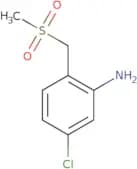
Discontinued product5-Chloro-2-(methanesulfonylmethyl)aniline
CAS:<p>Versatile small molecule scaffold</p>Formula:C8H10ClNO2SPurity:Min. 95%Molecular weight:219.69 g/molRef: 3D-AAC98811
Discontinued product4-(Benzyloxy)-3-chloro-5-methoxybenzaldehyde
CAS:<p>Versatile small molecule scaffold</p>Formula:C15H13ClO3Purity:Min. 95%Molecular weight:276.71 g/molRef: 3D-MBA68767
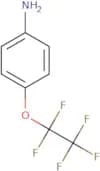
Discontinued product4-(Perfluoroethoxy)aniline
CAS:<p>Versatile small molecule scaffold</p>Formula:C8H6F5NOPurity:Min. 95%Molecular weight:227.13 g/molRef: 3D-AAA71785
Discontinued product7',8'-Dihydro-6'H-spiro[azetidine-3,5'-imidazo[1,2-a]pyrimidine]-7'-one dihydrochloride
CAS:<p>Versatile small molecule scaffold</p>Formula:C8H12Cl2N4OPurity:Min. 95%Molecular weight:251.11 g/molRef: 3D-MKD83202
Discontinued product2-[(4-bromophenyl)sulfanyl]ethan-1-ol
CAS:<p>Versatile small molecule scaffold</p>Formula:C8H9OSBrPurity:Min. 95%Molecular weight:233.12 g/molRef: 3D-PAA70392
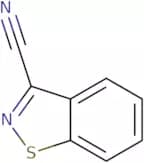
Discontinued product1,2-Benzothiazole-3-carbonitrile
CAS:<p>Versatile small molecule scaffold</p>Formula:C8H4N2SPurity:Min. 95%Molecular weight:160.2 g/molRef: 3D-RAA80720
Discontinued producttert-Butyl N-benzylcarbamate
CAS:<p>Tert-Butyl N-benzylcarbamate is a synthetic compound that is being developed for the treatment of cancer. It is an analog of carmustine, a drug used for the treatment of brain tumors, and has been shown to be effective against cell lines in vitro. Tert-Butyl N-benzylcarbamate binds to DNA and inhibits protein synthesis, leading to cancer cell death. The drug also inhibits the growth of cancer cells by inhibiting chloride channels and blocking the influx of hydrogen chloride into cells. Tert-Butyl N-benzylcarbamate has not been tested in humans yet, but it has shown promising results in animal models.</p>Formula:C12H17NO2Purity:Min. 95%Molecular weight:207.27 g/mol[(2-Bromo-5-chlorophenyl)methyl](2-methylpropyl)amine
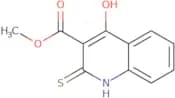
CAS:<p>Versatile small molecule scaffold</p>Formula:C11H15BrClNPurity:Min. 95%Molecular weight:276.6 g/molMethyl 4-hydroxy-2-sulfanylquinoline-3-carboxylate
CAS:<p>Methyl 4-hydroxy-2-sulfanylquinoline-3-carboxylate (MSQ) is a synthetic molecule that has shown to have antiviral activity against the hepatitis B virus. This compound is a competitive inhibitor of the virus and prevents it from infecting cells. MSQ has also been shown to inhibit other viruses, such as herpes simplex virus, influenza A and C, rotavirus, and human immunodeficiency virus type 1 (HIV-1). The high inhibition of MSQ can be attributed to its ability to form hydrogen bonds with the amino acid residues in viral proteins. Additionally, MSQ interacts with anions in the active site of the enzymes that are necessary for viral replication through alkylation reactions.<br>MSQ has been found to be selective for influenza A and C by binding at different sites on the enzyme compared to other compounds like zanamivir and oseltamivir. The single-crystal x</p>Formula:C11H9NO3SPurity:Min. 95%Molecular weight:235.26 g/molRef: 3D-SKB29434
Discontinued productmethyl 4-amino-2-(morpholin-4-yl)-1,3-thiazole-5-carboxylate
CAS:<p>Versatile small molecule scaffold</p>Formula:C9H13N3O3SPurity:Min. 95%Molecular weight:243.3 g/mol4-Bromo-5-chloro-2-fluorobenzonitrile
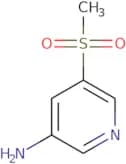
CAS:<p>Versatile small molecule scaffold</p>Formula:C7H2BrClFNPurity:Min. 95%Molecular weight:234.45 g/mol5-(methylsulfonyl)pyridin-3-amine
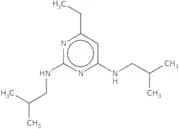
CAS:<p>Versatile small molecule scaffold</p>Formula:C6H8N2O2SPurity:Min. 95%Molecular weight:172.21 g/mol6-Ethyl-2-N,4-N-bis(2-methylpropyl)pyrimidine-2,4-diamine
CAS:<p>Versatile small molecule scaffold</p>Formula:C14H26N4Purity:Min. 95%Molecular weight:250.4 g/molRef: 3D-SSB67952
Discontinued product3a-Phenyl-hexahydro-1H-2λ6-thieno[3,4-c]pyrrole-2,2-dione hydrochloride
CAS:<p>Versatile small molecule scaffold</p>Formula:C12H16ClNO2SPurity:Min. 95%Molecular weight:273.8 g/molRef: 3D-TPD50501
Discontinued product[R]-1-Boc-3-Bromopyrrolidine
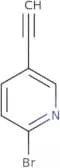
CAS:<p>Versatile small molecule scaffold</p>Formula:C9H16BrNO2Purity:Min. 95%Molecular weight:250.14 g/mol2-Bromo-5-ethynylpyridine
CAS:<p>Versatile small molecule scaffold</p>Formula:C7H4BrNPurity:Min. 95%Molecular weight:182.02 g/molRef: 3D-UXA67228
Discontinued product4-Amino-4-phenyl-butyric acid hydrochloride
CAS:<p>Versatile small molecule scaffold</p>Formula:C10H14ClNO2Purity:Min. 95%Molecular weight:215.68 g/mol3-(2,5-Dioxo-2,5-dihydro-1H-pyrrol-1-yl)-2,2-dimethylpropanoic acid
CAS:<p>Versatile small molecule scaffold</p>Formula:C9H11NO4Purity:Min. 95%Molecular weight:197.19 g/molRef: 3D-XLC39286
Discontinued product1-[(4-Chlorophenyl)methyl]-3-(2-methylpropyl)piperazine
CAS:<p>Versatile small molecule scaffold</p>Formula:C15H23ClN2Purity:Min. 95%Molecular weight:266.81 g/molRef: 3D-YJC70757
Discontinued product[2-(3-Methyl-1H-pyrazol-1-yl)pyridin-4-yl]methanol
CAS:<p>Versatile small molecule scaffold</p>Formula:C10H11N3OPurity:Min. 95%Molecular weight:189.21 g/molRef: 3D-ZZB36394
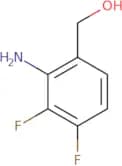
Discontinued product(2-Amino-3,4-difluorophenyl)methanol
CAS:<p>Versatile small molecule scaffold</p>Formula:C7H7F2NOPurity:Min. 95%Molecular weight:159.13 g/molRef: 3D-YXC91487
Discontinued product1-(Thiophen-2-yl)cyclohexane-1-carbonitrile
CAS:<p>Versatile small molecule scaffold</p>Formula:C11H13NSPurity:Min. 95%Molecular weight:191.29 g/molRef: 3D-ZDA85675
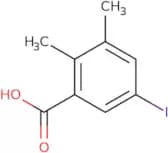
Discontinued product5-Iodo-2,3-dimethylbenzoic acid
CAS:<p>Versatile small molecule scaffold</p>Formula:C9H9IO2Purity:Min. 95%Molecular weight:276.07 g/molRef: 3D-FAA61333
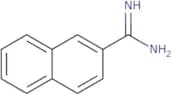
Discontinued productNaphthalene-2-carboximidamide
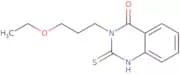
CAS:<p>Naphthalene-2-carboximidamide is a benzamidine derivative that interacts with the active site of serine proteases. It was shown to have potent inhibitory potency against a number of proteinases, including urokinase-type plasminogen activator (uPA), matrix metalloproteinase-9 (MMP-9), and cathepsin G. The interaction of naphthalene-2-carboximidamide with uPA was specific and led to inhibition of its catalytic activity. Naphthalene-2-carboximidamide has been tested in clinical trials for the treatment of influenza.</p>Formula:C11H10N2Purity:Min. 95%Molecular weight:170.21 g/mol3-(3-Ethoxypropyl)-2-sulfanyl-3,4-dihydroquinazolin-4-one
CAS:<p>Versatile small molecule scaffold</p>Formula:C13H16N2O2SPurity:Min. 95%Molecular weight:264.35 g/molRef: 3D-FQA43696
Discontinued product2-Methyl-4-[(1-methyl-1H-imidazol-2-yl)sulfanyl]aniline
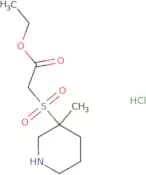
CAS:<p>Versatile small molecule scaffold</p>Formula:C11H13N3SPurity:Min. 95%Molecular weight:219.31 g/molEthyl 2-((3-methylpiperidin-3-yl)sulfonyl)acetate hydrochloride
CAS:<p>Versatile small molecule scaffold</p>Formula:C10H20ClNO4SPurity:Min. 95%Molecular weight:285.79 g/mol3-[3-(Trifluoromethyl)phenyl]-1,2,4-thiadiazol-5-amine
CAS:<p>Versatile small molecule scaffold</p>Formula:C9H6F3N3SPurity:Min. 95%Molecular weight:245.23 g/molRef: 3D-DWB97759
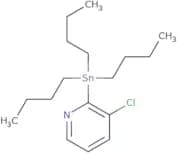
Discontinued product2-(Tributylstannyl)-3-chloropyridine
CAS:Controlled Product<p>Versatile small molecule scaffold</p>Formula:C17H30ClNSnPurity:Min. 95%Molecular weight:402.59 g/molMethyl[(1-phenyl-1H-pyrazol-3-yl)methyl]amine
CAS:<p>Versatile small molecule scaffold</p>Formula:C11H13N3Purity:Min. 95%Molecular weight:187.24 g/mol2-{[2-Formyl-4-(trifluoromethyl)phenyl](methyl)amino}acetic acid
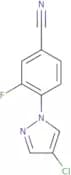
CAS:<p>Versatile small molecule scaffold</p>Formula:C11H10F3NO3Purity:Min. 95%Molecular weight:261.2 g/mol4-(4-Chloro-1H-pyrazol-1-yl)-3-fluorobenzonitrile
CAS:<p>Versatile small molecule scaffold</p>Formula:C10H5ClFN3Purity:Min. 95%Molecular weight:221.62 g/molRef: 3D-DXB19757
Discontinued product2-Oxa-spiro[3.3]heptan-6-ol
CAS:<p>Versatile small molecule scaffold</p>Formula:C6H10O2Purity:Min. 95%Molecular weight:114.14 g/mol2-Cyano-5-fluorophenol
CAS:<p>2-Cyano-5-fluorophenol is an organic compound that is used as a precursor to medicines and other chemicals. It reacts with calcium hydroxide in water to form 2-cyano-5-hydroxyfluorobenzene, which can be hydrolyzed to form 2-cyano-5-chlorofluorobenzene. This compound can also react with sodium hydroxide to produce sodium cyanate, which can be hydrolyzed to form sodium chloride and hydrogen cyanide gas. The alkali metal ions are needed for this reaction, which is why the product should not be exposed to water or moisture. 2-Cyano-5-fluorophenol has been shown to have liquid crystal properties and is used in the production of certain types of polymers. 2Cyano-5Fluorophenol crystals are also used in some medicines such as acetaminophen (paracetamol).</p>Formula:C7H4FNOPurity:Min. 95%Molecular weight:137.11 g/mol2-Bromo-3,3,3-trifluoro-1-propene
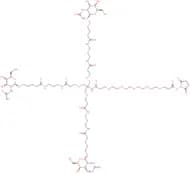
CAS:Controlled Product<p>2-Bromo-3,3,3-trifluoro-1-propene is a chemical compound that has been synthesized in an asymmetric reaction. The reactant is bromopropane and the product is 2,2,2-trifluoropropene. The methylene group on the propene molecule is activated by the nucleophilic attack of a fluoride ion from hydrogen fluoride to form a cavity with a highly strained bond. The kinetic study of this reaction revealed that the activation energy for the reaction is 42 kJ/mol. Palladium-catalyzed coupling reactions are catalyzed by palladium and require nonpolar solvents such as toluene or dichloromethane. This type of reaction has been shown to be exothermic with an isolated yield of 1%.</p>Formula:C3H2BrF3Purity:Min. 95%Color and Shape:Colorless PowderMolecular weight:174.95 g/molTri-b-GalNAc-PEG5-NHS ester
CAS:<p>Tri-GalNAc-NHS ester is a multivalent molecule composed of three GalNAc cluster arms. It is a protein degrader and a ligand of the asialoglycoprotein receptor (ASGPR) used for the development of targeted therapies for liver diseases. The GalNAc arms enable high-affinity binding to the ASGPR on hepatocyte surfaces. The crucial functional group, N-hydroxysuccinimide (NHS) ester, is known for its ease of conjugation with various biomolecules possessing amine (NH2) groups. This biocompatible reaction strategy allows the design and development of targeted conjugates such as drug-GalNAc conjugates, siRNA delivery vehicles, or probes for ASGPR imaging in the liver.</p>Formula:C79H137N11O37Purity:Min. 95%Color and Shape:PowderMolecular weight:1,832.99 g/molRef: 3D-FT183733
Discontinued product
![tert-Butyl 1-oxa-8-azadispiro[2.1.2{5}.3{3}]decane-8-carboxylate](/_next/image/?url=https%3A%2Fstatic.cymitquimica.com%2Fproducts%2F3D%2Fthumb-webp%2FLUD63570.webp&w=3840&q=75)

![3-[(2-Chlorophenyl)sulfamoyl]benzoic acid](/_next/image/?url=https%3A%2Fstatic.cymitquimica.com%2Fproducts%2F3D%2Fthumb-webp%2FANA73221.webp&w=3840&q=75)
![5-Azaspiro[3.5]nonan-7-ol](/_next/image/?url=https%3A%2Fstatic.cymitquimica.com%2Fproducts%2F3D%2Fthumb-webp%2FLUD63572.webp&w=3840&q=75)

![7',8'-Dihydro-6'H-spiro[azetidine-3,5'-imidazo[1,2-a]pyrimidine]-7'-one dihydrochloride](/_next/image/?url=https%3A%2Fstatic.cymitquimica.com%2Fproducts%2F3D%2Fthumb-webp%2FMKD83202.webp&w=3840&q=75)
![2-[(4-bromophenyl)sulfanyl]ethan-1-ol](/_next/image/?url=https%3A%2Fstatic.cymitquimica.com%2Fproducts%2F3D%2Fthumb-webp%2FPAA70392.webp&w=3840&q=75)

amine](/_next/image/?url=https%3A%2Fstatic.cymitquimica.com%2Fproducts%2F3D%2Fthumb-webp%2FSJC31753.webp&w=3840&q=75)
![3a-Phenyl-hexahydro-1H-2λ6-thieno[3,4-c]pyrrole-2,2-dione hydrochloride](/_next/image/?url=https%3A%2Fstatic.cymitquimica.com%2Fproducts%2F3D%2Fthumb-webp%2FTPD50501.webp&w=3840&q=75)
![[R]-1-Boc-3-Bromopyrrolidine](/_next/image/?url=https%3A%2Fstatic.cymitquimica.com%2Fproducts%2F3D%2Fthumb-webp%2FUXA66097.webp&w=3840&q=75)


![1-[(4-Chlorophenyl)methyl]-3-(2-methylpropyl)piperazine](/_next/image/?url=https%3A%2Fstatic.cymitquimica.com%2Fproducts%2F3D%2Fthumb-webp%2FYJC70757.webp&w=3840&q=75)
![[2-(3-Methyl-1H-pyrazol-1-yl)pyridin-4-yl]methanol](/_next/image/?url=https%3A%2Fstatic.cymitquimica.com%2Fproducts%2F3D%2Fthumb-webp%2FZZB36394.webp&w=3840&q=75)
![2-Methyl-4-[(1-methyl-1H-imidazol-2-yl)sulfanyl]aniline](/_next/image/?url=https%3A%2Fstatic.cymitquimica.com%2Fproducts%2F3D%2Fthumb-webp%2FFWB90851.webp&w=3840&q=75)
![3-[3-(Trifluoromethyl)phenyl]-1,2,4-thiadiazol-5-amine](/_next/image/?url=https%3A%2Fstatic.cymitquimica.com%2Fproducts%2F3D%2Fthumb-webp%2FDWB97759.webp&w=3840&q=75)
![Methyl[(1-phenyl-1H-pyrazol-3-yl)methyl]amine](/_next/image/?url=https%3A%2Fstatic.cymitquimica.com%2Fproducts%2F3D%2Fthumb-webp%2FGWB39185.webp&w=3840&q=75)
amino}acetic acid](/_next/image/?url=https%3A%2Fstatic.cymitquimica.com%2Fproducts%2F3D%2Fthumb-webp%2FDNB06231.webp&w=3840&q=75)
![2-Oxa-spiro[3.3]heptan-6-ol](/_next/image/?url=https%3A%2Fstatic.cymitquimica.com%2Fproducts%2F3D%2Fthumb-webp%2FNEC38108.webp&w=3840&q=75)