Building Blocks
This section contains fundamental products for the synthesis of organic and biological compounds. Building blocks are the essential starting materials used to construct complex molecules through various chemical reactions. They play a critical role in drug discovery, material science, and chemical research. At CymitQuimica, we offer a diverse range of high-quality building blocks to support your innovative research and industrial projects, ensuring you have the essential components for successful synthesis.
Subcategories of "Building Blocks"
- Boronic Acids & Boronic Acid Derivatives(5,756 products)
- Chiral Building Blocks(1,242 products)
- Hydrocarbon Building Blocks(6,095 products)
- Organic Building Blocks(61,037 products)
Found 196139 products of "Building Blocks"
Sort by
Purity (%)
0
100
|
0
|
50
|
90
|
95
|
100
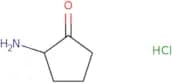
2-Aminocyclopentan-1-one hydrochloride
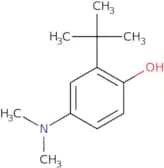
CAS:<p>Versatile small molecule scaffold</p>Formula:C5H10ClNOPurity:Min. 95%Molecular weight:135.59 g/mol2-tert-Butyl-4-(dimethylamino)phenol
CAS:<p>Versatile small molecule scaffold</p>Formula:C12H19NOPurity:Min. 95%Molecular weight:193.28 g/molRef: 3D-TZB40201
Discontinued product3-{[(Pyridin-2-yl)methyl]amino}benzoic acid
CAS:<p>Versatile small molecule scaffold</p>Formula:C13H12N2O2Purity:Min. 95%Molecular weight:228.25 g/molRef: 3D-UTB34707
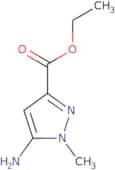
Discontinued productethyl 5-amino-1-methyl-1h-pyrazole-3-carboxylate
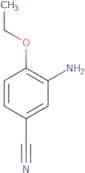
CAS:<p>Versatile small molecule scaffold</p>Formula:C7H11N3O2Purity:Min. 95%Molecular weight:169.18 g/mol3-Amino-4-ethoxybenzonitrile
CAS:<p>Versatile small molecule scaffold</p>Formula:C9H10N2OPurity:Min. 95%Molecular weight:162.19 g/molMethyl 2-chloro-5-(chlorosulfonyl)-4-fluorobenzoate
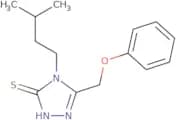
CAS:<p>Versatile small molecule scaffold</p>Formula:C8H5Cl2FO4SPurity:Min. 95%Molecular weight:287.09 g/mol4-(3-Methylbutyl)-5-(phenoxymethyl)-4H-1,2,4-triazole-3-thiol
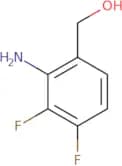
CAS:<p>Versatile small molecule scaffold</p>Formula:C14H19N3OSPurity:Min. 95%Molecular weight:277.39 g/mol(2-Amino-3,4-difluorophenyl)methanol
CAS:<p>Versatile small molecule scaffold</p>Formula:C7H7F2NOPurity:Min. 95%Molecular weight:159.13 g/molRef: 3D-YXC91487
Discontinued product1-[(3-{[(Diaminomethylidene)amino]methyl}phenyl)methyl]guanidine dihydrochloride
CAS:<p>Versatile small molecule scaffold</p>Formula:C10H18Cl2N6Purity:Min. 95%Molecular weight:293.19 g/molRef: 3D-EGA47491
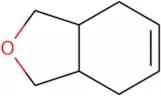
Discontinued product1,3,3a,4,7,7a-Hexahydro-2-benzofuran
CAS:<p>Versatile small molecule scaffold</p>Formula:C8H12OPurity:Min. 95%Molecular weight:124.18 g/molRef: 3D-EAA74355
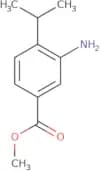
Discontinued productMethyl 3-amino-4-(propan-2-yl)benzoate
CAS:<p>Versatile small molecule scaffold</p>Formula:C11H15NO2Purity:Min. 95%Molecular weight:193.24 g/molRef: 3D-ZAA83044
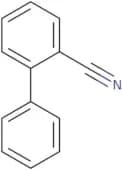
Discontinued product2-Cyanobiphenyl
CAS:<p>2-Cyanobiphenyl is a versatile research chemical that has various applications in the field of chemistry. It is a biphenyl compound that is commonly used as a fluorescent probe in scientific experiments. The chemical structure of 2-Cyanobiphenyl makes it an ideal candidate for studying phase transitions and solid-state NMR (Nuclear Magnetic Resonance). Researchers often use this compound to investigate the phase transition temperature and properties of different materials, such as nematic liquid crystals.</p>Formula:C13H9NPurity:Min. 95%Molecular weight:179.22 g/mol4-Bromo-1-ethyl-2-methyl-1H-imidazole
CAS:<p>Versatile small molecule scaffold</p>Formula:C6H9BrN2Purity:Min. 95%Molecular weight:189.05 g/molRef: 3D-ZRB11783
Discontinued product4-Amino-5-(oxolan-3-yl)-4H-1,2,4-triazole-3-thiol
CAS:<p>Versatile small molecule scaffold</p>Formula:C6H10N4OSPurity:Min. 95%Molecular weight:186.24 g/molRef: 3D-ZZB74371
Discontinued productmethyl 6-amino-1H-indole-3-carboxylate
CAS:<p>Versatile small molecule scaffold</p>Formula:C10H10N2O2Purity:Min. 95%Molecular weight:190.2 g/molRef: 3D-ZZB76334
Discontinued product3-Oxaspiro[5.5]undec-9-en-8-one
CAS:<p>Versatile small molecule scaffold</p>Formula:C10H14O2Purity:Min. 95%Molecular weight:166.2 g/molRef: 3D-DVD50672
Discontinued product1-Azaspiro[4.4]nonan-4-ol
CAS:<p>Versatile small molecule scaffold</p>Formula:C8H15NOPurity:Min. 95%Molecular weight:141.21 g/molRef: 3D-DMC89622
Discontinued product5-Azaspiro[2.5]octan-6-one
CAS:<p>Versatile small molecule scaffold</p>Formula:C7H11NOPurity:Min. 95%Molecular weight:125.17 g/mol3-Benzylpiperazin-2-one
CAS:<p>Versatile small molecule scaffold</p>Formula:C11H14N2OPurity:Min. 95%Molecular weight:190.24 g/molMethyl 4-(aminomethyl)bicyclo[2.2.2]octane-1-carboxylate hydrochloride
CAS:<p>Versatile small molecule scaffold</p>Formula:C11H20ClNO2Purity:Min. 95%Molecular weight:233.73 g/mol1-(4,6-Dimethylpyrimidin-2-yl)-3-methyl-1H-pyrazole-4-carboxylic acid
CAS:<p>Versatile small molecule scaffold</p>Formula:C11H12N4O2Purity:Min. 95%Molecular weight:232.24 g/molRef: 3D-CWB50860
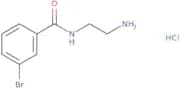
Discontinued productN-(2-Aminoethyl)-3-bromobenzamide hydrochloride
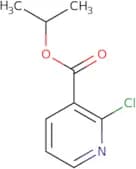
CAS:<p>Versatile small molecule scaffold</p>Formula:C9H12BrClN2OPurity:Min. 95%Molecular weight:279.56 g/molPropan-2-yl 2-chloropyridine-3-carboxylate
CAS:<p>Versatile small molecule scaffold</p>Formula:C9H10ClNO2Purity:Min. 95%Molecular weight:199.63 g/molRef: 3D-CGA52377
Discontinued product4H,5H,6H,7H-[1,2,4]Triazolo[1,5-a]pyrimidine-6-carboxylic acid
CAS:<p>Versatile small molecule scaffold</p>Formula:C6H8N4O2Purity:Min. 95%Molecular weight:168.2 g/molRef: 3D-BMC49356
Discontinued product4-Methyl-3-(1H-1,2,3,4-tetrazol-1-yl)aniline
CAS:<p>Versatile small molecule scaffold</p>Formula:C8H9N5Purity:Min. 95%Molecular weight:175.19 g/mol3-[(2-Chlorophenyl)sulfamoyl]benzoic acid
CAS:<p>Versatile small molecule scaffold</p>Formula:C13H10ClNO4SPurity:Min. 95%Molecular weight:311.74 g/molRef: 3D-ANA73221
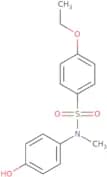
Discontinued product4-Ethoxy-N-(4-hydroxyphenyl)-N-methylbenzene-1-sulfonamide
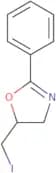
CAS:<p>Versatile small molecule scaffold</p>Formula:C15H17NO4SPurity:Min. 95%Molecular weight:307.4 g/mol5-(Iodomethyl)-2-phenyl-4,5-dihydro-1,3-oxazole
CAS:<p>Versatile small molecule scaffold</p>Formula:C10H10INOPurity:Min. 95%Molecular weight:287.1 g/molRef: 3D-AIA57305
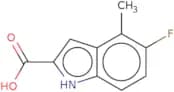
Discontinued product5-Fluoro-4-methyl-1H-indole-2-carboxylic acid
CAS:<p>Versatile small molecule scaffold</p>Formula:C10H8FNO2Purity:Min. 95%Molecular weight:193.2 g/molRef: 3D-ACA53662
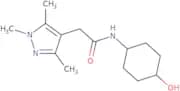
Discontinued productN-(4-Hydroxycyclohexyl)-2-(trimethyl-1H-pyrazol-4-yl)acetamide
CAS:<p>Versatile small molecule scaffold</p>Formula:C14H23N3O2Purity:Min. 95%Molecular weight:265.35 g/molRef: 3D-HWB10740
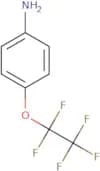
Discontinued product4-(Perfluoroethoxy)aniline
CAS:<p>Versatile small molecule scaffold</p>Formula:C8H6F5NOPurity:Min. 95%Molecular weight:227.13 g/molRef: 3D-AAA71785
Discontinued producttert-Butyl N-[3-(4-aminophenyl)propyl]carbamate
CAS:<p>Versatile small molecule scaffold</p>Formula:C14H22N2O2Purity:Min. 95%Molecular weight:250.34 g/molRef: 3D-FHA14782
Discontinued product6-Amino-[1,2,4]triazolo[1,5-a]pyridine
CAS:<p>6-Amino-[1,2,4]triazolo[1,5-a]pyridine is a drug that binds to the acetylcholine receptor and blocks the action of acetylcholine. It is used in psychiatry to treat dysfunction. 6-Amino-[1,2,4]triazolo[1,5-a]pyridine may also be used as an adjunct treatment for psychiatric disorders such as schizophrenia or depression. The drug has been shown to have allosteric properties in the muscarinic acetylcholine receptor and has been demonstrated to be a modulator at this site. 6-Amino-[1,2,4]triazolo[1,5-a]pyridine may also act on the muscarinic acetylcholine receptors in the central nervous system by blocking acetylcholine binding.</p>Formula:C6H6N4Purity:Min. 95%Molecular weight:134.14 g/molRef: 3D-GBA05294
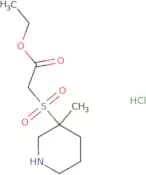
Discontinued productEthyl 2-((3-methylpiperidin-3-yl)sulfonyl)acetate hydrochloride
CAS:<p>Versatile small molecule scaffold</p>Formula:C10H20ClNO4SPurity:Min. 95%Molecular weight:285.79 g/mol3-{[3-(Trifluoromethyl)phenyl]methyl}azetidine hydrochloride
CAS:<p>Versatile small molecule scaffold</p>Formula:C11H13ClF3NPurity:Min. 95%Molecular weight:251.67 g/molRef: 3D-GXB45823
Discontinued product2-Cyano-5-fluorophenol
CAS:<p>2-Cyano-5-fluorophenol is an organic compound that is used as a precursor to medicines and other chemicals. It reacts with calcium hydroxide in water to form 2-cyano-5-hydroxyfluorobenzene, which can be hydrolyzed to form 2-cyano-5-chlorofluorobenzene. This compound can also react with sodium hydroxide to produce sodium cyanate, which can be hydrolyzed to form sodium chloride and hydrogen cyanide gas. The alkali metal ions are needed for this reaction, which is why the product should not be exposed to water or moisture. 2-Cyano-5-fluorophenol has been shown to have liquid crystal properties and is used in the production of certain types of polymers. 2Cyano-5Fluorophenol crystals are also used in some medicines such as acetaminophen (paracetamol).</p>Formula:C7H4FNOPurity:Min. 95%Molecular weight:137.11 g/mol2-Oxa-spiro[3.3]heptan-6-ol
CAS:<p>Versatile small molecule scaffold</p>Formula:C6H10O2Purity:Min. 95%Molecular weight:114.14 g/mol2-Bromo-3,3,3-trifluoro-1-propene
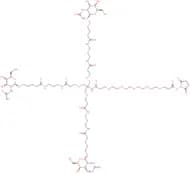
CAS:Controlled Product<p>2-Bromo-3,3,3-trifluoro-1-propene is a chemical compound that has been synthesized in an asymmetric reaction. The reactant is bromopropane and the product is 2,2,2-trifluoropropene. The methylene group on the propene molecule is activated by the nucleophilic attack of a fluoride ion from hydrogen fluoride to form a cavity with a highly strained bond. The kinetic study of this reaction revealed that the activation energy for the reaction is 42 kJ/mol. Palladium-catalyzed coupling reactions are catalyzed by palladium and require nonpolar solvents such as toluene or dichloromethane. This type of reaction has been shown to be exothermic with an isolated yield of 1%.</p>Formula:C3H2BrF3Purity:Min. 95%Color and Shape:Colorless PowderMolecular weight:174.95 g/molTri-b-GalNAc-PEG5-NHS ester
CAS:<p>Tri-GalNAc-NHS ester is a multivalent molecule composed of three GalNAc cluster arms. It is a protein degrader and a ligand of the asialoglycoprotein receptor (ASGPR) used for the development of targeted therapies for liver diseases. The GalNAc arms enable high-affinity binding to the ASGPR on hepatocyte surfaces. The crucial functional group, N-hydroxysuccinimide (NHS) ester, is known for its ease of conjugation with various biomolecules possessing amine (NH2) groups. This biocompatible reaction strategy allows the design and development of targeted conjugates such as drug-GalNAc conjugates, siRNA delivery vehicles, or probes for ASGPR imaging in the liver.</p>Formula:C79H137N11O37Purity:Min. 95%Color and Shape:PowderMolecular weight:1,832.99 g/molRef: 3D-FT183733
Discontinued product

![3-{[(Pyridin-2-yl)methyl]amino}benzoic acid](/_next/image/?url=https%3A%2Fstatic.cymitquimica.com%2Fproducts%2F3D%2Fthumb-webp%2FUTB34707.webp&w=3840&q=75)

![1-[(3-{[(Diaminomethylidene)amino]methyl}phenyl)methyl]guanidine dihydrochloride](/_next/image/?url=https%3A%2Fstatic.cymitquimica.com%2Fproducts%2F3D%2Fthumb-webp%2FEGA47491.webp&w=3840&q=75)


![3-Oxaspiro[5.5]undec-9-en-8-one](/_next/image/?url=https%3A%2Fstatic.cymitquimica.com%2Fproducts%2F3D%2Fthumb-webp%2FDVD50672.webp&w=3840&q=75)
![1-Azaspiro[4.4]nonan-4-ol](/_next/image/?url=https%3A%2Fstatic.cymitquimica.com%2Fproducts%2F3D%2Fthumb-webp%2FDMC89622.webp&w=3840&q=75)
![5-Azaspiro[2.5]octan-6-one](/_next/image/?url=https%3A%2Fstatic.cymitquimica.com%2Fproducts%2F3D%2Fthumb-webp%2FDFC59996.webp&w=3840&q=75)

![Methyl 4-(aminomethyl)bicyclo[2.2.2]octane-1-carboxylate hydrochloride](/_next/image/?url=https%3A%2Fstatic.cymitquimica.com%2Fproducts%2F3D%2Fthumb-webp%2FDBA34557.webp&w=3840&q=75)

![4H,5H,6H,7H-[1,2,4]Triazolo[1,5-a]pyrimidine-6-carboxylic acid](/_next/image/?url=https%3A%2Fstatic.cymitquimica.com%2Fproducts%2F3D%2Fthumb-webp%2FBMC49356.webp&w=3840&q=75)

![3-[(2-Chlorophenyl)sulfamoyl]benzoic acid](/_next/image/?url=https%3A%2Fstatic.cymitquimica.com%2Fproducts%2F3D%2Fthumb-webp%2FANA73221.webp&w=3840&q=75)
![tert-Butyl N-[3-(4-aminophenyl)propyl]carbamate](/_next/image/?url=https%3A%2Fstatic.cymitquimica.com%2Fproducts%2F3D%2Fthumb-webp%2FFHA14782.webp&w=3840&q=75)
![6-Amino-[1,2,4]triazolo[1,5-a]pyridine](/_next/image/?url=https%3A%2Fstatic.cymitquimica.com%2Fproducts%2F3D%2Fthumb-webp%2FGBA05294.webp&w=3840&q=75)
![3-{[3-(Trifluoromethyl)phenyl]methyl}azetidine hydrochloride](/_next/image/?url=https%3A%2Fstatic.cymitquimica.com%2Fproducts%2F3D%2Fthumb-webp%2FGXB45823.webp&w=3840&q=75)

![2-Oxa-spiro[3.3]heptan-6-ol](/_next/image/?url=https%3A%2Fstatic.cymitquimica.com%2Fproducts%2F3D%2Fthumb-webp%2FNEC38108.webp&w=3840&q=75)