


Building Blocks
This section contains fundamental products for the synthesis of organic and biological compounds. Building blocks are the essential starting materials used to construct complex molecules through various chemical reactions. They play a critical role in drug discovery, material science, and chemical research. At CymitQuimica, we offer a diverse range of high-quality building blocks to support your innovative research and industrial projects, ensuring you have the essential components for successful synthesis.
Subcategories of "Building Blocks"
- Boronic Acids & Boronic Acid Derivatives(5,756 products)
- Chiral Building Blocks(1,242 products)
- Hydrocarbon Building Blocks(6,095 products)
- Organic Building Blocks(61,038 products)
Found 196817 products of "Building Blocks"
Sort by
Purity (%)
0
100
|
0
|
50
|
90
|
95
|
100
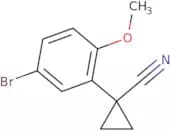
1-(5-Bromo-2-methoxyphenyl)cyclopropane-1-carbonitrile
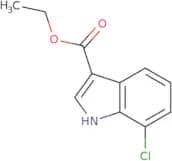
CAS:<p>Versatile small molecule scaffold</p>Formula:C11H10BrNOPurity:Min. 95%Molecular weight:252.11 g/molEthyl 7-chloro-1H-indole-3-carboxylate
CAS:Controlled Product<p>Versatile small molecule scaffold</p>Formula:C11H10ClNO2Purity:Min. 95%Molecular weight:223.65 g/mol4-{[(tert-Butoxy)carbonyl]amino}-4-methylpent-2-ynoic acid
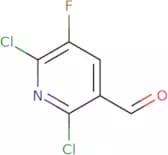
CAS:<p>Versatile small molecule scaffold</p>Formula:C11H17NO4Purity:Min. 95%Molecular weight:227.3 g/mol2,6-Dichloro-5-fluoro-3-pyridinecarboxaldehyde
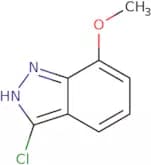
CAS:<p>Versatile small molecule scaffold</p>Formula:C6H2Cl2FNOPurity:Min. 95%Molecular weight:193.99 g/mol3-Chloro-7-methoxy-1H-indazole
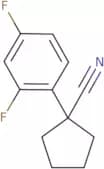
CAS:<p>Versatile small molecule scaffold</p>Formula:C8H7ClN2OPurity:Min. 95%Molecular weight:182.61 g/mol1-(2,4-Difluorophenyl)cyclopentane-1-carbonitrile
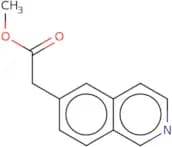
CAS:<p>Versatile small molecule scaffold</p>Formula:C12H11F2NPurity:Min. 95%Molecular weight:207.22 g/molMethyl 2-(isoquinolin-6-yl)acetate
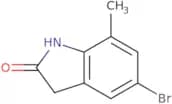
CAS:<p>Versatile small molecule scaffold</p>Formula:C12H11NO2Purity:Min. 95%Molecular weight:201.2 g/mol5-Bromo-7-methyl-2,3-dihydro-1H-indol-2-one
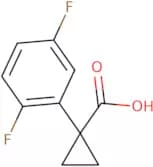
CAS:<p>Versatile small molecule scaffold</p>Formula:C9H8BrNOPurity:Min. 95%Molecular weight:226.07 g/mol1-(2,5-Difluorophenyl)cyclopropane-1-carboxylic acid
CAS:<p>Versatile small molecule scaffold</p>Formula:C10H8F2O2Purity:Min. 95%Molecular weight:198.17 g/molMethyl 2-bromo-3-[4-(trifluoromethyl)phenyl]propanoate
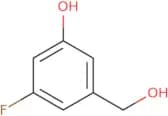
CAS:<p>Versatile small molecule scaffold</p>Formula:C11H10BrF3O2Purity:Min. 95%Molecular weight:311.09 g/mol3-Fluoro-5-(hydroxymethyl)phenol
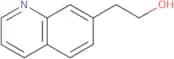
CAS:<p>Versatile small molecule scaffold</p>Formula:C7H7FO2Purity:Min. 95%Molecular weight:142.13 g/mol2-(Quinolin-7-yl)ethanol
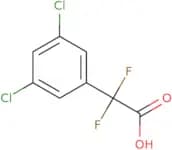
CAS:<p>Versatile small molecule scaffold</p>Formula:C11H11NOPurity:Min. 95%Molecular weight:173.21 g/mol2-(3,5-Dichlorophenyl)-2,2-difluoroacetic acid
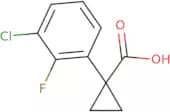
CAS:<p>Versatile small molecule scaffold</p>Formula:C8H4Cl2F2O2Purity:Min. 95%Molecular weight:241.02 g/mol1-(3-Chloro-2-fluorophenyl)cyclopropane-1-carboxylic acid
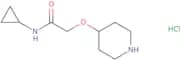
CAS:<p>Versatile small molecule scaffold</p>Formula:C10H8ClFO2Purity:Min. 95%Molecular weight:214.62 g/molN-Cyclopropyl-2-(piperidin-4-yloxy)acetamide hydrochloride
CAS:<p>Versatile small molecule scaffold</p>Formula:C10H19ClN2O2Purity:Min. 95%Molecular weight:234.72 g/mol3-[(4-Chlorophenyl)methyl]piperidin-2-one
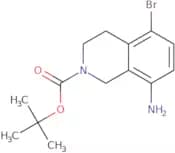
CAS:<p>Versatile small molecule scaffold</p>Formula:C12H14ClNOPurity:Min. 95%Molecular weight:223.7 g/mol2-boc-5-bromo-1,2,3,4-tetrahydroisoquinolin-8-amine
CAS:<p>Versatile small molecule scaffold</p>Formula:C14H19BrN2O2Purity:Min. 95%Molecular weight:327.22 g/mol2-Chloro-1-(5-(trifluoromethyl)pyridin-2-yl)-ethanone
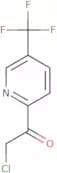
CAS:<p>Versatile small molecule scaffold</p>Formula:C8H5ClF3NOPurity:Min. 95%Molecular weight:223.58 g/mol1-(2-Bromoethyl)-2,4,5-trifluorobenzene
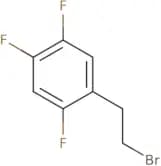
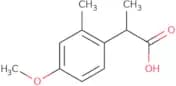
CAS:<p>Versatile small molecule scaffold</p>Formula:C8H6BrF3Purity:Min. 95%Molecular weight:239.03 g/mol2-(4-Methoxy-2-methylphenyl)propanoic acid
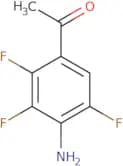
CAS:<p>Versatile small molecule scaffold</p>Formula:C11H14O3Purity:Min. 95%Molecular weight:194.23 g/mol1-(4-Amino-2,3,5-trifluorophenyl)ethan-1-one
CAS:<p>Versatile small molecule scaffold</p>Formula:C8H6F3NOPurity:Min. 95%Molecular weight:189.13 g/mol1-[3-(Trifluoromethoxy)phenyl]cyclobutane-1-carboxylic acid
CAS:<p>Versatile small molecule scaffold</p>Formula:C12H11F3O3Purity:Min. 95%Molecular weight:260.21 g/mol3-[(2-Chlorophenyl)methyl]piperidin-2-one
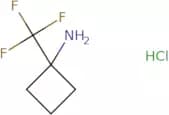
CAS:<p>Versatile small molecule scaffold</p>Formula:C12H14ClNOPurity:Min. 95%Molecular weight:223.7 g/mol1-(Trifluoromethyl)cyclobutan-1-amine hydrochloride
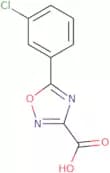
CAS:<p>Versatile small molecule scaffold</p>Formula:C5H9ClF3NPurity:Min. 95%Molecular weight:175.58 g/mol5-(3-Chlorophenyl)-1,2,4-oxadiazole-3-carboxylic acid
CAS:<p>Versatile small molecule scaffold</p>Formula:C9H5ClN2O3Purity:Min. 95%Molecular weight:224.6 g/mol5-[(4-Fluorophenyl)methyl]-1,2,4-oxadiazol-3-amine
CAS:<p>Versatile small molecule scaffold</p>Formula:C9H8FN3OPurity:Min. 95%Molecular weight:193.18 g/mol3-Methylimidazo[1,5-a]pyridine-6-carboxylic acid
CAS:<p>Versatile small molecule scaffold</p>Formula:C9H8N2O2Purity:Min. 95%Molecular weight:176.17 g/mol2-(Trifluoromethyl)imidazo[1,2-a]pyridine-7-carboxylic acid
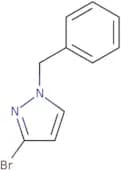
CAS:<p>Versatile small molecule scaffold</p>Formula:C9H5F3N2O2Purity:Min. 95%Molecular weight:230.14 g/mol1-Benzyl-3-bromo-1H-pyrazole
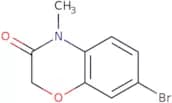
CAS:<p>Versatile small molecule scaffold</p>Formula:C10H9BrN2Purity:Min. 95%Molecular weight:237.1 g/mol7-Bromo-4-methyl-2H-1,4-benzoxazin-3-one
CAS:<p>Versatile small molecule scaffold</p>Formula:C9H8BrNO2Purity:Min. 95%Molecular weight:242.07 g/molEthyl 7-amino-5H-pyrrolo[2,3-b]pyrazine-6-carboxylate
CAS:<p>Versatile small molecule scaffold</p>Formula:C9H10N4O2Purity:Min. 95%Molecular weight:206.2 g/mol1-[(tert-butoxy)carbonyl]-3-(trifluoromethyl)pyrrolidine-3-carboxylic acid
CAS:<p>Versatile small molecule scaffold</p>Formula:C11H16F3NO4Purity:Min. 95%Molecular weight:283.2 g/mol1-[3-Fluoro-5-(trifluoromethyl)phenyl]cyclopropane-1-carboxylic acid
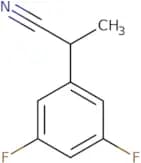
CAS:<p>Versatile small molecule scaffold</p>Formula:C11H8F4O2Purity:Min. 95%Molecular weight:248.17 g/mol2-(3,5-Difluorophenyl)propanenitrile
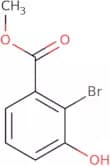
CAS:<p>Versatile small molecule scaffold</p>Formula:C9H7F2NPurity:Min. 95%Molecular weight:167.15 g/molMethyl 2-bromo-3-hydroxybenzoate
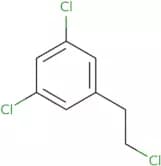
CAS:<p>Versatile small molecule scaffold</p>Formula:C8H7BrO3Purity:Min. 95%Molecular weight:231.04 g/mol1,3-Dichloro-5-(2-chloroethyl)benzene
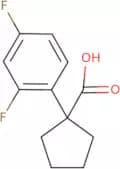
CAS:<p>Versatile small molecule scaffold</p>Formula:C8H7Cl3Purity:Min. 95%Molecular weight:209.5 g/mol1-(2,4-Difluorophenyl)cyclopentane-1-carboxylic acid
CAS:<p>Versatile small molecule scaffold</p>Formula:C12H12F2O2Purity:Min. 95%Molecular weight:226.22 g/mol1-[3,5-Bis(trifluoromethyl)phenyl]cyclopropane-1-carbonitrile
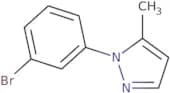
CAS:<p>Versatile small molecule scaffold</p>Formula:C12H7F6NPurity:Min. 95%Molecular weight:279.18 g/mol1-(3-Bromophenyl)-5-methyl-1H-pyrazole
CAS:<p>Versatile small molecule scaffold</p>Formula:C10H9BrN2Purity:Min. 95%Molecular weight:237.1 g/mol3-Bromo-7-chloro-1-methyl-1H-pyrazolo[4,3-d]pyrimidine
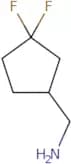
CAS:<p>Versatile small molecule scaffold</p>Formula:C6H4BrClN4Purity:Min. 95%Molecular weight:247.48 g/mol(3,3-Difluorocyclopentyl)methanamine
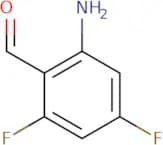
CAS:<p>Versatile small molecule scaffold</p>Formula:C6H11F2NPurity:Min. 95%Molecular weight:135.16 g/mol2-Amino-4,6-difluorobenzaldehyde
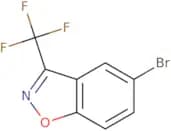
CAS:<p>Versatile small molecule scaffold</p>Formula:C7H5F2NOPurity:Min. 95%Molecular weight:157.12 g/mol5-Bromo-3-(trifluoromethyl)-1,2-benzoxazole
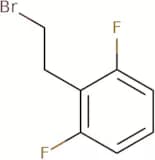
CAS:<p>Versatile small molecule scaffold</p>Formula:C8H3BrF3NOPurity:Min. 95%Molecular weight:266.01 g/mol2-(2-Bromoethyl)-1,3-difluorobenzene
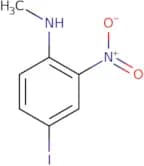
CAS:<p>Versatile small molecule scaffold</p>Formula:C8H7BrF2Purity:Min. 95%Molecular weight:221.04 g/mol4-Iodo-N-methyl-2-nitroaniline
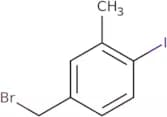
CAS:<p>Versatile small molecule scaffold</p>Formula:C7H7IN2O2Purity:Min. 95%Molecular weight:278.05 g/mol4-(Bromomethyl)-1-iodo-2-methylbenzene
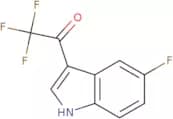
CAS:<p>Versatile small molecule scaffold</p>Formula:C8H8BrIPurity:Min. 95%Molecular weight:310.96 g/mol2,2,2-Trifluoro-1-(5-fluoro-1H-indol-3-yl)ethan-1-one
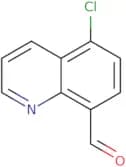
CAS:Controlled Product<p>Versatile small molecule scaffold</p>Formula:C10H5F4NOPurity:Min. 95%Molecular weight:231.15 g/mol5-Chloroquinoline-8-carbaldehyde
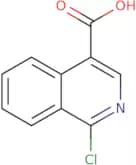
CAS:<p>Versatile small molecule scaffold</p>Formula:C10H6ClNOPurity:Min. 95%Molecular weight:191.61 g/mol1-chloroisoquinoline-4-carboxylic acid
CAS:<p>Versatile small molecule scaffold</p>Formula:C10H6ClNO2Purity:Min. 95%Molecular weight:207.6 g/mol3-[(3-Bromophenyl)methyl]pyrrolidin-2-one
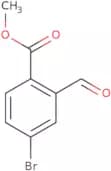
CAS:<p>Versatile small molecule scaffold</p>Formula:C11H12BrNOPurity:Min. 95%Molecular weight:254.12 g/molmethyl 4-bromo-2-formylbenzoate
CAS:<p>Versatile small molecule scaffold</p>Formula:C9H7BrO3Purity:Min. 95%Molecular weight:243.1 g/mol2-Methyl-2-[4-(trifluoromethoxy)phenyl]propanoic acid
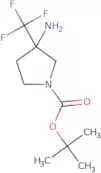
CAS:<p>Versatile small molecule scaffold</p>Formula:C11H11F3O3Purity:Min. 95%Molecular weight:248.2 g/moltert-butyl 3-amino-3-(trifluoromethyl)pyrrolidine-1-carboxylate
CAS:<p>Versatile small molecule scaffold</p>Formula:C10H17F3N2O2Purity:Min. 95%Molecular weight:254.2 g/molEthyl 7-fluoroimidazo[1,2-a]pyridine-2-carboxylate
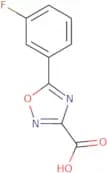
CAS:<p>Versatile small molecule scaffold</p>Formula:C10H9N2O2FPurity:Min. 95%Molecular weight:208.19 g/mol5-(3-Fluorophenyl)-1,2,4-oxadiazole-3-carboxylic acid
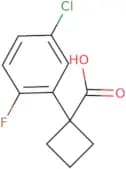
CAS:<p>Versatile small molecule scaffold</p>Formula:C9H5FN2O3Purity:Min. 95%Molecular weight:208.15 g/mol1-(5-Chloro-2-fluorophenyl)cyclobutane-1-carboxylic acid
CAS:<p>Versatile small molecule scaffold</p>Formula:C11H10ClFO2Purity:Min. 95%Molecular weight:228.65 g/mol2-Methyl-2-[4-(trifluoromethoxy)phenyl]propanenitrile
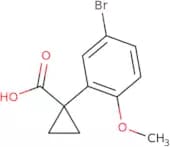
CAS:<p>Versatile small molecule scaffold</p>Formula:C11H10F3NOPurity:Min. 95%Molecular weight:229.2 g/mol1-(5-Bromo-2-methoxyphenyl)cyclopropane-1-carboxylic acid
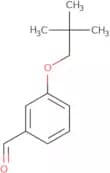
CAS:<p>Versatile small molecule scaffold</p>Formula:C11H11BrO3Purity:Min. 95%Molecular weight:271.11 g/mol3-(2,2-Dimethylpropoxy)benzaldehyde
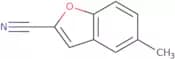
CAS:<p>Versatile small molecule scaffold</p>Formula:C12H16O2Purity:Min. 95%Molecular weight:192.25 g/mol5-Methyl-1-benzofuran-2-carbonitrile
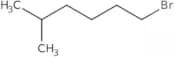
CAS:<p>5-Methyl-1-benzofuran-2-carbonitrile is a synthetic compound that is used for the efficient synthesis of bromobenzofuran. It is a byproduct in the synthesis of 5,5′-dibromo-1,1′-bi(benzofuran) and benzofurans. The product can be utilized to synthesize pharmaceuticals such as diazepam and anesthetics such as nitrous oxide.</p>Formula:C10H7NOPurity:Min. 95%Molecular weight:157.17 g/mol1-Bromo-5-methyl-hexane
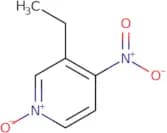
CAS:<p>1-Bromo-5-methyl-hexane is a volatile organic chemical that is used in the synthesis of pheromones and attractants. It has been shown to be an effective transport agent for other substances, such as aldehydes. This product has been used to study the effects of chemical ionization on the production of stereoisomers, which are molecules with the same molecular formula but different arrangements of atoms in space.</p>Formula:C7H15BrPurity:Min. 95%Molecular weight:179.1 g/mol3-Ethyl-4-nitropyridin-1-ium-1-olate
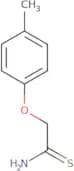
CAS:<p>Versatile small molecule scaffold</p>Formula:C7H8N2O3Purity:Min. 95%Molecular weight:168.15 g/mol2-(4-Methylphenoxy)ethanethioamide
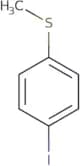
CAS:<p>Versatile small molecule scaffold</p>Formula:C9H11NOSPurity:Min. 95%Molecular weight:181.26 g/mol4-Iodothioanisole
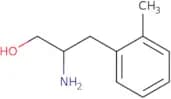
CAS:<p>4-Iodothioanisole is a synthetic molecule that is used in organic chemistry as a reagent for the formation of carbon-carbon bonds. It reacts with electrophiles to form carbon-iodine bonds and can be used to make cross-coupling reactions. 4-Iodothioanisole also enhances the fluorescence of some molecules and has been used in supramolecular chemistry. The optical properties of 4-iodothioanisole depend on its environment. In solution, it shows a yellowish color due to intramolecular excitation of the cyclopentene system, while in the solid state it is orange because of free rotation around the carbon-iodine bond.</p>Formula:C7H7ISPurity:Min. 95%Molecular weight:250.09 g/mol2-Amino-3-(2-methylphenyl)propan-1-ol
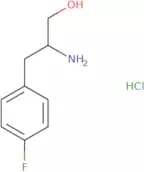
CAS:<p>Versatile small molecule scaffold</p>Formula:C10H15NOPurity:Min. 95%Molecular weight:165.23 g/mol2-Amino-3-(4-fluorophenyl)propan-1-ol
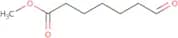
CAS:<p>Versatile small molecule scaffold</p>Formula:C9H13ClFNOPurity:Min. 95%Molecular weight:205.66 g/molMethyl 7-oxoheptanoate
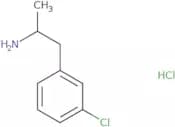
CAS:<p>Methyl 7-oxoheptanoate is a synthetic anticancer agent that inhibits cell growth. It has been shown to inhibit cancer cells and induce apoptosis in HL-60 human leukemia cells. Methyl 7-oxoheptanoate is converted to methyl heptanoate by the enzyme enantiopure, which is then hydrolyzed into diacid and cyclopentenone. The cyclopentenones are synthesized from the diacid and cyclopentenone and are used as pharmaceuticals.</p>Formula:C8H14O3Purity:Min. 95%Molecular weight:158.19 g/mol1-(3-Chlorophenyl)propan-2-amine hydrochloride
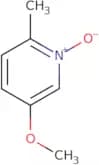
CAS:Controlled Product<p>Versatile small molecule scaffold</p>Formula:C9H13Cl2NPurity:Min. 95%Molecular weight:206.11 g/mol2-Methyl-5-methoxypyridine-N-oxide
CAS:<p>Versatile small molecule scaffold</p>Formula:C7H9NO2Purity:Min. 95%Molecular weight:139.15 g/molMethyl 2-[4-(acetyloxy)phenyl]acetate
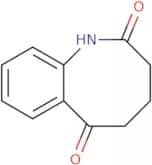
CAS:<p>Versatile small molecule scaffold</p>Formula:C11H12O4Purity:Min. 95%Molecular weight:208.21 g/mol1,2,3,4,5,6-Hexahydro-1-benzazocine-2,6-dione
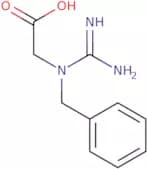
CAS:<p>Versatile small molecule scaffold</p>Formula:C11H11NO2Purity:Min. 95%Molecular weight:189.21 g/mol2-(1-Benzylcarbamimidamido)acetic acid
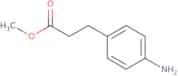
CAS:<p>Versatile small molecule scaffold</p>Formula:C10H13N3O2Purity:Min. 95%Molecular weight:207.23 g/molmethyl 3-(4-aminophenyl)propanoate
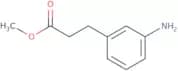
CAS:<p>Versatile small molecule scaffold</p>Formula:C10H13NO2Purity:Min. 95%Molecular weight:179.2 g/molMethyl 3-(3-aminophenyl)propanoate
CAS:<p>Versatile small molecule scaffold</p>Formula:C10H13NO2Purity:Min. 95%Molecular weight:179.22 g/molN-[(Hydrazinecarbonyl)methyl]pyridine-3-carboxamide
CAS:<p>Versatile small molecule scaffold</p>Formula:C8H10N4O2Purity:Min. 95%Molecular weight:194.19 g/mol2-Bromoethyl ethyl sulfide
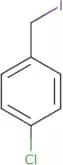
CAS:<p>2-Bromoethyl ethyl sulfide (2BEES) is a colorless liquid with a strong, sulfur-like odor. It is soluble in water, but not in organic solvents. 2BEES is a nucleophilic reagent that reacts with electrophiles at the carbon atom adjacent to the electron-donating group. The reaction of 2BEES with an electron-deficient aromatic ring can lead to substitution or elimination reactions. 2BEES has a boiling point of 108°C and its spectral data corresponds to that of chlorine. The activation energy for this reaction is 29 kJ/mol.</p>Formula:C4H9BrSPurity:Min. 95%Molecular weight:169.08 g/mol1-Chloro-4-(iodomethyl)benzene
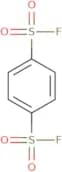
CAS:<p>1-Chloro-4-(iodomethyl)benzene (1CI) is a chlorinating agent that is used to produce aliphatic chlorinated compounds. It can be used for the alkylation of alcohols, as well as the chlorination of halides. 1CI has been shown to react with benzene in a synergistic manner when irradiated. In addition, it can be used for the preparation of iodides by reacting with sodium or potassium iodide in the presence of an alcohol and a catalyst. 1CI reacts with chloride ions to produce cyclic compounds in the microwave region. The reaction requires an electron transfer agent, such as copper chloride or silver nitrate, and yields are dependent on the type of alcohol used, which can be either aliphatic or cyclic.</p>Formula:C7H6ClIPurity:Min. 95%Molecular weight:252.48 g/molBenzene-1,4-disulfonyl difluoride
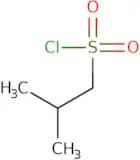
CAS:<p>Versatile small molecule scaffold</p>Formula:C6H4F2O4S2Purity:Min. 95%Molecular weight:242.2 g/mol2-Methylpropane-1-sulfonyl chloride
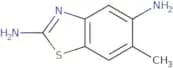
CAS:<p>2-Methylpropane-1-sulfonyl chloride is a ligand that binds to anilinoquinoline derivatives, such as the triazoles. It is also used in pharmaceuticals and as an antibacterial agent. 2-Methylpropane-1-sulfonyl chloride has been shown to inhibit Alzheimer's disease by preventing the accumulation of beta amyloid protein. This drug also inhibits bacterial growth by binding to the hydroxyl group on the outside of thiols, which are sulfur-containing compounds found in bacteria. 2-Methylpropane-1-sulfonyl chloride is structurally similar to pyridazine, a heterocyclic compound that acts as an inhibitor of DNA synthesis and protein synthesis in bacteria.</p>Formula:C4H9ClO2SPurity:Min. 95%Molecular weight:156.63 g/mol6-Methyl-1,3-benzothiazole-2,5-diamine
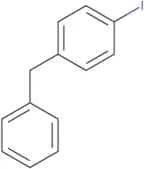
CAS:<p>Versatile small molecule scaffold</p>Formula:C8H9N3SPurity:Min. 95%Molecular weight:179.24 g/mol4-Iododiphenylmethane
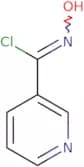
CAS:<p>4-Iododiphenylmethane is an organic compound that contains the methylene group (CH2) and is a substituted diphenylmethane. It can be prepared by the substitution of a methyl group for one of the phenyl groups on the benzene ring, followed by iodination. The reaction is catalyzed by hypophosphorous acid. This product has a number of substitutions, which creates steric effects in its reactivity. 4-Iododiphenylmethane can undergo an attack at the position one carbon away from the iodine atom. This attack leads to hypoiodite as a product. 4-Iododiphenylmethane also reacts with phenyl phosphine to form biphenyl, which is one possible way it can be used in industry.</p>Formula:C13H11IPurity:Min. 95%Molecular weight:294.13 g/molN-Hydroxypyridine-3-carbonimidoyl chloride
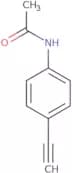
CAS:<p>Versatile small molecule scaffold</p>Formula:C6H5ClN2OPurity:Min. 95%Molecular weight:156.57 g/molN-(4-Ethynylphenyl)acetamide
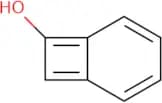
CAS:<p>Versatile small molecule scaffold</p>Formula:C10H9NOPurity:Min. 95%Molecular weight:159.18 g/mol1-Hydroxy-benzocyclobutene
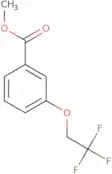
CAS:<p>1-Hydroxy-benzocyclobutene is a molecule that has been isolated from the marine sponge, Tethya crypta. It is a thioether that has been shown to inhibit the growth of Clostridium perfringens. This effect may be due to 1-hydroxy-benzocyclobutene's ability to bind primary amines in the bacterial cell wall and prevent the formation of an enzyme-inhibitor complex with the enzyme cell wall synthesis required for cell wall biosynthesis. 1-Hydroxy-benzocyclobutene also has been shown to have antioxidant properties, which may be due to its ability to absorb uv radiation and form reactive oxygen species (ROS).</p>Formula:C8H8OPurity:Min. 95%Molecular weight:120.15 g/molMethyl 3-(2,2,2-trifluoroethoxy)benzoate
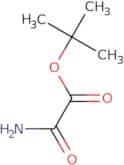
CAS:<p>Versatile small molecule scaffold</p>Formula:C10H9F3O3Purity:Min. 95%Molecular weight:234.17 g/moltert-butyl 2-amino-2-oxoacetate
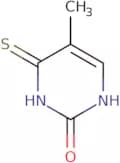
CAS:<p>Tert-butyl 2-amino-2-oxoacetate is a chiral molecule that can be used to produce enantiomerically pure amines by enzymatic reduction of ketones. This reaction is catalyzed by the enzyme alcohol dehydrogenase and proceeds with high enantioselectivities. Tert-butyl 2-amino-2-oxoacetate has also been shown to be a good substrate for enzymes that reduce other carbonyl compounds, such as esters, oximes, and nitriles. The kinetic studies showed that the enzymatic reduction of tert-butyl 2-amino-2-oxoacetate was first order in both the substrate and the enzyme and had an apparent second order rate constant for the formation of tert-butanol.</p>Formula:C6H11NO3Purity:Min. 95%Molecular weight:145.16 g/mol5-Methyl-4-thioxo-3,4-dihydropyrimidin-2(1H)-one
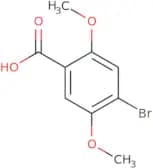
CAS:<p>5-Methyl-4-thioxo-3,4-dihydropyrimidin-2(1H)-one is a compound that interacts with DNA duplexes. It binds to the sugar residues of the DNA duplex in a manner that alters its photophysical and biological properties. 5-Methyl-4-thioxo-3,4-dihydropyrimidin-2(1H)-one has been shown to bind to dna binding proteins such as p53 and p300. This compound can also interact with oligodeoxynucleotides and is able to inhibit the synthesis of RNA by interacting with ribonucleotide reductase. The interaction of 5-methyl 4 thioxo 3,4 dihydropyrimidin 2(1H) one with ribonucleotide reductase leads to the formation of silver ions, which are toxic to cells and lead to cell death.</p>Formula:C5H6N2OSPurity:Min. 95%Molecular weight:142.18 g/mol4-Bromo-2,5-dimethoxybenzoic acid
CAS:<p>4-Bromo-2,5-dimethoxybenzoic acid (BDMA) is a chemical compound that has been used as an intermediate in the synthesis of pharmaceuticals. It is also used as a precursor for the synthesis of other compounds. BDMA has been shown to be toxic to both humans and monkeys, with toxic effects including convulsions, dyspnea, mydriasis, vomiting, and coma. The toxicological profile is not well understood because it has not been extensively studied. Studies have shown that BDMA undergoes oxidative deamination to form 4-bromo-2,5-dimethoxyamphetamine (DOB), which can cause hallucinations and nausea when ingested.</p>Formula:C9H9BrO4Purity:Min. 95%Molecular weight:261.07 g/mol4-(Fur-2-yl)benzoic acid
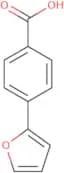
CAS:<p>4-(Fur-2-yl)benzoic acid is a palladium catalyst for Suzuki coupling reactions with boronic acids. It is also used as a modulator for furyl and benzamide synthesis. 4-(Fur-2-yl)benzoic acid has pharmacokinetic properties that are similar to those of other substituted benzoic acids. This compound is soluble in organic solvents and may be used as the solvent in high yield optimization of pharmacokinetic properties.</p>Formula:C11H8O3Purity:Min. 95%Molecular weight:188.18 g/mol3-(Fur-2-yl)benzoic acid
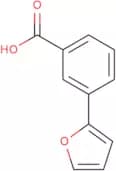
CAS:<p>Versatile small molecule scaffold</p>Formula:C11H8O3Purity:Min. 95%Molecular weight:188.18 g/mol4-Hydroxynaphthalene-1-carbonitrile
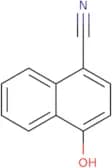
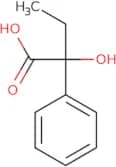
CAS:<p>4-Hydroxynaphthalene-1-carbonitrile is a white crystalline solid that can be prepared by the reaction of naphthalene with ethynyl chloride. It has been shown to have fluorescent properties and can be used as an indicator for the presence of certain metal ions in a solution, such as copper and iron. The fluorescence intensity is dependent on the concentration of the metal ion in solution. This compound also has photophysical properties, which are dependent on the wavelength of light used to excite it.<br>br></p>Formula:C11H7NOPurity:Min. 95%Molecular weight:169.18 g/mol2-Hydroxy-2-phenylbutanoic acid
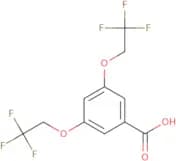
CAS:<p>2-Hydroxy-2-phenylbutanoic acid is a ligand that can bind to metal ions. It has a molecular electrostatic potential of -0.07 and a low vibrational frequency of 0.01. It has been shown that this ligand can be immobilized on surfaces where it can be used for the determination of amino acids, expressed proteins, and chiral compounds. This ligand has been shown to have good binding affinity for metal ions which makes it a useful tool in immobilization studies. 2-Hydroxy-2-phenylbutanoic acid is an amide that contains two hydroxy groups, one phenyl group, and one carboxylic acid group. It is also chiral due to its asymmetric carbon atom which means that there are two different forms of the molecule, one being levorotary (R) and the other being dextrorotary (S). The functional theory shows that 2-hydroxy-2</p>Formula:C10H12O3Purity:Min. 95%Molecular weight:180.2 g/mol3,5-Bis(2,2,2-trifluoroethoxy)benzoic acid
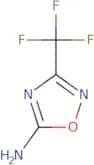
CAS:<p>Versatile small molecule scaffold</p>Formula:C11H8F6O4Purity:Min. 95%Molecular weight:318.17 g/mol3-(Trifluoromethyl)-1,2,4-oxadiazol-5-amine
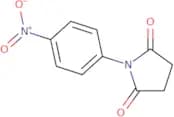
CAS:<p>Versatile small molecule scaffold</p>Formula:C3H2F3N3OPurity:Min. 95%Molecular weight:153.06 g/mol1-(4-Nitrophenyl)pyrrolidine-2,5-dione
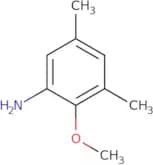
CAS:<p>Versatile small molecule scaffold</p>Formula:C10H8N2O4Purity:Min. 95%Molecular weight:220.18 g/mol2-Methoxy-3,5-dimethylaniline
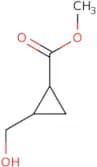
CAS:<p>Versatile small molecule scaffold</p>Formula:C9H13NOPurity:Min. 95%Molecular weight:151.21 g/molTrans-methyl 2-(hydroxymethyl)-cyclopropanecarboxylate
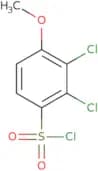
CAS:<p>Versatile small molecule scaffold</p>Formula:C6H10O3Purity:Min. 95%Molecular weight:130.14 g/mol2,3-Dichloro-4-methoxybenzene-1-sulfonyl chloride
CAS:<p>Versatile small molecule scaffold</p>Formula:C7H5Cl3O3SPurity:Min. 95%Molecular weight:275.5 g/mol4-(4-Chlorophenyl)-1H-imidazole
CAS:<p>4-(4-Chlorophenyl)-1H-imidazole is a fluorescent probe that has been used to study the substrate binding site of the enzyme cytochrome P450. This probe has been shown to bind to the cavity of the enzyme, which is located at the interface between two domains of the α-subunit. The binding of 4-(4-chlorophenyl)-1H-imidazole has been shown to inhibit catalysis by interfering with substrate binding. Crystallographic analysis and X-ray crystallographic structures have shown that this compound is a tight inhibitor of cytochrome P450. The inhibitor binds in a way that blocks access to the active site, resulting in an increase in Km and decrease in kcat for substrates bound at this site. Functional studies have also shown that 4-(4-chlorophenyl)-1H-imidazole inhibits cytochrome P450 activity, reducing levels of NADPH oxidase and other reactive</p>Formula:C9H7ClN2Purity:Min. 95%Molecular weight:178.62 g/mol1-[2-Chloro-4-(methylsulfanyl)phenyl]ethan-1-one
CAS:<p>Versatile small molecule scaffold</p>Formula:C9H9ClOSPurity:Min. 95%Molecular weight:200.69 g/mol

![4-{[(tert-Butoxy)carbonyl]amino}-4-methylpent-2-ynoic acid](/_next/image/?url=https%3A%2Fstatic.cymitquimica.com%2Fproducts%2F3D%2Fthumb-webp%2FKAC75730.webp&w=3840&q=75)
![Methyl 2-bromo-3-[4-(trifluoromethyl)phenyl]propanoate](/_next/image/?url=https%3A%2Fstatic.cymitquimica.com%2Fproducts%2F3D%2Fthumb-webp%2FKAC76144.webp&w=3840&q=75)
![3-[(4-Chlorophenyl)methyl]piperidin-2-one](/_next/image/?url=https%3A%2Fstatic.cymitquimica.com%2Fproducts%2F3D%2Fthumb-webp%2FKAC76319.webp&w=3840&q=75)
![1-[3-(Trifluoromethoxy)phenyl]cyclobutane-1-carboxylic acid](/_next/image/?url=https%3A%2Fstatic.cymitquimica.com%2Fproducts%2F3D%2Fthumb-webp%2FKAC76537.webp&w=3840&q=75)
![3-[(2-Chlorophenyl)methyl]piperidin-2-one](/_next/image/?url=https%3A%2Fstatic.cymitquimica.com%2Fproducts%2F3D%2Fthumb-webp%2FKAC76637.webp&w=3840&q=75)
![5-[(4-Fluorophenyl)methyl]-1,2,4-oxadiazol-3-amine](/_next/image/?url=https%3A%2Fstatic.cymitquimica.com%2Fproducts%2F3D%2Fthumb-webp%2FKAC77727.webp&w=3840&q=75)
![3-Methylimidazo[1,5-a]pyridine-6-carboxylic acid](/_next/image/?url=https%3A%2Fstatic.cymitquimica.com%2Fproducts%2F3D%2Fthumb-webp%2FKAC77734.webp&w=3840&q=75)
![2-(Trifluoromethyl)imidazo[1,2-a]pyridine-7-carboxylic acid](/_next/image/?url=https%3A%2Fstatic.cymitquimica.com%2Fproducts%2F3D%2Fthumb-webp%2FKAC77752.webp&w=3840&q=75)
![Ethyl 7-amino-5H-pyrrolo[2,3-b]pyrazine-6-carboxylate](/_next/image/?url=https%3A%2Fstatic.cymitquimica.com%2Fproducts%2F3D%2Fthumb-webp%2FKAC77951.webp&w=3840&q=75)
![1-[(tert-butoxy)carbonyl]-3-(trifluoromethyl)pyrrolidine-3-carboxylic acid](/_next/image/?url=https%3A%2Fstatic.cymitquimica.com%2Fproducts%2F3D%2Fthumb-webp%2FKAC78023.webp&w=3840&q=75)
![1-[3-Fluoro-5-(trifluoromethyl)phenyl]cyclopropane-1-carboxylic acid](/_next/image/?url=https%3A%2Fstatic.cymitquimica.com%2Fproducts%2F3D%2Fthumb-webp%2FKAC78099.webp&w=3840&q=75)
![1-[3,5-Bis(trifluoromethyl)phenyl]cyclopropane-1-carbonitrile](/_next/image/?url=https%3A%2Fstatic.cymitquimica.com%2Fproducts%2F3D%2Fthumb-webp%2FKAC78606.webp&w=3840&q=75)
![3-Bromo-7-chloro-1-methyl-1H-pyrazolo[4,3-d]pyrimidine](/_next/image/?url=https%3A%2Fstatic.cymitquimica.com%2Fproducts%2F3D%2Fthumb-webp%2FKAC78771.webp&w=3840&q=75)
![3-[(3-Bromophenyl)methyl]pyrrolidin-2-one](/_next/image/?url=https%3A%2Fstatic.cymitquimica.com%2Fproducts%2F3D%2Fthumb-webp%2FKAC79536.webp&w=3840&q=75)
![2-Methyl-2-[4-(trifluoromethoxy)phenyl]propanoic acid](/_next/image/?url=https%3A%2Fstatic.cymitquimica.com%2Fproducts%2F3D%2Fthumb-webp%2FKAC79543.webp&w=3840&q=75)
![Ethyl 7-fluoroimidazo[1,2-a]pyridine-2-carboxylate](/_next/image/?url=https%3A%2Fstatic.cymitquimica.com%2Fproducts%2F3D%2Fthumb-webp%2FKAC79814.webp&w=3840&q=75)
![2-Methyl-2-[4-(trifluoromethoxy)phenyl]propanenitrile](/_next/image/?url=https%3A%2Fstatic.cymitquimica.com%2Fproducts%2F3D%2Fthumb-webp%2FKAC79894.webp&w=3840&q=75)
![Methyl 2-[4-(acetyloxy)phenyl]acetate](/_next/image/?url=https%3A%2Fstatic.cymitquimica.com%2Fproducts%2F3D%2Fthumb-webp%2FKBA40015.webp&w=3840&q=75)
![N-[(Hydrazinecarbonyl)methyl]pyridine-3-carboxamide](/_next/image/?url=https%3A%2Fstatic.cymitquimica.com%2Fproducts%2F3D%2Fthumb-webp%2FKBA41823.webp&w=3840&q=75)

![1-[2-Chloro-4-(methylsulfanyl)phenyl]ethan-1-one](/_next/image/?url=https%3A%2Fstatic.cymitquimica.com%2Fproducts%2F3D%2Fthumb-webp%2FKBA51531.webp&w=3840&q=75)