Building Blocks
This section contains fundamental products for the synthesis of organic and biological compounds. Building blocks are the essential starting materials used to construct complex molecules through various chemical reactions. They play a critical role in drug discovery, material science, and chemical research. At CymitQuimica, we offer a diverse range of high-quality building blocks to support your innovative research and industrial projects, ensuring you have the essential components for successful synthesis.
Subcategories of "Building Blocks"
- Boronic Acids & Boronic Acid Derivatives(5,756 products)
- Chiral Building Blocks(1,242 products)
- Hydrocarbon Building Blocks(6,093 products)
- Organic Building Blocks(60,534 products)
Found 195534 products of "Building Blocks"
Sort by
Purity (%)
0
100
|
0
|
50
|
90
|
95
|
100
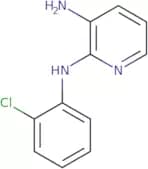
2-N-(2-Chlorophenyl)pyridine-2,3-diamine
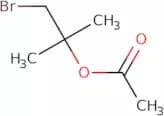
CAS:<p>Versatile small molecule scaffold</p>Formula:C11H10ClN3Purity:Min. 95%Molecular weight:219.67 g/mol1-Bromo-2-methylpropan-2-yl acetate
CAS:<p>1-Bromo-2-methylpropan-2-yl acetate is a glycol that is used as a stabilizer in the synthesis of other organic compounds. It can be used to cleave bonds and is useful for the production of drugs, such as antibiotics. In addition, 1-Bromo-2-methylpropan-2-yl acetate has been shown to inhibit the growth of staphylococcus aureus and other bacteria. This compound binds to the ribosome and inhibits protein synthesis by preventing peptide bond formation. It also has been shown to be effective against vancomycin resistance in strains of staphylococcus aureus.</p>Formula:C6H11BrO2Purity:Min. 95%Molecular weight:195.05 g/mol2-Methanesulfinylaniline
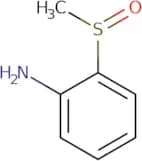
CAS:<p>2-Methanesulfinylaniline is a chemical compound that can be used as an arylating agent. It reacts with benzaldehyde or benzaldehydes to form benzylic alcohols. The reaction is catalyzed by acid and the regioselectivity of the reaction depends on the type of acid used. 2-Methanesulfinylaniline has been shown to be effective in the synthesis of 3-benzoylbenzoic acids, which are useful intermediates in organic chemistry.</p>Formula:C7H9NOSPurity:Min. 95%Molecular weight:155.22 g/mol(E,E)-Bis[(4-chlorophenyl)methylidene]hydrazine
CAS:<p>Versatile small molecule scaffold</p>Purity:Min. 95%Molecular weight:277.15 g/mol7-bromothieno[3,2-d]pyrimidine-2,4-diol
CAS:<p>Versatile small molecule scaffold</p>Formula:C6H3BrN2O2SPurity:Min. 95%Molecular weight:247.07 g/mol7-bromo-2,4-dichlorothieno[3,2-d]pyrimidine
CAS:<p>Versatile small molecule scaffold</p>Formula:C6HBrCl2N2SPurity:Min. 95%Molecular weight:283.95 g/mol4-Amino-6-chloro-1,2-dihydropyrimidin-2-one hydrochloride
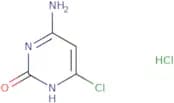
CAS:<p>Versatile small molecule scaffold</p>Formula:C4H5Cl2N3OPurity:Min. 95%Molecular weight:182.01 g/molPhenyl N-(4-sulfamoylphenyl)carbamate
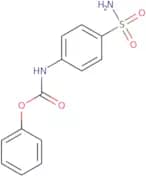
CAS:<p>Versatile small molecule scaffold</p>Formula:C13H12N2O4SPurity:Min. 95%Molecular weight:292.31 g/molMethyl 6-methylpyrazine-2-carboxylate
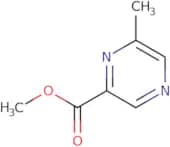
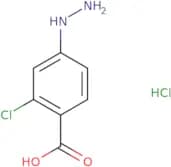
CAS:<p>Versatile small molecule scaffold</p>Formula:C7H8N2O2Purity:Min. 95%Molecular weight:152.15 g/mol2-Chloro-4-hydrazinylbenzoic Acid Hydrochloride
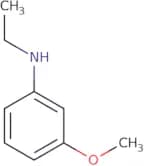
CAS:<p>Versatile small molecule scaffold</p>Formula:C7H7N2O2Cl·HClPurity:Min. 95%Molecular weight:223.05 g/molN-Ethyl-3-methoxyaniline
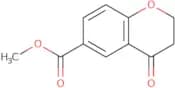
CAS:<p>N-Ethyl-3-methoxyaniline (NEM) is a biocompatible and biodegradable surrogate that can be used as a substitute for arginine in metathesis reactions. NEM has been shown to inhibit thrombin, an enzyme involved in the coagulation of blood. Cocrystallization with cobalt(II) chloride has been optimized to yield crystals with an x-ray crystal structure. The crystal structure was analyzed by x-ray diffraction and found to contain the cocrystallized product of NEM and cobalt(II) chloride.</p>Formula:C9H13NOPurity:Min. 95%Molecular weight:151.21 g/molMethyl 4-oxochromane-6-carboxylate
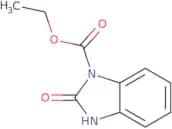
CAS:<p>Versatile small molecule scaffold</p>Formula:C11H10O4Purity:Min. 95%Molecular weight:206.2 g/molEthyl 2-oxo-2,3-dihydro-1H-1,3-benzodiazole-1-carboxylate
CAS:<p>Versatile small molecule scaffold</p>Formula:C10H10N2O3Purity:Min. 95%Molecular weight:206.2 g/mol5-Methyl-2-sulfanyl-4H,7H-[1,2,4]triazolo[1,5-a]pyrimidin-7-one
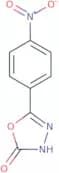
CAS:<p>Versatile small molecule scaffold</p>Formula:C6H6N4OSPurity:Min. 95%Molecular weight:182.2 g/mol5-(4-Nitrophenyl)-1,3,4-oxadiazol-2-ol
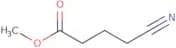
CAS:<p>Nitrophenols, such as 5-(4-nitrophenyl)-1,3,4-oxadiazol-2-ol (NPO), are a class of drugs that bind to the c1-6 alkyl receptor. This binding causes receptor desensitization and leads to the inhibition of the release of neurotransmitters such as acetylcholine, histamine, and serotonin. NPO is an excipient in some pharmaceuticals and may also be used for treatment of high blood pressure or damaged heart tissue. The carboxylic acid group on NPO can react with sodium ions to form a salt called sodium nitrophenolate. The residue from this reaction can be removed by adding a cationic polymer before use.</p>Formula:C8H5N3O4Purity:Min. 95%Molecular weight:207.14 g/molMethyl 4-cyanobutanoate
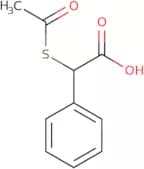
CAS:<p>Versatile small molecule scaffold</p>Formula:C6H9NO2Purity:Min. 95%Molecular weight:127.14 g/mol2-(Acetylsulfanyl)-2-phenylacetic acid
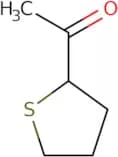
CAS:<p>Versatile small molecule scaffold</p>Formula:C10H10O3SPurity:Min. 95%Color and Shape:PowderMolecular weight:210.25 g/mol1-(Thiolan-2-yl)ethan-1-one
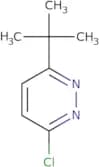
CAS:<p>Versatile small molecule scaffold</p>Formula:C6H10OSPurity:Min. 95%Molecular weight:130.21 g/mol3-tert-Butyl-6-chloropyridazine
CAS:<p>Versatile small molecule scaffold</p>Formula:C8H11ClN2Purity:Min. 95%Molecular weight:170.64 g/mol2,2-Dimethyl-1,3-diphenylpropane-1,3-dione
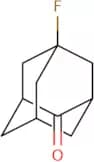
CAS:<p>Versatile small molecule scaffold</p>Formula:C17H16O2Purity:Min. 95%Molecular weight:252.31 g/mol5-Fluoroadamantan-2-one
CAS:<p>5-Fluoroadamantan-2-one is a stable molecule that has been shown to stabilize transition states in the presence of cyclohexanone. This agent can also be used for carbonyl reduction, iminium formation and epoxidation reactions. 5-Fluoroadamantan-2-one can also react with nucleophiles to form imino or organic chemistry moieties. It acts as a radical cation and can be detected by infrared spectroscopy.</p>Formula:C10H13FOPurity:Min. 95%Molecular weight:168.21 g/mol3-Oxocyclopentane-1-carbonitrile
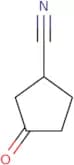
CAS:<p>3-Oxocyclopentane-1-carbonitrile is a chiral aliphatic compound that is used in the synthesis of other organic compounds. It is a diastereomer of cyclopentanone and can be obtained by the isomerization of cyclohexanone. The carbon atom at position 1 has three different substituents, which give it three stereoisomers. 3-Oxocyclopentane-1-carbonitrile is used to synthesize hexanoic acid, acrylonitrile, and styrene.</p>Purity:Min. 95%3-[4-(Methoxycarbonyl)-1,3-oxazol-5-yl]propanoic acid
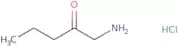
CAS:<p>Versatile small molecule scaffold</p>Formula:C8H9NO5Purity:Min. 95%Molecular weight:199.16 g/mol1-Aminopentan-2-one hydrochloride
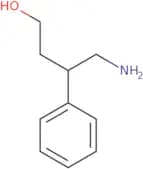
CAS:<p>Versatile small molecule scaffold</p>Formula:C5H12ClNOPurity:Min. 95%Molecular weight:137.61 g/mol4-Amino-3-phenylbutan-1-ol
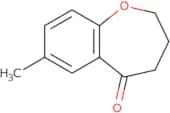
CAS:<p>Versatile small molecule scaffold</p>Formula:C10H15NOPurity:Min. 95%Molecular weight:165.23 g/mol7-Methyl-2,3,4,5-tetrahydro-1-benzoxepin-5-one
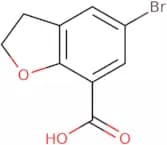
CAS:<p>Versatile small molecule scaffold</p>Formula:C11H12O2Purity:Min. 95%Molecular weight:176.21 g/mol5-Bromo-2,3-dihydrobenzofuran-7-carboxylic acid
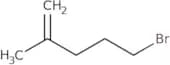
CAS:<p>Versatile small molecule scaffold</p>Formula:C9H7BrO3Purity:Min. 95%Molecular weight:243.06 g/mol5-bromo-2-methylpent-1-ene
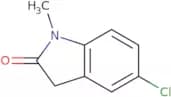
CAS:<p>5-bromo-2-methylpent-1-ene is an organic compound that belongs to the group of isopentenyl compounds. It is a synthetic compound that has been shown to be effective as an antimicrobial agent. 5-bromo-2-methylpent-1-ene has a copper complex which binds to the copper and diphosphate groups in bacterial DNA, preventing replication and transcription. This drug also inhibits the synthesis of proteins by binding to ribosomes, thereby inhibiting protein synthesis. The antimicrobial activity of 5-bromo-2-methylpent-1e is due to its ability to inhibit RNA synthesis and DNA synthesis in bacteria.</p>Formula:C6H11BrPurity:Min. 95%Molecular weight:163.06 g/mol5-Chloro-1-methyl-2,3-dihydro-1H-indol-2-one
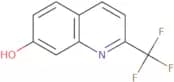
CAS:<p>Versatile small molecule scaffold</p>Formula:C9H8ClNOPurity:Min. 95%Molecular weight:181.62 g/mol2-(Trifluoromethyl)quinolin-7-ol
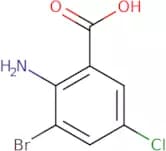
CAS:<p>Versatile small molecule scaffold</p>Formula:C10H6F3NOPurity:Min. 95%Molecular weight:213.16 g/mol2-Amino-3-bromo-5-chlorobenzoic acid
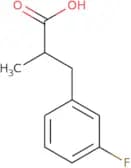
CAS:<p>Versatile small molecule scaffold</p>Formula:C7H5BrClNO2Purity:Min. 95%Molecular weight:250.48 g/mol3-(3-fluorophenyl)-2-methylpropanoic acid
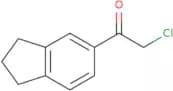
CAS:<p>Versatile small molecule scaffold</p>Formula:C10H11O2FPurity:Min. 95%Molecular weight:182.19 g/mol2-Chloro-1-(2,3-dihydro-1H-inden-5-yl)ethan-1-one
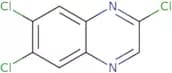
CAS:<p>Versatile small molecule scaffold</p>Formula:C11H11ClOPurity:Min. 95%Molecular weight:194.66 g/mol2,6,7-Trichloroquinoxaline
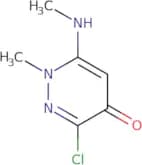
CAS:<p>Versatile small molecule scaffold</p>Formula:C8H3Cl3N2Purity:Min. 95%Molecular weight:233.5 g/mol3-Chloro-1-methyl-6-(methylamino)-1,4-dihydropyridazin-4-one
CAS:<p>Versatile small molecule scaffold</p>Formula:C6H8ClN3OPurity:Min. 95%Molecular weight:173.6 g/mol1-[(2-Methylphenyl)methyl]piperidin-4-amine
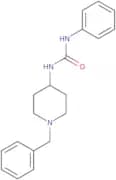
CAS:<p>Versatile small molecule scaffold</p>Formula:C13H20N2Purity:Min. 95%Molecular weight:204.31 g/mol3-(1-Benzylpiperidin-4-yl)-1-phenylurea
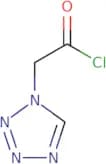
CAS:<p>Versatile small molecule scaffold</p>Formula:C19H23N3OPurity:Min. 95%Molecular weight:309.4 g/mol1H-Tetrazol-1-ylacetyl chloride
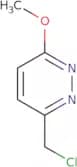
CAS:<p>Versatile small molecule scaffold</p>Formula:C3H3ClN4OPurity:Min. 95%Molecular weight:146.53 g/mol3-(Chloromethyl)-6-methoxypyridazine
CAS:<p>Versatile small molecule scaffold</p>Formula:C6H7ClN2OPurity:Min. 95%Molecular weight:158.58 g/mol2,3-Dimethyl-3H-imidazo[4,5-b]pyridine
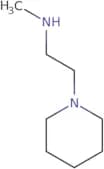
CAS:<p>Versatile small molecule scaffold</p>Formula:C8H9N3Purity:Min. 95%Color and Shape:PowderMolecular weight:147.18 g/molN-Methyl-2-piperidin-1-ylethanamine
CAS:<p>Versatile small molecule scaffold</p>Formula:C8H18N2Purity:Min. 95%Molecular weight:142.24 g/molH-Imidazo[1,2-a]pyridine-3-carbaldehyde
CAS:<p>H-Imidazo[1,2-a]pyridine-3-carbaldehyde is an anti-infective agent that is active against bacteria and fungi. The compound inhibits the growth of bacteria by interfering with the synthesis of DNA and RNA. H-Imidazo[1,2-a]pyridine-3-carbaldehyde has been shown to be effective in treating infections caused by Stenotrophomonas maltophilia and Pseudomonas aeruginosa. It also has an effect on Enterobacteriaceae, including Escherichia coli, Klebsiella pneumoniae, and Proteus mirabilis. H-Imidazo[1,2-a]pyridine-3-carbaldehyde is not effective against Streptococcus species such as Streptococcus pyogenes or Group A beta hemolytic streptococci.</p>Formula:C9H8N2OPurity:Min. 95%Molecular weight:160.17 g/mol(2-Chloroethyl)[(4-fluorophenyl)methyl]methylamine hydrochloride
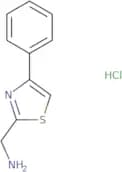
CAS:<p>Versatile small molecule scaffold</p>Formula:C10H14Cl2FNPurity:Min. 95%Molecular weight:238.13 g/mol4-Phenyl-thiazol-2-yl-methylamine hydrochloride
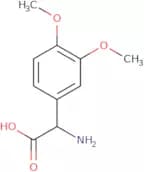
CAS:<p>Versatile small molecule scaffold</p>Formula:C10H11ClN2SPurity:Min. 95%Molecular weight:226.73 g/molamino(3,4-dimethoxyphenyl)acetic acid
CAS:<p>Versatile small molecule scaffold</p>Formula:C10H13NO4Purity:Min. 95%Molecular weight:211.22 g/mol1-Cyclohexyl-1H-1,3-benzodiazole
CAS:<p>1-Cyclohexyl-1H-1,3-benzodiazole is a synthesized chemical compound belonging to the class of amide benzimidazoles. It has been shown to be an effective inhibitor of xanthine oxidase and an inducer of apoptosis in leukemia cells.</p>Formula:C13H16N2Purity:Min. 95%Molecular weight:200.28 g/mol1-Benzylpiperidine-3-carbonitrile
CAS:<p>Versatile small molecule scaffold</p>Formula:C13H16N2Purity:Min. 95%Molecular weight:200.28 g/mol2-Chloro-6-[(4-chlorophenyl)sulfanyl]benzonitrile
CAS:<p>Versatile small molecule scaffold</p>Formula:C13H7Cl2NSPurity:Min. 95%Molecular weight:280.2 g/mol2-[(Methoxycarbonyl)amino]-2-methylpropanoic acid
CAS:<p>Versatile small molecule scaffold</p>Formula:C6H11NO4Purity:Min. 95%Molecular weight:161.16 g/mol1,3-Dioxo-2,3-dihydro-1H-isoindol-2-yl 2-{[(tert-butoxy)carbonyl]amino}acetate
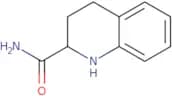
CAS:<p>Versatile small molecule scaffold</p>Formula:C15H16N2O6Purity:Min. 95%Molecular weight:320.3 g/mol1,2,3,4-Tetrahydroquinoline-2-carboxamide
CAS:<p>1,2,3,4-Tetrahydroquinoline-2-carboxamide is a potent inhibitor of the enzyme histidine decarboxylase. It has been shown to have significant cytotoxicity against certain cancer cells and inhibit the proliferation of other cells in culture. 1,2,3,4-Tetrahydroquinoline-2-carboxamide has shown a potent inhibition of serotonin synthesis and significant anti-inflammatory effects in animal models. This drug also inhibits the production of retinoic acid by binding to the retinoic acid receptor subtype II receptor. In addition to its therapeutic effects on inflammation and bone mass, 1,2,3,4-tetrahydroquinoline-2-carboxamide has been shown to be effective in treating congestive heart failure and glomerulonephropathy due to its ability to inhibit angiotensin II type I receptors.</p>Formula:C10H12N2OPurity:Min. 95%Molecular weight:176.21 g/molN-Methyl-3,4-dihydro-2H-1,4-benzoxazine-2-carboxamide
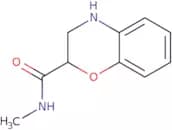
CAS:<p>Versatile small molecule scaffold</p>Formula:C10H12N2O2Purity:Min. 95%Molecular weight:192.21 g/molethyl 3-(aminomethyl)benzoate hydrochloride
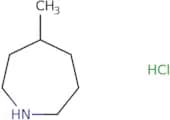
CAS:<p>Versatile small molecule scaffold</p>Formula:C10H14ClNO2Purity:Min. 95%Molecular weight:215.7 g/mol4-Methylazepane hydrochloride
CAS:<p>Versatile small molecule scaffold</p>Formula:C7H16ClNPurity:Min. 95%Molecular weight:149.66 g/mol1,4-Dichloro-5H,6H,7H-cyclopenta[D]pyridazine
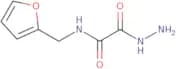
CAS:<p>1,4-Dichloro-5H,6H,7H-cyclopenta[D]pyridazine is a quaternary ammonium salt that has been shown to be an effective antibacterial agent. It binds to the bacterial cell wall by competitive inhibition and prevents the formation of an antibiotic-inhibitor complex with the enzyme cell wall synthesis that is required for cell wall biosynthesis, inhibiting protein synthesis and cell division. 1,4-Dichloro-5H,6H,7H-cyclopenta[D]pyridazine has also been shown to be effective against methacrylate microbeads in vitro. This drug is used as a disinfectant on polystyrene surfaces and can be used in combination with benzoyl peroxide or ethanol and benzoyl chloride to produce a disinfectant foam.</p>Formula:C7H6Cl2N2Purity:Min. 95%Molecular weight:189.04 g/molN-(Furan-2-ylmethyl)-1-(hydrazinecarbonyl)formamide
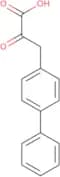
CAS:<p>Versatile small molecule scaffold</p>Formula:C7H9N3O3Purity:Min. 95%Molecular weight:183.16 g/mol2-Oxo-3-(4-phenylphenyl)propanoic acid
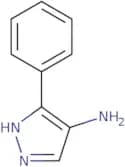
CAS:<p>2-Oxo-3-(4-phenylphenyl)propanoic acid is a chiral molecule that can be synthesized from 4-bromocinnamic acid and 2,3-dichlorobenzoyl chloride in two steps. The first step is an acid dehydrogenation of the 4-bromocinnamic acid to form the corresponding enol form. The second step is an arylation using 2,3-dichlorobenzoyl chloride. This compound has been found to be highly efficient and selective in its chemoenzymatic synthesis. Promiscuity of this compound has also been observed, which allows it to be used for the synthesis of various other compounds.</p>Formula:C15H12O3Purity:Min. 95%Molecular weight:240.25 g/mol3-Phenyl-1H-pyrazol-4-amine
CAS:<p>Versatile small molecule scaffold</p>Formula:C9H9N3Purity:Min. 95%Molecular weight:159.19 g/mol1-Methyl-5-phenyl-1H-pyrazol-4-amine
CAS:<p>Versatile small molecule scaffold</p>Formula:C10H11N3Purity:Min. 95%Molecular weight:173.21 g/mol2-[4-Chloro-2-(dimethylsulfamoyl)phenoxy]propanoic acid
CAS:<p>Versatile small molecule scaffold</p>Formula:C11H14ClNO5SPurity:Min. 95%Molecular weight:307.75 g/mol4-chloro-6-methyl-5h-pyrrolo[3,2-d]pyrimidine
CAS:<p>Versatile small molecule scaffold</p>Formula:C7H6ClN3Purity:Min. 95%Molecular weight:167.6 g/mol2-(Chloromethyl)-1H-benzimidazole hydrochloride
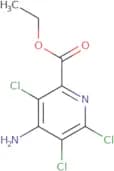
CAS:<p>Versatile small molecule scaffold</p>Formula:C8H8Cl2N2Purity:Min. 95%Molecular weight:203.07 g/molEthyl 4-amino-3,5,6-trichloropicolinate
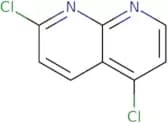
CAS:<p>Versatile small molecule scaffold</p>Formula:C8H7Cl3N2O2Purity:Min. 95%Molecular weight:269.5 g/mol2,5-Dichloro-1,8-naphthyridine
CAS:<p>Versatile small molecule scaffold</p>Formula:C8H4Cl2N2Purity:Min. 95%Molecular weight:199.03 g/mol4-[(2-Methoxyphenyl)methyl]-1H-imidazole hydrochloride
CAS:<p>Versatile small molecule scaffold</p>Formula:C11H13ClN2OPurity:Min. 95%Molecular weight:224.68 g/mol2-(3-Nitrophenyl)cyclopropane-1-carboxylic acid
CAS:<p>Versatile small molecule scaffold</p>Formula:C10H9NO4Purity:Min. 95%Molecular weight:207.18 g/mol4-Methoxy-5,8,8-trimethylbicyclo[3.2.1]oct-3-en-2-one
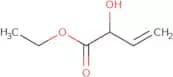
CAS:<p>Versatile small molecule scaffold</p>Formula:C12H18O2Purity:Min. 95%Molecular weight:194.27 g/molEthyl 2-hydroxybut-3-enoate
CAS:<p>Versatile small molecule scaffold</p>Formula:C6H10O3Purity:Min. 95%Molecular weight:130.14 g/mol2-Amino-N,N-dimethylethane-1-sulfonamide hydrochloride
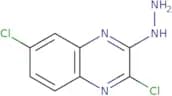
CAS:<p>Versatile small molecule scaffold</p>Formula:C4H13ClN2O2SPurity:Min. 95%Molecular weight:188.67 g/mol2,6-Dichloro-3-hydrazinoquinoxaline
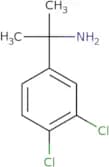
CAS:<p>Versatile small molecule scaffold</p>Formula:C8H6Cl2N4Purity:Min. 95%Molecular weight:229.06 g/mol2-(3,4-Dichlorophenyl)propan-2-amine
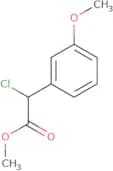
CAS:<p>Versatile small molecule scaffold</p>Formula:C9H11Cl2NPurity:Min. 95%Molecular weight:204.09 g/molMethyl 2-chloro-2-(3-methoxyphenyl)acetate
CAS:<p>Versatile small molecule scaffold</p>Formula:C10H11ClO3Purity:Min. 95%Molecular weight:214.64 g/mol2-Chloro-N-[1-(4-chlorophenyl)ethyl]acetamide
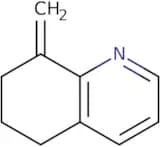
CAS:<p>Versatile small molecule scaffold</p>Formula:C10H11Cl2NOPurity:Min. 95%Molecular weight:232.1 g/mol8-Methylidene-5,6,7,8-tetrahydroquinoline
CAS:<p>Versatile small molecule scaffold</p>Formula:C10H11NPurity:Min. 95%Molecular weight:145.2 g/mol7-Methyl-5-phenylpyrazolo[1,5-a]pyrimidin-2-ol
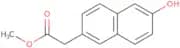
CAS:<p>Versatile small molecule scaffold</p>Formula:C13H11N3OPurity:Min. 95%Molecular weight:225.25 g/molMethyl 2-(6-hydroxynaphthalen-2-yl)acetate
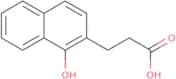
CAS:<p>Versatile small molecule scaffold</p>Formula:C13H12O3Purity:Min. 95%Molecular weight:216.23 g/mol3-(1-Hydroxynaphthalen-2-yl)propanoic acid
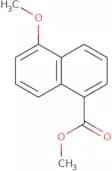
CAS:<p>Versatile small molecule scaffold</p>Formula:C13H12O3Purity:Min. 95%Molecular weight:216.23 g/molMethyl 5-methoxy-1-naphthoate
CAS:<p>Versatile small molecule scaffold</p>Formula:C13H12O3Purity:Min. 95%Molecular weight:216.23 g/mol[1-(2-Phenylethyl)pyrrolidin-3-yl]methanamine
CAS:<p>Versatile small molecule scaffold</p>Formula:C13H20N2Purity:Min. 95%Molecular weight:204.31 g/mol(1-Benzyl-4-methylpiperazin-2-yl)methanol
CAS:<p>Versatile small molecule scaffold</p>Formula:C13H20N2OPurity:Min. 95%Molecular weight:220.3 g/mol3-Butyl-1-[(4-methylphenyl)methyl]thiourea
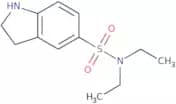
CAS:<p>Versatile small molecule scaffold</p>Formula:C13H20N2SPurity:Min. 95%Molecular weight:236.38 g/molN,N-Diethylindoline-5-sulfonamide
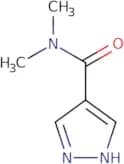
CAS:<p>Versatile small molecule scaffold</p>Formula:C12H18N2O2SPurity:Min. 95%Molecular weight:254.35 g/molN,N-Dimethyl-1H-pyrazole-4-carboxamide
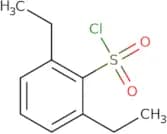
CAS:<p>N,N-Dimethyl-1H-pyrazole-4-carboxamide is a pyrazole derivative that has been used as a fluorescent probe for iron oxides. It has been shown to be efficient in the detection of light signals. This compound can also be used to measure water vapor and flow rate. N,N-Dimethyl-1H-pyrazole-4-carboxamide has been used in analytical chemistry as an indicator in the determination of inflammatory cytokines and splicing. The compound can also be programmed to emit light at specific wavelengths. Linear ranges can be adjusted depending on the needs of the user.</p>Formula:C6H9N3OPurity:Min. 95%Molecular weight:139.16 g/mol2,6-Diethylbenzene-1-sulfonyl chloride
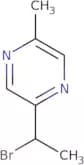
CAS:<p>Versatile small molecule scaffold</p>Formula:C10H13ClO2SPurity:Min. 95%Molecular weight:232.73 g/mol2-(1-Bromoethyl)-5-methylpyrazine
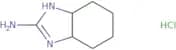
CAS:<p>Versatile small molecule scaffold</p>Formula:C7H9BrN2Purity:Min. 95%Molecular weight:201.06 g/mol3a,4,5,6,7,7a-Hexahydro-1H-1,3-benzodiazol-2-amine hydrochloride
CAS:<p>Versatile small molecule scaffold</p>Formula:C7H14ClN3Purity:Min. 95%Molecular weight:175.66 g/mol1-[2-(3-Aminopropoxy)ethoxy]-2-methoxyethane
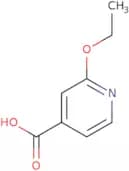
CAS:<p>Versatile small molecule scaffold</p>Formula:C8H19NO3Purity:Min. 95%Molecular weight:177.24 g/mol2-Ethoxyisonicotinic acid
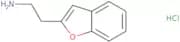
CAS:<p>Versatile small molecule scaffold</p>Formula:C8H9NO3Purity:Min. 95%Molecular weight:167.16 g/mol2-(1-Benzofuran-2-yl)ethan-1-amine hydrochloride
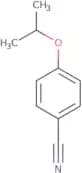
CAS:Controlled Product<p>Versatile small molecule scaffold</p>Formula:C10H12ClNOPurity:Min. 95%Molecular weight:197.66 g/mol4-Isopropoxybenzonitrile
CAS:<p>Versatile small molecule scaffold</p>Formula:C10H11NOPurity:Min. 95%Molecular weight:161.2 g/molEthyl 1-(methylamino)cyclohexane-1-carboxylate
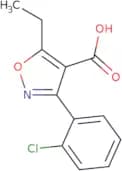
CAS:<p>Versatile small molecule scaffold</p>Formula:C10H19NO2Purity:Min. 95%Molecular weight:185.26 g/mol3-(2-Chlorophenyl)-5-ethyl-1,2-oxazole-4-carboxylic acid
CAS:<p>Versatile small molecule scaffold</p>Formula:C12H10ClNO3Purity:Min. 95%Molecular weight:251.66 g/mol4-Benzyloxane-2,6-dione
CAS:<p>4-Benzyloxane-2,6-dione is a methyl ester that has been optimized for pharmacokinetic properties. It is an amide with a catalytic activity and has been shown to bind to phospholipids. This compound has been screened in high-throughput screening tests and has been validated by binding to brain tissue. The pharmacological effects of 4-Benzyloxane-2,6-dione have not yet been elucidated but it is believed that the compound may be able to inhibit the production of beta amyloid peptides in the brain, which are thought to play a role in Alzheimer's disease.</p>Formula:C12H12O3Purity:Min. 95%Molecular weight:204.22 g/molDispiro[3.1.3(6).1(4)]decane-2-carboxylic acid
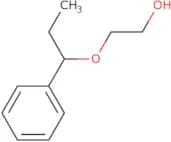
CAS:<p>Versatile small molecule scaffold</p>Formula:C11H16O2Purity:Min. 95%Molecular weight:180.24 g/mol2-(1-Phenylpropoxy)ethan-1-ol
CAS:<p>Versatile small molecule scaffold</p>Formula:C11H16O2Purity:Min. 95%Molecular weight:180.24 g/mol1-Propyl-decahydronaphthalene
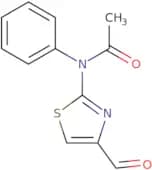
CAS:<p>Versatile small molecule scaffold</p>Formula:C13H24Purity:Min. 95%Molecular weight:180.33 g/molN-(4-Formyl-1,3-thiazol-2-yl)-N-phenylacetamide
CAS:<p>Versatile small molecule scaffold</p>Formula:C12H10N2O2SPurity:Min. 95%Molecular weight:246.29 g/mol6-Methyl-1-phenyl-1,5-dihydro-4{H}-pyrazolo[3,4-{D}]pyrimidin-4-one
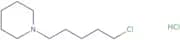
CAS:<p>Versatile small molecule scaffold</p>Formula:C12H10N4OPurity:Min. 95%Molecular weight:226.23 g/mol1-(5-Chloropentyl)piperidine hydrochloride
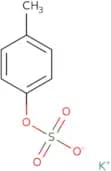
CAS:<p>Versatile small molecule scaffold</p>Formula:C10H21Cl2NPurity:Min. 95%Molecular weight:226.18 g/molp-Tolyl Sulfate-d7 Potassium Salt
CAS:<p>p-Tolyl Sulfate-d7 Potassium Salt is a mesoporous material that can be used in pharmaceuticals and other applications. It is made of an organic framework with indoxyl groups. p-Tolyl Sulfate-d7 Potassium Salt has been shown to adsorb toxins and remove them from water, as well as to bind selectively to the linker molecules on the surface of cells. This binding causes a change in the structure of the molecule, which alters its energetics and interaction with other molecules. The adsorption process is entropically favored, which makes it useful for removing toxins from water or wastewater. In addition, this material has been found to have high enthalpy values due to its strong interactions with sulfate ions.</p>Formula:C7D7KO4SPurity:Min. 95%Molecular weight:233.33 g/mol

![(E,E)-Bis[(4-chlorophenyl)methylidene]hydrazine](/_next/image/?url=https%3A%2Fstatic.cymitquimica.com%2Fproducts%2F3D%2Fthumb-webp%2FRBA09737.webp&w=3840&q=75)
![7-bromothieno[3,2-d]pyrimidine-2,4-diol](/_next/image/?url=https%3A%2Fstatic.cymitquimica.com%2Fproducts%2F3D%2Fthumb-webp%2FRBA10202.webp&w=3840&q=75)
![7-bromo-2,4-dichlorothieno[3,2-d]pyrimidine](/_next/image/?url=https%3A%2Fstatic.cymitquimica.com%2Fproducts%2F3D%2Fthumb-webp%2FRBA10225.webp&w=3840&q=75)
![5-Methyl-2-sulfanyl-4H,7H-[1,2,4]triazolo[1,5-a]pyrimidin-7-one](/_next/image/?url=https%3A%2Fstatic.cymitquimica.com%2Fproducts%2F3D%2Fthumb-webp%2FRBA12281.webp&w=3840&q=75)

![3-[4-(Methoxycarbonyl)-1,3-oxazol-5-yl]propanoic acid](/_next/image/?url=https%3A%2Fstatic.cymitquimica.com%2Fproducts%2F3D%2Fthumb-webp%2FRBA17261.webp&w=3840&q=75)
![1-[(2-Methylphenyl)methyl]piperidin-4-amine](/_next/image/?url=https%3A%2Fstatic.cymitquimica.com%2Fproducts%2F3D%2Fthumb-webp%2FRBA22034.webp&w=3840&q=75)
![2,3-Dimethyl-3H-imidazo[4,5-b]pyridine](/_next/image/?url=https%3A%2Fstatic.cymitquimica.com%2Fproducts%2F3D%2Fthumb-webp%2FRBA23105.webp&w=3840&q=75)
![H-Imidazo[1,2-a]pyridine-3-carbaldehyde](/_next/image/?url=https%3A%2Fstatic.cymitquimica.com%2Fproducts%2F3D%2Fthumb-webp%2FRBA24294.webp&w=3840&q=75)
![(2-Chloroethyl)[(4-fluorophenyl)methyl]methylamine hydrochloride](/_next/image/?url=https%3A%2Fstatic.cymitquimica.com%2Fproducts%2F3D%2Fthumb-webp%2FRDA81770.webp&w=3840&q=75)


![2-Chloro-6-[(4-chlorophenyl)sulfanyl]benzonitrile](/_next/image/?url=https%3A%2Fstatic.cymitquimica.com%2Fproducts%2F3D%2Fthumb-webp%2FRDA82205.webp&w=3840&q=75)
![2-[(Methoxycarbonyl)amino]-2-methylpropanoic acid](/_next/image/?url=https%3A%2Fstatic.cymitquimica.com%2Fproducts%2F3D%2Fthumb-webp%2FRDA82696.webp&w=3840&q=75)
![1,3-Dioxo-2,3-dihydro-1H-isoindol-2-yl 2-{[(tert-butoxy)carbonyl]amino}acetate](/_next/image/?url=https%3A%2Fstatic.cymitquimica.com%2Fproducts%2F3D%2Fthumb-webp%2FRDA83743.webp&w=3840&q=75)

![1,4-Dichloro-5H,6H,7H-cyclopenta[D]pyridazine](/_next/image/?url=https%3A%2Fstatic.cymitquimica.com%2Fproducts%2F3D%2Fthumb-webp%2FRDA84680.webp&w=3840&q=75)

![2-[4-Chloro-2-(dimethylsulfamoyl)phenoxy]propanoic acid](/_next/image/?url=https%3A%2Fstatic.cymitquimica.com%2Fproducts%2F3D%2Fthumb-webp%2FRDA85920.webp&w=3840&q=75)
![4-chloro-6-methyl-5h-pyrrolo[3,2-d]pyrimidine](/_next/image/?url=https%3A%2Fstatic.cymitquimica.com%2Fproducts%2F3D%2Fthumb-webp%2FRDA86235.webp&w=3840&q=75)

![4-[(2-Methoxyphenyl)methyl]-1H-imidazole hydrochloride](/_next/image/?url=https%3A%2Fstatic.cymitquimica.com%2Fproducts%2F3D%2Fthumb-webp%2FRDA87445.webp&w=3840&q=75)

![4-Methoxy-5,8,8-trimethylbicyclo[3.2.1]oct-3-en-2-one](/_next/image/?url=https%3A%2Fstatic.cymitquimica.com%2Fproducts%2F3D%2Fthumb-webp%2FRDA88113.webp&w=3840&q=75)

![2-Chloro-N-[1-(4-chlorophenyl)ethyl]acetamide](/_next/image/?url=https%3A%2Fstatic.cymitquimica.com%2Fproducts%2F3D%2Fthumb-webp%2FRDA90033.webp&w=3840&q=75)
![7-Methyl-5-phenylpyrazolo[1,5-a]pyrimidin-2-ol](/_next/image/?url=https%3A%2Fstatic.cymitquimica.com%2Fproducts%2F3D%2Fthumb-webp%2FRDA90203.webp&w=3840&q=75)
![[1-(2-Phenylethyl)pyrrolidin-3-yl]methanamine](/_next/image/?url=https%3A%2Fstatic.cymitquimica.com%2Fproducts%2F3D%2Fthumb-webp%2FRDA90423.webp&w=3840&q=75)
![3-Butyl-1-[(4-methylphenyl)methyl]thiourea](/_next/image/?url=https%3A%2Fstatic.cymitquimica.com%2Fproducts%2F3D%2Fthumb-webp%2FRDA90564.webp&w=3840&q=75)
![1-[2-(3-Aminopropoxy)ethoxy]-2-methoxyethane](/_next/image/?url=https%3A%2Fstatic.cymitquimica.com%2Fproducts%2F3D%2Fthumb-webp%2FRDA93340.webp&w=3840&q=75)


![Dispiro[3.1.3(6).1(4)]decane-2-carboxylic acid](/_next/image/?url=https%3A%2Fstatic.cymitquimica.com%2Fproducts%2F3D%2Fthumb-webp%2FRDA96835.webp&w=3840&q=75)

![6-Methyl-1-phenyl-1,5-dihydro-4{H}-pyrazolo[3,4-{D}]pyrimidin-4-one](/_next/image/?url=https%3A%2Fstatic.cymitquimica.com%2Fproducts%2F3D%2Fthumb-webp%2FRDA97463.webp&w=3840&q=75)