Building Blocks
This section contains fundamental products for the synthesis of organic and biological compounds. Building blocks are the essential starting materials used to construct complex molecules through various chemical reactions. They play a critical role in drug discovery, material science, and chemical research. At CymitQuimica, we offer a diverse range of high-quality building blocks to support your innovative research and industrial projects, ensuring you have the essential components for successful synthesis.
Subcategories of "Building Blocks"
- Boronic Acids & Boronic Acid Derivatives(5,756 products)
- Chiral Building Blocks(1,242 products)
- Hydrocarbon Building Blocks(6,095 products)
- Organic Building Blocks(60,526 products)
Found 195848 products of "Building Blocks"
Sort by
Purity (%)
0
100
|
0
|
50
|
90
|
95
|
100
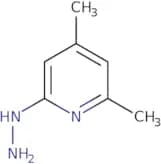
2-Hydrazinyl-4,6-dimethylpyridine
CAS:<p>Versatile small molecule scaffold</p>Formula:C7H11N3Purity:Min. 95%Molecular weight:137.18 g/mol1',2'-Dihydrospiro[cyclohexane-1,3'-indole]-2'-one
CAS:<p>Versatile small molecule scaffold</p>Formula:C13H15NOPurity:Min. 95%Molecular weight:201.26 g/mol5H,6H,7H-Pyrrolo[3,4-b]pyrazine-5,7-dione
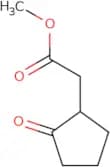
CAS:<p>Versatile small molecule scaffold</p>Formula:C6H3N3O2Purity:Min. 95%Molecular weight:149.11 g/molMethyl 2-(2-oxocyclopentyl)acetate
CAS:<p>Versatile small molecule scaffold</p>Formula:C8H12O3Purity:Min. 95%Molecular weight:156.18 g/mol1H,3H,4H,5H,6H,7H,8H,9H-Cycloocta[C]furan-1,3-dione
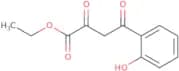
CAS:<p>Versatile small molecule scaffold</p>Formula:C10H12O3Purity:Min. 95%Molecular weight:180.2 g/molEthyl 4-(2-hydroxyphenyl)-2,4-dioxobutanoate
CAS:<p>Sildenafil is a drug that is used for the treatment of erectile dysfunction. It belongs to the class of phosphodiesterase inhibitors and inhibits the enzyme phosphodiesterase type 5 (PDE-5). This enzyme functions to breakdown cyclic guanosine monophosphate (cGMP), which causes blood vessels in the penis to relax, leading to an erection. Sildenafil has been shown to be well tolerated with oral bioavailability of more than 70%. Sildenafil can be taken orally, but has also been studied for pulmonary administration. The pharmacokinetic properties of sildenafil have been optimized for oral administration in humans and it has been shown that sildenafil does not inhibit human liver cytochrome P450 enzymes. Sildenafil also shows inhibitory potency against other phosphodiesterases such as PDE-2, PDE-3, and PDE-6.</p>Formula:C12H12O5Purity:Min. 95%Molecular weight:236.22 g/mol5-Methyl-1H-pyrrolo[3,2-b]pyridine
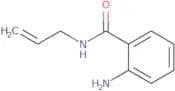
CAS:<p>5-Methyl-1H-pyrrolo[3,2-b]pyridine is a versatile compound that has various applications in different industries. It is commonly used in the production of polyvinyl and interferon, as well as in the synthesis of glycine and glutamate. This compound also finds its use in biomass production, where it acts as a catalyst for the growth of nanofibers. Additionally, 5-Methyl-1H-pyrrolo[3,2-b]pyridine has been studied for its potential therapeutic properties, including its ability to inhibit cytochalasin activity and the synthesis of oligosaccharides. Its unique chemical structure also makes it suitable for the development of copolymers and styrenic electrode materials.</p>Formula:C8H8N2Purity:Min. 95%Molecular weight:132.16 g/molN-Allyl-2-aminobenzamide
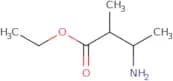
CAS:<p>2-Bromobenzaldehyde (2BA) is a reactive chemical that can be used as a building block for the synthesis of many other chemicals. It is also an efficient catalyst for reactions such as the reduction of amines to amides, and the conversion of nitroarenes to amines. 2BA has been shown to be cytotoxic in vitro and in vivo against human cancer cell lines when attached to magnetic nanoparticles and immobilized on different surfaces. The cytotoxic activity of 2BA was analyzed by using intramolecular cycloaddition reactions with electron-deficient olefins, which led to valuable insights into the mechanism of this reaction.</p>Formula:C10H12N2OPurity:Min. 95%Molecular weight:176.22 g/molEthyl 3-amino-2-methylbutanoate
CAS:<p>Versatile small molecule scaffold</p>Formula:C7H15NO2Purity:Min. 95%Molecular weight:145.2 g/mol9-Azabicyclo[6.2.0]decan-10-one
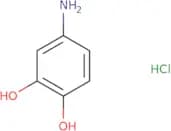
CAS:<p>9-Azabicyclo[6.2.0]decan-10-one is a lactam that can be synthesized by reacting diisopropyl with β-amino acid. 9-Azabicyclo[6.2.0]decan-10-one has been shown to have high enantioselectivity and enantiopurity, which is due to the use of a chiral catalyst in the synthesis process. This compound is also an intermediate for the synthesis of β-lactams such as penicillin, cephalosporin, and carbapenem antibiotics, which are used to treat bacterial infections. The enzymes in these β-lactams are inhibited by binding to their active site, preventing them from breaking down peptidoglycan during cell wall synthesis.</p>Formula:C9H15NOPurity:Min. 95%Molecular weight:153.22 g/mol4-Aminobenzene-1,2-diol hydrochloride
CAS:<p>4-Aminobenzene-1,2-diol hydrochloride (4ABAH) is a cox-2 inhibitor that has been shown to inhibit the activity of human cell factor and x-ray diffraction data. It has also been shown to possess anti-inflammatory properties by inhibiting the production of prostaglandins. The prodrug ester hydrochloride is converted to 4ABAH in vivo and undergoes hydrolysis by esterases to release 4ABAH. This conversion may be limited by the rate constant, which may decrease with time due to enzyme inactivation or competition with other substrates. 4ABAH inhibits cell proliferation in carcinoma cell lines, but not in normal cells. The drug is water soluble and therefore can be administered orally or intravenously.</p>Formula:C6H8ClNO2Purity:Min. 95%Molecular weight:161.58 g/mol1-Methoxy-2-(3-methylbut-2-en-1-yl)benzene
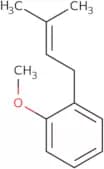
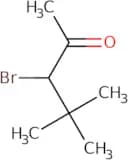
CAS:<p>Versatile small molecule scaffold</p>Formula:C12H16OPurity:Min. 95%Molecular weight:176.25 g/mol3-Bromo-4,4-dimethylpentan-2-one
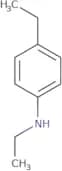
CAS:<p>Versatile small molecule scaffold</p>Formula:C7H13BrOPurity:Min. 95%Molecular weight:193.08 g/molN,4-Diethylaniline
CAS:<p>Versatile small molecule scaffold</p>Formula:C10H15NPurity:Min. 95%Molecular weight:149.23 g/mol2-[4-(2-Aminoethyl)phenoxy]ethan-1-ol
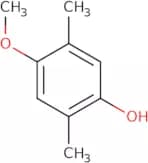
CAS:<p>Versatile small molecule scaffold</p>Formula:C10H15NO2Purity:Min. 95%Molecular weight:181.23 g/mol4-Methoxy-2,5-dimethylphenol
CAS:<p>Versatile small molecule scaffold</p>Formula:C9H12O2Purity:Min. 95%Molecular weight:152.19 g/mol1-(2-Bromoethoxy)-2-methylpropane
CAS:<p>Versatile small molecule scaffold</p>Formula:C6H13BrOPurity:Min. 95%Molecular weight:181.07 g/mol1-Phenyl-1λ⁵-phospholan-1-one
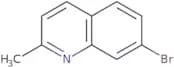
CAS:<p>1-Phenyl-1λ⁵-phospholan-1-one is a reagent that is used in organic synthesis to generate carbon-carbon bonds. This reagent can be activated with phosphorus and rearranged to form new carbon-carbon bonds. It can also be used as an electron donor, which enables it to activate other molecules, such as phosphines, phenyl borane, and hydrocarbons. 1-Phenyl-1λ⁵-phospholan-1-one is a stereoselective reagent that produces only one enantiomer of the product in high yields. It can be used to synthesize analogues of carbons and triaryl compounds.</p>Formula:C10H13OPPurity:Min. 95%Molecular weight:180.18 g/mol7-Bromo-2-methylquinoline
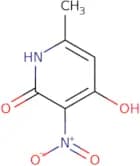
CAS:<p>7-Bromo-2-methylquinoline is a heterocyclic compound that is selectively activated by protonation. The reaction involves the formation of a carbocation at the carbon atom adjacent to the bromine atom. This intermediate is then attacked by an electrophile, such as an alcohol or a carboxylic acid. The reaction proceeds via an S2 mechanism and can be accelerated by using certain metals as catalysts, such as copper and palladium. 7-Bromo-2-methylquinoline has been used in cross coupling reactions with various arenes to form c–h bonds and halides, which have been analysed through mass spectroscopy.</p>Formula:C10H8BrNPurity:Min. 95%Molecular weight:222.08 g/mol4-Hydroxy-6-methyl-3-nitro-2-pyridone
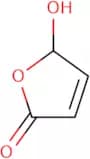
CAS:<p>4-Hydroxy-6-methyl-3-nitro-2-pyridone is a synthetic molecule that can be synthesized from dipropylamine and ethanolamine, two commercially available compounds. It has been shown to inhibit the growth of Mycobacterium tuberculosis, one of the most common bacteria that causes tuberculosis, in a metal ion sensor system. 4-Hydroxy-6-methyl-3-nitro-2-pyridone also inhibits the synthesis of protein, DNA and RNA by binding to amines. This compound is irradiated with lithium metal and emits an infrared frequency shift.</p>Formula:C6H6N2O4Purity:Min. 95%Molecular weight:170.12 g/molFuran-2,4-dione
CAS:<p>Furan-2,4-dione is a hydroxylated furan derivative that is used as an antimicrobial agent. It has a high degree of resistance to hydrochloric acid and human serum. Furan-2,4-dione reacts with the thiol groups on the mitochondrial membrane potential to create a disulfide bond, which leads to depolarization of the mitochondria and cell death. Furan-2,4-dione also inhibits tetronic acid dehydrogenase and tetronic acid reductase enzymes in cancer cells, leading to inhibition of tumor growth. The structure of furan-2,4-dione consists of a bicyclic heterocycle with basic properties.</p>Purity:Min. 95%1-Methyl-4-[(methylsulfanyl)sulfonyl]benzene
CAS:<p>Versatile small molecule scaffold</p>Formula:C8H10O2S2Purity:Min. 95%Molecular weight:202.3 g/mol4'-Chlorobutyrophenone
CAS:<p>4'-Chlorobutyrophenone is a chlorinated aromatic compound that is synthesized by the Friedel-Crafts reaction of anhydrous aluminum chloride with 4-chlorobenzene. This reaction requires palladium as a catalyst. The product of this reaction has been shown to be a high yield, selective, and inexpensive method for the synthesis of aromatic compounds. 4'-Chlorobutyrophenone may also be used in the synthesis of other organic compounds. The chloride group on the phenyl ring provides unsaturation, which can be used for further reactions such as alkylation or arylation.</p>Formula:C10H11ClOPurity:Min. 95%Molecular weight:182.65 g/mol1-Benzylbenzoimidazole
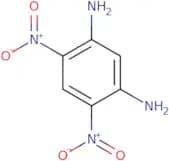
CAS:<p>1-Benzylbenzoimidazole is a benzimidazole derivative that inhibits the growth of fungi by inhibiting the production of mitochondrial membrane potential. It has been shown to inhibit angiogenesis and reduce tumor size in vivo, which may be due to its ability to induce apoptosis in endothelial cells. 1-Benzylbenzoimidazole also inhibits the synthesis of 2-hydroxyphenylacetic acid and nitrogen atoms from nitric oxide, which may be due to its ability to bind with chlorine atoms. 1-Benzylbenzoimidazole is not active against bacteria or mammalian cells, but it does inhibit the growth of fungi by binding with hydrogen bonds at the fungal cell wall.</p>Formula:C14H12N2Purity:Min. 95%Molecular weight:208.26 g/mol4,6-Dinitrobenzene-1,3-diamine
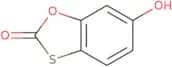
CAS:<p>4,6-Dinitrobenzene-1,3-diamine is an impurity in the manufacture of 4,6-dinitrotoluene. It was first synthesized by heating dinitrotoluene with nitric acid and ammonium hydroxide. The compound crystallizes as a trimorphic mixture of three polymorphs: α (monoclinic), β (orthorhombic), and γ (tetragonal). The α form has a melting point of 114°C, while the β form melts at 107°C. This compound has been used as a solvent for xylene and glycol ethers.</p>Formula:C6H6N4O4Purity:Min. 95%Molecular weight:198.14 g/mol6-Hydroxy-1,3-benzoxathiol-2-one
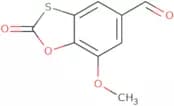
CAS:<p>6-Hydroxy-1,3-benzoxathiol-2-one is a solute compound that has been used as a food additive. It has been shown to inhibit the growth of various microorganisms including bacteria, yeast, and fungi. 6-Hydroxy-1,3-benzoxathiol-2-one is an inhibitor of enzymes such as beta-glucosidase and alpha amylase. It also has inhibitory properties against autoimmune diseases and bowel disease. Angelicae Dahuricae (AD) extract can be used as an alternative for 6HBO to treat leishmania infection. AD extract has synergistic antifungal activity with metal hydroxides or benzalkonium chloride when combined in vitro.</p>Formula:C7H4O3SPurity:Min. 95%Molecular weight:168.17 g/mol7-Methoxy-2-oxo-2H-1,3-benzoxathiole-5-carbaldehyde
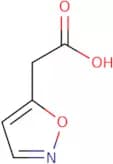
CAS:<p>Versatile small molecule scaffold</p>Formula:C9H6O4SPurity:Min. 95%Molecular weight:210.21 g/mol2-(1,2-Oxazol-5-yl)acetic acid
CAS:<p>2-(1,2-Oxazol-5-yl)acetic acid is a cell-permeable compound that induces death of cancer cells via apoptosis. It has been shown to be effective in vitro against mouse melanoma cells, as well as in vivo treatment of mice with xenografts of human melanoma cells. This drug activates caspase 3 by inhibiting the mitochondrial membrane potential and releasing cytochrome C from mitochondria into the cytosol. 2-(1,2-Oxazol-5-yl)acetic acid also mediates apoptotic cell death by activating the chloride channel, reactive oxygen species (ROS), and voltage gated ion channels. In addition, it inhibits viral replication by inducing autophagic cell death and has tumoricidal effects when given to mice with established tumors.<br>br></p>Formula:C5H5NO3Purity:Min. 95%Molecular weight:127.1 g/mol3-(2-Aminoethyl)-1,3-dihydro-2H-indol-2-onehydrochloride
CAS:<p>Versatile small molecule scaffold</p>Formula:C10H13ClN2OPurity:Min. 95%Molecular weight:212.68 g/mol5,6-Dimethylthieno[2,3-d]pyrimidin-4-amine
CAS:<p>5,6-Dimethylthieno[2,3-d]pyrimidin-4-amine is an ester of sucralose. It is a sweetener that can be used in sweetner compositions or solvates. 5,6-Dimethylthieno[2,3-d]pyrimidin-4-amine is an intermediate in the synthesis of sucralose.</p>Formula:C8H9N3SPurity:Min. 95%Molecular weight:179.24 g/mol3-(Pyrrolidin-1-yl)propanamide hydrochloride
CAS:<p>Versatile small molecule scaffold</p>Formula:C7H15ClN2OPurity:Min. 95%Molecular weight:178.66 g/mol3-Ethyl-4-hydroxybenzonitrile
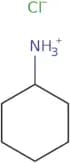
CAS:<p>Versatile small molecule scaffold</p>Formula:C9H9NOPurity:Min. 95%Molecular weight:147.17 g/molCyclohexylamine Hydrochloride
CAS:<p>Cyclohexylamine hydrochloride (CHA) is a cyclohexane ring with an amine group on the side. It is used as a metabolic rate indicator, which can be seen through optical sensors. The most common use of CHA is in bladder studies, where it is used to test the effect of various chemicals on the cells lining the bladder. CHA also has long-term toxicity and particle effects, which have been shown in animal studies. Cyclohexylamine hydrochloride may also have carcinogenic potential because it binds to fatty acid receptors, leading to increased uptake and tumor growth. Cyclohexylamine hydrochloride also has an effect on glucocorticoid receptors that can lead to toxic effects on the testes and ovaries. Cyclohexylamine hydrochloride has no known interactions with any other drugs or chemicals.</p>Formula:C6H13N·HClPurity:Min. 95%Molecular weight:135.64 g/mol8-(Difluoromethoxy)quinolin-4-ol
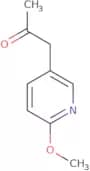
CAS:<p>Versatile small molecule scaffold</p>Formula:C10H7F2NO2Purity:Min. 95%Molecular weight:211.16 g/mol1-(6-Methoxypyridin-3-yl)propan-2-one
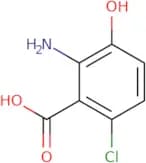
CAS:<p>Versatile small molecule scaffold</p>Formula:C9H11NO2Purity:Min. 95%Molecular weight:165.19 g/mol2-Amino-6-chloro-3-hydroxybenzoic acid
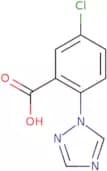
CAS:<p>Versatile small molecule scaffold</p>Formula:C7H6ClNO3Purity:Min. 95%Molecular weight:187.58 g/mol5-Chloro-2-(1H-1,2,4-triazol-1-yl)benzoic acid
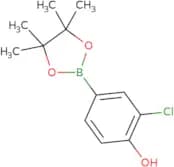
CAS:<p>Versatile small molecule scaffold</p>Formula:C9H6ClN3O2Purity:Min. 95%Molecular weight:223.61 g/mol3-Chloro-4-hydroxyphenylboronic acid pinacol ester
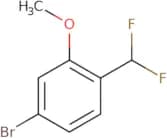
CAS:<p>Versatile small molecule scaffold</p>Formula:C12H16BClO3Purity:Min. 95%Molecular weight:254.52 g/mol4-Bromo-1-(difluoromethyl)-2-methoxybenzene
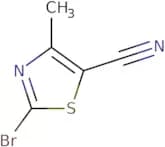
CAS:<p>Versatile small molecule scaffold</p>Formula:C8H7BrF2OPurity:Min. 95%Molecular weight:237.04 g/mol2-Bromo-4-methylthiazole-5-carbonitrile
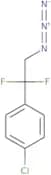
CAS:<p>Versatile small molecule scaffold</p>Formula:C5H3BrN2SPurity:Min. 95%Molecular weight:203.06 g/mol1-(2-Azido-1,1-difluoroethyl)-4-chlorobenzene
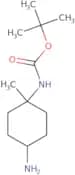
CAS:<p>Versatile small molecule scaffold</p>Formula:C8H6ClF2N3Purity:Min. 95%Molecular weight:217.6 g/moltert-butyl N-(4-amino-1-methylcyclohexyl)carbamate, Mixture of diastereomers
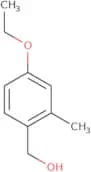
CAS:<p>Versatile small molecule scaffold</p>Formula:C12H24N2O2Purity:Min. 95%Molecular weight:228.3 g/mol(4-Ethoxy-2-methylphenyl)methanol
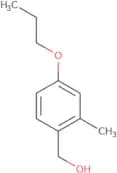
CAS:<p>Versatile small molecule scaffold</p>Formula:C10H14O2Purity:Min. 95%Molecular weight:166.22 g/mol(2-Methyl-4-propoxyphenyl)methanol
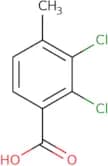
CAS:<p>Versatile small molecule scaffold</p>Formula:C11H16O2Purity:Min. 95%Molecular weight:180.24 g/mol2,3-Dichloro-4-methylbenzoic acid
CAS:<p>Versatile small molecule scaffold</p>Formula:C8H6Cl2O2Purity:Min. 95%Molecular weight:205.04 g/mol3,3-difluoro-8-azabicyclo[3.2.1]octane hydrochloride
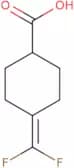
CAS:<p>Versatile small molecule scaffold</p>Formula:C7H12ClF2NPurity:Min. 95%Molecular weight:183.6 g/mol4-(Difluoromethylidene)cyclohexane-1-carboxylic acid
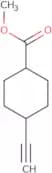
CAS:<p>Versatile small molecule scaffold</p>Formula:C8H10F2O2Purity:Min. 95%Molecular weight:176.16 g/molMethyl 4-ethynylcyclohexane-1-carboxylate
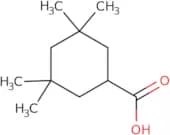
CAS:<p>Versatile small molecule scaffold</p>Formula:C10H14O2Purity:Min. 95%Molecular weight:166.22 g/mol3,3,5,5-Tetramethylcyclohexane-1-carboxylic acid
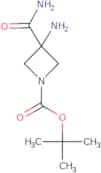
CAS:<p>Versatile small molecule scaffold</p>Formula:C11H20O2Purity:Min. 95%Molecular weight:184.27 g/moltert-butyl 3-amino-3-carbamoylazetidine-1-carboxylate
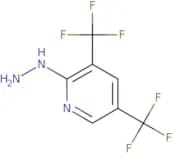
CAS:<p>Versatile small molecule scaffold</p>Formula:C9H17N3O3Purity:Min. 95%Molecular weight:215.2 g/mol2-Hydrazinyl-3,5-bis(trifluoromethyl)pyridine
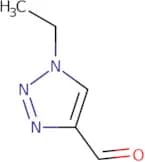
CAS:<p>Versatile small molecule scaffold</p>Formula:C7H5F6N3Purity:Min. 95%Molecular weight:245.13 g/mol1-Ethyl-1H-1,2,3-triazole-4-carbaldehyde
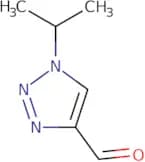
CAS:<p>Versatile small molecule scaffold</p>Formula:C5H7N3OPurity:Min. 95%Molecular weight:125.13 g/mol1-(Propan-2-yl)-1H-1,2,3-triazole-4-carbaldehyde
CAS:<p>Versatile small molecule scaffold</p>Formula:C6H9N3OPurity:Min. 95%Molecular weight:139.16 g/mol1-tert-Butyl-1H-1,2,3-triazole-4-carbaldehyde
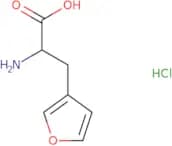
CAS:<p>Versatile small molecule scaffold</p>Formula:C7H11N3OPurity:Min. 95%Molecular weight:153.18 g/mol2-Amino-3-(furan-3-yl)propanoic acid hydrochloride
CAS:<p>Versatile small molecule scaffold</p>Formula:C7H10ClNO3Purity:Min. 95%Molecular weight:191.61 g/mol2-{[(tert-Butoxy)carbonyl]amino}-3-(4-hydroxy-3-methoxyphenyl)propanoic acid
CAS:<p>Versatile small molecule scaffold</p>Formula:C15H21NO6Purity:Min. 95%Molecular weight:311.33 g/mol{1-Oxaspiro[4.4]nonan-2-yl}methanol
CAS:<p>Versatile small molecule scaffold</p>Formula:C9H16O2Purity:Min. 95%Molecular weight:156.22 g/mol{1-Oxaspiro[4.5]decan-2-yl}methanol
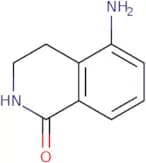
CAS:<p>Versatile small molecule scaffold</p>Formula:C10H18O2Purity:Min. 95%Molecular weight:170.25 g/mol5-Amino-1,2,3,4-tetrahydroisoquinolin-1-one hydrochloride
CAS:<p>Versatile small molecule scaffold</p>Formula:C9H11ClN2OPurity:Min. 95%Molecular weight:198.65 g/mol5-Amino-1,2,3,4-tetrahydroisoquinolin-1-one
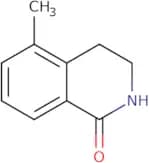
CAS:<p>Versatile small molecule scaffold</p>Formula:C9H10N2OPurity:Min. 95%Molecular weight:162.19 g/mol5-Methyl-3,4-dihydroisoquinolin-1(2H)-one
CAS:<p>5-Methyl-3,4-dihydroisoquinolin-1(2H)-one is a detectable compound that is found in adventitia. It has been shown to have polymerase activity and can be used to inhibit restenosis following angioplasty. 5-Methyl-3,4-dihydroisoquinolin-1(2H)-one inhibits the proliferation of vascular smooth muscle cells by inhibiting the synthesis of phosphoenolpyruvate, which is an important substrate for cellular respiration. This drug also inhibits cellular proliferation and neointimal hyperplasia in a hepatoma cell line. The drug has been shown to be effective at reducing neointimal hyperplasia following angioplasty in a porcine model of vascular injury.</p>Formula:C10H11NOPurity:Min. 95%Molecular weight:161.2 g/mol3-(3,5-Dimethoxyphenyl)pyrrolidine
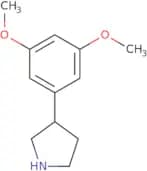
CAS:<p>Versatile small molecule scaffold</p>Formula:C12H17NO2Purity:Min. 95%Molecular weight:207.27 g/mol4-Benzyl-5-(pyridin-3-yl)-4H-1,2,4-triazole-3-thiol
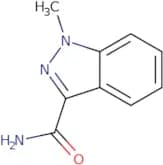
CAS:<p>Versatile small molecule scaffold</p>Formula:C14H12N4SPurity:Min. 95%Molecular weight:268.34 g/mol1-Methyl-1H-indazole-3-carboxamide
CAS:Controlled Product<p>1-Methyl-1H-indazole-3-carboxamide belongs to the group of indazole derivatives. It is a potent inhibitor of HIV replication and is used as an antiretroviral drug. 1-Methyl-1H-indazole-3-carboxamide has been shown to have antiviral activity against different types of viruses, such as hepatitis B virus, herpes simplex virus type 1, and human cytomegalovirus. The mechanism of action for this drug is not fully understood; however, it may inhibit viral protein synthesis by acting at the level of the polymerase chain reaction. This drug also has a number of side effects on the mother and infant, including metabolic disorders in both, increased body mass index in infants, and increased maternal mortality rates for women with HIV infection.</p>Formula:C9H9N3OPurity:Min. 95%Molecular weight:175.19 g/mol2-[3-(Trifluoromethyl)phenyl]butanoic acid
CAS:<p>Versatile small molecule scaffold</p>Formula:C11H11F3O2Purity:Min. 95%Molecular weight:232.2 g/mol1,3-Dimethyl-2,4-dioxo-1H,2H,3H,4H-thieno[2,3-d]pyrimidine-6-carboxylic acid
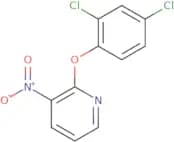
CAS:<p>Versatile small molecule scaffold</p>Formula:C9H8N2O4SPurity:Min. 95%Molecular weight:240.24 g/mol2-(2,4-Dichlorophenoxy)-3-nitropyridine
CAS:<p>Versatile small molecule scaffold</p>Formula:C11H6Cl2N2O3Purity:Min. 95%Molecular weight:285.08 g/molTrimethyl[3-(4,4,5,5-tetramethyl-1,3,2-dioxaborolan-2-yl)prop-1-yn-1-yl]silane
CAS:<p>Versatile small molecule scaffold</p>Formula:C12H23BO2SiPurity:Min. 95%Molecular weight:238.21 g/molProp-2-en-1-yl N-[(prop-2-en-1-yloxy)carbonyl]carbamate
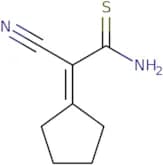
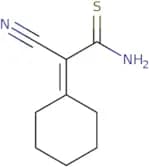
CAS:<p>Versatile small molecule scaffold</p>Formula:C8H11NO4Purity:Min. 95%Molecular weight:185.18 g/mol2-Cyano-2-cyclopentylideneethanethioamide
CAS:<p>2-Cyano-2-cyclopentylideneethanethioamide is a cycloaddition reaction product of 2-cyanoacetic acid and triethylamine. It is a structural analog of the amino acid lysine, with the sulfur atom replaced by a cyano group. The compound reacts with thiols or amines to form unsaturated amides. This reaction can be used in the synthesis of heterocycles such as pyridine and quinoline.</p>Formula:C8H10N2SPurity:Min. 95%Molecular weight:166.25 g/mol2-Cyano-2-cyclohexylideneethanethioamide
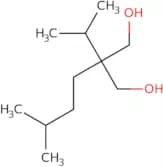
CAS:<p>2-Cyano-2-cyclohexylideneethanethioamide is a synthetic compound with the chemical formula (CH3)2CS. It has a crystalline structure and hydrogenated bonds. The primary amines in this compound are piperidine and salicylaldehyde. 2-Cyano-2-cyclohexylideneethanethioamide reacts with amines to form reaction products, which can also be alkylated. This synthetic compound is active methylene, making it an important structural analysis tool. Diffraction patterns of this compound have been analyzed to determine its molecular structure.</p>Formula:C9H12N2SPurity:Min. 95%Molecular weight:180.27 g/mol2-(3-Methylbutyl)-2-(propan-2-yl)propane-1,3-diol
CAS:<p>2-(3-Methylbutyl)-2-(propan-2-yl)propane-1,3-diol is a phthalate that is used as a plasticizer. It has been shown to have catalytic activity for the polymerization of dibenzoate and benzoate. 2-(3-Methylbutyl)-2-(propan-2-yl)propane-1,3-diol is also used as a catalyst in the synthesis of polyesters. 2-(3-Methylbutyl)-2-(propan-2-yl)propane-1,3-diol can be synthesized from propylene and butanol by reacting them in the presence of an acid catalyst.</p>Formula:C11H24O2Purity:Min. 95%Molecular weight:188.31 g/mol2-(2-Bromophenoxy)pyrazine
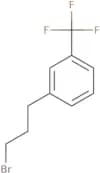
CAS:<p>Versatile small molecule scaffold</p>Formula:C10H7BrN2OPurity:Min. 95%Molecular weight:251.08 g/mol1-(3-Bromopropyl)-3-(trifluoromethyl)benzene
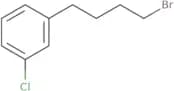
CAS:<p>Versatile small molecule scaffold</p>Formula:C10H10BrF3Purity:Min. 95%Molecular weight:267.09 g/mol1-(4-Bromobutyl)-3-chlorobenzene
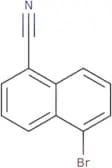
CAS:<p>Versatile small molecule scaffold</p>Formula:C10H12BrClPurity:Min. 95%Molecular weight:247.56 g/mol5-Bromonaphthalene-1-carbonitrile
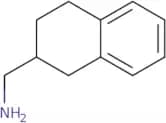
CAS:<p>Versatile small molecule scaffold</p>Formula:C11H6BrNPurity:Min. 95%Molecular weight:232.08 g/mol(1,2,3,4-Tetrahydronaphthalen-2-yl)methanamine
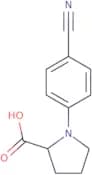
CAS:<p>Versatile small molecule scaffold</p>Formula:C11H15NPurity:Min. 95%Molecular weight:161.25 g/mol1-(4-Cyanophenyl)pyrrolidine-2-carboxylic acid
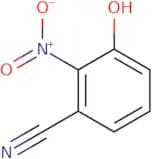
CAS:<p>Versatile small molecule scaffold</p>Formula:C12H12N2O2Purity:Min. 95%Molecular weight:216.24 g/mol3-Hydroxy-2-nitrobenzonitrile
CAS:<p>3-Hydroxy-2-nitrobenzonitrile (3HNB) is a biomolecule that has been systematically studied. It is a cyclic molecule with two nitro groups, and is synthesized by the reaction of 3,4-dihydroxybenzonitrile with nitric acid. The crystal structure of 3HNB was determined by X-ray diffraction to be orthorhombic and space group Pbca. The kinetic and thermodynamic parameters of 3HNB have been investigated in tumour cell lines. Mechanistic studies show that it inhibits the proliferation of tumour cells by binding to DNA and inhibiting DNA synthesis. This inhibition leads to cell death via apoptosis or necrosis, depending on the concentration of 3HNB used.</p>Formula:C7H4N2O3Purity:Min. 95%Molecular weight:164.12 g/mol1-Phenyl-1H-[1,2,3]triazolo[4,5-c]pyridine
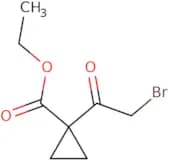
CAS:<p>Versatile small molecule scaffold</p>Formula:C11H8N4Purity:Min. 95%Molecular weight:196.21 g/molEthyl 1-(2-bromoacetyl)cyclopropanecarboxylate
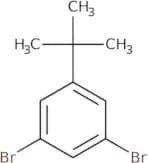
CAS:<p>Versatile small molecule scaffold</p>Formula:C8H11BrO3Purity:Min. 95%Molecular weight:235.08 g/mol1,3-Dibromo-5-(tert-butyl)benzene
CAS:<p>Versatile small molecule scaffold</p>Formula:C10H12Br2Purity:Min. 95%Molecular weight:292.01 g/mol1-[3-Chloro-4-(trifluoromethyl)phenyl]ethan-1-one
CAS:<p>Versatile small molecule scaffold</p>Formula:C9H6ClF3OPurity:Min. 95%Molecular weight:222.59 g/mol2-chloro-6,7-dihydroquinolin-8(5h)-one
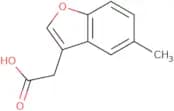
CAS:<p>2-Chloro-6,7-dihydroquinolin-8(5H)-one is a heterocycle that is structurally similar to other nitrogen-containing heterocycles. It can be synthesized by esterification of 2,6,7-trihydroxyquinoline with chloroacetyl chloride.</p>Formula:C9H8ClNOPurity:Min. 95%Molecular weight:181.62 g/mol2-(5-Methyl-1-benzofuran-3-yl)acetic acid
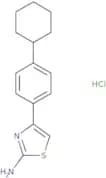
CAS:<p>2-(5-Methyl-1-benzofuran-3-yl)acetic acid is a molecule that belongs to the group of amides. It has been shown to inhibit human immunodeficiency virus (HIV) infection in cells and induce apoptosis. 2-(5-Methyl-1-benzofuran-3-yl)acetic acid also inhibits the replication of paramyxovirus, which may be due to its fusogenic properties. This compound also has anti-cancer activity. It has been shown to inhibit tumor growth and radiation sensitivity in vivo and in vitro by inducing apoptosis. The low energy of this compound may be responsible for the inhibition of HIV proliferation, as well as its ability to induce apoptosis.</p>Formula:C11H10O3Purity:Min. 95%Molecular weight:190.19 g/mol4-(4-Cyclohexylphenyl)-1,3-thiazol-2-amine hydrochloride
CAS:<p>Versatile small molecule scaffold</p>Formula:C15H19ClN2SPurity:Min. 95%Molecular weight:294.8 g/molEthyl 5-amino-1-{[(tert-butoxy)carbonyl]amino}-4-cyano-2-methyl-1H-pyrrole-3-carboxylate
CAS:<p>Versatile small molecule scaffold</p>Formula:C14H20N4O4Purity:Min. 95%Molecular weight:308.33 g/mol2-(tert-Butyldimethylsilyl)-N,N-dimethyl-1H-imidazole-1-sulfonamide
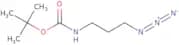
CAS:<p>Versatile small molecule scaffold</p>Formula:C11H23N3O2SSiPurity:Min. 95%Molecular weight:289.47 g/molTert-butyl (3-azidopropyl)carbamate
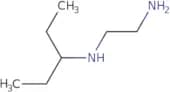
CAS:<p>Versatile small molecule scaffold</p>Formula:C8H16N4O2Purity:Min. 95%Molecular weight:200.23 g/mol(2-Aminoethyl)(pentan-3-yl)amine
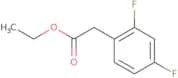
CAS:<p>Versatile small molecule scaffold</p>Formula:C7H18N2Purity:Min. 95%Molecular weight:130.23 g/mol(2,4-Difluorophenyl)acetic acid ethyl ester
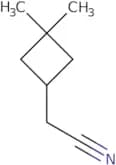
CAS:<p>Versatile small molecule scaffold</p>Formula:C10H10F2O2Purity:Min. 95%Molecular weight:200.19 g/mol2-(3,3-Dimethylcyclobutyl)acetonitrile
CAS:<p>Versatile small molecule scaffold</p>Formula:C8H13NPurity:Min. 95%Molecular weight:123.2 g/mol4-Bromo-3,3-dimethylbutanenitrile
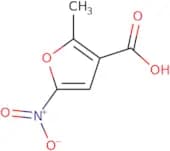
CAS:<p>Versatile small molecule scaffold</p>Formula:C6H10BrNPurity:Min. 95%Molecular weight:176.05 g/mol2-Methyl-5-nitrofuran-3-carboxylic acid
CAS:<p>Versatile small molecule scaffold</p>Formula:C6H5NO5Purity:Min. 95%Molecular weight:171.11 g/mol2-((Tert-butoxycarbonyl)amino)-3-(1h-pyrrolo[2,3-b]pyridin-3-yl)propanoic Acid
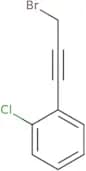
CAS:<p>Versatile small molecule scaffold</p>Formula:C15H19N3O4Purity:Min. 95%Molecular weight:305.32 g/mol1-(3-Bromoprop-1-yn-1-yl)-2-chlorobenzene
CAS:<p>Versatile small molecule scaffold</p>Formula:C9H6BrClPurity:Min. 95%Molecular weight:229.5 g/molMethyl 4-[(1R)-1-hydroxyethyl]benzoate
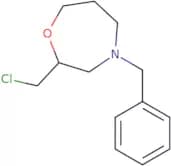
CAS:<p>Versatile small molecule scaffold</p>Formula:C10H12O3Purity:Min. 95%Molecular weight:180.2 g/mol4-Benzyl-2-(chloromethyl)homomorpholine
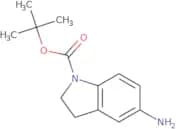
CAS:<p>Versatile small molecule scaffold</p>Formula:C13H18ClNOPurity:Min. 95%Molecular weight:239.74 g/mol5-Amino-2,3-dihydro-indole-1-carboxylic acid tert-butyl ester
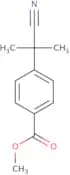
CAS:<p>Versatile small molecule scaffold</p>Formula:C13H18N2O2Purity:Min. 95%Molecular weight:234.3 g/molMethyl 4-(1-cyano-1-methylethyl)benzoate
CAS:<p>Versatile small molecule scaffold</p>Formula:C12H13NO2Purity:Min. 95%Molecular weight:203.24 g/mol

![1',2'-Dihydrospiro[cyclohexane-1,3'-indole]-2'-one](/_next/image/?url=https%3A%2Fstatic.cymitquimica.com%2Fproducts%2F3D%2Fthumb-webp%2FEAA93314.webp&w=3840&q=75)
![5H,6H,7H-Pyrrolo[3,4-b]pyrazine-5,7-dione](/_next/image/?url=https%3A%2Fstatic.cymitquimica.com%2Fproducts%2F3D%2Fthumb-webp%2FEAA93319.webp&w=3840&q=75)
![1H,3H,4H,5H,6H,7H,8H,9H-Cycloocta[C]furan-1,3-dione](/_next/image/?url=https%3A%2Fstatic.cymitquimica.com%2Fproducts%2F3D%2Fthumb-webp%2FEAA93619.webp&w=3840&q=75)
![5-Methyl-1H-pyrrolo[3,2-b]pyridine](/_next/image/?url=https%3A%2Fstatic.cymitquimica.com%2Fproducts%2F3D%2Fthumb-webp%2FEAA94367.webp&w=3840&q=75)
![9-Azabicyclo[6.2.0]decan-10-one](/_next/image/?url=https%3A%2Fstatic.cymitquimica.com%2Fproducts%2F3D%2Fthumb-webp%2FEAA94636.webp&w=3840&q=75)
![2-[4-(2-Aminoethyl)phenoxy]ethan-1-ol](/_next/image/?url=https%3A%2Fstatic.cymitquimica.com%2Fproducts%2F3D%2Fthumb-webp%2FEAA96064.webp&w=3840&q=75)


![1-Methyl-4-[(methylsulfanyl)sulfonyl]benzene](/_next/image/?url=https%3A%2Fstatic.cymitquimica.com%2Fproducts%2F3D%2Fthumb-webp%2FEAA97366.webp&w=3840&q=75)



![5,6-Dimethylthieno[2,3-d]pyrimidin-4-amine](/_next/image/?url=https%3A%2Fstatic.cymitquimica.com%2Fproducts%2F3D%2Fthumb-webp%2FEAA99489.webp&w=3840&q=75)


![3,3-difluoro-8-azabicyclo[3.2.1]octane hydrochloride](/_next/image/?url=https%3A%2Fstatic.cymitquimica.com%2Fproducts%2F3D%2Fthumb-webp%2FEAC10406.webp&w=3840&q=75)

![2-{[(tert-Butoxy)carbonyl]amino}-3-(4-hydroxy-3-methoxyphenyl)propanoic acid](/_next/image/?url=https%3A%2Fstatic.cymitquimica.com%2Fproducts%2F3D%2Fthumb-webp%2FEFA04872.webp&w=3840&q=75)
![{1-Oxaspiro[4.4]nonan-2-yl}methanol](/_next/image/?url=https%3A%2Fstatic.cymitquimica.com%2Fproducts%2F3D%2Fthumb-webp%2FEFA05562.webp&w=3840&q=75)
![{1-Oxaspiro[4.5]decan-2-yl}methanol](/_next/image/?url=https%3A%2Fstatic.cymitquimica.com%2Fproducts%2F3D%2Fthumb-webp%2FEFA05563.webp&w=3840&q=75)


![2-[3-(Trifluoromethyl)phenyl]butanoic acid](/_next/image/?url=https%3A%2Fstatic.cymitquimica.com%2Fproducts%2F3D%2Fthumb-webp%2FEFA14097.webp&w=3840&q=75)
![1,3-Dimethyl-2,4-dioxo-1H,2H,3H,4H-thieno[2,3-d]pyrimidine-6-carboxylic acid](/_next/image/?url=https%3A%2Fstatic.cymitquimica.com%2Fproducts%2F3D%2Fthumb-webp%2FEFA17739.webp&w=3840&q=75)
![Trimethyl[3-(4,4,5,5-tetramethyl-1,3,2-dioxaborolan-2-yl)prop-1-yn-1-yl]silane](/_next/image/?url=https%3A%2Fstatic.cymitquimica.com%2Fproducts%2F3D%2Fthumb-webp%2FEFA21785.webp&w=3840&q=75)
![Prop-2-en-1-yl N-[(prop-2-en-1-yloxy)carbonyl]carbamate](/_next/image/?url=https%3A%2Fstatic.cymitquimica.com%2Fproducts%2F3D%2Fthumb-webp%2FEFA22090.webp&w=3840&q=75)

![1-Phenyl-1H-[1,2,3]triazolo[4,5-c]pyridine](/_next/image/?url=https%3A%2Fstatic.cymitquimica.com%2Fproducts%2F3D%2Fthumb-webp%2FEFA30382.webp&w=3840&q=75)
![1-[3-Chloro-4-(trifluoromethyl)phenyl]ethan-1-one](/_next/image/?url=https%3A%2Fstatic.cymitquimica.com%2Fproducts%2F3D%2Fthumb-webp%2FEFA32280.webp&w=3840&q=75)

![Ethyl 5-amino-1-{[(tert-butoxy)carbonyl]amino}-4-cyano-2-methyl-1H-pyrrole-3-carboxylate](/_next/image/?url=https%3A%2Fstatic.cymitquimica.com%2Fproducts%2F3D%2Fthumb-webp%2FEFA37820.webp&w=3840&q=75)


![2-((Tert-butoxycarbonyl)amino)-3-(1h-pyrrolo[2,3-b]pyridin-3-yl)propanoic Acid](/_next/image/?url=https%3A%2Fstatic.cymitquimica.com%2Fproducts%2F3D%2Fthumb-webp%2FEFA42333.webp&w=3840&q=75)
![Methyl 4-[(1R)-1-hydroxyethyl]benzoate](/_next/image/?url=https%3A%2Fstatic.cymitquimica.com%2Fproducts%2F3D%2Fthumb-webp%2FEFA44647.webp&w=3840&q=75)