Building Blocks
This section contains fundamental products for the synthesis of organic and biological compounds. Building blocks are the essential starting materials used to construct complex molecules through various chemical reactions. They play a critical role in drug discovery, material science, and chemical research. At CymitQuimica, we offer a diverse range of high-quality building blocks to support your innovative research and industrial projects, ensuring you have the essential components for successful synthesis.
Subcategories of "Building Blocks"
- Boronic Acids & Boronic Acid Derivatives(5,756 products)
- Chiral Building Blocks(1,242 products)
- Hydrocarbon Building Blocks(6,095 products)
- Organic Building Blocks(61,038 products)
Found 196817 products of "Building Blocks"
Sort by
Purity (%)
0
100
|
0
|
50
|
90
|
95
|
100
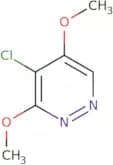
4-Chloro-3,5-dimethoxypyridazine
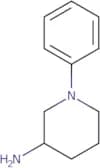
CAS:<p>4-Chloro-3,5-dimethoxypyridazine is a tautomeric compound that has been synthesized and characterized. The form of the molecule depends on the pH. At low pH, it exists in the form of an ion with a negative charge. When neutralized, it exists as a protonated molecule and at high pH, it exists as an ion with a positive charge. 4-Chloro-3,5-dimethoxypyridazine has been used to synthesise analogues with improved properties.</p>Formula:C6H7ClN2O2Purity:Min. 95%Molecular weight:174.58 g/mol1-Phenylpiperidin-3-amine
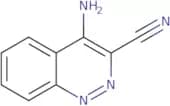
CAS:<p>Versatile small molecule scaffold</p>Formula:C11H16N2Purity:Min. 95%Molecular weight:176.26 g/mol4-Aminocinnoline-3-carbonitrile
CAS:<p>Versatile small molecule scaffold</p>Formula:C9H6N4Purity:Min. 95%Molecular weight:170.17 g/mol[2-(3,4-Dimethoxy-phenyl)-ethyl]-phenethyl-amine
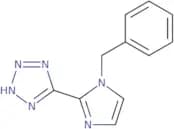
CAS:<p>Versatile small molecule scaffold</p>Formula:C18H23NO2Purity:Min. 95%Molecular weight:285.4 g/mol5-(1-Benzyl-1H-imidazol-2-yl)-1H-1,2,3,4-tetrazole
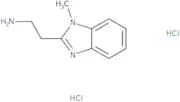
CAS:<p>5-(1-Benzyl-1H-imidazol-2-yl)-1H-1,2,3,4-tetrazole is a diagnostic agent that can be used for iontophoresis. It is insoluble in water and therefore cannot be administered by injection. 5-(1-Benzyl-1H-imidazol-2-yl)-1H-1,2,3,4-tetrazole is reconstituted with an antisolvent or diluent before use as an iontophoretic drug. It is hydrophobic and binds to the skin surface during iontophoresis, allowing for the passage of ions through the skin.</p>Formula:C11H10N6Purity:Min. 95%Molecular weight:226.24 g/mol2-(1-Methyl-1H-benzoimidazol-2-yl)-ethylamine dihydrochloride
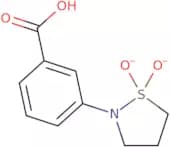
CAS:Controlled Product<p>Versatile small molecule scaffold</p>Formula:C10H15Cl2N3Purity:Min. 95%Molecular weight:248.15 g/mol3-(1,1-Dioxido-2-isothiazolidinyl)benzoic Acid
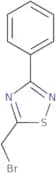
CAS:<p>Versatile small molecule scaffold</p>Formula:C10H11NO4SPurity:Min. 95%Molecular weight:241.26 g/mol5-(Bromomethyl)-3-phenyl-1,2,4-thiadiazole
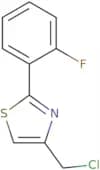
CAS:<p>Versatile small molecule scaffold</p>Formula:C9H7BrN2SPurity:Min. 95%Molecular weight:255.14 g/mol4-(Chloromethyl)-2-(2-fluorophenyl)-1,3-thiazole
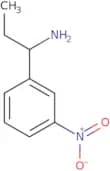
CAS:<p>Versatile small molecule scaffold</p>Formula:C10H7ClFNSPurity:Min. 95%Molecular weight:227.69 g/mol1-(3-Nitrophenyl)propan-1-amine
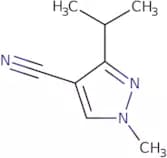
CAS:<p>Versatile small molecule scaffold</p>Formula:C9H12N2O2Purity:Min. 95%Molecular weight:180.2 g/mol1-Methyl-3-(propan-2-yl)-1H-pyrazole-4-carbonitrile
CAS:<p>1-Methyl-3-(propan-2-yl)-1H-pyrazole-4-carbonitrile (1MP) is a synthetic molecule that belongs to the class of linear, generalizes and heterocyclic compounds. It has biological activity and is six-membered in structure. 1MP has been shown to have nucleophilic properties, which may be due to its noncyclic nature.</p>Formula:C8H11N3Purity:Min. 95%Molecular weight:149.19 g/molEthyl 2-(3-bromophenoxy)acetate
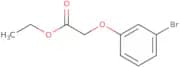
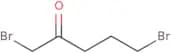
CAS:<p>Versatile small molecule scaffold</p>Formula:C10H11BrO3Purity:Min. 95%Molecular weight:259.1 g/mol1,5-Dibromopentan-2-one
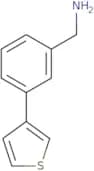
CAS:<p>Versatile small molecule scaffold</p>Formula:C5H8Br2OPurity:Min. 95%Molecular weight:243.92 g/mol(3-Thien-3-ylphenyl)methylamine
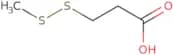
CAS:<p>Versatile small molecule scaffold</p>Formula:C11H11NSPurity:Min. 95%Molecular weight:189.28 g/mol3-(2-Methyldisulfanyl)propanoic acid
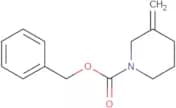
CAS:<p>Versatile small molecule scaffold</p>Formula:C4H8O2S2Purity:Min. 95%Molecular weight:152.2 g/molbenzyl 3-methylenepiperidine-1-carboxylate
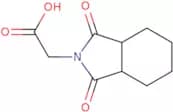
CAS:Versatile small molecule scaffoldFormula:C14H17NO2Purity:Min. 95%Molecular weight:231.3 g/mol2-(1,3-Dioxo-octahydro-1H-isoindol-2-yl)acetic acid
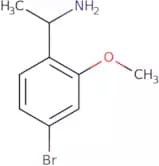
CAS:<p>Versatile small molecule scaffold</p>Formula:C10H13NO4Purity:Min. 95%Molecular weight:211.21 g/mol1-(4-bromo-2-methoxyphenyl)ethan-1-amine
CAS:<p>Versatile small molecule scaffold</p>Formula:C9H12BrNOPurity:Min. 95%Molecular weight:230.1 g/mol7-Methyl-[1,2,4]triazolo[1,5-a]pyridin-5-ol
CAS:<p>Versatile small molecule scaffold</p>Formula:C7H7N3OPurity:Min. 95%Molecular weight:149.15 g/mol2-Chloromethyl-5-cyclopropyl-1,3,4-thiadiazole
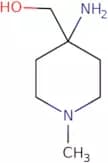
CAS:<p>Versatile small molecule scaffold</p>Formula:C6H7ClN2SPurity:Min. 95%Molecular weight:174.65 g/mol(4-Amino-1-methyl-piperidin-4-yl)-methanol
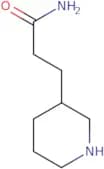
CAS:<p>Versatile small molecule scaffold</p>Formula:C7H16N2OPurity:Min. 95%Molecular weight:144.21 g/mol3-(Piperidin-3-yl)propanamide
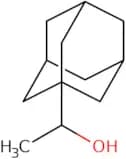
CAS:<p>Versatile small molecule scaffold</p>Formula:C8H16N2OPurity:Min. 95%Molecular weight:156.23 g/mol(1S)-1-(Adamantan-1-yl)ethan-1-ol
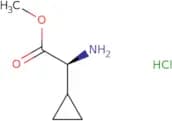
CAS:<p>Versatile small molecule scaffold</p>Formula:C12H20OPurity:Min. 95%Molecular weight:180.29 g/mol(S)-Methyl 2-amino-2-cyclopropylacetate hydrochloride
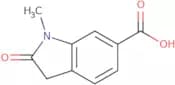
CAS:<p>Versatile small molecule scaffold</p>Formula:C6H11NO2·HClPurity:Min. 95%Molecular weight:165.62 g/mol1-methyl-2-oxo-2,3-dihydro-1H-indole-6-carboxylic acid
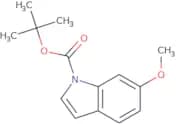
CAS:<p>Versatile small molecule scaffold</p>Formula:C10H9NO3Purity:Min. 95%Molecular weight:191.19 g/molN-Boc-6-methoxyindole
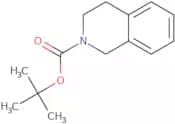
CAS:<p>Versatile small molecule scaffold</p>Formula:C14H17NO3Purity:Min. 95%Molecular weight:247.29 g/moltert-Butyl 1,2,3,4-tetrahydroisoquinoline-2-carboxylate
CAS:<p>Versatile small molecule scaffold</p>Formula:C14H19NO2Purity:Min. 95%Molecular weight:233.31 g/mol2-[2-(1-Piperidinyl)ethoxy]benzaldehyde hydrochloride
CAS:<p>Versatile small molecule scaffold</p>Formula:C14H20ClNO2Purity:Min. 95%Molecular weight:269.77 g/molPropyl[2-(pyrrolidin-1-yl)ethyl]amine
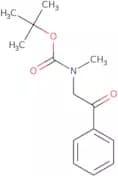
CAS:<p>Versatile small molecule scaffold</p>Formula:C9H20N2Purity:Min. 95%Molecular weight:156.27 g/molMethyl-(2-oxo-2-phenyl-ethyl)-carbamic acid tert-butyl ester
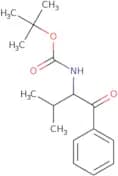
CAS:<p>Versatile small molecule scaffold</p>Formula:C14H19NO3Purity:Min. 95%Molecular weight:249.31 g/moltert-Butyl N-(3-methyl-1-oxo-1-phenylbutan-2-yl)carbamate
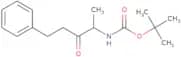
CAS:<p>Versatile small molecule scaffold</p>Formula:C16H23NO3Purity:Min. 95%Molecular weight:277.36 g/moltert-Butyl (3-oxo-5-phenylpentan-2-yl)carbamate
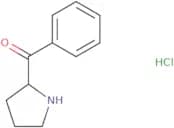
CAS:<p>Versatile small molecule scaffold</p>Formula:C16H23NO3Purity:Min. 95%Molecular weight:277.36 g/mol2-Benzoylpyrrolidine Hydrochloride
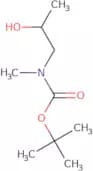
CAS:Controlled Product<p>Versatile small molecule scaffold</p>Formula:C11H14ClNOPurity:Min. 95%Molecular weight:211.69 g/moltert-Butyl N-(2-hydroxypropyl)-N-methylcarbamate
CAS:<p>Versatile small molecule scaffold</p>Formula:C9H19NO3Purity:Min. 95%Molecular weight:189.25 g/molIsothiazolo[5,4-b]pyridin-3(2H)-one 1,1-dioxide
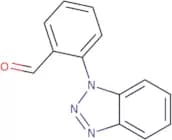
CAS:<p>Versatile small molecule scaffold</p>Formula:C6H4N2O3SPurity:Min. 95%Molecular weight:184.17 g/mol2-(1H-1,2,3-Benzotriazol-1-yl)benzaldehyde
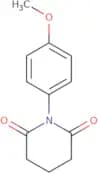
CAS:<p>Versatile small molecule scaffold</p>Formula:C13H9N3OPurity:Min. 95%Molecular weight:223.23 g/mol1-(4-Methoxyphenyl)piperidine-2,6-dione
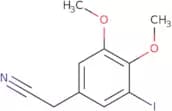
CAS:<p>1-(4-Methoxyphenyl)piperidine-2,6-dione is a potent inhibitor of the enzyme aromatase. It has been shown to be effective in inhibiting the growth of cancer cells and is currently being tested as an anti-cancer drug. 1-(4-Methoxyphenyl)piperidine-2,6-dione has been shown to inhibit the production of epidermal growth factor in human breast cancer cells. The covalent linkages between this compound and its aromatic ring are responsible for its potent inhibition of aromatase. This analog also inhibits the production of testosterone by blocking the binding site on the enzyme necessary for this reaction to occur.</p>Formula:C12H13NO3Purity:Min. 95%Molecular weight:219.24 g/mol2-(3-Iodo-4,5-dimethoxyphenyl)acetonitrile
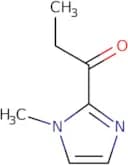
CAS:<p>Versatile small molecule scaffold</p>Formula:C10H10INO2Purity:Min. 95%Molecular weight:303.1 g/mol1-(1-Methyl-1H-imidazol-2-yl)propan-1-one
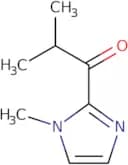
CAS:<p>Versatile small molecule scaffold</p>Formula:C7H10N2OPurity:Min. 95%Molecular weight:138.17 g/mol2-Methyl-1-(1-methyl-1H-imidazol-2-yl)propan-1-one
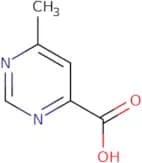
CAS:<p>Versatile small molecule scaffold</p>Formula:C8H12N2OPurity:Min. 95%Molecular weight:152.19 g/mol6-Methylpyrimidine-4-carboxylic acid
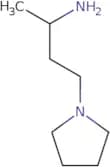
CAS:<p>Versatile small molecule scaffold</p>Formula:C6H6N2O2Purity:Min. 95%Molecular weight:138.12 g/mol4-(Pyrrolidin-1-yl)butan-2-amine
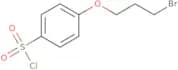
CAS:<p>Versatile small molecule scaffold</p>Formula:C8H18N2Purity:Min. 95%Molecular weight:142.24 g/mol4-(3-Bromopropoxy)benzene-1-sulfonyl chloride
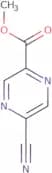
CAS:<p>Versatile small molecule scaffold</p>Formula:C9H10BrClO3SPurity:Min. 95%Molecular weight:313.6 g/molMethyl 5-cyanopyrazine-2-carboxylate
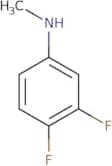
CAS:<p>Versatile small molecule scaffold</p>Formula:C7H5N3O2Purity:Min. 95%Molecular weight:163.13 g/mol3,4-Difluoro-N-methylaniline
CAS:<p>Versatile small molecule scaffold</p>Formula:C7H7F2NPurity:Min. 95%Molecular weight:143.14 g/mol3-[(2H-1,2,3,4-Tetrazol-5-yl)methyl]aniline
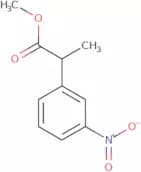
CAS:<p>Versatile small molecule scaffold</p>Formula:C8H9N5Purity:Min. 95%Molecular weight:175.19 g/molMethyl 2-(3-Nitrophenyl)propanoate
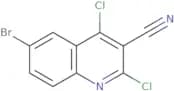
CAS:<p>Versatile small molecule scaffold</p>Formula:C10H11NO4Purity:Min. 95%Molecular weight:209.19 g/mol6-Bromo-2,4-dichloroquinoline-3-carbonitrile
CAS:<p>Versatile small molecule scaffold</p>Formula:C10H3BrCl2N2Purity:Min. 95%Molecular weight:301.95 g/mol(2S)-3-(Dimethylcarbamoyl)-2-({[(9H-fluoren-9-yl)methoxy]carbonyl}amino)propanoic acid
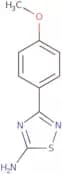
CAS:<p>Versatile small molecule scaffold</p>Formula:C21H22N2O5Purity:Min. 95%Molecular weight:382.4 g/mol3-(4-Methoxyphenyl)-1,2,4-thiadiazol-5-amine
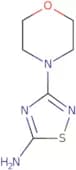
CAS:<p>Versatile small molecule scaffold</p>Formula:C9H9N3OSPurity:Min. 95%Molecular weight:207.25 g/mol3-Morpholino-1,2,4-thiadiazol-5-amine
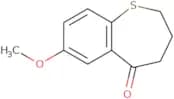
CAS:<p>Versatile small molecule scaffold</p>Formula:C6H10N4OSPurity:Min. 95%Molecular weight:186.23 g/mol7-Methoxy-2,3,4,5-tetrahydro-1-benzothiepin-5-one
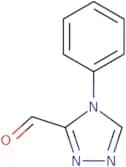
CAS:<p>Versatile small molecule scaffold</p>Formula:C11H12O2SPurity:Min. 95%Molecular weight:208.28 g/mol4-Phenyl-4H-1,2,4-triazole-3-carbaldehyde
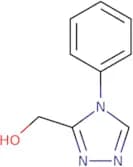
CAS:<p>Versatile small molecule scaffold</p>Formula:C9H7N3OPurity:Min. 95%Molecular weight:173.17 g/mol(4-Phenyl-4H-1,2,4-triazol-3-yl)methanol
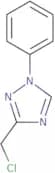
CAS:<p>Versatile small molecule scaffold</p>Formula:C9H9N3OPurity:Min. 95%Molecular weight:175.19 g/mol3-(Chloromethyl)-1-phenyl-1H-1,2,4-triazole
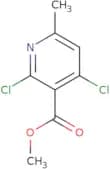
CAS:<p>Versatile small molecule scaffold</p>Formula:C9H8ClN3Purity:Min. 95%Molecular weight:193.63 g/molMethyl 2,4-dichloro-6-methylpyridine-3-carboxylate
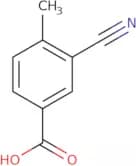
CAS:<p>Versatile small molecule scaffold</p>Formula:C8H7Cl2NO2Purity:Min. 95%Molecular weight:220.05 g/mol3-Cyano-4-methylbenzoic acid
CAS:<p>Versatile small molecule scaffold</p>Formula:C9H7NO2Purity:Min. 95%Molecular weight:161.16 g/mol6-Chloro-2-methyl-imidazo[1,2-a]pyridine-3-carboxylic acid
CAS:<p>Versatile small molecule scaffold</p>Formula:C9H7ClN2O2Purity:Min. 95%Molecular weight:210.62 g/mol3-Benzyl-8-azabicyclo[3.2.1]octan-3-ol
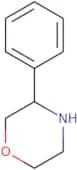
CAS:<p>Versatile small molecule scaffold</p>Formula:C14H19NOPurity:Min. 95%Molecular weight:217.31 g/mol3-Phenyl-morpholine
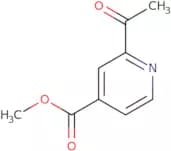
CAS:<p>3-Phenyl-morpholine is a functionalized aliphatic amine with three stereocenters. It is used as a substrate for the synthesis of cyclic and acyclic compounds. 3-Phenyl-morpholine can be used to functionalize amines, oximes, and other substrates with excellent diastereoselectivity and operational efficiency.</p>Formula:C10H13NOPurity:Min. 95%Molecular weight:163.22 g/molMethyl 2-Acetylpyridine-4-carboxylate
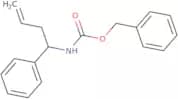
CAS:<p>Methyl 2-acetylpyridine-4-carboxylate is a photocurrent generating compound that can be used in organic solar cells. It has been shown to enhance the performance of organic solar cells by acting as a bidentate ligand for ruthenium complexes. Methyl 2-acetylpyridine-4-carboxylate is synthesized from the diacid, acetylene and formaldehyde. It can be used as an electron acceptor in coordination chemistry involving anthracene to produce a Ru(II) complex. The electron donor is usually a metal ion such as ruthenium, which can be activated by light or heat to generate electrons.</p>Formula:C9H9NO3Purity:Min. 95%Molecular weight:179.17 g/molBenzyl N-(1-phenylbut-3-en-1-yl)carbamate
CAS:<p>Versatile small molecule scaffold</p>Formula:C18H19NO2Purity:Min. 95%Molecular weight:281.3 g/mol5-{[(tert-Butoxy)carbonyl]amino}-1H-indole-2-carboxylic acid
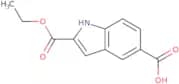
CAS:<p>Versatile small molecule scaffold</p>Formula:C14H16N2O4Purity:Min. 95%Molecular weight:276.29 g/mol2-(Ethoxycarbonyl)-1H-indole-5-carboxylic acid
CAS:<p>Versatile small molecule scaffold</p>Formula:C12H11NO4Purity:Min. 95%Molecular weight:233.22 g/moltert-Butyl 3-(hydroxymethyl)bicyclo[1.1.1]pentane-1-carboxylate
CAS:<p>Versatile small molecule scaffold</p>Formula:C11H18O3Purity:Min. 95%Molecular weight:198.26 g/moltert-Butyl 3-(bromomethyl)bicyclo[1.1.1]pentane-1-carboxylate
CAS:<p>Versatile small molecule scaffold</p>Formula:C11H17BrO2Purity:Min. 95%Molecular weight:261.15 g/mol5-({[(tert-Butoxy)carbonyl]amino}methyl)-1,2-oxazole-3-carboxylic acid
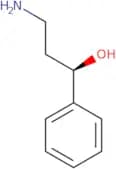
CAS:<p>Versatile small molecule scaffold</p>Formula:C10H14N2O5Purity:Min. 95%Molecular weight:242.23 g/mol(R)-3-Amino-1-phenyl-propan-1-ol
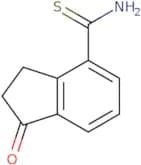
CAS:<p>(R)-3-Amino-1-phenyl-propan-1-ol is an antidepressant drug that belongs to the class of chiral, enantioselective reductants. It has been shown to have a high enantioselectivity for the reduction of nitroarenes and sulfides. The catalyzed reduction of these substrates is based on the formation of an intermediate sulfide complex with borane, which is then reduced by (R)-3-Amino-1-phenyl-propan-1-ol. The method described here can be used for the synthesis of alcohols and nitriles from optically pure starting materials.</p>Formula:C9H13NOPurity:Min. 95%Molecular weight:151.21 g/mol1-oxo-2,3-dihydro-1H-indene-4-carbothioamide
CAS:<p>Versatile small molecule scaffold</p>Formula:C10H9NOSPurity:Min. 95%Molecular weight:191.25 g/molMethyl 2-[1-(4-methylbenzenesulfonyl)-1H-pyrrol-3-yl]acetate
CAS:<p>Versatile small molecule scaffold</p>Formula:C14H15NO4SPurity:Min. 95%Molecular weight:293.3 g/mol[(1S)-1-cyclohexylethyl](methyl)amine
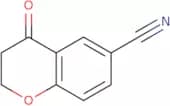
CAS:<p>Versatile small molecule scaffold</p>Formula:C9H19NPurity:Min. 95%Molecular weight:141.25 g/mol4-Oxochromane-6-carbonitrile
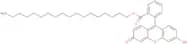
CAS:<p>Versatile small molecule scaffold</p>Formula:C10H7NO2Purity:Min. 95%Molecular weight:173.17 g/molChromoionophore xi
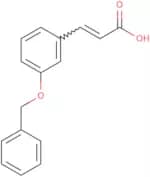
CAS:<p>Chromoionophore xi (CI) is a monoclonal antibody that binds to the CCR5 receptor on the surface of HIV-1. The binding of CI to the receptor inhibits HIV-1 entry into CD4+ cells, leading to a decrease in viral load. CI has an effective dose of 0.8 μg/mL and inhibits HIV-1 infection by 50% at 1 μg/mL. Chromoionophore xi has been shown to be effective in inhibiting HIV-1 infection in vitro and in vivo in mice.</p>Formula:C38H48O5Purity:Min. 95%Molecular weight:584.8 g/mol(E)-3-(3-(Benzyloxy)phenyl)acrylic acid
CAS:<p>(E)-3-(3-(Benzyloxy)phenyl)acrylic acid is a chiral, synthetic acrylic acid that is used in the synthesis of enantiomerically pure (2S,4R)-tapentadol. This compound is prepared by an enantioselective alkylation of (2S,4R)-2-aminobenzoic acid with benzyl bromide. The preparation of this compound was achieved by a chromatographic method and the purified product was obtained as a white solid. The purity of the product was confirmed by HPLC analysis and mass spectrometry.</p>Formula:C16H14O3Purity:Min. 95%Molecular weight:254.28 g/mol7-Oxo-4H,7H-pyrazolo[1,5-a]pyrimidine-3-carbonitrile
CAS:<p>Versatile small molecule scaffold</p>Formula:C7H4N4OPurity:Min. 95%Molecular weight:160.13 g/mol1-(4-Fluoro-phenyl)-1H-pyrazole-4-carboxylic acid
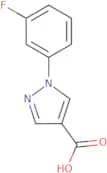
CAS:<p>Versatile small molecule scaffold</p>Formula:C10H7FN2O2Purity:Min. 95%Molecular weight:206.17 g/mol1-(3-Fluorophenyl)-1H-pyrazole-4-carboxylic acid
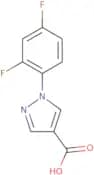
CAS:<p>Versatile small molecule scaffold</p>Formula:C10H7FN2O2Purity:Min. 95%Molecular weight:206.17 g/mol1-(2,4-Difluorophenyl)-1H-pyrazole-4-carboxylic acid
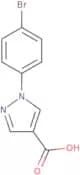
CAS:<p>Versatile small molecule scaffold</p>Formula:C10H6F2N2O2Purity:Min. 95%Molecular weight:224.16 g/mol1-(4-bromophenyl)-1H-pyrazole-4-carboxylic acid
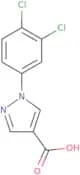
CAS:<p>Versatile small molecule scaffold</p>Formula:C10H7BrN2O2Purity:Min. 95%Molecular weight:267.1 g/mol1-(3,4-Dichlorophenyl)-1H-pyrazole-4-carboxylic acid
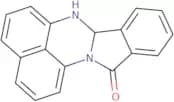
CAS:<p>Versatile small molecule scaffold</p>Formula:C10H6Cl2N2O2Purity:Min. 95%Molecular weight:257.07 g/mol7,7a-Ddihydro- 12H-phthaloperin-12-one
CAS:<p>Versatile small molecule scaffold</p>Formula:C18H12N2OPurity:Min. 95%Molecular weight:272.3 g/mol3-Amino-1-phenyl-1H-pyrazole-4-carbonitrile
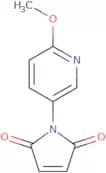
CAS:<p>3-Amino-1-phenyl-1H-pyrazole-4-carbonitrile (APC) is an organic compound that belongs to the class of isocyanates. It is a white solid with a melting point of 103°C and can be easily synthesized by reacting 1-acetyl-2-phenylhydrazine with methyl isocyanate. This compound has been used in the synthesis of pharmaceuticals, such as antihypertensives, antihistamines, antipsychotics, and antidepressants. APC also has applications in the synthesis of polyurethanes and other compounds.</p>Formula:C10H8N4Purity:Min. 95%Molecular weight:184.2 g/mol1-(6-Methoxypyridin-3-yl)-2,5-dihydro-1H-pyrrole-2,5-dione
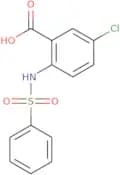
CAS:<p>Versatile small molecule scaffold</p>Formula:C10H8N2O3Purity:Min. 95%Molecular weight:204.18 g/mol2-Benzenesulfonamido-5-chlorobenzoic acid
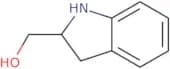
CAS:<p>2-Benzenesulfonamido-5-chlorobenzoic acid is a potent inhibitor of the enzyme protein tyrosine phosphatase 1B (PTP1B). PTP1B is a negative regulator of insulin signaling and has been found to be associated with type 2 diabetes. This drug binds to the active site of PTP1B and prevents it from dephosphorylating tyrosine residues on the insulin receptor, which activates downstream signaling pathways that lead to glucose uptake.<br>2-Benzenesulfonamido-5-chlorobenzoic acid has been shown to inhibit tumor cell proliferation in vitro and in vivo. It also inhibits tumor angiogenesis by blocking vascular endothelial growth factor receptor 2 (VEGFR2) signaling.</p>Formula:C13H10ClNO4SPurity:Min. 95%Molecular weight:311.74 g/mol2-(Hydroxymethyl)indoline
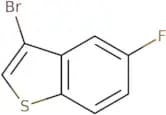
CAS:<p>2-(Hydroxymethyl)indoline is an organic compound with the formula C6H11NO. It is a colorless liquid that smells like ammonia. The compound was first synthesized in 1882 by Emil Fischer and was identified as an α-amino acid, which he called "indoline." 2-(Hydroxymethyl)indoline is used to synthesize other compounds and has been shown to react with nitric acid to form 2-nitrosoindoline. This reagent can be used for the synthesis of stereospecific products, such as 1-hydroxy-1,2-dihydroquinolin-2(1H)-one. Recrystallization of this product from ethanol yields 2-(hydroxymethyl)indoline in high purity.</p>Formula:C9H11NOPurity:Min. 95%Molecular weight:149.19 g/mol3-Bromo-5-fluoro-1-benzothiophene
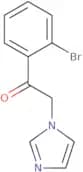
CAS:<p>Versatile small molecule scaffold</p>Formula:C8H4BrFSPurity:Min. 95%Molecular weight:231.09 g/mol1-(2-Bromophenyl)-2-(1H-imidazol-1-yl)ethan-1-one
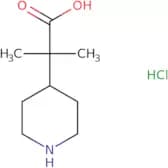
CAS:<p>Versatile small molecule scaffold</p>Formula:C11H9BrN2OPurity:Min. 95%Molecular weight:265.11 g/mol2-Methyl-2-(piperidin-4-yl)propanoic acid hydrochloride
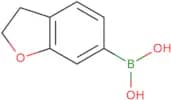
CAS:<p>Versatile small molecule scaffold</p>Formula:C9H18ClNO2Purity:Min. 95%Molecular weight:207.7 g/mol2,3-dihydrobenzofuran-6-ylboronic acid
CAS:<p>Versatile small molecule scaffold</p>Formula:C8H9BO3Purity:Min. 95%Molecular weight:163.97 g/mol[2-(1,3-Thiazol-4-yl)-1h-benzimidazol-1-yl]acetic acid
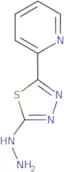
CAS:<p>Versatile small molecule scaffold</p>Formula:C12H9N3O2SPurity:Min. 95%Molecular weight:259.29 g/mol2-(5-Hydrazinyl-1,3,4-thiadiazol-2-yl)pyridine
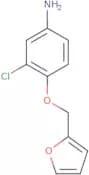
CAS:<p>Versatile small molecule scaffold</p>Formula:C7H7N5SPurity:Min. 95%Molecular weight:193.23 g/mol3-Chloro-4-(furan-2-ylmethoxy)aniline
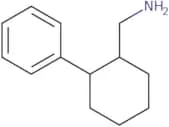
CAS:<p>Versatile small molecule scaffold</p>Formula:C11H10ClNO2Purity:Min. 95%Molecular weight:223.65 g/mol(2-Phenylcyclohexyl)methanamine
CAS:<p>Versatile small molecule scaffold</p>Formula:C13H19NPurity:Min. 95%Molecular weight:189.3 g/mol1-[4-Ethoxy-3-(morpholin-4-ylmethyl)phenyl]ethan-1-one
CAS:<p>Versatile small molecule scaffold</p>Formula:C15H21NO3Purity:Min. 95%Molecular weight:263.33 g/moltert-Butyl N-[1-(4-hydroxyphenyl)ethyl]carbamate
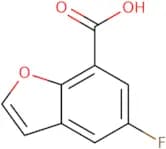
CAS:Versatile small molecule scaffoldFormula:C13H19NO3Purity:Min. 95%Molecular weight:237.3 g/mol5-Fluorobenzofuran-7-carboxylic acid
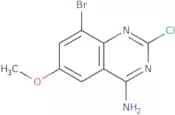
CAS:<p>Versatile small molecule scaffold</p>Formula:C9H5FO3Purity:Min. 95%Molecular weight:180.13 g/mol8-Bromo-2-chloro-6-methoxyquinazolin-4-amine
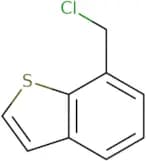
CAS:<p>Versatile small molecule scaffold</p>Formula:C9H7BrClN3OPurity:Min. 95%Molecular weight:288.53 g/mol7-(Chloromethyl)-1-benzothiophene
CAS:<p>Versatile small molecule scaffold</p>Formula:C9H7ClSPurity:Min. 95%Molecular weight:182.67 g/mol2-Chloro-7-methylquinazoline
CAS:<p>Versatile small molecule scaffold</p>Formula:C9H7ClN2Purity:Min. 95%Molecular weight:178.62 g/mol8-Methyl-5-(trifluoromethyl)-1,2,3,4-tetrahydroquinoline
CAS:<p>Versatile small molecule scaffold</p>Formula:C11H12F3NPurity:Min. 95%Molecular weight:215.21 g/mol

![[2-(3,4-Dimethoxy-phenyl)-ethyl]-phenethyl-amine](/_next/image/?url=https%3A%2Fstatic.cymitquimica.com%2Fproducts%2F3D%2Fthumb-webp%2FNCA92547.webp&w=3840&q=75)
![7-Methyl-[1,2,4]triazolo[1,5-a]pyridin-5-ol](/_next/image/?url=https%3A%2Fstatic.cymitquimica.com%2Fproducts%2F3D%2Fthumb-webp%2FNFA28210.webp&w=3840&q=75)

![2-[2-(1-Piperidinyl)ethoxy]benzaldehyde hydrochloride](/_next/image/?url=https%3A%2Fstatic.cymitquimica.com%2Fproducts%2F3D%2Fthumb-webp%2FNFA35108.webp&w=3840&q=75)
![Propyl[2-(pyrrolidin-1-yl)ethyl]amine](/_next/image/?url=https%3A%2Fstatic.cymitquimica.com%2Fproducts%2F3D%2Fthumb-webp%2FNFA35657.webp&w=3840&q=75)
![Isothiazolo[5,4-b]pyridin-3(2H)-one 1,1-dioxide](/_next/image/?url=https%3A%2Fstatic.cymitquimica.com%2Fproducts%2F3D%2Fthumb-webp%2FNFA41740.webp&w=3840&q=75)
![3-[(2H-1,2,3,4-Tetrazol-5-yl)methyl]aniline](/_next/image/?url=https%3A%2Fstatic.cymitquimica.com%2Fproducts%2F3D%2Fthumb-webp%2FNFA56410.webp&w=3840&q=75)
![(2S)-3-(Dimethylcarbamoyl)-2-({[(9H-fluoren-9-yl)methoxy]carbonyl}amino)propanoic acid](/_next/image/?url=https%3A%2Fstatic.cymitquimica.com%2Fproducts%2F3D%2Fthumb-webp%2FNFA58502.webp&w=3840&q=75)
![6-Chloro-2-methyl-imidazo[1,2-a]pyridine-3-carboxylic acid](/_next/image/?url=https%3A%2Fstatic.cymitquimica.com%2Fproducts%2F3D%2Fthumb-webp%2FNFA64296.webp&w=3840&q=75)
![3-Benzyl-8-azabicyclo[3.2.1]octan-3-ol](/_next/image/?url=https%3A%2Fstatic.cymitquimica.com%2Fproducts%2F3D%2Fthumb-webp%2FNFA66053.webp&w=3840&q=75)
![5-{[(tert-Butoxy)carbonyl]amino}-1H-indole-2-carboxylic acid](/_next/image/?url=https%3A%2Fstatic.cymitquimica.com%2Fproducts%2F3D%2Fthumb-webp%2FNFA73081.webp&w=3840&q=75)
![tert-Butyl 3-(hydroxymethyl)bicyclo[1.1.1]pentane-1-carboxylate](/_next/image/?url=https%3A%2Fstatic.cymitquimica.com%2Fproducts%2F3D%2Fthumb-webp%2FNFA73232.webp&w=3840&q=75)
![tert-Butyl 3-(bromomethyl)bicyclo[1.1.1]pentane-1-carboxylate](/_next/image/?url=https%3A%2Fstatic.cymitquimica.com%2Fproducts%2F3D%2Fthumb-webp%2FNFA73234.webp&w=3840&q=75)
![5-({[(tert-Butoxy)carbonyl]amino}methyl)-1,2-oxazole-3-carboxylic acid](/_next/image/?url=https%3A%2Fstatic.cymitquimica.com%2Fproducts%2F3D%2Fthumb-webp%2FNFA74219.webp&w=3840&q=75)
![Methyl 2-[1-(4-methylbenzenesulfonyl)-1H-pyrrol-3-yl]acetate](/_next/image/?url=https%3A%2Fstatic.cymitquimica.com%2Fproducts%2F3D%2Fthumb-webp%2FNFA77998.webp&w=3840&q=75)
amine](/_next/image/?url=https%3A%2Fstatic.cymitquimica.com%2Fproducts%2F3D%2Fthumb-webp%2FNFA78557.webp&w=3840&q=75)
![7-Oxo-4H,7H-pyrazolo[1,5-a]pyrimidine-3-carbonitrile](/_next/image/?url=https%3A%2Fstatic.cymitquimica.com%2Fproducts%2F3D%2Fthumb-webp%2FNFA90448.webp&w=3840&q=75)

![[2-(1,3-Thiazol-4-yl)-1h-benzimidazol-1-yl]acetic acid](/_next/image/?url=https%3A%2Fstatic.cymitquimica.com%2Fproducts%2F3D%2Fthumb-webp%2FNFB14758.webp&w=3840&q=75)
![1-[4-Ethoxy-3-(morpholin-4-ylmethyl)phenyl]ethan-1-one](/_next/image/?url=https%3A%2Fstatic.cymitquimica.com%2Fproducts%2F3D%2Fthumb-webp%2FNFB91651.webp&w=3840&q=75)
![tert-Butyl N-[1-(4-hydroxyphenyl)ethyl]carbamate](/_next/image/?url=https%3A%2Fstatic.cymitquimica.com%2Fproducts%2F3D%2Fthumb-webp%2FNFB93269.webp&w=3840&q=75)