Building Blocks
This section contains fundamental products for the synthesis of organic and biological compounds. Building blocks are the essential starting materials used to construct complex molecules through various chemical reactions. They play a critical role in drug discovery, material science, and chemical research. At CymitQuimica, we offer a diverse range of high-quality building blocks to support your innovative research and industrial projects, ensuring you have the essential components for successful synthesis.
Subcategories of "Building Blocks"
- Boronic Acids & Boronic Acid Derivatives(5,778 products)
- Chiral Building Blocks(1,242 products)
- Hydrocarbon Building Blocks(6,098 products)
- Organic Building Blocks(61,034 products)
Found 199601 products of "Building Blocks"
Sort by
Purity (%)
0
100
|
0
|
50
|
90
|
95
|
100
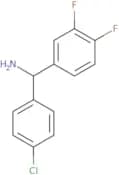
(4-Chlorophenyl)(3,4-difluorophenyl)methanamine
CAS:<p>Versatile small molecule scaffold</p>Formula:C13H10ClF2NPurity:Min. 95%Molecular weight:253.67 g/mol(3-Methanesulfonylphenyl)(4-methylphenyl)methanamine
CAS:<p>Versatile small molecule scaffold</p>Formula:C15H17NO2SPurity:Min. 95%Molecular weight:275.4 g/mol(2-Phenoxyphenyl)urea
CAS:<p>Versatile small molecule scaffold</p>Formula:C13H12N2O2Purity:Min. 95%Molecular weight:228.25 g/mol1-(4-Acetylpiperazin-1-yl)-2-chloropropan-1-one
CAS:<p>Versatile small molecule scaffold</p>Formula:C9H15ClN2O2Purity:Min. 95%Molecular weight:218.68 g/mol2-(2-Oxoazocan-1-yl)acetic acid
CAS:Versatile small molecule scaffoldFormula:C9H15NO3Purity:Min. 95%Molecular weight:185.22 g/mol1-(Ethanesulfonyl)-4-isocyanatopiperidine
CAS:<p>Versatile small molecule scaffold</p>Formula:C8H14N2O3SPurity:Min. 95%Molecular weight:218.28 g/mol2-(1H-1,2,4-Triazol-1-yl)pyridine-4-carbonitrile
CAS:<p>Versatile small molecule scaffold</p>Formula:C8H5N5Purity:Min. 95%Molecular weight:171.16 g/mol1-(2-Chlorobenzoyl)piperidin-4-one
CAS:Controlled Product<p>Versatile small molecule scaffold</p>Formula:C12H12ClNO2Purity:Min. 95%Molecular weight:237.68 g/mol5-(1-Benzofuran-2-yl)-4H-1,2,4-triazol-3-amine
CAS:<p>Versatile small molecule scaffold</p>Formula:C10H8N4OPurity:Min. 95%Molecular weight:200.2 g/mol3-[(3-Methylphenyl)methanesulfonyl]propanoic acid
CAS:<p>Versatile small molecule scaffold</p>Formula:C11H14O4SPurity:Min. 95%Molecular weight:242.29 g/mol4-(Butylsulfamoyl)benzene-1-sulfonyl chloride
CAS:<p>Versatile small molecule scaffold</p>Formula:C10H14ClNO4S2Purity:Min. 95%Molecular weight:311.8 g/molN-(1,3-Thiazol-2-yl)piperidine-3-carboxamide
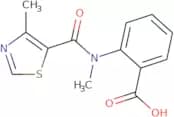
CAS:<p>Versatile small molecule scaffold</p>Formula:C9H13N3OSPurity:Min. 95%Molecular weight:211.29 g/mol2-(N-Methyl4-methyl-1,3-thiazole-5-amido)benzoic acid
CAS:<p>Versatile small molecule scaffold</p>Formula:C13H12N2O3SPurity:Min. 95%Molecular weight:276.31 g/mol3-Methyl-2-(2-methyl-1H-1,3-benzodiazol-1-yl)butanoic acid
CAS:<p>Versatile small molecule scaffold</p>Formula:C13H16N2O2Purity:Min. 95%Molecular weight:232.3 g/mol1-{2-[(4-Phenylpiperazin-1-yl)methyl]phenyl}methanamine
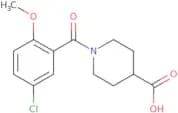
CAS:Versatile small molecule scaffoldFormula:C18H23N3Purity:Min. 95%Molecular weight:281.4 g/mol1-(5-Chloro-2-methoxybenzoyl)piperidine-4-carboxylic acid
CAS:<p>Versatile small molecule scaffold</p>Formula:C14H16ClNO4Purity:Min. 95%Molecular weight:297.73 g/mol2-Methyl-6-(trifluoromethyl)-4H,5H,6H,7H-pyrazolo[1,5-a]pyrimidine
CAS:<p>Versatile small molecule scaffold</p>Formula:C8H10F3N3Purity:Min. 95%Molecular weight:205.18 g/mol3-Fluoro-4-methanesulfonamidobenzene-1-sulfonyl chloride
CAS:<p>Versatile small molecule scaffold</p>Formula:C7H7ClFNO4S2Purity:Min. 95%Molecular weight:287.7 g/mol3-Methoxy-4-[(methylcarbamoyl)methoxy]benzoic acid
CAS:<p>3-Methoxy-4-[(methylcarbamoyl)methoxy]benzoic acid is a methylated, custom synthesized and click-modified oligosaccharide with a high purity. It is used in the synthesis of polysaccharides and saccharides. The modification of this chemical can be done at the monosaccharide level or even at the glycosylation level. This product has been fluorinated to increase its activity.</p>Formula:C11H13NO5Purity:Min. 95%Molecular weight:239.22 g/molN-(2-Amino-4-methoxyphenyl)-4-hydroxybenzamide
CAS:<p>Versatile small molecule scaffold</p>Formula:C14H14N2O3Purity:Min. 95%Molecular weight:258.27 g/mol2-[1-(5-Bromothiophen-2-yl)-N-methylformamido]acetic acid
CAS:Controlled Product<p>2-[1-(5-Bromothiophen-2-yl)-N-methylformamido]acetic acid is a peptide that was originally identified in the venom of the spider Agelenopsis aperta. It has been shown to be an activator of ion channels and is used as a research tool to study their functions. This peptide binds to receptors on cells, thereby inhibiting the action of ligands, which may be useful for pharmacology.</p>Formula:C8H8BrNO3SPurity:Min. 95%Molecular weight:278.13 g/mol1-(3,3-Dimethylbutanoyl)piperidin-4-one
CAS:Controlled Product<p>Versatile small molecule scaffold</p>Formula:C11H19NO2Purity:Min. 95%Molecular weight:197.27 g/mol4-[(5-Bromothiophen-2-yl)methoxy]-3-methoxybenzoic acid
CAS:<p>Versatile small molecule scaffold</p>Formula:C13H11BrO4SPurity:Min. 95%Molecular weight:343.19 g/mol3-[(5-Aminopyridin-2-yl)oxy]benzonitrile
CAS:<p>Versatile small molecule scaffold</p>Formula:C12H9N3OPurity:Min. 95%Molecular weight:211.22 g/mol4-[(2-Methoxyethoxy)methyl]aniline
CAS:<p>Versatile small molecule scaffold</p>Formula:C10H15NO2Purity:Min. 95%Molecular weight:181.23 g/mol5,6-Dimethyl-1-[(oxiran-2-yl)methyl]-1H-1,3-benzodiazole
CAS:<p>Versatile small molecule scaffold</p>Formula:C12H14N2OPurity:Min. 95%Molecular weight:202.25 g/mol5-(Cyclopentylmethyl)-1,3,4-oxadiazol-2-amine
CAS:<p>Versatile small molecule scaffold</p>Formula:C8H13N3OPurity:Min. 95%Molecular weight:167.21 g/molN-Butyl-6-methylpiperidine-3-carboxamide
CAS:<p>Versatile small molecule scaffold</p>Formula:C11H22N2OPurity:Min. 95%Molecular weight:198.31 g/mol5-(5-Methylthiophen-2-yl)-1,3,4-oxadiazol-2-amine
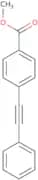
CAS:Versatile small molecule scaffoldFormula:C7H7N3OSPurity:Min. 95%Molecular weight:181.22 g/molMethyl 4-(2-phenylethynyl)benzoate
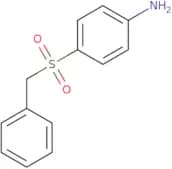
CAS:<p>Methyl 4-(2-phenylethynyl)benzoate is a quinoid compound. It has been studied for its electron, magnetic and crystallographic properties. The cyclic voltammetry of methyl 4-(2-phenylethynyl)benzoate shows a 1:1 square-wave voltammetry with a peak potential of 0.84 V vs. Ag/AgCl. The electronic structure of the molecule has been studied by means of resonance and one-electron reduction methods, which have shown that the molecule can be described as an analogous to benzene in terms of both spectra and nmr spectra.</p>Formula:C16H12O2Purity:Min. 95%Molecular weight:236.26 g/mol4-Phenylmethanesulfonylaniline
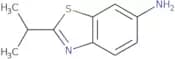
CAS:<p>Versatile small molecule scaffold</p>Formula:C13H13NO2SPurity:Min. 95%Molecular weight:247.31 g/mol2-Isopropyl-benzothiazol-6-ylamine
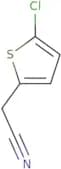
CAS:<p>Versatile small molecule scaffold</p>Formula:C10H12N2SPurity:Min. 95%Molecular weight:192.28 g/mol2-(5-Chlorothiophen-2-yl)acetonitrile
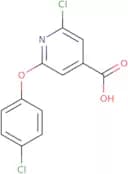
CAS:<p>Versatile small molecule scaffold</p>Formula:C6H4ClNSPurity:Min. 95%Molecular weight:157.62 g/mol2-Chloro-6-(4-chlorophenoxy)pyridine-4-carboxylic acid
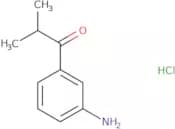
CAS:<p>Versatile small molecule scaffold</p>Formula:C12H7Cl2NO3Purity:Min. 95%Molecular weight:284.09 g/mol1-(3-Aminophenyl)-2-methylpropan-1-one hydrochloride
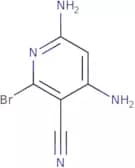
CAS:<p>Versatile small molecule scaffold</p>Formula:C10H14ClNOPurity:Min. 95%Molecular weight:199.68 g/mol4,6-Diamino-2-bromonicotinonitrile
CAS:<p>4,6-Diamino-2-bromonicotinonitrile (DAB) is a chemical compound that inhibits phosphodiesterase enzymes. It has been shown to inhibit cyclic nucleotide phosphodiesterases, including PDE5, which is found in tissues and bronchial passages. DAB also inhibits the activity of phosphodiesterases in cells. The inhibition is reversible and uses hydrogenated fatty acids as substrates. This compound has been used as a cross-linking agent to induce antigenicity in proteins.</p>Formula:C6H5BrN4Purity:Min. 95%Molecular weight:213.04 g/mol2-Chloro-4-nitrobenzyl bromide
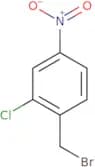
CAS:<p>Versatile small molecule scaffold</p>Formula:C7H5NO2ClBrPurity:Min. 95%Molecular weight:250.48 g/mol2-(Carbamoylamino)-4-methylpentanoic acid
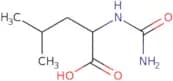
CAS:<p>2-(Carbamoylamino)-4-methylpentanoic acid is an enzyme that catalyzes the hydrolysis of l-amino acids. It has a broad substrate specificity and is able to hydrolyze branched-chain and n-substituted l-amino acids, as well as D-amino acids. The active site of this enzyme includes a zinc ion coordinated by four amino acid residues, which are important for the stereoselective catalysis of these reactions. This enzyme also displays stereoselectivity in its reactions with L-amino acids over D-amino acids. The crystal structure of 2-(carbamoylamino)-4-methylpentanoic acid reveals that it belongs to the family of dipeptidases, whose members have a beta barrel fold common to many enzymes in this class.</p>Formula:C7H14N2O3Purity:Min. 95%Molecular weight:174.2 g/molN-[1-(Methoxymethyl)cyclopropyl]aniline
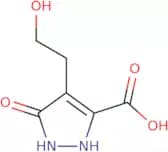
CAS:<p>Versatile small molecule scaffold</p>Formula:C11H15NOPurity:Min. 95%Molecular weight:177.24 g/mol3-Hydroxy-4-(2-hydroxyethyl)-1H-pyrazole-5-carboxylic acid
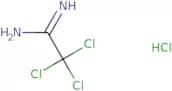
CAS:<p>Versatile small molecule scaffold</p>Formula:C6H8N2O4Purity:Min. 95%Molecular weight:172.14 g/molTrichloroethanimidamide hydrochloride
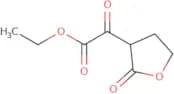
CAS:<p>Trichloroethanimidamide hydrochloride is a metal hydroxide with herbicidal activity. It is used as an intermediate for the production of herbicides and fungicides. The chemical composition of trichloroethanimidamide hydrochloride includes ammonium chloride, sodium chloride, potassium chloride, magnesium chloride, calcium chloride and iron chloride. This reagent can be used to isolate amines from other organic compounds. Trichloroethanimidamide hydrochloride has a boiling point of 161°C, which makes it useful as a solvent in organic synthesis reactions. Trichloroethanimidamide hydrochloride also reacts with toluenesulfonate to form an alkali metal salt, which can be isolated by vacuum distillation.</p>Formula:C2H4Cl4N2Purity:Min. 95%Molecular weight:197.9 g/molEthyl 2-Oxo-2-(2-oxotetrahydrofuran-3-yl)acetate
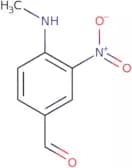
CAS:<p>Versatile small molecule scaffold</p>Formula:C8H10O5Purity:Min. 95%Molecular weight:186.16 g/mol4-Methylamino-3-nitrobenzaldehyde
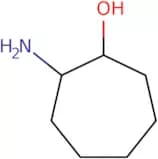
CAS:<p>4-Methylamino-3-nitrobenzaldehyde is a luminescent compound that can be used in the detection of oxidative metabolites. It is a mediator oxidation product of 4-methylaminobenzaldehyde and has been shown to be aerobic and phosphotungstic. This compound is recycled and does not interfere with other analytical methods. It can also be immobilized on a surface, such as silica gel or magnesium oxide, or immobilized in an acidic environment. The phosphotungstic acid used for this immobilization process is a biomimetic metal ion complex that has been modified to react with the triazole derivative.</p>Formula:C8H8N2O3Purity:Min. 95%Molecular weight:180.16 g/molrac-(1R,2R)-2-Aminocycloheptan-1-ol
CAS:<p>Racemic 2-aminocycloheptanol is an organic compound with a molecular formula of C7H14Cl2NO and a molecular weight of 206.24 g/mol. It is classified as a substituted cycloheptane and has the IUPAC name rac-(1R,2R)-2-aminocycloheptan-1-ol. Racemic 2-aminocycloheptanol can be synthesized by the substitution of chlorine atoms for hydrogen atoms on the benzyl group in benzoic acid. This reaction requires catalytic amounts of sodium hydroxide to hydrolyze the benzoic acid, forming sodium chloride and racemic 2-aminocycloheptanol. Racemic 2-aminocycloheptanol is used in the synthesis of antidepressants such as amitriptyline and nortriptyline. These drugs are believed to have their therapeutic effects through inhibition of norepinephrine reupt</p>Formula:C7H15NOPurity:Min. 95%Molecular weight:129.2 g/mol2-[(4-Hydroxyphenyl)sulfanyl]acetic acid
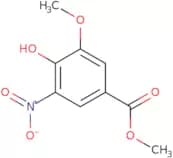
CAS:Versatile small molecule scaffoldFormula:C8H8O3SPurity:Min. 95%Molecular weight:184.21 g/molMethyl 4-hydroxy-3-methoxy-5-nitrobenzenecarboxylate
CAS:<p>Versatile small molecule scaffold</p>Formula:C9H9NO6Purity:Min. 95%Molecular weight:227.17 g/mol2-[(1S)-1-Hydroxyethyl]-1,4-dihydroquinazolin-4-one
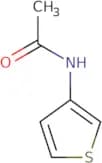
CAS:<p>2-[(1S)-1-Hydroxyethyl]-1,4-dihydroquinazolin-4-one is a quinazoline type compound that has been found to be an inhibitor of the type II fatty acid synthase (FAS II). The FAS II enzyme catalyzes the production of fatty acids and their derivatives by converting acetyl-CoA into malonyl CoA. The inhibition of FAS II leads to a decrease in the production of lipids, which are important components of bacterial cell membranes. This compound also inhibits the growth of fungi such as Monascus purpureus, Fusarium sporotrichioides, and Fusarium avenaceum at high concentrations. 2-[(1S)-1-Hydroxyethyl]-1,4-dihydroquinazolin-4-one was found to inhibit the growth of these fungi by binding to their elongation factor 1 alpha (EF-1α) and preventing</p>Formula:C10H10N2O2Purity:Min. 95%Molecular weight:190.2 g/molN-(3-Thienyl)acetamide
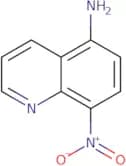
CAS:<p>N-(3-Thienyl)acetamide is an aromatic aldehyde that is used in the synthesis of carbamates. It has been shown to be brominated, acetylated, and aminated. N-(3-Thienyl)acetamide can undergo dehydrogenation and heterocyclic amine formation during cooking. It also has electrophilic properties, which allow it to react with nucleophiles such as amines or thiols to form diazonium salts. This compound is a substrate for transamination and dihydropyridines.</p>Formula:C6H7NOSPurity:Min. 95%Molecular weight:141.19 g/mol8-Nitroquinolin-5-amine
CAS:<p>8-Nitroquinolin-5-amine is a quinoline derivative that undergoes electrophilic substitution reactions with nucleophiles. This drug reacts with hydrogen chloride to give the corresponding 8-nitroquinolinium chloride. Reaction of this compound with imines gives the corresponding imine derivatives. Reaction of this compound with chlorides gives the corresponding 8-nitroquinolinium salts. The reactivity of this compound is similar to that of quinones, but it does not have a conjugated system and is not redox active.</p>Formula:C9H7N3O2Purity:Min. 95%Molecular weight:189.17 g/mol2-Methyl-1,3-dioxo-2,3-dihydro-1 H -isoindole-5-carboxylic acid
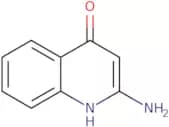
CAS:<p>Versatile small molecule scaffold</p>Formula:C10H7NO4Purity:Min. 95%Molecular weight:205.17 g/mol2-Aminoquinolin-4-ol
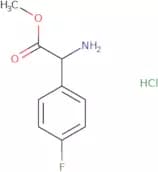
CAS:<p>2-Aminoquinolin-4-ol is a reactive nitrogen molecule that can be transformed into quinoline derivatives by reaction with methylene, amines, and primary amines. 2-Aminoquinolin-4-ol can also react with paraformaldehyde to form pyrimido compounds. These reactions are thermally induced. 2-Aminoquinolin-4-ol is nucleophilic and undergoes conjugation with aminoquinolines.</p>Formula:C9H8N2OPurity:Min. 95%Molecular weight:160.17 g/molMethyl amino(4-fluorophenyl)acetate hydrochloride
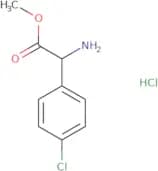
CAS:<p>Versatile small molecule scaffold</p>Formula:C9H11ClFNO2Purity:Min. 95%Molecular weight:219.64 g/molMethyl 2-amino-2-(4-chlorophenyl)acetatehydrochloride
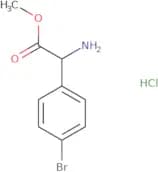
CAS:<p>Versatile small molecule scaffold</p>Formula:C9H11Cl2NO2Purity:Min. 95%Molecular weight:236.1 g/molMethyl 2-amino-2-(4-bromophenyl)acetate hydrochloride
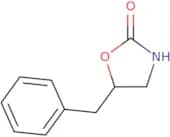
CAS:<p>Versatile small molecule scaffold</p>Formula:C9H11BrClNO2Purity:Min. 95%Molecular weight:280.55 g/mol5-Benzyl-1,3-oxazolidin-2-one
CAS:<p>5-Benzyl-1,3-oxazolidin-2-one is a nonsteroidal antiinflammatory drug that acts as an analgesic and antipyretic. It inhibits the enzyme cyclooxygenase to reduce prostaglandin synthesis. 5-Benzyl-1,3-oxazolidin-2-one is a prodrug that is metabolized to its active form by hydrolysis of the ester linkage. The hydrolysis of this bond requires the presence of acid such as carbonic acid or trifluoromethyl acid. This drug also has antiinflammatory properties and has been shown to be effective in the treatment of muscle pain.<br>5-Benzyl-1,3-oxazolidin-2-one binds to phenoxy and aralkyl groups in proteins, which may account for its analgesic effects.</p>Formula:C10H11NO2Purity:Min. 95%Molecular weight:177.2 g/mol2-[(Dimethylamino)methyl]cyclopentan-1-one hydrochloride
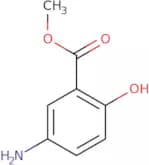
CAS:<p>Versatile small molecule scaffold</p>Formula:C8H16ClNOPurity:Min. 95%Molecular weight:177.67 g/molMethyl 5-aminosalicylate
CAS:<p>Methyl 5-aminosalicylate is a molecule that belongs to the class of nonsteroidal anti-inflammatory drugs. It is used for the treatment of bowel diseases and has been shown to inhibit inflammation in neurodegenerative diseases. Methyl 5-aminosalicylate can be converted from salicylic acid by aminopropionase, which converts choline into methylmalonyl CoA. The molecule is cytotoxic and has been shown to activate microglial cells in vitro. Methyl 5-aminosalicylate is also a dietary carbon source for some organisms.</p>Formula:C8H9NO3Purity:Min. 95%Molecular weight:167.16 g/mol6-Chloro-1H-pyrazolo[3,4-d]pyrimidin-4(7H)-one
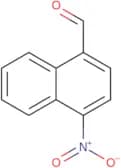
CAS:<p>Versatile small molecule scaffold</p>Formula:C5H3ClN4OPurity:Min. 95%Molecular weight:170.56 g/mol4-Nitronaphthalene-1-carbaldehyde
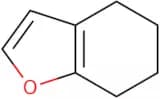
CAS:<p>Versatile small molecule scaffold</p>Formula:C11H7NO3Purity:Min. 95%Molecular weight:201.18 g/mol4,5,6,7-Tetrahydro-1-benzofuran
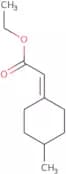
CAS:<p>Tetrahydro-1-benzofuran is a heterocyclic compound with the chemical formula C4H6O. It is a furan derivative, and is classified as an alkylene. Tetrahydro-1-benzofuran has been shown to have anti-amnesic properties in animal studies for Alzheimer's disease. It also has been found to be useful as a reagent for organic synthesis. Tetrahydro-1-benzofuran can be used as a starting material for the synthesis of other heterocyclic compounds such as pyrrole and furanosesquiterpenes.</p>Formula:C8H10OPurity:Min. 95%Molecular weight:122.16 g/molAcetic acid, 2-(4-methylcyclohexylidene)-, ethyl ester
CAS:<p>Versatile small molecule scaffold</p>Formula:C11H18O2Purity:Min. 95%Molecular weight:182.26 g/mol2-[1-(4-Chlorophenyl)-2,5-dimethyl-1H-pyrrol-3-yl]acetic acid
CAS:<p>2-[1-(4-Chlorophenyl)-2,5-dimethyl-1H-pyrrol-3-yl]acetic acid is a chemical substance that has been used as an analog to 2-[1-(4-chlorophenyl)-2,5-dimethyl-1H-pyrrol-3-yl]acetic acid. It has been shown to be biocompatible in the form of a polymer and has undergone double blind cross over studies. It has also been shown to have biological properties such as repair mechanisms for skin cancer, inflammatory bowel disease, and congestive heart disease. This chemical substance has a chemical stability in pharmaceutical preparations and is nanoparticulate in compositions.</p>Formula:C14H14ClNO2Purity:Min. 95%Molecular weight:263.72 g/mol2-[1-(4-Fluorophenyl)-2,5-dimethyl-1H-pyrrol-3-yl]acetic acid
CAS:<p>Versatile small molecule scaffold</p>Formula:C14H14FNO2Purity:Min. 95%Molecular weight:247.26 g/mol2-[2,5-Dimethyl-1-(4-methylphenyl)-1H-pyrrol-3-yl]acetic acid
CAS:<p>Versatile small molecule scaffold</p>Formula:C15H17NO2Purity:Min. 95%Molecular weight:243.3 g/mol2-[1-(4-Chlorophenyl)-2,5-dimethyl-1H-pyrrol-3-yl]acetonitrile
CAS:Versatile small molecule scaffoldFormula:C14H13ClN2Purity:Min. 95%Molecular weight:244.72 g/mol2-[1-(3,5-Dimethylphenyl)-2,5-dimethyl-1H-pyrrol-3-yl]acetonitrile
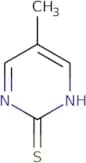
CAS:<p>Versatile small molecule scaffold</p>Formula:C16H18N2Purity:Min. 95%Molecular weight:238.33 g/mol5-Methyl-1,2-dihydropyrimidine-2-thione
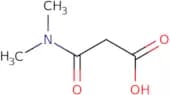
CAS:<p>Versatile small molecule scaffold</p>Formula:C5H6N2SPurity:Min. 95%Molecular weight:126.18 g/mol2-(Dimethylcarbamoyl)acetic acid
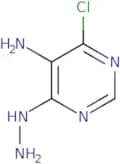
CAS:<p>2-(Dimethylcarbamoyl)acetic acid is a heterocyclic compound that contains a 5-membered, nitrogen-containing heterocycle. This molecule is used in the synthesis of pharmaceuticals and other organic compounds.</p>Formula:C5H9NO3Purity:Min. 95%Molecular weight:131.13 g/mol4-Chloro-6-hydrazino-pyrimidin-5-ylamine
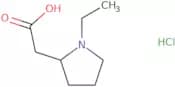
CAS:<p>Versatile small molecule scaffold</p>Formula:C4H6ClN5Purity:Min. 95%Molecular weight:159.58 g/mol2-(1-Ethylpyrrolidin-2-yl)acetic acid hydrochloride
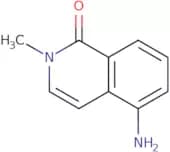
CAS:<p>Versatile small molecule scaffold</p>Formula:C8H16ClNO2Purity:Min. 95%Molecular weight:193.67 g/mol5-Amino-2-methyl-1,2-dihydroisoquinolin-1-one
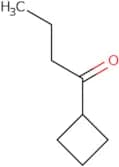
CAS:Versatile small molecule scaffoldFormula:C10H10N2OPurity:Min. 95%Molecular weight:174.2 g/mol1-Cyclobutylbutan-1-one
CAS:<p>Versatile small molecule scaffold</p>Formula:C8H14OPurity:Min. 95%Molecular weight:126.2 g/mol6-Methylhept-1-en-3-one
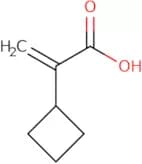
CAS:<p>Versatile small molecule scaffold</p>Formula:C8H14OPurity:Min. 95%Molecular weight:126.2 g/mol2-Cyclobutylprop-2-enoic acid
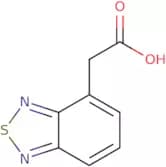
CAS:<p>Versatile small molecule scaffold</p>Formula:C7H10O2Purity:Min. 95%Molecular weight:126.15 g/mol2-(2,1,3-Benzothiadiazol-4-yl)acetic acid
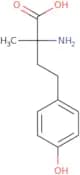
CAS:<p>Versatile small molecule scaffold</p>Formula:C8H6N2O2SPurity:Min. 95%Molecular weight:194.21 g/mol2-Amino-4-(4-hydroxyphenyl)-2-methylbutanoic acid
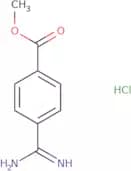
CAS:<p>Versatile small molecule scaffold</p>Formula:C11H15NO3Purity:Min. 95%Molecular weight:209.24 g/molMethyl 4-carbamimidoylbenzoate hydrochloride
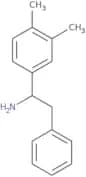
CAS:<p>Versatile small molecule scaffold</p>Formula:C9H10N2O2·HClPurity:Min. 95%Molecular weight:214.65 g/mol1-(3,4-Dimethylphenyl)-2-phenylethan-1-amine
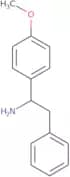
CAS:<p>Versatile small molecule scaffold</p>Formula:C16H19NPurity:Min. 95%Molecular weight:225.33 g/mol1-(4-Methoxyphenyl)-2-phenylethan-1-amine
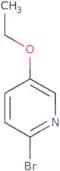
CAS:<p>Versatile small molecule scaffold</p>Formula:C15H17NOPurity:Min. 95%Molecular weight:227.3 g/mol2-Bromo-5-ethoxypyridine
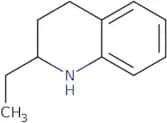
CAS:<p>Versatile small molecule scaffold</p>Formula:C7H8BrNOPurity:Min. 95%Molecular weight:202.05 g/mol2-Ethyl-1,2,3,4-tetrahydroquinoline
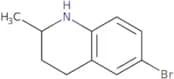
CAS:<p>2-Ethyl-1,2,3,4-tetrahydroquinoline is a synthetic reagent that is used in organic chemistry to perform alkylation and elimination reactions. It can be used as a cholesteryl ester transfer reagent and has been shown to have excellent stereoselectivity. 2-Ethyl-1,2,3,4-tetrahydroquinoline can be used to synthesize more complex molecules and it has been shown to react with magnesium metal (Mg) in the presence of an organic base such as cinnamyl alcohol. The resulting reaction product can be analyzed using crystallography.</p>Formula:C11H15NPurity:Min. 95%Molecular weight:161.24 g/mol6-Bromo-2-methyl-1,2,3,4-tetrahydroquinoline
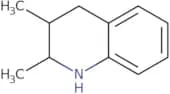
CAS:<p>Versatile small molecule scaffold</p>Formula:C10H12BrNPurity:Min. 95%Molecular weight:226.11 g/mol1,2,3,4-Tetrahydro-2,3-dimethylquinoline
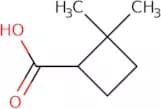
CAS:<p>Versatile small molecule scaffold</p>Formula:C11H15NPurity:Min. 95%Molecular weight:161.24 g/mol2,2-Dimethylcyclobutane-1-carboxylic acid
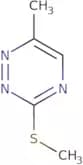
CAS:<p>2,2-Dimethylcyclobutane-1-carboxylic acid is a synthetic chemical that can be used as a biodiesel fuel additive. It is produced by the reaction of cyclohexanol and ethylene oxide. This compound has been shown to have redox potentials in the range of -0.03 V to -0.07 V, which makes it useful in synthesizing lipase and fatty acids. 2,2-Dimethylcyclobutane-1-carboxylic acid also has sulfonic acid groups that are reactive with metal surfaces, such as gold or silver electrodes and hydrochloric acid for pharmaceutical formulations. This compound has regulatory properties that can be used for preservatives or other functional purposes in pharmaceutical formulations. 2,2-Dimethylcyclobutane-1-carboxylic acid is also an acid catalyst in laboratory experiments involving regulatory pathways.br>br><br>2,2-Dimethylcyclobutane</p>Formula:C7H12O2Purity:Min. 95%Molecular weight:128.17 g/mol6-Methyl-3-(methylsulfanyl)-1,2,4-triazine
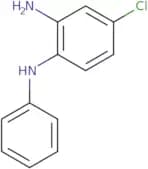
CAS:<p>Versatile small molecule scaffold</p>Formula:C5H7N3SPurity:Min. 95%Molecular weight:141.2 g/mol4-Chloro-N1-phenylbenzene-1,2-diamine
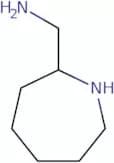
CAS:<p>Versatile small molecule scaffold</p>Formula:C12H11ClN2Purity:Min. 95%Molecular weight:218.68 g/molAzepan-2-ylmethanamine
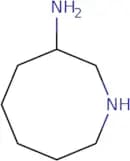
CAS:<p>Versatile small molecule scaffold</p>Formula:C7H16N2Purity:Min. 95%Molecular weight:128.22 g/molAzocan-3-amine
CAS:<p>Azocan-3-amine is a third-generation, small molecule inhibitor of the ErbB family of receptor tyrosine kinases. It was discovered by a team of scientists at AstraZeneca and has been evaluated in clinical trials for the treatment of various cancers. Azocan-3-amine inhibits the activity of EGFR and its two most common mutations, T790M and C797S. This drug is currently in Phase I/II trials for EGFR T790M mutation positive non-small cell lung cancer (NSCLC) and metastatic breast cancer patients with EGFR c797s mutation.</p>Formula:C7H16N2Purity:Min. 95%Molecular weight:128.22 g/molN-[(1-Methyl-1H-pyrazol-4-yl)methylidene]hydroxylamine
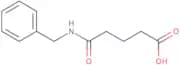
CAS:<p>Versatile small molecule scaffold</p>Formula:C5H7N3OPurity:Min. 95%Molecular weight:125.13 g/mol4-(Benzylcarbamoyl)butanoic acid
CAS:<p>Versatile small molecule scaffold</p>Formula:C12H15NO3Purity:Min. 95%Molecular weight:221.25 g/mol1-[3-(Oxiran-2-ylmethoxy)phenyl]ethanone
CAS:Versatile small molecule scaffoldFormula:C11H12O3Purity:Min. 95%Molecular weight:192.21 g/mol2-[1-(3,5-Dimethylphenyl)-2,5-dimethyl-1H-pyrrol-3-yl]acetic acid
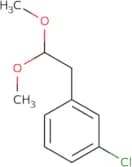
CAS:<p>Versatile small molecule scaffold</p>Formula:C16H19NO2Purity:Min. 95%Molecular weight:257.33 g/mol1-Chloro-3-(2,2-dimethoxyethyl)benzene
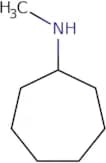
CAS:<p>Versatile small molecule scaffold</p>Formula:C10H13ClO2Purity:Min. 95%Molecular weight:200.66 g/molN-Methylcycloheptanamine
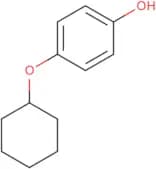
CAS:<p>N-Methylcycloheptanamine (NMCA) is a pyrimidine compound that has inhibitory activities against hexamethylenetetramine and aminopeptidase. NMCA also inhibits the immunosuppressive effect of cyclophosphamide, which is an anticancer drug. NMCA has been shown to be effective in treating autoimmune diseases and cancer. The inhibitory activity of NMCA on hexamethylenetetramine and aminopeptidase is due to its ability to react with these enzymes in nanomolar concentrations. Structural analysis has shown that NMCA binds to the enzyme by coordinating with the catalytic metal ions and the amino acid residues of the active site, forming a covalent bond with glutamic acid residue. This binding prevents substrate binding or product release, inhibiting enzyme activity.</p>Formula:C8H17NPurity:Min. 95%Molecular weight:127.23 g/mol4-(Cyclohexyloxy)phenol
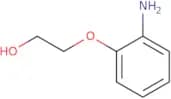
CAS:<p>Versatile small molecule scaffold</p>Formula:C12H16O2Purity:Min. 95%Molecular weight:192.25 g/mol2-(2-aminophenoxy)ethanol
CAS:<p>2-(2-aminophenoxy)ethanol (2-APOE) is an alkylating agent that has been shown to be mutagenic in bacterial strains. It is a direct-acting mutagen and can cause mutations by reacting with DNA bases or proteins. It also has the ability to cleave DNA chains, which may lead to carcinogenic effects. This product is not known to cause cancer in humans and has been found to be safe for use as a food additive at levels up to 0.1%. 2-APOE is used in the production of other chemicals and as an intermediate in chemical synthesis.</p>Formula:C8H11NO2Purity:Min. 95%Molecular weight:153.17 g/mol2-Acetyl-3-bromothiophene
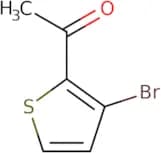
CAS:<p>2-Acetyl-3-bromothiophene is a dihedral molecule that has been shown to have photovoltaic properties. The molecule has two primary amines, which function as electron donors and an interleukin, which functions as an electron acceptor. 2-Acetyl-3-bromothiophene also has a chalcone group, a carbonyl group, and yields of primary alcohols. In the experimentally determined vibration frequencies, the most intense peaks were found at 1760 cm−1 (vibrational) and 1128 cm−1 (rotational).</p>Formula:C6H5BrOSPurity:Min. 95%Molecular weight:205.07 g/moltert-Butyl 2-bromo-3-methylbutanoate
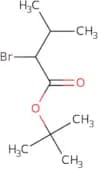
CAS:<p>Versatile small molecule scaffold</p>Formula:C9H17BrO2Purity:Min. 95%Molecular weight:237.13 g/mol1,2,3,4-Tetrahydroacridine-9-carboxamide
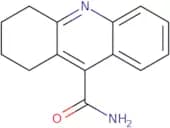
CAS:<p>Versatile small molecule scaffold</p>Formula:C14H14N2OPurity:Min. 95%Molecular weight:226.27 g/molN-Benzyl-2-methylpropan-1-amine
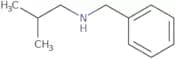
CAS:<p>N-Benzyl-2-methylpropan-1-amine is a phosphorous acid regulator that is used as a moiety in the synthesis of debenzylated benzyl amines. It can be used to regulate the pH of alkali metal esters and metal halides. N-Benzyl-2-methylpropan-1-amine also has been found to enhance the rates of amine reactions and promote the formation of ketones. This compound is also an ammonium salt with an oxidative effect on most organic substances.</p>Formula:C11H17NPurity:Min. 95%Molecular weight:163.26 g/mol


![3-[(3-Methylphenyl)methanesulfonyl]propanoic acid](/_next/image/?url=https%3A%2Fstatic.cymitquimica.com%2Fproducts%2F3D%2Fthumb-webp%2FRQB70155.webp&w=3840&q=75)



![1-{2-[(4-Phenylpiperazin-1-yl)methyl]phenyl}methanamine](/_next/image/?url=https%3A%2Fstatic.cymitquimica.com%2Fproducts%2F3D%2Fthumb-webp%2FRQB70342.webp&w=3840&q=75)
![2-Methyl-6-(trifluoromethyl)-4H,5H,6H,7H-pyrazolo[1,5-a]pyrimidine](/_next/image/?url=https%3A%2Fstatic.cymitquimica.com%2Fproducts%2F3D%2Fthumb-webp%2FRQB70380.webp&w=3840&q=75)

![3-Methoxy-4-[(methylcarbamoyl)methoxy]benzoic acid](/_next/image/?url=https%3A%2Fstatic.cymitquimica.com%2Fproducts%2F3D%2Fthumb-webp%2FRQB70464.webp&w=3840&q=75)

![2-[1-(5-Bromothiophen-2-yl)-N-methylformamido]acetic acid](/_next/image/?url=https%3A%2Fstatic.cymitquimica.com%2Fproducts%2F3D%2Fthumb-webp%2FRQB70513.webp&w=3840&q=75)

![4-[(5-Bromothiophen-2-yl)methoxy]-3-methoxybenzoic acid](/_next/image/?url=https%3A%2Fstatic.cymitquimica.com%2Fproducts%2F3D%2Fthumb-webp%2FRQB70548.webp&w=3840&q=75)
![3-[(5-Aminopyridin-2-yl)oxy]benzonitrile](/_next/image/?url=https%3A%2Fstatic.cymitquimica.com%2Fproducts%2F3D%2Fthumb-webp%2FRQB70578.webp&w=3840&q=75)
![4-[(2-Methoxyethoxy)methyl]aniline](/_next/image/?url=https%3A%2Fstatic.cymitquimica.com%2Fproducts%2F3D%2Fthumb-webp%2FRQB70642.webp&w=3840&q=75)
![5,6-Dimethyl-1-[(oxiran-2-yl)methyl]-1H-1,3-benzodiazole](/_next/image/?url=https%3A%2Fstatic.cymitquimica.com%2Fproducts%2F3D%2Fthumb-webp%2FRQB70685.webp&w=3840&q=75)


![N-[1-(Methoxymethyl)cyclopropyl]aniline](/_next/image/?url=https%3A%2Fstatic.cymitquimica.com%2Fproducts%2F3D%2Fthumb-webp%2FSBA54070.webp&w=3840&q=75)
![2-[(4-Hydroxyphenyl)sulfanyl]acetic acid](/_next/image/?url=https%3A%2Fstatic.cymitquimica.com%2Fproducts%2F3D%2Fthumb-webp%2FSBA58038.webp&w=3840&q=75)
![2-[(1S)-1-Hydroxyethyl]-1,4-dihydroquinazolin-4-one](/_next/image/?url=https%3A%2Fstatic.cymitquimica.com%2Fproducts%2F3D%2Fthumb-webp%2FSBA59989.webp&w=3840&q=75)
![2-[(Dimethylamino)methyl]cyclopentan-1-one hydrochloride](/_next/image/?url=https%3A%2Fstatic.cymitquimica.com%2Fproducts%2F3D%2Fthumb-webp%2FSBA74687.webp&w=3840&q=75)
![6-Chloro-1H-pyrazolo[3,4-d]pyrimidin-4(7H)-one](/_next/image/?url=https%3A%2Fstatic.cymitquimica.com%2Fproducts%2F3D%2Fthumb-webp%2FSBA75497.webp&w=3840&q=75)
![2-[1-(4-Chlorophenyl)-2,5-dimethyl-1H-pyrrol-3-yl]acetic acid](/_next/image/?url=https%3A%2Fstatic.cymitquimica.com%2Fproducts%2F3D%2Fthumb-webp%2FSBA77982.webp&w=3840&q=75)
![2-[1-(4-Fluorophenyl)-2,5-dimethyl-1H-pyrrol-3-yl]acetic acid](/_next/image/?url=https%3A%2Fstatic.cymitquimica.com%2Fproducts%2F3D%2Fthumb-webp%2FSBA77983.webp&w=3840&q=75)
![2-[2,5-Dimethyl-1-(4-methylphenyl)-1H-pyrrol-3-yl]acetic acid](/_next/image/?url=https%3A%2Fstatic.cymitquimica.com%2Fproducts%2F3D%2Fthumb-webp%2FSBA77984.webp&w=3840&q=75)
![2-[1-(4-Chlorophenyl)-2,5-dimethyl-1H-pyrrol-3-yl]acetonitrile](/_next/image/?url=https%3A%2Fstatic.cymitquimica.com%2Fproducts%2F3D%2Fthumb-webp%2FSBA78048.webp&w=3840&q=75)
![2-[1-(3,5-Dimethylphenyl)-2,5-dimethyl-1H-pyrrol-3-yl]acetonitrile](/_next/image/?url=https%3A%2Fstatic.cymitquimica.com%2Fproducts%2F3D%2Fthumb-webp%2FSBA78092.webp&w=3840&q=75)
![N-[(1-Methyl-1H-pyrazol-4-yl)methylidene]hydroxylamine](/_next/image/?url=https%3A%2Fstatic.cymitquimica.com%2Fproducts%2F3D%2Fthumb-webp%2FSBA84980.webp&w=3840&q=75)
![1-[3-(Oxiran-2-ylmethoxy)phenyl]ethanone](/_next/image/?url=https%3A%2Fstatic.cymitquimica.com%2Fproducts%2F3D%2Fthumb-webp%2FSBA86503.webp&w=3840&q=75)
![2-[1-(3,5-Dimethylphenyl)-2,5-dimethyl-1H-pyrrol-3-yl]acetic acid](/_next/image/?url=https%3A%2Fstatic.cymitquimica.com%2Fproducts%2F3D%2Fthumb-webp%2FSBA86602.webp&w=3840&q=75)