Building Blocks
This section contains fundamental products for the synthesis of organic and biological compounds. Building blocks are the essential starting materials used to construct complex molecules through various chemical reactions. They play a critical role in drug discovery, material science, and chemical research. At CymitQuimica, we offer a diverse range of high-quality building blocks to support your innovative research and industrial projects, ensuring you have the essential components for successful synthesis.
Subcategories of "Building Blocks"
- Boronic Acids & Boronic Acid Derivatives(5,756 products)
- Chiral Building Blocks(1,242 products)
- Hydrocarbon Building Blocks(6,095 products)
- Organic Building Blocks(61,037 products)
Found 196139 products of "Building Blocks"
Sort by
Purity (%)
0
100
|
0
|
50
|
90
|
95
|
100
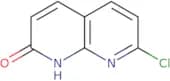
7-Chloro-1,8-naphthyridin-2-ol
CAS:<p>7-Chloro-1,8-naphthyridin-2-ol is a nucleic acid that stabilizes duplexes and triplexes. It has an affinity for adenine bases in DNA, RNA, or triplexes. 7-Chloro-1,8-naphthyridin-2-ol also binds to mismatched nucleobases in the sequence of nucleic acids. This compound is a potent inhibitor of HIV replication and has been shown to inhibit the growth of cancer cells by targeting the enzyme topoisomerase II alpha.</p>Formula:C8H5ClN2OPurity:Min. 95%Molecular weight:180.59 g/mol2-Chloro-5-(methylsulfanyl)aniline
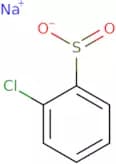
CAS:<p>2-Chloro-5-(methylsulfanyl)aniline is a sulfoxide that can inhibit the n-methyl-d-aspartate (NMDA) receptor, which is an ion channel that plays a key role in neuronal excitability. 2-Chloro-5-(methylsulfanyl)aniline has been shown to be neuroprotective against glutamate toxicity in rats and mice. This drug also blocks the NMDA receptor by binding to it, preventing glutamate from activating it. 2-Chloro-5-(methylsulfanyl)aniline has been shown to have neuroprotective effects in animal models of stroke, cerebral ischemia, and traumatic brain injury.</p>Formula:C7H8ClNSPurity:Min. 95%Molecular weight:173.66 g/mol2-Chlorobenzenesulfinic acid sodium
CAS:<p>Versatile small molecule scaffold</p>Formula:C6H4ClNaO2SPurity:Min. 95%Molecular weight:198.6 g/molSodium 3-chlorobenzene-1-sulfinate
CAS:<p>Versatile small molecule scaffold</p>Formula:C6H4ClNaO2SPurity:Min. 95%Molecular weight:198.6 g/mol2,3,4-Trichlorophenol
CAS:<p>2,3,4-Trichlorophenol (2,3,4-TCP) is a water-soluble compound that is used as an analytical reagent. 2,3,4-TCP is also an antimicrobial agent found in household cleaners and disinfectants. It is used to remove bacteria from equipment and surfaces in hospitals and other healthcare facilities. The acidic aqueous solution of 2,3,4-TCP has been shown to adsorb triclosan and p-hydroxybenzoic acid from wastewater treatment systems. The reaction mechanism for the adsorption process is not well understood but may involve the formation of hydrogen bonds between the polar hydroxyl groups on 2,3,4-TCP and the carboxyl groups on triclosan or p-hydroxybenzoic acid. Anhydrous sodium can be used as an alternative to water for this process.</p>Formula:Cl3C6H2OHPurity:Min. 95%Molecular weight:197.45 g/mol3-Chloro-N,N-diethylbenzamide
CAS:<p>Versatile small molecule scaffold</p>Formula:C11H14ClNOPurity:Min. 95%Molecular weight:211.69 g/mol3-(4-Fluorophenyl)butanoic acid
CAS:<p>3-(4-Fluorophenyl)butanoic acid is an analog of butanoic acid. It has been shown to have properties similar to carbamates and to be an intermediate in the synthesis of a number of other compounds. 3-(4-Fluorophenyl)butanoic acid is used as an oral dosage form, which is converted into its active form (2-chloro-N-[3-(4-fluorophenyl)propionyl]acetamide). This drug has been shown to be effective for the treatment of reflux disease, with a lower incidence of side effects than some other drugs used for this purpose.</p>Formula:C10H11FO2Purity:Min. 95%Molecular weight:182.19 g/mol1-(1,4-Dioxan-2-yl)ethan-1-one
CAS:<p>1-(1,4-Dioxan-2-yl)ethan-1-one is a nucleophilic compound that can be used as a catalyst for the conversion of carbinols and ketonitriles to their corresponding esters. It has been shown to have stereoselective properties in its reaction with substituted phenols. 1-(1,4-Dioxan-2-yl)ethan-1-one is also able to form coordination complexes with metals. The molecule is chiral and the enantiomers have different reactivities. This product has been shown to be useful in coatings, such as those applied to paper or textiles.</p>Formula:C6H10O3Purity:Min. 95%Molecular weight:130.14 g/molN-(4-Hydroxyphenyl)-3,4,5-trimethoxybenzamide
CAS:<p>N-(4-Hydroxyphenyl)-3,4,5-trimethoxybenzamide is a biomolecule that is found in nature. It has a square shape and is hydrophobic. The molecule consists of an amide group and a benzene ring. The molecule has been shown to have dose-dependent effects on ligands. Nonpolar molecules are attracted by the hydrophobic interactions between the benzene ring and the amide group. This molecule has also been cocrystallized with a nonpolar ligand. In this conformation, it is an anionic species with a dihedral angle of 90 degrees.</p>Formula:C16H17NO5Purity:Min. 95%Molecular weight:303.31 g/molSodium 4-nitrobenzene-1-sulfinate
CAS:<p>Sodium 4-nitrobenzenesulfinate is a sulfonylating agent that is used in organic chemistry to synthesize dihydronaphthalene, which is an intermediate in the synthesis of naphthalenes. It can be prepared by the ring-opening reaction of sodium nitrobenzenesulfinate with a suitable nucleophile such as methylenecyclopropanes. Sodium 4-nitrobenzenesulfinate reacts with sulfur to form sulfones, which are important intermediates for the synthesis of thiazoles and benzothiazoles. This reagent has been shown to be effective for the synthesis of biomolecules, such as proteins and peptides.</p>Formula:C6H4NNaO4SPurity:Min. 95%Molecular weight:209.16 g/molN-Phenylaminosulfonamide
CAS:<p>N-Phenylaminosulfonamide is a prodrug that is metabolized in the body to release oxadiazole. It has been shown to lower intracellular calcium levels by targeting response elements and hydrogen bonds in the cell. N-Phenylaminosulfonamide also inhibits fatty acid synthesis, which may be due to its ability to inhibit 3t3-l1 preadipocytes. The drug has been shown to have an anti-obesity effect by inhibiting energy metabolism through inhibition of hydroxyl group oxidation, leading to reduced glucose uptake and glycolysis.</p>Formula:C6H8N2O2SPurity:Min. 95%Molecular weight:172.21 g/mol2-Phenyl-2-propanamidoacetic acid
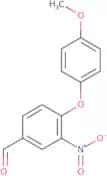
CAS:<p>Versatile small molecule scaffold</p>Formula:C11H13NO3Purity:Min. 95%Molecular weight:207.23 g/mol4-(4-Methoxyphenoxy)-3-nitrobenzaldehyde
CAS:<p>Versatile small molecule scaffold</p>Formula:C14H11NO5Purity:Min. 95%Molecular weight:273.24 g/molMethyl 3-methylenecyclobutanecarboxylate
CAS:<p>Methyl 3-methylenecyclobutanecarboxylate is an organic compound with the chemical formula CH3C(O)CH2CH2COOCH3. It is a colorless liquid that is soluble in organic solvents. Methyl 3-methylenecyclobutanecarboxylate has been studied for its use as a precursor to potassium salts, which are used as catalysts in industrial processes. Methyl 3-methylenecyclobutanecarboxylate has also been identified as a structural factor for the elimination of potassium from cyclopentanone and benzene, factors that contribute to its elimination from the body. This compound can be brominated using potassium tert-butoxide and reactions with other reagents such as lithium chloride or sodium hydroxide to form methyl 3-bromocyclobutanecarboxylate, which can then be dehydrobrominated to form methyl 3-</p>Formula:C7H10O2Purity:Min. 95%Molecular weight:126.15 g/mol(3-Chlorocyclobutyl)methanol
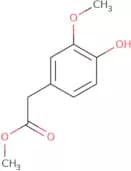
CAS:<p>Versatile small molecule scaffold</p>Formula:C5H9ClOPurity:Min. 95%Molecular weight:120.58 g/molMethyl 4-hydroxy-3-methoxyphenylacetate
CAS:<p>Methyl 4-hydroxy-3-methoxyphenylacetate (HMPAA) is a natural compound, which can be detected by mass spectrometric detection. It is an evaporative and has been shown to have inhibitory effects on the growth of ganglion cells in culture. HMPAA also inhibits phosphotungstic acid precipitation assays and crth2 expression. HMPAA has been shown to interact with other proteins, such as protein–protein interactions or functional groups. This compound is also involved in chemical reactions, such as the hydroxyl group or the methyl group. The detectable concentration of HMPAA ranges from 1 ng/mL to 1 μM and it is found in monomers or organic acids.</p>Formula:C10H12O4Purity:Min. 95%Molecular weight:196.2 g/mol1-Methyl-4-phenyl-1H-1,2,3-triazole
CAS:<p>1-Methyl-4-phenyl-1H-1,2,3-triazole is a ligand that interacts with copper. It is used in the synthesis of pyridine complexes and as a reagent for the preparation of other organometallic compounds. 1-Methyl-4-phenyl-1H-1,2,3-triazole has been shown to be able to replace azide or chloride ligands in some metal coordination complexes. It has been observed in spectra of copper and rhenium complexes with axially coordinated ligands. The X ray crystal structures of 1 methyl 4 phenyl 1H 1 2 3 triazole have revealed that it can be either a luminescent or nonluminescent compound depending on the type of solvent used during its preparation.</p>Formula:C9H9N3Purity:Min. 95%Molecular weight:159.19 g/mol2-Chloro-4-methyl-1H-benzo[d]imidazole
CAS:<p>2-Chloro-4-methyl-1H-benzo[d]imidazole is a biochemical, which has been used in structural studies and conformational analyses. The compound has been shown to be an oriented molecule that can exist in two different forms, depending on the solvent conditions. 2-Chloro-4-methyl-1H-benzo[d]imidazole is a halide with a low degree of solubility in water. It reacts with divalent cations such as magnesium or calcium ions to form insoluble salts. 2CMBDI has been shown to inhibit DNA replication by binding to 8-oxoguanosine residues during the synthesis of DNA and preventing their incorporation into the growing strand. Mechanistically, 2CMBDI inhibits cellular anions and causes cell death by inhibiting DNA replication.</p>Formula:C8H7ClN2Purity:Min. 95%Molecular weight:166.61 g/mol2-Chloro-1,5-dimethyl-1H-benzo[D]imidazole
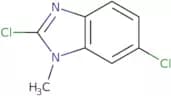
CAS:<p>Versatile small molecule scaffold</p>Formula:C9H9ClN2Purity:Min. 95%Molecular weight:180.63 g/mol2,6-Dichloro-1-methyl-1H-1,3-benzodiazole
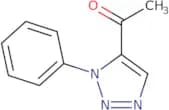
CAS:<p>Versatile small molecule scaffold</p>Formula:C8H6Cl2N2Purity:Min. 95%Molecular weight:201.05 g/mol1-(1-Phenyl-1H-1,2,3-triazol-5-yl)ethan-1-one
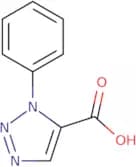
CAS:<p>Versatile small molecule scaffold</p>Formula:C10H9N3OPurity:Min. 95%Molecular weight:187.2 g/mol1-Phenyl-1H-1,2,3-triazole-5-carboxylic acid
CAS:<p>Versatile small molecule scaffold</p>Formula:C9H7N3O2Purity:Min. 95%Molecular weight:189.17 g/molPyrrolidine-1-carbohydrazide
CAS:<p>Versatile small molecule scaffold</p>Formula:C5H11N3OPurity:Min. 95%Molecular weight:129.16 g/mol2-[(4-Methoxyphenyl)carbonyl]furan
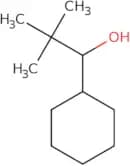
CAS:<p>Versatile small molecule scaffold</p>Formula:C12H10O3Purity:Min. 95%Molecular weight:202.21 g/mol1-Cyclohexyl-2,2-dimethylpropan-1-ol
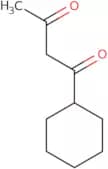
CAS:<p>Versatile small molecule scaffold</p>Formula:C11H22OPurity:Min. 95%Molecular weight:170.29 g/mol1-Cyclohexylbutane-1,3-dione
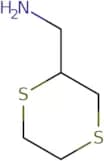
CAS:<p>Versatile small molecule scaffold</p>Formula:C10H16O2Purity:Min. 95%Molecular weight:168.23 g/mol1,4-Dithian-2-ylmethanamine
CAS:<p>Versatile small molecule scaffold</p>Formula:C5H11NS2Purity:Min. 95%Molecular weight:149.3 g/mol2-Amino-5-methyl-4-pyrimidinol
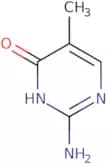
CAS:<p>2-Amino-5-methyl-4-pyrimidinol is a metabolite of the nucleobase cytosine. It is also a competitive inhibitor of guanine deaminase, an enzyme that converts guanine to inosine. 2-Amino-5-methyl-4-pyrimidinol can be synthesized by solid phase synthesis and has been shown to have clinical potential for the treatment of cancer.</p>Formula:C5H7N3OPurity:Min. 95%Molecular weight:125.13 g/molrac-(1R,2S)-2-Carbamoylcyclopropane-1-carboxylic acid
CAS:<p>Versatile small molecule scaffold</p>Formula:C5H7NO3Purity:Min. 95%Molecular weight:129.1 g/molMethyl 4-(aminooxy)butanoate hydrochloride
CAS:<p>Versatile small molecule scaffold</p>Formula:C5H12ClNO3Purity:Min. 95%Molecular weight:169.61 g/mol2-Propylpiperidine hydrochloride
CAS:<p>2-Propylpiperidine hydrochloride is a piperidine that is heterocyclic in nature and has the molecular formula C8H19N. It is obtained by the condensation of propionic acid with ammonia, followed by reaction with ethylene oxide. 2-Propylpiperidine hydrochloride is used as a starting material in the synthesis of other compounds such as coniine and its derivatives. The stereogenic center in 2-propylpiperidine hydrochloride can be synthesized using asymmetric methodology. The salt form of this compound is 2-propylpiperidine hydrochloride hydroxide (2-ppi) or 2-propylpiperidine hydrochloride hydrate. This compound can also exist as an alcohol, enantiopure, or amide form.</p>Formula:C8H18ClNPurity:Min. 95%Molecular weight:163.69 g/molrac-(3S,6R)-3,6-Bis(hydroxymethyl)piperazine-2,5-dione
CAS:<p>Versatile small molecule scaffold</p>Formula:C6H10N2O4Purity:Min. 95%Molecular weight:174.15 g/mol3,6-Dimethylene-2,5-piperazinedione
CAS:<p>3,6-Methylene-2,5-piperazinedione is a heterocyclic compound that belongs to the piperazinedione ring system. It is synthesized from 3,6-dithiobenzoic acid and thioacetic acid. The synthesis of this compound proceeds through a series of reactions involving oxidation of the thioacetic acid to the dithiols, followed by a sequence of nucleophilic substitution reactions.</p>Formula:C6H6N2O2Purity:Min. 95%Molecular weight:138.12 g/mol1,1-Dichloro-2-(chloromethyl)-2-methylcyclopropane
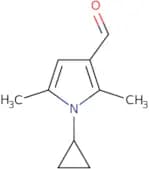
CAS:<p>Versatile small molecule scaffold</p>Formula:C5H7Cl3Purity:Min. 95%Molecular weight:173.46 g/mol1-Cyclopropyl-2,5-dimethyl-1h-pyrrole-3-carbaldehyde
CAS:<p>Versatile small molecule scaffold</p>Formula:C10H13NOPurity:Min. 95%Molecular weight:163.22 g/mol4-(1-Methyl-1H-pyrazol-5-yl)piperidine
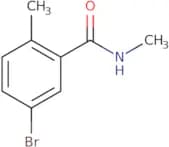
CAS:<p>Versatile small molecule scaffold</p>Formula:C9H15N3Purity:Min. 95%Molecular weight:165.24 g/mol5-Bromo-N,2-dimethylbenzamide
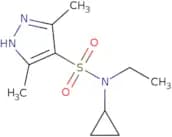
CAS:<p>Versatile small molecule scaffold</p>Formula:C9H10BrNOPurity:Min. 95%Molecular weight:228.09 g/molN-Cyclopropyl-N-ethyl-3,5-dimethyl-1H-pyrazole-4-sulfonamide
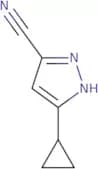
CAS:<p>Versatile small molecule scaffold</p>Formula:C10H17N3O2SPurity:Min. 95%Molecular weight:243.33 g/mol5-Cyclopropyl-1H-pyrazole-3-carbonitrile
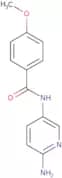
CAS:<p>Versatile small molecule scaffold</p>Formula:C7H7N3Purity:Min. 95%Molecular weight:133.15 g/molN-(6-Aminopyridin-3-yl)-4-methoxybenzamide
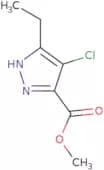
CAS:<p>Versatile small molecule scaffold</p>Formula:C13H13N3O2Purity:Min. 95%Molecular weight:243.26 g/molMethyl 4-chloro-5-ethyl-1H-pyrazole-3-carboxylate
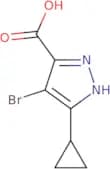
CAS:<p>Versatile small molecule scaffold</p>Formula:C7H9ClN2O2Purity:Min. 95%Molecular weight:188.61 g/mol4-Bromo-3-cyclopropyl-1H-pyrazole-5-carboxylic acid
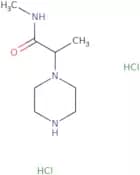
CAS:<p>Versatile small molecule scaffold</p>Formula:C7H7BrN2O2Purity:Min. 95%Molecular weight:231.05 g/molN-Methyl-2-(piperazin-1-yl)propanamide dihydrochloride
CAS:<p>Versatile small molecule scaffold</p>Formula:C8H19Cl2N3OPurity:Min. 95%Molecular weight:244.16 g/mol2-Methyl-6-{[(1-methyl-1H-pyrazol-4-yl)methyl]amino}pyridine-4-carboxylic acid
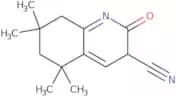
CAS:<p>Versatile small molecule scaffold</p>Formula:C12H14N4O2Purity:Min. 95%Molecular weight:246.3 g/mol5,5,7,7-Tetramethyl-2-oxo-1,2,5,6,7,8-hexahydroquinoline-3-carbonitrile
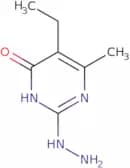
CAS:<p>Versatile small molecule scaffold</p>Formula:C14H18N2OPurity:Min. 95%Molecular weight:230.31 g/mol5-Ethyl-2-hydrazinyl-6-methyl-3,4-dihydropyrimidin-4-one
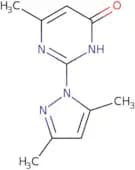
CAS:<p>5-Ethyl-2-hydrazinyl-6-methyl-3,4-dihydropyrimidin-4-one is a hydrazine compound that has been shown to have antiinflammatory and analgesic properties. It binds to the pyrimidine ring of nucleosides and inhibits their incorporation into DNA and RNA. The compound also has a role in the metabolism of aromatic amino acids, such as tyrosine. 5EHTP is an inhibitor of acetylacetone synthase, which converts acetoacetate into acetylacetone. This inhibition prevents the conversion of acetoacetate into other products, such as 4-hydroxybutanal. 5EHTP also inhibits isatin dehydrogenase, which catalyzes the oxidation of isatin to 2,5-diketopiperazine (ketopiperazine).</p>Formula:C7H12N4OPurity:Min. 95%Molecular weight:168.2 g/mol2-(3,5-Dimethyl-1H-pyrazol-1-yl)-6-methylpyrimidin-4-ol
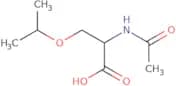
CAS:<p>2-(3,5-Dimethyl-1H-pyrazol-1-yl)-6-methylpyrimidin-4-ol is a tautomeric form of 2-(3,5-dimethylpyrazol-1-yl)-6-[(2R,3S)-3,5-dimethoxyphenyl]pyrimidin-4-ol. It is a potent inhibitor of lipases and has been shown to have antiinflammatory properties. The drug has also been found to decrease the number of inflammatory cells in the bowel and can be used for the treatment of inflammatory bowel disease. The drug may also be effective for treating other autoimmune diseases such as thyroiditis and scleroderma. This drug also has cancer prevention effects because it inhibits cell division and tumor growth by binding to DNA.</p>Formula:C10H12N4OPurity:Min. 95%Molecular weight:204.23 g/mol2-Acetamido-3-(propan-2-yloxy)propanoic acid
CAS:<p>Versatile small molecule scaffold</p>Formula:C8H15NO4Purity:Min. 95%Molecular weight:189.21 g/mol6-Hydrazinyl-8-oxa-3,5-diazatricyclo[7.4.0.0,2,7]trideca-1(9),2(7),3,5,10,12-hexaene
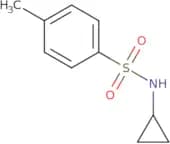
CAS:<p>Versatile small molecule scaffold</p>Formula:C10H8N4OPurity:Min. 95%Molecular weight:200.2 g/molN-Cyclopropyl-4-methylbenzene-1-sulfonamide
CAS:<p>Versatile small molecule scaffold</p>Formula:C10H13NO2SPurity:Min. 95%Molecular weight:211.28 g/mol1-[4-Hydroxy-3-(methoxymethyl)phenyl]ethan-1-one
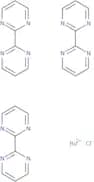
CAS:<p>Versatile small molecule scaffold</p>Formula:C10H12O3Purity:Min. 95%Molecular weight:180.2 g/molTris(2,2'-bipyrimidine), dichlororuthenium
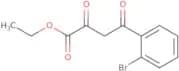
CAS:<p>Versatile small molecule scaffold</p>Formula:C24H18ClN12RuPurity:Min. 95%Molecular weight:611 g/molEthyl 4-(2-bromophenyl)-2,4-dioxobutanoate
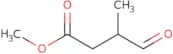
CAS:<p>Versatile small molecule scaffold</p>Formula:C12H11BrO4Purity:Min. 95%Molecular weight:299.12 g/molMethyl 3-methyl-4-oxobutanoate
CAS:<p>Versatile small molecule scaffold</p>Formula:C6H10O3Purity:Min. 95%Molecular weight:130.14 g/mol2-{[(2,4-Dichlorophenyl)methyl]sulfanyl}acetic acid
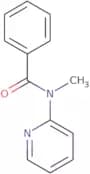
CAS:<p>Versatile small molecule scaffold</p>Formula:C9H8Cl2O2SPurity:Min. 95%Molecular weight:251.13 g/molN-Methyl-N-(pyridin-2-yl)benzamide
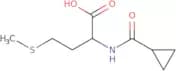
CAS:<p>Versatile small molecule scaffold</p>Formula:C13H12N2OPurity:Min. 95%Molecular weight:212.25 g/mol2-(Cyclopropylformamido)-4-(methylsulfanyl)butanoic acid
CAS:<p>Versatile small molecule scaffold</p>Formula:C9H15NO3SPurity:Min. 95%Molecular weight:217.29 g/mol2-[(2-Chlorophenyl)formamido]-4-(methylsulfanyl)butanoic acid
CAS:<p>Versatile small molecule scaffold</p>Formula:C12H14ClNO3SPurity:Min. 95%Molecular weight:287.76 g/mol2-[(2,4-Dichlorophenyl)formamido]-4-(methylsulfanyl)butanoic acid
CAS:<p>Versatile small molecule scaffold</p>Formula:C12H13Cl2NO3SPurity:Min. 95%Molecular weight:322.2 g/mol2-[(3-Methylphenyl)formamido]-4-(methylsulfanyl)butanoic acid
CAS:<p>Versatile small molecule scaffold</p>Formula:C13H17NO3SPurity:Min. 95%Molecular weight:267.35 g/mol2-[(4-tert-Butylphenyl)formamido]-4-(methylsulfanyl)butanoic acid
CAS:<p>Versatile small molecule scaffold</p>Formula:C16H23NO3SPurity:Min. 95%Molecular weight:309.4 g/mol2-[(2-Methoxyphenyl)formamido]-4-(methylsulfanyl)butanoic acid
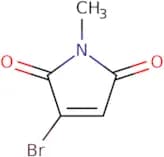
CAS:<p>Versatile small molecule scaffold</p>Formula:C13H17NO4SPurity:Min. 95%Molecular weight:283.35 g/mol3-Bromo-1-methyl-2,5-dihydro-1H-pyrrole-2,5-dione
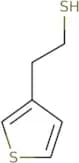
CAS:<p>3-Bromo-1-methyl-2,5-dihydro-1H-pyrrole-2,5-dione is a fluorescent molecule that can be used as a phosphine. It has been shown to be a useful tool for investigating the nature of phosphines and their reactions with other molecules. This compound has also been used in the kinetic modification of drugs to optimise their therapeutic properties. 3-Bromo-1-methyl-2,5-dihydro-1H-pyrrole-2,5-dione has been conjugated with biotin to create a reactive disulfide bond that can be visualised using fluorescent microscopy. The unmodified form of 3BMPD is used in molecular modelling studies as a model system for reactive disulfide bonds. 3BMPD can also be modified by reacting it with thiols or maleimides to produce reactive disulfides that are useful in conjug</p>Formula:C5H4BrNO2Purity:Min. 95%Molecular weight:189.99 g/mol2-(Thiophen-3-yl)ethane-1-thiol
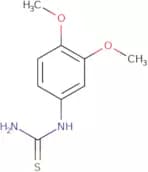
CAS:<p>Versatile small molecule scaffold</p>Formula:C6H8S2Purity:Min. 95%Molecular weight:144.3 g/mol(3,4-Dimethoxyphenyl)thiourea
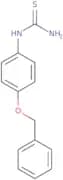
CAS:<p>Versatile small molecule scaffold</p>Formula:C9H12N2O2SPurity:Min. 95%Molecular weight:212.27 g/mol1-(4-Benzyloxyphenyl)-2-thiourea
CAS:<p>Versatile small molecule scaffold</p>Formula:C14H14N2OSPurity:Min. 95%Molecular weight:258.34 g/mol1-(Benzo[d][1,3]dioxol-5-yl)thiourea
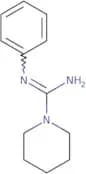
CAS:<p>1-(Benzo[d][1,3]dioxol-5-yl)thiourea is a molecule that belongs to the class of heterocycles. The molecular geometry of this compound has been calculated at the density functional theory level using the B3LYP hybrid functional. The hyperpolarizability of 1-(benzo[d][1,3]dioxol-5-yl)thiourea has been calculated by using the polarizability and frequency parameters in conjunction with the frequency spectrum. The optimum values for these parameters have been determined from an analysis of the electronic structure and density theory.</p>Formula:C8H8N2O2SPurity:Min. 95%Molecular weight:196.23 g/molN'-Phenylpiperidine-1-carboximidamide
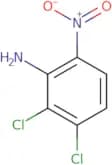
CAS:<p>Versatile small molecule scaffold</p>Formula:C12H17N3Purity:Min. 95%Molecular weight:203.28 g/mol2,3-Dichloro-6-nitroaniline
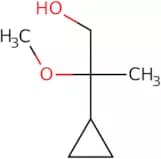
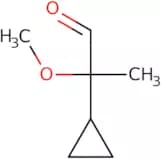
CAS:<p>2,3-Dichloro-6-nitroaniline is a nitro compound that is used as an antibacterial agent. It has been shown to inhibit the growth of Staphylococcus bacteria, with a selectivity for gram-positive organisms. 2,3-Dichloro-6-nitroaniline has also been shown to have catalytic effects on the reaction of nitroarenes with morpholine in the presence of alginic acid. This chemical can be synthesized by reacting sodium nitrite with morpholine and dichloroacetamide in boiling water and then adding zinc chloride. The reaction time varies depending on the concentration of reactants. 2,3-Dichloro-6-nitroaniline has anti HIV activity due to its ability to block electron transfer in viral DNA polymerases.</p>Formula:C6H4Cl2N2O2Purity:Min. 95%Molecular weight:207.02 g/mol2-Cyclopropyl-2-methoxypropan-1-ol
CAS:<p>Versatile small molecule scaffold</p>Formula:C7H14O2Purity:Min. 95%Molecular weight:130.18 g/mol2-Cyclopropyl-2-methoxypropanal
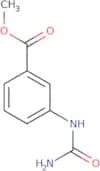
CAS:<p>Versatile small molecule scaffold</p>Formula:C7H12O2Purity:Min. 95%Molecular weight:128.17 g/molMethyl 3-(carbamoylamino)benzoate
CAS:<p>Versatile small molecule scaffold</p>Formula:C9H10N2O3Purity:Min. 95%Molecular weight:194.19 g/mol4-(Methylthio)-2-[(3-nitrobenzoyl)amino]butanoic acid
CAS:<p>Versatile small molecule scaffold</p>Formula:C12H14N2O5SPurity:Min. 95%Molecular weight:298.32 g/mol1-{3,5,6,7-Tetrahydrospiro[imidazo[4,5-c]pyridine-4,4'-piperidine]-1'-yl}ethan-1-one
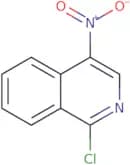
CAS:<p>Versatile small molecule scaffold</p>Formula:C12H18N4OPurity:Min. 95%Molecular weight:234.3 g/mol1-Chloro-4-nitroisoquinoline
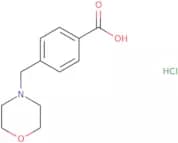
CAS:<p>1-Chloro-4-nitroisoquinoline is an antagonist of the alpha2-adrenergic receptor. It binds to the receptor and blocks the binding of agonists such as clonidine, causing a decrease in lipolysis and vasoconstriction. This agent has been shown to have a low affinity for other receptors, such as dopamine, histamine, serotonin, acetylcholine, and opioid receptors. 1-Chloro-4-nitroisoquinoline has been used to treat hypertension, Raynaud's phenomenon (a disorder that causes reduced blood flow to the fingers or toes), and benign prostatic hypertrophy (enlargement of the prostate).</p>Formula:C9H5ClN2O2Purity:Min. 95%Molecular weight:208.6 g/mol4-(Morpholinomethyl)benzoic acid hydrochloride
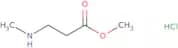
CAS:<p>Versatile small molecule scaffold</p>Formula:C12H16ClNO3Purity:Min. 95%Molecular weight:257.71 g/molmethyl 3-(methylamino)propanoate hydrochloride
CAS:<p>Versatile small molecule scaffold</p>Formula:C5H12ClNO2Purity:Min. 95%Molecular weight:153.6 g/mol2-[2-(Naphthalen-2-yl)acetamido]pentanedioic acid
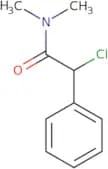
CAS:<p>Versatile small molecule scaffold</p>Formula:C17H17NO5Purity:Min. 95%Molecular weight:315.32 g/mol2-Chloro-N,N-dimethyl-2-phenylacetamide
CAS:<p>Versatile small molecule scaffold</p>Formula:C10H12ClNOPurity:Min. 95%Molecular weight:197.66 g/mol3-(Thiophen-3-yl)butan-1-ol
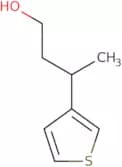
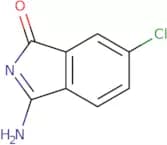
CAS:<p>Versatile small molecule scaffold</p>Formula:C8H12OSPurity:Min. 95%Molecular weight:156.25 g/mol3-Amino-6-chloro-1H-isoindol-1-one
CAS:<p>Versatile small molecule scaffold</p>Formula:C8H5ClN2OPurity:Min. 95%Molecular weight:180.59 g/mol{[1,3]Thiazolo[4,5-c]pyridin-2-yl}hydrazine
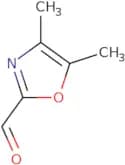
CAS:<p>Versatile small molecule scaffold</p>Formula:C6H6N4SPurity:Min. 95%Molecular weight:166.21 g/mol4,5-Dimethyl-1,3-oxazole-2-carbaldehyde
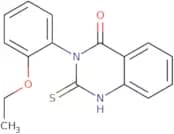
CAS:<p>Versatile small molecule scaffold</p>Formula:C6H7NO2Purity:Min. 95%Molecular weight:125.13 g/mol3-(2-Ethoxyphenyl)-2-sulfanyl-3,4-dihydroquinazolin-4-one
CAS:<p>Versatile small molecule scaffold</p>Formula:C16H14N2O2SPurity:Min. 95%Molecular weight:298.4 g/mol3-{6-Bromo-3H-imidazo[4,5-b]pyridin-2-yl}pyridine
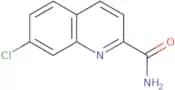
CAS:<p>Versatile small molecule scaffold</p>Formula:C11H7BrN4Purity:Min. 95%Molecular weight:275.1 g/mol7-Chloroquinoline-2-carboxamide
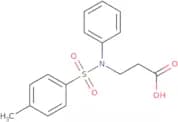
CAS:<p>Versatile small molecule scaffold</p>Formula:C10H7ClN2OPurity:Min. 95%Molecular weight:206.63 g/mol3-(N-Phenyl4-methylbenzenesulfonamido)propanoic acid
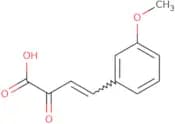
CAS:<p>Versatile small molecule scaffold</p>Formula:C16H17NO4SPurity:Min. 95%Molecular weight:319.4 g/mol4-(3-Methoxyphenyl)-2-oxobut-3-enoic acid
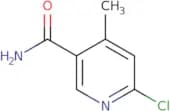
CAS:<p>Versatile small molecule scaffold</p>Formula:C11H10O4Purity:Min. 95%Molecular weight:206.19 g/mol6-Chloro-4-methyl-nicotinamide
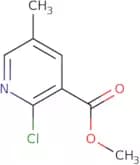
CAS:<p>Versatile small molecule scaffold</p>Formula:C7H7ClN2OPurity:Min. 95%Molecular weight:170.59 g/molMethyl 2-chloro-5-methylnicotinate
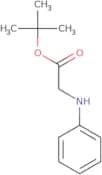
CAS:<p>Versatile small molecule scaffold</p>Formula:C8H8ClNO2Purity:Min. 95%Molecular weight:185.61 g/moltert-Butyl 2-(phenylamino)acetate
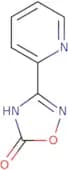
CAS:<p>Versatile small molecule scaffold</p>Formula:C12H17NO2Purity:Min. 95%Molecular weight:207.27 g/mol3-(Pyridin-2-yl)-4,5-dihydro-1,2,4-oxadiazol-5-one
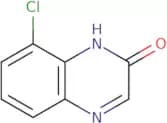
CAS:<p>Versatile small molecule scaffold</p>Formula:C7H5N3O2Purity:Min. 95%Molecular weight:163.13 g/mol8-Chloro-2-quinoxalinol
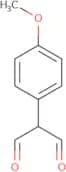
CAS:<p>Versatile small molecule scaffold</p>Formula:C8H5ClN2OPurity:Min. 95%Molecular weight:180.59 g/mol2-(4-Methoxyphenyl)malondialdehyde
CAS:<p>2-(4-Methoxyphenyl)malondialdehyde is a synthetic chemical that is used as a reagent for the synthesis of piperidine derivatives. It can be readily prepared using hydrogen chloride and a hydrocarbon solvent in the presence of an acid catalyst. 2-(4-Methoxyphenyl)malondialdehyde has been used in the synthesis of bone morphogenetic proteins and other molecules, such as dorsomorphin and ldn-193189.</p>Formula:C10H10O3Purity:Min. 95%Molecular weight:178.18 g/mol2-(Morpholin-4-yl)-5-sulfamoylbenzoic acid
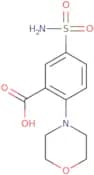
CAS:<p>Versatile small molecule scaffold</p>Formula:C11H14N2O5SPurity:Min. 95%Molecular weight:286.31 g/mol3-(2-Oxo-1,3-oxazolidin-3-yl)propanenitrile
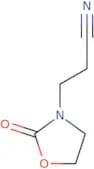
CAS:<p>Versatile small molecule scaffold</p>Formula:C6H8N2O2Purity:Min. 95%Molecular weight:140.14 g/mol2-Phenylquinolin-4-amine hydrochloride
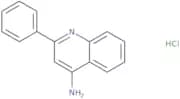
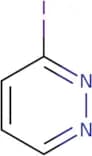
CAS:<p>Versatile small molecule scaffold</p>Formula:C15H13ClN2Purity:Min. 95%Molecular weight:256.73 g/mol3-Iodopyridazine
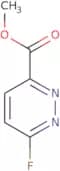
CAS:<p>3-Iodopyridazine is a trifunctional molecule that has been used as a luminophor. It can be synthesized by palladium-catalyzed cross-coupling of 3-bromopyridazine with diethyl ester, yielding the desired product. This product is an organic solvent that contains nitrogen atoms and exhibits enhanced fluorescent properties. The supramolecular chemistry of this compound has been studied extensively, and it has been shown to have nucleophilic functionalities, which make it useful in cross-coupling reactions.</p>Formula:C4H3IN2Purity:Min. 95%Molecular weight:205.98 g/molMethyl 6-fluoropyridazine-3-carboxylate
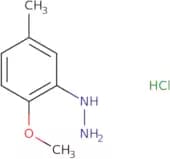
CAS:<p>Versatile small molecule scaffold</p>Formula:C6H5FN2O2Purity:Min. 95%Molecular weight:156.11 g/mol(2-Methoxy-5-methylphenyl)hydrazine hydrochloride
CAS:<p>Versatile small molecule scaffold</p>Formula:C8H13ClN2OPurity:Min. 95%Molecular weight:188.65 g/mol







![2-Chloro-4-methyl-1H-benzo[d]imidazole](/_next/image/?url=https%3A%2Fstatic.cymitquimica.com%2Fproducts%2F3D%2Fthumb-webp%2FQAA96557.webp&w=3840&q=75)
![2-Chloro-1,5-dimethyl-1H-benzo[D]imidazole](/_next/image/?url=https%3A%2Fstatic.cymitquimica.com%2Fproducts%2F3D%2Fthumb-webp%2FQAA96560.webp&w=3840&q=75)

![2-[(4-Methoxyphenyl)carbonyl]furan](/_next/image/?url=https%3A%2Fstatic.cymitquimica.com%2Fproducts%2F3D%2Fthumb-webp%2FQAA97074.webp&w=3840&q=75)



![2-Methyl-6-{[(1-methyl-1H-pyrazol-4-yl)methyl]amino}pyridine-4-carboxylic acid](/_next/image/?url=https%3A%2Fstatic.cymitquimica.com%2Fproducts%2F3D%2Fthumb-webp%2FQBD34875.webp&w=3840&q=75)
![6-Hydrazinyl-8-oxa-3,5-diazatricyclo[7.4.0.0,2,7]trideca-1(9),2(7),3,5,10,12-hexaene](/_next/image/?url=https%3A%2Fstatic.cymitquimica.com%2Fproducts%2F3D%2Fthumb-webp%2FQCA02400.webp&w=3840&q=75)
![1-[4-Hydroxy-3-(methoxymethyl)phenyl]ethan-1-one](/_next/image/?url=https%3A%2Fstatic.cymitquimica.com%2Fproducts%2F3D%2Fthumb-webp%2FQCA03320.webp&w=3840&q=75)
![2-{[(2,4-Dichlorophenyl)methyl]sulfanyl}acetic acid](/_next/image/?url=https%3A%2Fstatic.cymitquimica.com%2Fproducts%2F3D%2Fthumb-webp%2FQCA05131.webp&w=3840&q=75)
![2-[(2-Chlorophenyl)formamido]-4-(methylsulfanyl)butanoic acid](/_next/image/?url=https%3A%2Fstatic.cymitquimica.com%2Fproducts%2F3D%2Fthumb-webp%2FQCA05472.webp&w=3840&q=75)
![2-[(2,4-Dichlorophenyl)formamido]-4-(methylsulfanyl)butanoic acid](/_next/image/?url=https%3A%2Fstatic.cymitquimica.com%2Fproducts%2F3D%2Fthumb-webp%2FQCA05477.webp&w=3840&q=75)
![2-[(3-Methylphenyl)formamido]-4-(methylsulfanyl)butanoic acid](/_next/image/?url=https%3A%2Fstatic.cymitquimica.com%2Fproducts%2F3D%2Fthumb-webp%2FQCA05481.webp&w=3840&q=75)
![2-[(4-tert-Butylphenyl)formamido]-4-(methylsulfanyl)butanoic acid](/_next/image/?url=https%3A%2Fstatic.cymitquimica.com%2Fproducts%2F3D%2Fthumb-webp%2FQCA05482.webp&w=3840&q=75)
![2-[(2-Methoxyphenyl)formamido]-4-(methylsulfanyl)butanoic acid](/_next/image/?url=https%3A%2Fstatic.cymitquimica.com%2Fproducts%2F3D%2Fthumb-webp%2FQCA05483.webp&w=3840&q=75)
![1-(Benzo[d][1,3]dioxol-5-yl)thiourea](/_next/image/?url=https%3A%2Fstatic.cymitquimica.com%2Fproducts%2F3D%2Fthumb-webp%2FQCA06955.webp&w=3840&q=75)
![4-(Methylthio)-2-[(3-nitrobenzoyl)amino]butanoic acid](/_next/image/?url=https%3A%2Fstatic.cymitquimica.com%2Fproducts%2F3D%2Fthumb-webp%2FQCA08434.webp&w=3840&q=75)
![1-{3,5,6,7-Tetrahydrospiro[imidazo[4,5-c]pyridine-4,4'-piperidine]-1'-yl}ethan-1-one](/_next/image/?url=https%3A%2Fstatic.cymitquimica.com%2Fproducts%2F3D%2Fthumb-webp%2FQCA09221.webp&w=3840&q=75)
![2-[2-(Naphthalen-2-yl)acetamido]pentanedioic acid](/_next/image/?url=https%3A%2Fstatic.cymitquimica.com%2Fproducts%2F3D%2Fthumb-webp%2FQCA11447.webp&w=3840&q=75)
![{[1,3]Thiazolo[4,5-c]pyridin-2-yl}hydrazine](/_next/image/?url=https%3A%2Fstatic.cymitquimica.com%2Fproducts%2F3D%2Fthumb-webp%2FQCA12868.webp&w=3840&q=75)
![3-{6-Bromo-3H-imidazo[4,5-b]pyridin-2-yl}pyridine](/_next/image/?url=https%3A%2Fstatic.cymitquimica.com%2Fproducts%2F3D%2Fthumb-webp%2FQCA14790.webp&w=3840&q=75)