Building Blocks
This section contains fundamental products for the synthesis of organic and biological compounds. Building blocks are the essential starting materials used to construct complex molecules through various chemical reactions. They play a critical role in drug discovery, material science, and chemical research. At CymitQuimica, we offer a diverse range of high-quality building blocks to support your innovative research and industrial projects, ensuring you have the essential components for successful synthesis.
Subcategories of "Building Blocks"
- Boronic Acids & Boronic Acid Derivatives(5,756 products)
- Chiral Building Blocks(1,242 products)
- Hydrocarbon Building Blocks(6,095 products)
- Organic Building Blocks(61,037 products)
Found 196139 products of "Building Blocks"
Sort by
Purity (%)
0
100
|
0
|
50
|
90
|
95
|
100
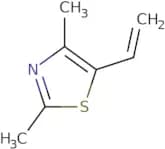
2,4-Dimethyl-5-vinylthiazole
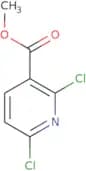
CAS:<p>Versatile small molecule scaffold</p>Formula:C7H9NSPurity:Min. 95%Molecular weight:139.22 g/molMethyl 2,6-dichloropyridine-3-carboxylate
CAS:<p>Methyl 2,6-dichloropyridine-3-carboxylate is a carboxylic acid that can be synthesized by reacting 2,6-dichloropyridine with an acetyl chloride. It has been used in the synthesis of dopamine D2 receptor antagonists. The sulfoxide group in this compound may undergo alkaline hydrolysis to yield an anion and a nucleophilic adduct. This carboxylic acid also reacts with triethylamine to form esters. In addition, methyl 2,6-dichloropyridine-3-carboxylate is regioselective for the alpha position when it reacts with methyltetrahydrofuran.</p>Formula:C7H5Cl2NO2Purity:Min. 95%Molecular weight:206.03 g/mol6-Chloro-2-methoxynicotinic acid
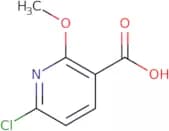
CAS:<p>6-Chloro-2-methoxynicotinic acid is a ketone that reacts with chlorine in the presence of light to form chlorinated products. It is a versatile intermediate for the synthesis of various compounds. 6-Chloro-2-methoxynicotinic acid is used in the synthesis of naphthacene, which is a precursor to dyes and pharmaceuticals. The reactivity of this compound depends on substituents located at the 2 position. Substituents cause sterically hindering effects and lead to different geometries and reactivities, such as attack by chlorine or substitution by hydrogen.</p>Formula:C7H6ClNO3Purity:Min. 95%Molecular weight:187.58 g/mol2-Methoxy-4,6-dimethylnicotinonitrile
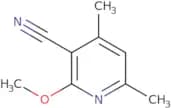
CAS:<p>2-Methoxy-4,6-dimethylnicotinonitrile is a photoreactive compound that reacts with UV light to produce an adduct. The 1-cyanonaphthalene group in 2-methoxy-4,6-dimethylnicotinonitrile undergoes a photochemical reaction to form an adduct with the benzene ring. It is postulated that the dimer and x-ray structural analysis of 2-methoxy-4,6-dimethylnicotinonitrile are stable and pyridine can be used as a solvent.</p>Formula:C9H10N2OPurity:Min. 95%Molecular weight:162.19 g/mol2-Amino-4-(aminooxy)butanoic acid dihydrochloride
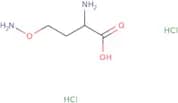
CAS:<p>2-Amino-4-(aminooxy)butanoic acid dihydrochloride is a cyclization product of the antibiotic cycloserine. It has been synthesised from 2-amino-4-oxobutanoic acid by the addition of hydrochloric acid and then heated to reflux for 20 hours. The purity of this product is >98%.<br>2-Amino-4-(aminooxy)butanoic acid dihydrochloride has been shown to be a homologue of canaline, which is an antibiotic used in the treatment of tuberculosis. This compound also has antibacterial activity, although it is less potent than cycloserine.</p>Formula:C4H12Cl2N2O3Purity:Min. 95%Molecular weight:207.05 g/mol(2E,4E)-Hepta-2,4-dienoic acid
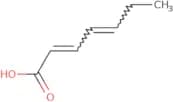
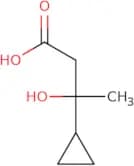
CAS:<p>(2E,4E)-Hepta-2,4-dienoic acid is an organic compound that belongs to the group of quinoline derivatives. It is a colorless liquid at room temperature and is soluble in organic solvents. This compound can be used as a dehydrohalogenating agent in the synthesis of mappicine and camptothecin derivatives. (2E,4E)-Hepta-2,4-dienoic acid can also react with ketocarboxylic acids to form carotenoid compounds. The chemical formula for this molecule is C8H10O3.</p>Formula:C7H10O2Purity:Min. 95%Molecular weight:126.15 g/mol3-Cyclopropyl-3-hydroxybutanoic acid
CAS:<p>Versatile small molecule scaffold</p>Formula:C7H12O3Purity:Min. 95%Molecular weight:144.17 g/mol3,3-Dimethyl-1,5-dioxa-9-azaspiro[5.5]undecane
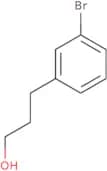
CAS:Controlled Product<p>Versatile small molecule scaffold</p>Formula:C10H19NO2Purity:Min. 95%Molecular weight:185.26 g/mol3-(3-Bromophenyl)propan-1-ol
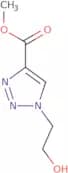
CAS:<p>Versatile small molecule scaffold</p>Formula:C9H11BrOPurity:Min. 95%Molecular weight:215.09 g/molMethyl 1-(2-hydroxyethyl)-1H-1,2,3-triazole-4-carboxylate
CAS:<p>Versatile small molecule scaffold</p>Formula:C6H9N3O3Purity:Min. 95%Molecular weight:171.15 g/mol[3-(1,3-Benzoxazol-2-yl)phenyl]methanol
CAS:<p>Versatile small molecule scaffold</p>Formula:C14H11NO2Purity:Min. 95%Molecular weight:225.24 g/molN-{4-[(Methylamino)methyl]phenyl}acetamide
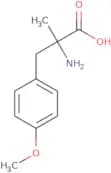
CAS:<p>Versatile small molecule scaffold</p>Formula:C10H14N2OPurity:Min. 95%Molecular weight:178.23 g/mol(2S)-2-Amino-3-(4-methoxyphenyl)-2-methylpropanoic acid
CAS:<p>Versatile small molecule scaffold</p>Formula:C11H15NO3Purity:Min. 95%Molecular weight:209.24 g/mol3-Methyl-octahydropyrrolo[1,2-a]piperazine-1,4-dione
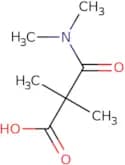
CAS:<p>Versatile small molecule scaffold</p>Formula:C8H12N2O2Purity:Min. 95%Molecular weight:168.19 g/mol3-(Dimethylamino)-2,2-dimethyl-3-oxopropanoic acid
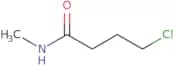
CAS:<p>Versatile small molecule scaffold</p>Formula:C7H13NO3Purity:Min. 95%Molecular weight:159.18 g/mol4-Chloro-N-methylbutanamide
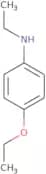
CAS:<p>Versatile small molecule scaffold</p>Formula:C5H10ClNOPurity:Min. 95%Molecular weight:135.59 g/mol4-Ethoxy-N-ethylaniline
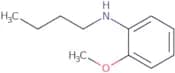
CAS:<p>Versatile small molecule scaffold</p>Formula:C10H15NOPurity:Min. 95%Molecular weight:165.23 g/molN-Butyl-2-methoxyaniline
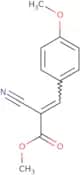
CAS:<p>Versatile small molecule scaffold</p>Formula:C11H17NOPurity:Min. 95%Molecular weight:179.26 g/molMethyl 2-cyano-3-(4-methoxyphenyl)acrylate
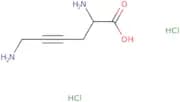
CAS:<p>Versatile small molecule scaffold</p>Formula:C12H11NO3Purity:Min. 95%Molecular weight:217.22 g/mol2,6-Diaminohex-4-ynoic acid dihydrochloride
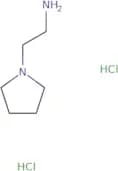
CAS:<p>Versatile small molecule scaffold</p>Formula:C6H12Cl2N2O2Purity:Min. 95%Molecular weight:215.07 g/mol2-(1-Pyrrolidinyl)ethanamine dihydrochloride
CAS:<p>Versatile small molecule scaffold</p>Formula:C6H16Cl2N2Purity:Min. 95%Molecular weight:187.11 g/mol3-[(2S)-1-[(tert-Butoxy)carbonyl]pyrrolidin-2-yl]propanoic acid
CAS:<p>Versatile small molecule scaffold</p>Formula:C12H21NO4Purity:Min. 95%Molecular weight:243.3 g/mol2-Oxatricyclo[5.4.0.0,3,5]undeca-1(11),7,9-trien-6-one
CAS:<p>2-Oxatricyclo[5.4.0.0,3,5]undeca-1(11),7,9-trien-6-one (2OCTU) is a ketone that can be synthesized from 2-oxatricyclo[5.4.0.0,3,5]undeca-1(11),7,9-trien-6-one (2OCU) by solvolysis with a base such as potassium hydroxide or sodium methoxide in methanol or ethanol. It can also be prepared by reacting cyclopropanes with aldehydes in the presence of catalytic amounts of pyridine and triethylamine at room temperature to form acetal rings that are then hydrolyzed to produce 2OCTU after acidification. The chemical reaction yields 2OCTU in high yield and it is a stable molecule that can be stored for</p>Formula:C10H8O2Purity:Min. 95%Molecular weight:160.17 g/mol3-Aminopyridin-1-ium-1-olate hydrochloride
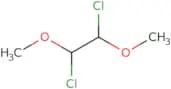
CAS:<p>Versatile small molecule scaffold</p>Formula:C5H7ClN2OPurity:Min. 95%Molecular weight:146.57 g/mol1,2-Dichloro-1,2-dimethoxyethane
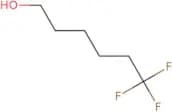
CAS:<p>Versatile small molecule scaffold</p>Formula:C4H8Cl2O2Purity:Min. 95%Molecular weight:159.01 g/mol6,6,6-Trifluorohexan-1-ol
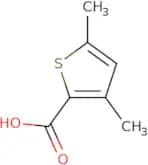
CAS:<p>Versatile small molecule scaffold</p>Formula:C6H11F3OPurity:Min. 95%Molecular weight:156.15 g/mol3,5-Dimethylthiophene-2-carboxylic acid
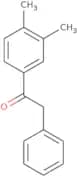
CAS:<p>Versatile small molecule scaffold</p>Formula:C7H8O2SPurity:Min. 95%Molecular weight:156.2 g/mol1-(3,4-Dimethylphenyl)-2-phenylethan-1-one
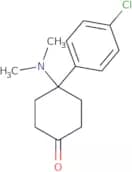
CAS:<p>Versatile small molecule scaffold</p>Formula:C16H16OPurity:Min. 95%Molecular weight:224.3 g/mol4-(4-Chlorophenyl)-4-(dimethylamino)cyclohexan-1-one
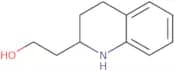
CAS:Controlled Product<p>Versatile small molecule scaffold</p>Formula:C14H18ClNOPurity:Min. 95%Molecular weight:251.75 g/mol2-(1,2,3,4-Tetrahydroquinolin-2-yl)ethan-1-ol
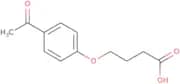
CAS:<p>Versatile small molecule scaffold</p>Formula:C11H15NOPurity:Min. 95%Molecular weight:177.24 g/molAcBut
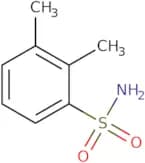
CAS:Controlled Product<p>Commonly abbreviated as AcBut, it is an aromatic acyl linker that can be cleaved under chemical conditions. It is used for the controlled release of payloads.</p>Formula:C12H14O4Purity:Min. 95%Molecular weight:222.24 g/mol2,3-Dimethylbenzene-1-sulfonamide
CAS:<p>2,3-Dimethylbenzene-1-sulfonamide is a crystalline compound that has been shown to have fungicidal and insecticidal activities. It can be used as a combination with other fungicides and insecticides. 2,3-Dimethylbenzene-1-sulfonamide is an active compound in sulfilimines, which are compounds containing the sulfonyl group (-SO2R) attached to a carbon atom in the heterocyclic ring system. This compound has been shown to inhibit carbenes and may be useful for the treatment of fungi that produce mycotoxins. 2,3-Dimethylbenzene-1-sulfonamide also has anti-inflammatory properties and can be used as a nitrogen source for plants.</p>Formula:C8H11NO2SPurity:Min. 95%Molecular weight:185.25 g/mol3,5-Dimethylbenzenesulfonamide
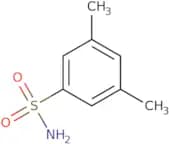
CAS:<p>Versatile small molecule scaffold</p>Formula:C8H11NO2SPurity:Min. 95%Molecular weight:185.25 g/mol4-Methyltetrahydro-2H-pyran-4-carbaldehyde
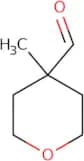
CAS:<p>Versatile small molecule scaffold</p>Formula:C7H12O2Purity:Min. 95%Molecular weight:128.16 g/mol(4-methyloxan-4-yl)methanamine
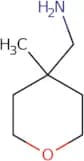
CAS:<p>Versatile small molecule scaffold</p>Formula:C7H15NOPurity:Min. 95%Molecular weight:129.2 g/mol1-Ethyl-1H-indazol-6-amine
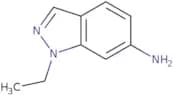
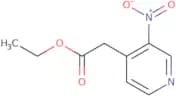
CAS:<p>Versatile small molecule scaffold</p>Formula:C9H11N3Purity:Min. 95%Molecular weight:161.2 g/molEthyl 2-(3-nitropyridin-4-yl)acetate
CAS:<p>Versatile small molecule scaffold</p>Formula:C9H10N2O4Purity:Min. 95%Molecular weight:210.19 g/mol2-Methyl-1H-pyrrolo[2,3-c]pyridine
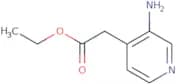
CAS:<p>Versatile small molecule scaffold</p>Formula:C8H8N2Purity:Min. 95%Molecular weight:132.16 g/molEthyl 2-(3-aminopyridin-4-yl)acetate
CAS:<p>Versatile small molecule scaffold</p>Formula:C9H12N2O2Purity:Min. 95%Molecular weight:180.2 g/mol2-Azatricyclo[7.3.0.0,3,7]dodeca-1(9),3(7)-dien-8-one
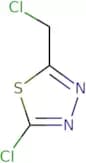
CAS:<p>Versatile small molecule scaffold</p>Formula:C11H13NOPurity:Min. 95%Molecular weight:175.23 g/mol2-Chloro-5-(chloromethyl)-1,3,4-thiadiazole
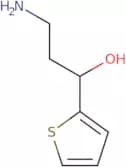
CAS:<p>Versatile small molecule scaffold</p>Formula:C3H2Cl2N2SPurity:Min. 95%Molecular weight:169.03 g/mol3-Amino-1-(thiophen-2-yl)propan-1-ol
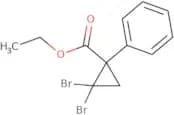
CAS:<p>3-Amino-1-(thiophen-2-yl)propan-1-ol is a form of 3 amino propanol that has the chemical formula CH3CH2CH2N(CH3)S. It is an optical isomer of 1-(thiophen-2-yl)propan-1-ol and can be used as a pharmaceutical preparation in formulae with other drugs. 3 amino propanol can be prepared by reacting propionamide with ammonia, aralkyl amides, or amido groups. This reaction yields a mixture of the two optical isomers in a ratio of 1:5 to 5:1. The substance is also known as 6-alkyl, optically active, pharmaceutical preparations and formulae (6AOPPF).</p>Formula:C7H11NOSPurity:Min. 95%Molecular weight:157.24 g/molEthyl 2,2-dibromo-1-phenylcyclopropane-1-carboxylate
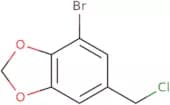
CAS:<p>Versatile small molecule scaffold</p>Formula:C12H12Br2O2Purity:Min. 95%Molecular weight:348.03 g/mol4-Bromo-6-(chloromethyl)-1,3-dioxaindane
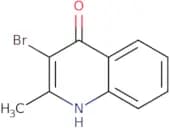
CAS:<p>Versatile small molecule scaffold</p>Formula:C8H6BrClO2Purity:Min. 95%Molecular weight:249.49 g/mol3-Bromo-2-methyl-4-quinolinol
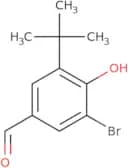
CAS:<p>Versatile small molecule scaffold</p>Formula:C10H8BrNOPurity:Min. 95%Molecular weight:238.08 g/mol3-bromo-5-tert-butyl-4-hydroxybenzaldehyde
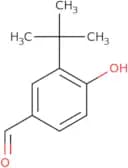
CAS:<p>Versatile small molecule scaffold</p>Formula:C11H13BrO2Purity:Min. 95%Molecular weight:257.13 g/mol3-tert-Butyl-4-hydroxybenzaldehyde
CAS:<p>Versatile small molecule scaffold</p>Formula:C11H14O2Purity:Min. 95%Molecular weight:178.23 g/mol3-Phenylpropanethioamide
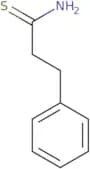
CAS:<p>3-Phenylpropanethioamide is an antibiotic that inhibits bacterial growth by binding to the 50S ribosomal subunit. It has been shown to be a potent inhibitor of bacterial biosynthesis, which may be due to its ability to form reactive oxygen species and dimethyl disulfide. 3-Phenylpropanethioamide also binds to penicillin-binding proteins in the bacterial cell wall by competitive inhibition, preventing the formation of an antibiotic-inhibitor complex with the enzyme cell wall synthesis that is required for cell wall biosynthesis, inhibiting protein synthesis and cell division. 3-Phenylpropanethioamide is capable of forming radical intermediates from peroxide, which can lead to DNA damage and mutations.</p>Formula:C9H11NSPurity:Min. 95%Molecular weight:165.26 g/mol6-Bromo-1,2-benzisoxazol-3-ol
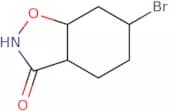
CAS:<p>Versatile small molecule scaffold</p>Formula:C7H4BrNO2Purity:Min. 95%Molecular weight:214.02 g/mol2,2,2-Trifluoro-1-(furan-2-yl)ethan-1-amine hydrochloride
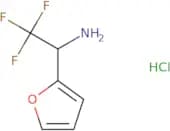
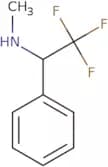
CAS:<p>Versatile small molecule scaffold</p>Formula:C6H7ClF3NOPurity:Min. 95%Molecular weight:201.57 g/molMethyl(2,2,2-trifluoro-1-phenylethyl)amine
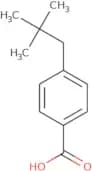
CAS:<p>Versatile small molecule scaffold</p>Formula:C9H10F3NPurity:Min. 95%Molecular weight:189.18 g/mol4-(2,2-Dimethylpropyl)benzoic acid
CAS:<p>4-(2,2-Dimethylpropyl)benzoic acid is a crystalline substance that can be found in polymers. It has a low energy and is soluble in hydrocarbons. 4-(2,2-Dimethylpropyl)benzoic acid is insoluble in solvents.</p>Formula:C12H16O2Purity:Min. 95%Molecular weight:192.25 g/molMethyl 4-[amino(hydroxyimino)methyl]-benzenecarboxylate
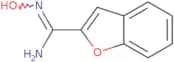
CAS:<p>Versatile small molecule scaffold</p>Formula:C9H10N2O3Purity:Min. 95%Molecular weight:194.19 g/molN'-Hydroxy-1-benzofuran-2-carboximidamide
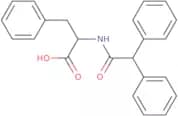
CAS:<p>Versatile small molecule scaffold</p>Formula:C9H8N2O2Purity:Min. 95%Molecular weight:176.17 g/mol2-(2,2-Diphenylacetamido)-3-phenylpropanoic acid
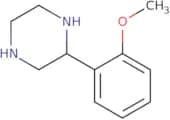
CAS:<p>Versatile small molecule scaffold</p>Formula:C23H21NO3Purity:Min. 95%Molecular weight:359.4 g/mol2-(2-Methoxyphenyl)-piperazine
CAS:<p>2-(2-Methoxyphenyl)-piperazine is a piperazine derivative that binds to the serotonin transporter and blocks its function. It has been shown to have affinity for the serotonin transporter in radioligand binding assays, with an IC50 of 0.8 μM. 2-(2-Methoxyphenyl)-piperazine also acts as an antagonist at the 5-HT1A receptor, with an EC50 of 1.0 μM. This compound has optimal activity at a cycloalkyl group length of 4-6 carbon atoms and is a potent antagonist, with an IC50 of 0.3 μM.</p>Formula:C11H16N2OPurity:Min. 95%Molecular weight:192.26 g/mol4-(Piperazin-2-yl)phenol dihydrochloride
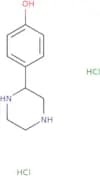
CAS:<p>Versatile small molecule scaffold</p>Formula:C10H16Cl2N2OPurity:Min. 95%Molecular weight:251.15 g/mol8-Methylquinoline-2-carboxylic acid
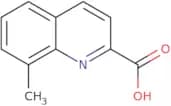
CAS:<p>Versatile small molecule scaffold</p>Formula:C11H9NO2Purity:Min. 95%Molecular weight:187.19 g/mol2-Methylthiazole-5-carbonitrile
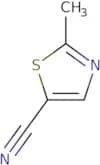
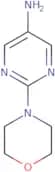
CAS:<p>Versatile small molecule scaffold</p>Formula:C5H4N2SPurity:Min. 95%Molecular weight:124.17 g/mol5-Amino-2-(morpholin-4-yl)pyrimidine
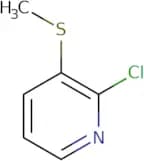
CAS:<p>Versatile small molecule scaffold</p>Formula:C8H12N4OPurity:Min. 95%Molecular weight:180.21 g/mol2-Chloro-3-(methylsulfanyl)pyridine
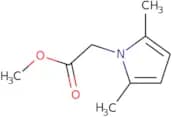
CAS:<p>Versatile small molecule scaffold</p>Formula:C6H6ClNSPurity:Min. 95%Molecular weight:159.64 g/molMethyl (2,5-dimethyl-1H-pyrrol-1-yl)acetate
CAS:<p>Versatile small molecule scaffold</p>Formula:C9H13NO2Purity:Min. 95%Molecular weight:167.2 g/mol5-Methyl-2-phenyl-4H,7H-pyrazolo[1,5-a]pyrimidin-7-one
CAS:<p>Versatile small molecule scaffold</p>Formula:C13H11N3OPurity:Min. 95%Molecular weight:225.25 g/mol3-Methylundecanoic acid
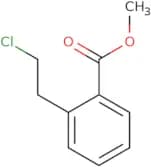
CAS:<p>3-Methylundecanoic acid is an acceptor of the nonribosomal peptide synthetase (NPS) enzyme. It is involved in the biosynthesis of branched-chain fatty acids and can be modified to produce other fatty acids. 3-Methylundecanoic acid is an intermediate in the synthesis of undecanoic acid, which is a major component of some bacterial cell membranes. 3-Methylundecanoic acid can also be used as a starting material for the production of synthetic, nonribosomal peptides.</p>Formula:C12H24O2Purity:Min. 95%Molecular weight:200.32 g/molMethyl 2-(2-chloroethyl)benzoate
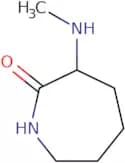
CAS:<p>Versatile small molecule scaffold</p>Formula:C10H11ClO2Purity:Min. 95%Molecular weight:198.64 g/mol3-(Methylamino)azepan-2-one
CAS:<p>Versatile small molecule scaffold</p>Formula:C7H14N2OPurity:Min. 95%Molecular weight:142.2 g/mol3-(2-Iodoethoxy)prop-1-ene
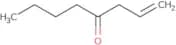
CAS:<p>Versatile small molecule scaffold</p>Formula:C5H9IOPurity:Min. 95%Molecular weight:212.03 g/molOct-1-en-4-one
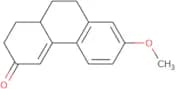
CAS:<p>Versatile small molecule scaffold</p>Formula:C8H14OPurity:Min. 95%Molecular weight:126.2 g/mol7-Methoxy-1,2,3,9,10,10a-hexahydrophenanthren-3-one
CAS:<p>Versatile small molecule scaffold</p>Formula:C15H16O2Purity:Min. 95%Molecular weight:228.3 g/mol4-[2-(4-Methoxyphenyl)ethenyl]phenol
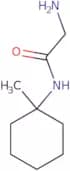
CAS:<p>Versatile small molecule scaffold</p>Formula:C15H14O2Purity:Min. 95%Molecular weight:226.27 g/mol2-Amino-N-(1-methylcyclohexyl)acetamide
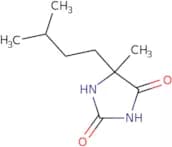
CAS:<p>Versatile small molecule scaffold</p>Formula:C9H18N2OPurity:Min. 95%Molecular weight:170.25 g/mol5-Methyl-5-(3-methylbutyl)imidazolidine-2,4-dione
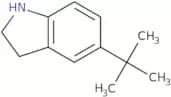
CAS:<p>Versatile small molecule scaffold</p>Formula:C9H16N2O2Purity:Min. 95%Molecular weight:184.24 g/mol5-tert-Butyl-2,3-dihydro-1H-indole
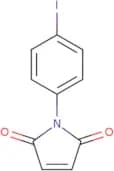
CAS:<p>Versatile small molecule scaffold</p>Formula:C12H17NPurity:Min. 95%Molecular weight:175.27 g/mol1-(4-Iodophenyl)-1H-pyrrole-2,5-dione
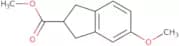
CAS:<p>1-(4-Iodophenyl)-1H-pyrrole-2,5-dione (1IPD) is a molecule that belongs to the endocannabinoid class of molecules. 1IPD is a lipophilic compound that can be identified by fluorescent spectroscopy and has been found in fatty acid and cholesterol esters. 1IPD binds to the active site of the enzyme fatty acid amide hydrolase, which is responsible for the breakdown of anandamide and other related molecules. This binding inhibits the activity of the enzyme, leading to an increase in levels of anandamide and other related molecules in cells.</p>Formula:C10H6INO2Purity:Min. 95%Molecular weight:299.06 g/molMethyl 5-methoxy-2,3-dihydro-1H-indene-2-carboxylate
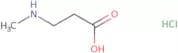
CAS:<p>Versatile small molecule scaffold</p>Formula:C12H14O3Purity:Min. 95%Molecular weight:206.24 g/mol3-(Methylamino)propanoic acid hydrochloride
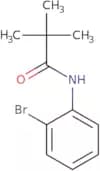
CAS:<p>Versatile small molecule scaffold</p>Formula:C4H10ClNO2Purity:Min. 95%Molecular weight:139.58 g/molN-(2-Bromophenyl)-2,2-dimethylpropanamide
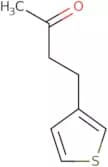
CAS:<p>Versatile small molecule scaffold</p>Formula:C11H14BrNOPurity:Min. 95%Molecular weight:256.14 g/mol4-(Thiophen-3-yl)butan-2-one
CAS:<p>Versatile small molecule scaffold</p>Formula:C8H10OSPurity:Min. 95%Molecular weight:154.23 g/mol3-methylbicyclo[1.1.1]pentane-1-carboxylic acid
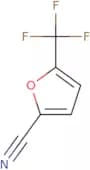
CAS:<p>Versatile small molecule scaffold</p>Formula:C7H10O2Purity:Min. 95%Molecular weight:126.2 g/mol5-(Trifluoromethyl)furan-2-carbonitrile
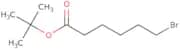
CAS:<p>Versatile small molecule scaffold</p>Formula:C6H2F3NOPurity:Min. 95%Molecular weight:161.08 g/moltert-Butyl 6-bromohexanoate
CAS:<p>Tert-Butyl 6-bromohexanoate is an intermediate in the synthesis of a variety of organic compounds, including pharmaceuticals. It is also used as a reagent for various reactions and as a solvent in chemical syntheses. Tert-Butyl 6-bromohexanoate can be used to generate other chemicals through the following reactions: 1) Organic Synthesis 2) Addition of Grignard Reagents 3) Reduction of Ketones 4) Alkylation with Bromides 5) Dehydration with HBr 6) Conversion to Halides 7) Reduction of Esters 8) Oxidation with PCC or MCPBA 9) Conversion to Nitriles 10) The Williamson Reaction</p>Formula:C10H19BrO2Purity:Min. 95%Molecular weight:251.16 g/mol3-(2-Hydroxyethyl)-1,1-dimethylurea
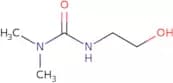
CAS:<p>Versatile small molecule scaffold</p>Formula:C5H12N2O2Purity:Min. 95%Molecular weight:132.16 g/mol5-Bromo-6-methoxynicotinaldehyde
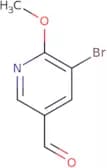
CAS:<p>Versatile small molecule scaffold</p>Formula:C7H6BrNO2Purity:Min. 95%Molecular weight:216.03 g/mol5-iodo-2-methylbenzaldehyde
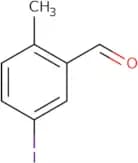
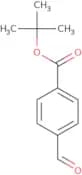
CAS:<p>Versatile small molecule scaffold</p>Formula:C8H7IOPurity:Min. 95%Molecular weight:246.05 g/mol4-Formyl-benzoic acid mono tert-butyl ester
CAS:<p>Versatile small molecule scaffold</p>Formula:C12H14O3Purity:Min. 95%Molecular weight:206.2 g/mol[(4-Chlorophenyl)methyl][2-(dimethylamino)ethyl]amine
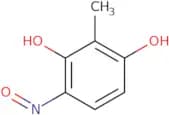
CAS:<p>Versatile small molecule scaffold</p>Formula:C11H17ClN2Purity:Min. 95%Molecular weight:212.72 g/mol2-Methyl-4-nitrosobenzene-1,3-diol
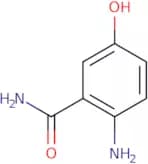
CAS:<p>Versatile small molecule scaffold</p>Formula:C7H7NO3Purity:Min. 95%Molecular weight:153.14 g/mol2-Amino-5-hydroxybenzamide
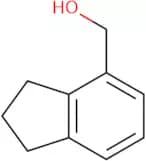
CAS:<p>2-Amino-5-hydroxybenzamide (2AB) is a hydroxylating agent that activates the microsomal enzyme cytochrome P450. This activation leads to an increase in the activity of various drug metabolizing enzymes, including those involved in the metabolism of drugs and xenobiotics. 2AB has been shown to denature proteins, such as anthranilamide and tyrosine, in rat liver homogenates. The activation of this hydroxylase may be due to the presence of copper ions or 2AB binding to tyrosine residues on proteins.</p>Formula:C7H8N2O2Purity:Min. 95%Molecular weight:152.15 g/mol(2,3-Dihydro-1H-inden-4-yl)methanol
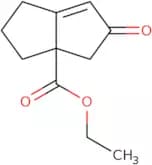
CAS:<p>Versatile small molecule scaffold</p>Formula:C10H12OPurity:Min. 95%Molecular weight:148.2 g/molEthyl 5-oxo-1,2,3,3a,4,5-hexahydropentalene-3a-carboxylate
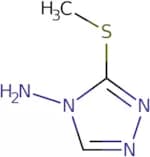
CAS:<p>Versatile small molecule scaffold</p>Formula:C11H14O3Purity:Min. 95%Molecular weight:194.23 g/mol3-(Methylsulfanyl)-4H-1,2,4-triazol-4-amine
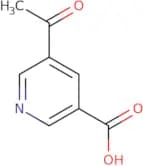
CAS:<p>Versatile small molecule scaffold</p>Formula:C3H6N4SPurity:Min. 95%Molecular weight:130.17 g/mol5-Acetylpyridine-3-carboxylic acid
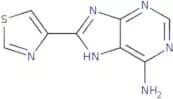
CAS:<p>Versatile small molecule scaffold</p>Formula:C8H7NO3Purity:Min. 95%Molecular weight:165.15 g/mol8-(Thiazol-4-yl)-9H-purin-6-amine
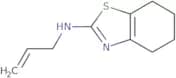
CAS:<p>Versatile small molecule scaffold</p>Formula:C8H6N6SPurity:Min. 95%Molecular weight:218.24 g/molN-(Prop-2-en-1-yl)-4,5,6,7-tetrahydro-1,3-benzothiazol-2-amine
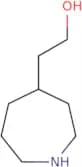
CAS:<p>Versatile small molecule scaffold</p>Formula:C10H14N2SPurity:Min. 95%Molecular weight:194.3 g/mol2-(Azepan-4-yl)ethan-1-ol
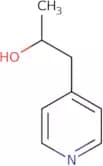
CAS:<p>Versatile small molecule scaffold</p>Formula:C8H17NOPurity:Min. 95%Molecular weight:143.23 g/mol1-(Pyridin-4-yl)propan-2-ol
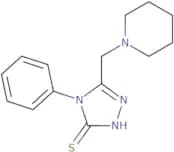
CAS:<p>Versatile small molecule scaffold</p>Formula:C8H11NOPurity:Min. 95%Molecular weight:137.18 g/mol4-Phenyl-5-(piperidin-1-ylmethyl)-4H-1,2,4-triazole-3-thiol
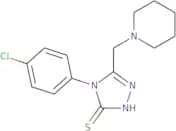
CAS:<p>Versatile small molecule scaffold</p>Formula:C14H18N4SPurity:Min. 95%Molecular weight:274.39 g/mol4-(4-Chlorophenyl)-5-(piperidin-1-ylmethyl)-4H-1,2,4-triazole-3-thiol
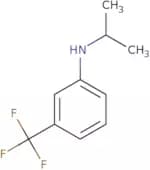
CAS:<p>Versatile small molecule scaffold</p>Formula:C14H17ClN4SPurity:Min. 95%Molecular weight:308.8 g/molN-(Propan-2-yl)-3-(trifluoromethyl)aniline
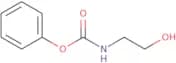
CAS:<p>Versatile small molecule scaffold</p>Formula:C10H12F3NPurity:Min. 95%Molecular weight:203.2 g/molPhenyl N-(2-hydroxyethyl)carbamate
CAS:<p>Versatile small molecule scaffold</p>Formula:C9H11NO3Purity:Min. 95%Molecular weight:181.19 g/mol

![3,3-Dimethyl-1,5-dioxa-9-azaspiro[5.5]undecane](/_next/image/?url=https%3A%2Fstatic.cymitquimica.com%2Fproducts%2F3D%2Fthumb-webp%2FQCA53586.webp&w=3840&q=75)
![[3-(1,3-Benzoxazol-2-yl)phenyl]methanol](/_next/image/?url=https%3A%2Fstatic.cymitquimica.com%2Fproducts%2F3D%2Fthumb-webp%2FQCA54083.webp&w=3840&q=75)
![N-{4-[(Methylamino)methyl]phenyl}acetamide](/_next/image/?url=https%3A%2Fstatic.cymitquimica.com%2Fproducts%2F3D%2Fthumb-webp%2FQCA54225.webp&w=3840&q=75)
![3-Methyl-octahydropyrrolo[1,2-a]piperazine-1,4-dione](/_next/image/?url=https%3A%2Fstatic.cymitquimica.com%2Fproducts%2F3D%2Fthumb-webp%2FQCA55633.webp&w=3840&q=75)
![3-[(2S)-1-[(tert-Butoxy)carbonyl]pyrrolidin-2-yl]propanoic acid](/_next/image/?url=https%3A%2Fstatic.cymitquimica.com%2Fproducts%2F3D%2Fthumb-webp%2FQCA59502.webp&w=3840&q=75)
![2-Oxatricyclo[5.4.0.0,3,5]undeca-1(11),7,9-trien-6-one](/_next/image/?url=https%3A%2Fstatic.cymitquimica.com%2Fproducts%2F3D%2Fthumb-webp%2FQCA59688.webp&w=3840&q=75)
![2-Methyl-1H-pyrrolo[2,3-c]pyridine](/_next/image/?url=https%3A%2Fstatic.cymitquimica.com%2Fproducts%2F3D%2Fthumb-webp%2FQCA64556.webp&w=3840&q=75)
![2-Azatricyclo[7.3.0.0,3,7]dodeca-1(9),3(7)-dien-8-one](/_next/image/?url=https%3A%2Fstatic.cymitquimica.com%2Fproducts%2F3D%2Fthumb-webp%2FQCA64583.webp&w=3840&q=75)
![Methyl 4-[amino(hydroxyimino)methyl]-benzenecarboxylate](/_next/image/?url=https%3A%2Fstatic.cymitquimica.com%2Fproducts%2F3D%2Fthumb-webp%2FQCA69505.webp&w=3840&q=75)
![5-Methyl-2-phenyl-4H,7H-pyrazolo[1,5-a]pyrimidin-7-one](/_next/image/?url=https%3A%2Fstatic.cymitquimica.com%2Fproducts%2F3D%2Fthumb-webp%2FQCA77492.webp&w=3840&q=75)


![4-[2-(4-Methoxyphenyl)ethenyl]phenol](/_next/image/?url=https%3A%2Fstatic.cymitquimica.com%2Fproducts%2F3D%2Fthumb-webp%2FQCA81934.webp&w=3840&q=75)
![3-methylbicyclo[1.1.1]pentane-1-carboxylic acid](/_next/image/?url=https%3A%2Fstatic.cymitquimica.com%2Fproducts%2F3D%2Fthumb-webp%2FQCA86201.webp&w=3840&q=75)
![[(4-Chlorophenyl)methyl][2-(dimethylamino)ethyl]amine](/_next/image/?url=https%3A%2Fstatic.cymitquimica.com%2Fproducts%2F3D%2Fthumb-webp%2FQCA87544.webp&w=3840&q=75)