Building Blocks
This section contains fundamental products for the synthesis of organic and biological compounds. Building blocks are the essential starting materials used to construct complex molecules through various chemical reactions. They play a critical role in drug discovery, material science, and chemical research. At CymitQuimica, we offer a diverse range of high-quality building blocks to support your innovative research and industrial projects, ensuring you have the essential components for successful synthesis.
Subcategories of "Building Blocks"
- Boronic Acids & Boronic Acid Derivatives(5,756 products)
- Chiral Building Blocks(1,242 products)
- Hydrocarbon Building Blocks(6,095 products)
- Organic Building Blocks(61,037 products)
Found 196200 products of "Building Blocks"
Sort by
Purity (%)
0
100
|
0
|
50
|
90
|
95
|
100
Ethyl 3-cyclopropylbut-2-enoate
CAS:<p>Versatile small molecule scaffold</p>Formula:C9H14O2Purity:Min. 95%Molecular weight:154.21 g/molEthyl 3,4-dimethylpent-2-enoate
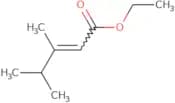
CAS:<p>Versatile small molecule scaffold</p>Formula:C9H16O2Purity:Min. 95%Molecular weight:156.22 g/mol3-[(4-Methoxyphenyl)amino]propanamide
CAS:<p>Versatile small molecule scaffold</p>Formula:C10H14N2O2Purity:Min. 95%Molecular weight:194.23 g/mol3-(Phenylamino)propanamide
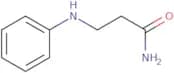
CAS:<p>3-(Phenylamino)propanamide is an alkali agent that is used to hydrolyze esters and dihydrouracils. 3-(Phenylamino)propanamide is a potent inhibitor of the enzyme uracil-DNA glycosylase, which repairs DNA damage caused by UV light or other forms of radiation. This drug also inhibits the enzyme DNA polymerase, which is needed to replicate damaged DNA. The inhibition of these enzymes leads to cell death.</p>Formula:C9H12N2OPurity:Min. 95%Molecular weight:164.2 g/molN,5-Dimethyl-1,3-thiazolidin-2-imine
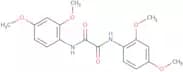
CAS:<p>Versatile small molecule scaffold</p>Formula:C5H10N2SPurity:Min. 95%Molecular weight:130.21 g/molN,N'-Bis(2,4-dimethoxyphenyl)ethanediamide
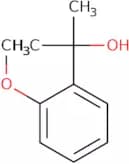
CAS:<p>Versatile small molecule scaffold</p>Formula:C18H20N2O6Purity:Min. 95%Molecular weight:360.4 g/mol2-(2-Methoxyphenyl)propan-2-ol
CAS:<p>Versatile small molecule scaffold</p>Formula:C10H14O2Purity:Min. 95%Molecular weight:166.22 g/molrac-2-[(1R,2S)-2-Phenylcyclopropyl]acetic acid
CAS:<p>Versatile small molecule scaffold</p>Formula:C11H12O2Purity:Min. 95%Molecular weight:176.2 g/molEthyl 3-[(2-aminophenyl)amino]-2-cyanoprop-2-enoate
CAS:<p>Versatile small molecule scaffold</p>Formula:C12H13N3O2Purity:Min. 95%Molecular weight:231.25 g/mol3-Bromobut-3-enoic acid
CAS:<p>Versatile small molecule scaffold</p>Formula:C4H5BrO2Purity:Min. 95%Molecular weight:164.99 g/molEthyl 3-bromobut-3-enoate
CAS:<p>Ethyl 3-bromobut-3-enoate is a synthetic compound that can be used to synthesize a variety of organic compounds. It is prepared by the reaction of ethyl bromoacetate and butyraldehyde in the presence of an acid catalyst. This product has been shown to have anticancer activity against human epidermoid carcinoma cells. The reactivity of this compound has been demonstrated using NMR spectroscopy, which showed that it undergoes highly stereoselective reactions with chloride ions. Ethyl 3-bromobut-3-enoate also reacts rapidly with imines and tissue culture cells, making it useful for research into these types of reactions.</p>Formula:C6H9BrO2Purity:Min. 95%Molecular weight:193.04 g/mol4-(3-Methyl-1-benzothiophen-2-yl)-1,3-thiazol-2-amine
CAS:<p>Versatile small molecule scaffold</p>Formula:C12H10N2S2Purity:Min. 95%Molecular weight:246.4 g/mol2H-Pyrido[2,3-d][1,3]oxazine-2,4(1H)-dione
CAS:<p>2H-Pyrido[2,3-d][1,3]oxazine-2,4(1H)-dione is a molecule with the chemical formula C8H7N3O2. It has an exothermic reaction with amines and hydroxyl groups. The carbanion of 2H-pyrido[2,3-d][1,3]oxazine-2,4(1H)-dione is a nucleophile that can be used to form organic compounds with alkali metals such as sodium hypochlorite or triphosgene. This molecule also acts as a diagnostic agent for nitro compounds by forming a red dye called 2h-pyrido[2,3-d][1,3]oxazine-2,4(1H)-dione dianion.</p>Formula:C7H4N2O3Purity:Min. 95%Molecular weight:164.12 g/molPyrido[2,3-d]pyrimidine-2,4(1h,3h)-dione
CAS:<p>Pyrido[2,3-d]pyrimidine-2,4(1h,3h)-dione is a synthetic molecule that has been shown to inhibit the production of necrosis factor alpha (TNFα) in human monocytes. Pyrido[2,3-d]pyrimidine-2,4(1h,3h)-dione has also been shown to cause DNA cleavage mediated by an aldehyde group. This chemical is being developed as an inhibitor of tumor necrosis factor and other cytokines with similar activities. Pyrido[2,3-d]pyrimidine-2,4(1h,3h)-dione is under investigation for its potential to prevent breast cancer metastasis. The molecule has been optimized for binding affinity and selectivity against TNFα and other cytokines with similar activity. Pyrido[2,3-d]pyrimidine-2,4(1h,3h)-d</p>Formula:C7H5N3O2Purity:Min. 95%Molecular weight:163.14 g/mol1-Cycloheptylpiperazine
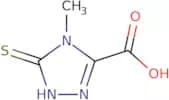
CAS:<p>1-Cycloheptylpiperazine is a drug substance that can be used as an active ingredient in medicines. It is used to treat inflammatory diseases, such as psoriasis, and neurodegenerative diseases, such as Parkinson's disease. 1-Cycloheptylpiperazine has a liposomal formulation and is soluble in organic solvents. The compound has been shown to be bioactive when administered at high doses and may have therapeutic effects on cardiovascular diseases, cancer and adp-ribose metabolism.</p>Formula:C11H22N2Purity:Min. 95%Molecular weight:182.31 g/mol4-Methyl-5-sulfanyl-4H-1,2,4-triazole-3-carboxylic acid
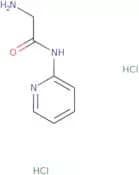
CAS:<p>Versatile small molecule scaffold</p>Formula:C4H5N3O2SPurity:Min. 95%Molecular weight:159.17 g/mol2-Amino-N-(pyridin-2-yl)acetamide dihydrochloride
CAS:<p>Versatile small molecule scaffold</p>Formula:C7H11Cl2N3OPurity:Min. 95%Molecular weight:224.08 g/mol3-Amino-N-(pyridin-3-yl)propanamide dihydrochloride
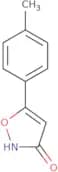
CAS:<p>Versatile small molecule scaffold</p>Formula:C8H13Cl2N3OPurity:Min. 95%Molecular weight:238.11 g/mol5-(4-Methylphenyl)-1,2-oxazol-3-ol
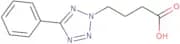
CAS:<p>Versatile small molecule scaffold</p>Formula:C10H9NO2Purity:Min. 95%Molecular weight:175.18 g/mol4-(5-Phenyl-2H-1,2,3,4-tetrazol-2-yl)butanoic acid
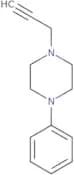
CAS:<p>Versatile small molecule scaffold</p>Formula:C11H12N4O2Purity:Min. 95%Molecular weight:232.24 g/mol1-phenyl-4-(prop-2-yn-1-yl)piperazine
CAS:<p>1-phenyl-4-(prop-2-yn-1-yl)piperazine is a dihalogenated compound with an azide substituent. It was first synthesized from potassium t-butoxide and cyclopropane in the presence of acetic acid. The synthesis was then completed by adding the 1,4-dihaloethane to the intermediate. This reaction proceeds via a sequential, two step cycloaddition reaction that produces a triazole ring system. This compound has been shown to be effective against Giardia lamblia trophozoites and Coccidia trophozoites. 1-phenyl-4-(prop-2-yn-1-yl)piperazine also has antihistamine activity, which may be due to its inhibition of histamine release from mast cells or basophils. It is also capable of inhibiting proliferation of human prostate cancer cells in culture at low concentrations and can induce apoptosis</p>Formula:C13H16N2Purity:Min. 95%Molecular weight:200.27 g/mol1-Hexyl-2-thiourea
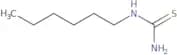
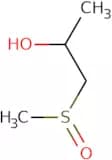
CAS:<p>1-Hexyl-2-thiourea is an aromatic hydrocarbon that has been used as an antidiabetic agent, although its mechanism of action is not well defined. This drug binds to the carboxy group in the receptor site of amines and blocks their activity, which may be related to its antidepressant effects. The reactive nature of 1-hexyl-2-thiourea means it can react with other compounds to form a variety of products, including pharmaceutical preparations.</p>Formula:C7H16N2SPurity:Min. 95%Molecular weight:160.28 g/mol1-Methanesulfinylpropan-2-ol
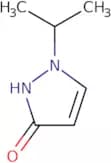
CAS:<p>Versatile small molecule scaffold</p>Formula:C4H10O2SPurity:Min. 95%Molecular weight:122.19 g/mol1-Isopropyl-1,2-dihydro-3H-pyrazol-3-one
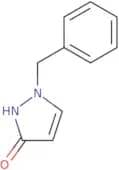
CAS:<p>Versatile small molecule scaffold</p>Formula:C6H10N2OPurity:Min. 95%Molecular weight:126.16 g/mol1-Benzyl-2,3-dihydro-1H-pyrazol-3-one
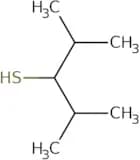
CAS:<p>Versatile small molecule scaffold</p>Formula:C10H10N2OPurity:Min. 95%Molecular weight:174.2 g/mol2,4-Dimethylpentane-3-thiol
CAS:<p>Versatile small molecule scaffold</p>Formula:C7H16SPurity:Min. 95%Molecular weight:132.27 g/mol2-Bromo-5H,6H,7H,8H,9H,10H,11H-cycloocta[b]indole
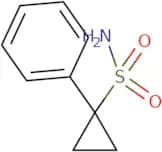
CAS:<p>Versatile small molecule scaffold</p>Formula:C14H16BrNPurity:Min. 95%Molecular weight:278.19 g/mol1-Phenylcyclopropanesulfonamide
CAS:<p>1-Phenylcyclopropanesulfonamide (PCPS) is a drug that binds to the P2Y12 receptor and inhibits platelet aggregation. It has been shown to be effective in reducing bleeding time, which may be due to its ability to inhibit the activation of thrombin. PCPS also has antithrombotic properties, and has been shown to inhibit collagen-induced platelet aggregation. This drug also binds to the P2Y12 receptor with high affinity, but it does not have any effect on agonist-mediated responses.</p>Formula:C9H11NO2SPurity:Min. 95%Molecular weight:197.26 g/mol1-Azabicyclo[2.2.1]heptane-7-carboxylic acid hydrochloride
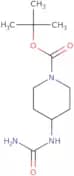
CAS:<p>Versatile small molecule scaffold</p>Formula:C7H12ClNO2Purity:Min. 95%Molecular weight:177.63 g/moltert-Butyl 4-(carbamoylamino)piperidine-1-carboxylate
CAS:<p>Versatile small molecule scaffold</p>Formula:C11H21N3O3Purity:Min. 95%Molecular weight:243.3 g/molN-[3,5-Bis(trifluoromethyl)phenyl]-2-bromopropanamide
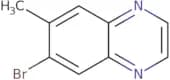
CAS:<p>Versatile small molecule scaffold</p>Formula:C11H8BrF6NOPurity:Min. 95%Molecular weight:364.08 g/mol6-Bromo-7-methylquinoxaline
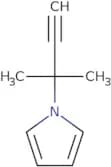
CAS:<p>6-Bromo-7-methylquinoxaline is a halogenated aromatic compound that can be used as an oxidizing agent. It reacts with the methyl group of dimethylbenzene to form a chlorinated product. 6-Bromo-7-methylquinoxaline also reacts with bisulphite to form peracetic acid. This chemical may also be used in the synthesis of quinoxalines by reacting with diamino.<br>6-Bromo-7-methylquinoxaline is oxidized by hydrogen peroxide to form the glyoxal and peroxide products, which are then reacted with methylquinaldine to produce diamino and quinoxalines.</p>Formula:C9H7BrN2Purity:Min. 95%Molecular weight:223.08 g/mol1-(2-Methylbut-3-yn-2-yl)-1H-pyrrole
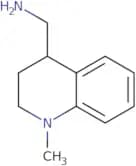
CAS:<p>Versatile small molecule scaffold</p>Formula:C9H11NPurity:Min. 95%Molecular weight:133.19 g/mol(1-Methyl-1,2,3,4-tetrahydroquinolin-4-yl)methanamine
CAS:<p>Versatile small molecule scaffold</p>Formula:C11H16N2Purity:Min. 95%Molecular weight:176.26 g/mol2-Methyl-4-{[(oxan-2-ylmethyl)amino]methyl}aniline
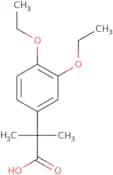
CAS:<p>Versatile small molecule scaffold</p>Formula:C14H22N2OPurity:Min. 95%Molecular weight:234.34 g/mol2-(3,4-Diethoxyphenyl)-2-methylpropanoic acid
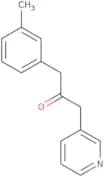
CAS:<p>Versatile small molecule scaffold</p>Formula:C14H20O4Purity:Min. 95%Molecular weight:252.31 g/mol1-(3-Methylphenyl)-3-(pyridin-3-yl)propan-2-one
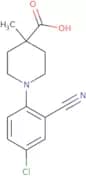
CAS:<p>Versatile small molecule scaffold</p>Formula:C15H15NOPurity:Min. 95%Molecular weight:225.28 g/mol1-(4-Chloro-2-cyanophenyl)-4-methylpiperidine-4-carboxylic acid
CAS:<p>Versatile small molecule scaffold</p>Formula:C14H15ClN2O2Purity:Min. 95%Molecular weight:278.73 g/mol3-{[(4-Methylpyrimidin-2-yl)amino]methyl}benzoic acid
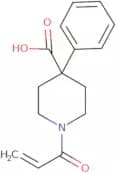
CAS:<p>Versatile small molecule scaffold</p>Formula:C13H13N3O2Purity:Min. 95%Molecular weight:243.26 g/mol4-Phenyl-1-(prop-2-enoyl)piperidine-4-carboxylic acid
CAS:<p>Versatile small molecule scaffold</p>Formula:C15H17NO3Purity:Min. 95%Molecular weight:259.3 g/mol4-({[(4-Bromothiophen-2-yl)methyl](methyl)amino}methyl)-N-methylpyridin-2-amine
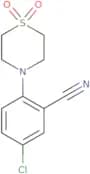
CAS:<p>Versatile small molecule scaffold</p>Formula:C13H16BrN3SPurity:Min. 95%Molecular weight:326.26 g/mol5-Chloro-2-(1,1-dioxo-1λ⁶-thiomorpholin-4-yl)benzonitrile
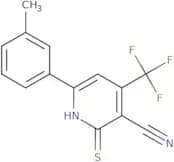
CAS:<p>Versatile small molecule scaffold</p>Formula:C11H11ClN2O2SPurity:Min. 95%Molecular weight:270.74 g/mol6-(3-Methylphenyl)-2-sulfanyl-4-(trifluoromethyl)pyridine-3-carbonitrile
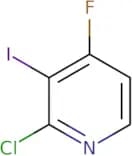
CAS:<p>Versatile small molecule scaffold</p>Formula:C14H9F3N2SPurity:Min. 95%Molecular weight:294.3 g/mol2-chloro-4-fluoro-3-iodopyridine
CAS:<p>Versatile small molecule scaffold</p>Formula:C5H2ClFINPurity:Min. 95%Molecular weight:257.4 g/mol4-{[2-(4-Methyl-1,3-thiazol-2-yl)ethyl]amino}benzoic acid
CAS:<p>Versatile small molecule scaffold</p>Formula:C13H14N2O2SPurity:Min. 95%Molecular weight:262.3 g/mol6-Amino-1-[(4-methylcyclohexyl)methyl]-1,2,3,4-tetrahydropyrimidine-2,4-dione
CAS:<p>Versatile small molecule scaffold</p>Formula:C12H19N3O2Purity:Min. 95%Molecular weight:237.3 g/mol2-[(Oxan-4-yloxy)methyl]benzoic acid
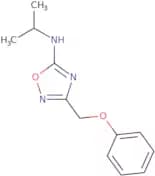
CAS:<p>Versatile small molecule scaffold</p>Formula:C13H16O4Purity:Min. 95%Molecular weight:236.26 g/mol3-(Phenoxymethyl)-N-(propan-2-yl)-1,2,4-oxadiazol-5-amine
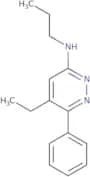
CAS:<p>Versatile small molecule scaffold</p>Formula:C12H15N3O2Purity:Min. 95%Molecular weight:233.27 g/mol5-Ethyl-6-phenyl-N-propylpyridazin-3-amine
CAS:<p>Versatile small molecule scaffold</p>Formula:C15H19N3Purity:Min. 95%Molecular weight:241.33 g/mol6-(2-Methylbutan-2-yl)spiro[2.5]octane-1-carboxylic acid
CAS:<p>Versatile small molecule scaffold</p>Formula:C14H24O2Purity:Min. 95%Molecular weight:224.34 g/mol1-[2-(2-Chloroethoxy)ethyl]-1,2-dihydropyrimidin-2-one
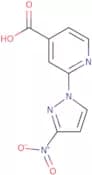
CAS:<p>Versatile small molecule scaffold</p>Formula:C8H11ClN2O2Purity:Min. 95%Molecular weight:202.64 g/mol2-(3-Nitro-1H-pyrazol-1-yl)pyridine-4-carboxylic acid
CAS:<p>Versatile small molecule scaffold</p>Formula:C9H6N4O4Purity:Min. 95%Molecular weight:234.17 g/molN3-PEG2-CH2CH2COOtBu
CAS:<p>N3-PEG2-CH2CH2COOtBu is a PEG compound with two different functional groups (also known as heterobifunctional). Unlike homobifunctional PEG compounds (same functional group on both ends), this type of compounds are more versatile as have two different anchor points. N3-PEG2-CH2CH2COOtBu is used as a linker and spacer to add a PEG moiety, via pegylation (a bioconjugation technique) to proteins, peptides, oligonucleotides, small molecules and nanoparticles.</p>Formula:C11H21N3O4Purity:Min. 95%Molecular weight:259.3 g/mol1-[5-(Trifluoromethyl)-1,3,4-thiadiazol-2-yl]piperazine hydrochloride
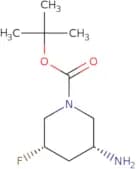
CAS:<p>Versatile small molecule scaffold</p>Formula:C7H10ClF3N4SPurity:Min. 95%Molecular weight:274.7 g/mol(3R,5S)-1-Boc-3-amino-5-fluoropiperidine
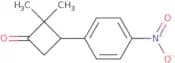
CAS:<p>Versatile small molecule scaffold</p>Formula:C10H19FN2O2Purity:Min. 95%Molecular weight:218.27 g/mol2,2-Dimethyl-3-(4-nitrophenyl)cyclobutan-1-one
CAS:<p>Versatile small molecule scaffold</p>Formula:C12H13NO3Purity:Min. 95%Molecular weight:219.24 g/molN-[(3-Trifluoromethyl)phenyl)propyl] Cinacalcet
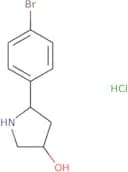
CAS:<p>Versatile small molecule scaffold</p>Formula:C32H31F6NPurity:Min. 95%Molecular weight:543.59 g/mol5-(4-Bromophenyl)pyrrolidin-3-ol hydrochloride
CAS:<p>Versatile small molecule scaffold</p>Formula:C10H13BrClNOPurity:Min. 95%Molecular weight:278.57 g/mol2-Bromo-5-[4-(propan-2-yl)phenyl]-1H-imidazole
CAS:<p>Versatile small molecule scaffold</p>Formula:C12H13BrN2Purity:Min. 95%Molecular weight:265.15 g/mol4-(2-Fluoropropan-2-yl)piperidine hydrochloride
CAS:<p>Versatile small molecule scaffold</p>Formula:C8H17ClFNPurity:Min. 95%Molecular weight:181.7 g/mol3-[2-(Dimethylamino)phenyl]propan-1-ol
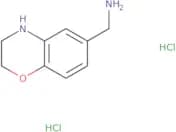
CAS:<p>Versatile small molecule scaffold</p>Formula:C11H17NOPurity:Min. 95%Molecular weight:179.3 g/mol3,4-Dihydro-2H-1,4-benzoxazine-6-methanamine Hydrochloride (1:2)
CAS:<p>Versatile small molecule scaffold</p>Formula:C9H12N2O·2HClPurity:Min. 95%Molecular weight:237.13 g/mol6-Fluoro-1-benzofuran-5-carboxylic acid
CAS:<p>Versatile small molecule scaffold</p>Formula:C9H5FO3Purity:Min. 95%Molecular weight:180.13 g/mol1-(2,6-Difluorophenyl)cyclopentan-1-amine hydrochloride
CAS:<p>Versatile small molecule scaffold</p>Formula:C11H14ClF2NPurity:Min. 95%Molecular weight:233.68 g/mol9-Oxa-1-azaspiro[5.5]undecane hydrochloride
CAS:<p>Versatile small molecule scaffold</p>Formula:C9H18ClNOPurity:Min. 95%Molecular weight:191.7 g/mol(5-Cyclopropyl-1,2-oxazol-4-yl)methanol
CAS:<p>Versatile small molecule scaffold</p>Formula:C7H9NO2Purity:Min. 95%Molecular weight:139.15 g/mol5-Cyclobutyl-1,2-oxazole-3-carbaldehyde
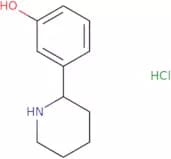
CAS:<p>Versatile small molecule scaffold</p>Formula:C8H9NO2Purity:Min. 95%Molecular weight:151.16 g/mol3-(Piperidin-2-yl)phenol hydrochloride
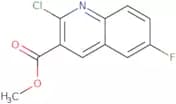
CAS:<p>Versatile small molecule scaffold</p>Formula:C11H16ClNOPurity:Min. 95%Molecular weight:213.7 g/molMethyl 2-chloro-6-fluoroquinoline-3-carboxylate
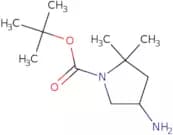
CAS:<p>Versatile small molecule scaffold</p>Formula:C11H7ClFNO2Purity:Min. 95%Molecular weight:239.63 g/moltert-Butyl 4-amino-2,2-dimethylpyrrolidine-1-carboxylate
CAS:<p>Versatile small molecule scaffold</p>Formula:C11H22N2O2Purity:Min. 95%Molecular weight:214.3 g/mol3-(2,2-Difluorocyclopropyl)benzoic acid
CAS:<p>Versatile small molecule scaffold</p>Formula:C10H8F2O2Purity:Min. 95%Molecular weight:198.17 g/mol1-Acetyl-N,N-dimethylcyclopropane-1-sulfonamide
CAS:<p>Versatile small molecule scaffold</p>Formula:C7H13NO3SPurity:Min. 95%Molecular weight:191.2 g/mol5-Chlorothieno[3,2-b]pyridine-2-carboxylic acid
CAS:<p>Versatile small molecule scaffold</p>Formula:C8H4ClNO2SPurity:Min. 95%Molecular weight:213.64 g/mol3-Cyclopropyl-[1,2,4]triazolo[4,3-a]pyridin-6-ol
CAS:<p>Versatile small molecule scaffold</p>Formula:C9H9N3OPurity:Min. 95%Molecular weight:175.19 g/mol2-(Trifluoromethyl)bicyclo[2.2.1]heptane-2-carboxylic acid
CAS:<p>Versatile small molecule scaffold</p>Formula:C9H11F3O2Purity:Min. 95%Molecular weight:208.18 g/molEthyl 2-amino-[1,3]thiazolo[4,5-b]pyridine-6-carboxylate
CAS:<p>Versatile small molecule scaffold</p>Formula:C9H9N3O2SPurity:Min. 95%Molecular weight:223.25 g/mol{[1,2,4]Triazolo[1,5-a]pyrimidin-2-yl}methanamine hydrochloride
CAS:<p>Versatile small molecule scaffold</p>Formula:C6H8ClN5Purity:Min. 95%Molecular weight:185.61 g/mol3-Ethyl-1-oxa-3,8-diazaspiro[4.5]decan-2-one hydrochloride
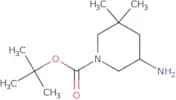
CAS:<p>Versatile small molecule scaffold</p>Formula:C9H17ClN2O2Purity:Min. 95%Molecular weight:220.69 g/moltert-Butyl 5-amino-3,3-dimethylpiperidine-1-carboxylate
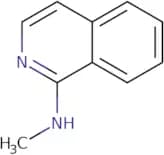
CAS:<p>Versatile small molecule scaffold</p>Formula:C12H24N2O2Purity:Min. 95%Molecular weight:228.33 g/mol1-(Methylamino)isoquinoline
CAS:<p>1-(Methylamino)isoquinoline (1-MAIQ) is a methylamine that can be synthesized by amination of anilines with potassium permanganate. 1-MAIQ has been shown to form n-oxides, which are compounds in which the nitro group is bonded to the oxygen atom of the oxo group. Nitro groups are electron acceptors and can be used as reagents for amination reactions. 1-MAIQ reacts with potassium permanganate to form a purple solution, and its regioselectivity increases in acidic conditions.</p>Formula:C10H10N2Purity:Min. 95%Molecular weight:158.2 g/mol2-(1H-Indol-7-yl)ethan-1-amine
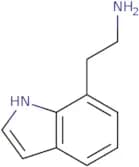
CAS:Controlled Product<p>Versatile small molecule scaffold</p>Formula:C10H12N2Purity:Min. 95%Molecular weight:160.22 g/mol1-(3-Methylbutyl)-2,5-dihydro-1H-pyrrole-2,5-dione
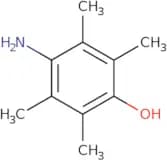
CAS:<p>Versatile small molecule scaffold</p>Formula:C9H13NO2Purity:Min. 95%Molecular weight:167.2 g/mol4-Amino-2,3,5,6-tetramethylphenol
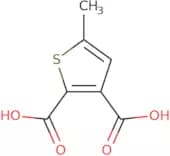
CAS:<p>Versatile small molecule scaffold</p>Formula:C10H15NOPurity:Min. 95%Molecular weight:165.23 g/mol5-Methylthiophene-2,3-dicarboxylic acid
CAS:<p>Versatile small molecule scaffold</p>Formula:C7H6O4SPurity:Min. 95%Molecular weight:186.19 g/mol2-(2-Methoxy-5-methylphenyl)ethan-1-amine
CAS:Controlled Product<p>Versatile small molecule scaffold</p>Formula:C10H15NOPurity:Min. 95%Molecular weight:165.23 g/mol1-Cyclohexylpyrrolidin-3-amine
CAS:<p>1-Cyclohexylpyrrolidin-3-amine is a chemical compound that acts as an antagonist of the chemokine receptor CXCR2. It has been shown to reduce inflammation and its associated symptoms in animal models. 1-Cyclohexylpyrrolidin-3-amine binds to the chemokine receptor and prevents it from binding to chemokines, which are inflammatory mediators. The inhibition of these receptors blocks the migration of cells towards sites of inflammation, reducing the symptoms associated with this condition. This compound also inhibits the activity of other G protein coupled receptors, such as muscarinic acetylcholine receptors, dopamine receptors (D1), serotonin receptors (5HT2A), and histamine H1 receptors.</p>Formula:C10H20N2Purity:Min. 95%Molecular weight:168.28 g/mol3-Amino-1-(azepan-1-yl)propan-1-one
CAS:<p>Versatile small molecule scaffold</p>Formula:C9H18N2OPurity:Min. 95%Molecular weight:170.25 g/mol3-Amino-1-(4-chlorophenyl)propan-1-ol
CAS:<p>Versatile small molecule scaffold</p>Formula:C9H12ClNOPurity:Min. 95%Molecular weight:185.65 g/mol2-(1,3-benzothiazol-2-yl)ethan-1-ol
CAS:<p>Versatile small molecule scaffold</p>Formula:C9H9NOSPurity:Min. 95%Molecular weight:179.24 g/mol4-Hydroxy-3-(propan-2-yl)benzonitrile
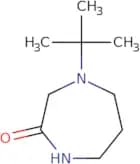
CAS:<p>Versatile small molecule scaffold</p>Formula:C10H11NOPurity:Min. 95%Molecular weight:161.2 g/mol4-tert-Butyl-1,4-diazepan-2-one
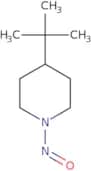
CAS:<p>Versatile small molecule scaffold</p>Formula:C9H18N2OPurity:Min. 95%Molecular weight:170.25 g/mol4-tert-Butyl-1-nitrosopiperidine
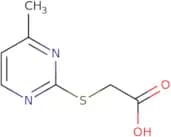
CAS:<p>Versatile small molecule scaffold</p>Formula:C9H18N2OPurity:Min. 95%Molecular weight:170.25 g/mol2-(Carboxymethylthio)-4-methylpyrimidine
CAS:<p>Versatile small molecule scaffold</p>Formula:C7H8N2O2SPurity:Min. 95%Molecular weight:184.22 g/mol2-[6-(Cyanomethyl)pyridin-2-yl]acetonitrile
CAS:<p>Versatile small molecule scaffold</p>Formula:C9H7N3Purity:Min. 95%Molecular weight:157.17 g/mol1,4-Dioxaspiro[4.6]undecan-2-ylmethanamine
CAS:<p>Versatile small molecule scaffold</p>Formula:C10H19NO2Purity:Min. 95%Molecular weight:185.26 g/mol6-Chloro-1,1-dioxo-1,2-dihydro-1-benzo[d]isothiazol-3-one
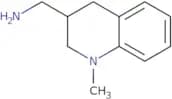
CAS:<p>6-Chloro-1,1-dioxo-1,2-dihydro-1-benzo[d]isothiazol-3-one is a chemical used for the treatment of bladder cancer. It inhibits the growth of cancer cells by interacting with DNA and inhibiting its synthesis. 6CDAI has been shown to be effective in treating refluxing bladder cancer, but has also been shown to have carcinogenic properties. This drug is metabolized mainly by hydroxylation and then conjugation with glucuronic acid or sulfate.</p>Formula:C7H4ClNO3SPurity:Min. 95%Molecular weight:217.62 g/mol(1-Methyl-1,2,3,4-tetrahydroquinolin-3-yl)methanamine
CAS:<p>Versatile small molecule scaffold</p>Formula:C11H16N2Purity:Min. 95%Molecular weight:176.26 g/mol3-(Morpholin-2-yl)phenol
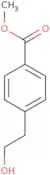
CAS:<p>Versatile small molecule scaffold</p>Formula:C10H13NO2Purity:Min. 95%Molecular weight:179.22 g/molMethyl 4-(2-hydroxyethyl)benzoate
CAS:<p>Versatile small molecule scaffold</p>Formula:C10H12O3Purity:Min. 95%Molecular weight:180.2 g/mol2-Phenylmethanesulfonylethan-1-amine
CAS:<p>Versatile small molecule scaffold</p>Formula:C9H13NO2SPurity:Min. 95%Molecular weight:199.27 g/mol


![3-[(4-Methoxyphenyl)amino]propanamide](/_next/image/?url=https%3A%2Fstatic.cymitquimica.com%2Fproducts%2F3D%2Fthumb-webp%2FWAA01746.webp&w=3840&q=75)

![rac-2-[(1R,2S)-2-Phenylcyclopropyl]acetic acid](/_next/image/?url=https%3A%2Fstatic.cymitquimica.com%2Fproducts%2F3D%2Fthumb-webp%2FWAA02466.webp&w=3840&q=75)
![Ethyl 3-[(2-aminophenyl)amino]-2-cyanoprop-2-enoate](/_next/image/?url=https%3A%2Fstatic.cymitquimica.com%2Fproducts%2F3D%2Fthumb-webp%2FWAA02547.webp&w=3840&q=75)


![2H-Pyrido[2,3-d][1,3]oxazine-2,4(1H)-dione](/_next/image/?url=https%3A%2Fstatic.cymitquimica.com%2Fproducts%2F3D%2Fthumb-webp%2FWAA03863.webp&w=3840&q=75)
![Pyrido[2,3-d]pyrimidine-2,4(1h,3h)-dione](/_next/image/?url=https%3A%2Fstatic.cymitquimica.com%2Fproducts%2F3D%2Fthumb-webp%2FWAA03866.webp&w=3840&q=75)


![2-Bromo-5H,6H,7H,8H,9H,10H,11H-cycloocta[b]indole](/_next/image/?url=https%3A%2Fstatic.cymitquimica.com%2Fproducts%2F3D%2Fthumb-webp%2FWAB03803.webp&w=3840&q=75)
![1-Azabicyclo[2.2.1]heptane-7-carboxylic acid hydrochloride](/_next/image/?url=https%3A%2Fstatic.cymitquimica.com%2Fproducts%2F3D%2Fthumb-webp%2FWAB05594.webp&w=3840&q=75)
![N-[3,5-Bis(trifluoromethyl)phenyl]-2-bromopropanamide](/_next/image/?url=https%3A%2Fstatic.cymitquimica.com%2Fproducts%2F3D%2Fthumb-webp%2FWAB49742.webp&w=3840&q=75)
![2-Methyl-4-{[(oxan-2-ylmethyl)amino]methyl}aniline](/_next/image/?url=https%3A%2Fstatic.cymitquimica.com%2Fproducts%2F3D%2Fthumb-webp%2FWAC00436.webp&w=3840&q=75)
![3-{[(4-Methylpyrimidin-2-yl)amino]methyl}benzoic acid](/_next/image/?url=https%3A%2Fstatic.cymitquimica.com%2Fproducts%2F3D%2Fthumb-webp%2FWAC18938.webp&w=3840&q=75)
amino}methyl)-N-methylpyridin-2-amine](/_next/image/?url=https%3A%2Fstatic.cymitquimica.com%2Fproducts%2F3D%2Fthumb-webp%2FWAC45174.webp&w=3840&q=75)
![4-{[2-(4-Methyl-1,3-thiazol-2-yl)ethyl]amino}benzoic acid](/_next/image/?url=https%3A%2Fstatic.cymitquimica.com%2Fproducts%2F3D%2Fthumb-webp%2FWAC47886.webp&w=3840&q=75)
![6-Amino-1-[(4-methylcyclohexyl)methyl]-1,2,3,4-tetrahydropyrimidine-2,4-dione](/_next/image/?url=https%3A%2Fstatic.cymitquimica.com%2Fproducts%2F3D%2Fthumb-webp%2FWAC47995.webp&w=3840&q=75)
![2-[(Oxan-4-yloxy)methyl]benzoic acid](/_next/image/?url=https%3A%2Fstatic.cymitquimica.com%2Fproducts%2F3D%2Fthumb-webp%2FWAC54980.webp&w=3840&q=75)
![6-(2-Methylbutan-2-yl)spiro[2.5]octane-1-carboxylic acid](/_next/image/?url=https%3A%2Fstatic.cymitquimica.com%2Fproducts%2F3D%2Fthumb-webp%2FWAC65984.webp&w=3840&q=75)
![1-[2-(2-Chloroethoxy)ethyl]-1,2-dihydropyrimidin-2-one](/_next/image/?url=https%3A%2Fstatic.cymitquimica.com%2Fproducts%2F3D%2Fthumb-webp%2FWAC67587.webp&w=3840&q=75)

![1-[5-(Trifluoromethyl)-1,3,4-thiadiazol-2-yl]piperazine hydrochloride](/_next/image/?url=https%3A%2Fstatic.cymitquimica.com%2Fproducts%2F3D%2Fthumb-webp%2FWAC73867.webp&w=3840&q=75)
![N-[(3-Trifluoromethyl)phenyl)propyl] Cinacalcet](/_next/image/?url=https%3A%2Fstatic.cymitquimica.com%2Fproducts%2F3D%2Fthumb-webp%2FWAC93015.webp&w=3840&q=75)
![2-Bromo-5-[4-(propan-2-yl)phenyl]-1H-imidazole](/_next/image/?url=https%3A%2Fstatic.cymitquimica.com%2Fproducts%2F3D%2Fthumb-webp%2FWAD19215.webp&w=3840&q=75)
![3-[2-(Dimethylamino)phenyl]propan-1-ol](/_next/image/?url=https%3A%2Fstatic.cymitquimica.com%2Fproducts%2F3D%2Fthumb-webp%2FWAD34547.webp&w=3840&q=75)
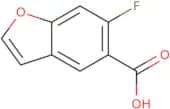
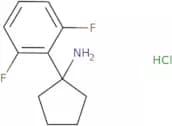
![9-Oxa-1-azaspiro[5.5]undecane hydrochloride](/_next/image/?url=https%3A%2Fstatic.cymitquimica.com%2Fproducts%2F3D%2Fthumb-webp%2FWAD45421.webp&w=3840&q=75)
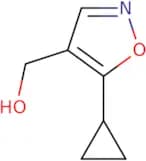
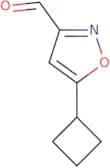


![5-Chlorothieno[3,2-b]pyridine-2-carboxylic acid](/_next/image/?url=https%3A%2Fstatic.cymitquimica.com%2Fproducts%2F3D%2Fthumb-webp%2FWAD66909.webp&w=3840&q=75)
![3-Cyclopropyl-[1,2,4]triazolo[4,3-a]pyridin-6-ol](/_next/image/?url=https%3A%2Fstatic.cymitquimica.com%2Fproducts%2F3D%2Fthumb-webp%2FWAD71752.webp&w=3840&q=75)
![2-(Trifluoromethyl)bicyclo[2.2.1]heptane-2-carboxylic acid](/_next/image/?url=https%3A%2Fstatic.cymitquimica.com%2Fproducts%2F3D%2Fthumb-webp%2FWAD75294.webp&w=3840&q=75)
![Ethyl 2-amino-[1,3]thiazolo[4,5-b]pyridine-6-carboxylate](/_next/image/?url=https%3A%2Fstatic.cymitquimica.com%2Fproducts%2F3D%2Fthumb-webp%2FWAD75311.webp&w=3840&q=75)
![{[1,2,4]Triazolo[1,5-a]pyrimidin-2-yl}methanamine hydrochloride](/_next/image/?url=https%3A%2Fstatic.cymitquimica.com%2Fproducts%2F3D%2Fthumb-webp%2FWAD82595.webp&w=3840&q=75)
![3-Ethyl-1-oxa-3,8-diazaspiro[4.5]decan-2-one hydrochloride](/_next/image/?url=https%3A%2Fstatic.cymitquimica.com%2Fproducts%2F3D%2Fthumb-webp%2FWAD91528.webp&w=3840&q=75)



![2-[6-(Cyanomethyl)pyridin-2-yl]acetonitrile](/_next/image/?url=https%3A%2Fstatic.cymitquimica.com%2Fproducts%2F3D%2Fthumb-webp%2FWBA13338.webp&w=3840&q=75)
![1,4-Dioxaspiro[4.6]undecan-2-ylmethanamine](/_next/image/?url=https%3A%2Fstatic.cymitquimica.com%2Fproducts%2F3D%2Fthumb-webp%2FWBA14557.webp&w=3840&q=75)
![6-Chloro-1,1-dioxo-1,2-dihydro-1-benzo[d]isothiazol-3-one](/_next/image/?url=https%3A%2Fstatic.cymitquimica.com%2Fproducts%2F3D%2Fthumb-webp%2FWBA14910.webp&w=3840&q=75)