


Building Blocks
Subcategories of "Building Blocks"
- Boronic Acids & Boronic Acid Derivatives(5,778 products)
- Chiral Building Blocks(1,243 products)
- Hydrocarbon Building Blocks(6,099 products)
- Organic Building Blocks(61,038 products)
Found 205376 products of "Building Blocks"
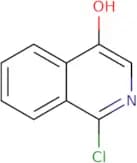
1-Chloroisoquinolin-4-ol
CAS:1-Chloroisoquinolin-4-ol is a phenylpyrimidine with anti-inflammatory properties. It is used in the treatment of sensitivity and mediated diseases, such as osteoarthritis, rheumatoid arthritis, and ankylosing spondylitis. 1-Chloroisoquinolin-4-ol inhibits the enzymatic activity of matrix metalloproteinases (MMPs), which are enzymes that break down collagen and other proteins in the body. The inhibition of MMPs by 1-chloroisoquinolin-4-ol leads to reduced inflammation and pain. This compound is also an effective inhibitor of the activities of chloride channels involved in acid secretion by cells in the stomach lining, thus inhibiting acid production. 1-Chloroisoquinolin-4-ol has been shown to have anticholesterolemic effects on liver cells due to its ability to inhibit cholesterol synthesis through inhibition of HMG CoA
Formula:C9H6ClNOPurity:Min. 95%Molecular weight:179.6 g/molRef: 3D-DAA33643
Discontinued product2-(5-Methyl-1H-pyrazol-1-yl)aniline
CAS:Versatile small molecule scaffold
Formula:C10H11N3Purity:Min. 95%Molecular weight:173.21 g/molRef: 3D-CWB58305
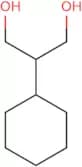
Discontinued product2-Cyclohexylpropane-1,3-diol
CAS:2-Cyclohexylpropane-1,3-diol is a substrate for porcine pancreatic lipase. It is hydrolyzed by this enzyme, which is stereoselective and enantioselective. 2-Cyclohexylpropane-1,3-diol also has properties that are similar to angiotensin, a peptide that is secreted by the human body. This substance can be used as a solvent for other organic compounds in chemical reactions.
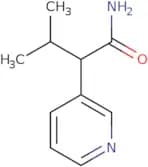
Formula:C9H18O2Purity:Min. 95%Molecular weight:158.24 g/mol3-Methyl-2-(pyridin-3-yl)butanamide
CAS:Versatile small molecule scaffold
Formula:C10H14N2OPurity:Min. 95%Molecular weight:178.23 g/molRef: 3D-BFC36176
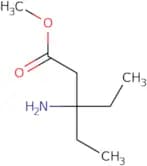
Discontinued productMethyl 3-amino-3-ethylpentanoate
CAS:Versatile small molecule scaffold
Formula:C8H17NO2Purity:Min. 95%Molecular weight:159.23 g/molRef: 3D-BFC28653
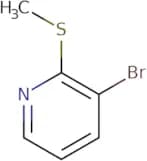
Discontinued product3-Bromo-2-(methylthio)pyridine
CAS:Versatile small molecule scaffold
Formula:C6H6BrNSPurity:Min. 95%Molecular weight:204.09 g/molRef: 3D-BCA93377
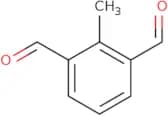
Discontinued product2-Methylbenzene-1,3-dicarbaldehyde
CAS:2-Methylbenzene-1,3-dicarbaldehyde is a divalent hydrocarbon that has an oxidation catalyst. This compound is used as an intermediate in the production of drugs and pharmaceuticals. It has been shown to have cardiovascular disorders, such as vasodilatation and hypotension. The mechanism of action is not fully understood but may be related to its ability to act as a nitrovasodilator by increasing nitric oxide (NO) release. 2-Methylbenzene-1,3-dicarbaldehyde also produces psychotic disorders when long term exposure occurs. This compound has been shown to have neurotoxic effects in animal models with long term exposure.
Formula:C9H8O2Purity:Min. 95%Molecular weight:148.16 g/molRef: 3D-BCA68950
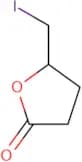
Discontinued product5-(Iodomethyl)oxolan-2-one
CAS:Versatile small molecule scaffold
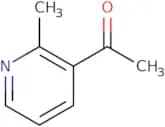
Formula:C5H7IO2Purity:Min. 95%Molecular weight:226.01 g/mol1-(2-Methylpyridin-3-yl)ethanone
CAS:1-(2-Methylpyridin-3-yl)ethanone is a ketone that can be synthesized using the reaction of methyl sulfone, benzyl sulfone, and sulphone. It has been shown to have anti-inflammatory properties by inhibiting prostaglandin synthesis and has been used as a nonsteroidal anti-inflammatory drug (NSAID). 1-(2-Methylpyridin-3-yl)ethanone has also been shown to have analgesic effects in mice. This synthetic compound may be useful in treating inflammation, pain, and fever.
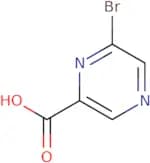
Formula:C8H9NOPurity:Min. 95%Molecular weight:135.16 g/mol6-Bromopyrazine-2-carboxylic acid
CAS:Versatile small molecule scaffold
Formula:C5H3BrN2O2Purity:Min. 95%Molecular weight:202.99 g/molRef: 3D-WXB15153
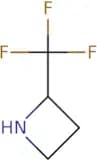
Discontinued product2-(Trifluoromethyl)azetidine
CAS:2-(Trifluoromethyl)azetidine is a synthetic compound that has been used in the synthesis of other compounds. It is an ionic, organometallic reagent that can be used as a catalyst for a variety of reactions. The trifluoromethyl group on 2-(trifluoromethyl)azetidine is electrophilic and nucleophilic and can catalyze reactions involving heterocycles, connect, or electron-deficient alkynes.
Formula:C4H6F3NPurity:Min. 95%Molecular weight:125.09 g/molRef: 3D-QRB33155
Discontinued product1,3-Dioxo-2,3-dihydro-1H-isoindol-2-yl 2-[4-(2-methylpropyl)phenyl]propanoate
CAS:Versatile small molecule scaffold
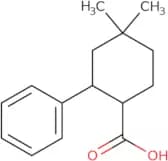
Formula:C21H21NO4Purity:Min. 95%Molecular weight:351.4 g/mol4,4-Dimethyl-2-phenylcyclohexane-1-carboxylic acid
CAS:Versatile small molecule scaffold
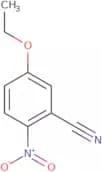
Formula:C15H20O2Purity:Min. 95%Molecular weight:232.32 g/mol5-Ethoxy-2-nitrobenzonitrile
CAS:Versatile small molecule scaffold
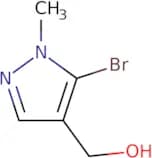
Formula:C9H8N2O3Purity:Min. 95%Molecular weight:192.17 g/mol(5-Bromo-1-methyl-1H-pyrazol-4-yl)methanol
CAS:Versatile small molecule scaffoldFormula:C5H7BrN2OPurity:Min. 95%Molecular weight:191.03 g/mol3-(3-Fluorophenoxymethyl)-5H,6H,7H,8H,9H-[1,2,4]triazolo[4,3-a]azepine
CAS:Versatile small molecule scaffoldFormula:C14H16FN3OPurity:Min. 95%Molecular weight:261.29 g/molRef: 3D-QGB27246
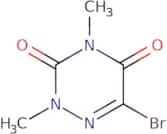
Discontinued product6-Bromo-2,4-dimethyl-2,3,4,5-tetrahydro-1,2,4-triazine-3,5-dione
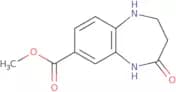
CAS:Versatile small molecule scaffoldFormula:C5H6BrN3O2Purity:Min. 95%Molecular weight:220.02 g/molMethyl 4-oxo-2,3,4,5-tetrahydro-1H-1,5-benzodiazepine-7-carboxylate
CAS:Versatile small molecule scaffold
Formula:C11H12N2O3Purity:Min. 95%Molecular weight:220.22 g/mol3-Amino-4-methyl-N-[3-(trifluoromethyl)phenyl]benzene-1-sulfonamide
CAS:Versatile small molecule scaffoldFormula:C14H13F3N2O2SPurity:Min. 95%Molecular weight:330.33 g/molRef: 3D-QXA20922
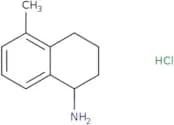
Discontinued product5-Methyl-1,2,3,4-tetrahydronaphthalen-1-amine hydrochloride
CAS:Versatile small molecule scaffold
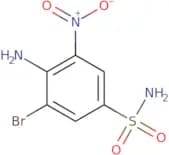
Formula:C11H16ClNPurity:Min. 95%Molecular weight:197.7 g/mol4-Amino-3-bromo-5-nitro-benzenesulfonamide
CAS:Versatile small molecule scaffold
Formula:C6H6BrN3O4SPurity:Min. 95%Molecular weight:296.1 g/molRef: 3D-PBA23496
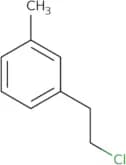
Discontinued product1-(2-Chloroethyl)-3-methylbenzene
CAS:Versatile small molecule scaffold
Formula:C9H11ClPurity:Min. 95%Molecular weight:154.64 g/mol3-[(2,2,3,3-Tetrafluoropropoxy)methyl]benzoic acid
CAS:Versatile small molecule scaffoldFormula:C11H10F4O3Purity:Min. 95%Molecular weight:266.19 g/molRef: 3D-NSA46600
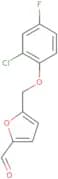
Discontinued product5-(2-Chloro-4-fluorophenoxymethyl)furan-2-carbaldehyde
CAS:Versatile small molecule scaffold
Formula:C12H8ClFO3Purity:Min. 95%Molecular weight:254.64 g/molRef: 3D-NSA22197
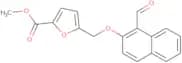
Discontinued product5-(1-Formyl-naphthalen-2-yloxymethyl)-furan-2-carboxylic acid methyl ester
CAS:Versatile small molecule scaffold
Formula:C18H14O5Purity:Min. 95%Molecular weight:310.3 g/mol{6-[(2-Fluorophenyl)methoxy]pyridin-3-yl}methanol
CAS:Versatile small molecule scaffoldFormula:C13H12FNO2Purity:Min. 95%Molecular weight:233.24 g/molRef: 3D-NSA04964
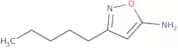
Discontinued product3-Pentyl-1,2-oxazol-5-amine
CAS:Versatile small molecule scaffold
Formula:C8H14N2OPurity:Min. 95%Molecular weight:154.21 g/molRef: 3D-NRB96874
Discontinued product1-Methyl-1,7-diazaspiro[4.5]decane dihydrochloride
CAS:Versatile small molecule scaffold
Formula:C9H20Cl2N2Purity:Min. 95%Molecular weight:227.17 g/molRef: 3D-NKD10054
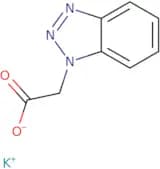
Discontinued productPotassium 2-(1H-1,2,3-benzotriazol-1-yl)acetate
CAS:Versatile small molecule scaffold
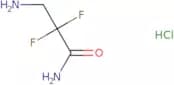
Formula:C8H6KN3O2Purity:Min. 95%Molecular weight:215.25 g/mol3-Amino-2,2-difluoropropanamide hydrochloride
CAS:Versatile small molecule scaffold
Formula:C3H7ClF2N2OPurity:Min. 95%Molecular weight:160.55 g/molRef: 3D-NKD09321
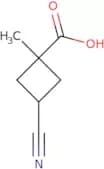
Discontinued product3-Cyano-1-methylcyclobutane-1-carboxylic acid
CAS:Versatile small molecule scaffoldFormula:C7H9NO2Purity:Min. 95%Molecular weight:139.15 g/molRef: 3D-NKD04501
Discontinued product2-{[(9H-Fluoren-9-yl)methoxy]carbonyl}-2-azabicyclo[2.2.2]oct-7-ene-6-carboxylic acid
CAS:Versatile small molecule scaffold
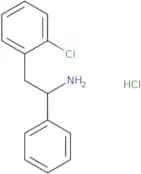
Formula:C23H21NO4Purity:Min. 95%Molecular weight:375.4 g/mol2-(2-Chlorophenyl)-1-phenylethan-1-amine hydrochloride
CAS:Controlled ProductVersatile small molecule scaffoldFormula:C14H15Cl2NPurity:Min. 95%Molecular weight:268.2 g/molRef: 3D-KZB44044
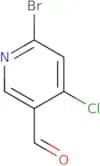
Discontinued product6-bromo-4-chloropyridine-3-carbaldehyde
CAS:Versatile small molecule scaffold
Formula:C6H3BrClNOPurity:Min. 95%Molecular weight:220.5 g/molRef: 3D-KSB81124
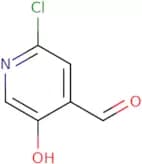
Discontinued product2-Chloro-5-hydroxyisonicotinaldehyde
CAS:Versatile small molecule scaffoldFormula:C6H4ClNO2Purity:Min. 95%Molecular weight:157.55 g/mol{3-[3-(4-Fluorophenyl)-1,2-oxazol-5-yl]propyl}(methyl)amine
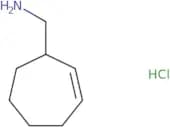
CAS:Versatile small molecule scaffoldFormula:C13H15FN2OPurity:Min. 95%Molecular weight:234.27 g/mol(Cyclohept-2-en-1-yl)methanamine hydrochloride
CAS:Versatile small molecule scaffold
Formula:C8H16ClNPurity:Min. 95%Molecular weight:161.7 g/molRef: 3D-KQD93769
Discontinued product4-(3-Cyclopropyl-1H-1,2,4-triazol-5-yl)aniline
CAS:Versatile small molecule scaffold
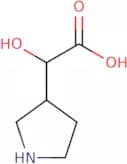
Formula:C11H12N4Purity:Min. 95%Molecular weight:200.24 g/mol2-Hydroxy-2-(pyrrolidin-3-yl)acetic acid
CAS:Versatile small molecule scaffold
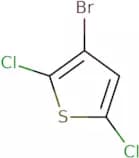
Formula:C6H11NO3Purity:Min. 95%Molecular weight:145.16 g/mol3-Bromo-2,5-dichlorothiophene
CAS:Versatile small molecule scaffold
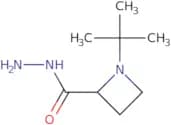
Formula:C4HBrCl2SPurity:Min. 95%Molecular weight:231.93 g/mol1-tert-Butylazetidine-2-carbohydrazide
CAS:Versatile small molecule scaffoldFormula:C8H17N3OPurity:Min. 95%Molecular weight:171.24 g/molRef: 3D-KCA16934
Discontinued product[(1,4-Dioxan-2-yl)methyl]urea
CAS:Versatile small molecule scaffold
Formula:C6H12N2O3Purity:Min. 95%Molecular weight:160.17 g/molRef: 3D-JXB82665
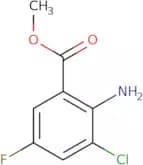
Discontinued productMethyl 2-amino-3-chloro-5-fluorobenzoate
CAS:Versatile small molecule scaffoldFormula:C8H7ClFNO2Purity:Min. 95%Molecular weight:203.6 g/mol[3-(3-Propyl-1,2,4-oxadiazol-5-yl)phenyl]methanamine
CAS:Versatile small molecule scaffold
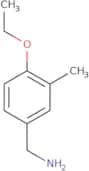
Formula:C12H15N3OPurity:Min. 95%Molecular weight:217.27 g/mol(4-Ethoxy-3-methylphenyl)methanamine
CAS:Versatile small molecule scaffold
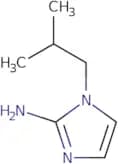
Formula:C10H15NOPurity:Min. 95%Molecular weight:165.23 g/mol1-(2-Methylpropyl)-1H-imidazol-2-amine
CAS:Versatile small molecule scaffold
Formula:C7H13N3Purity:Min. 95%Molecular weight:139.2 g/molRef: 3D-JXB01789
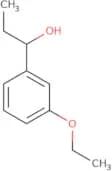
Discontinued product1-(3-Ethoxyphenyl)propan-1-ol
CAS:Versatile small molecule scaffold
Formula:C11H16O2Purity:Min. 95%Molecular weight:180.24 g/molRef: 3D-JLB56759
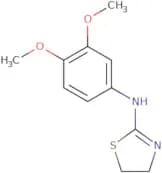
Discontinued productN-(3,4-Dimethoxyphenyl)-4,5-dihydro-1,3-thiazol-2-amine
CAS:Versatile small molecule scaffoldFormula:C11H14N2O2SPurity:Min. 95%Molecular weight:238.31 g/molRef: 3D-JGA09188
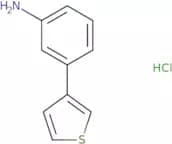
Discontinued product3-(Thiophen-3-yl)aniline hydrochloride
CAS:Versatile small molecule scaffold
Formula:C10H10ClNSPurity:Min. 95%Molecular weight:211.71 g/mol3-[(Furan-2-ylmethyl)sulfanyl]prop-2-enoic acid
CAS:Versatile small molecule scaffold
Formula:C8H8O3SPurity:Min. 95%Molecular weight:184.21 g/molRef: 3D-JFC43383
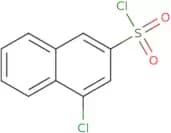
Discontinued product4-Chloronaphthalene-2-sulfonyl chloride
CAS:Versatile small molecule scaffoldFormula:C10H6Cl2O2SPurity:Min. 95%Molecular weight:261.12 g/molRef: 3D-JFC43112
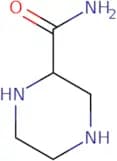
Discontinued productPiperazine-2-carboxamide
CAS:Piperazine-2-carboxamide is a synthetic drug that is used to treat tuberculosis. It binds to the mycolic acid of the bacterial cell wall, preventing it from forming an outer layer and disrupting its function. Piperazine-2-carboxamide also inhibits the synthesis of fatty acids and amines in bacteria, which are necessary for their survival. This drug can be synthesized by reacting piperazine with formaldehyde and acetamide.
Formula:C5H11N3OPurity:Min. 95%Molecular weight:129.16 g/mol[2-(1H-Indol-4-yl)ethyl]dimethylamine
CAS:Controlled ProductVersatile small molecule scaffold
Formula:C12H16N2Purity:Min. 95%Molecular weight:188.27 g/molRef: 3D-JDA40101
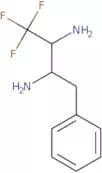
Discontinued product1,1,1-Trifluoro-4-phenylbutane-2,3-diamine
CAS:Versatile small molecule scaffold
Formula:C10H13F3N2Purity:Min. 95%Molecular weight:218.22 g/molRef: 3D-QZB52939
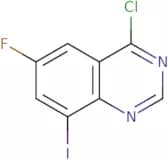
Discontinued product4-Chloro-6-fluoro-8-iodoquinazoline
CAS:Versatile small molecule scaffold
Formula:C8H3ClFIN2Purity:Min. 95%Molecular weight:308.48 g/molRef: 3D-JBD31990
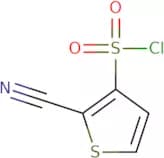
Discontinued product2-Cyanothiophene-3-sulfonyl chloride
CAS:Versatile small molecule scaffoldFormula:C5H2ClNO2S2Purity:Min. 95%Molecular weight:207.7 g/molRef: 3D-JBD31887
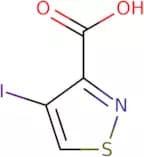
Discontinued product4-Iodo-1,2-thiazole-3-carboxylic acid
CAS:Versatile small molecule scaffoldFormula:C4H2INO2SPurity:Min. 95%Molecular weight:255.04 g/molRef: 3D-JBD31882
Discontinued product2-[(3-Bromophenyl)methyl]butanoic acid
CAS:Versatile small molecule scaffold
Formula:C11H13BrO2Purity:Min. 95%Molecular weight:257.12 g/molRef: 3D-IXB11486
Discontinued product[(4-Bromo-2-fluorophenyl)methyl][2-(4-methylpiperazin-1-yl)ethyl]amine
CAS:Versatile small molecule scaffold
Formula:C14H21BrFN3Purity:Min. 95%Molecular weight:330.24 g/molRef: 3D-IXB00918
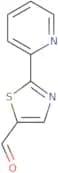
Discontinued product2-(Pyridin-2-yl)-1,3-thiazole-5-carbaldehyde
CAS:Versatile small molecule scaffoldFormula:C9H6N2OSPurity:Min. 95%Molecular weight:190.22 g/molRef: 3D-ITB31725
Discontinued product{4-[(3-Fluorophenyl)methoxy]phenyl}methanamine hydrochloride
CAS:Versatile small molecule scaffold
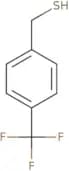
Formula:C14H15ClFNOPurity:Min. 95%Molecular weight:267.72 g/mol4-(Trifluoromethyl)benzyl mercaptan
CAS:4-(Trifluoromethyl)benzyl mercaptan is a chemical that has been used as an additive to organic solar cells. It has been shown to improve the performance of these devices by reducing interfacial recombination and increasing electron mobility. This chemical also has semiconducting properties, which have been demonstrated by its ability to be translated in an electron microscope. In addition, 4-(Trifluoromethyl)benzyl mercaptan interacts with many solvents, such as chloroform and dichloromethane, leading to changes in their properties.
Formula:C8H7F3SPurity:Min. 95%Molecular weight:192.2 g/molRef: 3D-IEA49924
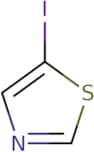
Discontinued product5-Iodo-1,3-thiazole
CAS:Versatile small molecule scaffold
Formula:C3H2INSPurity:Min. 95%Molecular weight:211.03 g/molRef: 3D-IEA30661
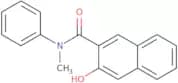
Discontinued product3-Hydroxy-N-methyl-N-phenylnaphthalene-2-carboxamide
CAS:Versatile small molecule scaffold
Formula:C18H15NO2Purity:Min. 95%Molecular weight:277.3 g/molRef: 3D-IDA03839
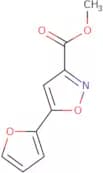
Discontinued productMethyl 5-(2-furyl)isoxazole-3-carboxylate
CAS:Versatile small molecule scaffold
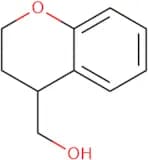
Formula:C9H7NO4Purity:Min. 95%Molecular weight:193.16 g/mol3,4-Dihydro-2H-1-benzopyran-4-ylmethanol
CAS:Versatile small molecule scaffold
Formula:C10H12O2Purity:Min. 95%Molecular weight:164.2 g/molRef: 3D-IBA31382
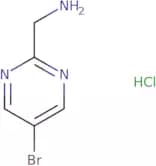
Discontinued product(5-bromopyrimidin-2-yl)methanamine hcl
CAS:Versatile small molecule scaffold
Formula:C5H7BrClN3Purity:Min. 95%Molecular weight:224.49 g/mol8-Bromo-2-methylimidazo[1,2-a]pyridine
CAS:Versatile small molecule scaffold
Formula:C8H7N2BrPurity:Min. 95%Molecular weight:211.05 g/mol1-Hydroxycyclopentane-1-carbonitrile
CAS:1-Hydroxycyclopentane-1-carbonitrile is a monomer that is hydrolyzed to form benzoin and cyanohydrins. It can be used in the production of scifinder as a monomer or dimerizer.
Formula:C6H9NOPurity:Min. 95%Molecular weight:111.14 g/mol4,5-Dihydro-1H-imidazol-2-amine hydrochloride
CAS:Please enquire for more information about 4,5-Dihydro-1H-imidazol-2-amine hydrochloride including the price, delivery time and more detailed product information at the technical inquiry form on this page
Formula:C3H7N3•HClPurity:Min. 95%Molecular weight:121.57 g/molRef: 3D-FD183639
Discontinued product4-Chloro-2-hydroxy-6-methylphenylboronic acid
CAS:Versatile small molecule scaffoldFormula:C7H8BClO3Purity:Min. 95%Molecular weight:186.4 g/mol3-Hydroxy-5-methylpyridine
CAS:3-Hydroxy-5-methylpyridine (3HMP) is a chemical substance that has been classified as an amine. It is a product of the metabolism of purines, which are nitrogenous bases found in DNA and RNA. 3HMP is produced by aerogenic bacteria (such as Enterobacter), and can be used to estimate the number of these bacteria present in water samples. 3HMP has been shown to have antiviral properties against influenza virus, and can be used as a biomarker for the presence of other viruses in animals. 3HMP also has mineralization properties, which have been studied extensively, particularly with regards to pancreatic disease.
Formula:C6H7NOPurity:Min. 95%Color and Shape:PowderMolecular weight:109.13 g/molRef: 3D-FH16174
Discontinued producttert-Butyl (2,2-difluoro-3-hydroxypropyl)carbamate
CAS:Versatile small molecule scaffoldFormula:C10H13NO4Purity:Min. 95%Molecular weight:211.21 g/mol2-Bromo-3,3,3-trifluoro-1-propene
CAS:Controlled Product2-Bromo-3,3,3-trifluoro-1-propene is a chemical compound that has been synthesized in an asymmetric reaction. The reactant is bromopropane and the product is 2,2,2-trifluoropropene. The methylene group on the propene molecule is activated by the nucleophilic attack of a fluoride ion from hydrogen fluoride to form a cavity with a highly strained bond. The kinetic study of this reaction revealed that the activation energy for the reaction is 42 kJ/mol. Palladium-catalyzed coupling reactions are catalyzed by palladium and require nonpolar solvents such as toluene or dichloromethane. This type of reaction has been shown to be exothermic with an isolated yield of 1%.
Formula:C3H2BrF3Purity:Min. 95%Color and Shape:Colorless PowderMolecular weight:174.95 g/mol4,5-Dihydroxy-2,3-Pentanedione
CAS:4,5-Dihydroxy-2,3-pentanedione is a carbonyl compound that is the product of the oxidation of ascorbic acid. It is used in wastewater treatment and has antimicrobial properties against infectious diseases. This compound has been shown to inhibit protein synthesis by binding to the ribosome and preventing the formation of peptide bonds between amino acids. 4,5-Dihydroxy-2,3-pentanedione has also been shown to bind to plasma proteins, which may be due to its acyl chain structure. 4,5-Dihydroxy-2,3-pentanedione can be synthesized in a catalytic mechanism that involves dehydroascorbic acid and molecular oxygen.
Formula:C5H8O4Purity:Min. 95%Color and Shape:PowderMolecular weight:132.11 g/molRef: 3D-FD180770
Discontinued productPiperyline
CAS:Piperyline is an alkanoic acid that has shown to be effective against skin cancer. It also has antimicrobial properties, which may be due to its ability to bind metal ions and form polymeric compounds. Piperyline inhibits microbial growth by inhibiting the synthesis of proteins and nucleic acids. The antimicrobial activity is related to its cationic polymerization with hydroxyl groups, which forms a structure that can inhibit microbial enzymes and disrupt microbial cell membranes. This compound also interacts with the skin's natural lipids, making it difficult for microorganisms to attach and grow on the skin. Piperyline is synthesized in organic chemistry laboratories as an amide precursor of other pharmaceuticals such as penicillin.
Formula:C16H17NO3Purity:Min. 95%Molecular weight:271.31 g/mol


![1,3-Dioxo-2,3-dihydro-1H-isoindol-2-yl 2-[4-(2-methylpropyl)phenyl]propanoate](/_next/image/?url=https%3A%2Fstatic.cymitquimica.com%2Fproducts%2F3D%2Fthumb-webp%2FQKD88961.webp&w=3840&q=75)
![3-(3-Fluorophenoxymethyl)-5H,6H,7H,8H,9H-[1,2,4]triazolo[4,3-a]azepine](/_next/image/?url=https%3A%2Fstatic.cymitquimica.com%2Fproducts%2F3D%2Fthumb-webp%2FQGB27246.webp&w=3840&q=75)
![3-Amino-4-methyl-N-[3-(trifluoromethyl)phenyl]benzene-1-sulfonamide](/_next/image/?url=https%3A%2Fstatic.cymitquimica.com%2Fproducts%2F3D%2Fthumb-webp%2FQXA20922.webp&w=3840&q=75)
![3-[(2,2,3,3-Tetrafluoropropoxy)methyl]benzoic acid](/_next/image/?url=https%3A%2Fstatic.cymitquimica.com%2Fproducts%2F3D%2Fthumb-webp%2FNSA46600.webp&w=3840&q=75)
![{6-[(2-Fluorophenyl)methoxy]pyridin-3-yl}methanol](/_next/image/?url=https%3A%2Fstatic.cymitquimica.com%2Fproducts%2F3D%2Fthumb-webp%2FNSA04964.webp&w=3840&q=75)
![1-Methyl-1,7-diazaspiro[4.5]decane dihydrochloride](/_next/image/?url=https%3A%2Fstatic.cymitquimica.com%2Fproducts%2F3D%2Fthumb-webp%2FNKD10054.webp&w=3840&q=75)
![2-{[(9H-Fluoren-9-yl)methoxy]carbonyl}-2-azabicyclo[2.2.2]oct-7-ene-6-carboxylic acid](/_next/image/?url=https%3A%2Fstatic.cymitquimica.com%2Fproducts%2F3D%2Fthumb-webp%2FNKD00993.webp&w=3840&q=75)
![{3-[3-(4-Fluorophenyl)-1,2-oxazol-5-yl]propyl}(methyl)amine](/_next/image/?url=https%3A%2Fstatic.cymitquimica.com%2Fproducts%2F3D%2Fthumb-webp%2FQZB52864.webp&w=3840&q=75)

![[(1,4-Dioxan-2-yl)methyl]urea](/_next/image/?url=https%3A%2Fstatic.cymitquimica.com%2Fproducts%2F3D%2Fthumb-webp%2FJXB82665.webp&w=3840&q=75)
![[3-(3-Propyl-1,2,4-oxadiazol-5-yl)phenyl]methanamine](/_next/image/?url=https%3A%2Fstatic.cymitquimica.com%2Fproducts%2F3D%2Fthumb-webp%2FJXB25246.webp&w=3840&q=75)
![3-[(Furan-2-ylmethyl)sulfanyl]prop-2-enoic acid](/_next/image/?url=https%3A%2Fstatic.cymitquimica.com%2Fproducts%2F3D%2Fthumb-webp%2FJFC43383.webp&w=3840&q=75)
![[2-(1H-Indol-4-yl)ethyl]dimethylamine](/_next/image/?url=https%3A%2Fstatic.cymitquimica.com%2Fproducts%2F3D%2Fthumb-webp%2FJDA40101.webp&w=3840&q=75)
![2-[(3-Bromophenyl)methyl]butanoic acid](/_next/image/?url=https%3A%2Fstatic.cymitquimica.com%2Fproducts%2F3D%2Fthumb-webp%2FIXB11486.webp&w=3840&q=75)
![[(4-Bromo-2-fluorophenyl)methyl][2-(4-methylpiperazin-1-yl)ethyl]amine](/_next/image/?url=https%3A%2Fstatic.cymitquimica.com%2Fproducts%2F3D%2Fthumb-webp%2FIXB00918.webp&w=3840&q=75)
![{4-[(3-Fluorophenyl)methoxy]phenyl}methanamine hydrochloride](/_next/image/?url=https%3A%2Fstatic.cymitquimica.com%2Fproducts%2F3D%2Fthumb-webp%2FQZB52951.webp&w=3840&q=75)
![8-Bromo-2-methylimidazo[1,2-a]pyridine](/_next/image/?url=https%3A%2Fstatic.cymitquimica.com%2Fproducts%2F3D%2Fthumb-webp%2FUXB37475.webp&w=3840&q=75)







