


Building Blocks
Subcategories of "Building Blocks"
- Boronic Acids & Boronic Acid Derivatives(5,778 products)
- Chiral Building Blocks(1,243 products)
- Hydrocarbon Building Blocks(6,098 products)
- Organic Building Blocks(61,036 products)
Found 205240 products of "Building Blocks"
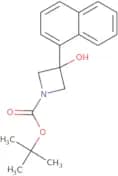
tert-Butyl 3-hydroxy-3-(naphthalen-1-yl)azetidine-1-carboxylate
CAS:Versatile small molecule scaffold
Formula:C18H21NO3Purity:Min. 95%Molecular weight:299.4 g/molRef: 3D-WSC84861
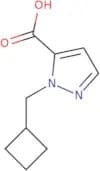
Discontinued product1-(Cyclobutylmethyl)-1H-pyrazole-5-carboxylic acid
CAS:Versatile small molecule scaffoldFormula:C9H12N2O2Purity:Min. 95%Molecular weight:180.2 g/molRef: 3D-WJC58413
Discontinued productMethyl 2-Octynoate
CAS:Methyl 2-octynoate is a chemical that has been shown to bind to the nicotinic acetylcholine receptor. Methyl 2-octynoate has been shown to have antitumor activity in various types of cancer cells, including breast, prostate, and lung cancer cells. This chemical is not known to be chemically stable or film-forming. It also disrupts mitochondrial membrane potential and reduces the endpoints of oxidative phosphorylation. Methyl 2-octynoate was found to have low potency against cancer cells in vitro and in vivo.
Formula:C9H14O2Purity:Min. 95%Molecular weight:154.21 g/mol5-[(2,4-Difluorophenyl)methyl]-4-methyl-1,3-thiazol-2-amine hydrobromide
CAS:Versatile small molecule scaffold
Formula:C11H11BrF2N2SPurity:Min. 95%Molecular weight:321.19 g/molRef: 3D-VWC49324
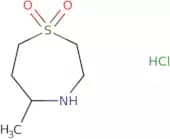
Discontinued product5-Methyl-1,4-thiazepane-1,1-dione hydrochloride
CAS:Versatile small molecule scaffold
Formula:C6H14ClNO2SPurity:Min. 95%Molecular weight:199.7 g/molRef: 3D-VWC27667
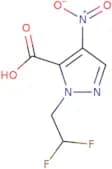
Discontinued product1-(2,2-Difluoroethyl)-4-nitro-1H-pyrazole-5-carboxylic acid
CAS:Versatile small molecule scaffoldFormula:C6H5F2N3O4Purity:Min. 95%Molecular weight:221.12 g/molRef: 3D-VWC27524
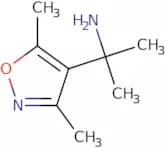
Discontinued product2-(Dimethyl-1,2-oxazol-4-yl)propan-2-amine
CAS:Versatile small molecule scaffold
Formula:C8H14N2OPurity:Min. 95%Molecular weight:154.21 g/molRef: 3D-VKC10832
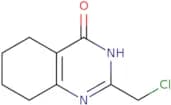
Discontinued product2-(Chloromethyl)-5,6,7,8-tetrahydroquinazolin-4(3H)-one
CAS:Versatile small molecule scaffold
Formula:C9H11ClN2OPurity:Min. 95%Molecular weight:198.65 g/molEthyl 1-amino-1-cyclobutanecarboxylate monohydrochloride
CAS:Ethyl 1-amino-1-cyclobutanecarboxylate monohydrochloride is a cyclic carbonyl compound that is used as a building block in organic synthesis. It has been used to synthesize a number of natural products, such as piperarborenine and cyclobutanes. This compound can be synthesized by reacting ethyl chloroformate with cyclobutanecarbaldehyde in the presence of an acid or base catalyst. The steric and geometric properties of this molecule are highlighted below.
Formula:C2H5O2CC4H6NH2·HClPurity:Min. 95%Molecular weight:179.64 g/mol6-[3-(3-Chlorophenyl)-1,2,4-oxadiazol-5-yl]-2,3-dihydropyridazin-3-one
CAS:Versatile small molecule scaffold
Formula:C12H7ClN4O2Purity:Min. 95%Molecular weight:274.66 g/molRef: 3D-VEC59761
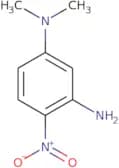
Discontinued product3-Amino-N,N-dimethyl-4-nitroaniline
CAS:Versatile small molecule scaffold
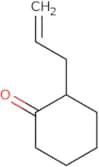
Formula:C8H11N3O2Purity:Min. 95%Molecular weight:181.19 g/mol2-Allylcyclohexanone
CAS:2-Allylcyclohexanone is an unsaturated ketone that is synthesized by the ring-opening of allyl cyclohexane carboxylate with sodium hydroxide. It can be used as a chemical intermediate for the synthesis of other compounds. 2-Allylcyclohexanone can also be used to react with hydroxide solution to produce a salt and an alcohol. The hydroxide solution can act as a base, reducing the carbonyl group in the presence of an acid to form the corresponding alcohol. This reaction is stereoselective because it only occurs when there are two different groups on adjacent carbons.
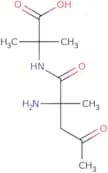
2-Allylcyclohexanone has been shown to inhibit non-nucleoside reverse transcriptase inhibitors (NNRTIs) such as nevirapine, efavirenz, and delavirdine. In addition, it has been found to have functional groups that are capable of reactingFormula:C9H14OPurity:Min. 95%Molecular weight:138.21 g/mol2-(2-acetamido-2-methylpropanamido)-2-methylpropanoic acid
CAS:Versatile small molecule scaffoldFormula:C10H18N2O4Purity:Min. 95%Molecular weight:230.26 g/molRef: 3D-TEA72499
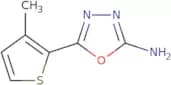
Discontinued product5-(3-Methylthiophen-2-yl)-1,3,4-oxadiazol-2-amine
CAS:5-(3-Methylthiophen-2-yl)-1,3,4-oxadiazol-2-amine is a ligand that binds to the ion channels in cells and activates them. It is used as a research tool in pharmacology and protein interactions. 5-(3-Methylthiophen-2-yl)-1,3,4-oxadiazol-2-amine has been shown to activate potassium channels by interacting with the receptor site. This ligand was also shown to inhibit cell growth by binding to the antibody site of the receptor. 5-(3-Methylthiophen-2-yl)-1,3,4--oxadiazol-2--amine has been shown to have a high purity of 99%.
Formula:C7H7N3OSPurity:Min. 95%Molecular weight:181.22 g/molRef: 3D-SQB04874
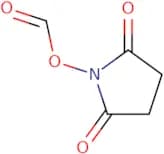
Discontinued product2,5-Dioxopyrrolidin-1-yl formate
CAS:2,5-Dioxopyrrolidin-1-yl formate is a solubilized ATP analog that has been clinically developed for the treatment of cancer. This drug binds to cell membranes and causes alkylation of the acidic phospholipids in the membrane, leading to increased permeability of the membrane and release of intracellular components. 2,5-Dioxopyrrolidin-1-yl formate also interacts with lysosomes and increases their acidity, which may lead to an increase in lysosomal enzyme activity. This drug has been shown to inhibit tumor growth in a mouse model by binding to erythrocytes while it was being simultaneously administered intravenously. The chemical structures of this drug are closely related to those of phaseolus, which is known for its anticancer effects.
Formula:C5H5NO4Purity:Min. 95%Molecular weight:143.1 g/molRef: 3D-SAA59254
Discontinued product1-(4-Chlorophenyl)-1H-imidazole-2(3H)-thione
CAS:1-(4-Chlorophenyl)-1H-imidazole-2(3H)-thione is a crystalline solid that belongs to the class of imidazoles. It has been synthesized by reacting 1,2-dibromoethane with sodium methoxide in methanol. The compound was found to have a melting point of about 183°C and a molecular weight of 212.06 g/mol. This compound has been shown to interact with methanol, methoxide, and ethoxy groups. Crystallization occurs when the substance is heated to about 183°C in vacuum and then cooled slowly.
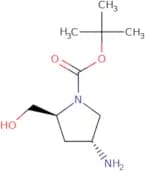
Formula:C9H7ClN2SPurity:Min. 95%Molecular weight:210.68 g/mol(2S,4R)-1-Boc-2-Hydroxymethyl-4-aminopyrrolidinehydrochloride
CAS:Versatile small molecule scaffold
Formula:C10H21ClN2O3Purity:Min. 95%Molecular weight:252.74 g/mol3-[(Trimethylsilyl)oxy]oxane-3-carbonitrile
CAS:Versatile small molecule scaffold
Formula:C9H17NO2SiPurity:Min. 95%Molecular weight:199.32 g/molRef: 3D-RDC77065
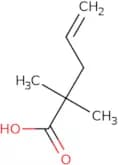
Discontinued product2,2-Dimethyl-4-pentenoic Acid
CAS:2,2-Dimethyl-4-pentenoic acid is a decarboxylating agent that converts the carboxylic acid group to an aldehyde. It is commonly used as a reducing agent in organic synthesis, especially for the conversion of esters and nitriles to alcohols and amines respectively. The synthesis of 2,2-dimethyl-4-pentenoic acid is achieved by reacting piperidine with propylene oxide. This reaction proceeds via a six-membered ring intermediate that decomposes to form the final product. The reaction can be catalyzed with peroxide or hydrogen peroxide, which leads to a high yield. 2,2-Dimethyl-4-pentenoic acid has been shown to be effective against hyperproteinemia and lipogenous disorders such as steatosis and cholestasis.
Formula:C7H12O2Purity:Min. 95%Molecular weight:128.17 g/mol2-Mercaptobenzo[d]thiazole-6-carbonitrile
CAS:Versatile small molecule scaffoldFormula:C8H4N2S2Purity:Min. 95%Molecular weight:192.25 g/molRef: 3D-QMA22879
Discontinued product4,5,6,7-Tetrahydropyrazolo[1,5-a]pyrazine dihydrochloride
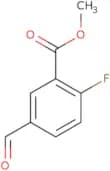
CAS:Versatile small molecule scaffoldFormula:C6H11Cl2N3Purity:Min. 95%Molecular weight:196.08 g/molMethyl 2-fluoro-5-formylbenzoate
CAS:Versatile small molecule scaffold
Formula:C9H7FO3Purity:Min. 95%Molecular weight:182.15 g/molRef: 3D-QGA80394
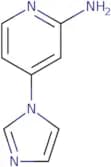
Discontinued product4-(1H-Imidazol-1-yl)pyridin-2-amine
CAS:Versatile small molecule scaffold
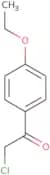
Formula:C8H8N4Purity:Min. 95%Molecular weight:160.18 g/mol2-Chloro-1-(4-ethoxyphenyl)ethan-1-one
CAS:2-Chloro-1-(4-ethoxyphenyl)ethan-1-one is a hydrocarbon radical that is used as a vitamin and in the synthesis of other molecules. This molecule has a covalent bond between the two chlorine atoms and one carbon atom. The hydrocarbon radical is also present in many hydrocarbons.
Formula:C10H11ClO2Purity:Min. 95%Molecular weight:198.64 g/mol2-(Pyrrolidin-3-yl)ethanol hydrochloride
CAS:Versatile small molecule scaffoldFormula:C6H13NO·HClPurity:Min. 95%Molecular weight:151.64 g/mol(5R)-5-(Aminomethyl)-1,3-oxazolidin-2-one HCl ee
CAS:Versatile small molecule scaffold
Formula:C4H9ClN2O2Purity:Min. 95%Molecular weight:152.58 g/molRef: 3D-NWC03627
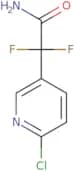
Discontinued product2-(6-Chloropyridin-3-yl)-2,2-difluoroacetamide
CAS:Versatile small molecule scaffoldFormula:C7H5ClF2N2OPurity:Min. 95%Molecular weight:206.58 g/molRef: 3D-NKD14959
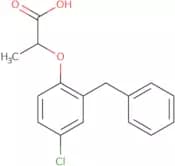
Discontinued product2-(2-Benzyl-4-chlorophenoxy)propanoic acid
CAS:Versatile small molecule scaffoldFormula:C16H15ClO3Purity:Min. 95%Molecular weight:290.74 g/molRef: 3D-NAA79403
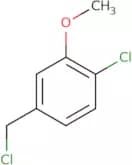
Discontinued product1-Chloro-4-(chloromethyl)-2-methoxybenzene
CAS:Versatile small molecule scaffold
Formula:C8H8Cl2OPurity:Min. 95%Molecular weight:191.05 g/molRef: 3D-NAA72618
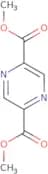
Discontinued productDimethyl Pyrazine-2,5-dicarboxylate
CAS:Versatile small molecule scaffold
Formula:C8H8N2O4Purity:Min. 95%Molecular weight:196.16 g/molRef: 3D-NAA05189
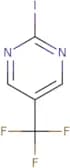
Discontinued product2-Iodo-5-(trifluoromethyl)pyrimidine
CAS:Versatile small molecule scaffold
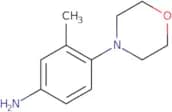
Formula:C5H2F3IN2Purity:Min. 95%Molecular weight:273.98 g/mol3-Methyl-4-(4-morpholinyl)aniline
CAS:Versatile small molecule scaffold
Formula:C11H16N2OPurity:Min. 95%Molecular weight:192.26 g/molRef: 3D-MEA90082
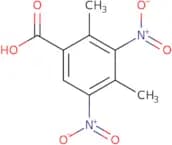
Discontinued product2,4-Dimethyl-3,5-dinitrobenzoic acid
CAS:Versatile small molecule scaffold
Formula:C9H8N2O6Purity:Min. 95%Molecular weight:240.17 g/mol4-Chloro-5H,6H,7H-pyrimido[4,5-b][1,4]oxazin-6-one
CAS:Versatile small molecule scaffoldFormula:C6H4ClN3O2Purity:Min. 95%Molecular weight:185.57 g/molRef: 3D-LYB52467
Discontinued product4-[2-(2-Methylphenyl)ethyl]piperidine
CAS:Versatile small molecule scaffold
Formula:C14H21NPurity:Min. 95%Molecular weight:203.32 g/mol2-Bromo-3,3,3-trifluoro-1-propene
CAS:Controlled Product2-Bromo-3,3,3-trifluoro-1-propene is a chemical compound that has been synthesized in an asymmetric reaction. The reactant is bromopropane and the product is 2,2,2-trifluoropropene. The methylene group on the propene molecule is activated by the nucleophilic attack of a fluoride ion from hydrogen fluoride to form a cavity with a highly strained bond. The kinetic study of this reaction revealed that the activation energy for the reaction is 42 kJ/mol. Palladium-catalyzed coupling reactions are catalyzed by palladium and require nonpolar solvents such as toluene or dichloromethane. This type of reaction has been shown to be exothermic with an isolated yield of 1%.
Formula:C3H2BrF3Purity:Min. 95%Color and Shape:Colorless PowderMolecular weight:174.95 g/mol4-Chloro-2-hydroxy-6-methylphenylboronic acid
CAS:Versatile small molecule scaffoldFormula:C7H8BClO3Purity:Min. 95%Molecular weight:186.4 g/mol3-Hydroxy-5-methylpyridine
CAS:3-Hydroxy-5-methylpyridine (3HMP) is a chemical substance that has been classified as an amine. It is a product of the metabolism of purines, which are nitrogenous bases found in DNA and RNA. 3HMP is produced by aerogenic bacteria (such as Enterobacter), and can be used to estimate the number of these bacteria present in water samples. 3HMP has been shown to have antiviral properties against influenza virus, and can be used as a biomarker for the presence of other viruses in animals. 3HMP also has mineralization properties, which have been studied extensively, particularly with regards to pancreatic disease.
Formula:C6H7NOPurity:Min. 95%Color and Shape:PowderMolecular weight:109.13 g/molRef: 3D-FH16174
Discontinued product4,5-Dihydroxy-2,3-Pentanedione
CAS:4,5-Dihydroxy-2,3-pentanedione is a carbonyl compound that is the product of the oxidation of ascorbic acid. It is used in wastewater treatment and has antimicrobial properties against infectious diseases. This compound has been shown to inhibit protein synthesis by binding to the ribosome and preventing the formation of peptide bonds between amino acids. 4,5-Dihydroxy-2,3-pentanedione has also been shown to bind to plasma proteins, which may be due to its acyl chain structure. 4,5-Dihydroxy-2,3-pentanedione can be synthesized in a catalytic mechanism that involves dehydroascorbic acid and molecular oxygen.
Formula:C5H8O4Purity:Min. 95%Color and Shape:PowderMolecular weight:132.11 g/molRef: 3D-FD180770
Discontinued productPiperyline
CAS:Piperyline is an alkanoic acid that has shown to be effective against skin cancer. It also has antimicrobial properties, which may be due to its ability to bind metal ions and form polymeric compounds. Piperyline inhibits microbial growth by inhibiting the synthesis of proteins and nucleic acids. The antimicrobial activity is related to its cationic polymerization with hydroxyl groups, which forms a structure that can inhibit microbial enzymes and disrupt microbial cell membranes. This compound also interacts with the skin's natural lipids, making it difficult for microorganisms to attach and grow on the skin. Piperyline is synthesized in organic chemistry laboratories as an amide precursor of other pharmaceuticals such as penicillin.
Formula:C16H17NO3Purity:Min. 95%Molecular weight:271.31 g/mol


![5-[(2,4-Difluorophenyl)methyl]-4-methyl-1,3-thiazol-2-amine hydrobromide](/_next/image/?url=https%3A%2Fstatic.cymitquimica.com%2Fproducts%2F3D%2Fthumb-webp%2FVWC49324.webp&w=3840&q=75)

![6-[3-(3-Chlorophenyl)-1,2,4-oxadiazol-5-yl]-2,3-dihydropyridazin-3-one](/_next/image/?url=https%3A%2Fstatic.cymitquimica.com%2Fproducts%2F3D%2Fthumb-webp%2FVEC59761.webp&w=3840&q=75)

![3-[(Trimethylsilyl)oxy]oxane-3-carbonitrile](/_next/image/?url=https%3A%2Fstatic.cymitquimica.com%2Fproducts%2F3D%2Fthumb-webp%2FRDC77065.webp&w=3840&q=75)
![2-Mercaptobenzo[d]thiazole-6-carbonitrile](/_next/image/?url=https%3A%2Fstatic.cymitquimica.com%2Fproducts%2F3D%2Fthumb-webp%2FQMA22879.webp&w=3840&q=75)
![4,5,6,7-Tetrahydropyrazolo[1,5-a]pyrazine dihydrochloride](/_next/image/?url=https%3A%2Fstatic.cymitquimica.com%2Fproducts%2F3D%2Fthumb-webp%2FQGA89407.webp&w=3840&q=75)


![4-Chloro-5H,6H,7H-pyrimido[4,5-b][1,4]oxazin-6-one](/_next/image/?url=https%3A%2Fstatic.cymitquimica.com%2Fproducts%2F3D%2Fthumb-webp%2FLYB52467.webp&w=3840&q=75)
![4-[2-(2-Methylphenyl)ethyl]piperidine](/_next/image/?url=https%3A%2Fstatic.cymitquimica.com%2Fproducts%2F3D%2Fthumb-webp%2FEBB66297.webp&w=3840&q=75)




