Building Blocks
Subcategories of "Building Blocks"
- Boronic Acids & Boronic Acid Derivatives(5,780 products)
- Chiral Building Blocks(1,241 products)
- Hydrocarbon Building Blocks(6,100 products)
- Organic Building Blocks(61,024 products)
Found 205297 products of "Building Blocks"
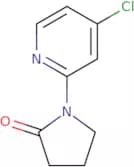
1-(4-Chloropyridin-2-yl)pyrrolidin-2-one
CAS:Versatile small molecule scaffoldFormula:C9H9ClN2OPurity:Min. 95%Molecular weight:196.63 g/molRef: 3D-GMC05375
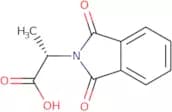
Discontinued productPhthaloyl-L-alanine
CAS:Phthaloyl-L-alanine is a molecule with a hydrochloric acid group and a carbonyl group. It has been shown to have the ability to bind to peptidyl molecules and immobilize them, leading to an inhibition of the reaction mechanism. This process can be induced by enzymatic inactivation or by hydrogen bonding with chloride. The cisplatin-induced apoptosis of cancer cells has been demonstrated using patch-clamp technique on human erythrocytes. Caspases are proteins that are activated during apoptosis and have been found to interact with Phthaloyl-L-alanine in vitro. Molecular modeling studies suggest that Phthaloyl-L-alanine may inhibit caspases by binding to the enzyme's active site.
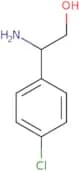
Formula:C11H9NO4Purity:Min. 95%Color and Shape:PowderMolecular weight:219.19 g/molb-Amino-4-chlorobenzeneethanol
CAS:Versatile small molecule scaffold
Formula:C8H10ClNOPurity:Min. 95%Molecular weight:171.62 g/mol3-[(5-Bromopyrimidin-2-yl)oxy]aniline
CAS:Versatile small molecule scaffold
Formula:C10H8BrN3OPurity:Min. 95%Molecular weight:266.09 g/molRef: 3D-LEA98667
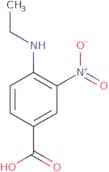
Discontinued product4-(Ethylamino)-3-nitrobenzoic acid
CAS:4-(Ethylamino)-3-nitrobenzoic acid (4ENA) is a centrosymmetric molecule with a crystal structure that contains ammonium and nitro groups. It also forms dimers when in the presence of chloride or chloroformate, which can be seen by the absorption bands at 550 nm. The 4ENA molecule is sensitive to hydrogen chloride and ammonium carbonate, which can cause it to decompose into ethylamine and 3-nitrophenol. Nitric acid will cause 4ENA to form the nitro group attached to the benzene ring. 4ENA has been shown to inhibit platelet aggregation by inhibiting thrombus formation on damaged endothelium.
Formula:C9H10N2O4Purity:Min. 95%Molecular weight:210.19 g/molRef: 3D-CAA78874
Discontinued product2-Azaspiro[5.5]undecane
CAS:2-Azaspiro[5.5]undecane is a perchlorate amide, which is a quinoline derivative. It has been used in the synthesis of spirocyclic compounds and yields high yields, including carbon-carbon bonds. 2-Azaspiro[5.5]undecane can be used in the synthesis of aliphatic alcohols and formaldehyde, which is also a chemical known as an aliphatic or an alcohol. 2-Azaspiro[5.5]undecane can also be used in the synthesis of phthalimide and 2-naphthylamine, both of which are organic compounds that belong to the class of aliphatic amines.
Formula:C10H19NPurity:Min. 95%Molecular weight:153.26 g/molRef: 3D-AAA18048
Discontinued product2,8-Diazaspiro[4.5]decane
CAS:2,8-Diazaspiro[4.5]decane is a competitive antagonist of the receptor α-adrenergic. It has been shown to significantly activate ATP-binding cassette transporter proteins in bone cells and increase bone mass. 2,8-Diazaspiro[4.5]decane is also an enantiomer that can be used for the treatment of cancer, as well as other diseases such as depression and anxiety. The pharmacokinetic properties of this drug have been studied in rats and mice with significant concentration levels achieved in plasma after 1 hour. The half-life of 2,8-Diazaspiro[4.5]decane is 3 hours and it is metabolized by hydrolysis by carboxylesterase or hydroxylase enzymes to form an inactive compound.
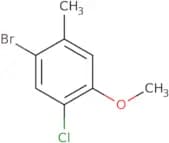
Formula:C8H16N2Purity:Min. 95%Molecular weight:140.23 g/mol4-Bromo-2-chloro-5-methylanisole
CAS:Versatile small molecule scaffold
Formula:C8H8BrClOPurity:Min. 95%Molecular weight:235.51 g/molRef: 3D-EHA89795
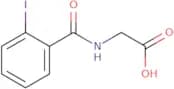
Discontinued product2-Iodohippuric acid
CAS:2-Iodohippuric acid (2HPA) is a diagnostic agent that is used to measure the renal function of patients with chronic kidney disease. It is a radionuclide that is taken up by the renal tubules and excreted in the urine. 2HPA has been shown to be effective in diagnosing acute renal injury and chronic kidney disease, as well as estimating the glomerular filtration rate (GFR). This drug binds to metals such as cadmium, mercury, lead, and nickel and can be used for the treatment of metal poisoning. 2HPA has been shown to have a pharmacokinetic profile that includes a rapid uptake phase followed by an elimination phase with a half-life of approximately 9 hours.
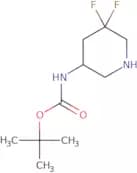
Formula:IC6H4CONHCH2CO2HPurity:Min. 95%Molecular weight:305.07 g/moltert-butyl N-(5,5-difluoropiperidin-3-yl)carbamate
CAS:Versatile small molecule scaffold
Formula:C10H18F2N2O2Purity:Min. 95%Molecular weight:236.3 g/molRef: 3D-DCC97394
Discontinued productMethyl 3-(thiophen-3-yl)propanoate
CAS:Versatile small molecule scaffold
Formula:C8H10O2SPurity:Min. 95%Molecular weight:170.23 g/molButyl benzoate
CAS:Butyl benzoate is a glycol ester that is used as a chemical solvent and as a catalyst for chemical reactions. It has been shown to be an effective catalyst for the synthesis of polymers, such as polybutylene terephthalate (PBT), from the monomers butanediol and terephthalic acid. Butyl benzoate also has been used in the production of fatty acids and pharmaceuticals, such as warfarin. The activation energy for butyl benzoate is 10.5 kJ/mol, which is higher than the activation energy for water at 10.2 kJ/mol.
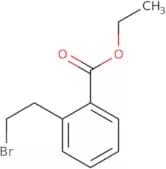
Formula:C11H14O2Purity:Min. 95%Molecular weight:178.23 g/molEthyl 2-(2-Bromoethyl)benzoate
CAS:Versatile small molecule scaffold
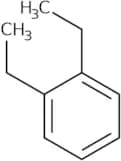
Formula:C11H13BrO2Purity:Min. 95%Molecular weight:257.13 g/mol1,2-Diethylbenzene
CAS:1,2-Diethylbenzene is a trifluoroacetic acid derivative that is used as an acylation agent and a solid catalyst. 1,2-Diethylbenzene has been shown to increase the energy metabolism in cultured human cells. It also influences fatty acid synthesis and nmr spectra of plant families. 1,2-Diethylbenzene was found to be safe for use in sciatic nerve regeneration in Sprague-Dawley rats with axonopathy. This chemical can also be used as an analytical reagent for the separation of urine samples by liquid chromatography methods.
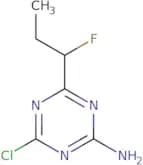
Formula:C10H14Purity:Min. 95%Molecular weight:134.22 g/mol4-Chloro-6-(1-fluoropropyl)-1,3,5-triazin-2-amine
CAS:Versatile small molecule scaffoldFormula:C6H8ClFN4Purity:Min. 95%Molecular weight:190.6 g/molDiallylamine
CAS:Diallylamine is a colorless, volatile liquid that is miscible with water and most organic solvents. It is chemically stable and has a constant boiling point. Diallylamine has the ability to bind nitrogen atoms from the air and transfer them to other substances. It can also react with trifluoroacetic acid in the presence of water vapor to produce polymers and particles. This reaction mechanism is determined by structural analysis, which shows that diallylamine has an ester hydrochloride linkage between two fatty acids with hydroxyl groups on each end.
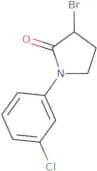
Formula:C8H17NPurity:Min. 95%Molecular weight:127.23 g/mol3-Bromo-1-(3-chlorophenyl)pyrrolidin-2-one
CAS:Versatile small molecule scaffold
Formula:C10H9BrClNOPurity:Min. 95%Molecular weight:274.54 g/molN-[2-(Aziridin-1-yl)ethyl]-2-[(2,4-dimethylphenyl)sulfanyl]aniline
CAS:2-[(2,4-Dimethylphenyl)sulfanyl]aniline is a synthetic chemical that is used as an analytical reagent for the determination of impurities in organic solvents. It is also used to bind the organic solvent in reaction solutions and to form chromatographic plates. 2-[(2,4-Dimethylphenyl)sulfanyl]aniline reacts with hydrogen peroxide to form an azo dye that can be detected with a simple test. This test is often used as a qualitative assay for acidity. Hydrochloric acid or sodium hydroxide solution must be added before this reaction occurs.
Formula:C18H22N2SPurity:Min. 95%Molecular weight:298.4 g/molRef: 3D-DCD74186
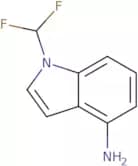
Discontinued product1-(Difluoromethyl)-1H-indol-4-amine
CAS:Versatile small molecule scaffold
Formula:C9H8F2N2Purity:Min. 95%Molecular weight:182.17 g/molRef: 3D-EHC04306
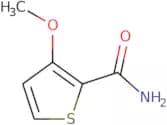
Discontinued product3-Methoxythiophene-2-carboxamide
CAS:Versatile small molecule scaffold
Formula:C6H7NO2SPurity:Min. 95%Molecular weight:157.19 g/mol

![3-[(5-Bromopyrimidin-2-yl)oxy]aniline](/_next/image/?url=https%3A%2Fstatic.cymitquimica.com%2Fproducts%2F3D%2Fthumb-webp%2FLEA98667.webp&w=3840&q=75)
![2-Azaspiro[5.5]undecane](/_next/image/?url=https%3A%2Fstatic.cymitquimica.com%2Fproducts%2F3D%2Fthumb-webp%2FAAA18048.webp&w=3840&q=75)
![2,8-Diazaspiro[4.5]decane](/_next/image/?url=https%3A%2Fstatic.cymitquimica.com%2Fproducts%2F3D%2Fthumb-webp%2FAAA17667.webp&w=3840&q=75)



![N-[2-(Aziridin-1-yl)ethyl]-2-[(2,4-dimethylphenyl)sulfanyl]aniline](/_next/image/?url=https%3A%2Fstatic.cymitquimica.com%2Fproducts%2F3D%2Fthumb-webp%2FDCD74186.webp&w=3840&q=75)