Building Blocks
Subcategories of "Building Blocks"
- Boronic Acids & Boronic Acid Derivatives(5,784 products)
- Chiral Building Blocks(1,243 products)
- Hydrocarbon Building Blocks(6,105 products)
- Organic Building Blocks(61,066 products)
Found 205426 products of "Building Blocks"
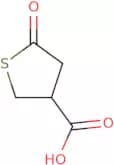
5-Oxothiolane-3-carboxylic acid
CAS:Versatile small molecule scaffold
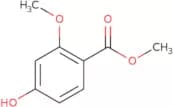
Formula:C5H6O3SPurity:Min. 95%Molecular weight:146.17 g/molMethyl 4-hydroxy-2-methoxybenzoate
CAS:Methyl 4-hydroxy-2-methoxybenzoate is a cell-based inhibitor of indoles and amides. It is an optimal inhibitor for assays for the inhibition of cellular cytokines, including the inhibition of TNF-α, IL-1β, and IL-6. Methyl 4-hydroxy-2-methoxybenzoate has been shown to be an effective inhibitor of piperidine and oxalyl in the presence of NADPH.
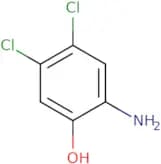
Methyl 4-hydroxy-2-methoxybenzoate is also a selective inhibitor of azaindoles and enzymatic reactions. This compound binds to the active site of azaindole synthase, interfering with its activity.Formula:C9H10O4Purity:Min. 95%Molecular weight:182.18 g/mol2-Amino-4,5-dichlorophenol
CAS:2-Amino-4,5-dichlorophenol is a chemical that is used as an intermediate in the production of other chemicals. It has shown to be toxic to the bladder and hemolytic, but is not active against tissues. 2-Amino-4,5-dichlorophenol increases urea nitrogen levels in the urine when administered to rats. This compound also has been shown to exhibit immunomodulatory effects.
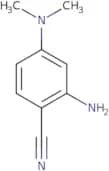
Formula:C6H5Cl2NOPurity:Min. 95%Molecular weight:178.02 g/mol2-Amino-4-(dimethylamino)benzonitrile
CAS:Versatile small molecule scaffold
Formula:C9H11N3Purity:Min. 95%Molecular weight:161.2 g/molRef: 3D-DBA34063
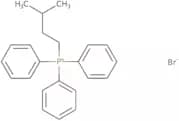
Discontinued productIsoamyltriphenylphosphonium bromide
CAS:Isoamyltriphenylphosphonium bromide is a corrosion inhibitor that is used to protect metals, such as steel and aluminum, from damage caused by water and other corrosive substances. It is also an antifungal agent and can be used in pharmaceutical formulations. Isoamyltriphenylphosphonium bromide has been shown to inhibit the activity of thrombin, an enzyme that regulates blood clotting. This drug also inhibits the growth of fungi that cause infections such as athlete's foot (tinea pedis) or ringworm (tinea corporis). In addition, it has been shown to have antimicrobial activity against bacteria such as Escherichia coli and Staphylococcus aureus.
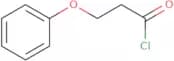
Formula:C23H26BrPPurity:Min. 95%Molecular weight:413.33 g/mol3-Phenoxypropanoyl chloride
CAS:3-Phenoxypropanoyl chloride is a phenoxy compound that is metabolized by the liver to form an amide. It has been shown to have therapeutic benefits in a variety of diseases, such as metabolic disorders, autoimmune diseases, cancers, and inflammatory diseases. 3-Phenoxypropanoyl chloride can be used for treating patients with autoimmune diseases and cancer due to its ability to inhibit the synthesis of cytokines and other mediators of inflammation. It also inhibits platelet aggregation at low doses, but has no effect on platelet function at higher doses. This drug is not active against gram-negative bacteria or fungi.
Formula:C9H9O2ClPurity:Min. 95%Molecular weight:184.61 g/molRef: 3D-DBA31796
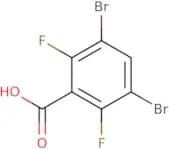
Discontinued product3,5-Dibromo-2,6-difluorobenzoic acid
CAS:Versatile small molecule scaffold
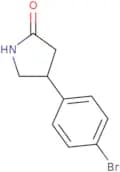
Formula:C7H2Br2F2O2Purity:Min. 95%Molecular weight:315.89 g/mol4-(4-Bromophenyl)pyrrolidin-2-one
CAS:Versatile small molecule scaffold
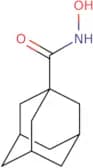
Formula:C10H10BrNOPurity:Min. 95%Molecular weight:240.1 g/molN-Hydroxyadamantane-1-carboxamide
CAS:N-Hydroxyadamantane-1-carboxamide is a research chemical that acts as a growth factor and has various applications in the field of medicine and biology. It has been shown to inhibit tumor necrosis factor-alpha (TNF-α), which plays a role in inflammation and immune response. Additionally, N-Hydroxyadamantane-1-carboxamide can be used as an electrode inhibitor in electrochemical studies.
Formula:C11H17NO2Purity:Min. 95%Molecular weight:195.26 g/molRef: 3D-DBA30944
Discontinued productN-(Butan-2-yl)-1,3-benzothiazol-2-amine
CAS:Versatile small molecule scaffoldFormula:C11H14N2SPurity:Min. 95%Molecular weight:206.31 g/molRef: 3D-DBA29173
Discontinued product3-[(tert-Butylsulfanyl)methyl]aniline
CAS:Versatile small molecule scaffold
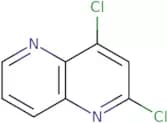
Formula:C11H17NSPurity:Min. 95%Molecular weight:195.33 g/mol2,4-dichloro-1,5-naphthyridine
CAS:2,4-Dichloro-1,5-naphthyridine is a methanolic solution of hydrogen chloride and chloroquine. It has been shown to be an effective antimalarial agent. 2,4-Dichloro-1,5-naphthyridine has been synthesized by the reaction of methanolic hydrogen chloride and sodium methoxide with 1,5-dichloronaphthalene in the presence of chloroform. The chemical name for this compound is 2-(2′,4′-dichlorophenyl)-1H-isoindole-1,3(2H)-dione. This chemical has not been studied extensively in humans but it is thought that it may have similar effects to primaquine.
Formula:C8H4Cl2N2Purity:Min. 95%Molecular weight:199 g/molRef: 3D-DBA25282
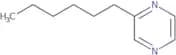
Discontinued product2-Hexylpyrazine
CAS:2-Hexylpyrazine is a heterocyclic organic compound that belongs to the group of alkynyl pyrazines. It is used as a solid catalyst in organic reactions, such as methylation, esterification, and alkylation. 2-Hexylpyrazine has been shown to be effective for bowel disease and inflammatory bowel disease. It has also been shown to inhibit cancer cell growth and is being studied for its potential use in the treatment of autoimmune diseases. 2-Hexylpyrazine is metabolized by bile acids and inflammatory cells into a reactive species which activates G protein coupled receptors on the surface of cells, leading to increased chloride ion concentrations within the cell. This leads to inhibition of dopamine D3 receptor signaling, which may have anti-inflammatory effects.
Formula:C10H16N2Purity:Min. 95%Molecular weight:164.25 g/molRef: 3D-DBA21791
Discontinued productBenzene, (1,1-dimethyl-2-propyn-1-yl)-
CAS:Versatile small molecule scaffold
Formula:C11H12Purity:Min. 95%Molecular weight:144.21 g/molRef: 3D-DBA12905
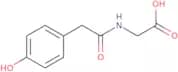
Discontinued productp-Hydroxyphenylacetylglycine
CAS:p-Hydroxyphenylacetylglycine (PHPAG) is a metabolite of creatine, which is found in urine samples. It can be detected through chemical analysis of tissue and food composition. The detection sensitivity is determined by the type of sample and the analytical method used. PHPAG has been shown to have diagnostic value for the diagnosis of certain diseases, such as liver cirrhosis, kidney disease, and fatty acid metabolism disorders. PHPAG has also been shown to be an indicator for intracellular levels of fatty acids and polyunsaturated fatty acids (PUFA).
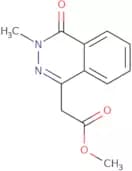
Formula:C10H11NO4Purity:Min. 95%Molecular weight:209.2 g/molMethyl 2-(3-methyl-4-oxo-3,4-dihydrophthalazin-1-yl)acetate
CAS:Versatile small molecule scaffold
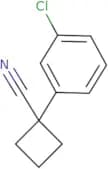
Formula:C12H12N2O3Purity:Min. 95%Molecular weight:232.23 g/mol1-(3-chlorophenyl)cyclobutane-1-carbonitrile
CAS:Versatile small molecule scaffoldFormula:C11H10ClNPurity:Min. 95%Molecular weight:191.66 g/molRef: 3D-DBA04960
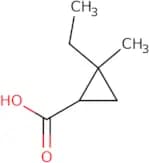
Discontinued product2-Ethyl-2-methylcyclopropane-1-carboxylic acid
CAS:Versatile small molecule scaffold
Formula:C7H12O2Purity:Min. 95%Molecular weight:128.17 g/molRef: 3D-DBA03484
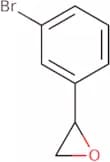
Discontinued product2-(3-bromophenyl)oxirane
CAS:2-(3-Bromophenyl)oxirane is a reactive intermediate which has been studied as a potential neuropharmacological agent. It is a strain of the drug carbamazepine and an epoxide surrogate of sulfinyl. 2-(3-Bromophenyl)oxirane has been shown to be deuterated at the α-carbon position, allowing for reproducible and high concentrations in experiments. The deuterated version can be used to determine the metabolic fate of drugs, such as dopamine.
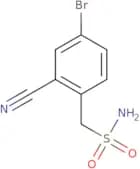
Formula:C8H7OBrPurity:Min. 95%Molecular weight:199.04 g/mol(4-Bromo-2-cyanophenyl)methanesulfonamide
CAS:Versatile small molecule scaffoldFormula:C8H7BrN2O2SPurity:Min. 95%Molecular weight:275.12 g/molRef: 3D-DAD32703
Discontinued product


![3-[(tert-Butylsulfanyl)methyl]aniline](/_next/image/?url=https%3A%2Fstatic.cymitquimica.com%2Fproducts%2F3D%2Fthumb-webp%2FDBA28827.webp&w=3840&q=75)