Building Blocks
Subcategories of "Building Blocks"
- Boronic Acids & Boronic Acid Derivatives(5,778 products)
- Chiral Building Blocks(1,243 products)
- Hydrocarbon Building Blocks(6,099 products)
- Organic Building Blocks(61,038 products)
Found 205376 products of "Building Blocks"
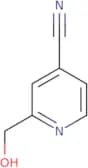
2-(Hydroxymethyl)pyridine-4-carbonitrile
CAS:2-(Hydroxymethyl)pyridine-4-carbonitrile is a methyl ester of 4-cyanopyridine and cysteine, which are two natural amino acids. This compound has been found to be an intermediate in the biosynthesis of thiazoles. It can also be synthesized from the coupling of 2-cyanopyridines with aldehydes or ketones using metal catalysts, such as palladium or platinum. 2-(Hydroxymethyl)pyridine-4-carbonitrile was first identified in luciferin, a biomimetic compound that produces light when oxidized by an enzyme called luciferase.Formula:C7H6N2OPurity:Min. 95%Molecular weight:134.14 g/molethyl 4-azidobutanoate
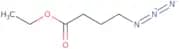
CAS:Ethyl 4-azidobutanoate is a radiotracer that binds to the DNA of tumor cells. It has been shown to have high binding activity in xenograft models, which is mediated by the interaction between ethyl 4-azidobutanoate and nucleophilic sites on the DNA. This radiotracer also has a high specificity for tumors, with no detectable uptake in other tissues. Ethyl 4-azidobutanoate can be used as a diagnostic agent for detecting and quantifying radiation-induced damage in cells and tissues.
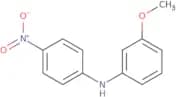
Formula:C6H11N3O2Purity:Min. 95%Molecular weight:157.17 g/mol3-Methoxy-N-(4-nitrophenyl)aniline
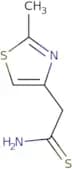
CAS:Versatile small molecule scaffoldFormula:C13H12N2O3Purity:Min. 95%Molecular weight:244.25 g/mol2-(2-Methyl-1,3-thiazol-4-yl)ethanethioamide
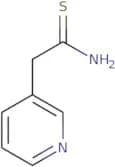
CAS:Versatile small molecule scaffoldFormula:C6H8N2S2Purity:Min. 95%Molecular weight:172.3 g/mol2-(Pyridin-3-yl)ethanethioamide
CAS:Versatile small molecule scaffold
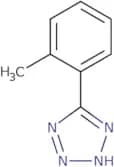
Formula:C7H8N2SPurity:Min. 95%Molecular weight:152.22 g/mol5-(o-Tolyl)tetrazole
CAS:5-(o-Tolyl)tetrazole is a compound that can be synthesized by the reaction of tetrazole with an aldehyde. It has been shown to have high efficiency in the preparation of halides, including chlorides and bromides. 5-(o-Tolyl)tetrazole is also efficient for the synthesis of functional groups, such as methyl tetrazole, ethyl tetrazole, phenyl tetrazole, and substituted phenyl tetrazoles. The cyclic form of 5-(o-tolyl)tetrazole is obtained through irradiation or catalysis.
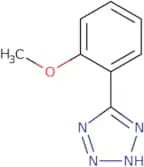
5-(o-Tolyl)tetrazole can also be used as a ligand in coordination chemistry to generate metal complexes with various metals.Formula:C8H8N4Purity:Min. 95%Molecular weight:160.18 g/mol5-(2-Methoxyphenyl)-1H-1,2,3,4-tetrazole
CAS:Versatile small molecule scaffold
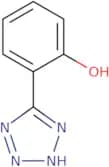
Formula:C8H8N4OPurity:Min. 95%Molecular weight:176.18 g/mol2-(1H-Tetrazol-5-yl)phenol
CAS:2-(1H-Tetrazol-5-yl)phenol (HTZP) is a fluorescent probe that has been shown to have a high affinity for cancer cells. It binds to the DNA of cancer cells and emits light in the presence of hydrogen peroxide. This process generates a signal with a unique wavelength that can be detected by optical microscopy, flow cytometry, and fluorescence spectroscopy. HTZP has also been shown to bind to alkali metal ions such as Li+, K+, Na+, and Cs+. HTZP is an example of a supramolecular ligand that binds to cisplatin, which inhibits DNA replication and protein synthesis in cancer cells. The binding constants for HTZP are higher than those for cisplatin, suggesting that it may be used as an alternative treatment for cancer.
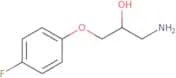
Formula:C7H6N4OPurity:Min. 95%Molecular weight:162.15 g/mol1-Amino-3-(4-fluorophenoxy)propan-2-ol
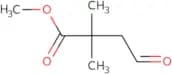
CAS:Versatile small molecule scaffoldFormula:C9H12FNO2Purity:Min. 95%Molecular weight:185.2 g/molMethyl 2,2-dimethyl-4-oxobutanoate
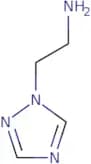
CAS:Versatile small molecule scaffoldFormula:C7H12O3Purity:Min. 95%Molecular weight:144.17 g/mol2-(1H-1,2,4-triazol-1-yl)ethanamine hydrochloride
CAS:Versatile small molecule scaffold
Formula:C4H9ClN4Purity:Min. 95%Molecular weight:148.59 g/mol3-[(6-Chloro-4-phenylquinazolin-2-yl)amino]propan-1-ol
CAS:Versatile small molecule scaffold
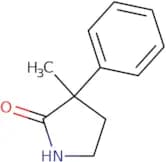
Formula:C17H16ClN3OPurity:Min. 95%Molecular weight:313.8 g/mol3-Methyl-3-phenylpyrrolidin-2-one
CAS:Versatile small molecule scaffoldFormula:C11H13NOPurity:Min. 95%Molecular weight:175.23 g/mol5,5-Dimethyl-5,6,7,8-tetrahydronaphthalen-2-ol
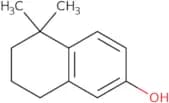
CAS:Versatile small molecule scaffold
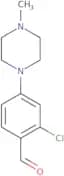
Formula:C12H16OPurity:Min. 95%Molecular weight:176.25 g/mol2-Chloro-4-(4-methylpiperazino)benzaldehyde
CAS:Versatile small molecule scaffoldFormula:C12H15ClN2OPurity:Min. 95%Molecular weight:238.72 g/mol(4-Amino-2-chlorophenyl)methanol
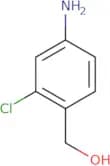
CAS:Versatile small molecule scaffold
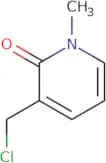
Formula:C7H8ClNOPurity:Min. 95%Molecular weight:157.6 g/mol3-(Chloromethyl)-1-methyl-1,2-dihydropyridin-2-one
CAS:Versatile small molecule scaffold
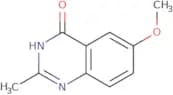
Formula:C7H8ClNOPurity:Min. 95%Molecular weight:157.6 g/mol6-Methoxy-2-methylquinazolin-4-ol
CAS:Versatile small molecule scaffold
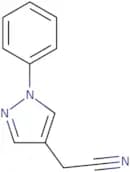
Formula:C10H10N2O2Purity:Min. 95%Molecular weight:190.2 g/mol2-(1-Phenyl-1H-pyrazol-4-yl)acetonitrile
CAS:2-(1-Phenyl-1H-pyrazol-4-yl)acetonitrile is a chemical compound that belongs to the group of methylamines. It can be found in bacteria, where it has been shown to react with methylamine to form tautomers. 2-(1-Phenyl-1H-pyrazol-4-yl)acetonitrile has biological activity and can be detected by the spectra of its compounds. The biological activity may be due to its ability to cyclize into a pyrazole ring or react with other chemicals.Formula:C11H9N3Purity:Min. 95%Molecular weight:183.21 g/mol1-Aminoheptan-2-ol
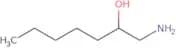
CAS:Versatile small molecule scaffold
Formula:C7H17NOPurity:Min. 95%Molecular weight:131.22 g/mol

![3-[(6-Chloro-4-phenylquinazolin-2-yl)amino]propan-1-ol](/_next/image/?url=https%3A%2Fstatic.cymitquimica.com%2Fproducts%2F3D%2Fthumb-webp%2FBCA44354.webp&w=3840&q=75)