


Building Blocks
This section contains fundamental products for the synthesis of organic and biological compounds. Building blocks are the essential starting materials used to construct complex molecules through various chemical reactions. They play a critical role in drug discovery, material science, and chemical research. At CymitQuimica, we offer a diverse range of high-quality building blocks to support your innovative research and industrial projects, ensuring you have the essential components for successful synthesis.
Subcategories of "Building Blocks"
- Boronic Acids & Boronic Acid Derivatives(5,778 products)
- Chiral Building Blocks(1,243 products)
- Hydrocarbon Building Blocks(6,097 products)
- Organic Building Blocks(61,052 products)
Found 201390 products of "Building Blocks"
Sort by
Purity (%)
0
100
|
0
|
50
|
90
|
95
|
100
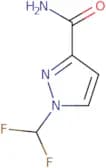
1-(Difluoromethyl)-1H-pyrazole-3-carboxamide
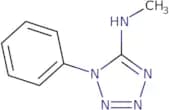
CAS:<p>Versatile small molecule scaffold</p>Formula:C5H5F2N3OPurity:Min. 95%Molecular weight:161.11 g/molN-Methyl-1-phenyl-1H-1,2,3,4-tetrazol-5-amine
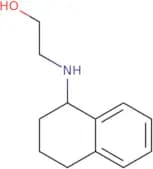
CAS:<p>Versatile small molecule scaffold</p>Formula:C8H9N5Purity:Min. 95%Molecular weight:175.19 g/mol2-((1,2,3,4-Tetrahydronaphthalen-1-yl)amino)ethanol
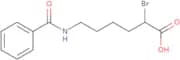
CAS:<p>Versatile small molecule scaffold</p>Formula:C12H17NOPurity:Min. 95%Molecular weight:191.27 g/mol2-Bromo-6-(phenylformamido)hexanoic acid
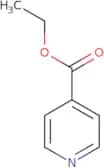
CAS:<p>Versatile small molecule scaffold</p>Formula:C13H16BrNO3Purity:Min. 95%Molecular weight:314.17 g/mol4-Pyridinecarboxylic Acid Ethyl Ester
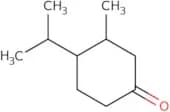
CAS:<p>4-Pyridinecarboxylic Acid Ethyl Ester is a compound that belongs to the group of pyridinecarboxylic acids. It is a metabolite of nicotinamide, which is converted to 4-pyridinecarboxylic acid ethyl ester by esterases in the intestine. Nicotinamide is an important component of the vitamin B3 and has been shown to be effective for treating autoimmune diseases such as rheumatoid arthritis. 4-Pyridinecarboxylic Acid Ethyl Ester may have similar effects on inflammatory bowel disease and alopecia areata. The reaction mechanism of this compound has not been elucidated, but it has been shown to inhibit amyloid protein production in rat intestines. Hydroxyl groups on the side chain likely play a role in hydrogen bonding interactions with receptors in inflammatory bowel disease and alopecia areata.</p>Formula:C8H9NO2Purity:Min. 95%Molecular weight:151.16 g/mol3-Methyl-4-(propan-2-yl)cyclohexan-1-one
CAS:<p>Versatile small molecule scaffold</p>Formula:C10H18OPurity:Min. 95%Molecular weight:154.25 g/molRef: 3D-BAA53819
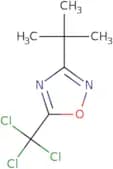
Discontinued product3-tert-Butyl-5-(trichloromethyl)-1,2,4-oxadiazole
CAS:<p>Versatile small molecule scaffold</p>Formula:C7H9Cl3N2OPurity:Min. 95%Molecular weight:243.5 g/mol2-Bromo-5-nitrobenzenesulphonyl chloride
CAS:Versatile small molecule scaffoldFormula:C6H3BrClNO4SPurity:Min. 95%Molecular weight:300.51 g/molRef: 3D-YDA13055
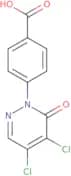
Discontinued product4-(4,5-Dichloro-6-oxo-1,6-dihydropyridazin-1-yl)benzoic acid
CAS:<p>Versatile small molecule scaffold</p>Formula:C11H6Cl2N2O3Purity:Min. 95%Molecular weight:285.08 g/mol2-{[3-(Dimethylamino)propyl]sulfanyl}aniline
CAS:<p>Versatile small molecule scaffold</p>Formula:C11H18N2SPurity:Min. 95%Molecular weight:210.34 g/molRef: 3D-BAA13477
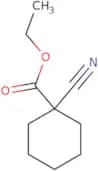
Discontinued product1-Cyano-cyclohexanecarboxylic acid ethyl ester
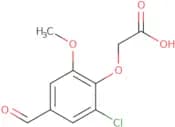
CAS:<p>1-Cyano-cyclohexanecarboxylic acid ethyl ester is a synthetic intermediate in the preparation of benzene. It is used as a reagent for the synthesis of methylcyclohexane and other cyclohexanones. The compound can be prepared by reacting chlorinated aliphatic hydrocarbons with carbon dioxide, followed by acidification and decarbonylation. 1-Cyano-cyclohexanecarboxylic acid ethyl ester can be purified by distillation or recrystallization from acetonitrile, chloroform, or benzene.</p>Formula:C10H15NO2Purity:Min. 95%Molecular weight:181.23 g/mol2-(2-chloro-4-formyl-6-methoxyphenoxy)acetic acid
CAS:<p>Versatile small molecule scaffold</p>Formula:C10H9ClO5Purity:Min. 95%Molecular weight:244.6 g/mol2,5-Dimethylpiperazine dihydrochloride
CAS:<p>Versatile small molecule scaffold</p>Formula:C6H16Cl2N2Purity:Min. 95%Molecular weight:187.11 g/molN-(5-Aminopentyl)hydroxylamine dihydrochloride
CAS:<p>Versatile small molecule scaffold</p>Formula:C5H15ClN2OPurity:Min. 95%Molecular weight:154.64 g/molRef: 3D-BAA00238
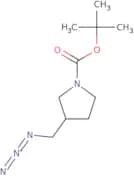
Discontinued producttert-Butyl 3-(azidomethyl)pyrrolidine-1-carboxylate
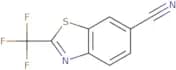
CAS:<p>Versatile small molecule scaffold</p>Formula:C10H18N4O2Purity:Min. 95%Molecular weight:226.28 g/mol2-(Trifluoromethyl)-1,3-benzothiazole-6-carbonitrile
CAS:<p>2-(Trifluoromethyl)-1,3-benzothiazole-6-carbonitrile (2TFB) is a volatile chemical used in the diagnosis of infectious diseases. It is extracted from sample by solid phase microextraction and then analyzed by gas chromatography with mass spectrometry. 2TFB has been shown to be an influential compound in the synthesis of microspheres for drug delivery. The imprinting process is also influenced by this compound and can be used for the production of microspheres with different properties on demand. It has been shown that 2-TFB inhibits virus growth and can be used as a potential anti-viral agent.</p>Formula:C9H3F3N2SPurity:Min. 95%Molecular weight:228.2 g/molRef: 3D-AZB04114
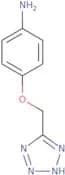
Discontinued product4-(1H-1,2,3,4-Tetrazol-5-ylmethoxy)aniline
CAS:<p>Versatile small molecule scaffold</p>Formula:C8H9N5OPurity:Min. 95%Molecular weight:191.19 g/molRef: 3D-AYA47447
Discontinued product4-[(2-Chlorophenyl)methyl]piperidine hydrochloride
CAS:<p>Versatile small molecule scaffold</p>Formula:C12H17Cl2NPurity:Min. 95%Molecular weight:246.17 g/molRef: 3D-AXC30294
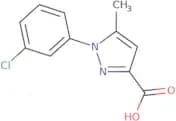
Discontinued product1-(3-Chlorophenyl)-5-methyl-1H-pyrazole-3-carboxylic acid
CAS:<p>Versatile small molecule scaffold</p>Formula:C11H9ClN2O2Purity:Min. 95%Molecular weight:236.65 g/molRef: 3D-AXB97208
Discontinued product7-(Trifluoromethyl)benzo[b]thiophene-2-carboxylic acid
CAS:<p>Versatile small molecule scaffold</p>Formula:C10H5F3O2SPurity:Min. 95%Molecular weight:246.2 g/molRef: 3D-AXA99866
Discontinued product

![2-{[3-(Dimethylamino)propyl]sulfanyl}aniline](/_next/image/?url=https%3A%2Fstatic.cymitquimica.com%2Fproducts%2F3D%2Fthumb-webp%2FBAA13477.webp&w=3840&q=75)


![4-[(2-Chlorophenyl)methyl]piperidine hydrochloride](/_next/image/?url=https%3A%2Fstatic.cymitquimica.com%2Fproducts%2F3D%2Fthumb-webp%2FAXC30294.webp&w=3840&q=75)
![7-(Trifluoromethyl)benzo[b]thiophene-2-carboxylic acid](/_next/image/?url=https%3A%2Fstatic.cymitquimica.com%2Fproducts%2F3D%2Fthumb-webp%2FAXA99866.webp&w=3840&q=75)