Building Blocks
This section contains fundamental products for the synthesis of organic and biological compounds. Building blocks are the essential starting materials used to construct complex molecules through various chemical reactions. They play a critical role in drug discovery, material science, and chemical research. At CymitQuimica, we offer a diverse range of high-quality building blocks to support your innovative research and industrial projects, ensuring you have the essential components for successful synthesis.
Subcategories of "Building Blocks"
- Boronic Acids & Boronic Acid Derivatives(5,778 products)
- Chiral Building Blocks(1,243 products)
- Hydrocarbon Building Blocks(6,097 products)
- Organic Building Blocks(61,052 products)
Found 201390 products of "Building Blocks"
Sort by
Purity (%)
0
100
|
0
|
50
|
90
|
95
|
100
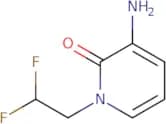
3-Amino-1-(2,2-difluoroethyl)-1,2-dihydropyridin-2-one
CAS:<p>Versatile small molecule scaffold</p>Formula:C7H8F2N2OPurity:Min. 95%Molecular weight:174.15 g/molRef: 3D-AAC64665
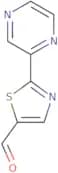
Discontinued product2-(Pyrazin-2-yl)-1,3-thiazole-5-carbaldehyde
CAS:Versatile small molecule scaffoldFormula:C8H5N3OSPurity:Min. 95%Molecular weight:191.21 g/molRef: 3D-AAC59409
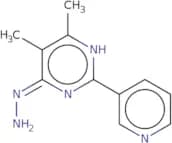
Discontinued product4-Hydrazinylidene-5,6-dimethyl-2-(pyridin-3-yl)-1,4-dihydropyrimidine
CAS:<p>Versatile small molecule scaffold</p>Formula:C11H13N5Purity:Min. 95%Molecular weight:215.3 g/molRef: 3D-AAC57157
Discontinued productBicyclo[4.1.0]heptan-7-ylmethanol
CAS:<p>Bicyclo[4.1.0]heptan-7-ylmethanol is a hydride inhibitor of lactate dehydrogenase, which is an enzyme that catalyzes the conversion of pyruvate to lactate in the liver. Bicyclo[4.1.0]heptan-7-ylmethanol has inhibitory properties against aldehyde dehydrogenase and alcohol dehydrogenase, which are enzymes involved in the metabolism of aldehydes and alcohols respectively. This substance also inhibits mitochondrial monoamine oxidase (MAO), which is an enzyme that breaks down neurotransmitters such as dopamine, norepinephrine, and serotonin. Bicyclo[4.1.0]heptan-7-ylmethanol can be used to inhibit the function of MAO in order to increase levels of these neurotransmitters in the brain, which may be helpful for conditions like depression or Parkinson</p>Formula:C8H14OPurity:Min. 95%Molecular weight:126.2 g/molRef: 3D-GAA22639
Discontinued product2-Cyclopropyl-5-fluorobenzoic acid
CAS:<p>Versatile small molecule scaffold</p>Formula:C10H9FO2Purity:Min. 95%Molecular weight:180.17 g/molRef: 3D-AAC50478
Discontinued product3,6-Dimethylimidazo[2,1-b]thiazole-5-carbaldehyde
CAS:<p>Versatile small molecule scaffold</p>Formula:C8H8N2OSPurity:Min. 95%Molecular weight:180.23 g/mol3-[(6-Chloropyrimidin-4-yl)amino]propanamide
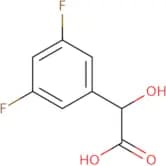
CAS:<p>Versatile small molecule scaffold</p>Formula:C7H9ClN4OPurity:Min. 95%Molecular weight:200.62 g/molBenzeneacetic acid, 3,5-difluoro-hydroxy-, (S)-
CAS:<p>Benzeneacetic acid, 3,5-difluoro-hydroxy-, (S)- is a ligand that can bind to transition metals such as copper or iron. It has been shown to be a good sensing ligand for the detection of mandelate and enantioselective for the synthesis of chiral molecules. The divalent bonding between the benzeneacetic acid and the metal may be due to coordination or dipyridyl. The stability of this molecule is also dependent on the type of metal it is bonded with.</p>Formula:C8H6F2O3Purity:Min. 95%Molecular weight:188.13 g/mol1-(3-Methoxyphenyl)ethane-1-sulfonamide
CAS:<p>Versatile small molecule scaffold</p>Formula:C9H13NO3SPurity:Min. 95%Molecular weight:215.27 g/molRef: 3D-AAC48760
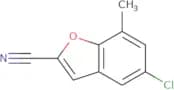
Discontinued product5-Chloro-7-methyl-1-benzofuran-2-carbonitrile
CAS:<p>Versatile small molecule scaffold</p>Formula:C10H6ClNOPurity:Min. 95%Molecular weight:191.61 g/molRef: 3D-AAC39356
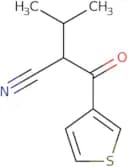
Discontinued product3-Methyl-2-(thiophene-3-carbonyl)butanenitrile
CAS:<p>Versatile small molecule scaffold</p>Formula:C10H11NOSPurity:Min. 95%Molecular weight:193.27 g/molRef: 3D-AAC35155
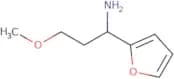
Discontinued product1-(Furan-2-yl)-3-methoxypropan-1-amine
CAS:<p>Versatile small molecule scaffold</p>Formula:C8H13NO2Purity:Min. 95%Molecular weight:155.19 g/molRef: 3D-AAC28244
Discontinued product2-[(2-Cyclohexylethyl)amino]acetamide
CAS:<p>Versatile small molecule scaffold</p>Formula:C10H20N2OPurity:Min. 95%Molecular weight:184.28 g/molRef: 3D-JXB07544
Discontinued productN-Methoxy-N,2-dimethylbenzamide
CAS:<p>Versatile small molecule scaffold</p>Formula:C10H13NO2Purity:Min. 95%Molecular weight:179.22 g/molRef: 3D-FFA25061
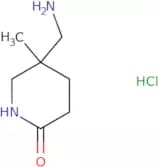
Discontinued product5-(Aminomethyl)-5-methylpiperidin-2-one hydrochloride
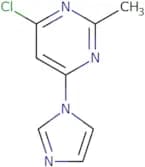
CAS:<p>Versatile small molecule scaffold</p>Formula:C7H15ClN2OPurity:Min. 95%Molecular weight:178.66 g/mol4-Chloro-6-(1H-imidazol-1-yl)-2-methylpyrimidine
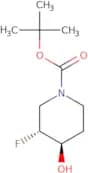
CAS:<p>Versatile small molecule scaffold</p>Formula:C8H7ClN4Purity:Min. 95%Molecular weight:194.62 g/moltrans-1-BOC-3-Fluoro-4-hydroxypiperidine
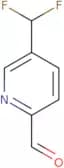
CAS:<p>Versatile small molecule scaffold</p>Formula:C10H18FNO3Purity:Min. 95%Molecular weight:219.26 g/mol5-(Difluoromethyl)pyridine-2-carbaldehyde
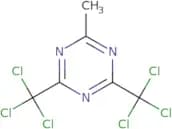
CAS:<p>Versatile small molecule scaffold</p>Formula:C7H5F2NOPurity:Min. 95%Molecular weight:157.12 g/mol2-Methyl-4,6-bis(trichloromethyl)-1,3,5-triazine
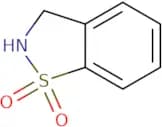
CAS:<p>2-Methyl-4,6-bis(trichloromethyl)-1,3,5-triazine is a triazine with an ionic structure. It is used as a precursor to benzene and acetonitrile. The yields of 2-methyl-4,6-bis(trichloromethyl)-1,3,5-triazine are higher in the presence of benzene compared to acetonitrile. The quantum yield for 2-methyl-4,6-bis(trichloromethyl)-1,3,5-triazine has been found to be 0.2 from the photophysical properties of its emission spectrum. This technique has been used to detect small amounts of singlet oxygen that are generated by photolysis or irradiation with lasers.</p>Formula:C6H3Cl6N3Purity:Min. 95%Molecular weight:329.81 g/mol2,3-dihydro-1lambda6,2-benzothiazole-1,1-dione
CAS:<p>2,3-Dihydro-1lambda6,2-benzothiazole-1,1-dione is a plant growth regulator that is used in horticultural applications. It is an anion that can be used as an additive to prevent corrosion and rusting of metals. 2,3-Dihydro-1lambda6,2-benzothiazole-1,1-dione reacts with chloride ions to form the corresponding chromatographic product. This compound also forms reaction products with other compounds such as pyrrole, amide and carbonyl group.</p>Formula:C7H7NO2SPurity:Min. 95%Molecular weight:169.2 g/mol

![Bicyclo[4.1.0]heptan-7-ylmethanol](/_next/image/?url=https%3A%2Fstatic.cymitquimica.com%2Fproducts%2F3D%2Fthumb-webp%2FGAA22639.webp&w=3840&q=75)

![3,6-Dimethylimidazo[2,1-b]thiazole-5-carbaldehyde](/_next/image/?url=https%3A%2Fstatic.cymitquimica.com%2Fproducts%2F3D%2Fthumb-webp%2FFFA18230.webp&w=3840&q=75)
![3-[(6-Chloropyrimidin-4-yl)amino]propanamide](/_next/image/?url=https%3A%2Fstatic.cymitquimica.com%2Fproducts%2F3D%2Fthumb-webp%2FAAC48959.webp&w=3840&q=75)

![2-[(2-Cyclohexylethyl)amino]acetamide](/_next/image/?url=https%3A%2Fstatic.cymitquimica.com%2Fproducts%2F3D%2Fthumb-webp%2FJXB07544.webp&w=3840&q=75)