Building Blocks
Subcategories of "Building Blocks"
- Boronic Acids & Boronic Acid Derivatives(5,805 products)
- Chiral Building Blocks(1,248 products)
- Hydrocarbon Building Blocks(6,118 products)
- Organic Building Blocks(61,447 products)
Found 208423 products of "Building Blocks"
2-[(5-Chloro-2-fluorophenyl)formamido]-3-hydroxybutanoic acid
CAS:Versatile small molecule scaffoldFormula:C11H11ClFNO4Purity:Min. 95%Molecular weight:275.66 g/mol2-[(2,6-Difluorophenyl)formamido]-3-methylbutanoic acid
CAS:Versatile small molecule scaffoldFormula:C12H13F2NO3Purity:Min. 95%Molecular weight:257.23 g/mol2-[(1H-Indazol-5-yl)formamido]propanoic acid
CAS:Versatile small molecule scaffoldFormula:C11H11N3O3Purity:Min. 95%Molecular weight:233.22 g/mol2-((1,1-Dioxidobenzo[D]isothiazol-3-yl)amino)-3-methylpentanoic acid
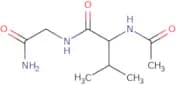
CAS:Versatile small molecule scaffoldFormula:C13H16N2O4SPurity:Min. 95%Molecular weight:296.34 g/molN-(Carbamoylmethyl)-2-acetamido-3-methylbutanamide
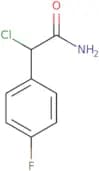
CAS:Versatile small molecule scaffoldFormula:C9H17N3O3Purity:Min. 95%Molecular weight:215.25 g/mol2-Chloro-2-(4-fluorophenyl)acetamide
CAS:Versatile small molecule scaffold
Formula:C8H7ClFNOPurity:Min. 95%Molecular weight:187.6 g/mol2-[(Adamantan-1-yl)formamido]-3-(1H-indol-3-yl)propanoic acid
CAS:Versatile small molecule scaffold
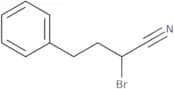
Formula:C22H26N2O3Purity:Min. 95%Molecular weight:366.5 g/mol2-Bromo-4-phenylbutanenitrile
CAS:2-Bromo-4-phenylbutanenitrile is a quinoline derivative that is used in the synthesis of nitriles, thiophenes, and pyridines. This compound can be obtained by cross-coupling reactions with organometallic reagents such as iodides and pyridines. The use of 2-bromo-4-phenylbutanenitrile in synthesis allows for enantioselective syntheses. This compound is also a nucleophile, which can be used to introduce a carbon atom into organic compounds. 2-Bromo-4-phenylbutanenitrile can be reduced with lithium aluminum hydride or sodium borohydride to form an alcohol or an amine respectively.Formula:C10H10BrNPurity:Min. 95%Molecular weight:224.1 g/moltert-Butyl N-[(3-nitrophenyl)methyl]carbamate
CAS:Versatile small molecule scaffoldFormula:C12H16N2O4Purity:Min. 95%Molecular weight:252.27 g/mol1-Chloro-3-[(2-methylpropyl)sulfanyl]propane
CAS:Versatile small molecule scaffoldFormula:C7H15ClSPurity:Min. 95%Molecular weight:166.71 g/mol6-Methoxy-1,2-benzothiazole
CAS:Versatile small molecule scaffold
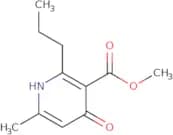
Formula:C8H9N3OPurity:Min. 95%Molecular weight:163.18 g/molMethyl 6-methyl-4-oxo-2-propyl-1,4-dihydropyridine-3-carboxylate
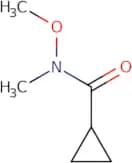
CAS:Versatile small molecule scaffoldFormula:C11H15NO3Purity:Min. 95%Molecular weight:209.24 g/molN-Methoxy-N-methylcyclopropanecarboxamide
CAS:N-Methoxy-N-methylcyclopropanecarboxamide is a selective inhibitor of the enzyme azaindole synthase. This drug was shown to be efficacious in vivo in rats with an azaindole-resistant strain of neutrophil leukemia. It also showed efficacy in vitro against human neutrophils and erythrocytes, as well as human blood cells. Azaindole synthase is an enzyme that catalyzes the synthesis of azaindoles from indole and acetaldehyde. This compound has been identified as a lead optimization candidate for treatment of certain cancers, such as leukemia and lymphoma.
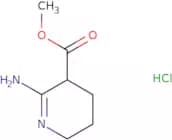
Formula:C6H11NO2Purity:Min. 95%Molecular weight:129.16 g/molMethyl 2-amino-3,4,5,6-tetrahydropyridine-3-carboxylate hydrochloride
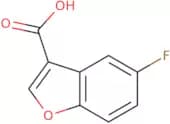
CAS:Versatile small molecule scaffoldFormula:C7H13ClN2O2Purity:Min. 95%Molecular weight:192.64 g/mol5-Fluoro-1-benzofuran-3-carboxylic acid
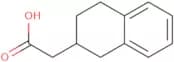
CAS:Versatile small molecule scaffoldFormula:C9H5FO3Purity:Min. 95%Molecular weight:180.13 g/mol2-(1,2,3,4-Tetrahydronaphthalen-2-yl)acetic acid
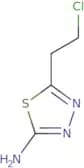
CAS:Versatile small molecule scaffoldFormula:C12H14O2Purity:Min. 95%Molecular weight:190.24 g/mol5-(2-Chloroethyl)-1,3,4-thiadiazol-2-amine
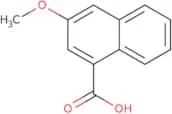
CAS:Versatile small molecule scaffoldFormula:C4H6ClN3SPurity:Min. 95%Molecular weight:163.63 g/mol3-Methoxynaphthalene-1-carboxylic acid
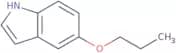
CAS:3-Methoxynaphthalene-1-carboxylic acid is a biotransformed product of guanine and aziridine, which is involved in the formation of amide. 3-Methoxynaphthalene-1-carboxylic acid has been shown to inhibit tumor growth in vivo. It also has an antitumor effect on cultured cells and impurities that are present in the drug can be removed by preparative high performance liquid chromatography (HPLC). 3-Methoxynaphthalene-1-carboxylic acid inhibits bacterial growth by binding to DNA gyrase and topoisomerase IV, which are enzymes that maintain the integrity of bacterial DNA. 3-Methoxynaphthalene-1-carboxylic acid has not been tested as a potential antihypertensive agent. The cytotoxic activity of this compound is mainly due to its ability to interfere with DNA replication andFormula:C12H10O3Purity:Min. 95%Molecular weight:202.21 g/mol5-Propoxy-1H-indole
CAS:5-Propoxy-1H-indole is a small molecule that inhibits protein synthesis at the level of translation. It binds to mammalian ribosomes and prevents the amino acid transfer, thereby inhibiting protein synthesis. 5-Propoxy-1H-indole has been shown to inhibit the production of proteins in cells in culture, and also has a strong effect on neuronal function in vivo. This drug has been shown to have clinical relevance for Parkinson's disease, as it may be used to treat symptoms such as tremors, rigidity, and bradykinesia.
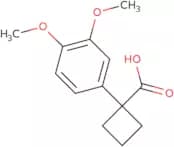
Formula:C11H13NOPurity:Min. 95%Molecular weight:175.23 g/mol1-(3,4-Dimethoxyphenyl)cyclobutane-1-carboxylic acid
CAS:Versatile small molecule scaffold
Formula:C13H16O4Purity:Min. 95%Molecular weight:236.26 g/mol
![2-[(5-Chloro-2-fluorophenyl)formamido]-3-hydroxybutanoic acid](/_next/image/?url=https%3A%2Fstatic.cymitquimica.com%2Fproducts%2F3D%2Fthumb-webp%2FWFC96918.webp&w=3840&q=75)

![2-[(2,6-Difluorophenyl)formamido]-3-methylbutanoic acid](/_next/image/?url=https%3A%2Fstatic.cymitquimica.com%2Fproducts%2F3D%2Fthumb-webp%2FWFC97219.webp&w=3840&q=75)
![2-[(1H-Indazol-5-yl)formamido]propanoic acid](/_next/image/?url=https%3A%2Fstatic.cymitquimica.com%2Fproducts%2F3D%2Fthumb-webp%2FWFC97336.webp&w=3840&q=75)
![2-((1,1-Dioxidobenzo[D]isothiazol-3-yl)amino)-3-methylpentanoic acid](/_next/image/?url=https%3A%2Fstatic.cymitquimica.com%2Fproducts%2F3D%2Fthumb-webp%2FWFC97966.webp&w=3840&q=75)
![2-[(Adamantan-1-yl)formamido]-3-(1H-indol-3-yl)propanoic acid](/_next/image/?url=https%3A%2Fstatic.cymitquimica.com%2Fproducts%2F3D%2Fthumb-webp%2FWFC98855.webp&w=3840&q=75)
![tert-Butyl N-[(3-nitrophenyl)methyl]carbamate](/_next/image/?url=https%3A%2Fstatic.cymitquimica.com%2Fproducts%2F3D%2Fthumb-webp%2FXFA29165.webp&w=3840&q=75)
![1-Chloro-3-[(2-methylpropyl)sulfanyl]propane](/_next/image/?url=https%3A%2Fstatic.cymitquimica.com%2Fproducts%2F3D%2Fthumb-webp%2FXFA29864.webp&w=3840&q=75)