Building Blocks
Subcategories of "Building Blocks"
- Boronic Acids & Boronic Acid Derivatives(5,780 products)
- Chiral Building Blocks(1,241 products)
- Hydrocarbon Building Blocks(6,100 products)
- Organic Building Blocks(61,010 products)
Found 205258 products of "Building Blocks"
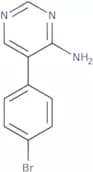
5-(4-Bromophenyl)pyrimidin-4-amine
CAS:Versatile small molecule scaffold
Formula:C10H8BrN3Purity:Min. 95%Molecular weight:250.09 g/molRef: 3D-GCA23914
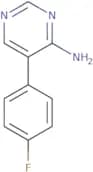
Discontinued product5-(4-Fluorophenyl)pyrimidin-4-amine
CAS:Versatile small molecule scaffold
Formula:C10H8FN3Purity:Min. 95%Molecular weight:189.19 g/molRef: 3D-GCA23905
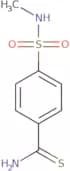
Discontinued product4-(Methylsulfamoyl)benzene-1-carbothioamide
CAS:Versatile small molecule scaffold
Formula:C8H10N2O2S2Purity:Min. 95%Molecular weight:230.3 g/molRef: 3D-GCA23681
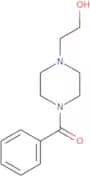
Discontinued product2-(4-Benzoyl-1-piperazinyl)ethanol
CAS:Versatile small molecule scaffold
Formula:C13H18N2O2Purity:Min. 95%Molecular weight:234.3 g/molRef: 3D-GCA22756
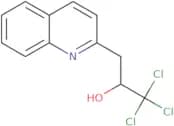
Discontinued product1,1,1-Trichloro-3-(quinolin-2-yl)propan-2-ol
CAS:Versatile small molecule scaffoldFormula:C12H10Cl3NOPurity:Min. 95%Molecular weight:290.6 g/molRef: 3D-GCA21174
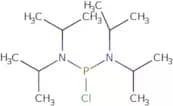
Discontinued productBis(diisopropylamino)chlorophosphine
CAS:Bis(diisopropylamino)chlorophosphine is a phosphorylating agent that binds to the polymerase active site of the hepatitis C virus (HCV) NS5B protein. It is a promising anti-HCV drug candidate for the treatment of chronic hepatitis C infections. Bis(diisopropylamino)chlorophosphine has been shown to be effective in inhibiting HCV replication in vitro and in vivo, with no significant toxicity. Bis(diisopropylamino)chlorophosphine has also been shown to be an excellent probe for detecting HCV RNA in clinical samples by fluorescence microscopy. This compound has been successfully used in a phase I clinical trial and is currently undergoing phase II clinical development.
Formula:C12H28ClN2PPurity:Min. 95%Molecular weight:266.79 g/molRef: 3D-GCA18363
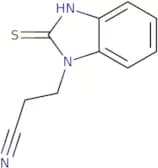
Discontinued product3-(2-Sulfanyl-1H-1,3-benzodiazol-1-yl)propanenitrile
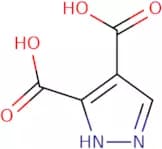
CAS:Versatile small molecule scaffoldFormula:C10H9N3SPurity:Min. 95%Molecular weight:203.27 g/mol1H-Pyrazole-3,4-dicarboxylic acid
CAS:1H-Pyrazole-3,4-dicarboxylic acid is an organic compound that is a white solid. It is a proton acceptor and stabilizer in ammonium formate. In the presence of amide and cyanoformate, it has been shown to inhibit neprilysin activity. 1H-Pyrazole-3,4-dicarboxylic acid also has membrane properties and can be used as a viscosity modifier for polyphosphoric acid. This compound also has some acid moieties that can modulate its solubility in organic solvents.
Formula:C5H4N2O4Purity:Min. 95%Molecular weight:156.1 g/mol4-(4-Nitrophenoxy)azetidin-2-one
CAS:Versatile small molecule scaffold
Formula:C9H8N2O4Purity:Min. 95%Molecular weight:208.17 g/molRef: 3D-GBA89887
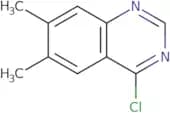
Discontinued product4-Chloro-6,7-dimethylquinazoline
CAS:Versatile small molecule scaffold
Formula:C10H9ClN2Purity:Min. 95%Molecular weight:192.64 g/mol7-Bromobenzo[d][1,2,3]thiadiazole
CAS:Versatile small molecule scaffold
Formula:C6H3BrN2SPurity:Min. 95%Molecular weight:215.07 g/molRef: 3D-GBA86003
Discontinued product4-[(Dimethylamino)methyl]quinolin-3-ol dihydrochloride
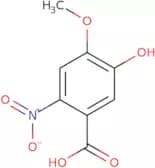
CAS:Versatile small molecule scaffoldFormula:C12H16Cl2N2OPurity:Min. 95%Molecular weight:275.17 g/mol5-hydroxy-4-methoxy-2-nitrobenzoic acid
CAS:5-hydroxy-4-methoxy-2-nitrobenzoic acid is a synthetic antioxidant that is synthesised from α-tocopherol. It has been shown to be an effective scavenger of hydroxyl radicals and reactive oxygen species, which are involved in the oxidative degradation of biomolecules. 5-Hydroxy-4-methoxy-2-nitrobenzoic acid can be used as an antioxidant in food and cosmetics. This compound also reacts with linoleic acid, forming a phenolic product, which has antioxidant activity.
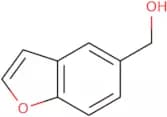
Formula:C8H7NO6Purity:Min. 95%Molecular weight:213.14 g/molBenzofuran-5-ylmethanol
CAS:Benzofuran-5-ylmethanol is an aromatic ether that finds applications in various industries such as research chemicals, medicines, and catalysts. It is used as a building block for the synthesis of compounds like oxalyl glycine, aldehyde dimers, and trifluoroacetic acid. Benzofuran-5-ylmethanol also exhibits antiviral properties and has been studied for its potential in inhibiting viral replication. Additionally, it is a precursor for the synthesis of phenylethylamine derivatives and polyunsaturated fatty acids. With its diverse range of applications, Benzofuran-5-ylmethanol serves as a valuable compound in the field of organic chemistry and industrial processes.
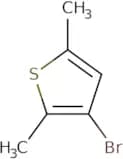
Formula:C9H8O2Purity:Min. 95%Molecular weight:148.16 g/mol3-Bromo-2,5-dimethylthiophene
CAS:Versatile small molecule scaffold
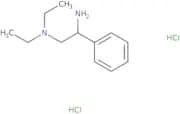
Formula:C6H7BrSPurity:Min. 95%Molecular weight:191.09 g/mol(2-Amino-2-phenylethyl)diethylamine dihydrochloride
CAS:Versatile small molecule scaffold
Formula:C12H22Cl2N2Purity:Min. 95%Molecular weight:265.2 g/molRef: 3D-GBA78886
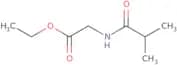
Discontinued productEthyl 2-(2-methylpropanamido)acetate
CAS:Versatile small molecule scaffold
Formula:C8H15NO3Purity:Min. 95%Molecular weight:173.21 g/molRef: 3D-GBA76630
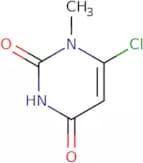
Discontinued product6-Chloro-1-methyluracil
CAS:6-Chloro-1-methyluracil is a nucleophilic acylating agent that reacts with primary amines to form N,N'-acylureas. It also reacts with chloride to form chlorinated derivatives. 6-Chloro-1-methyluracil has been shown to react with hydrogen peroxide in an acid solution to produce cyclen and aldehydes. The reaction scheme is shown below:
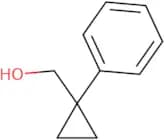
Formula:C5H5ClN2O2Purity:Min. 95%Molecular weight:160.56 g/mol(1-Phenylcyclopropyl)methanol
CAS:(1-Phenylcyclopropyl)methanol is an aromatic ketone that can be used in the synthesis of oxazaborolidines. It has been proven to be a good substrate for asymmetric syntheses, which are often used for the development of enantioselective reactions. The mechanism of this reaction is not yet fully understood, but it is thought that the C-O bond in (1-phenylcyclopropyl)methanol reacts with acetophenone to form an intermediate diketone. This intermediate then reacts with an electrophile such as sodium methoxide or methyl iodide to produce the desired product.
Formula:C10H12OPurity:Min. 95%Molecular weight:148.2 g/molMethyl oxazole-2-carboxylate
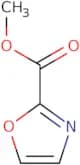
CAS:Methyl oxazole-2-carboxylate is a cyclic, chiral, methyl ester. It is a congener of the drug Valine and has been shown to have antitumor potential. The methyl oxazole-2-carboxylate is an amide with a cyclic peptide backbone and is synthesized from valine by way of an enzymatic reaction that converts the amino acid into a chiral, cyclic amide. This compound has demonstrated anticancer properties in vitro and in vivo. Methyl oxazole-2-carboxylate also has antiangiogenic activity which may be due to its ability to inhibit protein synthesis in tumor cells.
Formula:C5H5NO3Purity:Min. 95%Molecular weight:127.1 g/mol


![7-Bromobenzo[d][1,2,3]thiadiazole](/_next/image/?url=https%3A%2Fstatic.cymitquimica.com%2Fproducts%2F3D%2Fthumb-webp%2FGBA86003.webp&w=3840&q=75)
![4-[(Dimethylamino)methyl]quinolin-3-ol dihydrochloride](/_next/image/?url=https%3A%2Fstatic.cymitquimica.com%2Fproducts%2F3D%2Fthumb-webp%2FGBA84224.webp&w=3840&q=75)