


Building Blocks
Subcategories of "Building Blocks"
- Boronic Acids & Boronic Acid Derivatives(5,774 products)
- Chiral Building Blocks(1,237 products)
- Hydrocarbon Building Blocks(6,098 products)
- Organic Building Blocks(60,970 products)
Found 205134 products of "Building Blocks"
Potassium tert-butyl N-[3-(trifluoroboranuidyl)propyl]carbamate
CAS:Versatile small molecule scaffold
Formula:C8H16BF3KNO2Purity:Min. 95%Molecular weight:265.13 g/mol3-Dimethylamino-1-pyridin-3-yl-propenone
CAS:Versatile small molecule scaffoldFormula:C10H12N2OPurity:Min. 95%Molecular weight:176.22 g/mol(e)-(2-(1-(tert-butoxycarbonyl)piperidin-4-yl)vinyl)boronic acid pinacol ester
CAS:Versatile small molecule scaffold
Formula:C18H32BNO4Purity:Min. 95%Molecular weight:337.27 g/molGlycidyltrimethylammonium Chloride
CAS:Glycidyltrimethylammonium chloride is a quaternary ammonium compound that has been widely used as a disinfectant and in wastewater treatment. It is mainly used to kill bacteria and viruses, although it can also be used to remove hazardous material from water. Glycidyltrimethylammonium chloride has the ability to inhibit bacterial growth by causing cell membrane damage. This compound is also able to inhibit the synthesis of DNA, RNA, and protein in cells by binding to their respective building blocks. In addition, glycidyltrimethylammonium chloride has cytotoxic effects on human cells and significantly inhibits the replication of oral pathogens.Formula:C6H14ClNOPurity:Min. 95%Color and Shape:Clear LiquidMolecular weight:151.63 g/mol(2R)-2-Acetamido-3,3-dimethylbutanoic acid
CAS:Versatile small molecule scaffoldFormula:C8H15NO3Purity:Min. 95%Molecular weight:173.21 g/mol3-bromo-6,7-dihydro-5h-pyrrolo[3,4-b]pyridine hcl
CAS:Versatile small molecule scaffold
Formula:C7H8BrClN2Purity:Min. 95%Molecular weight:235.51 g/mol2-{[2-(2,6-Dioxopiperidin-3-yl)-1-oxo-2,3-dihydro-1H-isoindol-4-yl]oxy}acetic acid
CAS:Versatile small molecule scaffoldFormula:C15H14N2O6Purity:Min. 95%Molecular weight:318.28 g/mol3-Methylbenzo[b]thiophene-2-carboxylic acid
CAS:3-Methylbenzo[b]thiophene-2-carboxylic acid (MBTCA) is a heterocyclic compound that is an intermediate in the synthesis of 3-methylthiophene-2-carboxylic acid, a precursor to other drugs. MBTCA is an aerobic, nonpolar compound that has shown antimicrobial activity against some bacteria and fungi. It also has been shown to have practicality as a biomolecular probe for methyl groups in organic solvents. MBTCA can be synthesized by nitration of benzene in the presence of sulfur and sulfoxides. This reaction produces nitrobenzene, which can then be oxidized by potassium permanganate or hydrogen peroxide to produce MBTCA. The most common isomer of MBTCA is 2-(3,5-dimethoxybenzylidene)tetrahydrofuran, with three methyl groups on the
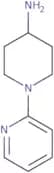
Formula:C10H8O2SPurity:Min. 95%Molecular weight:192.23 g/mol(1-Pyridin-2-yl)piperidin-4-amine
CAS:(1-Pyridin-2-yl)piperidin-4-amine is a drug that acts as an anorexiant. It binds to the serotonin 5HT3 receptor, which is involved in the regulation of appetite and mood. It also blocks the action of serotonin at the 5HT4 receptor, which is involved in mediating intestinal motility. This agent has been shown to have a potent antagonist effect on the 1-4c alkyl group of serotonin receptors. The phenoxy group and methyl group are also responsible for binding with serotonin receptors and blocking their activity.Formula:C10H15N3Purity:Min. 95%Molecular weight:177.25 g/mol2-[5-(4,4,5,5-Tetramethyl-1,3,2-dioxaborolan-2-yl)pyrimidin-2-yl]propan-2-ol
CAS:Versatile small molecule scaffoldFormula:C13H21BN2O3Purity:Min. 95%Molecular weight:264.13 g/molImidazo[1,2-a]pyrazine-2-carbaldehyde
CAS:Versatile small molecule scaffold
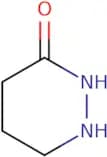
Formula:C7H5N3OPurity:Min. 95%Molecular weight:147.14 g/mol1,2-Diazinan-3-one
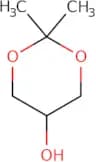
CAS:Please enquire for more information about 1,2-Diazinan-3-one including the price, delivery time and more detailed product information at the technical inquiry form on this pageFormula:C4H8N2OPurity:Min. 95%Molecular weight:100.12 g/mol2,2-Dimethyl-1,3-dioxan-5-ol
CAS:2,2-Dimethyl-1,3-dioxan-5-ol is a chemical compound that has been shown to have catalytic properties. It has also been used as an additive in organic synthesis reactions to activate carboxylic acids. 2,2-Dimethyl-1,3-dioxan-5-ol is an oxygenated compound that can be synthesized by the reaction of pyridine and formaldehyde. This substance can be used in acidic conditions and must be activated by solketal or dioxane before use. The physical properties of this chemical are shown using FTIR spectroscopy on corncob samples and physicochemical parameters were determined using standard techniques.Formula:C6H12O3Purity:Min. 95%Molecular weight:132.16 g/molMethyl 3-oxoisoindoline-5-carboxylate
CAS:Versatile small molecule scaffoldFormula:C10H9NO3Purity:Min. 95%Molecular weight:191.18 g/molbenzyl 5-(tetramethyl-1,3,2-dioxaborolan-2-yl)-1,2,3,6-tetrahydropyridine-1-carboxylate
CAS:Versatile small molecule scaffoldFormula:C19H26BNO4Purity:Min. 95%Molecular weight:343.2 g/mol1,9-Nonanediol
CAS:1,9-Nonanediol is a chemical substance that has been synthesized with the use of a constant pressure process. It is an asymmetric synthesis with light exposure. The molecule has been characterized by chromatographic methods and has the molecular formula CH3(CH2)9O. 1,9-Nonanediol is a dodecanedioic acid and an aliphatic hydrocarbon. It exists in two forms: one hydroxyl group and one hydrogen bond, which are both involved in the dehydration process. This substance does not have any chloride or magnetic resonance spectroscopy properties because it does not contain any chlorine atoms or hydrogen atoms.Formula:C9H20O2Purity:Min. 95%Molecular weight:160.25 g/mol(2,2-Difluoroethyl)hydrazine hydrochloride
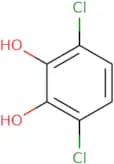
CAS:Versatile small molecule scaffoldFormula:C2H7ClF2N2Purity:Min. 95%Molecular weight:132.54 g/mol3,6-Dichlorobenzene-1,2-diol
CAS:3,6-Dichlorobenzene-1,2-diol is a conjugate acid of benzene. It has two dimensions in the plane of the molecule and three dimensions in space. The molecule is composed of six carbon atoms, six hydrogen atoms, and one chlorine atom. 3,6-Dichlorobenzene-1,2-diol has a centroid at the center of the molecule that is surrounded by a ring of four hydrogen atoms. The hydrogen-bonded molecules stack on top of each other to form a hexagonal shape. 3,6-Dichlorobenzene-1,2-diol forms hydrogen bonds with other molecules through its lone pairs of electrons on both oxygen atoms as well as through its pi electron system.Formula:C6H4Cl2O2Purity:Min. 95%Molecular weight:179 g/mol5-Chloro-1H-pyrrolo[2,3-c]pyridine-3-carboxylic acid
CAS:Versatile small molecule scaffoldFormula:C8H5ClN2O2Purity:Min. 95%Molecular weight:196.59 g/moltert-Butyl 4-(5-aminoisoxazol-3-yl)piperidine-1-carboxylate
CAS:Versatile small molecule scaffoldFormula:C13H21N3O3Purity:Min. 95%Molecular weight:267.32 g/mol
![Potassium tert-butyl N-[3-(trifluoroboranuidyl)propyl]carbamate](/_next/image/?url=https%3A%2Fstatic.cymitquimica.com%2Fproducts%2F3D%2Fthumb-webp%2FCNC28926.webp&w=3840&q=75)


![3-bromo-6,7-dihydro-5h-pyrrolo[3,4-b]pyridine hcl](/_next/image/?url=https%3A%2Fstatic.cymitquimica.com%2Fproducts%2F3D%2Fthumb-webp%2FUFC11724.webp&w=3840&q=75)
![2-{[2-(2,6-Dioxopiperidin-3-yl)-1-oxo-2,3-dihydro-1H-isoindol-4-yl]oxy}acetic acid](/_next/image/?url=https%3A%2Fstatic.cymitquimica.com%2Fproducts%2F3D%2Fthumb-webp%2FEPD97616.webp&w=3840&q=75)
![3-Methylbenzo[b]thiophene-2-carboxylic acid](/_next/image/?url=https%3A%2Fstatic.cymitquimica.com%2Fproducts%2F3D%2Fthumb-webp%2FDAA13378.webp&w=3840&q=75)
![2-[5-(4,4,5,5-Tetramethyl-1,3,2-dioxaborolan-2-yl)pyrimidin-2-yl]propan-2-ol](/_next/image/?url=https%3A%2Fstatic.cymitquimica.com%2Fproducts%2F3D%2Fthumb-webp%2FUCC25587.webp&w=3840&q=75)
![Imidazo[1,2-a]pyrazine-2-carbaldehyde](/_next/image/?url=https%3A%2Fstatic.cymitquimica.com%2Fproducts%2F3D%2Fthumb-webp%2FSQB78215.webp&w=3840&q=75)




![5-Chloro-1H-pyrrolo[2,3-c]pyridine-3-carboxylic acid](/_next/image/?url=https%3A%2Fstatic.cymitquimica.com%2Fproducts%2F3D%2Fthumb-webp%2FSSB19336.webp&w=3840&q=75)
