Building Blocks
Subcategories of "Building Blocks"
- Boronic Acids & Boronic Acid Derivatives(5,778 products)
- Chiral Building Blocks(1,243 products)
- Hydrocarbon Building Blocks(6,099 products)
- Organic Building Blocks(61,038 products)
Found 205376 products of "Building Blocks"
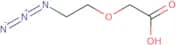
2-(2-Azidoethoxy)acetic Acid
CAS:2-(2-Azidoethoxy)acetic Acid is a hydrophobic antibacterial agent that can be used to inhibit bacterial growth by disrupting the cell membrane. It has been shown to inhibit the growth of Staphylococcus aureus and Escherichia coli, which may be due to its ability to bind to the glutathione moiety in the bacterial cell membrane. 2-(2-Azidoethoxy)acetic Acid has been shown to have antimicrobial activity against both Gram-positive and Gram-negative bacteria in vitro. This compound is also able to cross the cell membrane, inhibiting bacterial replication in vivo.
Formula:C4H7N3O3Purity:Min. 95%Molecular weight:145.12 g/moltert-butyl 4-oxo-2,3-dihydroquinoline-1-carboxylate
CAS:Versatile small molecule scaffoldFormula:C14H17NO3Purity:Min. 95%Molecular weight:247.29 g/mol2-{[2-(2,6-Dioxopiperidin-3-yl)-1-oxo-2,3-dihydro-1H-isoindol-4-yl]oxy}acetic acid
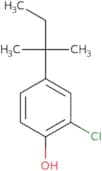
CAS:Versatile small molecule scaffoldFormula:C15H14N2O6Purity:Min. 95%Molecular weight:318.28 g/mol2-Chloro-4-(tert-pentyl)phenol
CAS:2-Chloro-4-(tert-pentyl)phenol is an aromatic compound. It has a cyclic, unsaturated alkyl group with a biphenyl and 6-membered heterocycle. This compound also has a haloalkyl group that can be substituted by nitro or benzoxazine groups. 2-Chloro-4-(tert-pentyl)phenol is used as an intermediate in the production of pharmaceuticals, dyes, and pesticides.Formula:C11H15ClOPurity:Min. 95%Molecular weight:198.69 g/mol3-Bromo-2-fluoro-6-methylpyridine
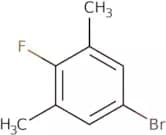
CAS:Please enquire for more information about 3-Bromo-2-fluoro-6-methylpyridine including the price, delivery time and more detailed product information at the technical inquiry form on this pageFormula:C6H5BrFNPurity:Min. 95%Molecular weight:190.01 g/mol5-Bromo-2-fluoro-1,3-dimethylbenzene
CAS:Please enquire for more information about 5-Bromo-2-fluoro-1,3-dimethylbenzene including the price, delivery time and more detailed product information at the technical inquiry form on this pageFormula:C8H8BrFPurity:Min. 95%Color and Shape:Clear Colourless To Yellow LiquidMolecular weight:203.05 g/molBenzophenone-4-carboxylic acid
CAS:Organic intermediate
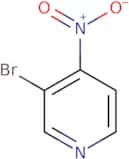
Formula:C14H10O3Purity:Min. 98 Area-%Color and Shape:White PowderMolecular weight:226.23 g/mol3-Bromo-4-nitropyridine
CAS:3-Bromo-4-nitropyridine is a pyridine compound that has been identified as an environmental contaminant. It is used to synthesize other compounds, such as 4-(3-bromopyridin-2-yl)morpholine, which is used in the synthesis of acetonitrile. 3-Bromo-4-nitropyridine undergoes nucleophilic substitution reactions with amines, leading to homoconjugation and bond cleavage. This reaction may be followed by nitration to give 3-(3'-nitro)pyridine. 3-Bromo-4-nitropyridine can be converted into its n-oxide form or into the ionic form by treatment with acetonitrile.Formula:C5H3BrN2O2Purity:Min. 95%Color and Shape:Yellow PowderMolecular weight:202.99 g/mol(R)-tert-Butyl 2-methylpiperazine-1-carboxylate
CAS:(R)-tert-Butyl 2-methylpiperazine-1-carboxylate is a versatile building block that can be used for the synthesis of complex compounds. The compound is a reagent, speciality chemical, and useful building block in research. It can be used as a reaction component or scaffold in synthesis. (R)-tert-Butyl 2-methylpiperazine-1-carboxylate has been shown to react with nucleophiles such as amines and alcohols to form stable products. This product has high quality and is useful for chemical reactions involving carbonyl groups.Formula:C10H20N2O2Purity:Min. 95%Color and Shape:White PowderMolecular weight:200.28 g/mol2-Bromobenzo[d]thiazol-6-amine
CAS:Please enquire for more information about 2-Bromobenzo[d]thiazol-6-amine including the price, delivery time and more detailed product information at the technical inquiry form on this pageFormula:C7H5BrN2SPurity:Min. 95%Molecular weight:229.1 g/molN-[5-(4-Bromophenyl)-6-(2-hydroxyethoxy)-4-pyrimidinyl]-N′-propylsulfamide
CAS:Please enquire for more information about N-[5-(4-Bromophenyl)-6-(2-hydroxyethoxy)-4-pyrimidinyl]-N′-propylsulfamide including the price, delivery time and more detailed product information at the technical inquiry form on this page
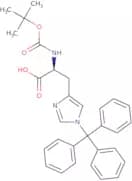
Formula:C15H19BrN4O4SPurity:Min. 95%Molecular weight:431.31 g/molBoc-His(Trt)-OH
CAS:Boc-His(Trt)-OH is a chemical compound that has been used in the laboratory to study uptake and binding of compounds. It is stable in complex with albumin, which has led to its use as a model system for studying hepatic steatosis. This chemical can be synthesized by solid-phase synthesis with trifluoroacetic acid and polypeptide synthesis. FT-IR spectroscopy has been used to characterize Boc-His(Trt)-OH, revealing its chemical diversity.
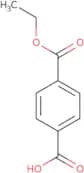
Formula:C30H31N3O4Purity:Min. 95%Color and Shape:PowderMolecular weight:497.58 g/mol1,4-Benzenedicarboxylic acid, monoethyl ester
CAS:1,4-Benzenedicarboxylic acid, monoethyl ester (1,4-BDE) is a monomer that is used in the manufacture of polycarbonates and other plastics. 1,4-BDE is also used as a solvent for xylene and butanol. It has been shown to be useful in the production of polyester fibers. The monomer can be synthesized by reacting ethylene with terephthalic acid or dimethyl terephthalate (DMT). This reaction produces 1,4-BDE and methanol as byproducts. The process is carried out at temperatures of 250 °C to 300 °C and under atmospheric pressure. The purified product can be isolated using distillation or extraction with organic solvents such as benzene or butanol. The reaction can be carried out in the presence of ruthenium, which acts as a catalyst.Formula:C10H10O4Purity:Min. 95%Color and Shape:White PowderMolecular weight:194.18 g/mol6-Chlorohexanol
CAS:6-Chlorohexanol is a fatty alcohol with a hydroxyl group. It is soluble in water and has a phase transition temperature of -114°C. 6-Chlorohexanol can be synthesized by reacting 2,6-dichlorophenol with hydrochloric acid and sodium hydroxide in the presence of azobenzene. The reaction solution is then heated to about 300°C for 3 hours. 6-Chlorohexanol is used as a model system for studying the photochemical reactions of fatty acids. Hydroxy groups are susceptible to light exposure, which leads to the formation of carbonyl compounds such as malonic acid and chloride monomers.Formula:C6H13ClOPurity:Min. 95%Color and Shape:PowderMolecular weight:136.62 g/molR-(-)-3-Chloro-1,2-propanediol
CAS:R-(-)-3-Chloro-1,2-propanediol is a chiral epoxide that is used in the synthesis of other chemicals. It has been shown to be active against bacterial strains such as corynebacterium and coryneform bacteria. This chemical can be synthesized from hydrochloric acid and chlorinated propane with an asymmetric synthesis. The R-(-)-3-Chloro-1,2-propanediol can also be synthesized through electrochemical methods using chloride ion as the reducing agent. This compound is soluble in water and shows kinetic activity with carbon sources when used as an antibiotic.
Formula:C3H7ClO2Purity:Min. 95%Color and Shape:Colorless Clear LiquidMolecular weight:110.54 g/molH-beta-Cyclohexyl-Ala-OMe·HCl
CAS:Please enquire for more information about H-beta-Cyclohexyl-Ala-OMe·HCl including the price, delivery time and more detailed product information at the technical inquiry form on this pageFormula:C10H19NO2·HClPurity:Min. 95%Molecular weight:221.72 g/molCyclobutanesulfonyl chloride
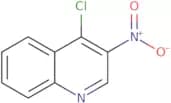
CAS:Cyclobutanesulfonyl chloride is a reagent that is used for the synthesis of 1-6-alkylcyclobutanes. It can be used to synthesize heterocyclic compounds, including those with high optical purity. Cyclobutanesulfonyl chloride has been shown to have antiviral and antiproliferative properties. It has also been shown to exhibit anticancer activity in vitro and in vivo. The mechanism of action for this compound is unclear, but it may inhibit protein synthesis by attacking the amino acid methionine in proteins or by inhibiting DNA replication.Formula:C4H7ClO2SPurity:Min. 95%Color and Shape:Clear LiquidMolecular weight:154.62 g/mol4-Chloro-3-nitroquinoline
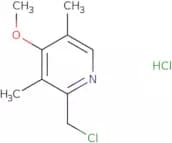
CAS:4-Chloro-3-nitroquinoline is a quinoline derivative that can be synthesized by cross-coupling reaction. The amide and n-oxide functional groups are the most reactive sites. It can react with nucleophiles such as haloamines, azides, and pyridazines to form covalent bonds. 4-Chloro-3-nitroquinoline has been shown to have anti-HIV activity in vitro and in vivo in animal models. In addition, this compound has shown potential use for the treatment of leishmania.Formula:C9H5ClN2O2Purity:Min. 95%Color and Shape:Slightly Yellow PowderMolecular weight:208.6 g/mol2-(Chloromethyl)-4-methoxy-3,5-dimethylpyridine hydrochloride
CAS:2-(Chloromethyl)-4-methoxy-3,5-dimethylpyridine hydrochloride is a benzimidazole derivative. It has a chemical stability and can be used for wastewater treatment. It is also a pump inhibitor and can be used for anhydrous sodium magnesium salts. This product is synthesized from the reaction of protonated 2-bromo-4-methoxyphenol with 2,6-dimethylpyridine in the presence of hydrochloric acid. The reaction was carried out in an asymmetric synthesis using a proton transport system. 2-(Chloromethyl)-4-methoxy-3,5-dimethylpyridine hydrochloride is soluble in water and has a pH of 1 to 3. It has been shown that this product can be used as an antioxidant and as a metal chelation agent.
Formula:C9H13Cl2NOPurity:Min. 95%Color and Shape:PowderMolecular weight:222.11 g/molCymiazole
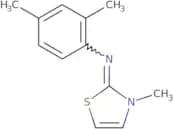
CAS:Veterinary drug, ectoparasiticide
Formula:C12H14N2SPurity:Min. 95%Color and Shape:Brown Clear LiquidMolecular weight:218.32 g/mol


![2-{[2-(2,6-Dioxopiperidin-3-yl)-1-oxo-2,3-dihydro-1H-isoindol-4-yl]oxy}acetic acid](/_next/image/?url=https%3A%2Fstatic.cymitquimica.com%2Fproducts%2F3D%2Fthumb-webp%2FEPD97616.webp&w=3840&q=75)



![2-Bromobenzo[d]thiazol-6-amine](/_next/image/?url=https%3A%2Fstatic.cymitquimica.com%2Fproducts%2F3D%2Fthumb-webp%2FFB144124.webp&w=3840&q=75)
![N-[5-(4-Bromophenyl)-6-(2-hydroxyethoxy)-4-pyrimidinyl]-N′-propylsulfamide](/_next/image/?url=https%3A%2Fstatic.cymitquimica.com%2Fproducts%2F3D%2Fthumb-webp%2FFB183879.webp&w=3840&q=75)