


Building Blocks
Subcategories of "Building Blocks"
- Boronic Acids & Boronic Acid Derivatives(5,778 products)
- Chiral Building Blocks(1,243 products)
- Hydrocarbon Building Blocks(6,099 products)
- Organic Building Blocks(61,038 products)
Found 205376 products of "Building Blocks"
N-(11-Bromoundecyl)carbamic acid t-butyl ester
CAS:Versatile small molecule scaffoldFormula:C16H32BrNO2Purity:Min. 95%Molecular weight:350.33 g/mol8-chloro-3H,4H-pyrido[3,4-d]pyrimidin-4-one
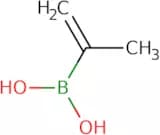
CAS:Versatile small molecule scaffoldFormula:C7H4N3OClPurity:Min. 95%Molecular weight:181.57 g/molProp-1-en-2-ylboronic acid
CAS:Prop-1-en-2-ylboronic acid is a chemical compound that belongs to the group of aromatic hydrocarbons. It is used in pharmaceutical preparations as a monomer and as a chiral building block for the synthesis of oxazolidinones, which are used in medicinal chemistry as protein inhibitors against cancers. Prop-1-en-2-ylboronic acid is also used as a reagent in preparative high performance liquid chromatography. This chemical has shown maximal response against colorectal carcinoma cells and has been shown to be an inhibitor of cholesterol ester transfer.Formula:C3H7BO2Purity:90%MinMolecular weight:85.9 g/mol(2,2-Difluoroethyl)hydrazine hydrochloride
CAS:Versatile small molecule scaffoldFormula:C2H7ClF2N2Purity:Min. 95%Molecular weight:132.54 g/molCyclobutanesulfonyl chloride
CAS:Cyclobutanesulfonyl chloride is a reagent that is used for the synthesis of 1-6-alkylcyclobutanes. It can be used to synthesize heterocyclic compounds, including those with high optical purity. Cyclobutanesulfonyl chloride has been shown to have antiviral and antiproliferative properties. It has also been shown to exhibit anticancer activity in vitro and in vivo. The mechanism of action for this compound is unclear, but it may inhibit protein synthesis by attacking the amino acid methionine in proteins or by inhibiting DNA replication.Formula:C4H7ClO2SPurity:Min. 95%Color and Shape:Clear LiquidMolecular weight:154.62 g/mol6-Hydroxyquinoline-4-carboxylic acid
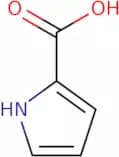
CAS:Versatile small molecule scaffoldFormula:C10H7NO3Purity:Min. 95%Molecular weight:189.17 g/molPyrrole-2-carboxylic acid
CAS:Pyrrole-2-carboxylic acid is a polycyclic aromatic compound that can be found in coal tar. It has been shown to have anti-inflammatory, antiallergic, and antifungal properties. Pyrrole-2-carboxylic acid is produced by the human body as an intermediate in the metabolism of tryptophan. This compound can also be synthesized and used to treat chronic bronchitis, which is caused by excessive mucus production and inflammation of the airways. The reaction mechanism for pyrrole-2-carboxylic acid is similar to that of other drugs that are used in respiratory therapy, such as aminophylline or acetylcysteine.
Formula:C5H5NO2Purity:Min. 95%Molecular weight:111.1 g/mol(3S)-3- [4- [(2-Chlorophenyl) methyl] phenoxy] tetrahydrofuran
CAS:Please enquire for more information about (3S)-3- [4- [(2-Chlorophenyl) methyl] phenoxy] tetrahydrofuran including the price, delivery time and more detailed product information at the technical inquiry form on this pagePurity:Min. 95%1-Phenyl-1-butanol
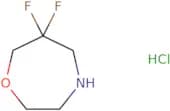
CAS:1-Phenyl-1-butanol (1PB) is a chiral compound that forms hydrogen bonds with itself. It is a colorless liquid that is soluble in organic solvents and has a boiling point of 61 °C. 1PB has been found to inhibit the growth of Pseudomonas aeruginosa by inhibiting fatty acid synthesis, which may be due to its ability to inhibit β-hydroxylase activity. 1PB also inhibits the growth of some bacteria (e.g., Staphylococcus aureus) by blocking the synthesis of fatty acids, which are important for bacterial cell membrane integrity. The hydroxyl group in 1PB helps it form hydrogen bonds with other molecules, including proteins and DNA strands, which makes it useful for chromatographic separation and as an antioxidant in food preservation.Formula:C10H14OPurity:Min. 95%Molecular weight:150.22 g/mol6,6-difluoro-1,4-oxazepane hydrochloride
CAS:Versatile small molecule scaffoldFormula:C5H10ClF2NOPurity:Min. 95%Molecular weight:173.6 g/molChlorpheniramine N-oxide
CAS:Please enquire for more information about Chlorpheniramine N-oxide including the price, delivery time and more detailed product information at the technical inquiry form on this page
Formula:C16H19ClN2OPurity:Min. 95%Molecular weight:290.79 g/mol2-Octyldecanoic acid
CAS:2-Octyldecanoic acid is a fatty acid that is used as a stabilizer in detergent compositions. This stabilizer is also utilizable at high alkali metal concentrations, which makes it suitable for use in hard water conditions. 2-Octyldecanoic acid has a low viscosity at room temperature, and the nature of its hydrocarbon chain leads to increased stability against decomposition when heated or exposed to carbon tetrachloride. It can be synthesized from an aliphatic hydrocarbon, such as octane, to form a macrocyclic ring structure. 2-Octyldecanoic acid also has optical properties that depend on the configuration of the carbon atoms. The molecule has two chiral centers and can exist in four different forms: erythro (E), threo (T), dithreo (D) and meso (M). The optical activity of 2-octyldecanoic acid dependsFormula:C18H36O2Purity:Min. 95%Molecular weight:284.5 g/mol6-(Chloromethyl)pteridine-2,4-diamine monohydrochloride
CAS:Please enquire for more information about 6-(Chloromethyl)pteridine-2,4-diamine monohydrochloride including the price, delivery time and more detailed product information at the technical inquiry form on this pageFormula:C7H7ClN6•HClPurity:Min. 95%Molecular weight:247.08 g/mol7-bromo-3-iodoimidazo[1,2-a]pyridine
CAS:Versatile small molecule scaffold
Formula:C7H4BrIN2Purity:Min. 95%Molecular weight:322.9 g/mol2-(4-Methoxyphenyl)ethyl bromide
CAS:2-(4-Methoxyphenyl)ethyl bromide is an adenosine receptor antagonist that can be used in cancer treatment. It has been shown to inhibit the growth of cancer cells by blocking the binding of adenosine to its receptors and inhibiting phosphodiesterase, which is an enzyme that breaks down the key cellular messenger, cyclic AMP (cAMP). 2-(4-Methoxyphenyl)ethyl bromide also inhibits the production of aphanorphine, a morphine analogue that has been shown to stimulate endoplasmic reticulum stress and apoptosis in cancer cells. This compound has been synthesised and tested on animal models with promising results.Formula:C9H11BrOPurity:Min. 95%Molecular weight:215.09 g/mol5-Oxotetrahydrofuran-2-carboxylic acid
CAS:5-Oxotetrahydrofuran-2-carboxylic acid is a solid phase extraction compound that can be used to extract and purify compounds from biological samples. It is synthesized by an asymmetric synthesis of the acetate ester of 5-hydroxytetrahydrofuran-2-carboxylic acid, which is then hydrolyzed to give the desired product. 5-Oxotetrahydrofuran-2-carboxylic acid has been used in cell culture studies as a diagnostic agent for cancer cells. The reactive nature of this molecule allows it to react with chloride ions and fatty acids, which leads to the death of cancer cells.Formula:C5H6O4Purity:Min. 95%Molecular weight:130.1 g/molCyanidin 3-O-rutinoside
CAS:Please enquire for more information about Cyanidin 3-O-rutinoside including the price, delivery time and more detailed product information at the technical inquiry form on this pageFormula:C27H31O15Purity:Min. 95%Molecular weight:595.53 g/molDiethyl Acetylphosphonate
CAS:Diethyl Acetylphosphonate is a synthetic chemical that is used in the production of ethyl esters, which are used as intermediates for the production of epoxides. It has shown to be a bidentate ligand and reacts with primary amines. Diethyl Acetylphosphonate can be made by reacting phosphorus pentachloride with ethyl acetate and hydrochloric acid. The reaction mechanism is similar to that of other organophosphorus compounds, in which a phosphine oxide intermediate reacts with an organic halide. Diethyl Acetylphosphonate has shown to be effective in detergent compositions and triethyl orthoformate, as well as alkanoic acid.
Formula:C6H13O4PPurity:Min. 95%Molecular weight:180.14 g/molCoproporphyrin III
CAS:Please enquire for more information about Coproporphyrin III including the price, delivery time and more detailed product information at the technical inquiry form on this page
Formula:C36H38N4O8Purity:Min. 95%Molecular weight:654.71 g/molFmoc-α-methyl-L-phenylalanine
CAS:Please enquire for more information about Fmoc-α-methyl-L-phenylalanine including the price, delivery time and more detailed product information at the technical inquiry form on this pageFormula:C25H23NO4Purity:Min. 95%Color and Shape:PowderMolecular weight:401.45 g/mol


![8-chloro-3H,4H-pyrido[3,4-d]pyrimidin-4-one](/_next/image/?url=https%3A%2Fstatic.cymitquimica.com%2Fproducts%2F3D%2Fthumb-webp%2FJDA34113.webp&w=3840&q=75)


![(3S)-3- [4- [(2-Chlorophenyl) methyl] phenoxy] tetrahydrofuran](/_next/image/?url=https%3A%2Fstatic.cymitquimica.com%2Fproducts%2F3D%2Fthumb-webp%2FFC181171.webp&w=3840&q=75)




![7-bromo-3-iodoimidazo[1,2-a]pyridine](/_next/image/?url=https%3A%2Fstatic.cymitquimica.com%2Fproducts%2F3D%2Fthumb-webp%2FWZB18455.webp&w=3840&q=75)


