Building Blocks
Subcategories of "Building Blocks"
- Boronic Acids & Boronic Acid Derivatives(5,778 products)
- Chiral Building Blocks(1,243 products)
- Hydrocarbon Building Blocks(6,099 products)
- Organic Building Blocks(61,038 products)
Found 205376 products of "Building Blocks"
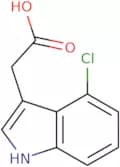
4-Chloroindole-3-acetic acid
CAS:4-Chloroindole-3-acetic acid is a fine chemical that is used as a building block in the synthesis of complex compounds. It is also used as a reagent and speciality chemical. The compound is versatile and can be used as a reaction component or as an intermediate to produce useful scaffolds. 4-Chloroindole-3-acetic acid has been shown to be effective in the synthesis of certain pharmaceuticals, such as antipsychotics, antidepressants, and antihistamines. It has also been shown to have antiviral properties against HIV and HSV viruses.Formula:C10H8ClNO2Purity:Min. 95.0 Area-%Molecular weight:209.63 g/molN-Boc Palbociclib-d4
CAS:Versatile small molecule scaffold
Formula:C29H33D4N7O4Purity:Min. 95%Molecular weight:551.67 g/mol(1R)-2-Chloro-1-(2,4-dichlorophenyl)ethan-1-ol
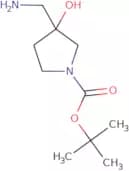
CAS:(1R)-2-Chloro-1-(2,4-dichlorophenyl)ethan-1-ol is a substrate for acetylation that is used in the synthesis of enantiopure alcohols. It has been shown to be an inhibitor of alcohol dehydrogenases and hydrophobic alcohols. (1R)-2-Chloro-1-(2,4-dichlorophenyl)ethan-1-ol has also been found to be active against fungi such as Penicillium chrysogenum and Cryptococcus neoformans. This compound is stereoselective when used as an antifungal agent, which means it will only inhibit one enantiomer of a molecule.Formula:C8H7OCl3Purity:Min. 95%Molecular weight:225.49 g/moltert-butyl 3-(aminomethyl)-3-hydroxypyrrolidine-1-carboxylate
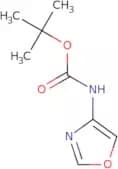
CAS:Versatile small molecule scaffoldFormula:C10H20N2O3Purity:Min. 95%Molecular weight:216.3 g/moltert-Butyl oxazol-4-ylcarbamate
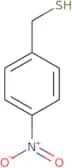
CAS:Versatile small molecule scaffoldFormula:C8H12N2O3Purity:Min. 95%Molecular weight:184.19 g/mol(4-Nitrophenyl)methanethiol
CAS:4-Nitrophenylmethanethiol is a reactive molecule that reacts with dopamine D3, an important cytosolic protein, to form a stable covalent bond. This reaction was shown to be pH-dependent and the products were identified by x-ray diffraction data. The disulfide bond formed by this reaction is then reduced to the corresponding sulfhydryl group with sodium borohydride or hydroxide solution. 4-Nitrophenylmethanethiol also reacts with inorganic acid and sodium carbonate to form a molecule containing carbapenem, which is a model protein used in research on chemical reactions. 4-Nitrophenylmethanethiol reacts with chloride ions and phenyl groups to yield hydrochloric acid as the final product of the chemical reaction.Formula:C7H7NO2SPurity:Min. 95%Molecular weight:169.2 g/mol2-(2-Chloro-4-nitrophenyl)acetic acid
CAS:Versatile small molecule scaffold
Formula:C8H6ClNO4Purity:Min. 95%Molecular weight:215.59 g/moltert-Butyl 6-(4,4,5,5-tetramethyl-1,3,2-dioxaborolan-2-yl)-3,4-dihydroquinoline-1(2H)-carboxylate 97
CAS:Versatile small molecule scaffoldFormula:C20H30BNO4Purity:Min. 95%Molecular weight:359.27 g/mol3,3,5-Trimethylcyclohexanone
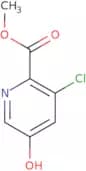
CAS:3,3,5-Trimethylcyclohexanone is an intermediate in the synthesis of polymers and polyesters. This compound is a reactive hydrogenation product which can be used to produce polymers with desired properties. The unsaturated side chain of 3,3,5-trimethylcyclohexanone reacts with borohydride to form a ketal. After being converted to the corresponding acid chloride, the 3,3,5-trimethylcyclohexanone can be used for the synthesis of polyesters. This compound has also been shown to be an effective catalyst for producing β-unsaturated ketones from aldehydes and dienes.Formula:C9H16OPurity:Min. 95%Color and Shape:Clear LiquidMolecular weight:140.23 g/molMethyl 3-chloro-5-hydroxypyridine-2-carboxylate
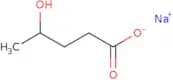
CAS:Versatile small molecule scaffoldFormula:C7H6NO3ClPurity:Min. 95%Molecular weight:187.58 g/mol4-Hydroxyvaleric Acid Sodium Salt
CAS:Controlled Product4-Hydroxyvaleric acid sodium salt is a hydrophilic, thermally sensitive substance that is used as an analytical reagent in toxicology. It is typically used as a screening agent for the detection of acetaldehyde and other aldehydes. 4-Hydoxyvaleric acid sodium salt reacts with acetone to form a clear solution and can be injected into a gas chromatograph using an injection method. The reaction between 4-hydroxyvaleric acid sodium salt and acetone produces an efficient method for the analysis of acetaldehyde. This chemical is often used by toxicologists and chemists to screen for the presence of acetaldehyde in blood or urine samples.Formula:C5H9NaO3Purity:Min. 95%Molecular weight:140.11 g/molMethyl Pyridin-3-ylacetate
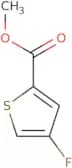
CAS:Methyl Pyridin-3-ylacetate is an organic compound that is the methyl ester of pyridine-3-carboxylic acid. It has a melting point of 197°C, with an ionization potential of 1.78 eV and a lactam. Methyl Pyridin-3-ylacetate has been shown to react with hydrochloric acid to form picric acid and methyl 3-(hydroxymethyl)pyridine-2,5-dicarboxylate. Methyl Pyridin-3-ylacetate can be used in the preparation of picrates, which are used in the synthesis of dyes and explosives such as picric acid and TNT. Methyl Pyridin-3-ylacetate can also be demethylated by heating with sodium methoxide to give methyl pyridine carboxylate.Formula:C8H9NO2Purity:Min. 95%Molecular weight:151.16 g/molMethyl 4-fluorothiophene-2-carboxylate
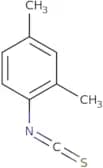
CAS:Methyl 4-fluorothiophene-2-carboxylate is a fluorinated organic compound that is used as a model compound in polymer chemistry. It has been used to synthesize polymers with stepwise fluorination and diketopyrrolopyrrole moieties. This molecule also has optoelectronic properties and can be converted to a conjugated, monofluorinated, or difluorinated form by the addition of electron-withdrawing groups such as nitro or cyano groups. Methyl 4-fluorothiophene-2-carboxylate is an acceptor for electron transfer reactions.Formula:C6H5FO2SPurity:Min. 95%Molecular weight:160.16 g/mol2,4-Dimethylphenyl isothiocyanate
CAS:2,4-Dimethylphenyl isothiocyanate (DMIT) is a dipole molecule that has been used as a preservative and antimicrobial agent. DMIT has been shown to be an effective anti-microbial agent against Gram-positive bacteria such as Staphylococcus aureus, Enterococcus faecalis, and Streptococcus pyogenes. It also inhibits the growth of Gram-negative bacteria such as Escherichia coli, Pseudomonas aeruginosa, and Klebsiella pneumoniae. DMIT has been shown to be non-toxic to animals at high concentrations. It is also safe for use in food products because it does not react with polyunsaturated compounds.
Formula:C9H9NSPurity:Min. 95%Molecular weight:163.24 g/molN-(11-Bromoundecyl)carbamic acid t-butyl ester
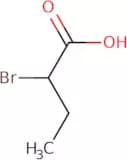
CAS:Versatile small molecule scaffoldFormula:C16H32BrNO2Purity:Min. 95%Molecular weight:350.33 g/mol(S)-2-Bromobutyric acid
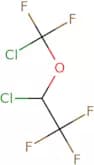
CAS:(S)-2-Bromobutyric acid is a chiral compound. It is an enantiomer of the biologically inactive (R)-2-bromobutyric acid. The (S)-enantiomer has been shown to exhibit biological activity, with a kinetic and detectable activity that are similar to those of the parent molecule. This compound can be used as a precursor for pharmaceuticals, such as antibiotics, which would be useful in cases where bacteria have developed resistance to existing antibiotics. The dehalogenase enzyme catalyzes the hydrolysis of halogenated aromatic compounds in a way that produces an alcohol and hydrogen bromide. This reaction can be detected by changes in the chemical properties of the environment or by detecting changes in the optical rotation or fluorescence of the product.Formula:C4H7BrO2Purity:Min. 95%Molecular weight:167 g/mol2-Chloro-2-(chlorodifluoromethoxy)-1,1,1-trifluoroethane
CAS:2-Chloro-2-(chlorodifluoromethoxy)-1,1,1-trifluoroethane (HFC-152a) is a chemical compound that belongs to the group of chlorofluorocarbons. It has been used as a refrigerant and aerosol propellant. HFC-152a is an azeotrope with methyl ethyl ketone and ethyl ketone. It has also been reported to have properties as an ether, acetone, and difluoromethyl.
Formula:C3HCl2F5OPurity:Min. 95%Molecular weight:218.94 g/mol4-[1-(tert-Butoxy)-2-methyl-1-oxopropan-2-yl]benzoic acid
CAS:Versatile small molecule scaffold
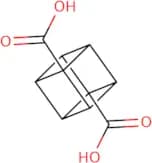
Formula:C15H20O4Purity:Min. 95%Molecular weight:264.32 g/mol1,4-Cubanedicarboxylic acid
CAS:1,4-Cubanedicarboxylic acid is an organic compound that is a diacid. It has been shown to be an inhibitor of chloride secretion in the intestine, and can also decrease the rate at which hydrogen ions are released into the intestinal lumen. 1,4-Cubanedicarboxylic acid is also a cross-linking agent that can be used in organic solvents for large-scale synthesis. The optical properties of 1,4-cubanedicarboxylic acid have been studied using FTIR spectroscopy. This agent has been found to react with intramolecular hydrogen to form a six membered ring.Formula:C10H8O4Purity:Min. 95%Molecular weight:192.17 g/mol5,6-Dibromopyridin-2-ol
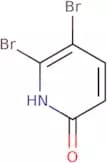
CAS:Versatile small molecule scaffold
Formula:C5H3Br2NOPurity:Min. 95%Molecular weight:252.89 g/mol






![4-[1-(tert-Butoxy)-2-methyl-1-oxopropan-2-yl]benzoic acid](/_next/image/?url=https%3A%2Fstatic.cymitquimica.com%2Fproducts%2F3D%2Fthumb-webp%2FNKD15780.webp&w=3840&q=75)