Building Blocks
Subcategories of "Building Blocks"
- Boronic Acids & Boronic Acid Derivatives(5,784 products)
- Chiral Building Blocks(1,244 products)
- Hydrocarbon Building Blocks(6,105 products)
- Organic Building Blocks(61,073 products)
Found 205446 products of "Building Blocks"
Azepane-1-carbonyl chloride
CAS:Azepane-1-carbonyl chloride is a molecule that has been shown to be efficacious in the treatment of trypanosomiasis. It is a urea derivative that works by inhibiting the activity of a specific enzyme, adenylate kinase, which is essential for the metabolism of nucleotides and nucleosides. Azepane-1-carbonyl chloride binds to this enzyme and prevents it from converting ATP into AMP, which leads to cell death. This molecule has been shown to have antiviral properties against murine leukemia virus and trypanosoma cruzi. However, it does not seem to work as well on human cells. The efficacy of azepane-1-carbonyl chloride in vivo has also been demonstrated using an animal model. The effects of this molecule are dose dependent and there may be potential for optimization by changing its structure or metabolic stability.
Formula:C7H12ClNOPurity:Min. 95%Molecular weight:161.63 g/molRef: 3D-CBA81735
Discontinued productEthyl 2-oxo-1,2-dihydropyridine-3-carboxylate
CAS:Versatile small molecule scaffold
Formula:C8H9NO3Purity:Min. 95%Molecular weight:167.16 g/molRef: 3D-CBA80512
Discontinued product11-Aminoundecan-1-ol
CAS:11-Aminoundecan-1-ol is a bifunctional molecule that binds to the receptor and stabilizes it. It can be used as an antimicrobial agent against human pathogens, such as HIV, by preventing the virus from attaching to cells. 11-Aminoundecan-1-ol also has activity against plant viruses. This compound is an anhydroglucose with hydroxamic acid groups that are responsible for its antiviral properties and also contains a particle with azide functionalities. 11-Aminoundecan-1-ol has shown efficacy in inhibiting the replication of human Herpes simplex virus types 1 and 2 (HSV) in vitro, which may be due to its ability to bind to the HSV glycoprotein B envelope protein GP2.
11-Aminoundecan-1-ol can also bind to the receptor lysine and stabilize it. This binding prevents azides from reacting with lFormula:C11H25NOPurity:Min. 95%Molecular weight:187.32 g/mol4,5,6,7-Tetrahydro-benzo[d]isoxazol-3-ol
CAS:4,5,6,7-Tetrahydro-benzo[d]isoxazol-3-ol (THI) is a chromatic integrating device that utilizes an algorithm and coding to update circuitry and devices. THI interacts with the optical vector techniques in order to position itself. The circuitry updates in response to the interaction with the optical vector techniques. THI can be utilized for many purposes such as updating bandwidth, devices, or interaction.
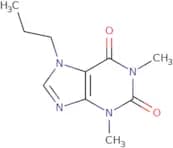
Formula:C7H9NO2Purity:Min. 95%Molecular weight:139.15 g/mol1,3-Dimethyl-7-propyl-3,7-dihydro-1H-purine-2,6-dione
CAS:Controlled ProductVersatile small molecule scaffoldFormula:C10H14N4O2Purity:Min. 95%Molecular weight:222.24 g/molEthyl cyclobutylideneacetate
CAS:Ethyl cyclobutylideneacetate is a compound that is used as an intermediate in the synthesis of pyrimidine compounds. It has autophagy-inducing activity and can stimulate the growth of epidermal cells. This compound has not been shown to have any direct effects on kinases, but it is known to act as a modulator for factors such as epidermal growth factor, which can regulate cell proliferation. Ethyl cyclobutylideneacetate is active in the presence of solvates and regulators. The tautomers of this compound are stereoisomers that are also homologues, with some polymorphs possible depending on the solvent conditions.
Formula:C8H12O2Purity:Min. 95%Molecular weight:140.18 g/molThieno[3,2-c]pyridin-4-ol
CAS:Thieno[3,2-c]pyridin-4-ol is a thienopyridone that is an inhibitor of the bromodomain. It has been shown to inhibit the bromodomain, which is a protein domain that also binds acetylated histones. The inhibition of this domain leads to chromatin condensation and DNA compaction, inhibiting transcription and replication. Thieno[3,2-c]pyridin-4-ol has been shown to have anti-inflammatory effects in vivo and in vitro.
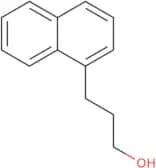
Formula:C7H5NOSPurity:Min. 95%Molecular weight:151.19 g/mol3-(Naphthalen-1-yl)propan-1-ol
CAS:3-(Naphthalen-1-yl)propan-1-ol is a tannin isolated from the bark of the naphthalene tree. It has been shown to have hepatoprotective effects, normalizing hepatic enzyme activity and protecting against environmental pollution. 3-(Naphthalen-1-yl)propan-1-ol also has antidiabetic properties, and may act as an acetate extract by inhibiting the absorption of glucose in the gut. The laxative effect of 3-(Naphthalen-1-yl)propan-1-ol may be due to its ability to stimulate intestinal peristalsis.
Formula:C13H14OPurity:Min. 95%Molecular weight:186.25 g/mol1-(3-Bromopropyl)naphthalene
CAS:Versatile small molecule scaffold
Formula:C13H13BrPurity:Min. 95%Molecular weight:249.15 g/molRef: 3D-CBA65086
Discontinued product1-(1,2,3-Thiadiazol-4-yl)ethan-1-one
CAS:Versatile small molecule scaffold
Formula:C4H4N2OSPurity:Min. 95%Molecular weight:128.15 g/molRef: 3D-CBA64314
Discontinued product4-Hydroxy-N-methylbenzamide
CAS:4-Hydroxy-N-methylbenzamide (4HMB) is an organic compound that consists of a benzene ring with a methyl group attached to the 4 position. It has been found to have amide, chloride and hydrogen bonding interactions with other molecules. The filtrate was collected by passing the reaction liquid through a filter paper. This stepwise process allowed for the isolation of 4HMB from the mixture of compounds called benzenes.
Formula:C8H9NO2Purity:Min. 95%Molecular weight:151.16 g/molRef: 3D-CBA64227
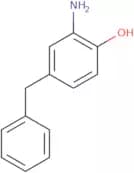
Discontinued product2-Amino-4-benzylphenol
CAS:Versatile small molecule scaffold
Formula:C13H13NOPurity:Min. 95%Molecular weight:199.25 g/molRef: 3D-CBA61810
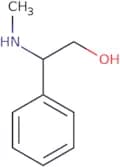
Discontinued product2-(Methylamino)-2-phenylethan-1-ol
CAS:Versatile small molecule scaffold
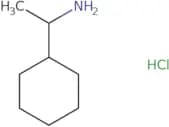
Formula:C9H13NOPurity:Min. 95%Molecular weight:151.21 g/mol(1-Cyclohexylethyl)amine hydrochloride
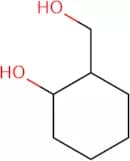
CAS:Versatile small molecule scaffoldFormula:C8H18ClNPurity:Min. 95%Molecular weight:163.69 g/mol2-(Hydroxymethyl)cyclohexan-1-ol
CAS:2-(Hydroxymethyl)cyclohexan-1-ol is a potassium salt that is used as an intermediate for the synthesis of other chemicals. It has been shown to be a strong inhibitor of the enzyme acetylcholinesterase in vitro, which leads to increased levels of acetylcholine and neurotransmission. The compound has also been shown to inhibit the growth of bacteria by inhibiting protein synthesis through an unknown mechanism. 2-(Hydroxymethyl)cyclohexan-1-ol is isolated from a variety of sources, including wood tar, coal tar, and petroleum.
2-(Hydroxymethyl)cyclohexan-1-ol can be synthesized by solvolysis with potassium hydroxide or tetrafluoroborate followed by acetolysis with acetic anhydride.
Potassium acetate can also be used to synthesize 2-(hydroxymethyl)-cyclohexan-1-Formula:C7H14O2Purity:Min. 95%Molecular weight:130.18 g/molRef: 3D-CBA58343
Discontinued product5-methyl-1H-imidazo[4,5-b]pyridine
CAS:Versatile small molecule scaffold
Formula:C7H6N3Purity:Min. 95%Molecular weight:132.14 g/molRef: 3D-CBA58224
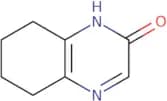
Discontinued product1,2,5,6,7,8-Hexahydroquinoxalin-2-one
CAS:1,2,5,6,7,8-Hexahydroquinoxalin-2-one is a stimulant that has been shown to be effective for the prophylaxis and/or treatment of diabetes. It is also a prophylactic agent for the prevention of pyrazinone. This drug has been shown to stimulate insulin secretion from pancreatic beta cells in vitro. 1,2,5,6,7,8-Hexahydroquinoxalin-2-one stimulates the release of insulin by stimulating exocytosis and inhibiting vesicle fusion in response to glucose. It can also inhibit or stimulate the release of insulin in response to other stimuli such as amino acids and fatty acids.
Formula:C8H10N2OPurity:Min. 95%Molecular weight:150.18 g/molRef: 3D-CBA57958
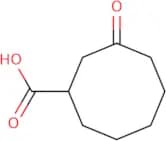
Discontinued product3-Oxocyclooctane-1-carboxylic acid
CAS:Versatile small molecule scaffold
Formula:C9H14O3Purity:Min. 95%Molecular weight:170.21 g/molRef: 3D-CBA53169
Discontinued productTributyl(methoxymethyl)stannane
CAS:Controlled ProductTributyl(methoxymethyl)stannane is a synthetic organo-tin compound that has antifungal, antiviral, and antibacterial properties. It is also used in the treatment of idiopathic pulmonary fibrosis, hepatitis, cirrhosis, heart disease, and scleroderma. Tributyl(methoxymethyl)stannane inhibits the synthesis of proteins by binding to the 30S ribosomal subunit through a number of mechanisms. It has been shown to inhibit the growth of many fungi including those that cause athlete's foot and ringworm. Tributyl(methoxymethyl)stannane also shows some promise as an anti-inflammatory agent.
Formula:C14H32OSnPurity:Min. 95%Molecular weight:335.1 g/molRef: 3D-CBA49032
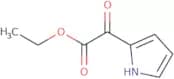
Discontinued productEthyl 2-oxo-2-(1H-pyrrol-2-yl)acetate
CAS:Versatile small molecule scaffold
Formula:C8H9NO3Purity:Min. 95%Molecular weight:167.16 g/molRef: 3D-CBA47243
Discontinued product


![4,5,6,7-Tetrahydro-benzo[d]isoxazol-3-ol](/_next/image/?url=https%3A%2Fstatic.cymitquimica.com%2Fproducts%2F3D%2Fthumb-webp%2FCBA77290.webp&w=3840&q=75)

![Thieno[3,2-c]pyridin-4-ol](/_next/image/?url=https%3A%2Fstatic.cymitquimica.com%2Fproducts%2F3D%2Fthumb-webp%2FCBA68592.webp&w=3840&q=75)


![5-methyl-1H-imidazo[4,5-b]pyridine](/_next/image/?url=https%3A%2Fstatic.cymitquimica.com%2Fproducts%2F3D%2Fthumb-webp%2FCBA58224.webp&w=3840&q=75)