Building Blocks
Subcategories of "Building Blocks"
- Boronic Acids & Boronic Acid Derivatives(5,774 products)
- Chiral Building Blocks(1,237 products)
- Hydrocarbon Building Blocks(6,098 products)
- Organic Building Blocks(60,970 products)
Found 205135 products of "Building Blocks"
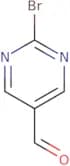
2-bromopyrimidine-5-carbaldehyde
CAS:Versatile small molecule scaffold
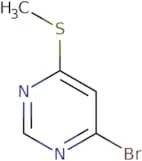
Formula:C5H3BrN2OPurity:Min. 95%Molecular weight:187 g/mol4-Bromo-6-(methylthio)pyrimidine
CAS:Versatile small molecule scaffold
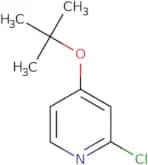
Formula:C5H5N2SBrPurity:Min. 95%Molecular weight:205.07 g/mol4-(tert-Butoxy)-2-chloropyridine
CAS:Versatile small molecule scaffold
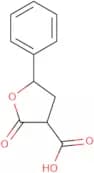
Formula:C9H12ClNOPurity:Min. 95%Molecular weight:185.65 g/mol2-Oxo-5-phenyloxolane-3-carboxylic acid
CAS:Versatile small molecule scaffold
Formula:C11H10O4Purity:Min. 95%Molecular weight:206.19 g/molRef: 3D-GAA00595
Discontinued product5-Chloro-N1-methylbenzene-1,2-diamine
CAS:Versatile small molecule scaffoldFormula:C7H9N2ClPurity:Min. 95%Molecular weight:156.61 g/mol5H,6H,7H,8H-Imidazo[1,5-a]pyridin-6-amine
CAS:Versatile small molecule scaffold
Formula:C7H11N3Purity:Min. 95%Molecular weight:137.18 g/molRef: 3D-KHA79662
Discontinued product4H,5H,6H-Thieno[3,4-c]pyrrole-4,6-dione
CAS:4H,5H,6H-Thieno[3,4-c]pyrrole-4,6-dione is a potent antitumor agent that inhibits the activity of protein kinases. It has been shown to have the ability to inhibit tumor growth in animal models and has been shown to be effective against resistant microorganisms such as Staphylococcus aureus and Mycobacterium tuberculosis. 4H,5H,6H-Thieno[3,4-c]pyrrole-4,6-dione has also been shown to improve hematopoiesis by stimulating colony stimulating factor production. This compound is metabolized through a number of metabolic transformations including oxidative deamination by monoamine oxidase or pyridoxal phosphate dependent aminotransferases. The biological properties of 4H,5H,6H-Thieno[3,4-c]pyrrole-4
Formula:C6H3NO2SPurity:Min. 95%Molecular weight:153.16 g/molRef: 3D-GAA00782
Discontinued product2-(4-Acetyl-3-fluorobenzenesulfonyl)acetic acid
CAS:Versatile small molecule scaffold
Formula:C10H9FO5SPurity:Min. 95%Molecular weight:260.24 g/molRef: 3D-LCC31752
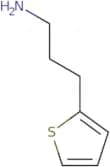
Discontinued product3-(Thiophen-2-yl)propan-1-amine
CAS:3-(Thiophen-2-yl)propan-1-amine is an organic solvent that is used as a reactant in the production of polyphosphoric acid. It is also used in the synthesis of pharmaceuticals. This compound can be produced by reacting chloroformate with propylamine and aluminium chloride in a solution of hydrochloric acid, producing 3-(thiophen-2-yl)propan-1-amine and hydrogen chloride gas. The reaction can also be carried out using phosphoryl chloride and propylamine to produce 3-(thiophen-2-yl)propan-1-amine and phosphorus pentoxide.
Formula:C7H11NSPurity:Min. 95%Molecular weight:141.24 g/molRef: 3D-GAA00790
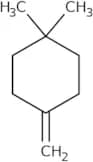
Discontinued product1,1-dimethyl-4-methylidenecyclohexane
CAS:Mesityl oxide is a colorless liquid with a sweet odor that is used as a flavor and fragrance agent. It can be found in the volatile fraction of many essential oils such as lavender, rosemary, and sage. Mesityl oxide has been identified by gas chromatography-mass spectrometry (GC-MS) to be present in the volatile fraction of these oils. It is also found in many foods such as red wine, coffee, and beer. Mesityl oxide has been shown to have differentiating properties in initially similar samples. This compound can be detected by GC-MS using an oxidized pentane extraction procedure.
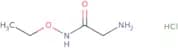
Mesityl oxide is not considered to be toxic at low doses but may cause irritation at high doses.Formula:C9H16Purity:Min. 95%Molecular weight:124.23 g/mol2-Amino-N-ethoxyacetamide hydrochloride
CAS:Versatile small molecule scaffold
Formula:C4H11ClN2O2Purity:Min. 95%Molecular weight:154.59 g/molRef: 3D-JBD30535
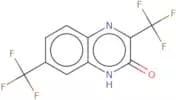
Discontinued product3,7-Bis(trifluoromethyl)-1,2-dihydroquinoxalin-2-one
CAS:Versatile small molecule scaffoldFormula:C10H4F6N2OPurity:Min. 95%Molecular weight:282.1 g/molRef: 3D-GJA60777
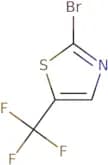
Discontinued product2-bromo-5-(trifluoromethyl)-1,3-thiazole
CAS:Versatile small molecule scaffold
Formula:C4HBrF3NSPurity:Min. 95%Molecular weight:232 g/mol5H,6H,7H,8H-Imidazo[1,2-a]pyridine-8-carboxamide
CAS:Versatile small molecule scaffold
Formula:C8H11N3OPurity:Min. 95%Molecular weight:165.19 g/mol2-({1-[(tert-butoxy)carbonyl]piperidin-3-yl}oxy)acetic acid
CAS:Versatile small molecule scaffold
Formula:C12H21NO5Purity:Min. 95%Molecular weight:259.3 g/molRef: 3D-GJA62209
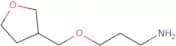
Discontinued product3-(Oxolan-3-ylmethoxy)propan-1-amine
CAS:Versatile small molecule scaffold
Formula:C8H17NO2Purity:Min. 95%Molecular weight:159.23 g/molRef: 3D-IMB70126
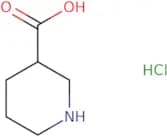
Discontinued productPiperidine-3-carboxylic acid hydrochloride
CAS:Versatile small molecule scaffoldFormula:C6H12ClNO2Purity:Min. 95%Molecular weight:165.62 g/molRef: 3D-GAA03480
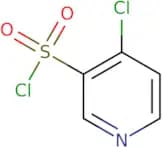
Discontinued product4-chloropyridine-3-sulfonyl chloride
CAS:4-Chloropyridine-3-sulfonyl chloride is a thrombin inhibitor that has been discovered through the use of in vitro screening methods. It is a small molecule with lipophilic properties and oral bioavailability. This compound inhibits thrombin by binding to the active site of the enzyme, which prevents the formation of an enzyme-thrombin complex. The discovery was made using a pharmacophore-based approach and further modifications were made to improve its potency and increase its lipophilicity. This compound also exhibits an acceptable level of bioavailability in vivo, which may be due to its high solubility in water.Formula:C5H3Cl2NO2SPurity:Min. 95%Molecular weight:212.1 g/molRef: 3D-IBA26344
Discontinued product2-[3-(Trifluoromethyl)-1H-pyrazol-4-yl]ethan-1-ol
CAS:Versatile small molecule scaffold
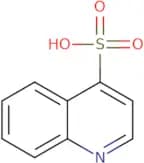
Formula:C6H7F3N2OPurity:Min. 95%Molecular weight:180.13 g/molQuinoline-4-sulfonic acid
CAS:Quinoline-4-sulfonic acid is a chemical compound that belongs to the class of quinoline derivatives. It has a linear range of activity and inhibits enzymes such as glutamicum, organisms, additives, metal ion, alkali metal, heterocycle, methyl groups and oxygenated. The optimum pH for this compound is 7. Quinoline-4-sulfonic acid is not very soluble in water but is soluble in an organic solvent such as acetone or ethanol. This molecule has been shown to be active against strains of Escherichia coli.
Formula:C9H7NO3SPurity:Min. 95%Molecular weight:209.22 g/mol

![5H,6H,7H,8H-Imidazo[1,5-a]pyridin-6-amine](/_next/image/?url=https%3A%2Fstatic.cymitquimica.com%2Fproducts%2F3D%2Fthumb-webp%2FKHA79662.webp&w=3840&q=75)
![4H,5H,6H-Thieno[3,4-c]pyrrole-4,6-dione](/_next/image/?url=https%3A%2Fstatic.cymitquimica.com%2Fproducts%2F3D%2Fthumb-webp%2FGAA00782.webp&w=3840&q=75)

![5H,6H,7H,8H-Imidazo[1,2-a]pyridine-8-carboxamide](/_next/image/?url=https%3A%2Fstatic.cymitquimica.com%2Fproducts%2F3D%2Fthumb-webp%2FKHA79736.webp&w=3840&q=75)
![2-({1-[(tert-butoxy)carbonyl]piperidin-3-yl}oxy)acetic acid](/_next/image/?url=https%3A%2Fstatic.cymitquimica.com%2Fproducts%2F3D%2Fthumb-webp%2FGJA62209.webp&w=3840&q=75)
![2-[3-(Trifluoromethyl)-1H-pyrazol-4-yl]ethan-1-ol](/_next/image/?url=https%3A%2Fstatic.cymitquimica.com%2Fproducts%2F3D%2Fthumb-webp%2FKHA85385.webp&w=3840&q=75)