Building Blocks
Subcategories of "Building Blocks"
- Boronic Acids & Boronic Acid Derivatives(5,780 products)
- Chiral Building Blocks(1,240 products)
- Hydrocarbon Building Blocks(6,100 products)
- Organic Building Blocks(61,009 products)
Found 205248 products of "Building Blocks"
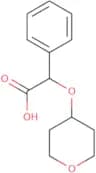
2-(Oxan-4-yloxy)-2-phenylacetic acid
CAS:Versatile small molecule scaffold
Formula:C13H16O4Purity:Min. 95%Molecular weight:236.26 g/molRef: 3D-GCC17572
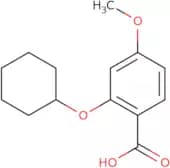
Discontinued product2-(Cyclohexyloxy)-4-methoxybenzoic acid
CAS:Versatile small molecule scaffold
Formula:C14H18O4Purity:Min. 95%Molecular weight:250.29 g/molRef: 3D-GCC07587
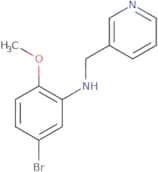
Discontinued product5-Bromo-2-methoxy-N-(pyridin-3-ylmethyl)aniline
CAS:Versatile small molecule scaffold
Formula:C13H13BrN2OPurity:Min. 95%Molecular weight:293.16 g/molRef: 3D-GCC06643
Discontinued product1-Ethyl-1H-indol-6-amine
CAS:Versatile small molecule scaffold
Formula:C10H12N2Purity:Min. 95%Molecular weight:160.22 g/molRef: 3D-GCB83677
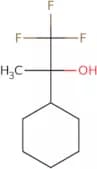
Discontinued product2-Cyclohexyl-1,1,1-trifluoropropan-2-ol
CAS:Versatile small molecule scaffoldFormula:C9H15F3OPurity:Min. 95%Molecular weight:196.21 g/molRef: 3D-GCB81173
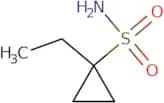
Discontinued product1-ethylcyclopropane-1-sulfonamide
CAS:Versatile small molecule scaffold
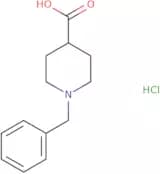
Formula:C5H11NO2SPurity:Min. 95%Molecular weight:149.21 g/mol1-Benzylpiperidine-4-carboxylic acid hydrochloride
CAS:Versatile small molecule scaffoldFormula:C13H18ClNO2Purity:Min. 95%Molecular weight:255.74 g/mol5-Phenylpyridin-3-ol
CAS:5-Phenylpyridin-3-ol is an organic compound with the formula C8H6O. It is a white solid that is stable in air. 5-Phenylpyridin-3-ol reacts with bromoacetate to give formate, the reaction being catalyzed by base. The synthetic method involves the use of ethyl bromoacetate and ammonium formate in aqueous solution at room temperature.
Formula:C11H9NOPurity:Min. 95%Molecular weight:171.19 g/molRef: 3D-GBA67655
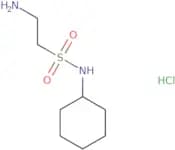
Discontinued product2-Amino-N-cyclohexylethane-1-sulfonamide hydrochloride
CAS:Versatile small molecule scaffoldFormula:C8H19ClN2O2SPurity:Min. 95%Molecular weight:242.77 g/molRef: 3D-GBA64451
Discontinued productMethyl N,N-bis(propan-2-yl)carbamate
CAS:Methyl N,N-bis(propan-2-yl)carbamate is a drug that can be used to treat reperfusion injury. It has been shown to protect the heart from reperfusion injury. Methyl N,N-bis(propan-2-yl)carbamate is an anticancer compound with physicochemical properties that make it suitable for intravenous administration. It inhibits the activity of formyl and other reactive oxygen species and attenuates the release of mitochondrial DNA into the cytosol. It also induces mitochondrial biogenesis by inhibiting the expression of p53 and caspase 9, which are apoptotic proteins in mitochondria.
Methyl N,N-bis(propan-2-yl)carbamate can be used as a drug candidate for treating reperfusion injury due to its pharmacokinetic properties and ability to attenuate infarct size following reperfusion.Formula:C8H17NO2Purity:Min. 95%Molecular weight:159.23 g/molRef: 3D-GBA60349
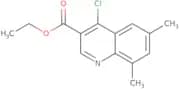
Discontinued productEthyl 4-chloro-6,8-dimethylquinoline-3-carboxylate
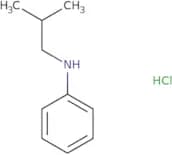
CAS:Versatile small molecule scaffoldFormula:C14H14ClNO2Purity:Min. 95%Molecular weight:263.72 g/molN-(2-Methylpropyl)aniline hydrochloride
CAS:Versatile small molecule scaffold
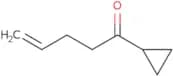
Formula:C10H16ClNPurity:Min. 95%Molecular weight:185.69 g/mol1-Cyclopropylpent-4-en-1-one
CAS:Versatile small molecule scaffold
Formula:C8H12OPurity:Min. 95%Molecular weight:124.18 g/molRef: 3D-GBA59449
Discontinued product1H,7H-[1,2,4]Triazolo[1,5-a]pyrimidin-7-one
CAS:Fluconazole is an oral antifungal drug that is used to treat a variety of fungal infections such as candida, cryptococcus, and histoplasmosis. It binds to the 14-alpha-demethylase enzyme in the fungal cell membrane and inhibits the synthesis of ergosterol, which is an essential component of the cell membrane. This prevents the formation of ergosterol crystals that are necessary for maintaining cell shape and function. Fluconazole has been shown to be effective against influenza virus and other viruses that use subunits similar to those found in fluconazole. Fluconazole also has antibacterial properties against bacteria such as Staphylococcus aureus and Streptococcus pneumonia. The pharmacokinetic properties of fluconazole have been studied using ethyl bromoacetate and carboxylate derivatives. Fluconazole has also been shown to inhibit methicillin-resistant Staphylococcus
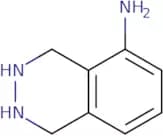
Formula:C5H4N4OPurity:Min. 95%Molecular weight:136.11 g/mol1,2,3,4-Tetrahydrophthalazin-5-amine
CAS:Versatile small molecule scaffold
Formula:C8H11N3Purity:Min. 95%Molecular weight:149.19 g/molRef: 3D-GBA59056
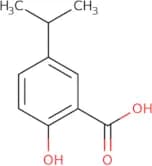
Discontinued product2-Hydroxy-5-(propan-2-yl)benzoic acid
CAS:Versatile small molecule scaffold
Formula:C10H12O3Purity:Min. 95%Molecular weight:180.2 g/molRef: 3D-GBA58971
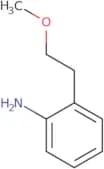
Discontinued product2-(2-Methoxyethyl)aniline
CAS:2-(2-Methoxyethyl)aniline is a chemical compound with the chemical formula CH3OCH2NHCH2CH2SCl. It is a colorless, water-soluble liquid and has a pungent odor. 2-(2-Methoxyethyl)aniline reacts with trimethylamine to form trimethylammonium chloride. It also reacts with dimethyl sulfate to form dimethyl sulfate and methylamine. The reaction with hydrazine yields anilinohydrazide and methylated aniline, which can then be converted into borohydride or chlorotrimethylsilane by reacting it with lithium borohydride or chlorotrimethylsilane respectively.
2-(2-Methoxyethyl)aniline is used in the synthesis of various organic compounds such as pharmaceuticals, dyes, pesticides, and perfumes.Formula:C9H13NOPurity:Min. 95%Molecular weight:151.21 g/molRef: 3D-GBA55311
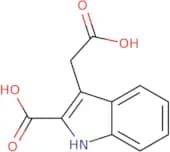
Discontinued product3-(Carboxymethyl)-1H-indole-2-carboxylic acid
CAS:3-(Carboxymethyl)-1H-indole-2-carboxylic acid is an intramolecular cyclization reaction that involves the amination of a propanoic acid and a ring system. This reaction is analogous to the synthesis of 2,5-diaminopentane, which is also a cyclization of an amine to form a five-membered ring. The nmda receptor complex has been shown to be efficient in binding 3-(carboxymethyl)-1H-indole-2-carboxylic acid and other analogues of this compound. In addition, 3-(carboxymethyl)-1H-indole-2-carboxylic acid has shown affinity for the glycine site on the nmda receptor complex. The chemistry behind this drug is not well understood due to its complexity.
Formula:C11H9NO4Purity:Min. 95%Molecular weight:219.19 g/molRef: 3D-GBA52927
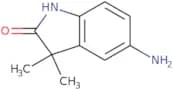
Discontinued product5-Amino-3,3-dimethyl-indolin-2-one
CAS:Versatile small molecule scaffold
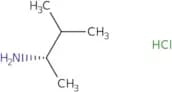
Formula:C10H12N2OPurity:Min. 95%Molecular weight:176.21 g/mol(S)-3-Methyl-2-butylamine Hydrochloride ee
CAS:Versatile small molecule scaffold
Formula:C5H14ClNPurity:Min. 95%Molecular weight:123.62 g/molRef: 3D-GBA51953
Discontinued product




![1H,7H-[1,2,4]Triazolo[1,5-a]pyrimidin-7-one](/_next/image/?url=https%3A%2Fstatic.cymitquimica.com%2Fproducts%2F3D%2Fthumb-webp%2FGBA59208.webp&w=3840&q=75)