Building Blocks
Subcategories of "Building Blocks"
- Boronic Acids & Boronic Acid Derivatives(5,780 products)
- Chiral Building Blocks(1,241 products)
- Hydrocarbon Building Blocks(6,100 products)
- Organic Building Blocks(61,017 products)
Found 205265 products of "Building Blocks"
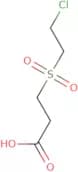
3-(2-Chloroethanesulfonyl)propanoic acid
CAS:Versatile small molecule scaffold
Formula:C5H9ClO4SPurity:Min. 95%Molecular weight:200.64 g/molRef: 3D-DAA88476
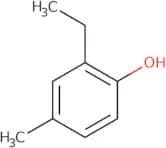
Discontinued product2-Ethyl-p-cresol
CAS:2-Ethyl-p-cresol is an ester compound that is soluble in water. It has a cycloalkyl group and aryl group and a pyrogallol, phloroglucinol, and resorcinol moiety. 2-Ethyl-p-cresol is resistant to heat and acidic conditions. It also has an ester function, which makes it soluble in water.
Formula:C9H12OPurity:Min. 95%Molecular weight:136.19 g/molRef: 3D-DAA85526
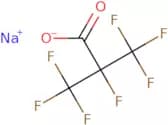
Discontinued productSodium 2,3,3,3-tetrafluoro-2-(trifluoromethyl)propanoate
CAS:Versatile small molecule scaffold
Formula:C4F7NaO2Purity:Min. 95%Molecular weight:236.02 g/mol6-Methylimidazo[2,1-b][1,3]thiazole
CAS:Versatile small molecule scaffold
Formula:C6H6N2SPurity:Min. 95%Molecular weight:138.19 g/molRef: 3D-DAA83541
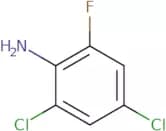
Discontinued product2,4-dichloro-6-fluoroaniline
CAS:Versatile small molecule scaffold
Formula:C6H4Cl2FNPurity:Min. 95%Molecular weight:180 g/molRef: 3D-DAA83170
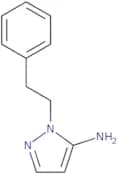
Discontinued product1-(2-Phenylethyl)-1H-pyrazol-5-amine
CAS:Versatile small molecule scaffold
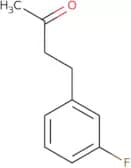
Formula:C11H13N3Purity:Min. 95%Molecular weight:187.24 g/mol4-(3-Fluorophenyl)butan-2-one
CAS:Versatile small molecule scaffold
Formula:C10H11FOPurity:Min. 95%Molecular weight:166.19 g/molRef: 3D-DAA50677
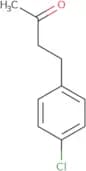
Discontinued product4-(4-Chlorophenyl)butan-2-one
CAS:4-Chlorobenzenediazonium is a benzenediazonium salt that can be used to form arylating agents. It has been used in the synthesis of olefins and as a reagent for the synthesis of 4-chloro-3-(4-chlorophenyl)butan-2-one, which is an intermediate for the synthesis of dyes. 4-Chlorobenzenediazonium can also be used to synthesize cyano compounds from nitroarenes and chloroformates.
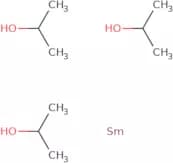
Formula:C10H11ClOPurity:Min. 95%Molecular weight:182.64 g/molSamarium(III) isopropoxide
CAS:Samarium(III) isopropoxide (Sm(0)IPO) is a metal ion that has a slow reaction rate with hydrochloric acid in the presence of nitrogen atoms. It can be used to form chiral compounds. Sm(0)IPO, which has fluorescence properties, is used as an analytical reagent in organic chemistry and biochemistry. The reactions of Sm(0)IPO are initiated by the protonation of the hydroxyl group on the metal ion followed by nucleophilic attack by the amino acid serine protease. This reaction results in the formation of an acyl halide.
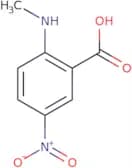
Formula:C9H21O3SmPurity:Min. 95%Molecular weight:327.62 g/mol2-(Methylamino)-5-nitrobenzoic acid
CAS:2-(Methylamino)-5-nitrobenzoic acid is a benzimidazole that contains a planar, aromatic ring and an amino group in the side chain. The compound is a hydrogen bond donor and acceptor. It undergoes oxidative cyclisations to form benzoic acids from anilines, which are generated through hydrogen atom abstraction. 2-(Methylamino)-5-nitrobenzoic acid also reacts with other aromatic compounds to form dimers or benzoic acids.
Formula:C8H8N2O4Purity:Min. 95%Molecular weight:196.16 g/molRef: 3D-DAA48433
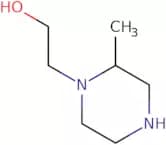
Discontinued product2-(2-Methylpiperazin-1-yl)ethan-1-ol
CAS:Versatile small molecule scaffold
Formula:C7H16N2OPurity:Min. 95%Molecular weight:144.21 g/molRef: 3D-DAA47742
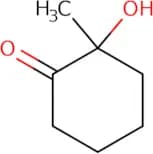
Discontinued product2-Hydroxy-2-methylcyclohexan-1-one
CAS:2-Hydroxy-2-methylcyclohexan-1-one is a tetroxide that is a ligand for osmium. It can be used as an oxidant to produce epoxides, which are important chemical intermediates. This substance has been used in the synthesis of cyclic epoxides and osmium complexes. The yields of this reaction depend on the ligand and the metal catalyst that is used. Epoxidation is catalyzed by metal ions such as vanadium, manganese, or iron, with ruthenium being one of the most effective. 2-Hydroxy-2-methylcyclohexan-1-one also forms epoxides with oxygenated substrates due to its ability to act as an oxidant.
Epoxidation reactions can be performed using 2-hydroxy-2-methylcyclohexan-1-one as a catalyst or ligand, or it may function solely as an oxidFormula:C7H12O2Purity:Min. 95%Molecular weight:128.17 g/molRef: 3D-DAA47678
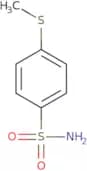
Discontinued product4-(Methylsulfanyl)benzene-1-sulfonamide
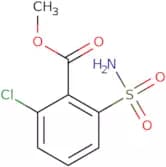
CAS:Versatile small molecule scaffoldFormula:C7H9NO2S2Purity:Min. 95%Molecular weight:203.3 g/molMethyl 2-chloro-6-sulfamoylbenzoate
CAS:Versatile small molecule scaffold
Formula:C8H8ClNO4SPurity:Min. 95%Molecular weight:249.67 g/molRef: 3D-DAA47597
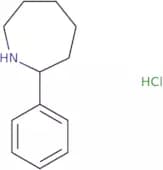
Discontinued product2-Phenylazepane hydrochloride
CAS:Versatile small molecule scaffold
Formula:C12H18ClNPurity:Min. 95%Molecular weight:211.73 g/mol(4-Cyanophenyl)thiourea
CAS:Versatile small molecule scaffold
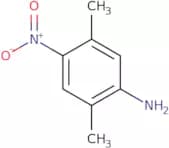
Formula:C8H7N3SPurity:Min. 95%Molecular weight:177.23 g/mol2,5-Dimethyl-4-nitroaniline
CAS:2,5-Dimethyl-4-nitroaniline is an isomer of 2,5-dimethylaniline. The molecular electrostatic potential map reveals that the molecule has a high electron density at the 4 position of the aniline ring, which is characteristic of an aromatic system. This molecule displays a conformational change when it interacts with chloride ions, which can be seen in its vibrational spectrum. The nature of this molecule is interannular between aromatic and nonaromatic.
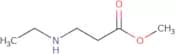
2,5-Dimethyl-4-nitroaniline's crystal system is orthorhombic. Its interactions with other molecules are determined by the electrostatic forces present on the surface of the crystal.Formula:C8H10N2O2Purity:Min. 95%Color and Shape:PowderMolecular weight:166.18 g/molmethyl 3-(ethylamino)propanoate
CAS:Versatile small molecule scaffold
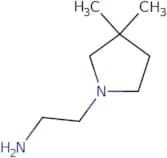
Formula:C6H13NO2Purity:Min. 95%Molecular weight:131.2 g/mol2-(3,3-Dimethylpyrrolidin-1-yl)ethan-1-amine
CAS:Versatile small molecule scaffoldFormula:C8H18N2Purity:Min. 95%Molecular weight:142.24 g/molRef: 3D-DAA43732
Discontinued product4-Bromo-6-chloropyridin-2(1H)-one
CAS:Versatile small molecule scaffold
Formula:C5H3BrClNOPurity:Min. 95%Molecular weight:208.44 g/molRef: 3D-CZB58174
Discontinued product

![6-Methylimidazo[2,1-b][1,3]thiazole](/_next/image/?url=https%3A%2Fstatic.cymitquimica.com%2Fproducts%2F3D%2Fthumb-webp%2FDAA83541.webp&w=3840&q=75)