


Building Blocks
Subcategories of "Building Blocks"
- Boronic Acids & Boronic Acid Derivatives(5,780 products)
- Chiral Building Blocks(1,241 products)
- Hydrocarbon Building Blocks(6,100 products)
- Organic Building Blocks(61,010 products)
Found 205258 products of "Building Blocks"
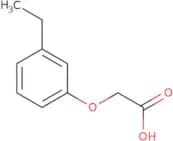
2-(3-Ethylphenoxy)acetic acid
CAS:2-(3-Ethylphenoxy)acetic acid is a phenoxyacetic acid that can be used as an igniting agent. It can be synthesized by the reaction of an alcohol with a carboxylic acid chloride in the presence of a base. The compound weighs 130.2 g/mol and has a melting point of 50°C. 2-(3-Ethylphenoxy)acetic acid is often used as a reagent for weighing zirconium oxide, which is used in some dental prostheses and dentures. It reacts with zirconia to produce ZrO2 and CO2 gas. The compound also reacts with water to form hydrogen gas, which makes it useful as a catalyst for oxidation reactions when heating zirconium metal in air.
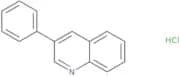
Formula:C10H12O3Purity:Min. 95%Molecular weight:180.2 g/mol3-Phenylquinoline hydrochloride
CAS:Versatile small molecule scaffold
Formula:C15H12ClNPurity:Min. 95%Molecular weight:241.71 g/molRef: 3D-BAA87537
Discontinued product2-[(4-Aminophenyl)carbamoyl]acetic acid
CAS:Versatile small molecule scaffold
Formula:C9H10N2O3Purity:Min. 95%Molecular weight:194.19 g/molRef: 3D-JJB19748
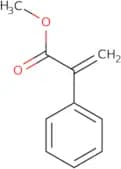
Discontinued productMethyl 2-phenylacrylate
CAS:Methyl 2-phenylacrylate is a synthetic chemical that is used in the production of polymers. It reacts with oxygen to give an oxidative carbonylation product, which consists of a particle and a functional group. The particle can be made insoluble by polymerisation. The reaction mechanism involves the donation of a methyl cinnamate group to the carbonyl group, which has a redox potential and kinetic energy that are sufficient for the reaction to proceed. Methyl 2-phenylacrylate has been used as an initiator for free radical polymerisation, which leads to cross-linked polymers. This initiator also reacts with other functional groups such as phenol or amine groups.
Formula:C10H10O2Purity:Min. 95%Molecular weight:162.19 g/mol1-(Cyclopropylmethyl)cyclopropane-1-carboxylic acid
CAS:Versatile small molecule scaffoldFormula:C8H12O2Purity:Min. 95%Molecular weight:140.18 g/mol6H-Benzo[C][1,2]benzothiazine 5,5-dioxide
CAS:6H-Benzo[C][1,2]benzothiazine 5,5-dioxide is a white crystalline solid with a molecular weight of 169.14. It is soluble in ether and benzene, but insoluble in water. 6H-Benzo[C][1,2]benzothiazine 5,5-dioxide has been shown to yield adducts with hydrochlorination and to react with quinones and other electrophiles to form chlorinated products. The regioselectivity of the reaction is determined by the anion of the substrate; chloride being the most reactive. The interaction of 6H-Benzo[C][1,2]benzothiazine 5,5-dioxide with anions such as diimide or sulfinic acid leads to the formation of different isomeric adducts.
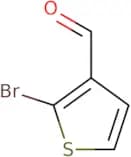
Formula:C12H9NO2SPurity:Min. 95%Molecular weight:231.27 g/mol2-Bromothiophene-3-carbaldehyde
CAS:2-Bromothiophene-3-carbaldehyde is a versatile monomer that can be used for the synthesis of a wide range of products. 2-Bromothiophene-3-carbaldehyde has been used in the synthesis of hexacyclic and grignard reagents, as well as aldehydes, which are precursors to many other chemicals. It is also an isomeric compound and can be used for cross coupling reactions. The yields of this chemical are high, making it an ideal choice for use in organic syntheses. 2-Bromothiophene-3-carbaldehyde can also be used in solar cells to produce polymers with optimal reaction rates. This chemical is often used as a monomer in the formylation and dimethylformamide processes.
Formula:C5H3BrOSPurity:Min. 95%Molecular weight:191.05 g/molRef: 3D-BAA86099
Discontinued product[4-(2-Methoxyethoxy)phenyl]methanamine
CAS:Versatile small molecule scaffold
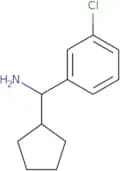
Formula:C10H15NO2Purity:Min. 95%Molecular weight:181.23 g/mol(3-Chlorophenyl)(cyclopentyl)methanamine
CAS:Versatile small molecule scaffold
Formula:C12H16ClNPurity:Min. 95%Molecular weight:209.71 g/molRef: 3D-BAA85539
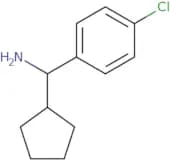
Discontinued product(4-Chlorophenyl)(cyclopentyl)methanamine
CAS:Versatile small molecule scaffold
Formula:C12H16ClNPurity:Min. 95%Molecular weight:209.71 g/molRef: 3D-BAA85537
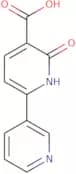
Discontinued product2-Oxo-6-(pyridin-3-yl)-1,2-dihydropyridine-3-carboxylic acid
CAS:Versatile small molecule scaffold
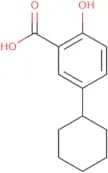
Formula:C11H8N2O3Purity:Min. 95%Molecular weight:216.19 g/mol5-Cyclohexyl-2-hydroxybenzoic acid
CAS:5-Cyclohexyl-2-hydroxybenzoic acid is a compound that belongs to the group of phenolic compounds. It has been clinically used for the treatment of systemic hypertension and is used in the manufacture of dyes, resins, flavors and fragrances. 5-Cyclohexyl-2-hydroxybenzoic acid can be found in light exposure, metal cations and environmental pollution. The use of this compound may lead to depression, which may be due to its effects on the vessel diameter. This drug also has an effect on blood pressure by stimulating vasodilatation through an endothelium-dependent mechanism.
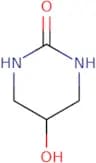
Formula:C13H16O3Purity:Min. 95%Molecular weight:220.26 g/mol5-Hydroxy-1,3-diazinan-2-one
CAS:Versatile small molecule scaffold
Formula:C4H8N2O2Purity:Min. 95%Molecular weight:116.12 g/molRef: 3D-BAA85218
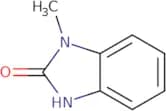
Discontinued product1-Methyl-2-benzimidazolinone
CAS:1-Methyl-2-benzimidazolinone is a synthetic compound that has been shown to be cytotoxic to cancer cells. It binds to metal ions and forms reactive intermediates, which are able to react with nucleophiles in cellular macromolecules. The reaction mechanism of 1-methyl-2-benzimidazolinone is similar to the reaction of picolinic acid with metal hydroxides. The heteroarylations of this compound have also been studied using chemical ligation, and it has been found that the d4 receptor may play a role in its cytotoxicity.
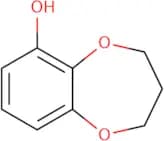
Formula:C8H8N2OPurity:Min. 95%Molecular weight:148.16 g/mol3,4-Dihydro-2H-1,5-benzodioxepin-6-ol
CAS:Versatile small molecule scaffold
Formula:C9H10O3Purity:Min. 95%Molecular weight:166.17 g/molRef: 3D-BAA84396
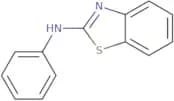
Discontinued productN-Phenyl-1,3-benzothiazol-2-amine
CAS:N-Phenyl-1,3-benzothiazol-2-amine is a synthetic aromatic compound that has been used as an antiviral agent. It inhibits the replication of RNA by binding to the carbon disulphide group in the ribose moiety of nucleosides. This prevents formation of the helix structure and stops synthesis of viral DNA. N-Phenyl-1,3-benzothiazol-2-amine is also active against influenza A virus and some other viruses. The molecular descriptors for this compound are nitrogen atoms (N), stabilization (S), cb1 receptor (Cb1) and virus activity (V). This substance is an active ingredient in many pharmaceuticals, such as cough syrup, pain relief tablets, and eye drops. It can be synthesized from copper oxide and chloride or introduced into a drug formulation by impurities.
Formula:C13H10N2SPurity:Min. 95%Molecular weight:226.3 g/molRef: 3D-BAA84321
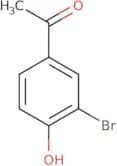
Discontinued product3'-Bromo-4'-hydroxyacetophenone
CAS:3'-Bromo-4'-hydroxyacetophenone is an epoxy that is used in the synthesis of a variety of chemical products. The mechanisms for its aerobic oxidation are not well understood, but it has been shown that it undergoes transformation reactions to form methides and phenols. It also participates in the aerobic oxidation process, which is a chemical reaction that occurs with oxygen and hydrogen peroxide as catalysts. 3'-Bromo-4'-hydroxyacetophenone has been shown to be a competitive inhibitor of cytochrome P450 enzymes.
Formula:C8H7BrO2Purity:Min. 95%Molecular weight:215.05 g/molRef: 3D-BAA83606
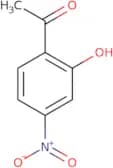
Discontinued product1-(2-Hydroxy-4-nitrophenyl)ethan-1-one
CAS:1-(2-Hydroxy-4-nitrophenyl)ethan-1-one (KPNE) is a potassium salt of a diketone that has antitubercular activity. KPNE inhibits the growth of Mycobacterium tuberculosis and has been shown to be effective as an antitubercular agent in animals. KPNE also has antiviral properties, inhibiting the RNA polymerase in HIV, which may be due to its ability to inhibit the synthesis of DNA. The mechanism of action for KPNE is thought to be due to its hydrolysis into 4-aminosalicylic acid, which inhibits bacterial protein synthesis by inhibition of the enzyme dihydrofolate reductase.
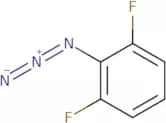
Formula:C8H7NO4Purity:Min. 95%Molecular weight:181.15 g/mol2-Azido-1,3-difluorobenzene, 2-methoxy-2-methylpropane
CAS:2-Azido-1,3-difluorobenzene is a photoactive compound that can be used to form an azide. It has been shown to undergo photochemical reactions to form the triplet state and then isomerize to the singlet state. This reaction can be initiated by a laser beam or other light source, such as sunlight. The triplet state of 2-azido-1,3-difluorobenzene has been shown to react with organic molecules containing electron withdrawing groups on their molecules, such as 2-methoxy-2-methylpropane. When these two substances are mixed together, they react to form an isomerized product that has a carbonyl group in its structure. This reaction could be helpful for developing new synthetic methods for producing pharmaceuticals and other compounds with important functions in chemistry and physics.
Formula:C6H3F2N3Purity:Min. 95%Molecular weight:155.1 g/mol[(2-Bromophenyl)methyl]trimethylsilane
CAS:Versatile small molecule scaffold
Formula:C10H15BrSiPurity:Min. 95%Molecular weight:243.21 g/molRef: 3D-BAA83344
Discontinued product

![2-[(4-Aminophenyl)carbamoyl]acetic acid](/_next/image/?url=https%3A%2Fstatic.cymitquimica.com%2Fproducts%2F3D%2Fthumb-webp%2FJJB19748.webp&w=3840&q=75)

![6H-Benzo[C][1,2]benzothiazine 5,5-dioxide](/_next/image/?url=https%3A%2Fstatic.cymitquimica.com%2Fproducts%2F3D%2Fthumb-webp%2FBAA86433.webp&w=3840&q=75)
![[4-(2-Methoxyethoxy)phenyl]methanamine](/_next/image/?url=https%3A%2Fstatic.cymitquimica.com%2Fproducts%2F3D%2Fthumb-webp%2FCEA19620.webp&w=3840&q=75)
![[(2-Bromophenyl)methyl]trimethylsilane](/_next/image/?url=https%3A%2Fstatic.cymitquimica.com%2Fproducts%2F3D%2Fthumb-webp%2FBAA83344.webp&w=3840&q=75)