Building Blocks
Subcategories of "Building Blocks"
- Boronic Acids & Boronic Acid Derivatives(5,780 products)
- Chiral Building Blocks(1,240 products)
- Hydrocarbon Building Blocks(6,100 products)
- Organic Building Blocks(61,009 products)
Found 205248 products of "Building Blocks"
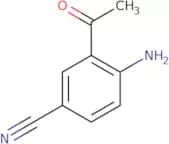
3-Acetyl-4-aminobenzonitrile
CAS:Versatile small molecule scaffold
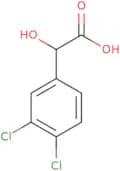
Formula:C9H8N2OPurity:Min. 95%Molecular weight:160.17 g/mol2-(3,4-Dichlorophenyl)-2-hydroxyacetic acid
CAS:Versatile small molecule scaffold
Formula:C8H6Cl2O3Purity:Min. 95%Molecular weight:221.03 g/molRef: 3D-GCA07199
Discontinued product2-[2-(Benzyloxy)phenyl]ethan-1-ol
CAS:Versatile small molecule scaffold
Formula:C15H16O2Purity:Min. 95%Molecular weight:228.29 g/molRef: 3D-GCA05243
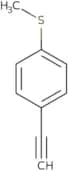
Discontinued product1-Ethynyl-4-(methylsulfanyl)benzene
CAS:1-Ethynyl-4-(methylsulfanyl)benzene (EMSB) is a novel organometallic compound that has been shown to be an inhibitor of cyclooxygenases. EMSB inhibits cox-1 and cox-2, which are enzymes involved in the inflammatory response. Inhibiting these enzymes may lead to the reduction of inflammation, which is implicated in many diseases such as cancer, arthritis, and cardiovascular disease. EMSB has also been shown to have antiinflammatory activity in a gravimetric analysis of human neutrophils. This molecule has been shown to inhibit the production of prostaglandins by inhibiting the enzyme cyclooxygenase and x-ray diffraction data show that this molecule binds with high affinity to cox-1 and cox-2.
Formula:C9H8SPurity:Min. 95%Molecular weight:148.23 g/molRef: 3D-GCA04185
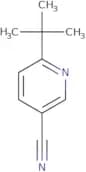
Discontinued product6-Tert-butylnicotinonitrile
CAS:Versatile small molecule scaffold
Formula:C10H12N2Purity:Min. 95%Molecular weight:160.22 g/molRef: 3D-GCA02945
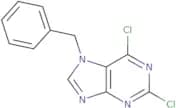
Discontinued product7-Benzyl-2,6-dichloro-7H-purine
CAS:7-Benzyl-2,6-dichloro-7H-purine is a reagent that is used in the synthesis of adenine and other purines. It can be synthesized by coupling 3-methylxanthine with aminoacids and organometallic reagents. This chemical can also be used to selectively synthesize 6-benzyladenine, which is an important precursor to pharmaceuticals. The 7-benzyl group on this chemical has been shown to act as a positional group in the catalytic hydrogenation of amines. This selective hydrogenation process has been found to be regioselective for cycloalkyl amines.
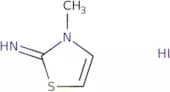
Formula:C12H8Cl2N4Purity:Min. 95%Molecular weight:279.1 g/mol3-Methyl-2,3-dihydro-1,3-thiazol-2-imine hydroiodide
CAS:Versatile small molecule scaffoldFormula:C4H7IN2SPurity:Min. 95%Molecular weight:242.08 g/molRef: 3D-GCA01023
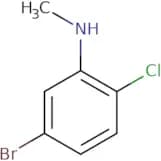
Discontinued product5-Bromo-2-chloro-N-methylaniline
CAS:Versatile small molecule scaffold
Formula:C7H7BrClNPurity:Min. 95%Molecular weight:220.49 g/molRef: 3D-GBC90731
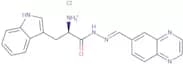
Discontinued productRhosin hydrochloride
CAS:Rhosin hydrochloride is a cardiac glycoside derived from the plant Rhosinus peregrinus. It has been shown to have a regulatory effect on cardiac hypertrophy, and has been used in animal experiments to treat cancer. Rhosin hydrochloride is also known to inhibit cell factor and regulatory adhesions, which are proteins that aid in the binding of cells to other cells or tissue. It has been shown to be effective at inhibiting the uptake of calcium ions by rat cardiomyocytes. These properties make rhosin hydrochloride an attractive target for future research into cardiovascular disease treatment.
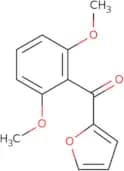
Formula:C20H19ClN6OPurity:Min. 95%Molecular weight:394.86 g/mol2-(2,6-Dimethoxybenzoyl)furan
CAS:Versatile small molecule scaffold
Formula:C13H12O4Purity:Min. 95%Molecular weight:232.2 g/molRef: 3D-GBC64254
Discontinued productN,N,4-Trimethyl-1,3-thiazol-2-amine
CAS:Versatile small molecule scaffold
Formula:C6H10N2SPurity:Min. 95%Molecular weight:142.22 g/molRef: 3D-GAA14218
Discontinued productEthyl 3-methyl-5-oxo-[1,3]thiazolo[3,2-a]pyrimidine-6-carboxylate
CAS:Versatile small molecule scaffoldFormula:C10H10N2O3SPurity:Min. 95%Molecular weight:238.27 g/molMethyl 2-nitropropanoate
CAS:Methyl 2-nitropropanoate is a reactive compound that is used as an epigenetic marker. It reacts with lysine residues in proteins and histones, resulting in the methylation of these proteins. Methyl 2-nitropropanoate has been shown to inhibit the replication of DNA and induce cellular apoptosis in mammalian cells. The effector proteins H3K9me2 and H4K5me1 are involved in epigenetic changes that include gene silencing and histone demethylation. Methyl 2-nitropropanoate can also cause clastogenic effects by forming adducts on dna replication enzymes, such as amide and demethylation. Histone lysines are methylated by methyl 2-nitropropanoate, which causes histones to condense into tight bundles of DNA that contribute to the formation of actin filaments.
Formula:C4H7NO4Purity:Min. 95%Molecular weight:133.1 g/molRef: 3D-GAA11850
Discontinued product2,3-Dimethyl-1H-indole-5-carboxamide
CAS:Versatile small molecule scaffold
Formula:C11H12N2OPurity:Min. 95%Molecular weight:188.23 g/molRef: 3D-GAA11647
Discontinued product4-(4-Nitrophenyl)-1H-1,2,3-triazole
CAS:4-(4-Nitrophenyl)-1H-1,2,3-triazole (NPT) is a bioactive molecule that inhibits the growth of promyelocytic leukemia cells by interfering with the activity of certain enzymes. NPT has been shown to inhibit the influenza virus and human cervical carcinoma cells in vitro. In addition, it has been shown to inhibit the proliferation of leukemia HL60 cells. NPT is an unsymmetrical molecule that forms an imine during the enzymatic process. The molecular modeling studies show that this compound binds to the active site of enzyme histidine kinase in a manner similar to ATP. This binding prevents ATP from forming a stable complex with histidine kinase and phosphorylating its target protein, which disrupts cellular homeostasis and leads to cell death.
Formula:C8H6N4O2Purity:Min. 95%Molecular weight:190.16 g/molRef: 3D-GAA11197
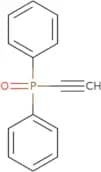
Discontinued productEthynyl(diphenyl)phosphine oxide
CAS:Ethynyl(diphenyl)phosphine oxide is an amide that has been shown to be useful in coordination, catalysis, and organic chemistry. It is a conformational analog of the amide group. Ethynyl(diphenyl)phosphine oxide has been used as a hydrogen-bond donor in esterification reactions. This compound can be synthesized by reacting the corresponding boronic acid with ethynyl alcohol. The yields of this reaction are dependent on the temperature and have been found to range from 60% to 70%. The nmr spectra of this compound show two signals at δ 2.95 and δ 4.85 ppm, corresponding to two different conformers of ethynyl(diphenyl)phosphine oxide.
Formula:C14H11OPPurity:Min. 95%Molecular weight:226.21 g/mol2,4,6-Trimethylphenyl Isothiocyanate
CAS:2,4,6-Trimethylphenyl Isothiocyanate is a reactive compound that can inactivate enzymes. It is used as a catalyst and an intermediate in the production of dyes and pharmaceuticals. 2,4,6-Trimethylphenyl Isothiocyanate reacts with dimethyldioxirane to form diphenylphosphine acid. This acid reacts with choline to produce sulfines. The sulfines react with hydrogen to yield the desired product or prodrug. 2,4,6-Trimethylphenyl Isothiocyanate also catalyzes the reaction between sulfur and hydrogen gas at high temperatures to form hydrogen sulfide gas.br>br>
br>br>
Yield: 100%Formula:C10H11NSPurity:Min. 95%Molecular weight:177.27 g/mol2-Hydroxy-3-iodo-5-methylbenzoic acid
CAS:Versatile small molecule scaffoldFormula:C8H7IO3Purity:Min. 95%Molecular weight:278.04 g/mol(Isothiocyanatomethyl)cyclopropane
CAS:(Isothiocyanatomethyl)cyclopropane is a cyclopropane derivative that has been used to study the conformational properties of molecules in solution. It has been shown that the vibrational frequencies of (isothiocyanatomethyl)cyclopropane are strongly dependent on the solvent, temperature, and concentration. FT-IR spectra show that the molecule has a strong dipole moment and symmetrical vibrations. The theory behind this work is based on the functional theory of quantum mechanics, which predicts that the frequency of vibration should depend on the functions, intensities, and parameters of a molecule. This work also shows how conformational studies can be used to investigate different types of molecules.
Formula:C5H7NSPurity:Min. 95%Molecular weight:113.18 g/mol2-Hydroxyhexanoic acid
CAS:2-Hydroxyhexanoic acid is a fatty acid that is used in the treatment of diabetic patients. It is an intermediate product of the metabolism of glucose, which can be obtained by hydrolysis of glycerol with hydrochloric acid and supercritical carbon dioxide. The molecule has two hydroxyl groups, which are important for its function as a substrate in chemical reactions. 2-Hydroxyhexanoic acid also reacts with lysine residues at neutral pH, forming an ester linkage. This reaction can be demonstrated by adding phosphotungstic acid to a solution containing 2-hydroxyhexanoic acid or lysine residues.
Formula:C6H12O3Purity:Min. 95%Molecular weight:132.16 g/mol

![2-[2-(Benzyloxy)phenyl]ethan-1-ol](/_next/image/?url=https%3A%2Fstatic.cymitquimica.com%2Fproducts%2F3D%2Fthumb-webp%2FGCA05243.webp&w=3840&q=75)

![Ethyl 3-methyl-5-oxo-[1,3]thiazolo[3,2-a]pyrimidine-6-carboxylate](/_next/image/?url=https%3A%2Fstatic.cymitquimica.com%2Fproducts%2F3D%2Fthumb-webp%2FGAA12413.webp&w=3840&q=75)