Building Blocks
Subcategories of "Building Blocks"
- Boronic Acids & Boronic Acid Derivatives(5,783 products)
- Chiral Building Blocks(1,242 products)
- Hydrocarbon Building Blocks(6,105 products)
- Organic Building Blocks(61,055 products)
Found 205383 products of "Building Blocks"
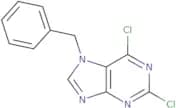
7-Benzyl-2,6-dichloro-7H-purine
CAS:7-Benzyl-2,6-dichloro-7H-purine is a reagent that is used in the synthesis of adenine and other purines. It can be synthesized by coupling 3-methylxanthine with aminoacids and organometallic reagents. This chemical can also be used to selectively synthesize 6-benzyladenine, which is an important precursor to pharmaceuticals. The 7-benzyl group on this chemical has been shown to act as a positional group in the catalytic hydrogenation of amines. This selective hydrogenation process has been found to be regioselective for cycloalkyl amines.
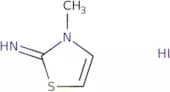
Formula:C12H8Cl2N4Purity:Min. 95%Molecular weight:279.1 g/mol3-Methyl-2,3-dihydro-1,3-thiazol-2-imine hydroiodide
CAS:Versatile small molecule scaffoldFormula:C4H7IN2SPurity:Min. 95%Molecular weight:242.08 g/molRef: 3D-GCA01023
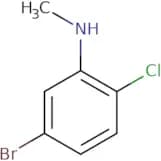
Discontinued product5-Bromo-2-chloro-N-methylaniline
CAS:Versatile small molecule scaffold
Formula:C7H7BrClNPurity:Min. 95%Molecular weight:220.49 g/molRef: 3D-GBC90731
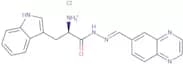
Discontinued productRhosin hydrochloride
CAS:Rhosin hydrochloride is a cardiac glycoside derived from the plant Rhosinus peregrinus. It has been shown to have a regulatory effect on cardiac hypertrophy, and has been used in animal experiments to treat cancer. Rhosin hydrochloride is also known to inhibit cell factor and regulatory adhesions, which are proteins that aid in the binding of cells to other cells or tissue. It has been shown to be effective at inhibiting the uptake of calcium ions by rat cardiomyocytes. These properties make rhosin hydrochloride an attractive target for future research into cardiovascular disease treatment.
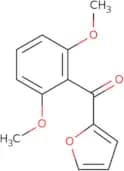
Formula:C20H19ClN6OPurity:Min. 95%Molecular weight:394.86 g/mol2-(2,6-Dimethoxybenzoyl)furan
CAS:Versatile small molecule scaffold
Formula:C13H12O4Purity:Min. 95%Molecular weight:232.2 g/molRef: 3D-GBC64254
Discontinued product4,8-Dioxatricyclo[4.2.1.0,3,7]nonan-5-one
CAS:Versatile small molecule scaffold
Formula:C7H8O3Purity:Min. 95%Molecular weight:140.14 g/molRef: 3D-GAA71283
Discontinued productDimethyl[2-(phenylamino)ethyl]amine
CAS:Versatile small molecule scaffold
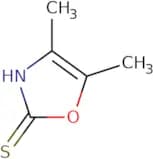
Formula:C10H16N2Purity:Min. 95%Molecular weight:164.25 g/molDimethyl-1,3-oxazole-2-thiol
CAS:Versatile small molecule scaffold
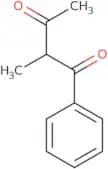
Formula:C5H7NOSPurity:Min. 95%Molecular weight:129.18 g/mol2-Methyl-1-phenylbutane-1,3-dione
CAS:2-Methyl-1-phenylbutane-1,3-dione is a chemical intermediate that belongs to the group of alkyl bromides. It is used as an herbicide and a pesticide, and can be reduced to 2-methyl-2-(4'-bromophenyl)pentanal by reductive cleavage with chlorine. The reduction of 2-methyl-1-phenylbutane-1,3-dione by hydrogen gas leads to the diastereoisomers 2-(4'-bromophenyl)-2-(2'-methylpropionyl)pentanal and 3-(4'-bromophenyl)-2-(2'-methylpropionyl)pentanal. The former is a chiral molecule that can be used as a medicine for high blood pressure, while the latter has been shown to be effective against microbial strains such as Escherichia coli and Candida albicans.
Formula:C11H12O2Purity:Min. 95%Molecular weight:176.21 g/mol4-Iodo-1,5-dimethyl-1H-pyrazole-3-carboxylic acid
CAS:Versatile small molecule scaffoldFormula:C6H7IN2O2Purity:Min. 95%Molecular weight:266.04 g/molRef: 3D-GAA64795
Discontinued productmethyl 2-(4-amino-1H-pyrazol-1-yl)acetate hydrochloride
CAS:Versatile small molecule scaffoldFormula:C6H10ClN3O2Purity:Min. 95%Molecular weight:191.6 g/molRef: 3D-GAA64789
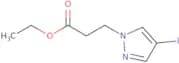
Discontinued productEthyl 3-(4-iodopyrazol-1-yl)propanoate
CAS:Versatile small molecule scaffold
Formula:C8H11IN2O2Purity:Min. 95%Molecular weight:294.09 g/mol(6-Bromobenzo[d][1,3]dioxol-5-yl)methanol
CAS:Versatile small molecule scaffold
Formula:C8H7BrO3Purity:Min. 95%Molecular weight:231.04 g/molRef: 3D-GAA64234
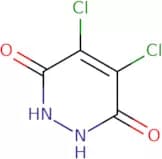
Discontinued product4,5-Dichloropyridazine-3,6-diol
CAS:Dichloropyridazine-3,6-diol is a furan derivative that has been shown to act as an inhibitor of the oxidative deamination of pyridine. It is also a nucleophilic reagent with a chlorine atom and two hydroxylamine groups in its structure. The carbonyl oxygen atom and the cyclic carbonyl group are both susceptible to oxidation and can be used to form chlorides. Dichloropyridazine-3,6-diol is resistant to acid chlorides such as thionyl chloride or phosphoric acid. This compound undergoes dehydration reactions with carboxylic acids and chlorides, yielding the corresponding carboxylate or chloride.
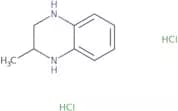
Formula:C4H2Cl2N2O2Purity:Min. 95%Molecular weight:180.97 g/mol2-Methyl-1,2,3,4-tetrahydroquinoxaline
CAS:2-Methyl-1,2,3,4-tetrahydroquinoxaline is an enantioselective antioxidant that has been shown to have a chiral conformation. It has also been found to be a catalyst in the reductive elimination of hydrochloric acid. This compound can be hydrogenated by catalytic hydrogenation and this reaction produces tetralin as a by-product. 2-Methyl-1,2,3,4-tetrahydroquinoxaline is used in research because it contains a methyl group and amines that are important for biological functions.
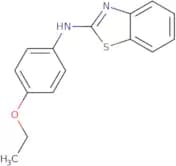
Formula:C9H12N2Purity:Min. 95%Molecular weight:148.2 g/molBenzothiazol-2-yl-(4-ethoxy-phenyl)-amine
CAS:Benzothiazol-2-yl-(4-ethoxy-phenyl)-amine is a compound that has been shown to be active against solid tumours and metastases. It has been shown to inhibit phosphatase activity in the presence of monoclonal antibodies, which is an indicator for cancerous cells. Benzothiazol-2-yl-(4-ethoxy-phenyl)-amine may be used as a diagnostic marker for determining the presence of cancer cells in patients with infectious diseases, such as HIV/AIDS. This compound has also been shown to inhibit phosphatase activity in the presence of monoclonal antibodies, which is an indicator for cancerous cells. Benzothiazol-2-yl-(4-ethoxy-phenyl)-amine may be used as a diagnostic marker for determining the presence of cancer cells in patients with infectious diseases, such as HIV/AIDS.Formula:C15H14N2OSPurity:Min. 95%Molecular weight:270.4 g/molRef: 3D-GAA63487
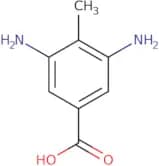
Discontinued product3,5-Diamino-4-methylbenzoic acid
CAS:3,5-Diamino-4-methylbenzoic acid is a chemical compound with the formula C6H3N3O2. It is an organic nitrite that reacts readily with nucleophiles such as alcohols, phenols, and amines to form the corresponding N-substituted benzoic acid. The reaction proceeds via a two step process in which 3,5-diamino-4-methylbenzoic acid first reacts with sodium nitrite to produce 3,5-diamino-4-nitrobenzoic acid followed by hydrolysis of this intermediate to form the desired product. Nitrite salts are used in the food industry as preservatives and antimicrobials. They can be applied as a gas or dissolved in water. Nitrite salts are also used for wastewater treatment and for environmental remediation.
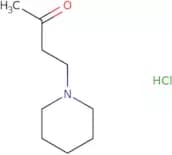
Formula:C8H10N2O2Purity:Min. 95%Molecular weight:166.18 g/mol4-(Piperidin-1-yl)butan-2-one hydrochloride
CAS:Versatile small molecule scaffold
Formula:C9H18ClNOPurity:Min. 95%Molecular weight:191.7 g/molRef: 3D-GAA63171
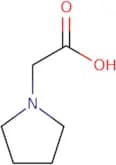
Discontinued productPyrrolidin-1-yl-acetic acid hydrochloride
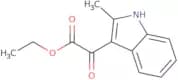
CAS:Pyrrolidin-1-yl-acetic acid hydrochloride is a drug that inhibits the enzyme protease, which is involved in the replication of HIV. It also inhibits the enzyme piperazine, an essential cofactor for retroviral replication. Pyrrolidin-1-yl-acetic acid hydrochloride has been shown to inhibit insulin resistance and increase glucose uptake in animal models. This drug may be a potential treatment for diabetes mellitus type 2. The structural formula of this drug is shown below:Formula:C6H12ClNO2Purity:Min. 95%Molecular weight:165.62 g/molEthyl 2-(2-methyl-1H-indol-3-yl)-2-oxoacetate
CAS:Versatile small molecule scaffold
Formula:C13H13NO3Purity:Min. 95%Molecular weight:231.25 g/molRef: 3D-GAA62834
Discontinued product

![4,8-Dioxatricyclo[4.2.1.0,3,7]nonan-5-one](/_next/image/?url=https%3A%2Fstatic.cymitquimica.com%2Fproducts%2F3D%2Fthumb-webp%2FGAA71283.webp&w=3840&q=75)
![Dimethyl[2-(phenylamino)ethyl]amine](/_next/image/?url=https%3A%2Fstatic.cymitquimica.com%2Fproducts%2F3D%2Fthumb-webp%2FGAA71146.webp&w=3840&q=75)


![(6-Bromobenzo[d][1,3]dioxol-5-yl)methanol](/_next/image/?url=https%3A%2Fstatic.cymitquimica.com%2Fproducts%2F3D%2Fthumb-webp%2FGAA64234.webp&w=3840&q=75)