Building Blocks
Subcategories of "Building Blocks"
- Boronic Acids & Boronic Acid Derivatives(5,784 products)
- Chiral Building Blocks(1,243 products)
- Hydrocarbon Building Blocks(6,105 products)
- Organic Building Blocks(61,066 products)
Found 205426 products of "Building Blocks"
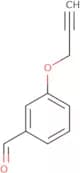
3-Prop-2-ynyloxy-benzaldehyde
CAS:3-Prop-2-ynyloxy-benzaldehyde is a crystalline compound that can be used as an intermediate for the synthesis of azides. The crystal structure of 3-prop-2-ynyloxybenzaldehyde was determined by X-ray crystallography. This molecule has four nitro groups, which are in the form of methylenes. The active methylene is a tetradentate amine, which coordinates to the chloride ion and forms a supramolecular complex with it. The chloroformate group is also coordinated to this chloride ion. The azide group is coordinated to the chloride ion through an N–N bond, and the nitro group is coordinated through an N–O bond. This molecule has a high degree of symmetry due to its rigid geometry and planarity, which helps in its efficient synthesis methods.
Formula:C10H8O2Purity:Min. 95%Molecular weight:160.17 g/molRef: 3D-FAA65187
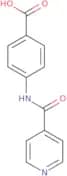
Discontinued product4-(Pyridine-4-amido)benzoic acid
CAS:Versatile small molecule scaffold
Formula:C13H10N2O3Purity:Min. 95%Molecular weight:242.23 g/mol5-Phosphonopentanoic acid
CAS:5-Phosphonopentanoic acid is a neurotransmitter that activates voltage-dependent calcium channels and integrin receptors. It has been shown to bind to the dopamine receptor, as well as to other receptors such as the NMDA, GABA, and AMPA receptors. 5-Phosphonopentanoic acid also plays an important role in energy metabolism and neuronal function. This chemical can be used pharmacologically to study receptor activity, which may lead to a better understanding of brain functions and physiological mechanisms. In addition, 5-phosphonopentanoic acid is used in the production of electrochemical detectors for detecting histological tissue changes or pathological conditions.
Formula:C5H11O5PPurity:Min. 95%Molecular weight:182.11 g/molRef: 3D-FAA65084
Discontinued product5,6-Dihydrocyclopenta[b]thiophen-4-one
CAS:5,6-Dihydrocyclopenta[b]thiophen-4-one is a heterocycle that is formed from the condensation of two molecules of propanedioic acid. The reaction occurs in a catalytic fashion at 160 degrees Celsius. The yield of this reaction is low and no other information on reactivity or topology has been found.
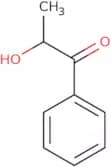
Formula:C7H6OSPurity:Min. 95%Molecular weight:138.19 g/mol2-Hydroxy-1-phenylpropan-1-one
CAS:2-Hydroxy-1-phenylpropan-1-one is a propiophenone derivative that is synthesized from phenol and acetone. The asymmetric synthesis of 2-hydroxy-1-phenylpropan-1-one has been achieved using magnetic particles and dry weight measurement, which are used to optimize the process. The biotransformations of 2-hydroxy-1-phenylpropan-1-one include oxidative injury, metal chelate formation, and salicylaldoxime formation. This compound has been shown to be toxic in rat liver microsomes at concentrations of 10 μM. It also displays hepatoprotective properties in liver cells grown under immobilized conditions. Structural analysis has shown that this compound is a chiral molecule with two stereocenters located at the alpha carbon atom and the beta carbon atom.
Formula:C9H10O2Purity:Min. 95%Molecular weight:150.17 g/molRef: 3D-FAA65040
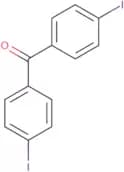
Discontinued productBis(4-iodophenyl)methanone
CAS:Versatile small molecule scaffold
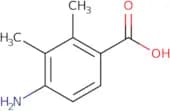
Formula:C13H8I2OPurity:Min. 95%Molecular weight:434.01 g/mol4-Amino-2,3-dimethyl-benzoic acid
CAS:4-Amino-2,3-dimethyl-benzoic acid is a benzene derivative that has been detected in wastewater treatment plants at median concentrations of 3.2 μg/L. It is used as a sunscreen agent and can be found in sunscreens, cosmetics, and soaps. 4-Amino-2,3-dimethyl-benzoic acid has been shown to induce cancer in the skin of mice. This drug may also have effects on the production of reactive oxygen species that cause DNA mutations. 4DMBBA binds to proteins and nucleic acids by hydrogen bonding interactions with amino groups. The binding of 4DMBBA to DNA prevents the transcription of genes encoding proteins involved in DNA repair, leading to cell death and cancer.
Formula:C9H11NO2Purity:Min. 95%Molecular weight:165.19 g/mol(2-Aminoethyl)[2-(piperidin-1-yl)ethyl]amine
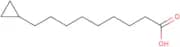
CAS:Versatile small molecule scaffoldFormula:C9H21N3Purity:Min. 95%Molecular weight:171.28 g/mol9-Cyclopropylnonanoic acid
CAS:Versatile small molecule scaffold
Formula:C12H22O2Purity:Min. 95%Molecular weight:198.3 g/molRef: 3D-FAA61797
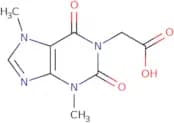
Discontinued product2-(3,7-Dimethyl-2,6-dioxo-2,3,6,7-tetrahydro-1H-purin-1-yl)acetic acid
CAS:Controlled Product2-(3,7-Dimethyl-2,6-dioxo-2,3,6,7-tetrahydro-1H-purin-1-yl)acetic acid is a molecule used in various industries. It is an organic solvent that can be used to deodorize and clean surfaces. This compound is also used as a diagnostic agent for animal health. 2-(3,7-Dimethyl-2,6-dioxo-2,3,6,7-tetrahydro-1H-purin-- 1yl)acetic acid has been shown to have carboxylic acid group properties. It can be found in the leaves of marrubium and caffeic acid.
Formula:C9H10N4O4Purity:Min. 95%Molecular weight:238.2 g/molRef: 3D-FAA61456
Discontinued product3-Azabicyclo[3.2.2]nonane HCl
CAS:Versatile small molecule scaffold
Formula:C8H16ClNPurity:Min. 95%Molecular weight:161.67 g/molRef: 3D-FAA59741
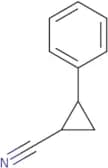
Discontinued productrac-(1R,2R)-2-Phenylcyclopropane-1-carbonitrile
CAS:Rac-1R,2R-2-phenylcyclopropane-1-carbonitrile is an enantiopure compound with two chiral centers. It is a reaction intermediate in the synthesis of prodrugs for the treatment of cancer. Rac-1R,2R-2-phenylcyclopropane-1-carbonitrile is converted to its corresponding amide by reaction with ammonia and then reacted with hydrochloric acid to form the corresponding ester. The optical purity of rac-(1R,2R)-2-phenylcyclopropane-1-carbonitrile can be determined by measuring the optical rotation of the chiral center at 366 nm. Rac-(1R,2R)-2-phenylcyclopropane-1-carbonitrile has a spontaneous rate constant of k=0.02±0.001 s−1 and an additivity parameter of ΔH=-3.84±0.17 kcal mol−1Formula:C10H9NPurity:Min. 95%Molecular weight:143.18 g/molRef: 3D-FAA59014
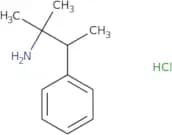
Discontinued product2-Methyl-3-phenylbutan-2-amine hydrochloride
CAS:Controlled ProductVersatile small molecule scaffold
Formula:C11H18ClNPurity:Min. 95%Molecular weight:199.72 g/molRef: 3D-FAA58552
Discontinued product2-(5-Methyloxolan-2-yl)acetic acid
CAS:Versatile small molecule scaffold
Formula:C7H12O3Purity:Min. 95%Molecular weight:144.17 g/molRef: 3D-FAA58400
Discontinued product1-(2-Methylphenyl)propan-2-amine
CAS:Controlled Product1-(2-Methylphenyl)propan-2-amine is a fatty acid ester that is used as an excipient in pharmaceutical dosage forms. It is used to increase the viscosity of drug solutions and suspensions, and to provide a protective coating for tablets. 1-(2-Methylphenyl)propan-2-amine is insoluble in water, but soluble in organic solvents such as alcohols and acetone. It can be prepared by reacting a primary amine with a fatty acid chloride or anhydride. The compound has been shown to have high affinity for 5HT2A receptors in vitro, which may account for its psychoactive effects.
Formula:C10H15NPurity:Min. 95%Molecular weight:149.23 g/molRef: 3D-FAA58032
Discontinued productEthyl 1,2,3,4-tetrahydroquinoline-6-carboxylate
CAS:Versatile small molecule scaffold
Formula:C12H15NO2Purity:Min. 95%Molecular weight:205.25 g/molRef: 3D-FAA57085
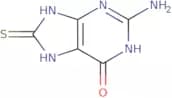
Discontinued product2-Amino-6-hydroxy-8-mercaptopurine
CAS:2-Amino-6-hydroxy-8-mercaptopurine is an antimicrobial agent that inhibits the growth of bacteria by binding to their ribosomes. It has been shown to have a cytotoxic effect in vivo on cancer cells and intestinal parasites, as well as a protective effect against infectious diseases. 2-Amino-6-hydroxy-8-mercaptopurine has also been shown to inhibit the synthesis of proteins in vitro, which may be due to its ability to bind to the ribosomal subunit and inhibit protein synthesis. 2-Amino-6-hydroxy-8-mercaptopurine inhibits bacterial growth by binding to DNA dependent RNA polymerase, thereby preventing transcription and replication. The high frequency of human activity has been shown using a patch clamp technique on human erythrocytes. This active form is metabolized through a number of metabolic transformations, including hydrolysis by esterases or gluc
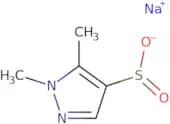
Formula:C5H5N5OSPurity:Min. 95%Color and Shape:PowderMolecular weight:183.19 g/molSodium 1,5-dimethyl-1H-pyrazole-4-sulfinate
CAS:Versatile small molecule scaffold
Formula:C5H7N2NaO2SPurity:Min. 95%Molecular weight:182.18 g/molRef: 3D-EZC90842
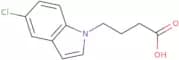
Discontinued product4-(5-Chloro-1H-indol-1-yl)butanoic acid
CAS:Versatile small molecule scaffold
Formula:C12H12ClNO2Purity:Min. 95%Molecular weight:237.68 g/molRef: 3D-EZB95332
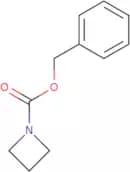
Discontinued productBenzyl azetidine-1-carboxylate
CAS:Versatile small molecule scaffold
Formula:C11H13NO2Purity:Min. 95%Molecular weight:191.23 g/molRef: 3D-EZB70538
Discontinued product

![5,6-Dihydrocyclopenta[b]thiophen-4-one](/_next/image/?url=https%3A%2Fstatic.cymitquimica.com%2Fproducts%2F3D%2Fthumb-webp%2FFAA65051.webp&w=3840&q=75)
![(2-Aminoethyl)[2-(piperidin-1-yl)ethyl]amine](/_next/image/?url=https%3A%2Fstatic.cymitquimica.com%2Fproducts%2F3D%2Fthumb-webp%2FFAA62569.webp&w=3840&q=75)
![3-Azabicyclo[3.2.2]nonane HCl](/_next/image/?url=https%3A%2Fstatic.cymitquimica.com%2Fproducts%2F3D%2Fthumb-webp%2FFAA59741.webp&w=3840&q=75)